Free printable practice
Leveled Reading Practice Activities
Grade 4 leveled reading worksheets with Level Q, R, and S children’s stories plus comprehension questions for fluency, vocabulary, and evidence-based answers.
Explore Leveled Reading
Free printable worksheet PDFs
Preview every available page, then download the free worksheet PDF for home, homeschool, tutoring, or classroom practice.
Preview the exact activity before downloading it.
 Level Q Childrens Story — Preview and VocabularyGrade 4 Level Q children’s story worksheets help students read longer fiction, track plot and character motives, and answer evidence-based questions. This preview and vocabulary worksheet provides a distinct, age-appropriate way to practise the same lesson.Grade 4Free PDF preview
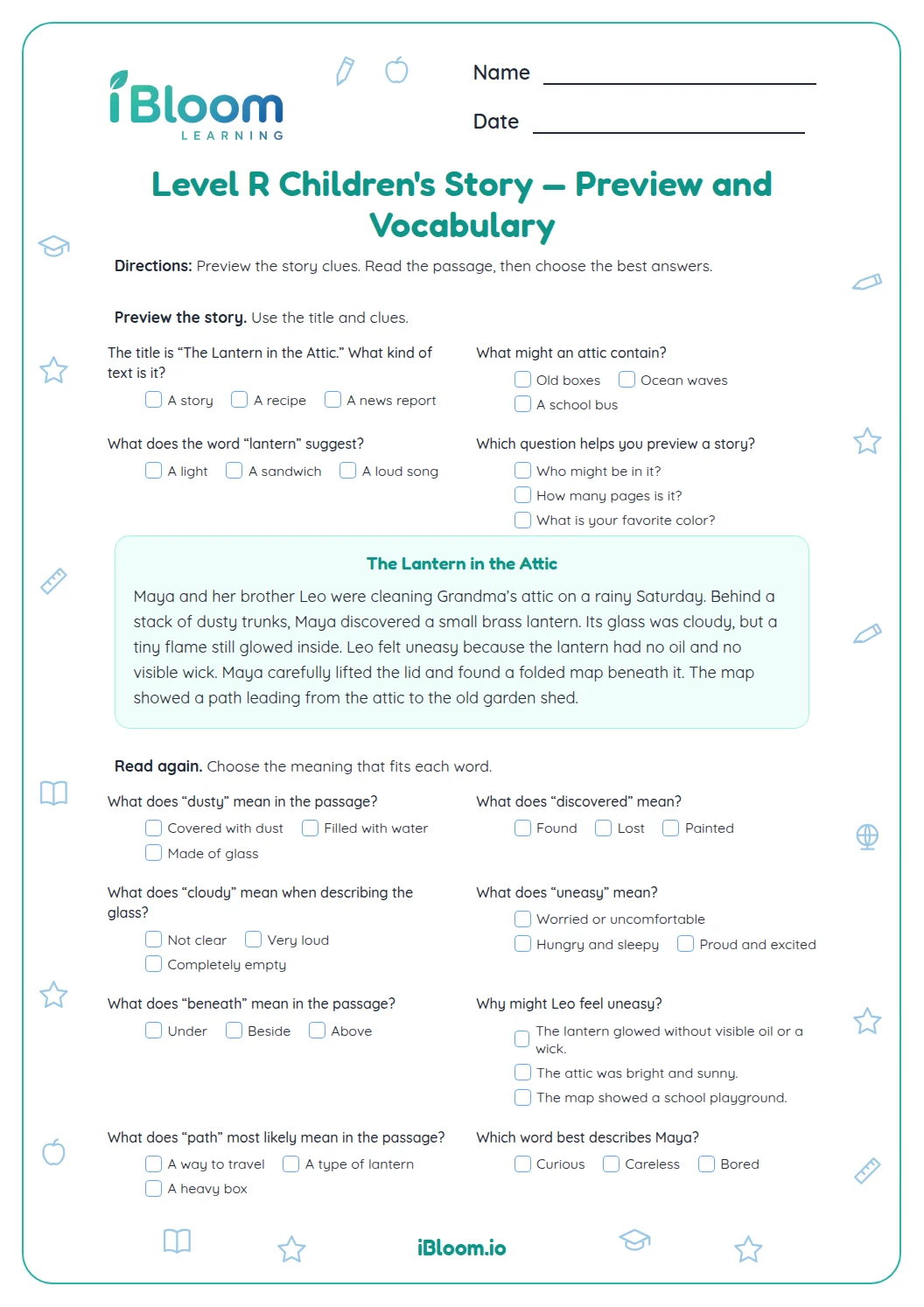 Level R Childrens Story — Preview and VocabularyGrade 4 Level R children’s story worksheets help students read longer fiction, infer meaning, track plot events, and support answers with text evidence. This preview and vocabulary worksheet provides a distinct, age-appropriate way to practise the same lesson.Grade 4Free PDF preview
 Level S Childrens Story — Preview and VocabularyGrade 4 students read Level S children’s stories and practise deeper comprehension through evidence-based questions, vocabulary work, and short written responses. This preview and vocabulary worksheet provides a distinct, age-appropriate way to practise the same lesson.Grade 4Free PDF preview
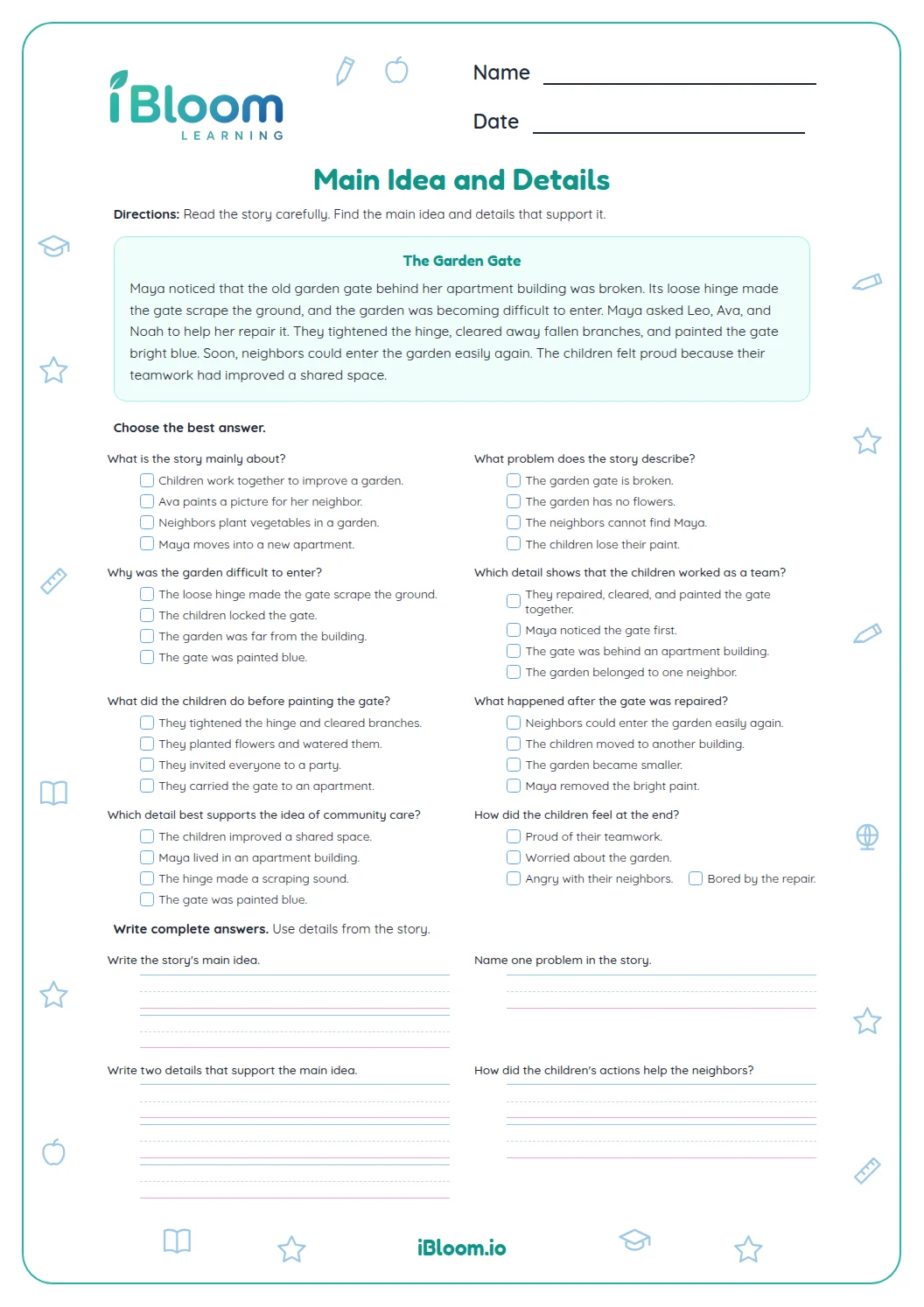 Level Q Childrens Story — Main Idea and DetailsGrade 4 Level Q children’s story worksheets help students read longer fiction, track plot and character motives, and answer evidence-based questions. This main idea and details worksheet provides a distinct, age-appropriate way to practise the same lesson.Grade 4Free PDF preview
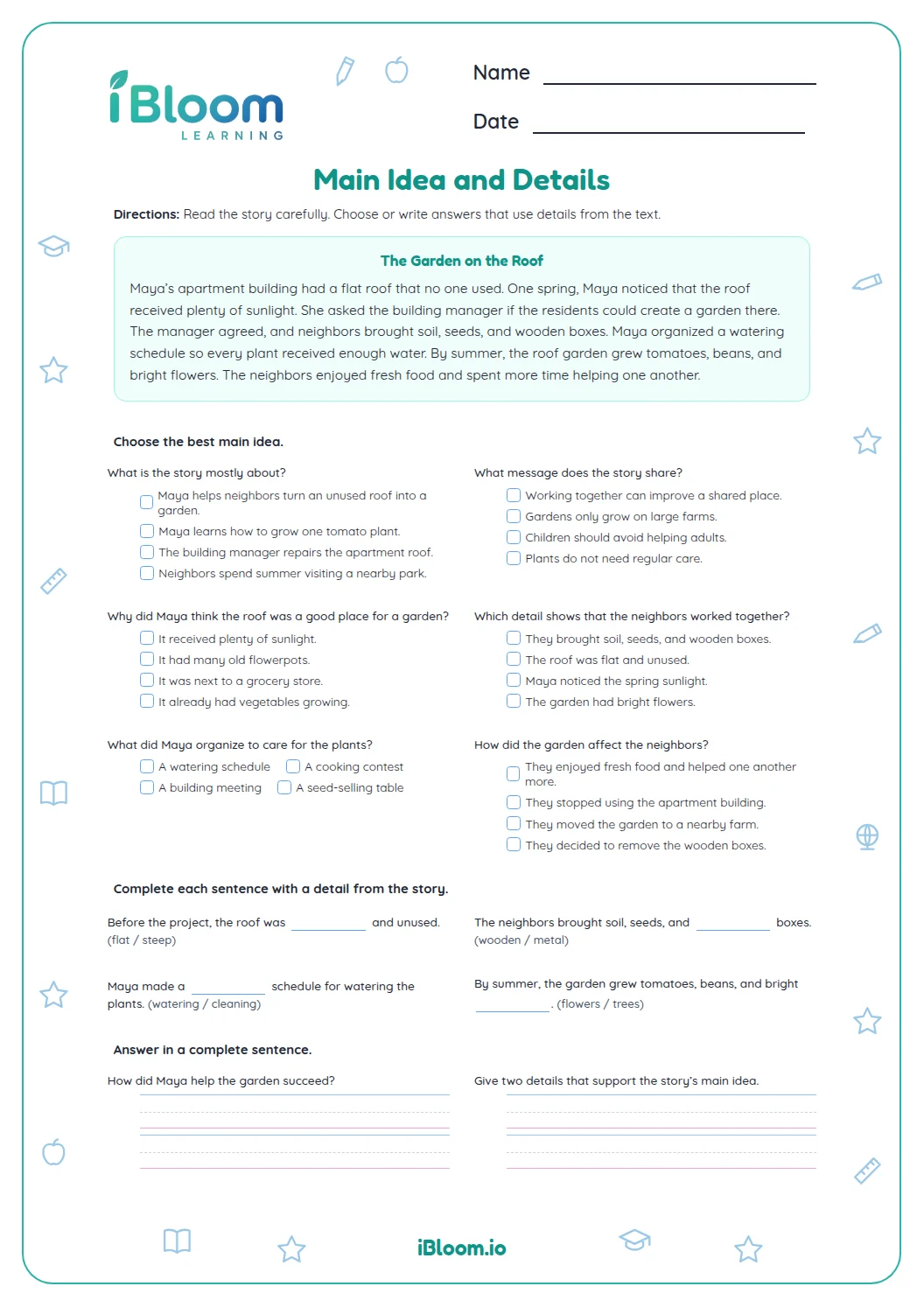 Level R Childrens Story — Main Idea and DetailsGrade 4 Level R children’s story worksheets help students read longer fiction, infer meaning, track plot events, and support answers with text evidence. This main idea and details worksheet provides a distinct, age-appropriate way to practise the same lesson.Grade 4Free PDF preview
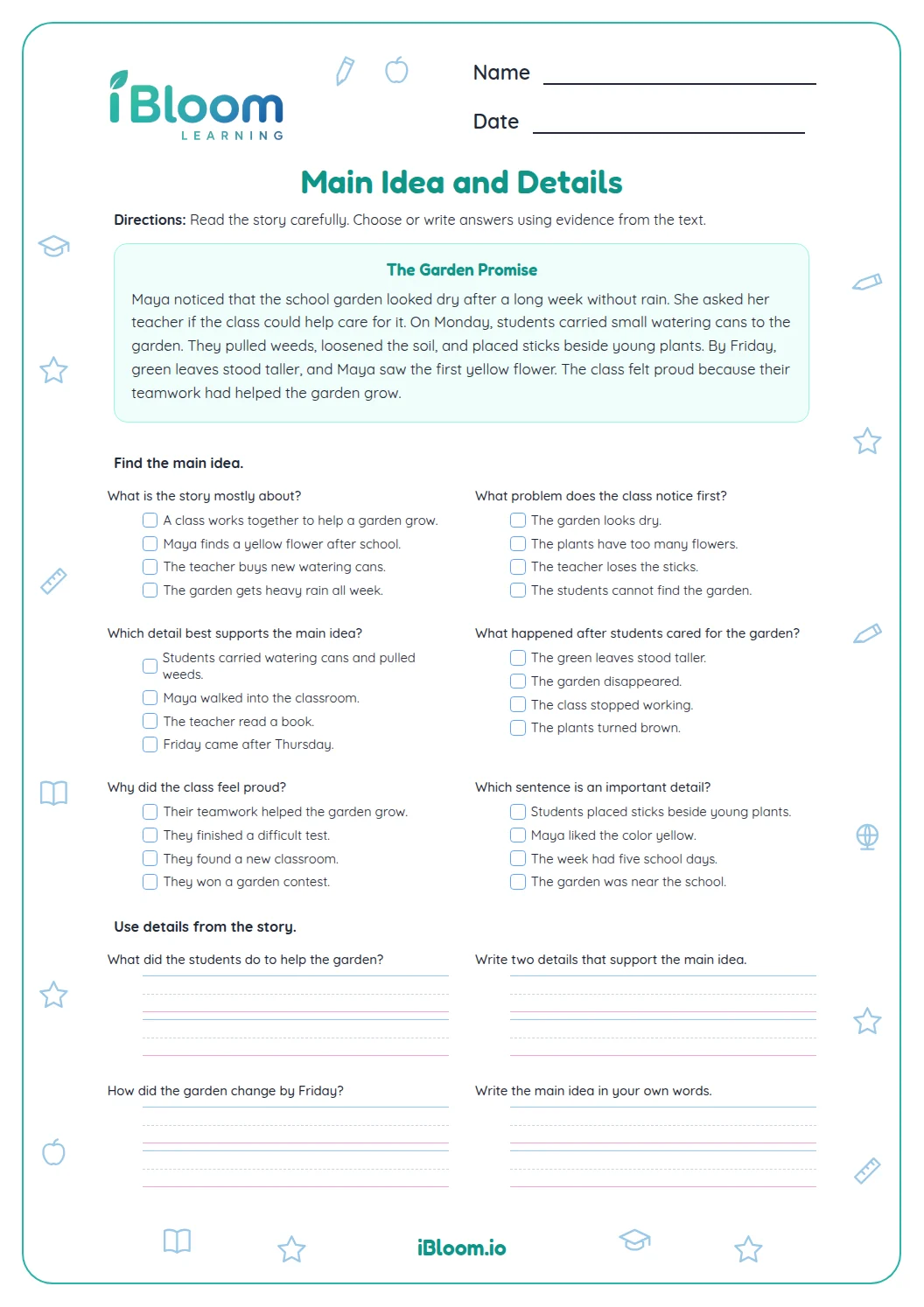 Level S Childrens Story — Main Idea and DetailsGrade 4 students read Level S children’s stories and practise deeper comprehension through evidence-based questions, vocabulary work, and short written responses. This main idea and details worksheet provides a distinct, age-appropriate way to practise the same lesson.Grade 4Free PDF preview
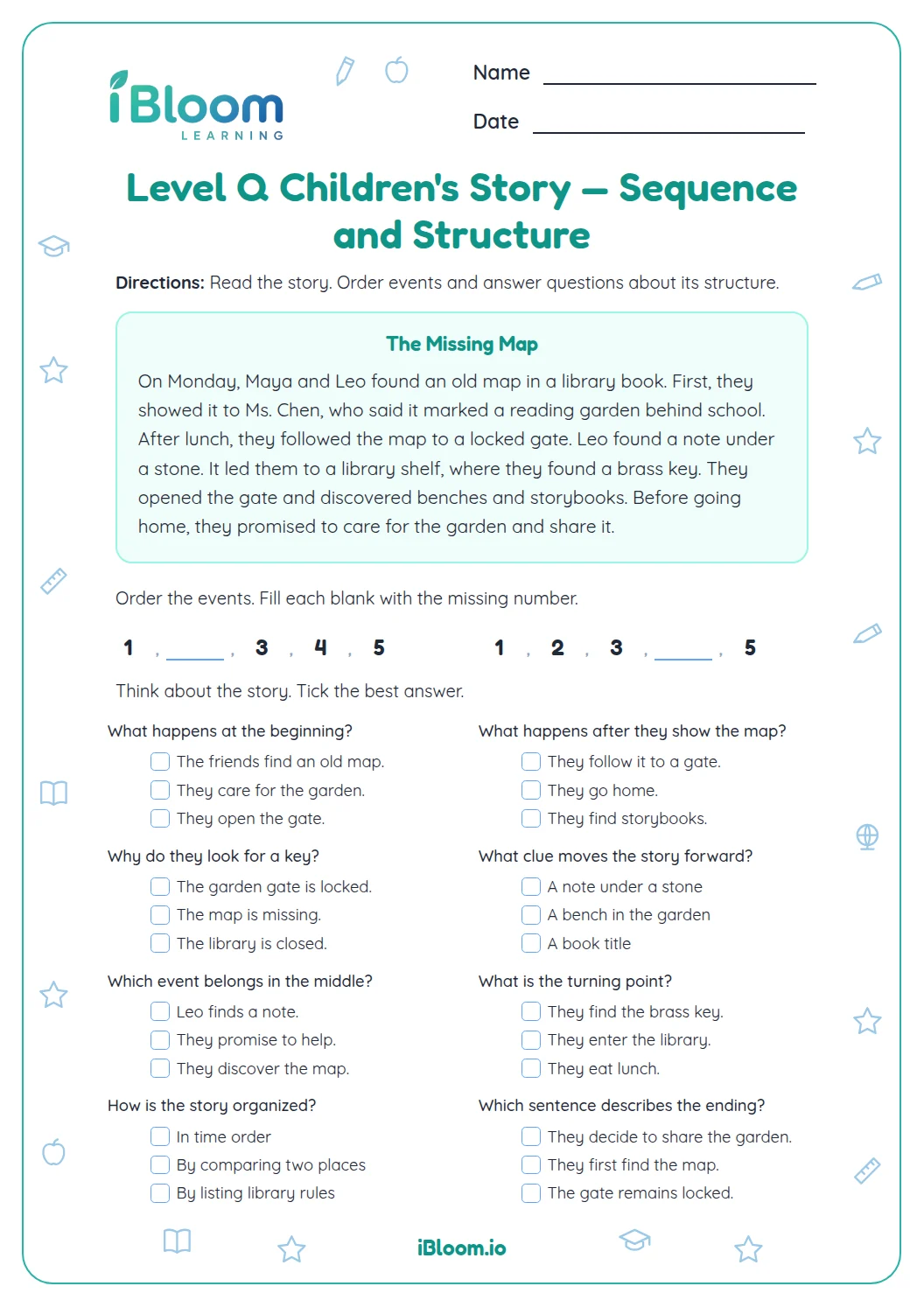 Level Q Childrens Story — Sequence and StructureGrade 4 Level Q children’s story worksheets help students read longer fiction, track plot and character motives, and answer evidence-based questions. This sequence and structure worksheet provides a distinct, age-appropriate way to practise the same lesson.Grade 4Free PDF preview
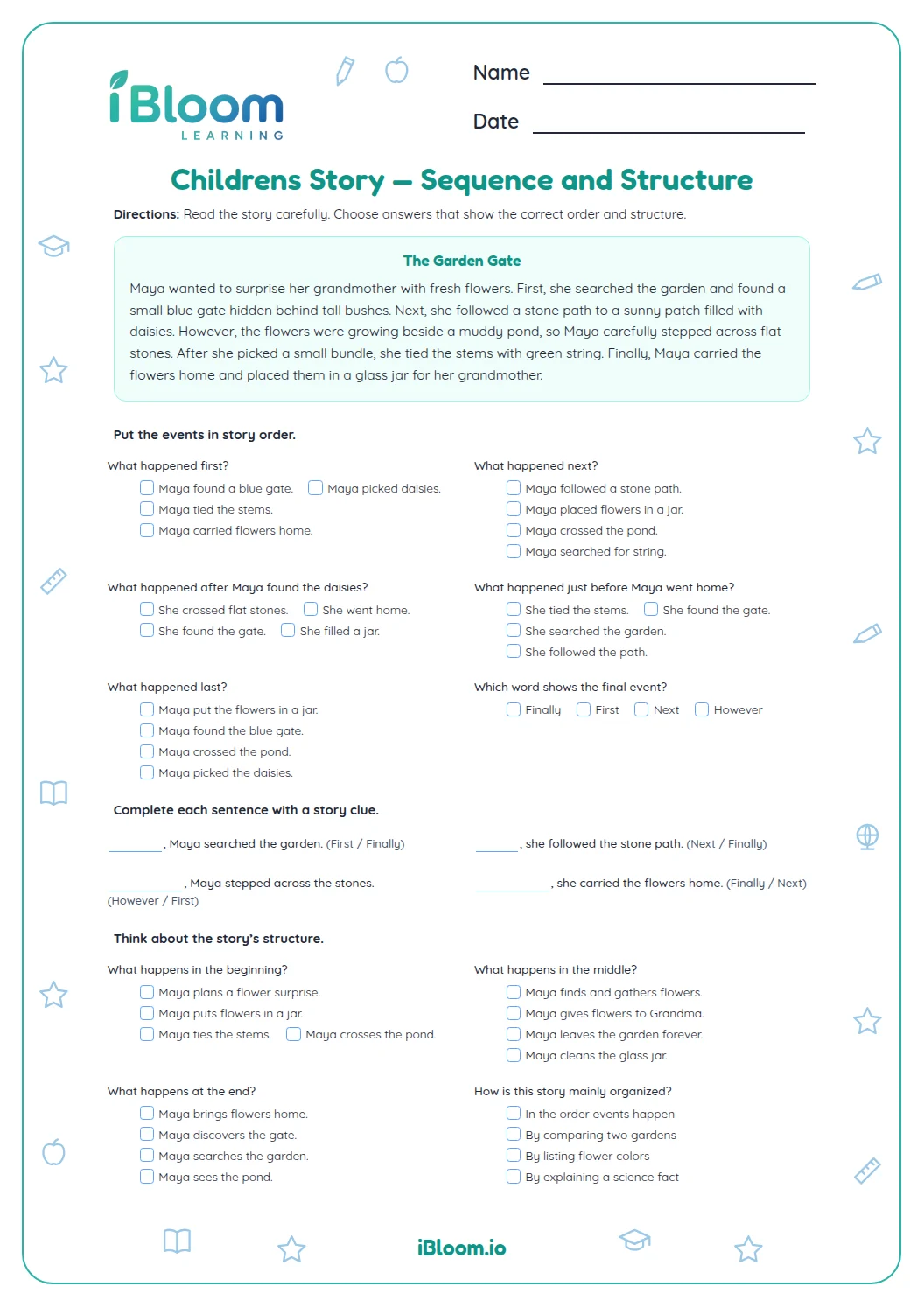 Level R Childrens Story — Sequence and StructureGrade 4 Level R children’s story worksheets help students read longer fiction, infer meaning, track plot events, and support answers with text evidence. This sequence and structure worksheet provides a distinct, age-appropriate way to practise the same lesson.Grade 4Free PDF preview
 Level S Childrens Story — Sequence and StructureGrade 4 students read Level S children’s stories and practise deeper comprehension through evidence-based questions, vocabulary work, and short written responses. This sequence and structure worksheet provides a distinct, age-appropriate way to practise the same lesson.Grade 4Free PDF preview
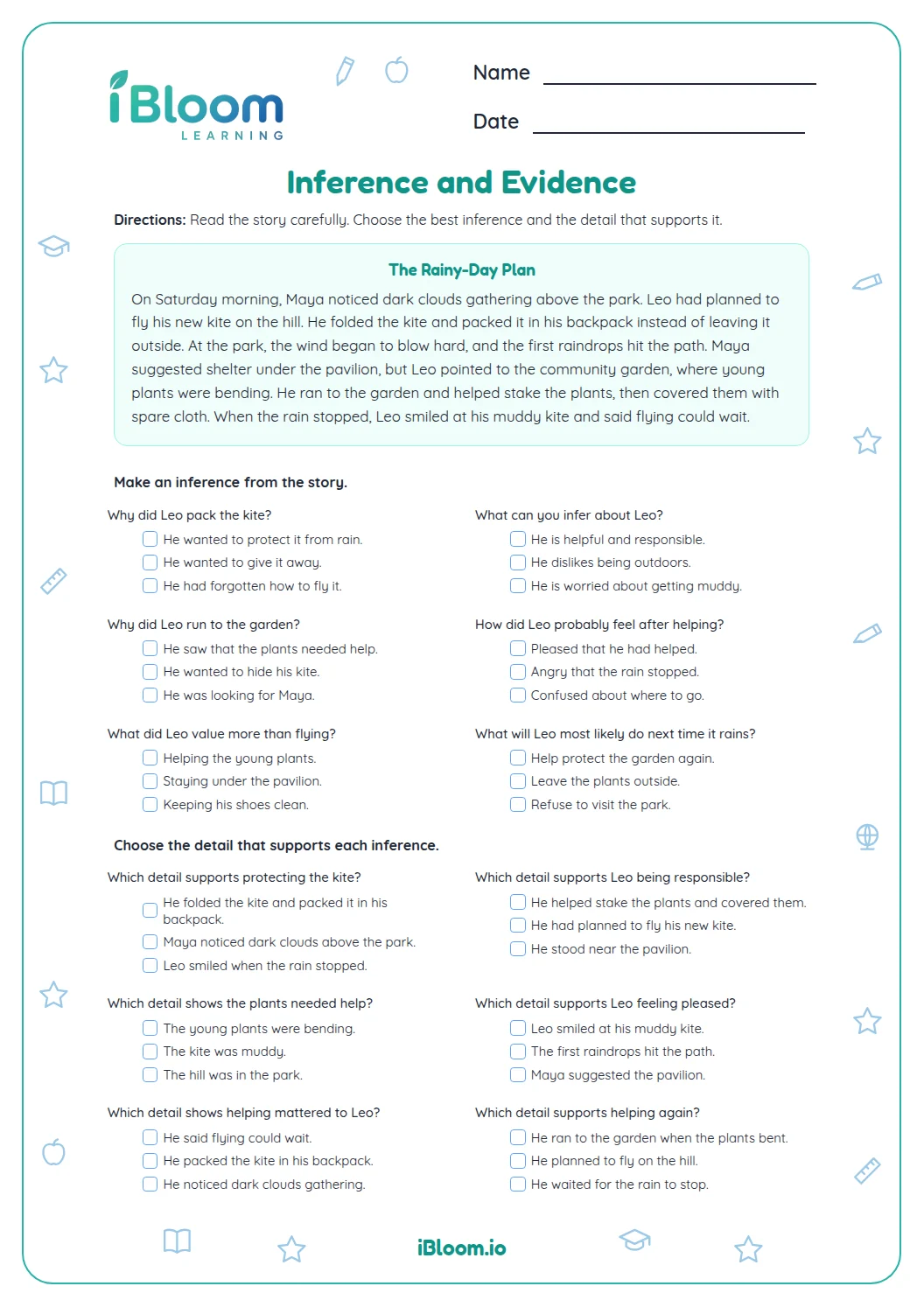 Level Q Childrens Story — Inference and EvidenceGrade 4 Level Q children’s story worksheets help students read longer fiction, track plot and character motives, and answer evidence-based questions. This inference and evidence worksheet provides a distinct, age-appropriate way to practise the same lesson.Grade 4Free PDF preview8 pages
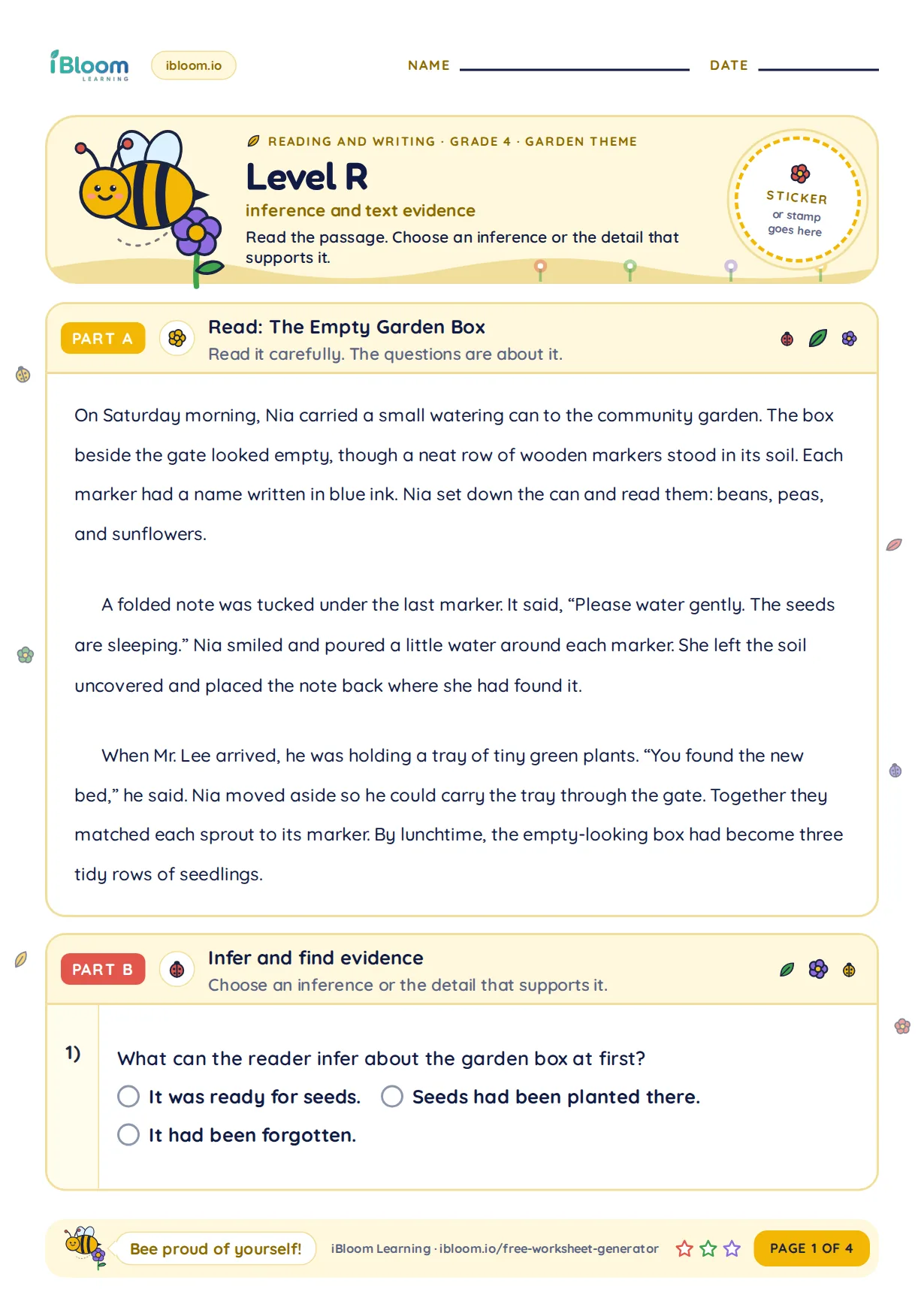 Level R Childrens Story — Inference and EvidenceGrade 4 Level R children’s story worksheets help students read longer fiction, infer meaning, track plot events, and support answers with text evidence. This inference and evidence worksheet provides a distinct, age-appropriate way to practise the same lesson.Grade 4Free PDF preview8 pages
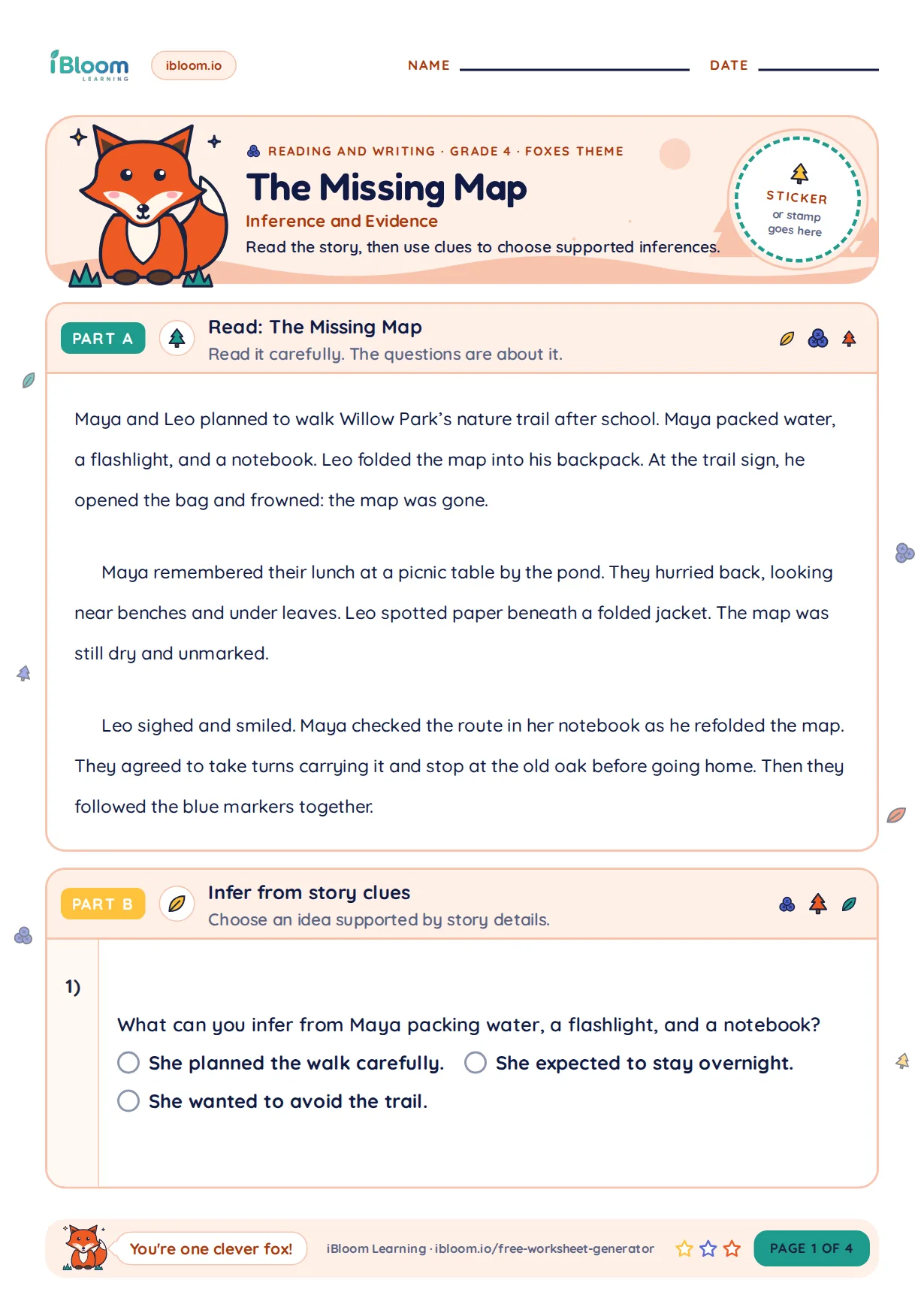 Level S Childrens Story — Inference and EvidenceGrade 4 students read Level S children’s stories and practise deeper comprehension through evidence-based questions, vocabulary work, and short written responses. This inference and evidence worksheet provides a distinct, age-appropriate way to practise the same lesson.Grade 4Free PDF preview
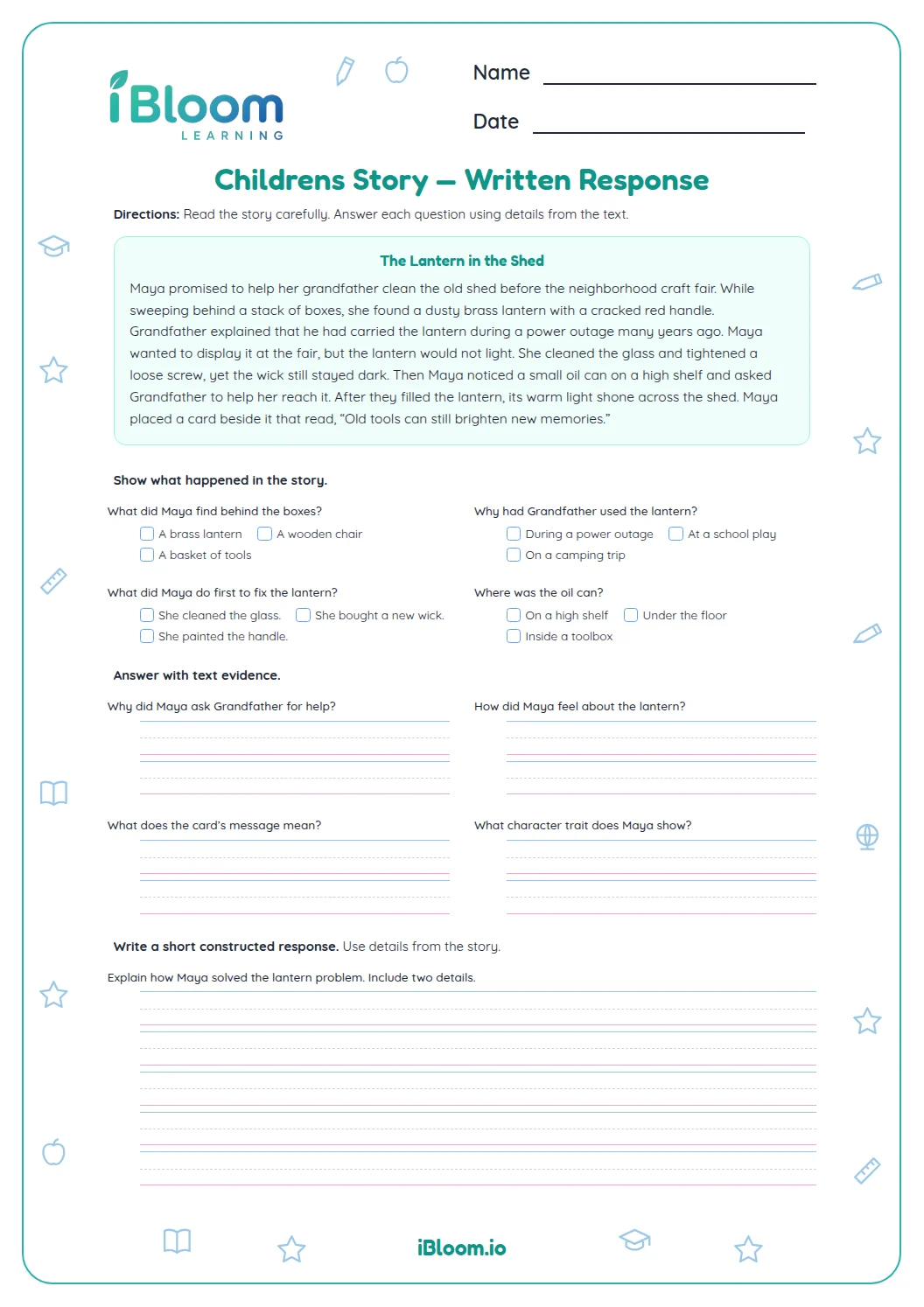 Level Q Childrens Story — Written ResponseGrade 4 Level Q children’s story worksheets help students read longer fiction, track plot and character motives, and answer evidence-based questions. This written response worksheet provides a distinct, age-appropriate way to practise the same lesson.Grade 4Free PDF preview
 Level R Childrens Story — Written ResponseGrade 4 Level R children’s story worksheets help students read longer fiction, infer meaning, track plot events, and support answers with text evidence. This written response worksheet provides a distinct, age-appropriate way to practise the same lesson.Grade 4Free PDF preview10 pages
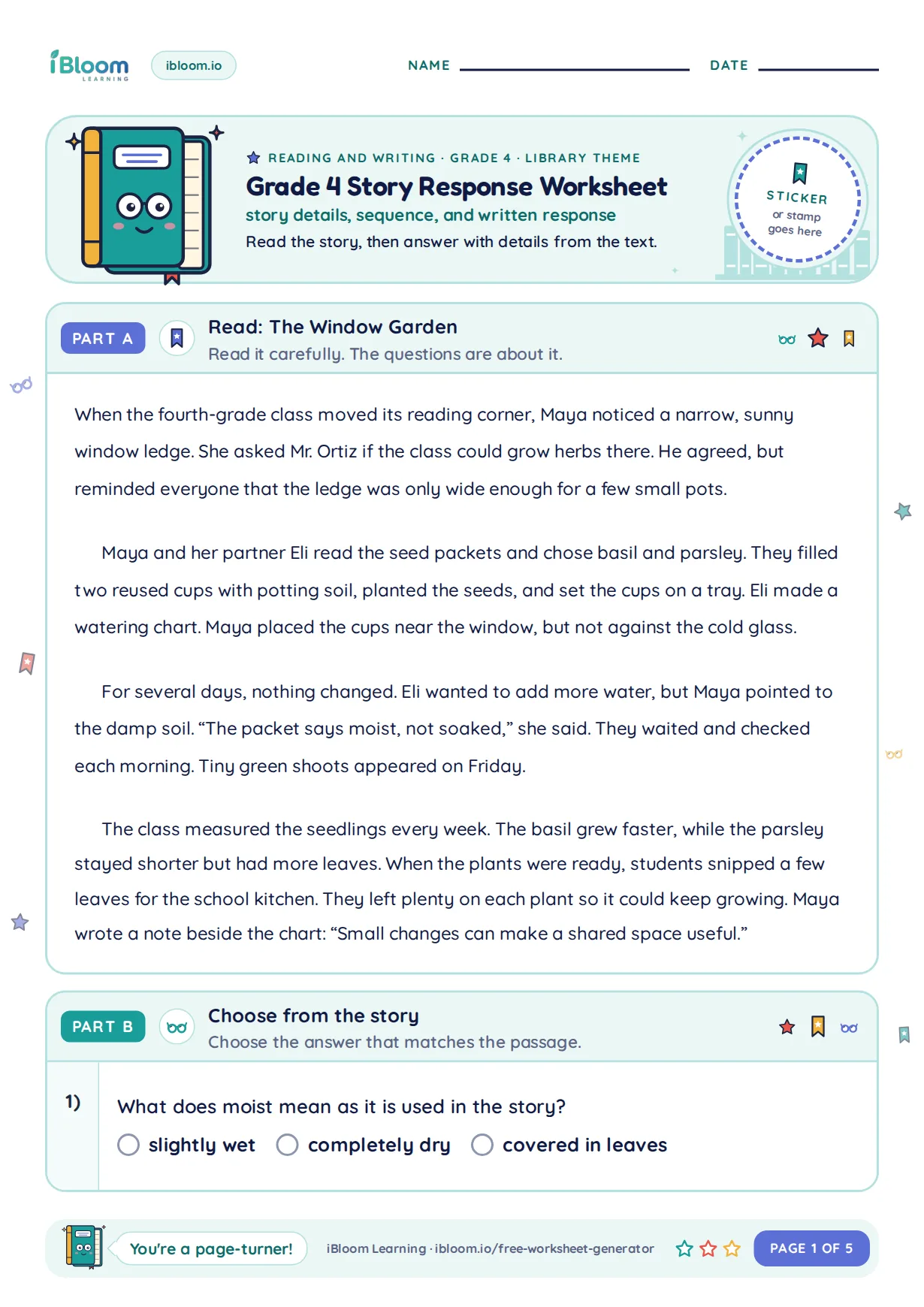 Level S Childrens Story — Written ResponseGrade 4 students read Level S children’s stories and practise deeper comprehension through evidence-based questions, vocabulary work, and short written responses. This written response worksheet provides a distinct, age-appropriate way to practise the same lesson.Grade 4Free PDF preview
 Level Q Childrens Story — Mixed Comprehension ChallengeGrade 4 Level Q children’s story worksheets help students read longer fiction, track plot and character motives, and answer evidence-based questions. This mixed comprehension challenge worksheet provides a distinct, age-appropriate way to practise the same lesson.Grade 4Free PDF preview4 pages
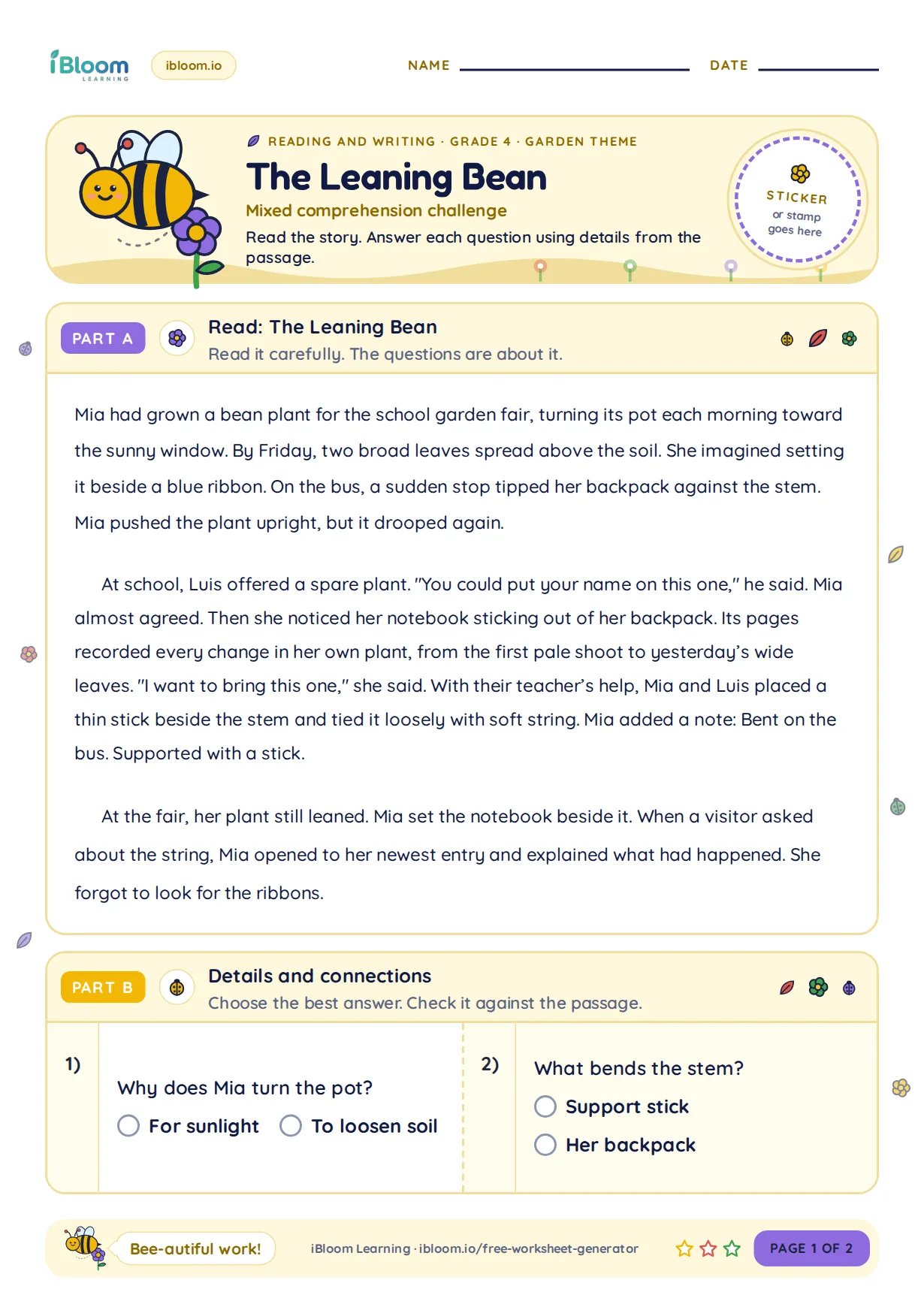 Level R Childrens Story — Mixed Comprehension ChallengeGrade 4 Level R children’s story worksheets help students read longer fiction, infer meaning, track plot events, and support answers with text evidence. This mixed comprehension challenge worksheet provides a distinct, age-appropriate way to practise the same lesson.Grade 4Free PDF preview
 Level S Childrens Story — Mixed Comprehension ChallengeGrade 4 students read Level S children’s stories and practise deeper comprehension through evidence-based questions, vocabulary work, and short written responses. This mixed comprehension challenge worksheet provides a distinct, age-appropriate way to practise the same lesson.Grade 4Free PDF preview
Practice that builds confidence
Reading growth across Levels Q, R, and S
These Grade 4 leveled reading practice activities help children read appropriately challenging children’s stories at Levels Q, R, and S. Students practise understanding plot, character, setting, main idea, vocabulary in context, and details that support an answer.
Each printable worksheet includes a short leveled passage and comprehension tasks that encourage careful rereading. The activities are useful for independent reading, small groups, homework, or extra practice when a child is ready to move through nearby text levels.
Grade 4 readers are often ready for longer sentences, richer vocabulary, and stories with more than one idea to track. Level Q children’s stories give practice with clear story structure and direct evidence. Level R stories may include more character motivation, descriptive language, or shifts in events. Level S stories can ask students to connect details across the whole passage before choosing or writing an answer.

What students practise
The worksheets focus on reading comprehension, not just finishing a passage. Children identify the main problem, notice how a character changes, use context clues for unfamiliar words, and return to the text to find proof. Questions may ask about sequence, cause and effect, theme, inference, or the meaning of a phrase. This helps students move from “I remember” answers to “I can show where the text says it” answers.
A simple parent routine
At home, have your child read the story once for the gist. Then ask, “Who is this mostly about, and what changes?” After the questions, choose one answer and ask your child to underline the sentence or detail that supports it. If a passage feels hard, read one paragraph aloud together, discuss any tricky words, and let your child continue. Keep the focus on explaining thinking, not racing through pages.

Classroom uses
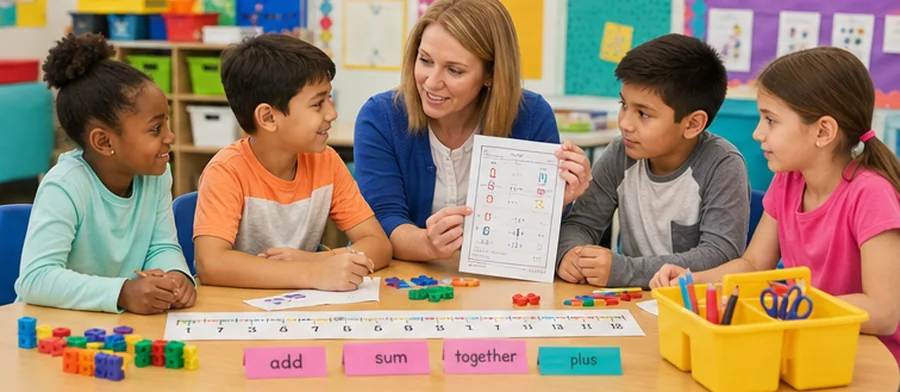
Teachers can use these printables for guided reading groups, reading centers, fluency folders, or quick comprehension checks. Because the child topics include Level Q Children’s Story, Level R Children’s Story, and Level S Children’s Story, it is easy to match practice to a student’s current reading level or provide a nearby challenge. Students can also compare answers with a partner and explain which details helped them decide.
Common errors to watch for
Some Grade 4 readers answer from memory or personal opinion instead of using the passage. Others miss small words that change meaning, such as “although,” “because,” or “before.” Watch for skipped paragraphs, vague written responses, and guesses on vocabulary questions. A helpful child-friendly strategy is: read, think, prove. Read the question, think about the best answer, then prove it with a line from the story.
Free printable PDF download
Use this grade 4 leveled reading worksheet page to preview the activity, print it, or download it as a PDF for quick practice. It works well for homework, homeschool lessons, tutoring, morning work, revision, and classroom centers.
Answers and answer key support
After the child completes the worksheet independently, parents and teachers can use the answer support or answer key information to check the work, review mistakes, and choose the next practice step.
Why iBloom worksheets help
iBloom worksheets keep the passage and questions closely connected, so children practise comprehension in a clear, printable format. The leveled sequence supports steady progress while still giving students real story reading practice with characters, events, vocabulary, and evidence.
Helpful answers
Frequently asked questions
What reading levels are included in this Grade 4 collection?
This collection focuses on Level Q, Level R, and Level S children’s stories, giving Grade 4 readers practice across nearby leveled texts.
What skills do the comprehension questions target?
The questions help students practise main idea, sequence, character actions, inference, vocabulary in context, cause and effect, and using text evidence.
How should I choose between Level Q, R, and S worksheets?
Start with the level your child can read with good accuracy and understanding. Use the next level when your child can explain answers clearly and support them with details from the story.
Can these worksheets be used for guided reading groups?
Yes. Teachers can assign a shared leveled story to a small group, have students answer independently, and then discuss the evidence behind each response.
What should I do if my child reads the story but misses many questions?
Have your child reread the question, locate the matching part of the passage, and underline helpful evidence before answering. This builds the habit of checking the text instead of guessing.
Is this grade 4 leveled reading worksheet free?
Yes. You can preview it for free and use the printable worksheet for home or classroom practice.
Can I download this grade 4 leveled reading worksheet as a PDF?
Yes. Use the worksheet download option to save a printable PDF, or print the worksheet directly from the page.
Does this grade 4 leveled reading worksheet include answers or an answer key?
When the activity has fixed answers, iBloom includes answer support so parents and teachers can check the completed worksheet.