



About this worksheet
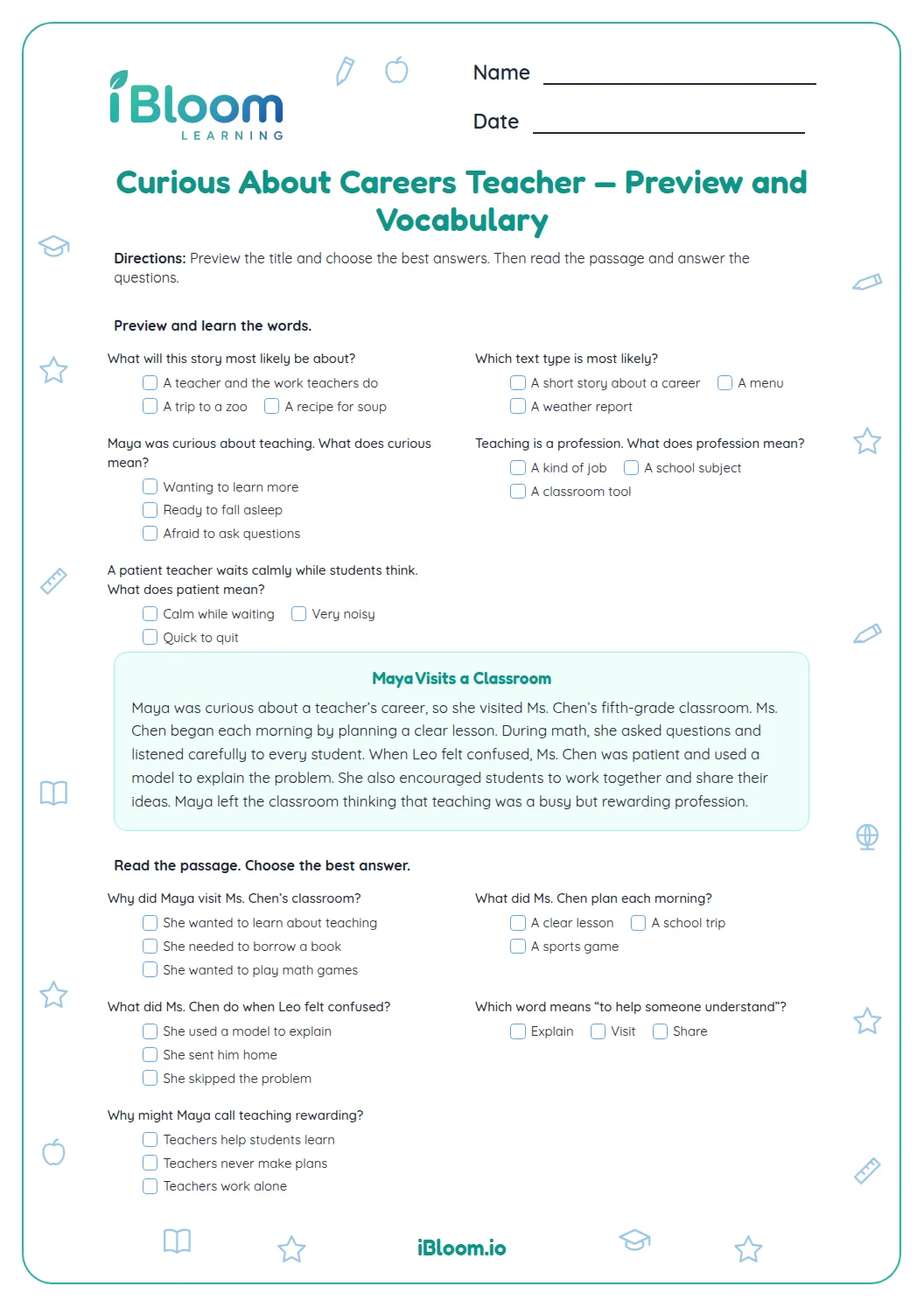
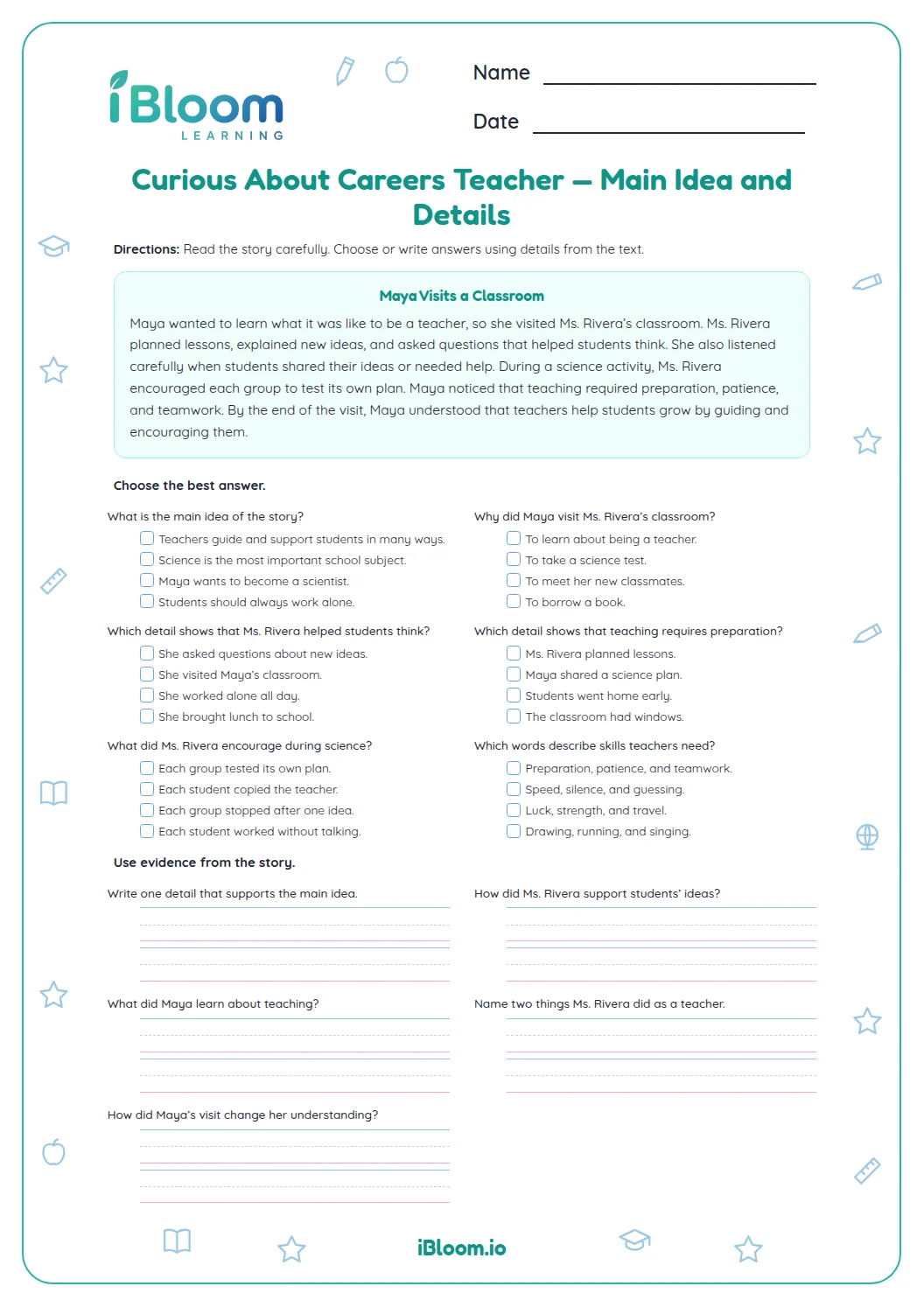
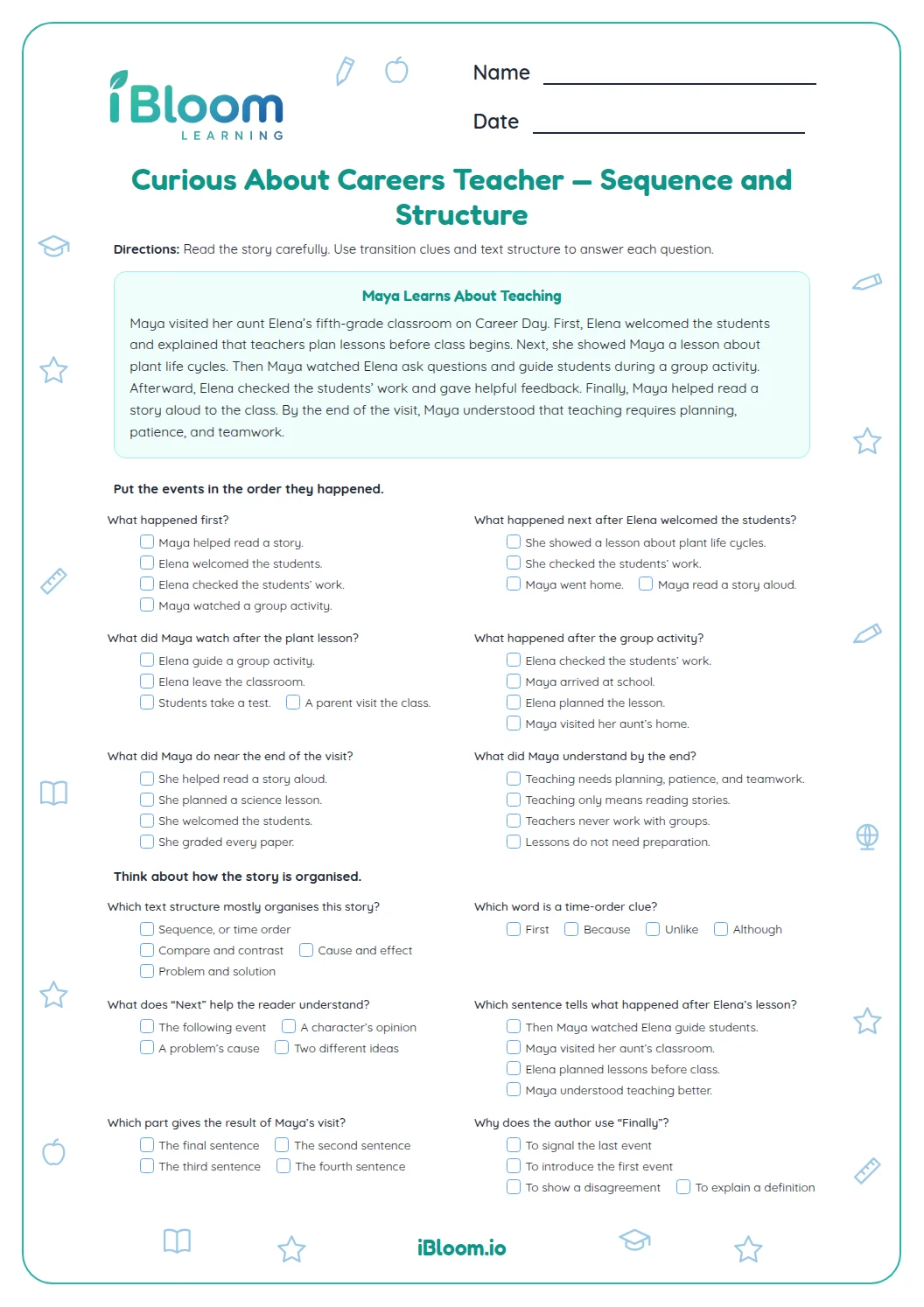
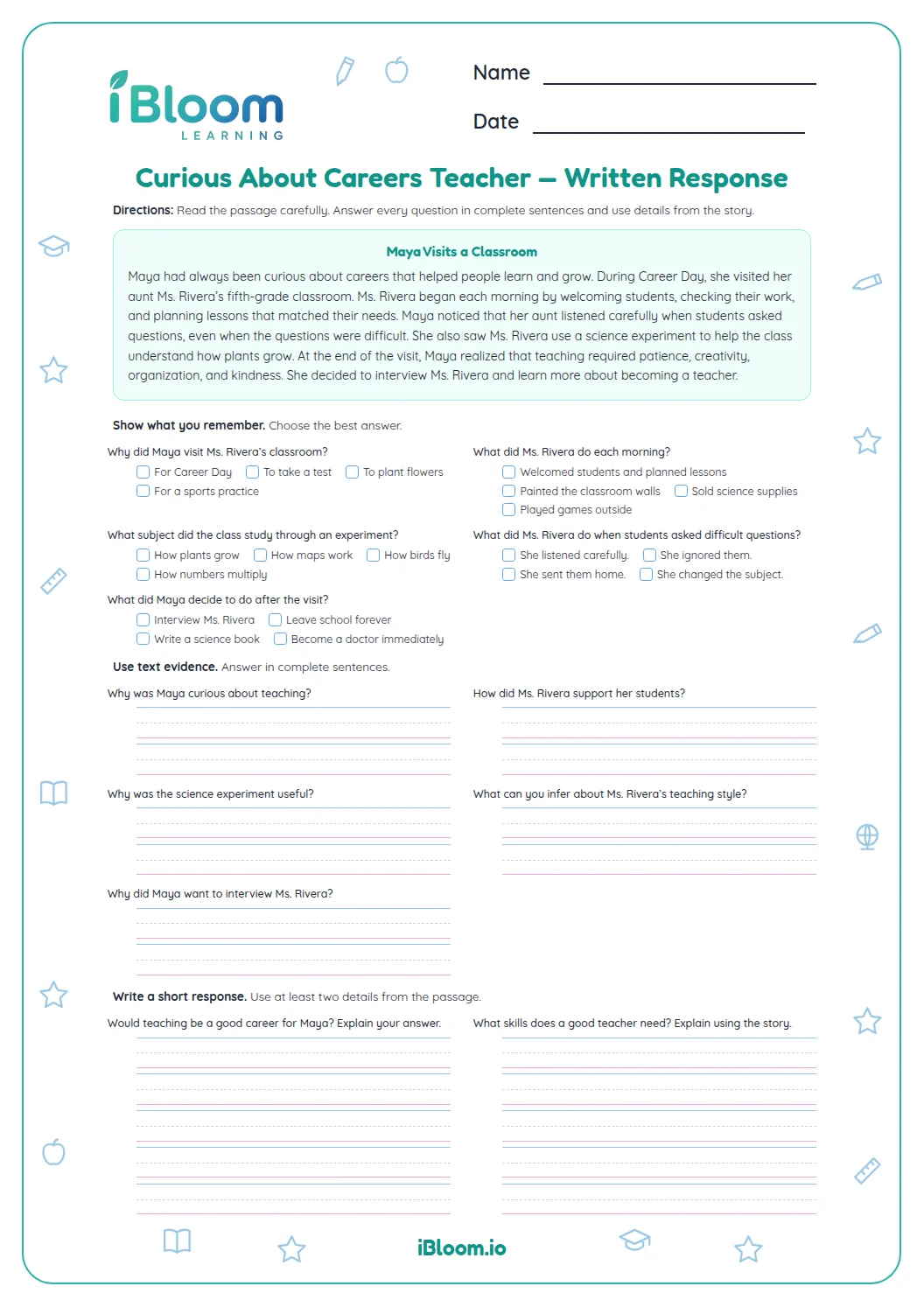
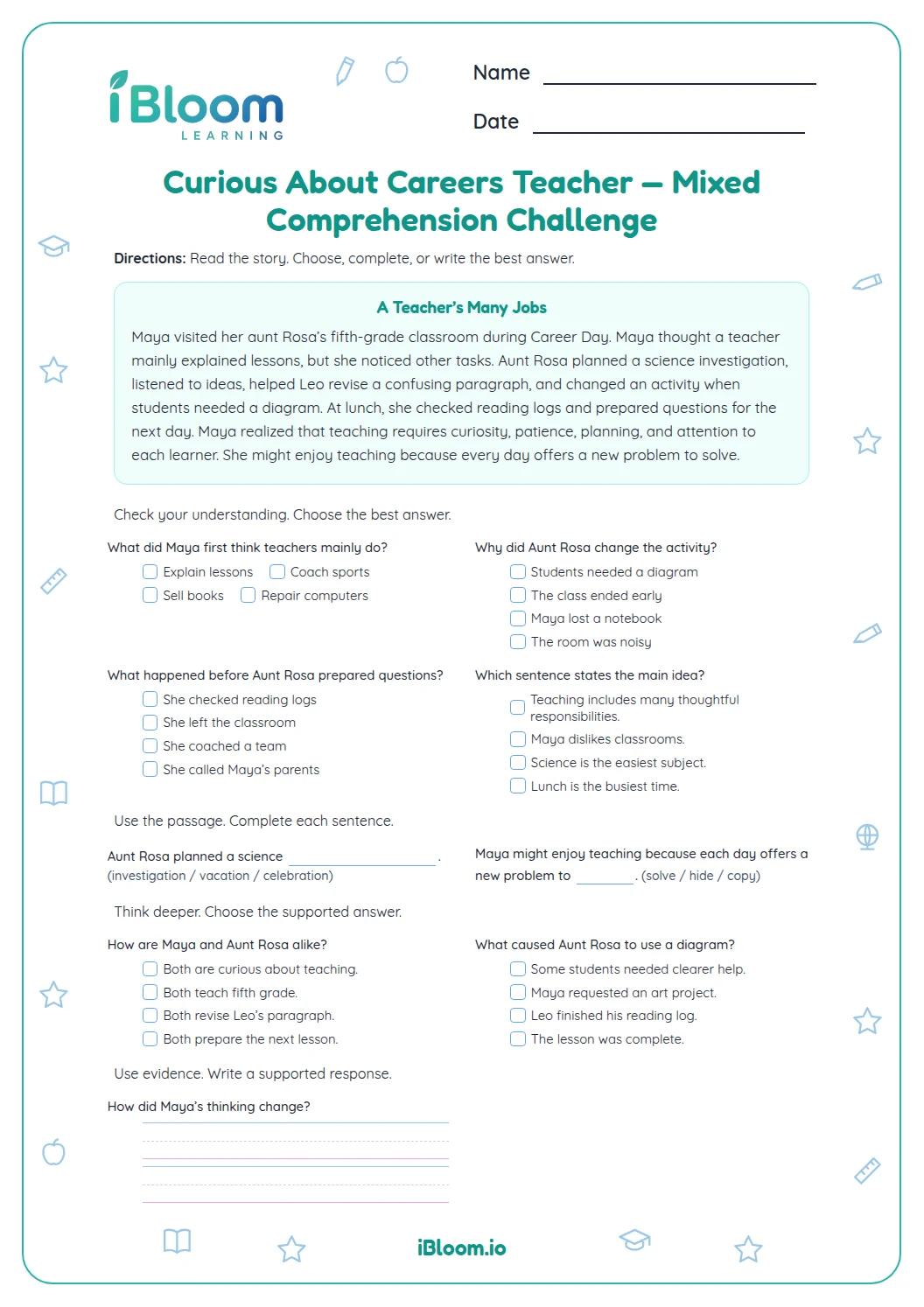
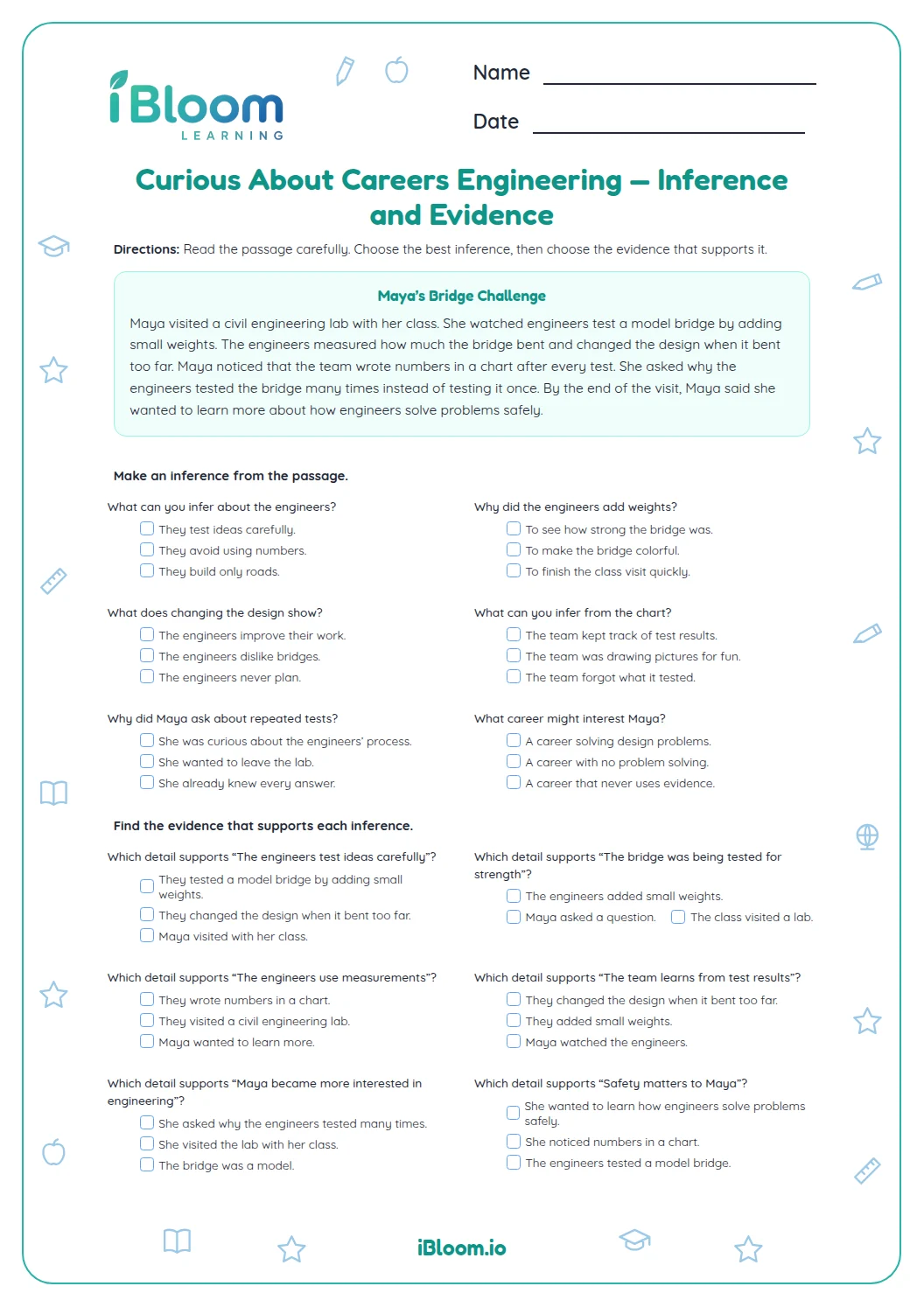
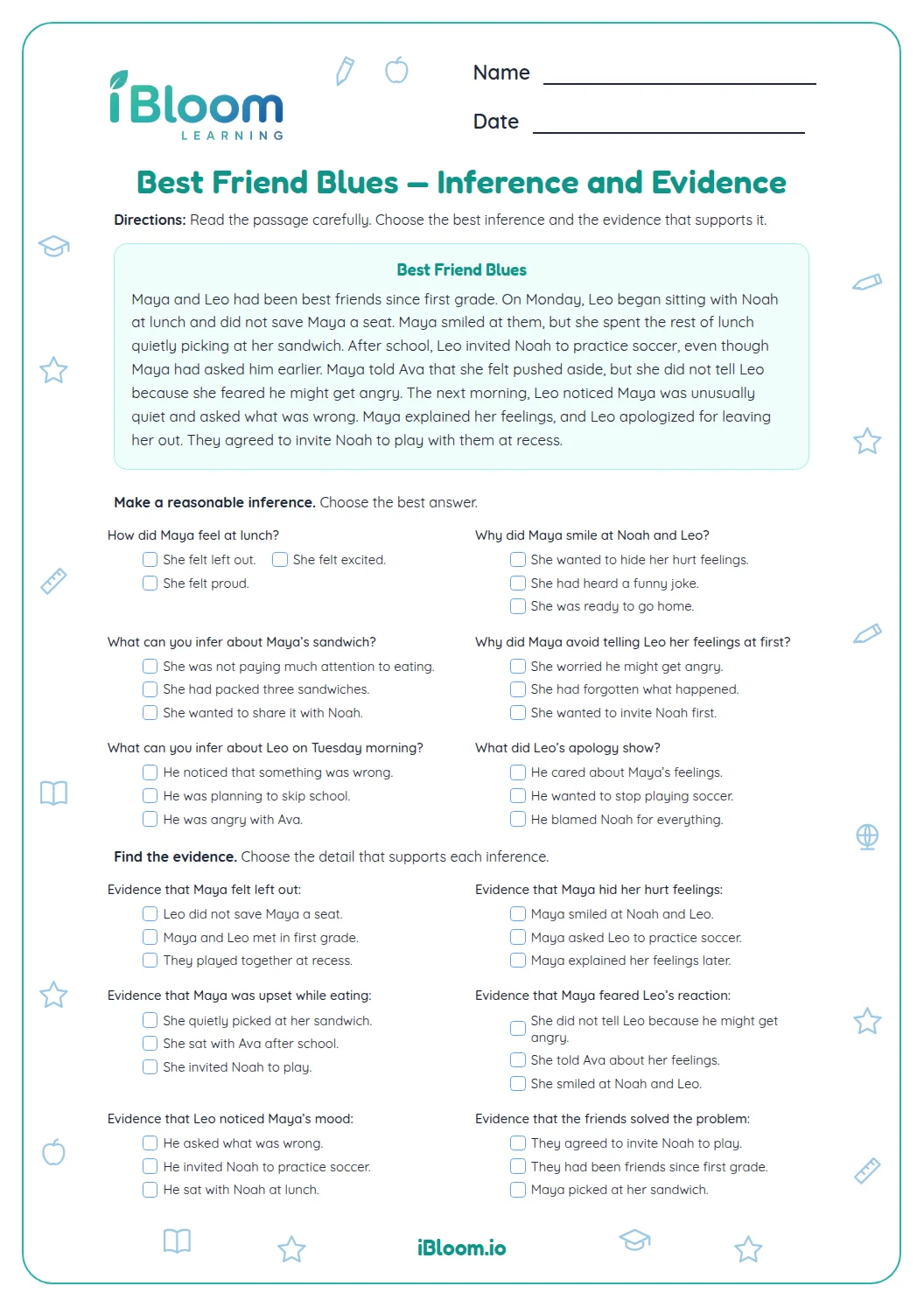
This Grade 5 printable pairs an original Career Week classroom story with 14 questions about inference and text evidence. Maya watches her aunt Elena prepare and teach, then notices how Elena supports Leo during a science task. Learners identify details, draw conclusions, and choose evidence that supports those conclusions. A separate answer key is included. The questions practice Common Core reading standard RL.5.1.
Aligned to RL.5.1
What is an inference?
An inference is a conclusion drawn from details in a text. The author may not state that Elena is patient, but her decision to give Leo one manageable step supports that conclusion.
How do readers support an inference?
Name the idea, then point to the story detail that makes it reasonable. A detail should directly connect to the conclusion, rather than merely occur in the same scene.
- 1Idea: Elena is patient.
- 2Story detail: She gives Leo one smaller step to try.
- 3Connection: She supports his effort instead of taking over.
- 4Answer: She is patient.
What happens in the Career Week story?
Maya visits her aunt Elena’s fifth-grade classroom. Elena prepares materials, listens to students, and helps Leo continue a science task by offering a smaller step. At the end of the day, Maya notices Elena is tired but still smiling.
What does the question set ask?
The 14 multiple-choice items move from recalling details to making inferences and selecting evidence. The answer key follows the worksheet pages.
Read, infer, and find evidence
- 1Read the passage once to understand what happens.
- 2Reread the paragraph named or suggested by the question.
- 3Decide whether the question asks for a detail or an inference.
- 4Choose the detail that directly supports the idea.
- 5Check each answer against the passage and key.
Common inference mistakes
The mistake
Choosing a detail that is true but does not support the idea.
The fix
Ask how the detail connects to the conclusion.
The mistake
Treating a guess about a character as a fact.
The fix
Find an action or statement in the passage that makes the inference reasonable.
The mistake
Using personal experience instead of the story.
The fix
Return to the passage and select evidence from its events.
Curriculum alignment
Quote accurately and use details to explain ideas and inferences.
On this sheet: Learners select story details that support conclusions about Elena and Leo.
Show the official wordingHide the official wording
Quote accurately from a text when explaining what the text says explicitly and when drawing inferences from the text.
What to practice next
Make more practice
Further reading
Questions parents and teachers ask
What is an inference in reading?
An inference is a conclusion made from details in a text. The story does not directly label Elena patient, but her choice to guide Leo through a smaller step helps readers infer that she is patient and supportive. The questions invite readers to connect each idea to story evidence.
How do readers support an inference with evidence?
First state the idea, then find an event or description that supports it. For example, Elena offers Leo a smaller step and lets him try the next one. That detail supports the inference that she wants him to learn independently.
What does Maya learn about teaching?
At first, Maya thinks teachers mostly talk in front of a class. After watching Elena prepare materials, listen to students, and help Leo work through a task, Maya recognizes that teaching also involves planning and guiding students. She sees the work behind a lesson.
How many questions are on the worksheet?
There are 15 multiple-choice questions about details, inferences, and supporting evidence. They accompany an original classroom story and are followed by a separate answer key. Several questions ask learners to select a story detail that supports an idea about a character.
Which reading standard does this page practice?
Common Core RL.5.1 asks Grade 5 readers to quote accurately from a text when explaining what it says and when drawing inferences. The questions ask learners to connect character conclusions with details from the story, then choose evidence that supports the conclusion.