
About this worksheet
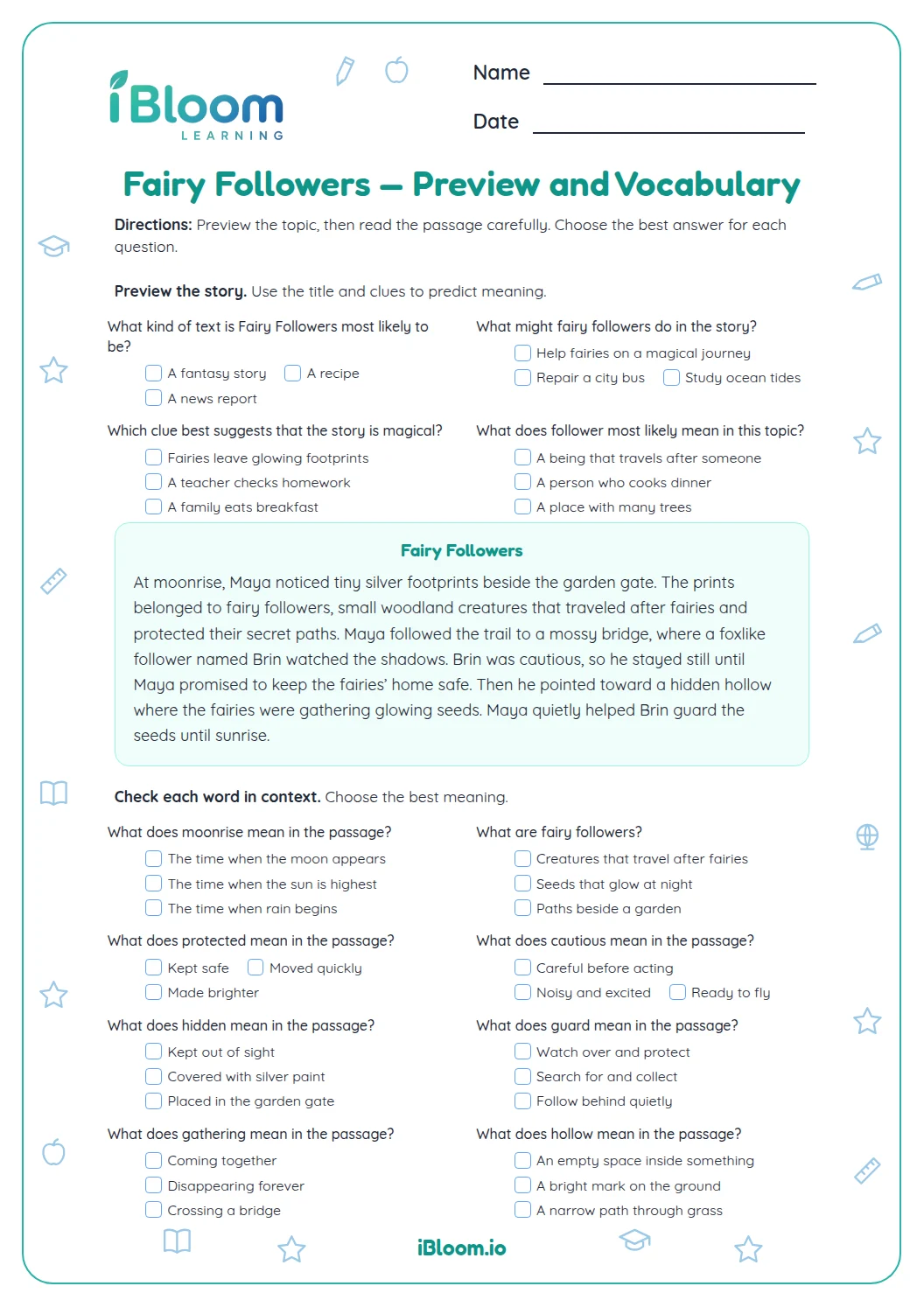
This Grade 5 worksheet follows the established Fairy Followers story: Maya finds a silver bell, meets three fairies, and helps wild moonflowers bloom. Questions ask learners to track what happens first, next, and last and to connect the story’s discovery, clue, and resolution.
How to use this fairy followers worksheet
Read each direction aloud if needed. Encourage the learner to work carefully and check each response with the separate key. The questions begin with a direct example and then ask the learner to apply the same skill independently.
What does the worksheet include?
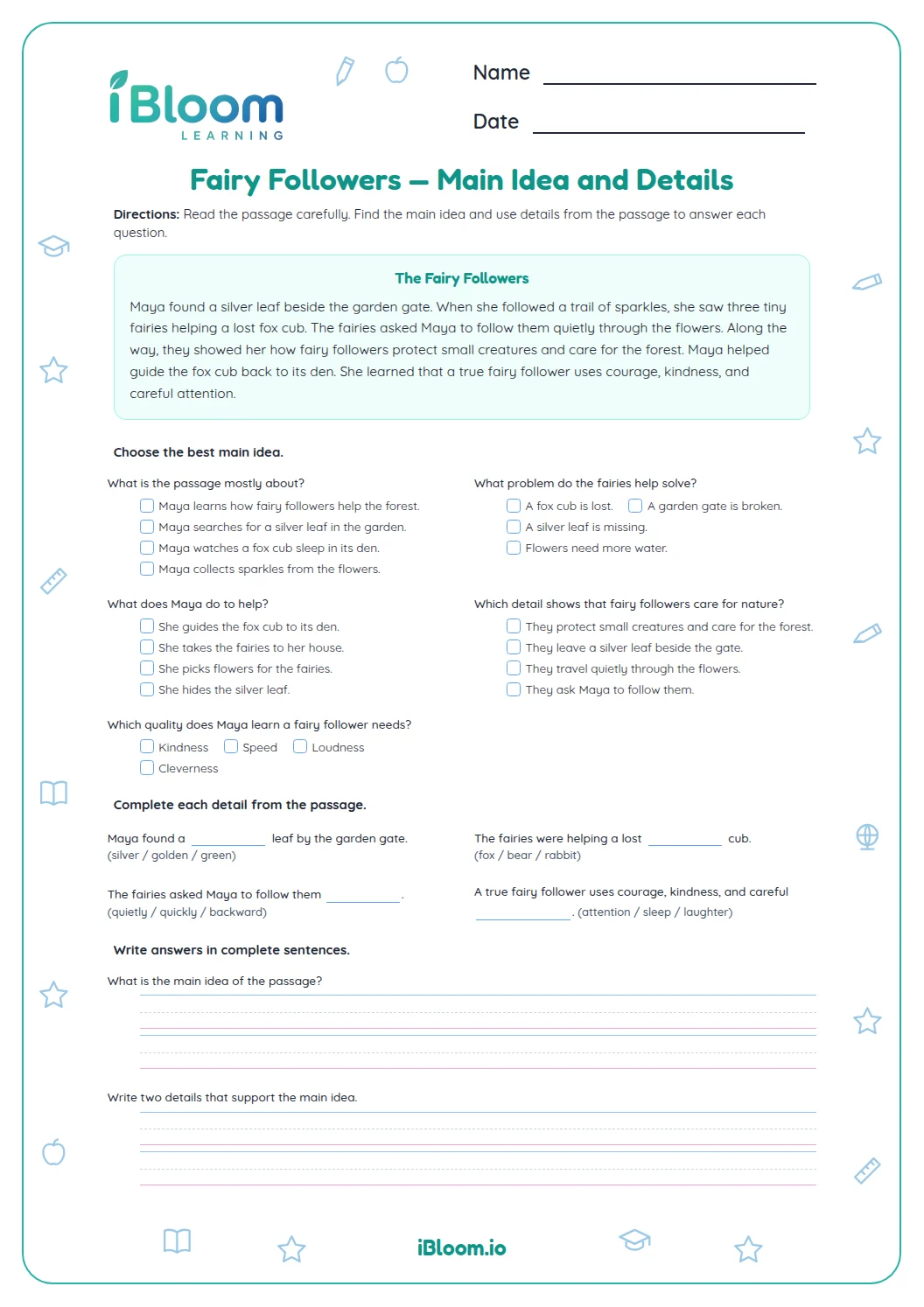
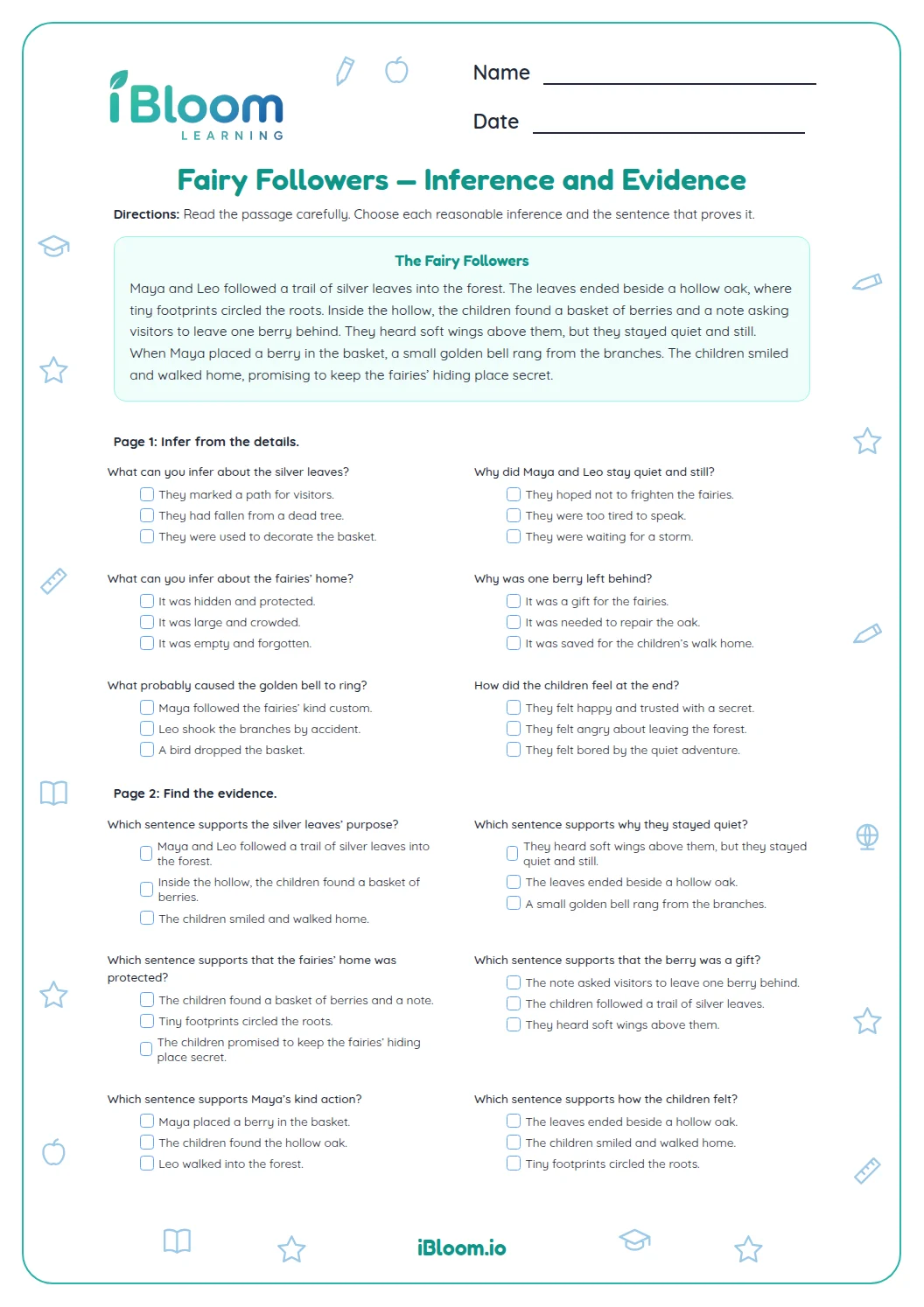
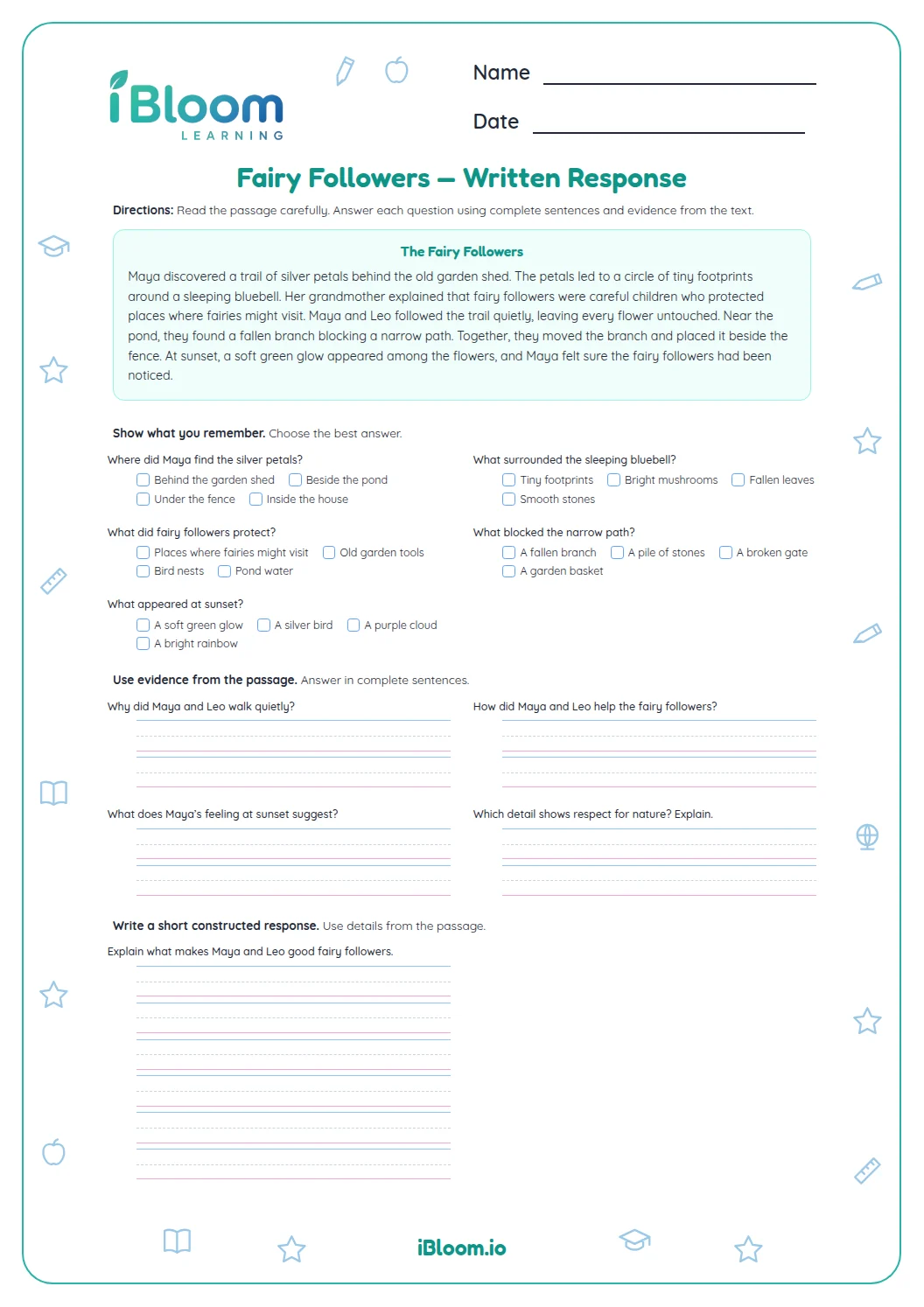
The sheet has 14 questions arranged in short parts. Each part focuses on one way to practice the target skill, so a learner can build confidence while still getting varied examples.
A simple way to practice
- 1Read the whole direction before beginning a part.
- 2Complete one item at a time, using the printed model or drawing when provided.
- 3Review the finished page with the answer key and revisit any response that needs another try.
Helpful reminders
The mistake
Rushing past a direction or model.
The fix
Pause and identify what the question asks before writing or tracing.
The mistake
Stopping after one example.
The fix
Complete every item in the part to practice the full target skill.
What to practice next
Further reading
Questions parents and teachers ask
How long is the story?
The worksheet includes an original passage about Maya, a silver bell, three fairy followers, and moonflowers that need water. Learners can reread the story while answering questions about events and structure. The answer key helps check each response. Learners can point to the exact sentence or event that supports the answer.
How many questions are included?
There are 14 questions after the passage. Eight ask about key events, four complete sequence sentences, and two ask learners to explain story structure using details from Maya’s experience. Check the key after finishing. Learners can point to the exact sentence or event that supports the answer.
Does the worksheet ask students to explain their thinking?
Yes. The final two questions ask learners to connect the flowers’ dry soil with Maya’s response and explain how transition words signal event order. The answer key provides sample responses for these open-ended items. Learners can point to the exact sentence or event that supports the answer.
Can answers use different wording?
The multiple-choice and sequence-completion items have specific expected responses. For the two written explanations, wording can vary if it accurately explains the cause and event order described in the passage. The key offers models. Learners can point to the exact sentence or event that supports the answer.
What is a good way to find an event’s place in the story?
Look for sequence clues such as “First,” “Next,” and “Finally,” then reread the surrounding sentences. These words help place an event in relation to what came before and after it. Check your choices against the passage. Learners can point to the exact sentence or event that supports the answer.