



About this worksheet
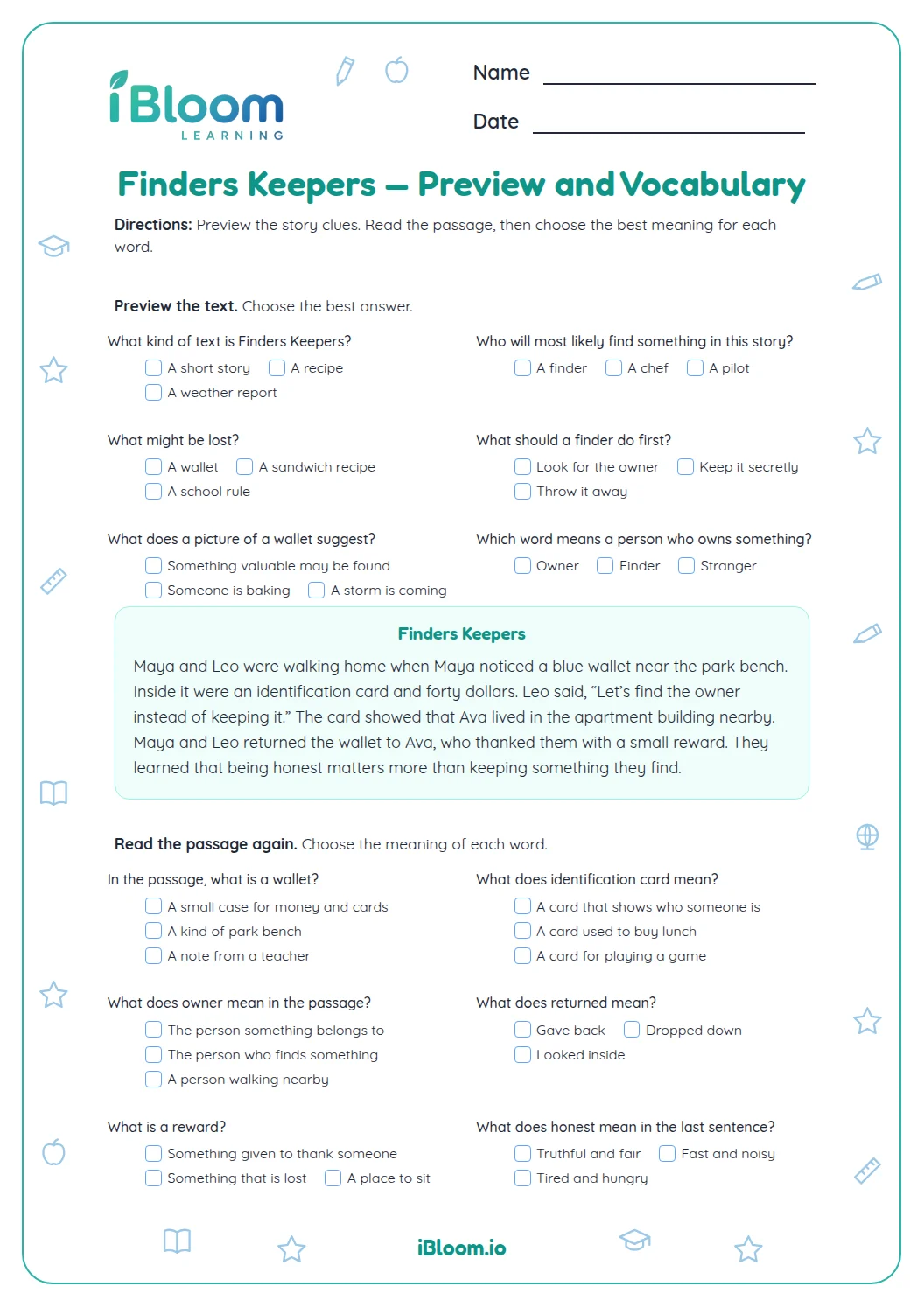
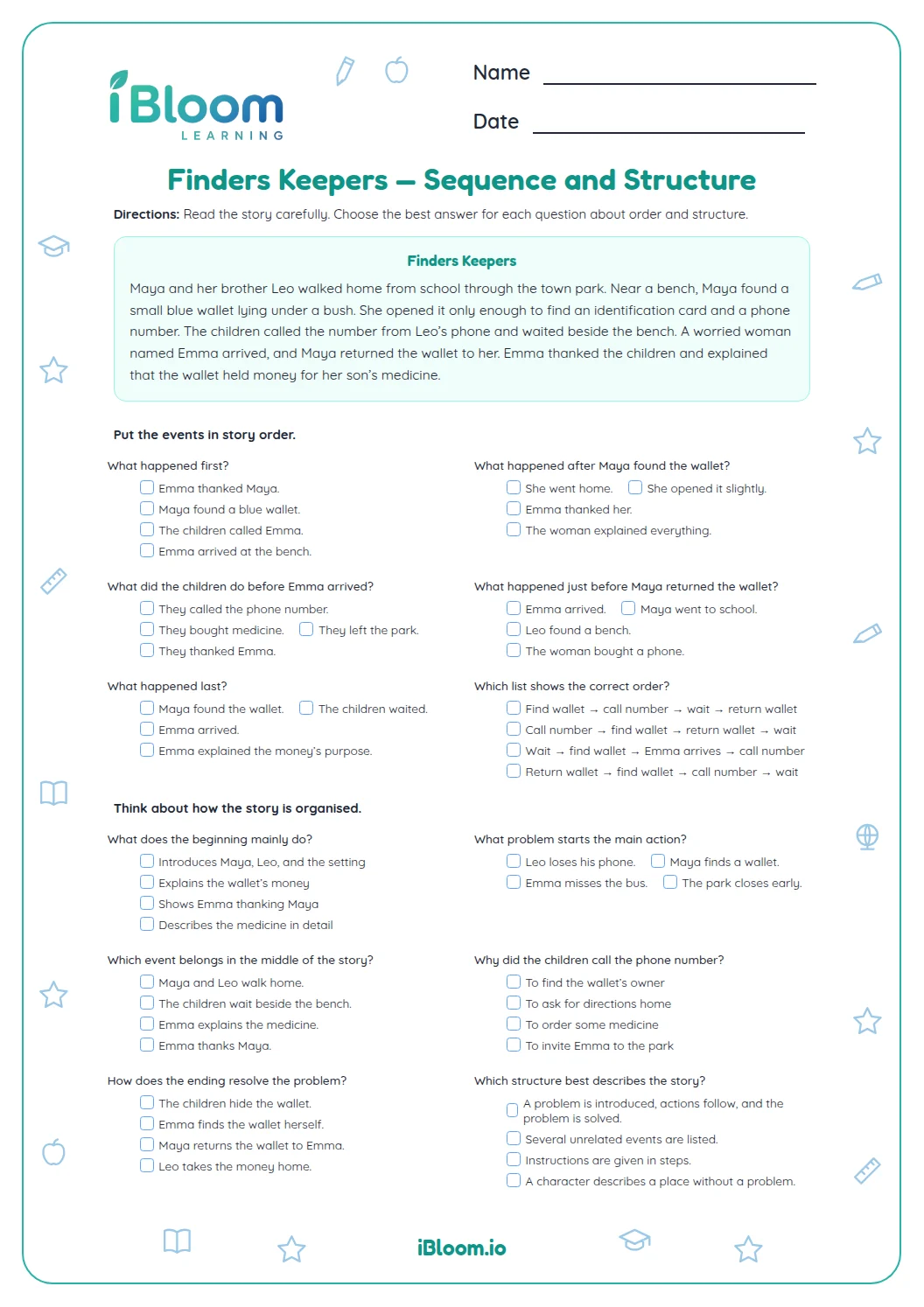
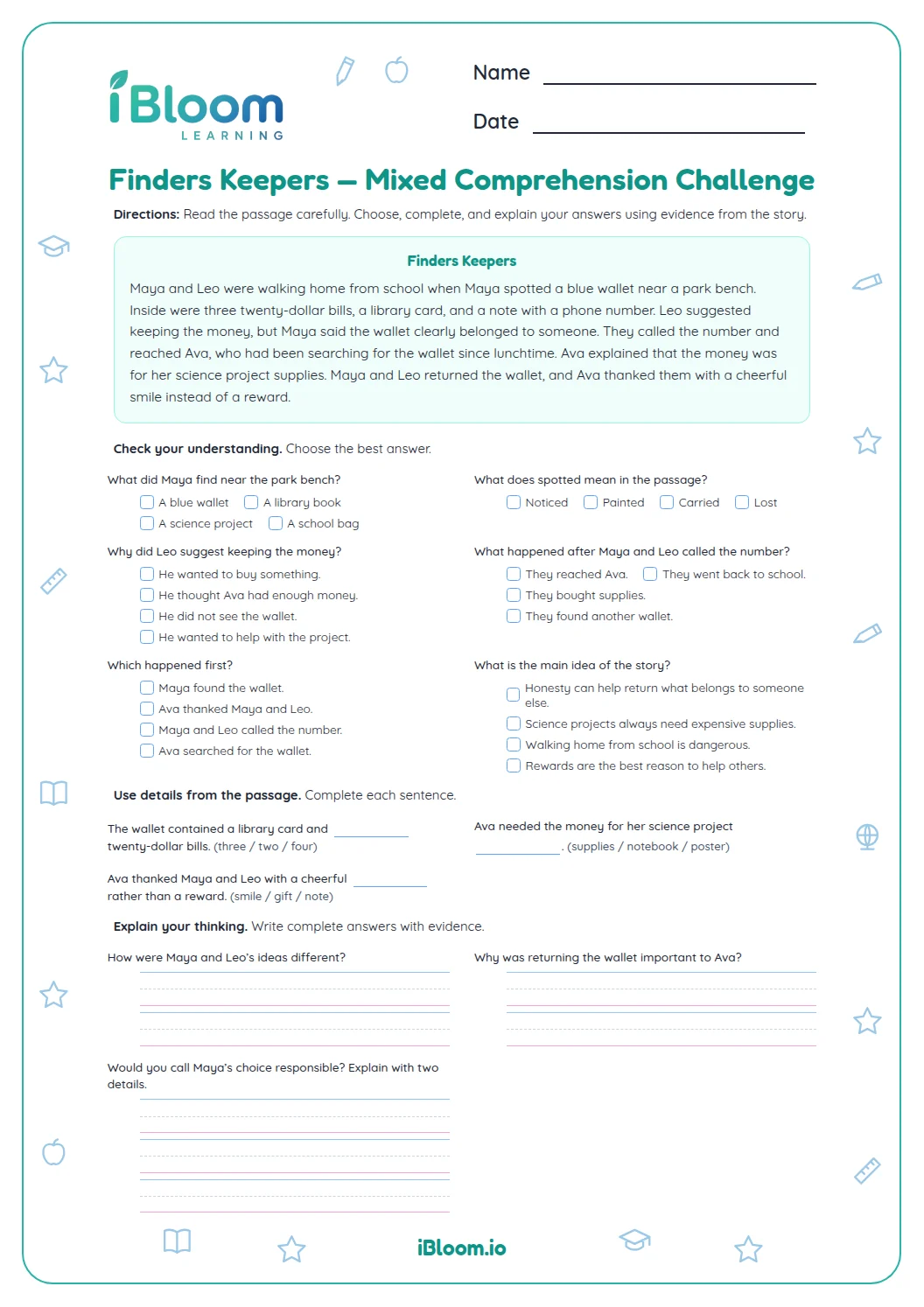
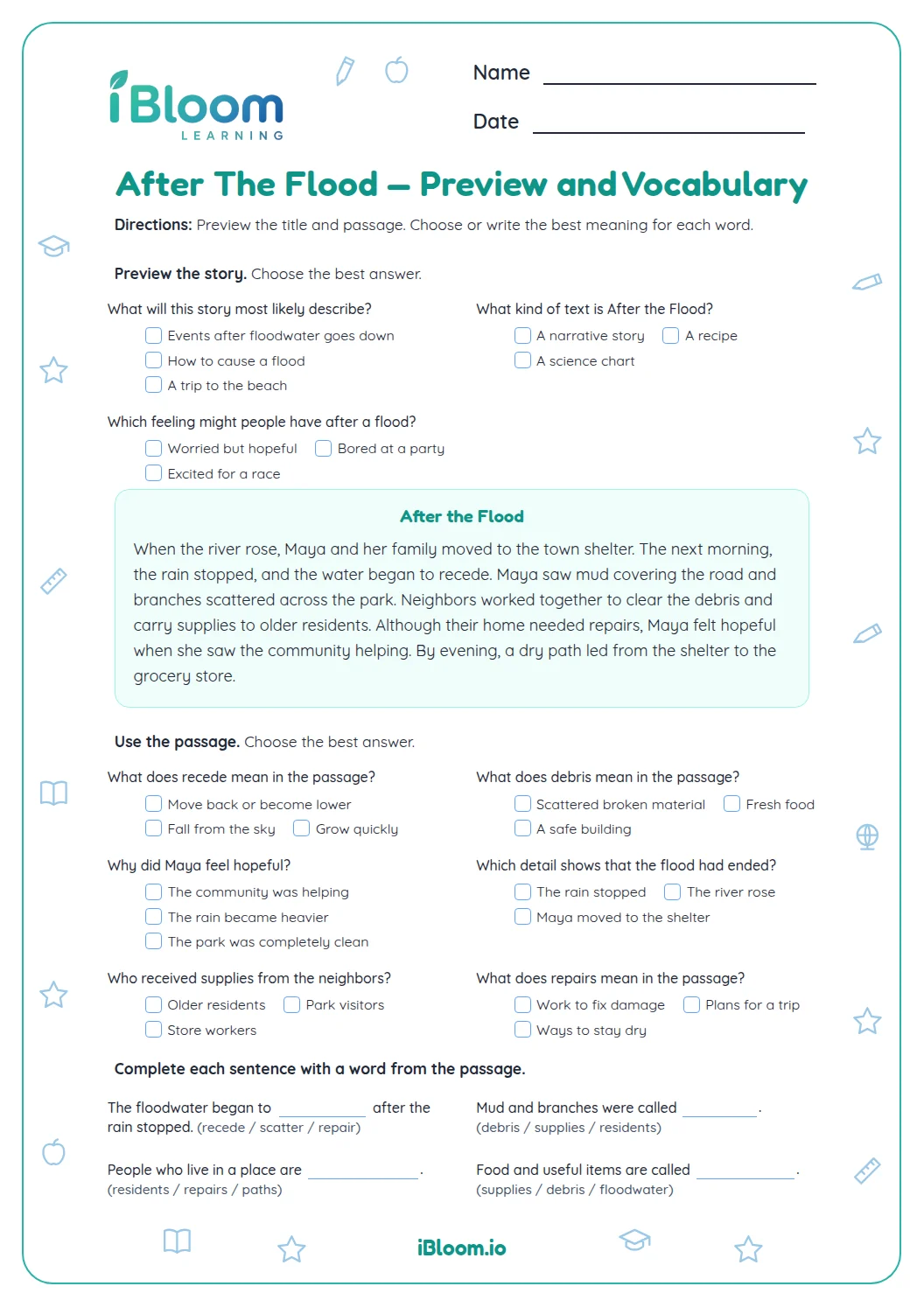
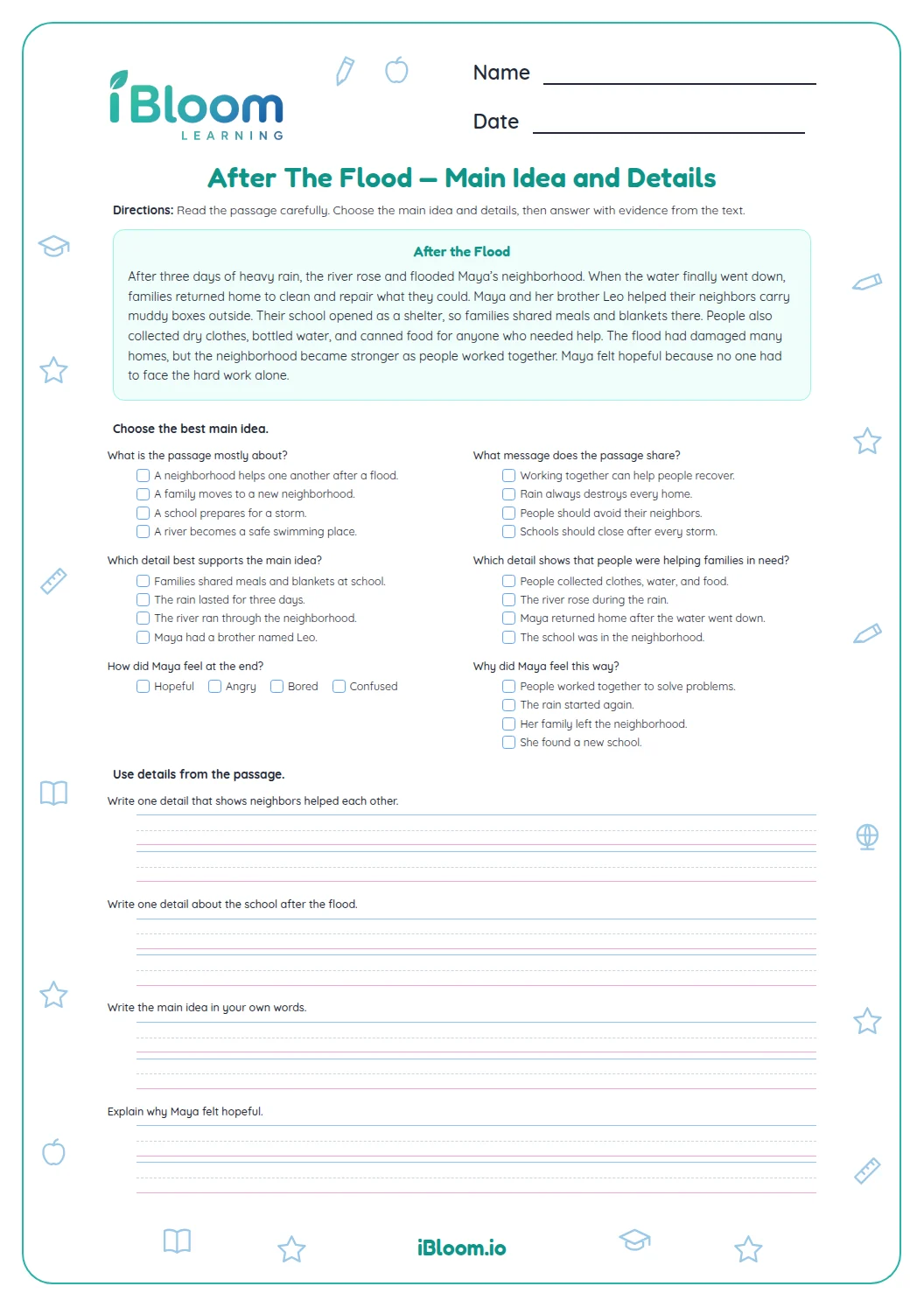
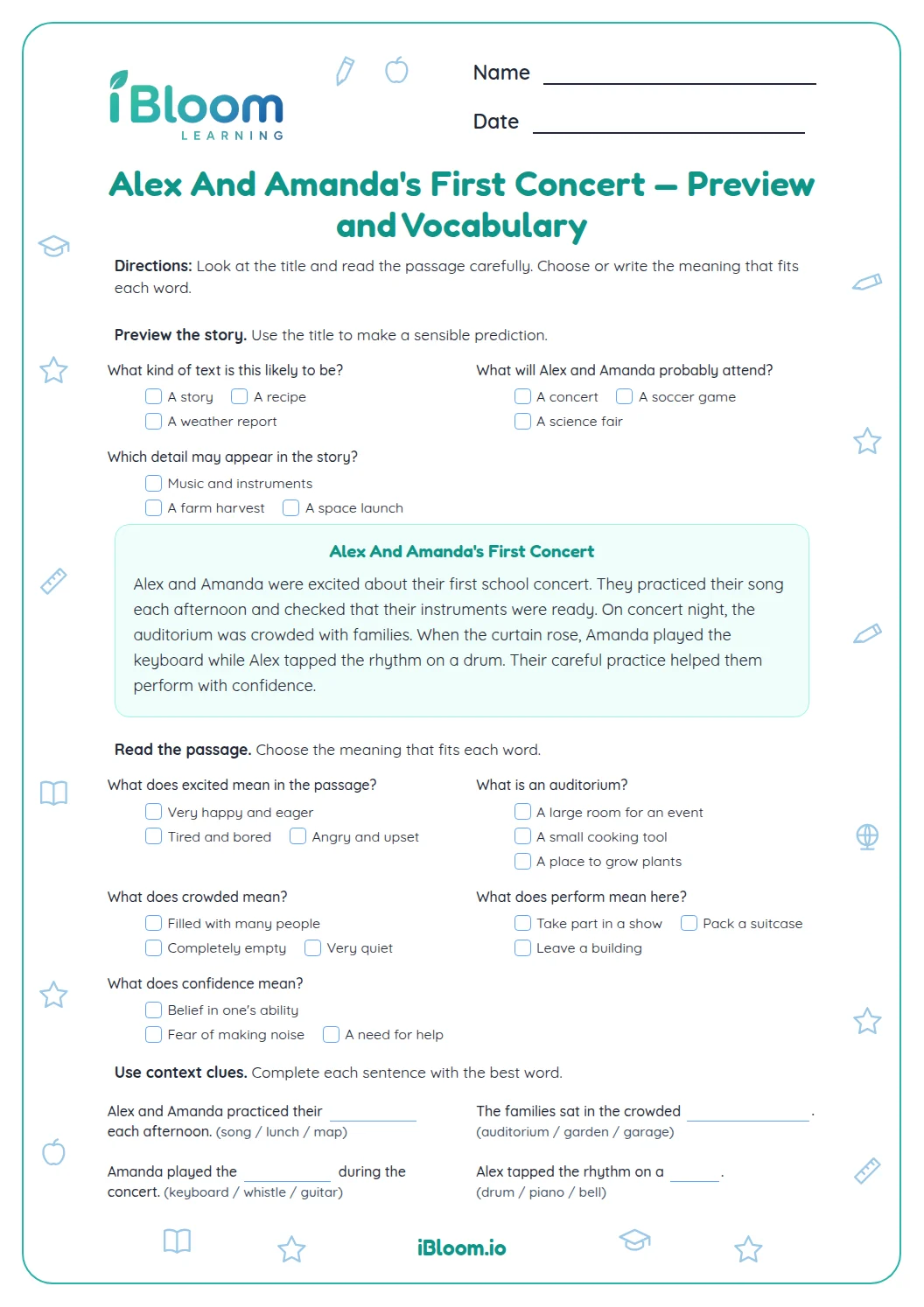
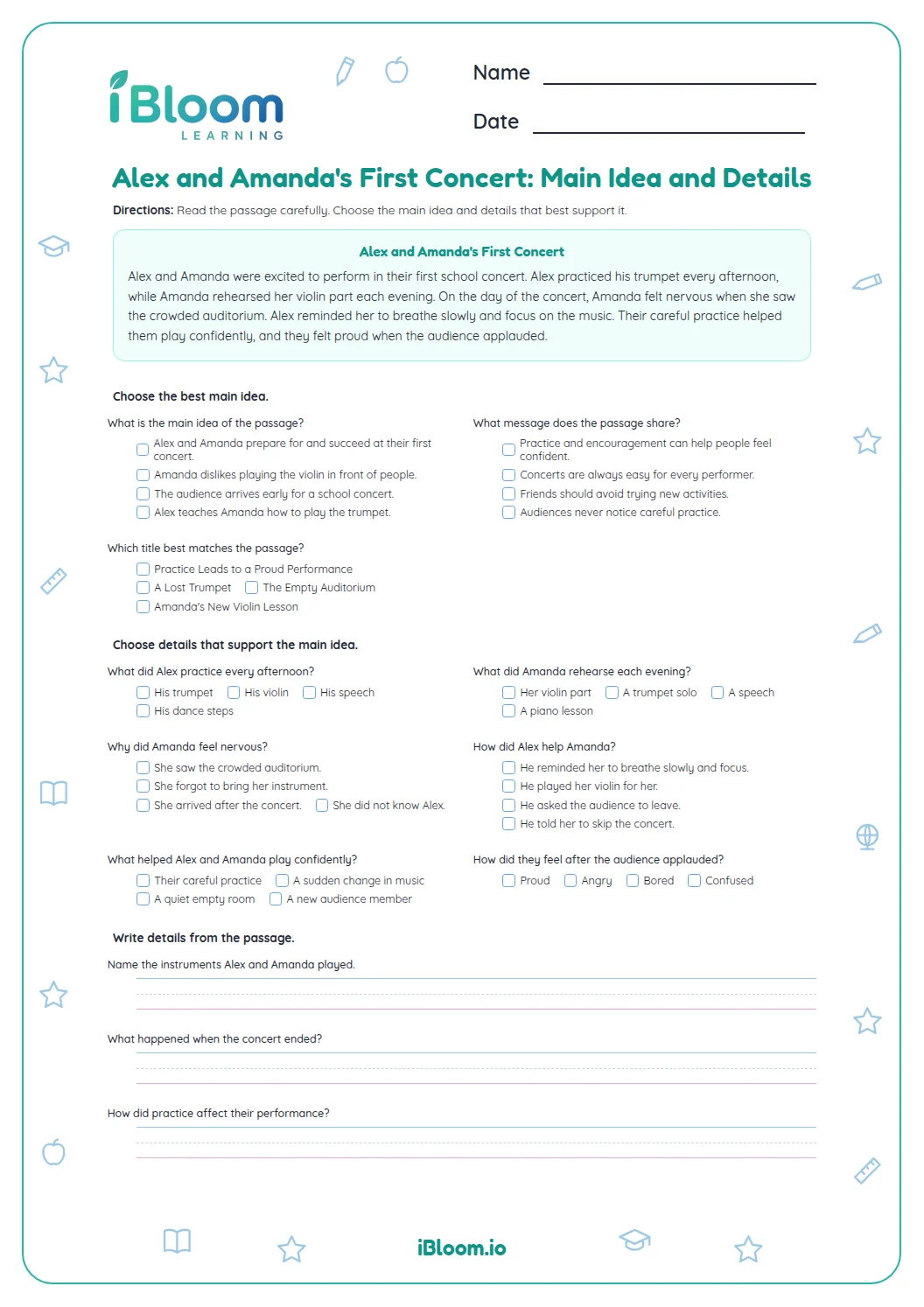
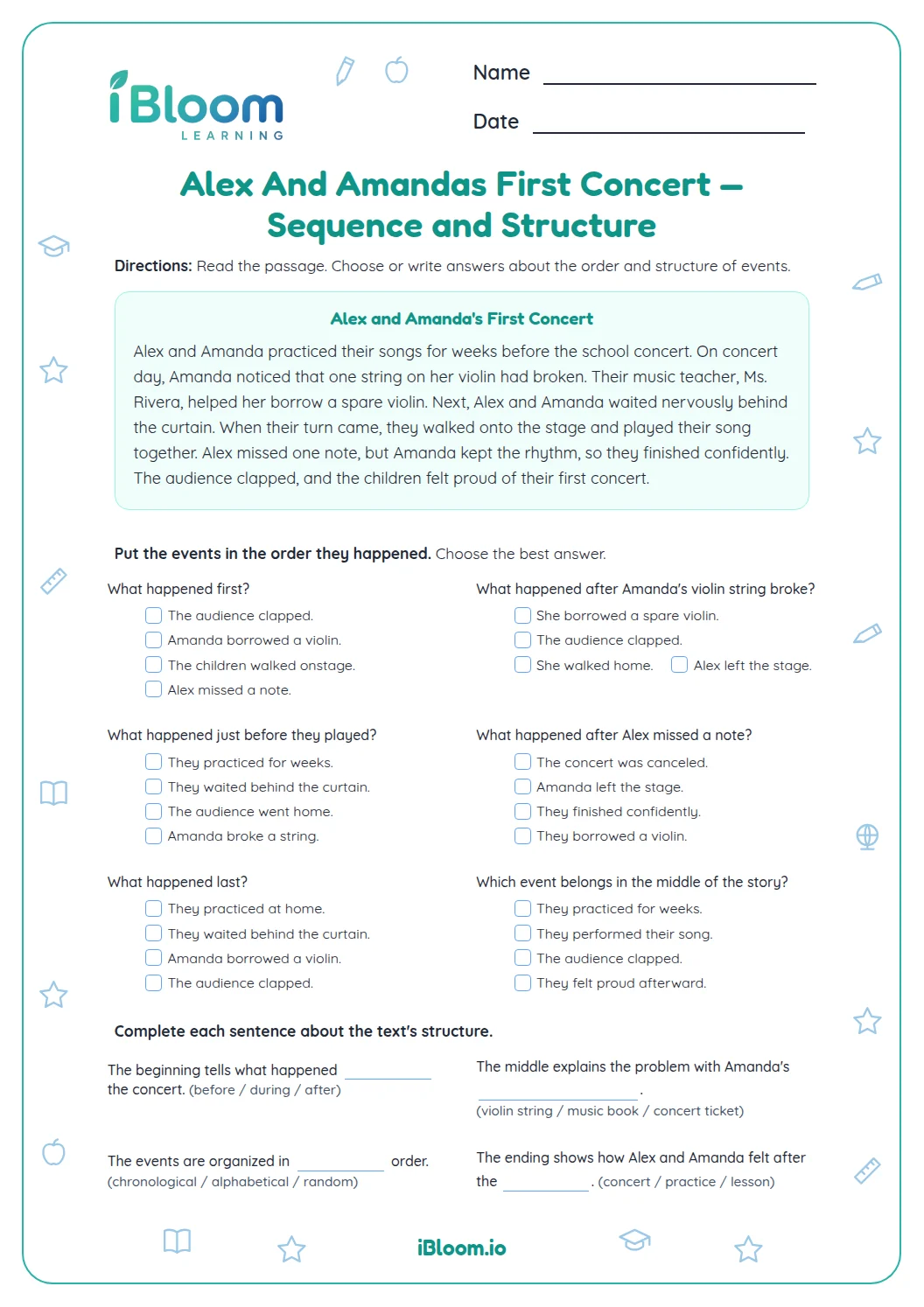
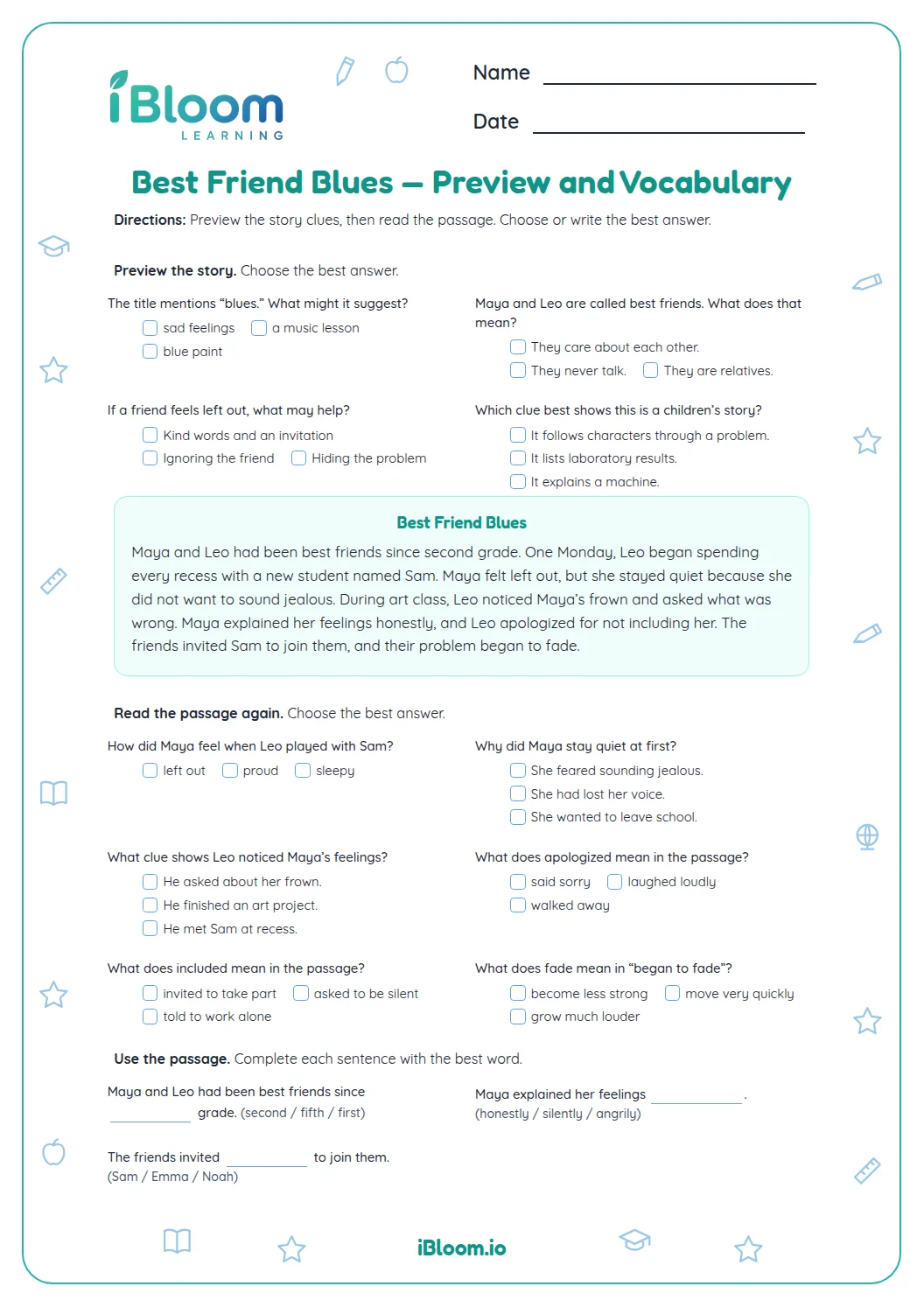
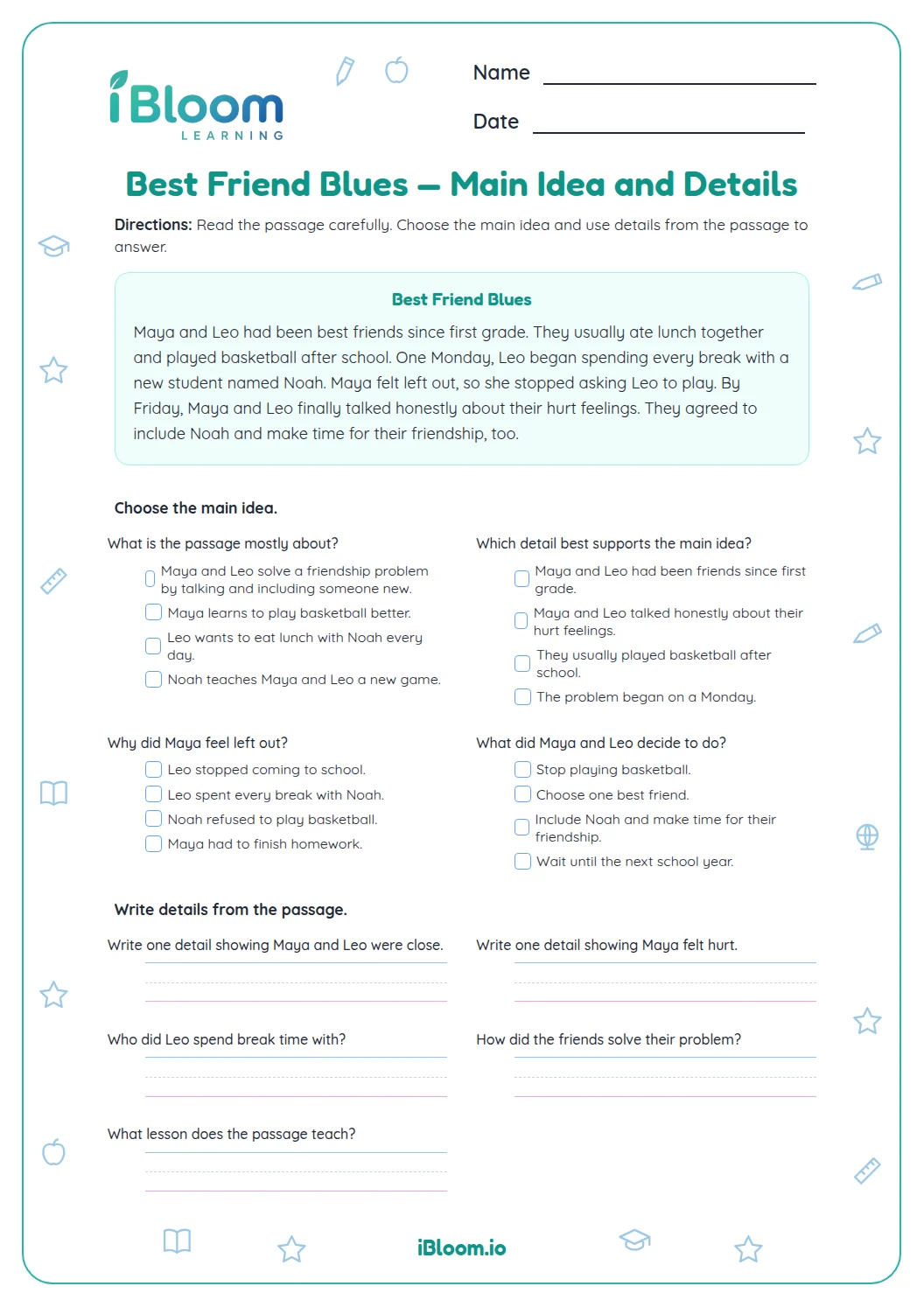
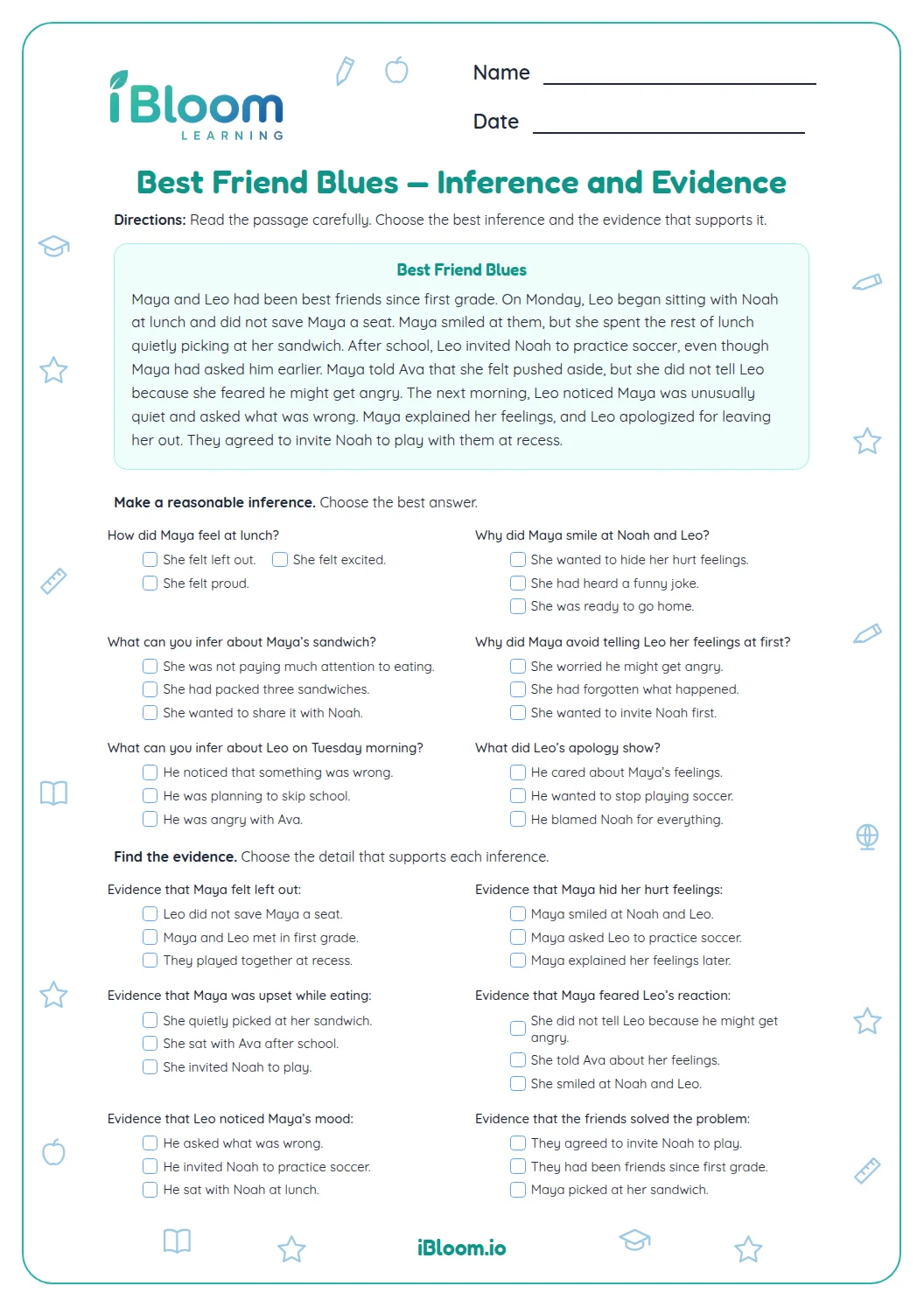
This free printable Grade 5 worksheet builds practice with finders keepers - inference and evidence. It practices RL.5.1. The pages include 12 questions in several formats and a separate answer key. Children can work through the parts in order, showing their thinking as they go.
Aligned to RL.5.1
How can a reader support an inference?
In “The Lost Key,” Eli takes a brass key to Ms. Rivera instead of trying it. The detail that he checks the lost-items notebook supports the inference that he wants to return it to its owner.
What clues does the passage offer?
The 12 questions move from character motives and word meaning to evidence, sequence, and the story’s problem and solution. For evidence questions, point to the exact phrase that supports the answer.
How to read for clues
- 1Read the question and identify whether it asks why, what, or when.
- 2Reread the sentence around the relevant event.
- 3For an inference, combine a story detail with what it suggests.
- 4For evidence, quote or name the detail that supports the idea.
- 5Check that a response fits the passage from “The Lost Key.”
Inference and evidence checks
The mistake
Treating a guess as an inference.
The fix
Tie the idea to a specific action or phrase in the story.
The mistake
Giving a detail without explaining its connection.
The fix
State what the detail suggests about a character or event.
The mistake
Mixing up event order.
The fix
Reread the passage and trace what happened first, next, and last.
Common Core alignment
Quote accurately from a story when explaining what it says and inferring.
On this sheet: Questions ask readers to infer from and cite details in the story.
Show the official wordingHide the official wording
Quote accurately from a text when explaining what the text says explicitly and when drawing inferences from the text.
What to practice next
Make more practice
Further reading
Questions parents and teachers ask
How should a child use this worksheet?
Start with one item at a time. Read the direction, then look for the exact clue the question asks about. For a choice, compare every option before deciding. For a written response, use a complete thought and return to the story, model, or sentence to check it.
What is included with the printable?
The answer key is a separate checking tool. Let the learner finish a section before looking at it, then compare one response at a time. If an answer differs, reread the prompt and point to the evidence or calculation that supports a correction.
Can the practice be split into shorter sessions?
A short practice session can be split across the worksheet pages. Pause between parts to talk through one example, especially when moving from recognition to an explanation or a written answer. Resume with the next unanswered question, and return to missed items after a brief break.
What materials are helpful?
These questions focus on the named skill using varied item formats. Keep scratch paper nearby for computations or notes, and encourage the learner to explain how a clue, model, or sentence supports a response. Talking through one answer can help reveal which step needs another look.