





About this worksheet
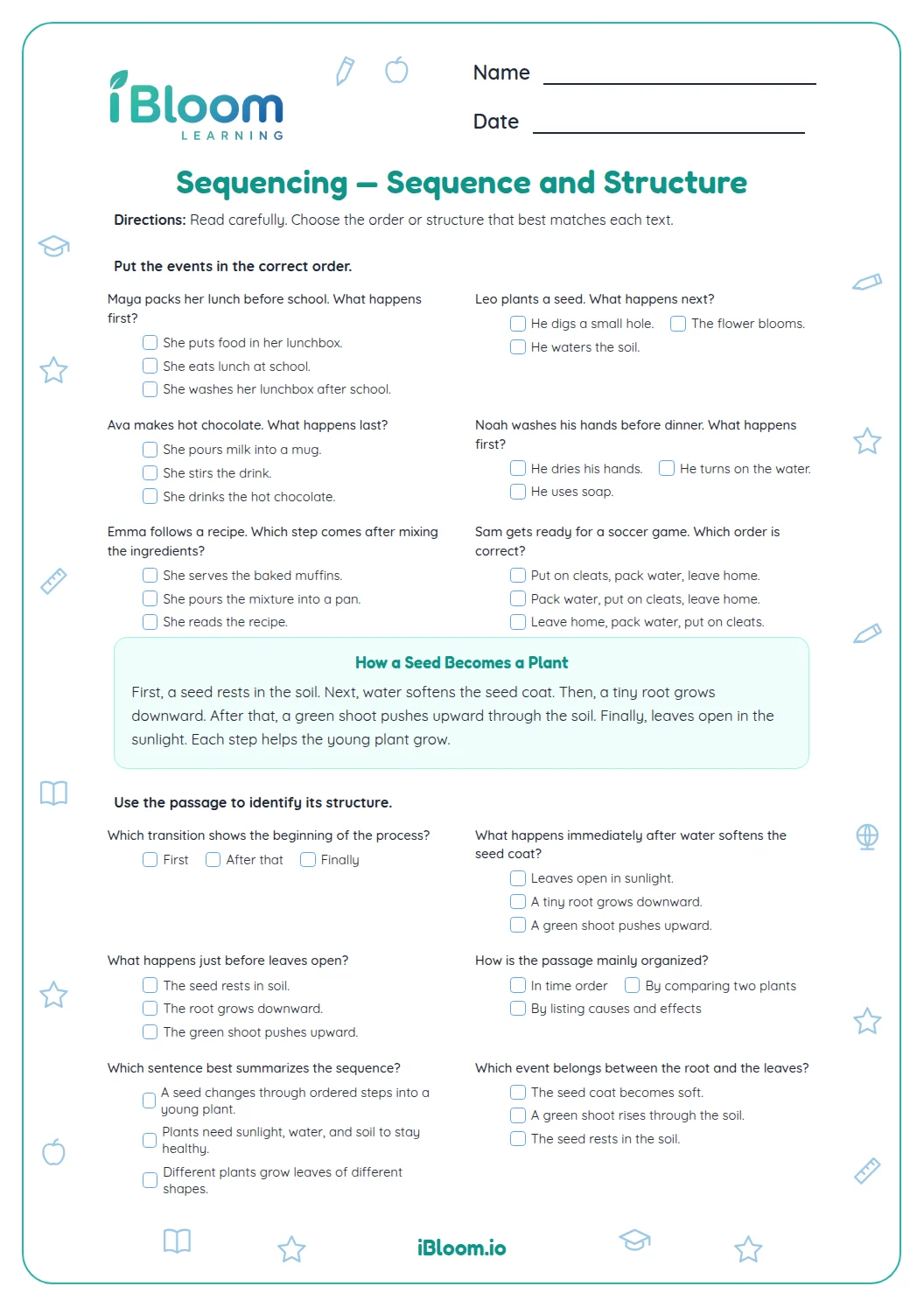
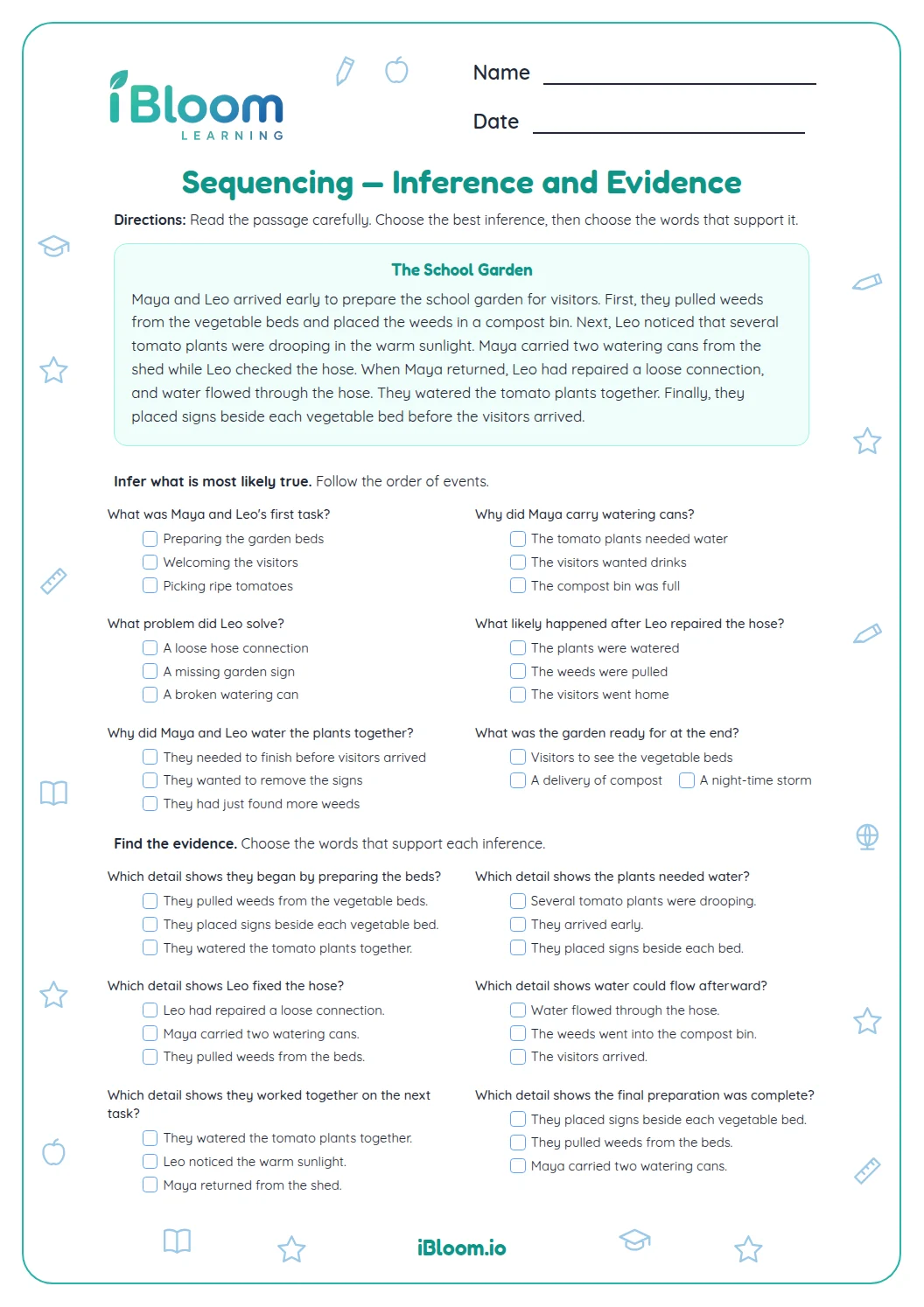
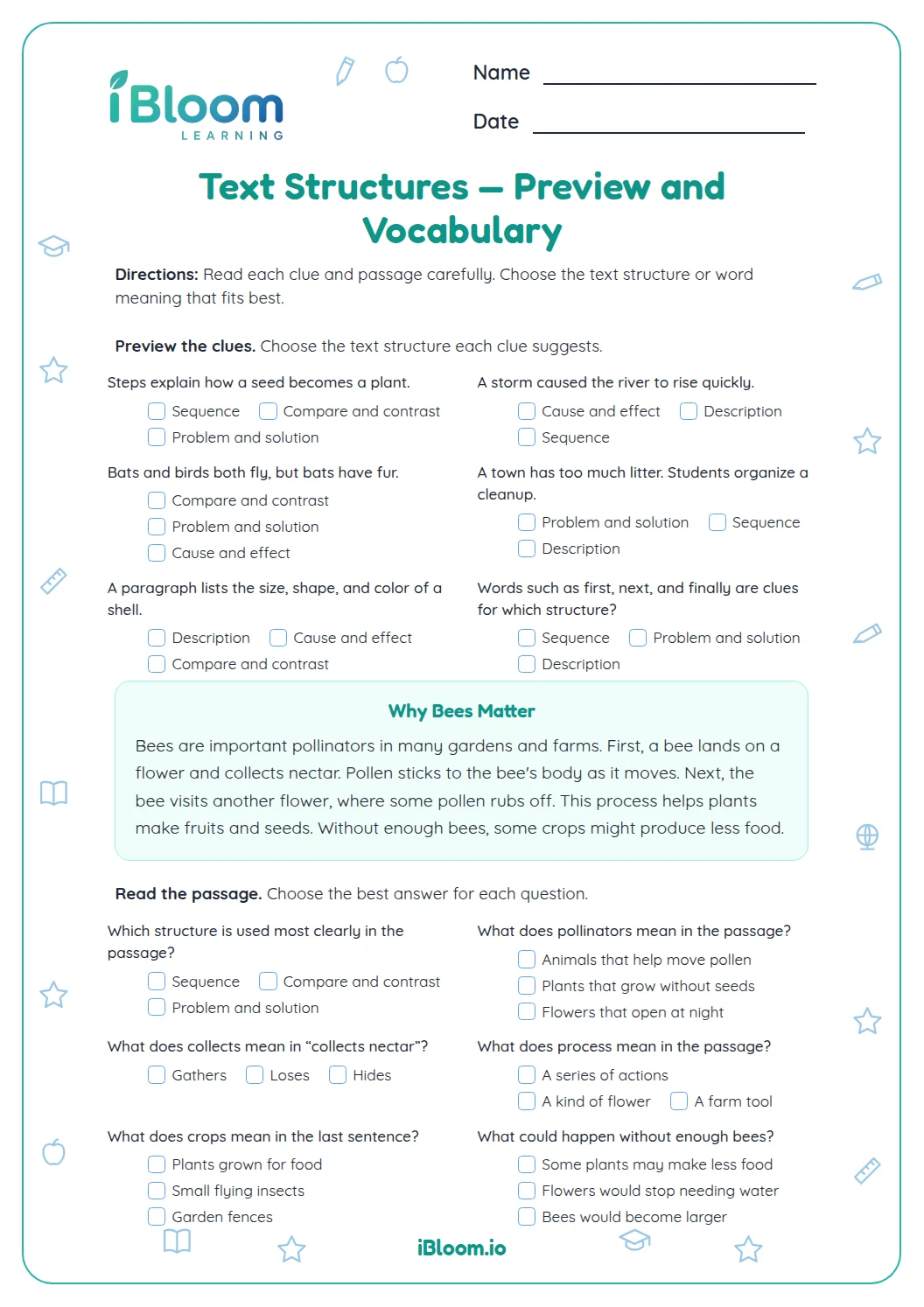
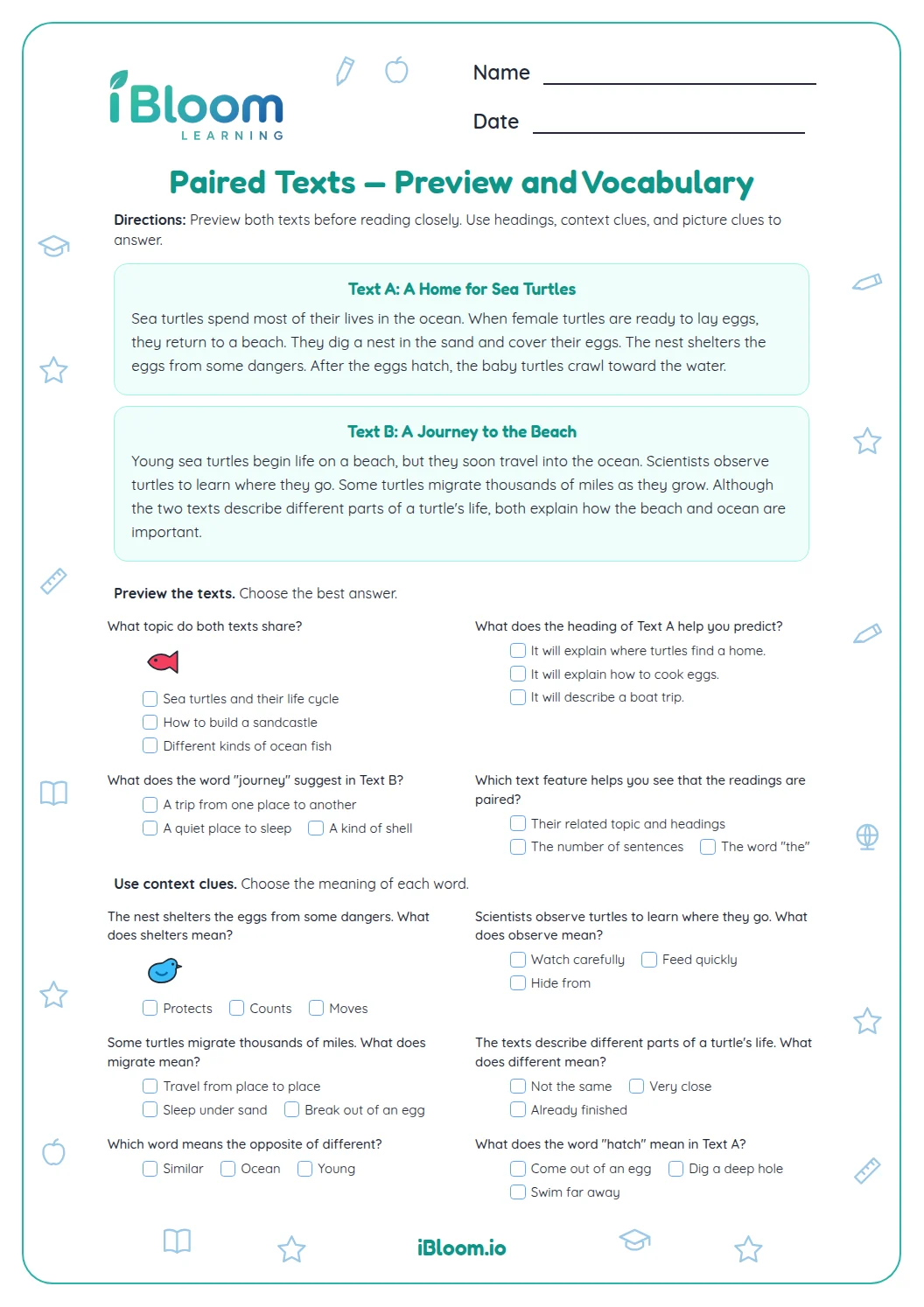
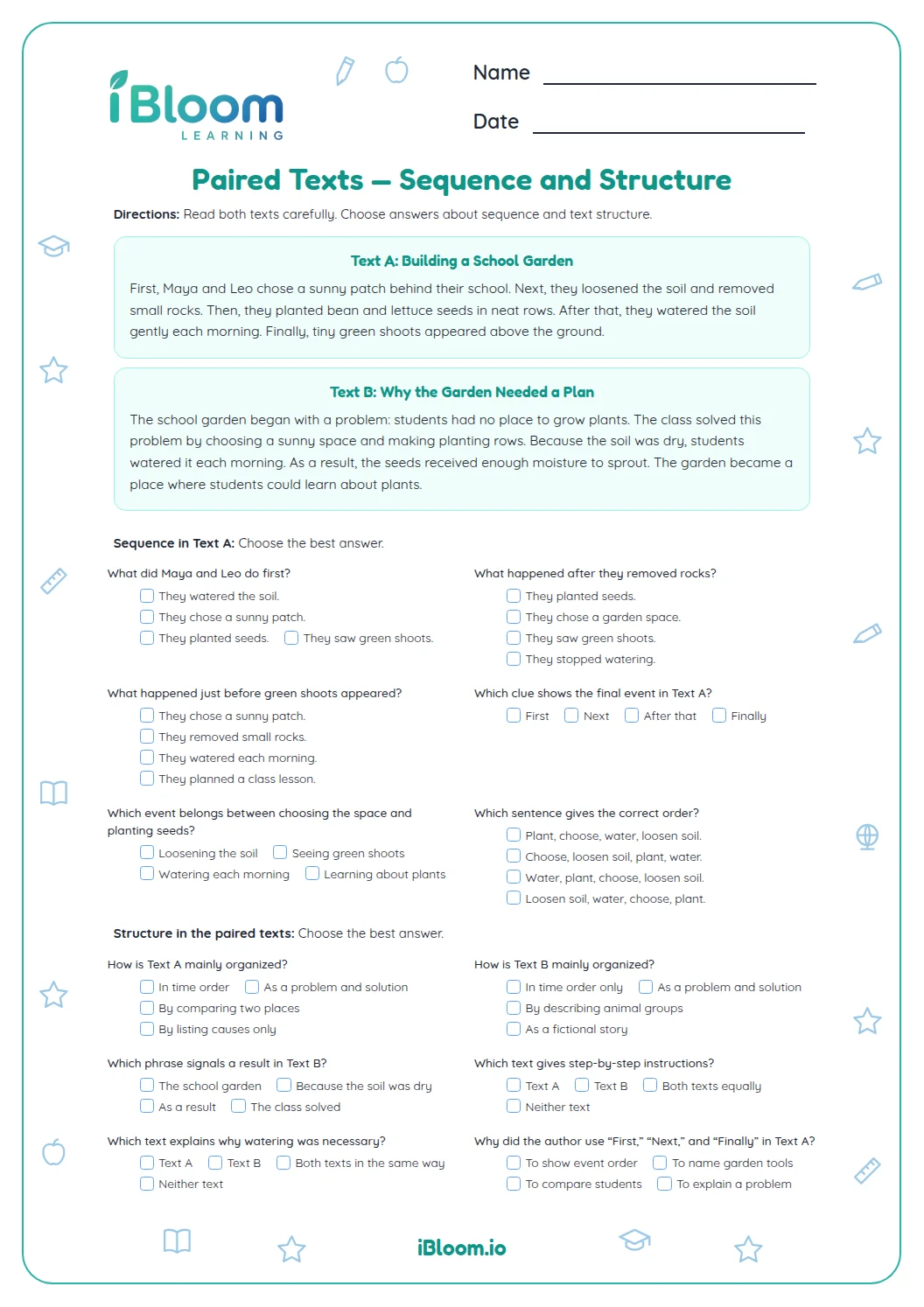
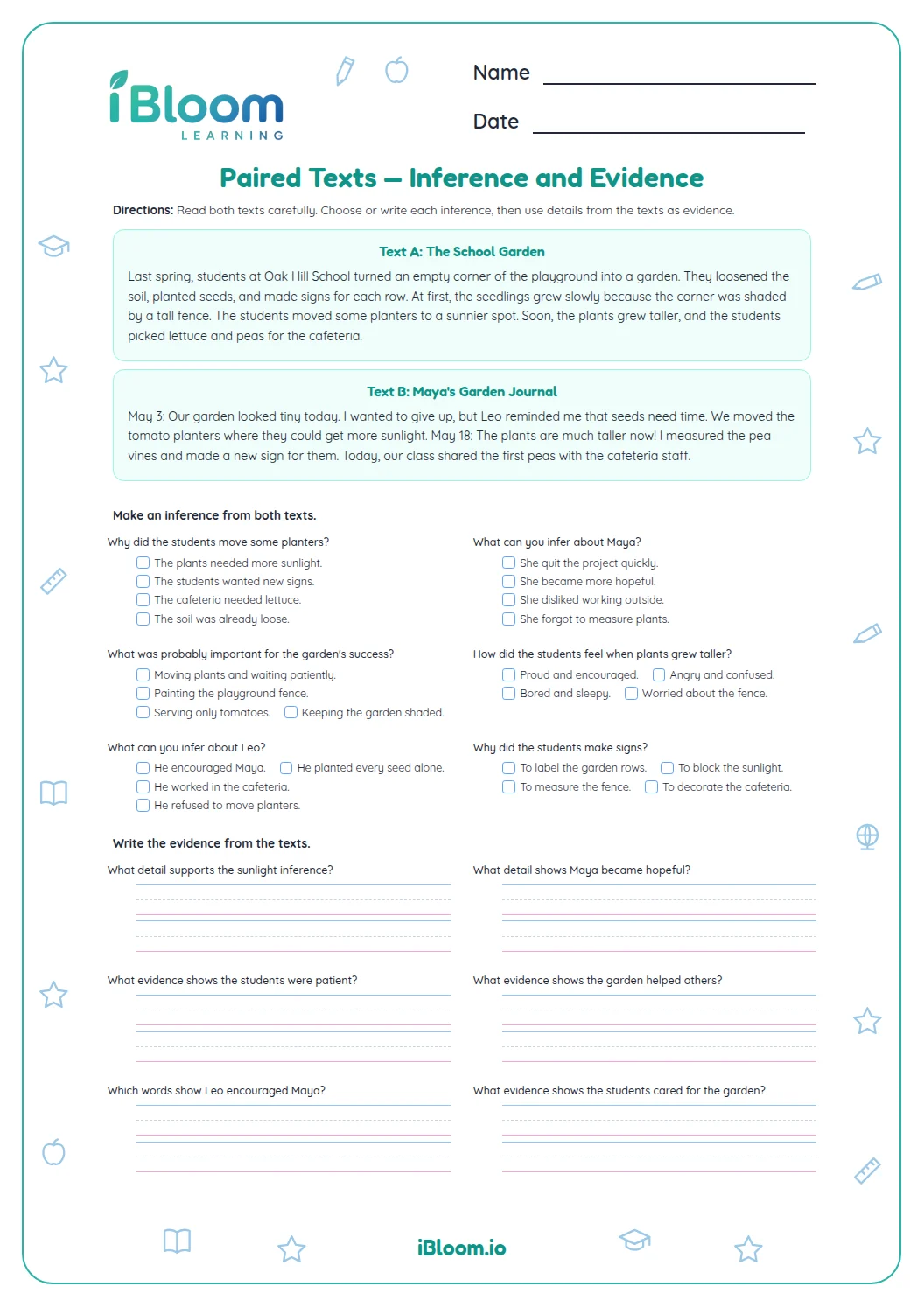
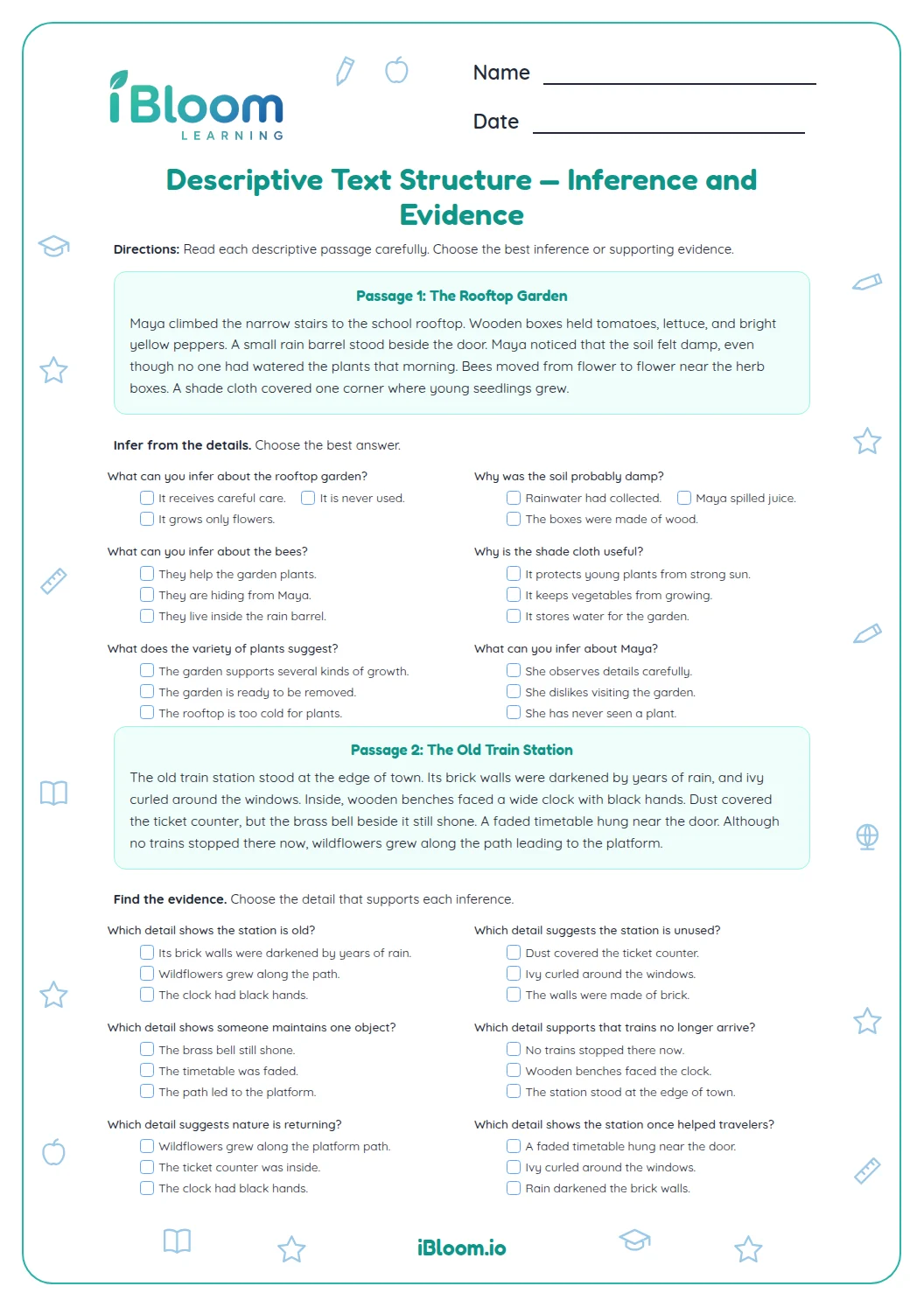
This Grade 5 worksheet pairs a time-ordered passage about Maya and Leo’s garden jobs with a comparison of beavers and otters. Fourteen multiple-choice questions practice sequence clues, details about each animal, shared traits, and how the passage is organized. A separate answer key supports checking.
How do transitions show order?
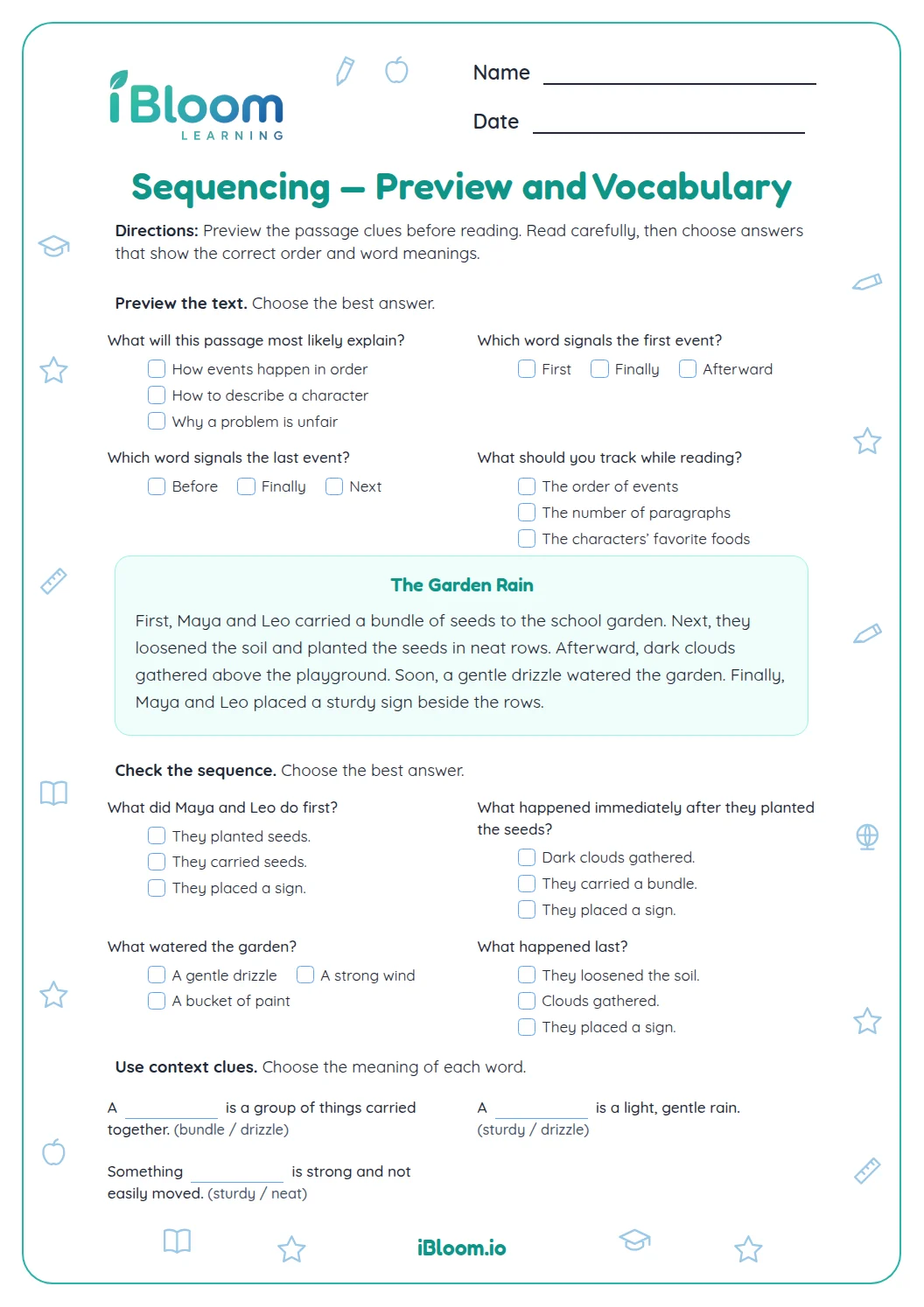
The first passage uses First, Next, After that, and Finally to show how Maya and Leo complete garden jobs. Read the transition and the action that follows it.
How does the second passage compare animals?
It describes beavers first, then otters, and ends with traits they share. Details such as a beaver’s flat tail and an otter’s webbed feet belong to one animal; thick fur and holding a breath underwater are shared details.
Why group details this way?
Separate descriptions help readers learn about each animal. The final shared details make similarities clear.
How to use this worksheet
- 1Read the garden passage and follow the transition words.
- 2Notice which jobs Maya and Leo do at the same time.
- 3Read each animal description separately.
- 4Use the last part to identify shared traits.
- 5Check each answer in the key.
Common mistakes and quick fixes
The mistake
Mixing up Maya’s and Leo’s jobs.
The fix
Track the name beside each action.
The mistake
Calling an otter detail a shared trait.
The fix
Check whether the sentence names both animals.
The mistake
Treating the whole passage as a list of steps.
The fix
The garden jobs use sequence; the animal section compares details.
What to practice next
Make more practice
Questions parents and teachers ask
What is the final step in the garden passage?
Maya and Leo return their tools and wash their hands. The transition “Finally” signals this last action. Before cleanup, Maya checks soil, waters vegetables, and labels seedlings, while Leo gathers leaves, adds them to compost, and pulls weeds. The order helps readers follow their shared garden work.
How are beavers and otters alike?
The passage says both animals have thick fur, eat food from watery habitats, and can hold their breath underwater. These shared details come after the separate descriptions of beavers and otters. Readers can use that final section to tell which traits belong to both animals.
Which details describe beavers?
Beavers have wide, flat tails and build dams from branches and mud. The passage gives those details in the beaver section. Otters are described separately with long, slim bodies and webbed feet that help them swim quickly, so readers can sort each fact by animal.
How does the worksheet use sequence?
The garden passage arranges Maya and Leo’s actions from the first jobs to their final cleanup. Words such as “Next” and “Finally” signal where an action falls in the order. Readers also compare which jobs the students do at the same time.
How is the animal section organized?
It describes beavers first, then otters, and ends with details they share. This organization lets readers learn about each animal before comparing their traits. Questions ask students to identify animal-specific details, shared features, and how the author grouped the information.