

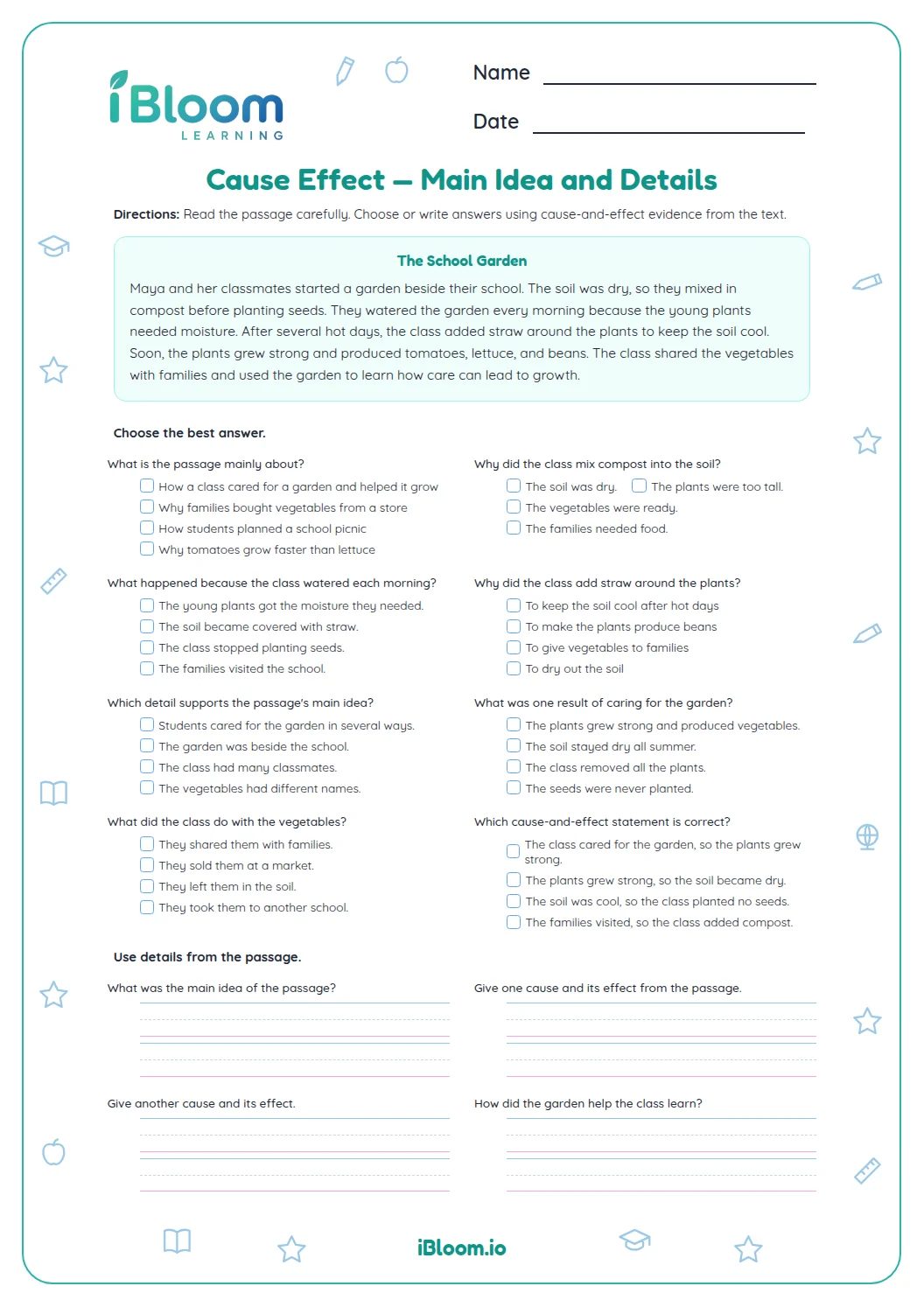

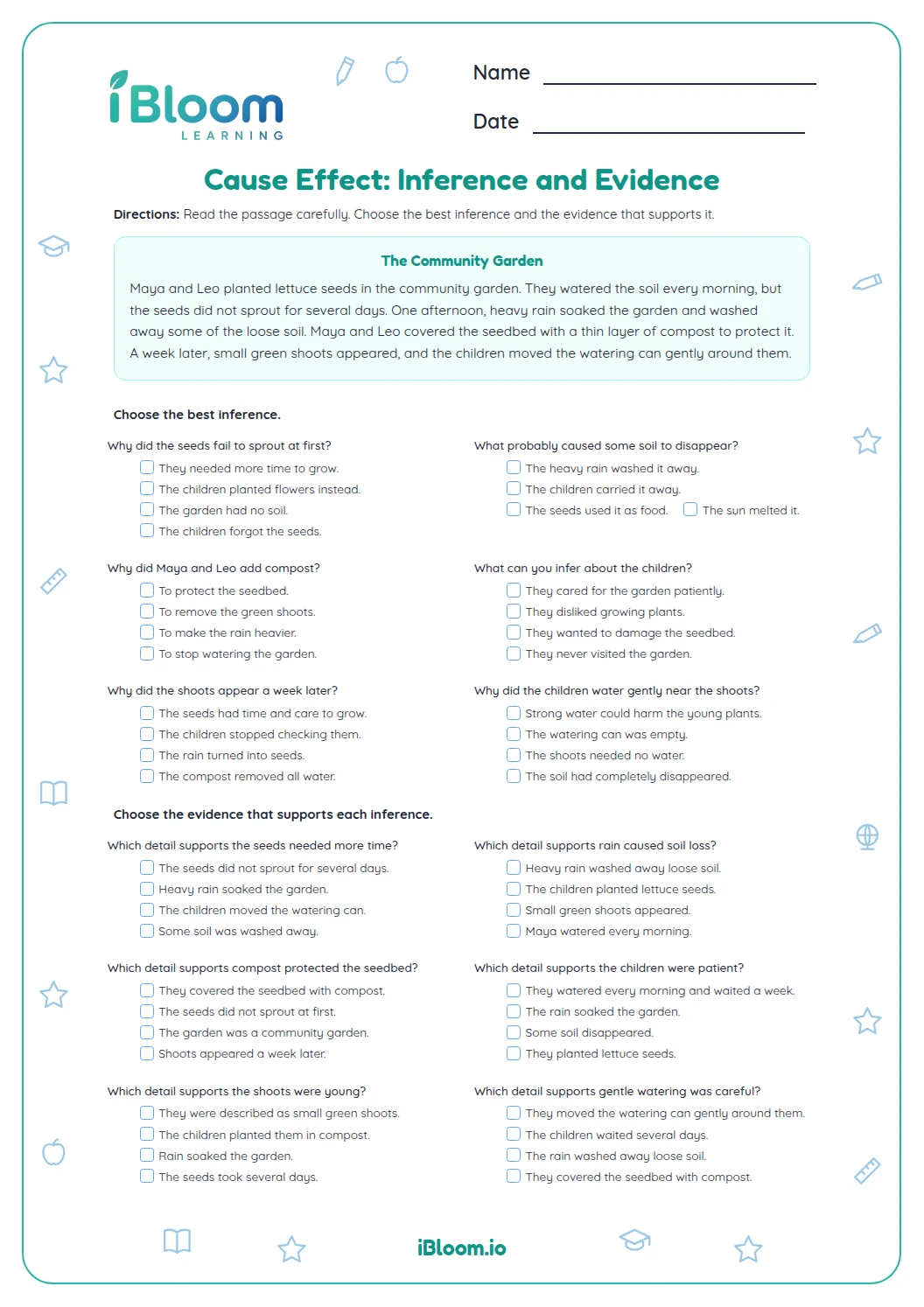
About this worksheet
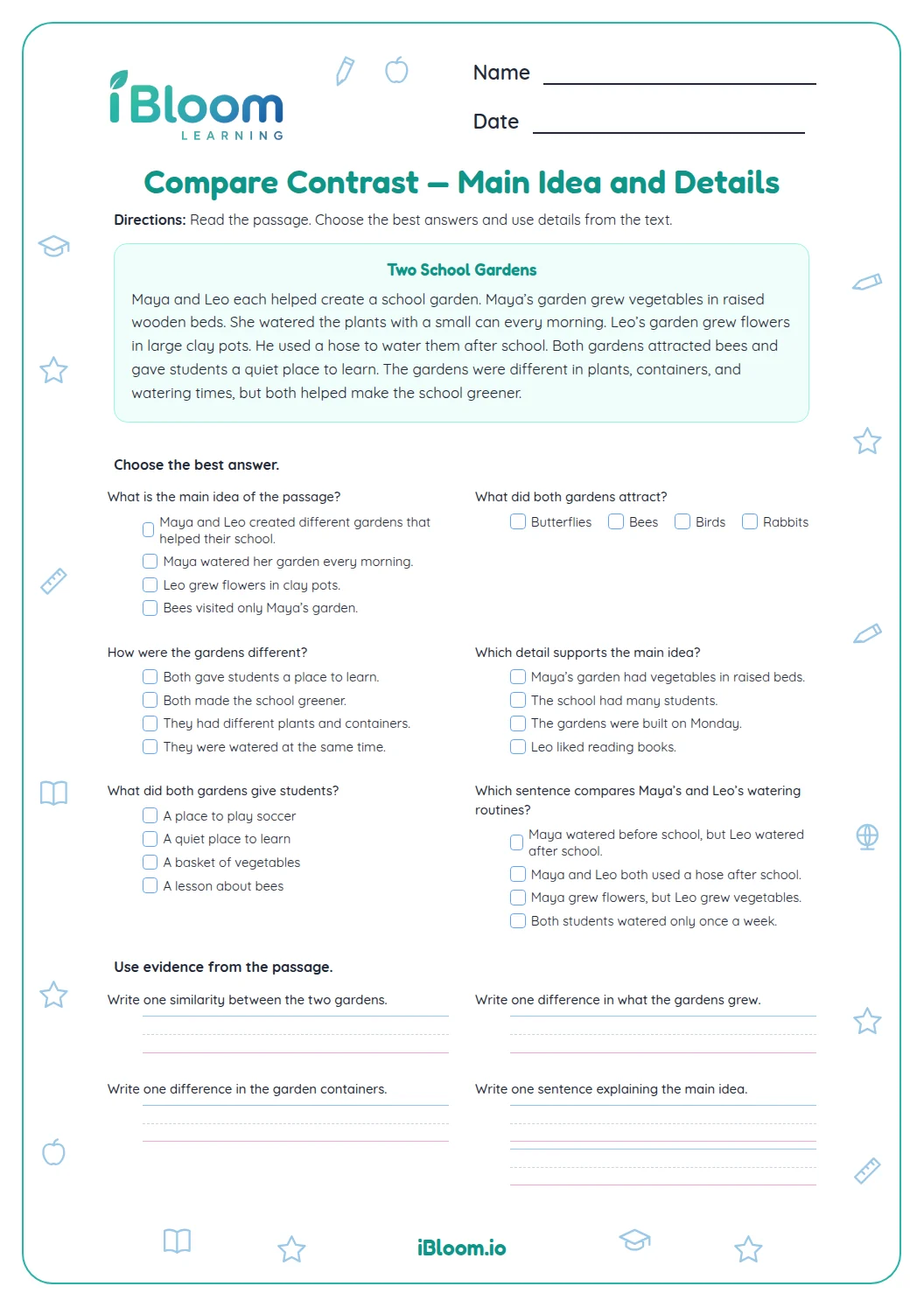
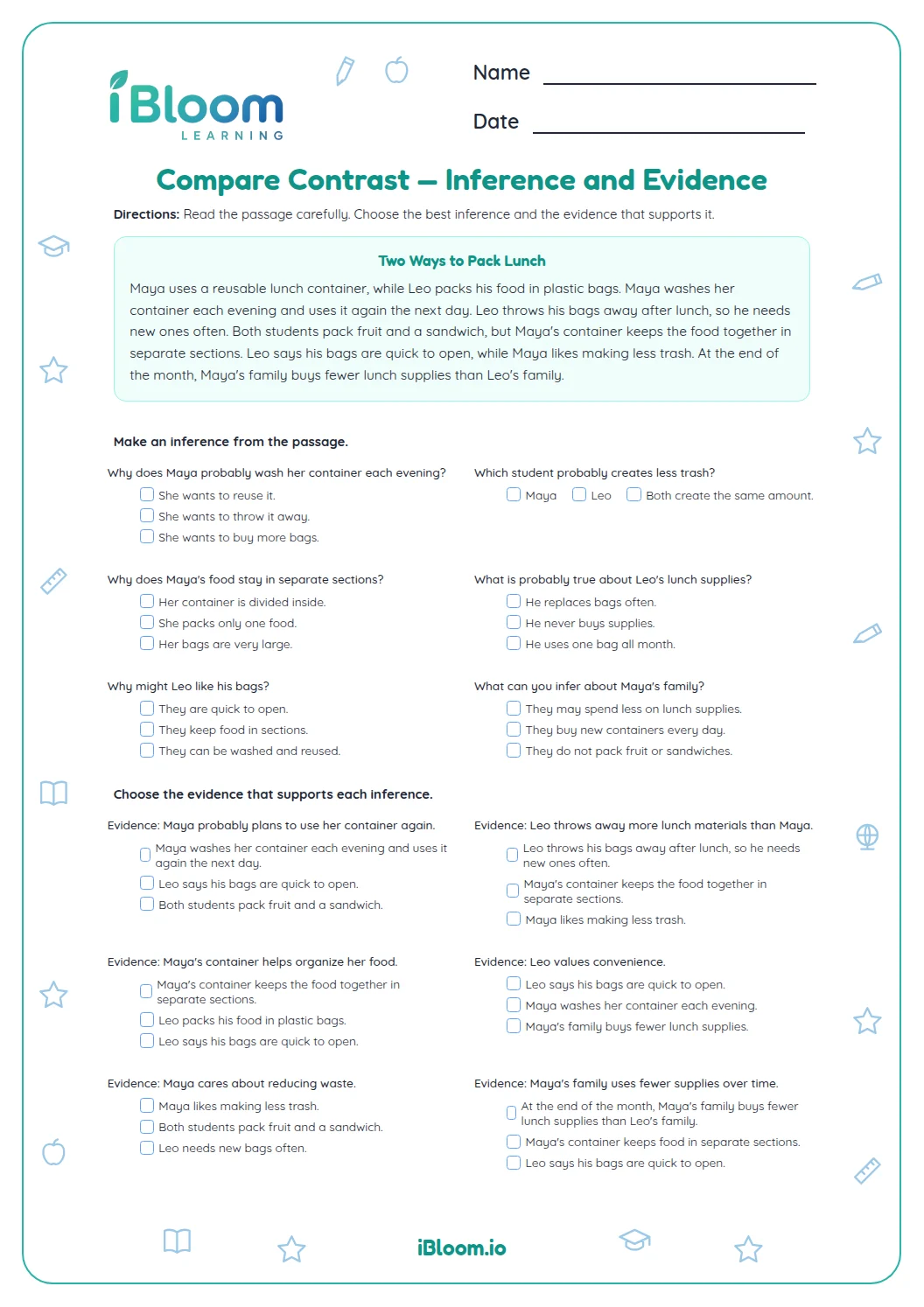
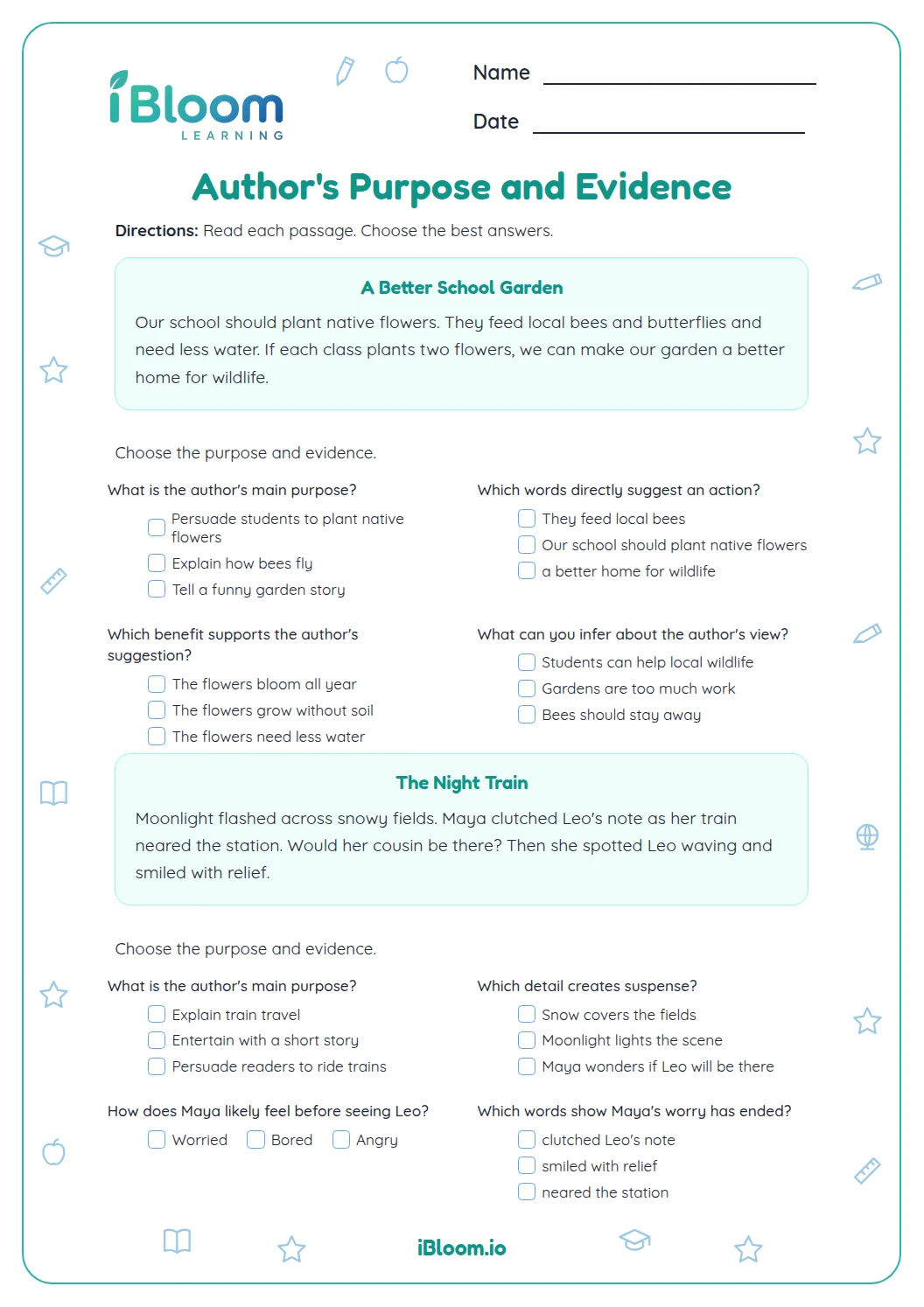
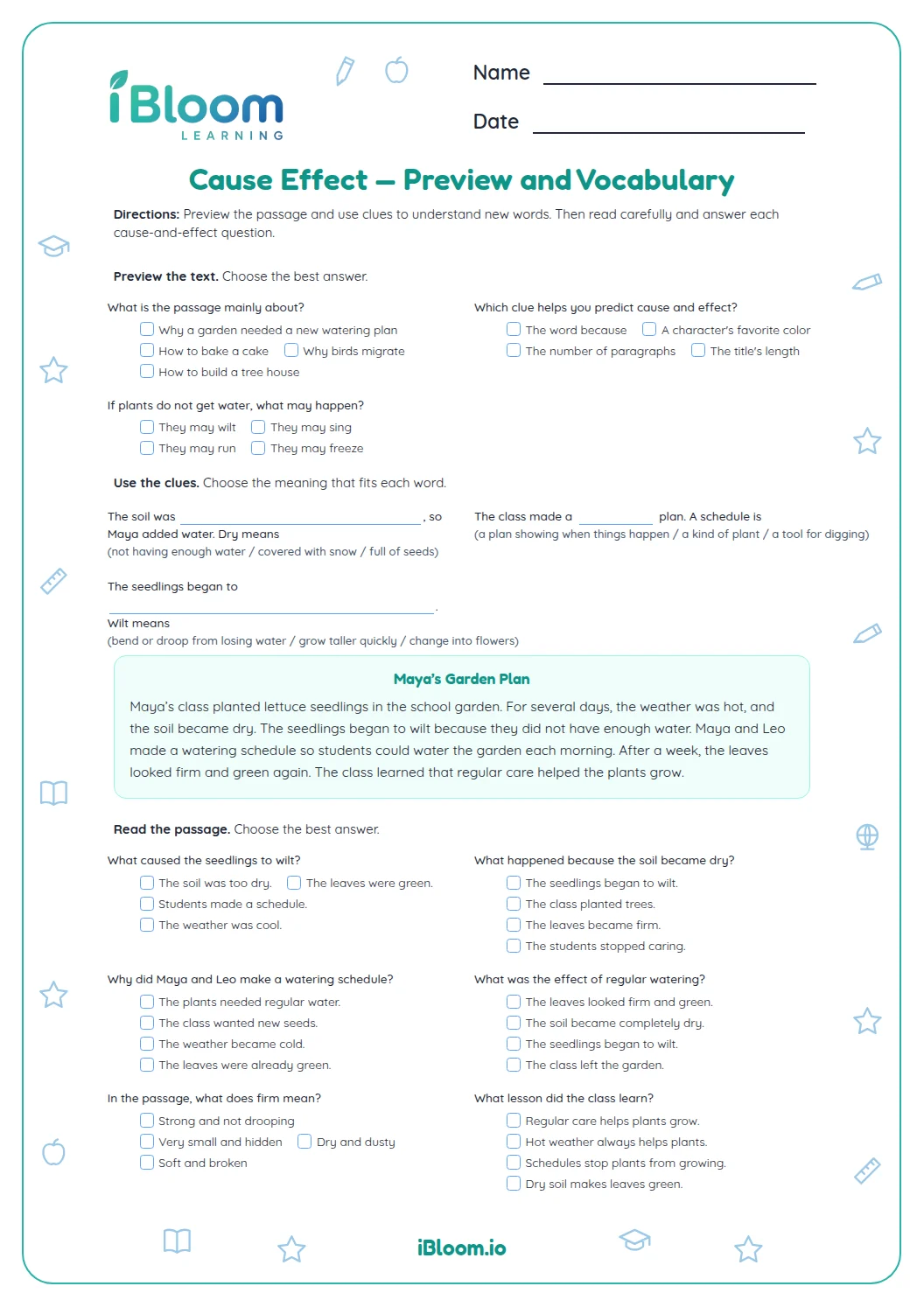
This free Grade 5 worksheet pairs descriptions of gardens at Cedar School and Brook School. Students compare their locations, planting methods, care routines, and challenges, then support answers with details from both texts. The 14 questions also ask about inference and how the final paragraph organizes similarities and differences. The passage and questions span three worksheet pages, followed by a separate answer key. The work practices CCSS RI.5.5 on comparing text structures.
What is alike and different about the gardens?
Cedar School’s account describes a garden in raised beds beside the playground. Brook School’s account describes rows in a flat field. Both schools grow food and provide regular water and care, but their methods create different benefits and challenges.
- 1Shared detail: Both gardens grow food.
- 2Difference: Cedar uses raised beds; Brook uses a flat field.
- 3Choose the option that includes both accurate details.
How do you support a comparison with evidence?
Use a detail from the passage rather than a guess. Question 7 asks for an accurate comparison: both gardens grow food, while Cedar has raised beds and Brook uses a field. Each clause is supported by the descriptions.
How is the passage organized?
The two school accounts share information about growing food while describing different garden methods. Question 11 asks readers to identify how the final paragraph organizes those similarities and differences. The set has 14 questions on details, comparisons, evidence, inference, and organization.
How to use this worksheet
- 1Read the Cedar description and note its location, crops, method, and challenge.
- 2Read the Brook description and record the same categories.
- 3For a “both” question, find a detail stated about each school.
- 4For a difference, compare the matching category, such as beds versus rows.
- 5For an inference, combine a clue from the text with a reasonable conclusion.
- 6Use the answer key and return to the exact supporting detail.
Common mistakes and how to check
The mistake
Choosing a detail that is true for only one school when asked about both.
The fix
Check that the passage says the detail applies to Cedar and Brook.
The mistake
Mixing up which school used raised beds or a hose.
The fix
Return to each school’s paragraph; Cedar has beds and watering cans, Brook has field rows and a hose.
The mistake
Making an inference that the passage does not support.
The fix
Point to a clue in the text first, then make the smallest conclusion that follows.
What to practice next
Make more practice
Questions parents and teachers ask
What are the two gardens like?
Cedar School has raised wooden beds beside the playground, where students grow tomatoes and peppers. Brook School has a flat field with rows of beans and squash. Both gardens need water and care, but their layouts create different benefits and challenges.
What do the gardens have in common?
Both schools grow food and share garden work among students. Each garden needs regular water and attention. Question 3 asks about these common needs; the answer is supported by the passage’s closing comparison. The passage states each of these shared needs directly.
How are Cedar’s and Brook’s methods different?
Cedar’s raised beds make plants easier to reach and keep feet off the soil; students water with cans. Brook’s open field allows many plants and a hose makes watering quicker, but weeds grow between rows and rain can leave puddles. These details are stated in the separate school descriptions.
What does compare and contrast mean in this passage?
Compare means identify similarities; contrast means explain differences. A complete response may say both gardens need care, while Cedar uses raised beds and Brook uses field rows. Question 7 models that kind of answer in a choice. The answer should name both the similarity and the difference.
How is the final paragraph organized?
It begins with shared features: both schools grow food and need regular care. It then contrasts Cedar’s raised beds with Brook’s open field. Question 11 asks students to recognize that pattern of similarities followed by differences. That organization helps readers see the common point before the contrast.