




About this worksheet
This free Grade 5 reading worksheet pairs two original texts about a school garden. Students identify why each text was written, follow event order, recognize chronological and problem-solution structures, and compare how organization shapes understanding. A separate answer key includes sample explanations. The comparison asks students to use evidence from both texts.
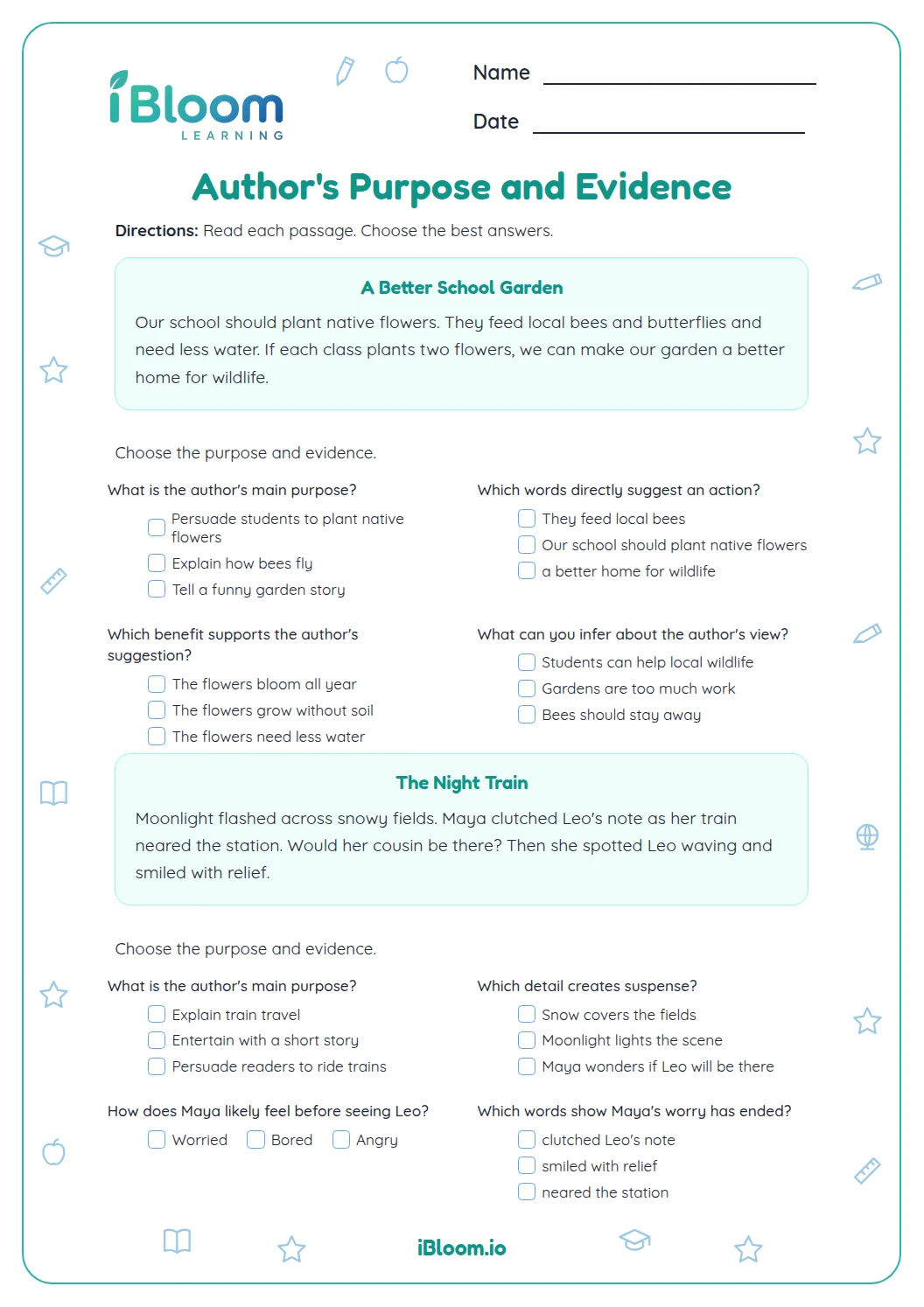
How can you identify an author’s purpose?
Ask what the author mainly wants readers to understand. Text A explains how a garden developed from a bare patch. Text B explains a problem with watering and the class’s response. Details and structure help reveal each purpose.
- 1Question 4: Text A uses “First,” “Next,” and “By June.”
- 2Those time words signal a chronological sequence.
How do sequence and problem-solution structures differ?
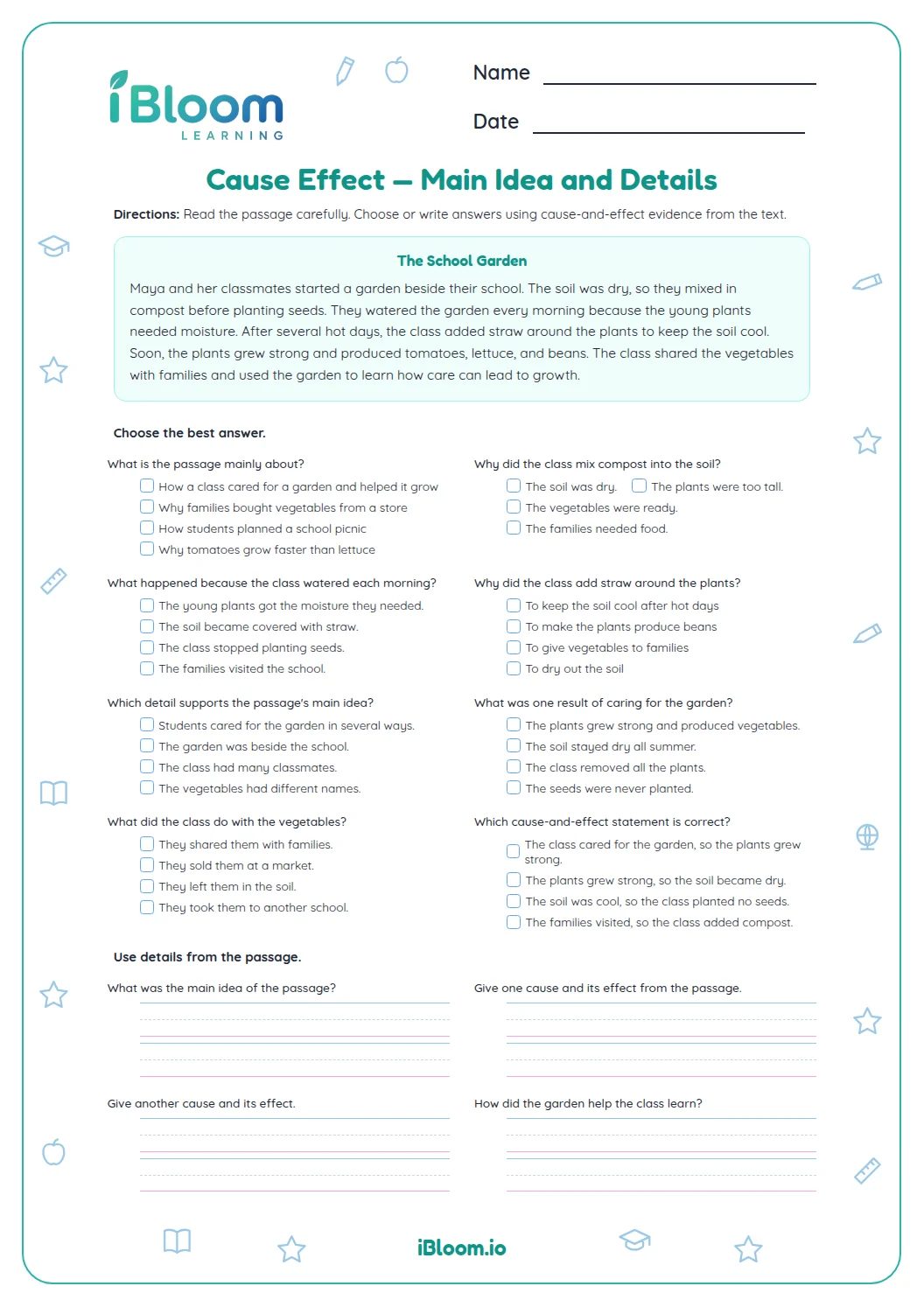
A chronological text arranges events in the order they happened. A problem-solution text names a difficulty, describes a response, and often explains the result. Text A traces the garden’s growth; Text B starts with drooping plants and then explains the class’s plan.
How can you compare two texts?
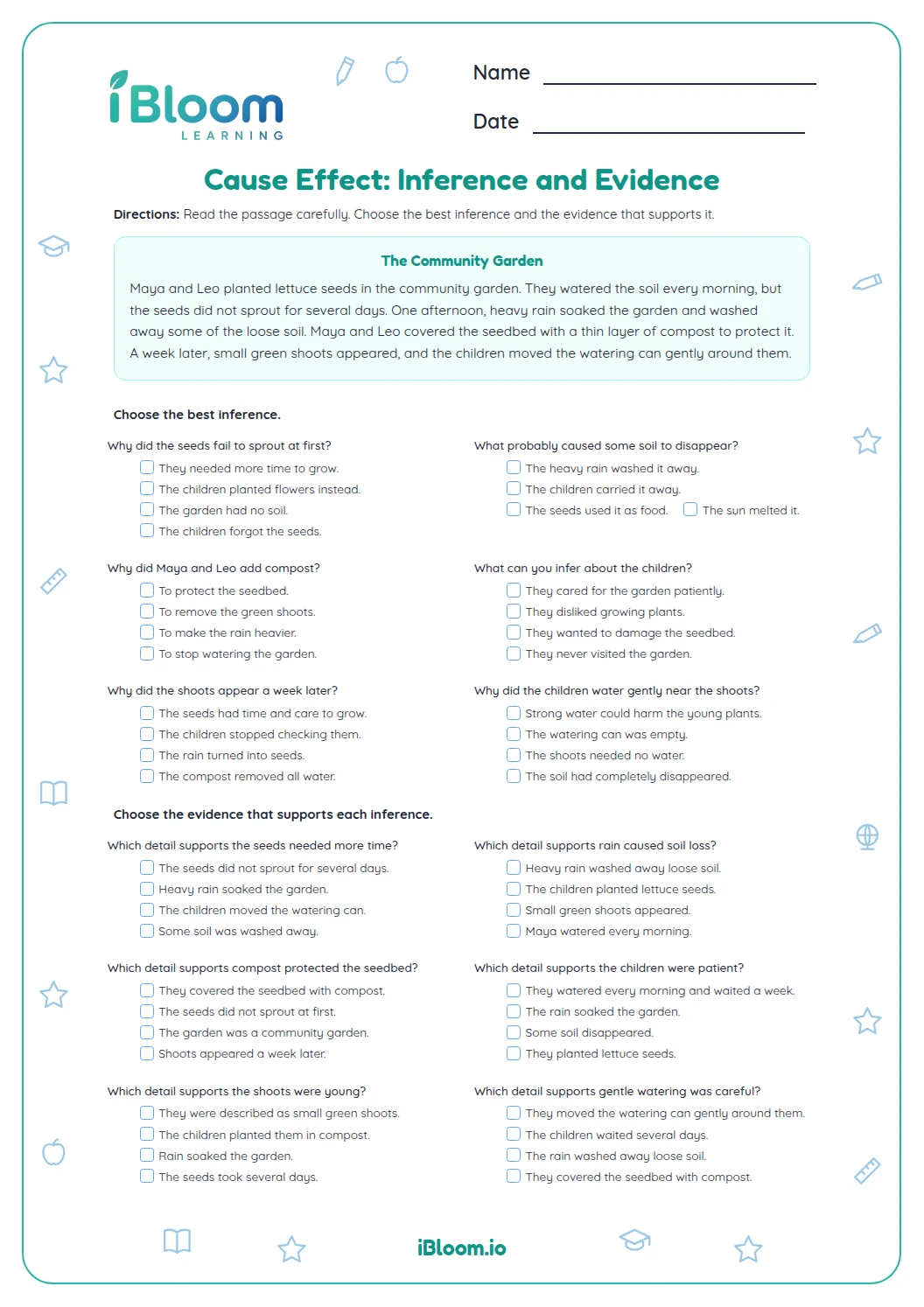
Name each text’s organization, then point to evidence. A comparison is stronger when it explains how the structure helps: the sequence in Text A tracks progress, while Text B’s problem first makes the watering chart’s purpose clear.
How to use this worksheet
- 1Read both texts once for the main idea before answering.
- 2Underline time words in Text A and identify the events they connect.
- 3In Text B, mark the problem, the class’s response, and the result.
- 4For comparison questions, name a structure for each text and cite a detail.
- 5Use the key’s sample answers as models; accept equivalent evidence from the passages.
Common mistakes and quick fixes
The mistake
Calling every text with several events a problem-solution text.
The fix
Check whether it presents a specific difficulty and a response; Text A mainly follows the garden’s timeline.
The mistake
Choosing a purpose from one interesting detail.
The fix
Use the whole text: ask what the details collectively help readers understand.
The mistake
Comparing topics but not structures.
The fix
Name the order pattern in each passage, then explain how those patterns differ.
What to practice next
Questions parents and teachers ask
What is the difference between author’s purpose and text structure?
Author’s purpose is what the author mainly wants to do for readers; structure is how the information is arranged. Text A explains garden growth through a timeline. Text B explains a watering problem and a response. Ask your child to point to the question and explain the clue that supports the answer in their own words.
What structure does Text A use?
Text A is organized mostly in chronological order. Words such as “First,” “Next,” and “By June” show when the garden events happened. Questions 2, 4, and 13 ask children to use those sequence clues. Ask your child to point to the question and explain the clue that supports the answer in their own words.
How is Text B organized?
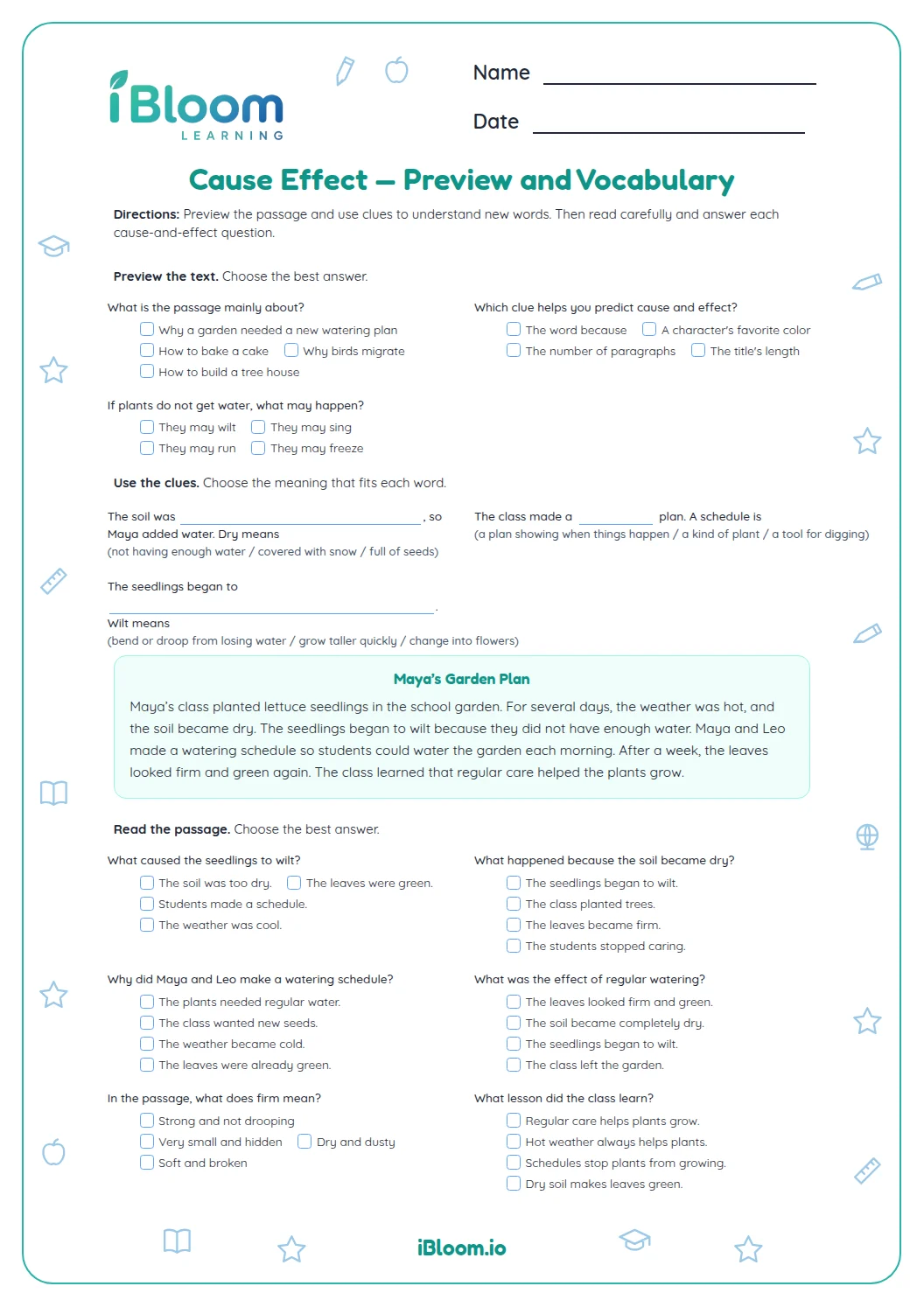
Text B uses problem and solution. The plants droop after watering turns are missed, then the students make a chart and use a rain gauge. The final sentence describes the result of the routine. Ask your child to point to the question and explain the clue that supports the answer in their own words.
Can a text use more than one structure?
Yes. A passage may include events in time while emphasizing a problem and its solution. For this activity, children choose the organization that best describes each text overall and support it with details. Ask your child to point to the question and explain the clue that supports the answer in their own words.
What does the answer key expect for written responses?
The key provides sample answers for questions 12 and 16. Similar responses are correct when they explain the watering chart’s purpose or describe how the problem-first organization clarifies the response. Ask your child to point to the question and explain the clue that supports the answer in their own words.
How can students check an author’s purpose?
Summarize what the passage mostly explains, then see whether its details support that purpose. For Text B, the drooping plants, missed turns, chart, and gauge all connect to solving the watering problem. Ask your child to point to the question and explain the clue that supports the answer in their own words.