



About this worksheet
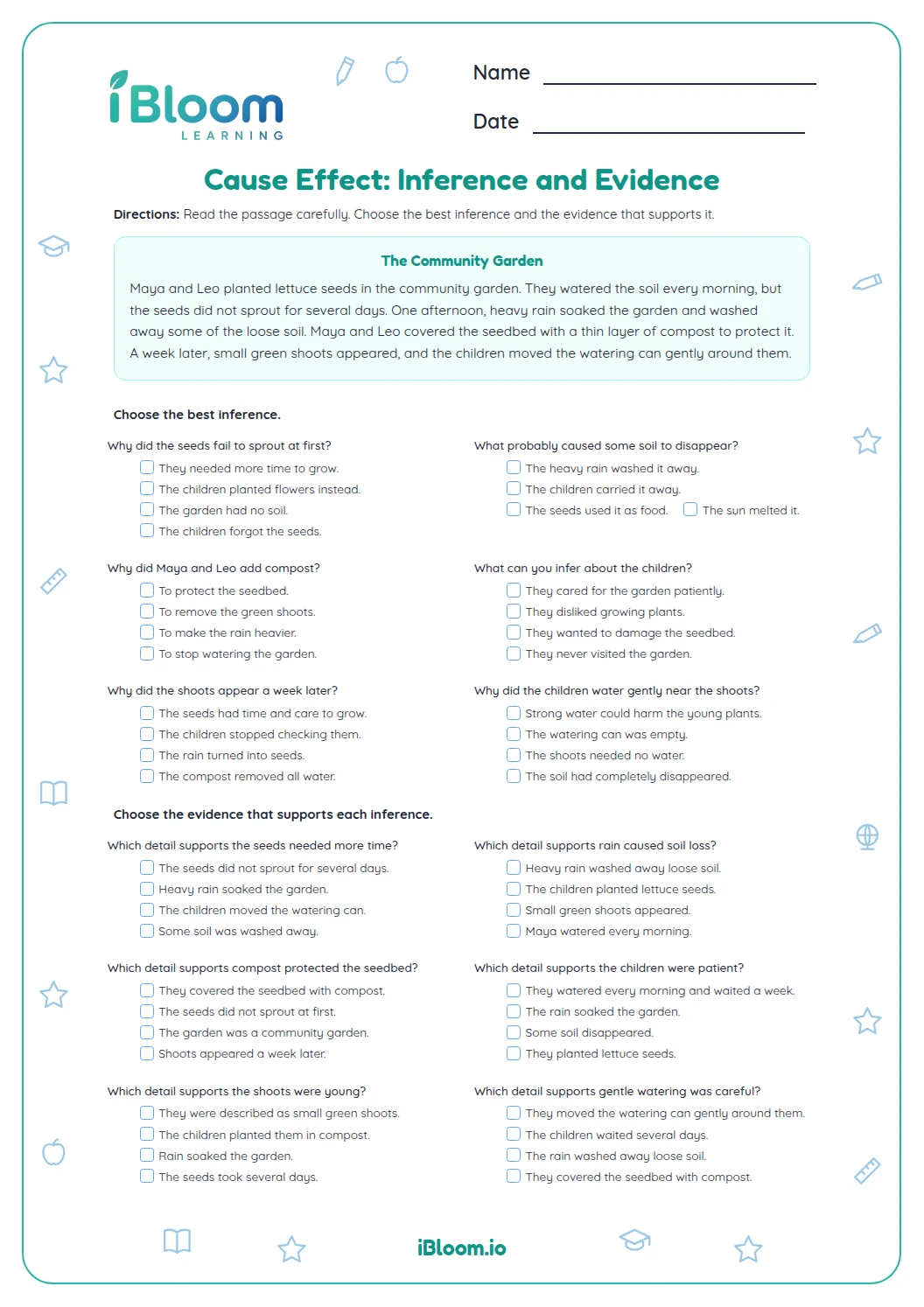
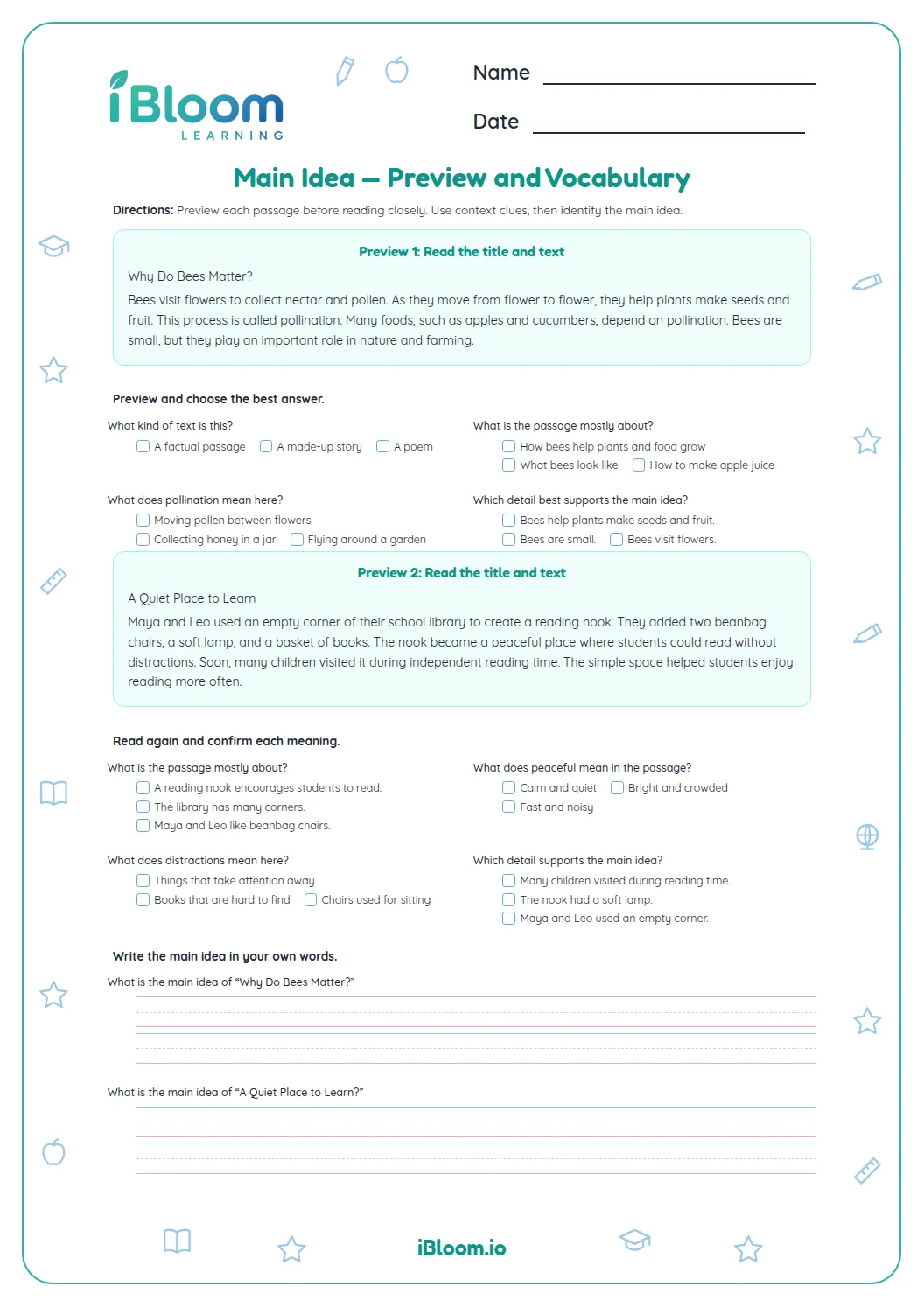
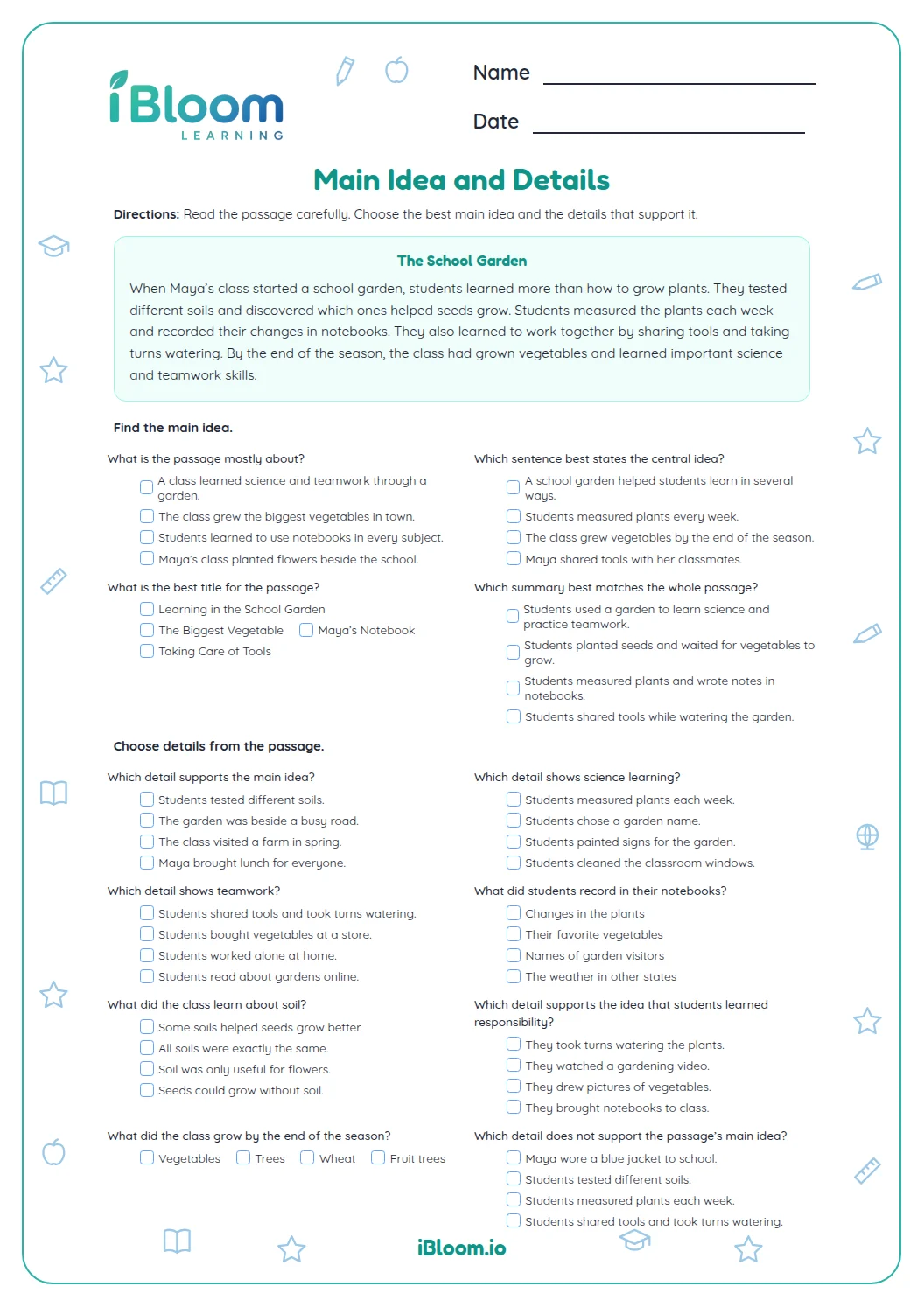
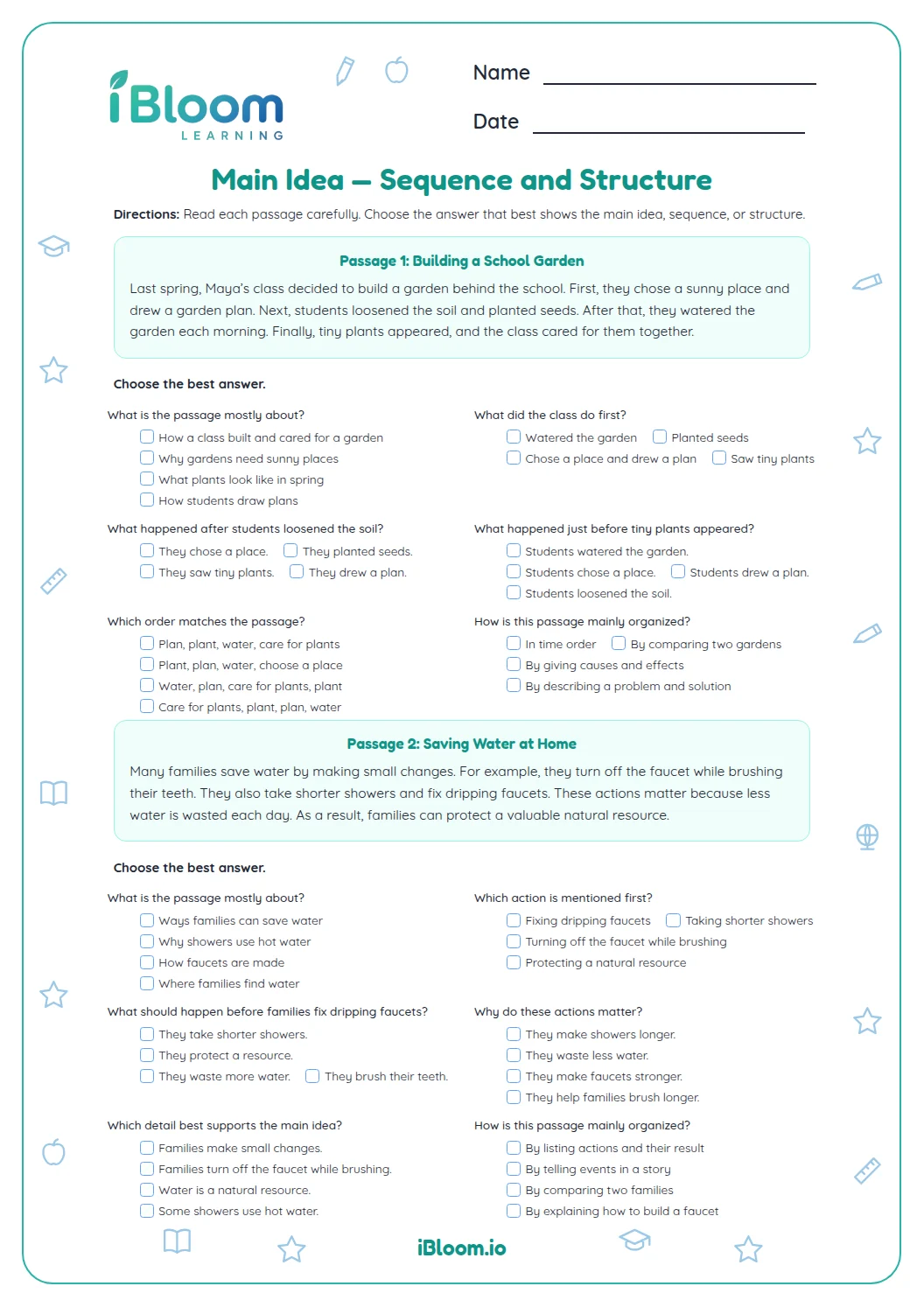
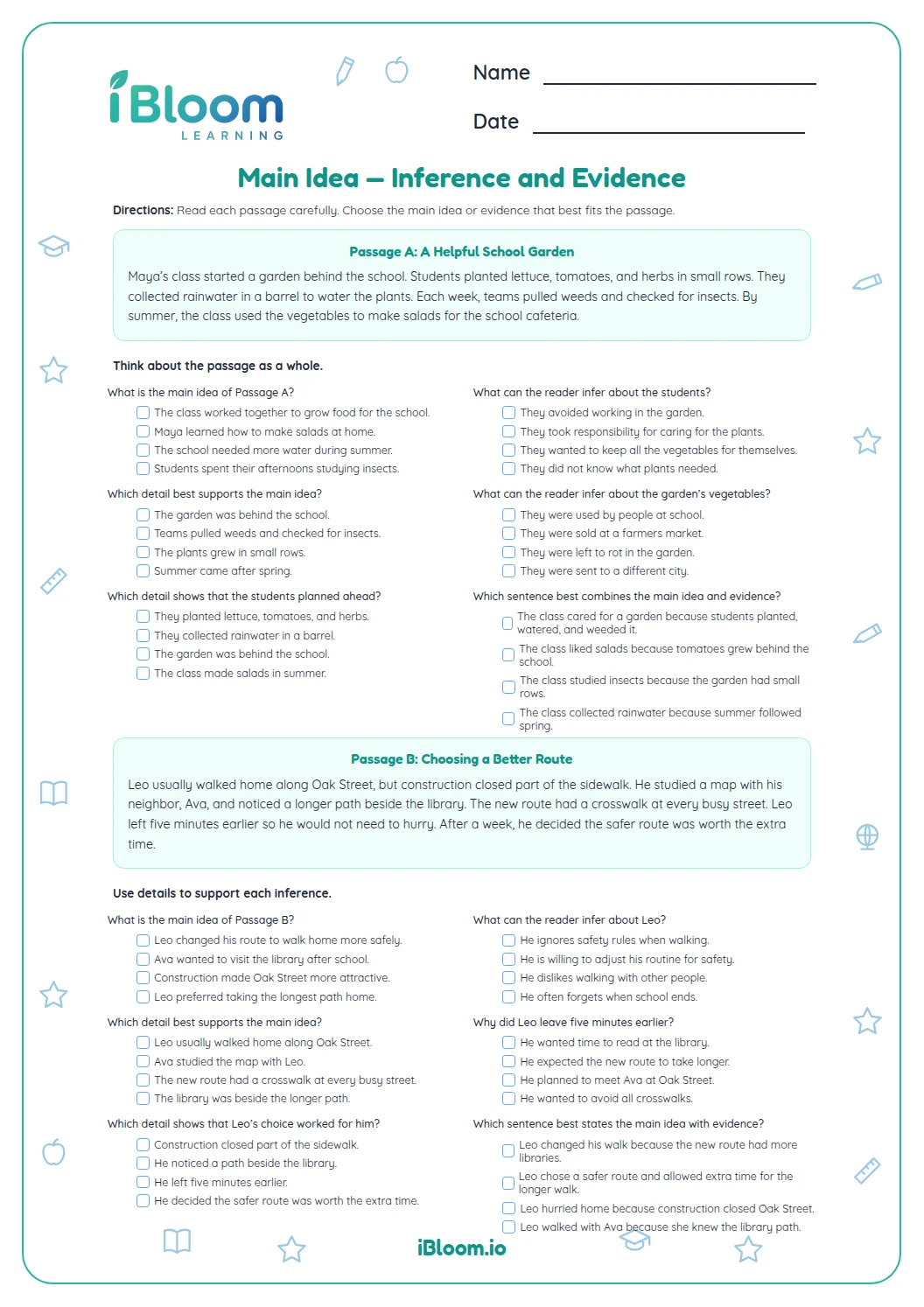
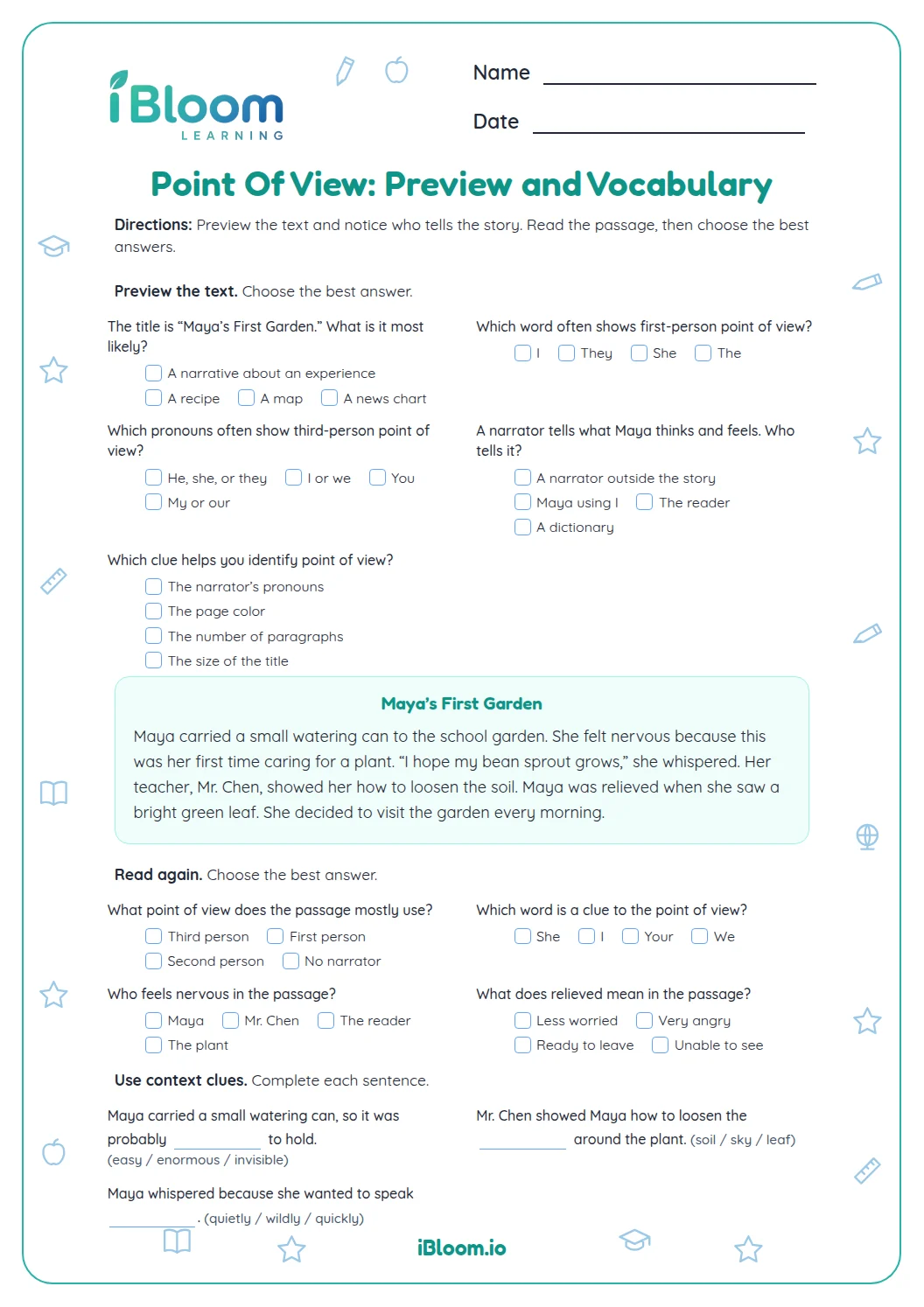
This free Grade 5 reading worksheet features an original passage about students tracking rain for a school garden. Fourteen concise questions ask readers to draw conclusions, support inferences with text details, and use context to interpret vocabulary. Part B uses multiple-choice practice; Part C asks for two short written explanations. The comprehension work aligns with CCSS RI.5.1, and the vocabulary items align with L.5.4. The answer key includes sample responses.
Aligned to RI.5.1 and L.5.4
How do readers draw a conclusion from clues?
An inference combines what the passage says with what a reader can reasonably work out. The text does not directly say which animal approached the rain gauge, but muddy paw prints and an upside-down lid support the idea that an animal disturbed it. Use the clue, then state the conclusion it supports.
- 1Clue: Muddy paw prints were beside the gauge; its lid lay upside down.
- 2Inference: Something reached or bumped the gauge while the gate was open.
How can a reader support an inference?
Point to a precise detail instead of repeating the whole story. Lena’s note about checking the gate supports the idea that she learned to prevent another problem. A different detail, such as the tape showing a steady rise, supports the conclusion that the new location helped the class measure rain.
How do context clues help with vocabulary?
Read the word in its sentence and notice the surrounding details. The gauge is described as lightweight, then the class moves it to protect it; this context shows that lightweight means not heavy. “Steady rise” describes a water line that continued to increase gradually.
How to use this worksheet
- 1Read the passage once to understand the project.
- 2Reread the paragraph named or suggested by a question.
- 3Underline one or two details that support your idea.
- 4Separate what the text states from what you infer.
- 5Use nearby words to determine vocabulary meanings.
- 6Answer written questions with a conclusion and a supporting detail.
Common mistakes and quick fixes
The mistake
Choosing an idea that could be true but has no passage clue.
The fix
Point to a sentence or detail that supports the conclusion.
The mistake
Repeating a detail without stating what it suggests.
The fix
Add a sentence that connects the detail to your inference.
The mistake
Guessing a word meaning without reading its context.
The fix
Reread the full sentence and look at what happens around the word.
Common Core alignment
The questions connect text evidence, inferences and vocabulary in context.
Use accurate text details when explaining explicit meaning and making inferences.
On this sheet: Students infer why events happen and support conclusions with specific details from the passage.
Show the official wordingHide the official wording
Quote accurately from a text when explaining what the text says explicitly and when drawing inferences from the text.
Use context and other strategies to determine word meaning.
On this sheet: Students use sentence context to determine the meanings of lightweight and steady.
Show the official wordingHide the official wording
Determine or clarify the meaning of unknown and multiple-meaning words and phrases based on grade 5 reading and content, choosing flexibly from a range of strategies.
What to practice next
Make more practice
Further reading
Questions parents and teachers ask
What skill does this Grade 5 inference and vocabulary reading worksheet practice?
This printable gives focused practice with Grade 5 inference and vocabulary reading. Children read each direction, solve or respond to the prompt, and use the separate key to check their work. The questions move from a supported first step to more independent application, so an adult can pause to discuss a strategy when useful.
Can my child use the answer key independently?
Yes. The separate answer key lets a child compare each response after trying the page. For an open response, use the sample as one possible answer and check that the response includes the requested detail or reasoning. A child can correct an answer in a different color and explain the change.
How should we work through the harder questions?
Start by reading the section heading and its short direction together. Work one example aloud, naming the clue or strategy, then let the child continue. When an answer is incorrect, return to the prompt and show the step that leads to a correct result instead of simply copying the key.
How long should this printable take?
Plan for about 15 minutes, with extra time if the child explains each choice or writes a full response. The worksheet is designed for one sitting, but it can also be split at the part break. A short pause between sections can help children check their work carefully.
What can we do after finishing this page?
Ask the child to choose one question and explain how they solved it without looking at the key. Then try another worksheet in the same skill sequence for additional practice. A brief conversation about which clue or step was most useful helps connect the printable to future work.