



About this worksheet
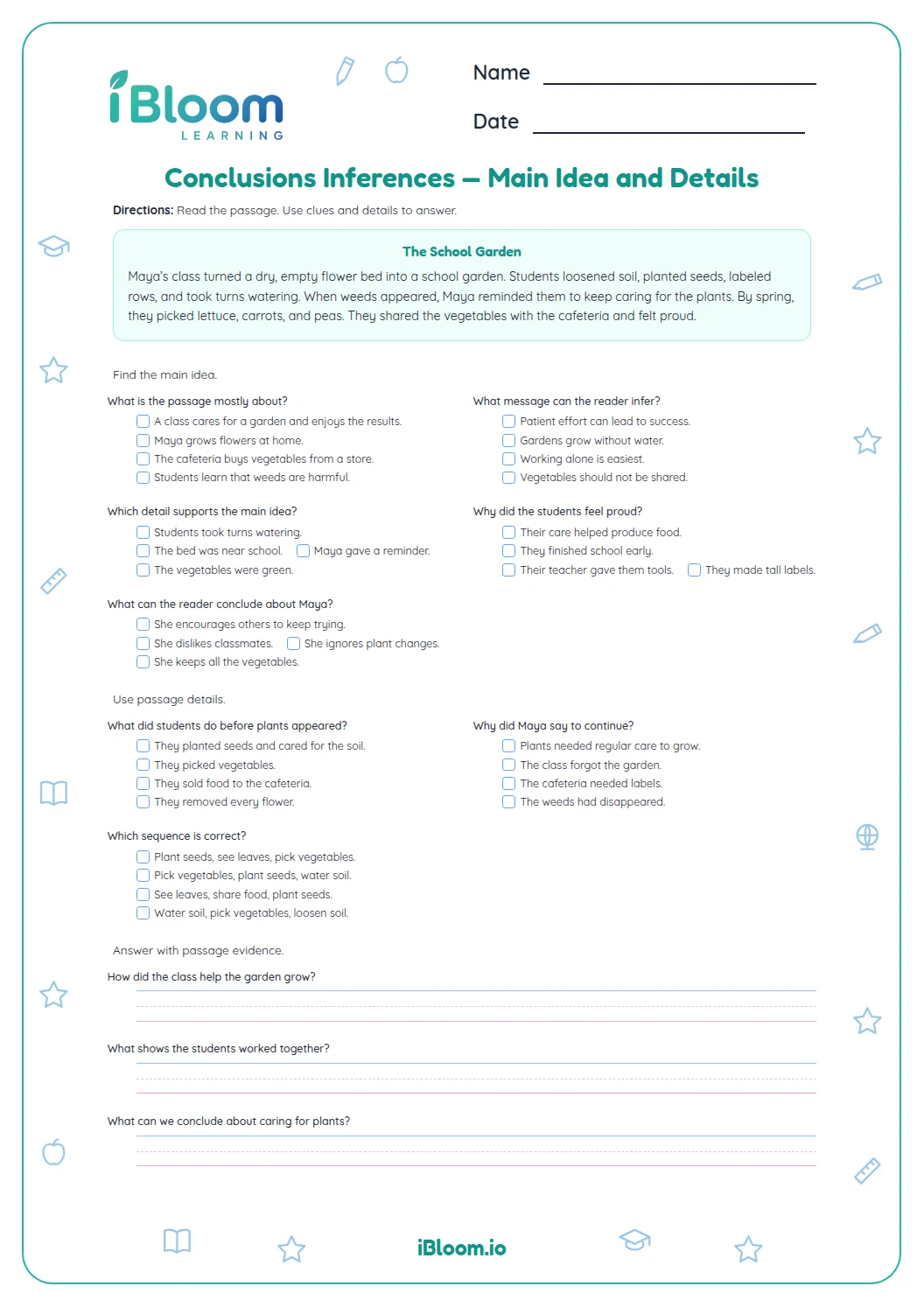
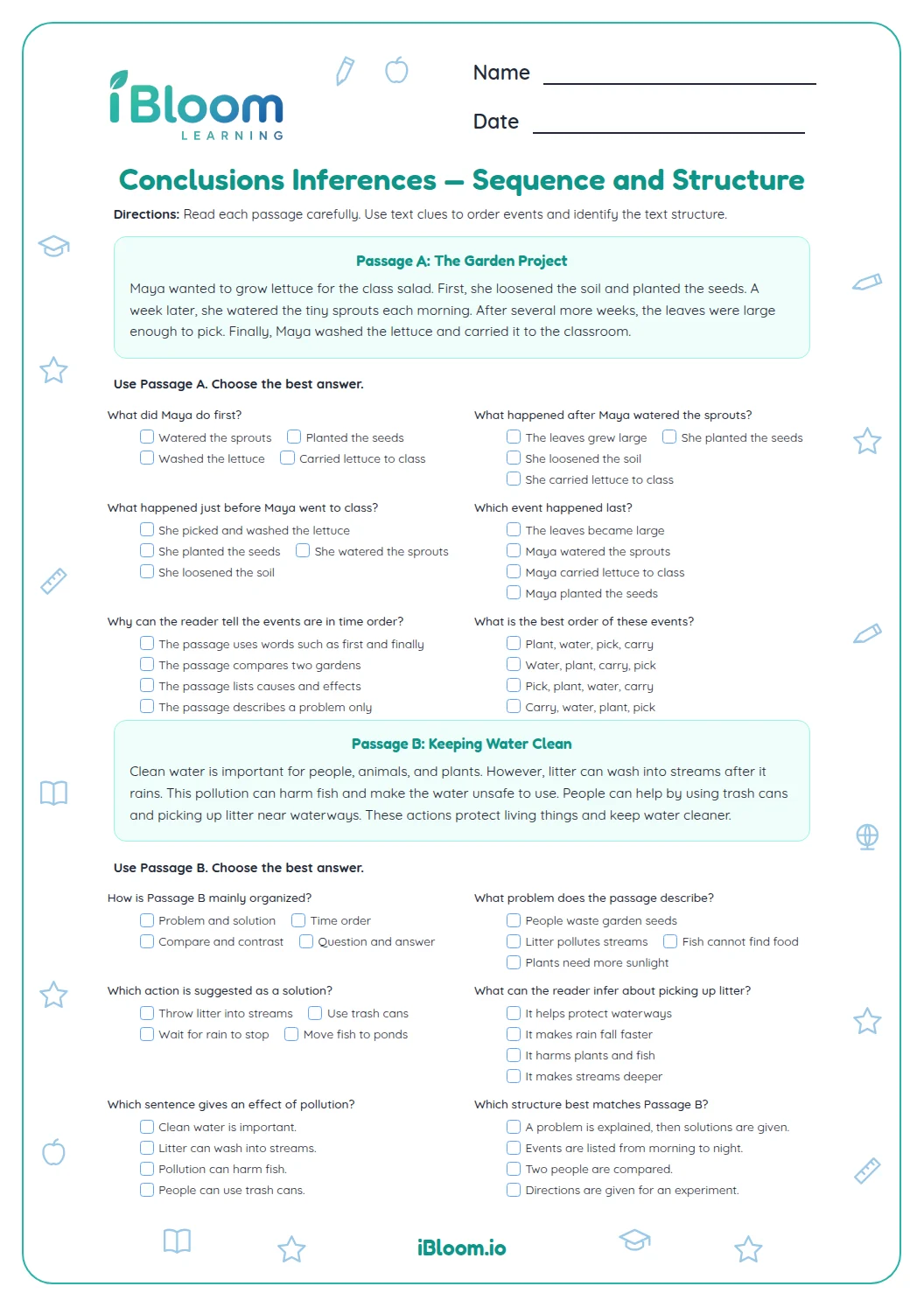
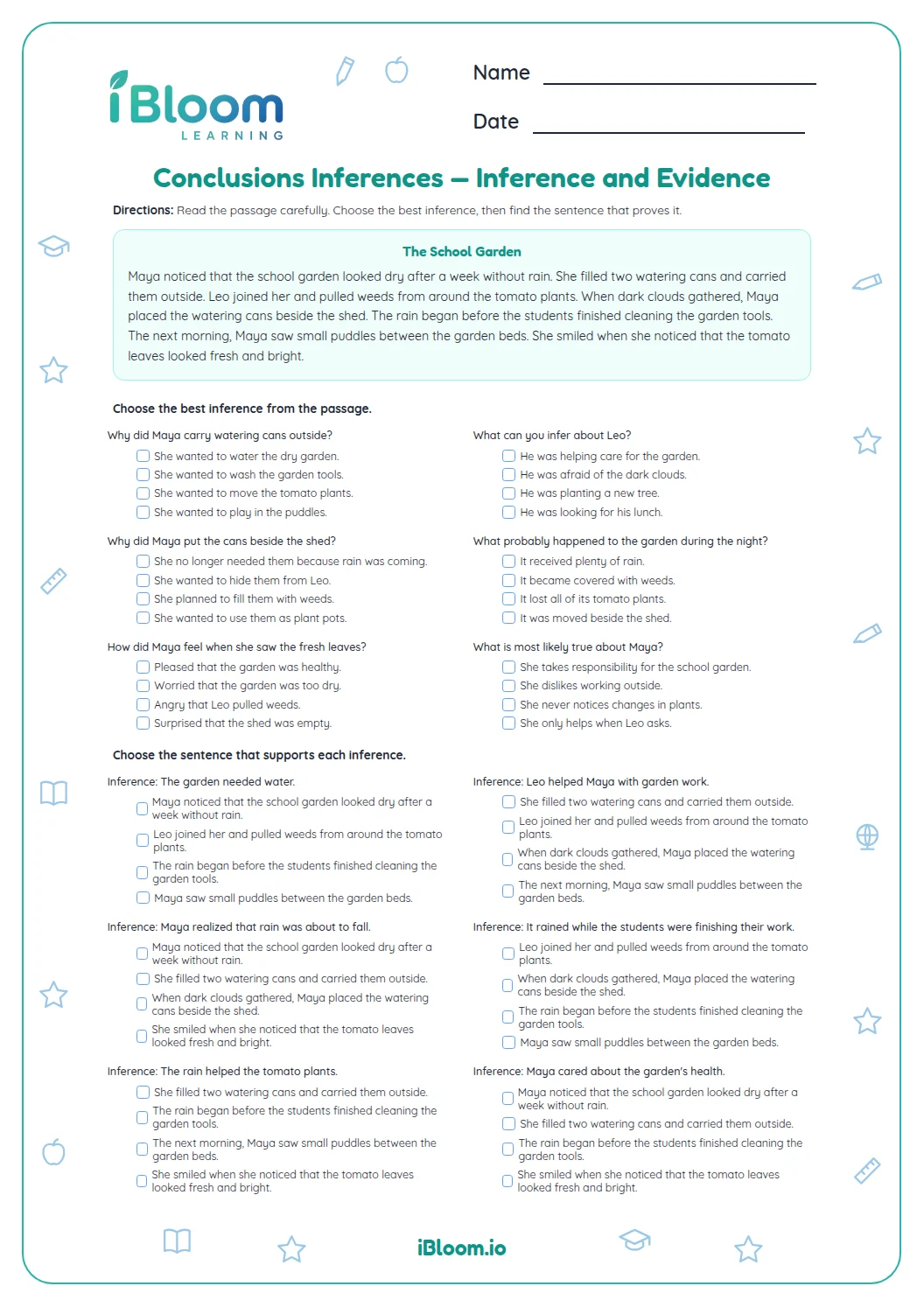
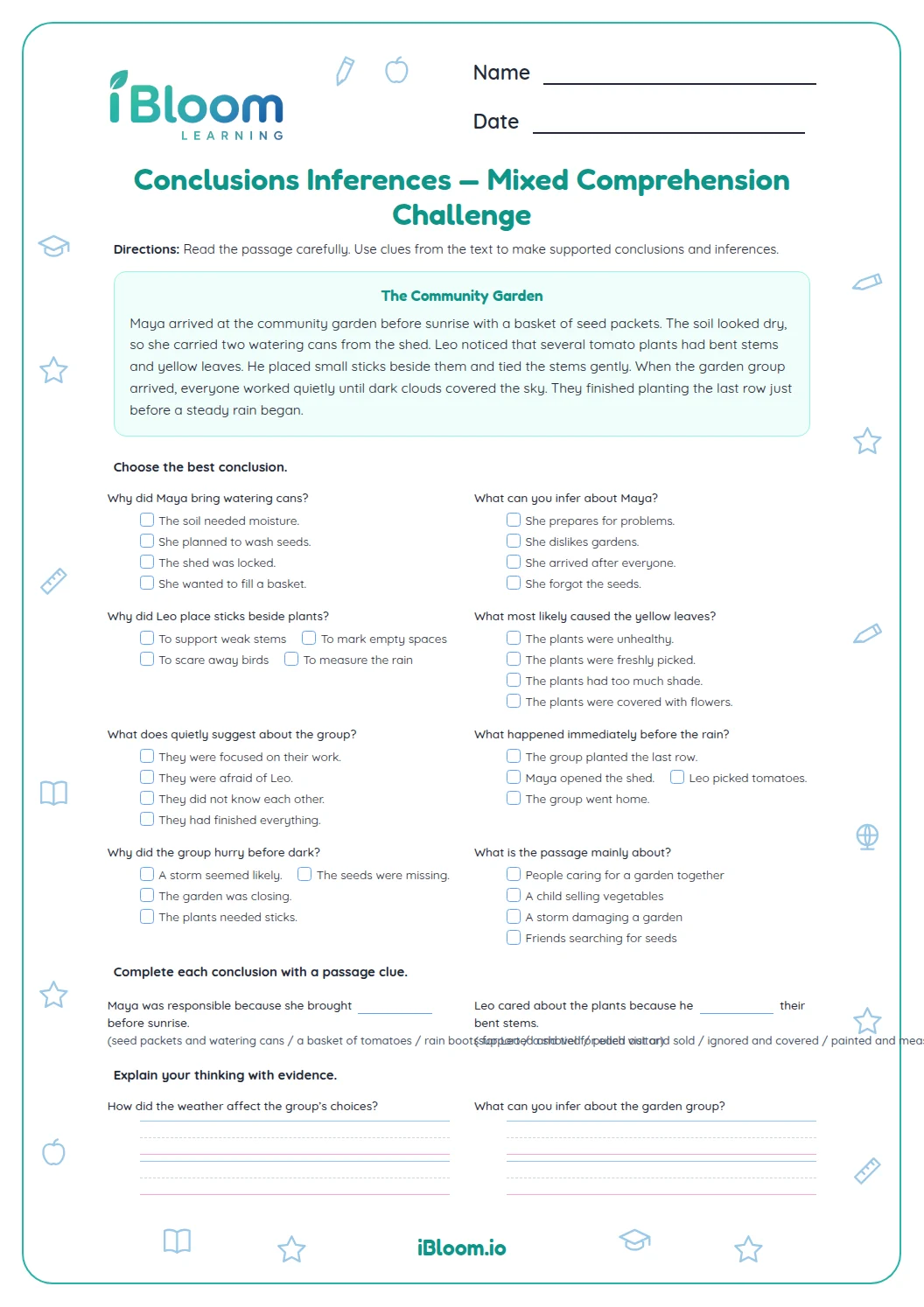
This Grade 5 reading worksheet uses a passage about Maya and neighbors caring for a dry community garden. Fourteen questions ask students to connect details such as drooping plants and an empty rain gauge to supported conclusions. Thirteen fill-in items practice concise evidence and inference thinking; one final response asks for a written conclusion. A separate answer key includes sample wording. The passage work practices CCSS RI.5.1.
Aligned to RI.5.1
How do details support a conclusion?
A conclusion combines a passage clue with a reasonable idea. For example, dry soil and drooping plants show that the garden needed water and care.
- 1Clue: The rain gauge was empty and soil was dry.
- 2Conclusion: Little rain had fallen.
What happens in the garden?
Maya sees dry soil and drooping plants, checks an empty rain gauge, brings water, and works with Leo and Ava. She asks neighbors to help keep the plants watered. Questions connect these details to the garden’s needs.
What kinds of answers are included?
The worksheet has 14 questions: 13 compact fill-ins and one short written conclusion. The separate key gives the expected phrase for each blank and a sample supported conclusion.
How to use this reading worksheet
- 1Read the passage once for the main event.
- 2Return to the paragraph named or described in the question.
- 3Choose a detail that answers the question.
- 4For an inference, explain what the detail suggests.
- 5Write a complete response in your own words.
- 6Compare the idea with a sample response in the key.
Evidence-based reading slips to check
The mistake
Giving an inference without a passage clue.
The fix
Add the detail that led you to the idea.
The mistake
Repeating a detail without answering why it matters.
The fix
Explain what the detail suggests about the event or plan.
The mistake
Treating a possible idea as a stated fact.
The fix
Use phrases such as “This suggests…” and point to the evidence.
Common Core alignment
This passage and its written-response questions practice this Common Core reading standard.
Use accurate passage details to explain explicit ideas and inferences.
On this sheet: Students use details from the passage to explain what it says and what they infer.
Show the official wordingHide the official wording
Quote accurately from a text when explaining what the text says explicitly and when drawing inferences from the text.
What to practice next
Make more practice
Further reading
Questions parents and teachers ask
How do readers support a conclusion with evidence?
A reader connects a detail in the passage to a reasonable idea. Here, the soil is dry and several plants droop toward the ground. Those clues support the conclusion that the garden needs water and regular care, rather than proving a cause the passage never states.
How many questions are on this worksheet?
There are 14 questions about Maya and the community garden. Thirteen ask students to complete a short sentence with a passage detail or conclusion, and one asks for a written conclusion with evidence. A separate answer key includes concise responses and a sample for the final item.
Does the key require the exact same wording?
The key gives concise expected answers for the fill-in items and a sample conclusion for the written response. A student can use different wording if it fits the blank, matches the garden passage, and supports a reasonable idea with an accurate detail.
What happens in the community garden passage?
Maya finds dry soil and drooping plants, checks an empty rain gauge, and brings watering cans. Leo loosens the hard soil while Ava ties tomato plants to stakes. The garden looks healthier by sunrise, and Maya asks neighbors to share watering during the week.
How can I help a child explain an inference?
Ask the child to name a detail from the garden passage, then say what that detail suggests. For example, dry soil and drooping plants suggest a need for water. Check that the conclusion follows from the clue and does not add an unsupported event.