


About this worksheet
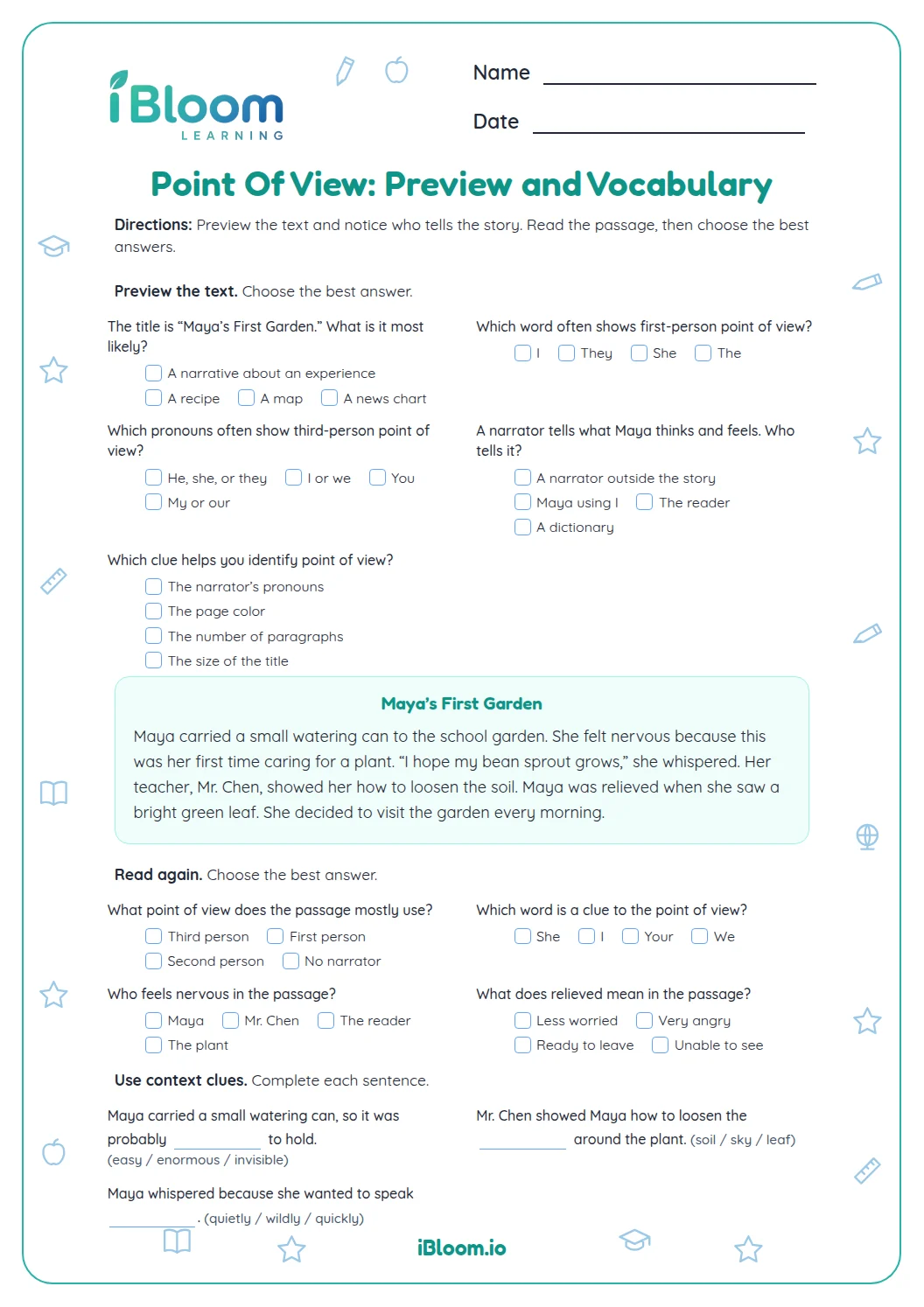
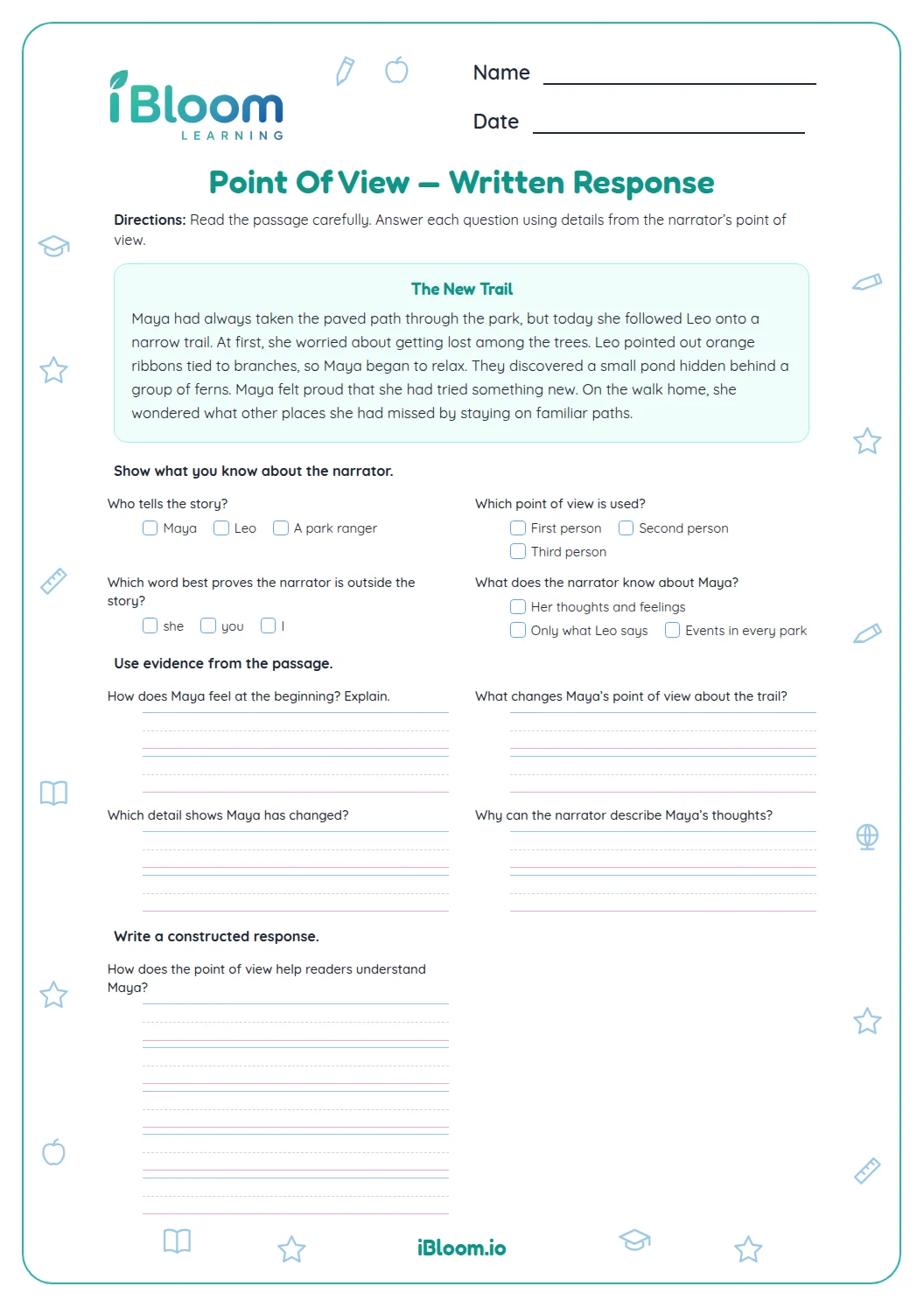
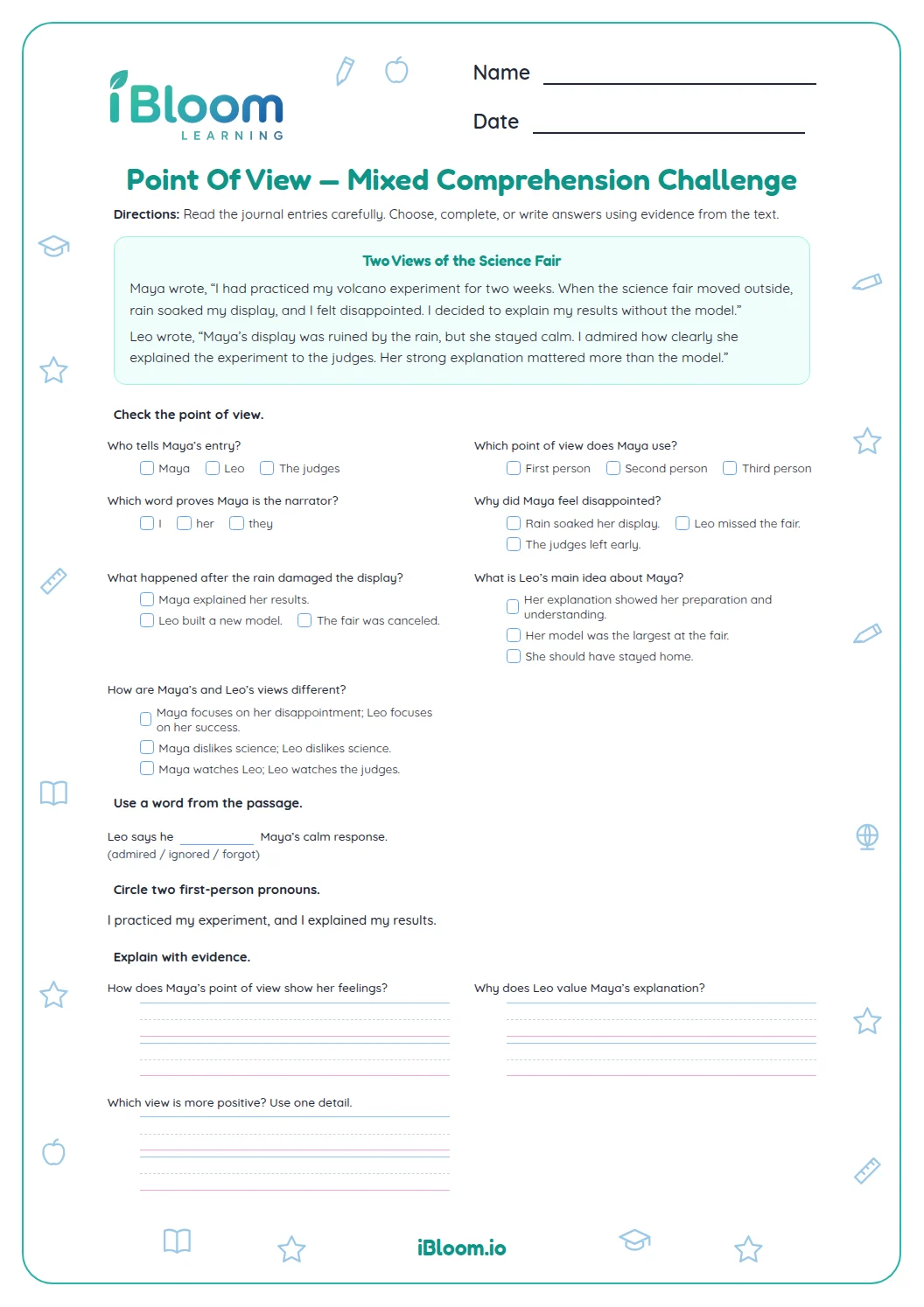
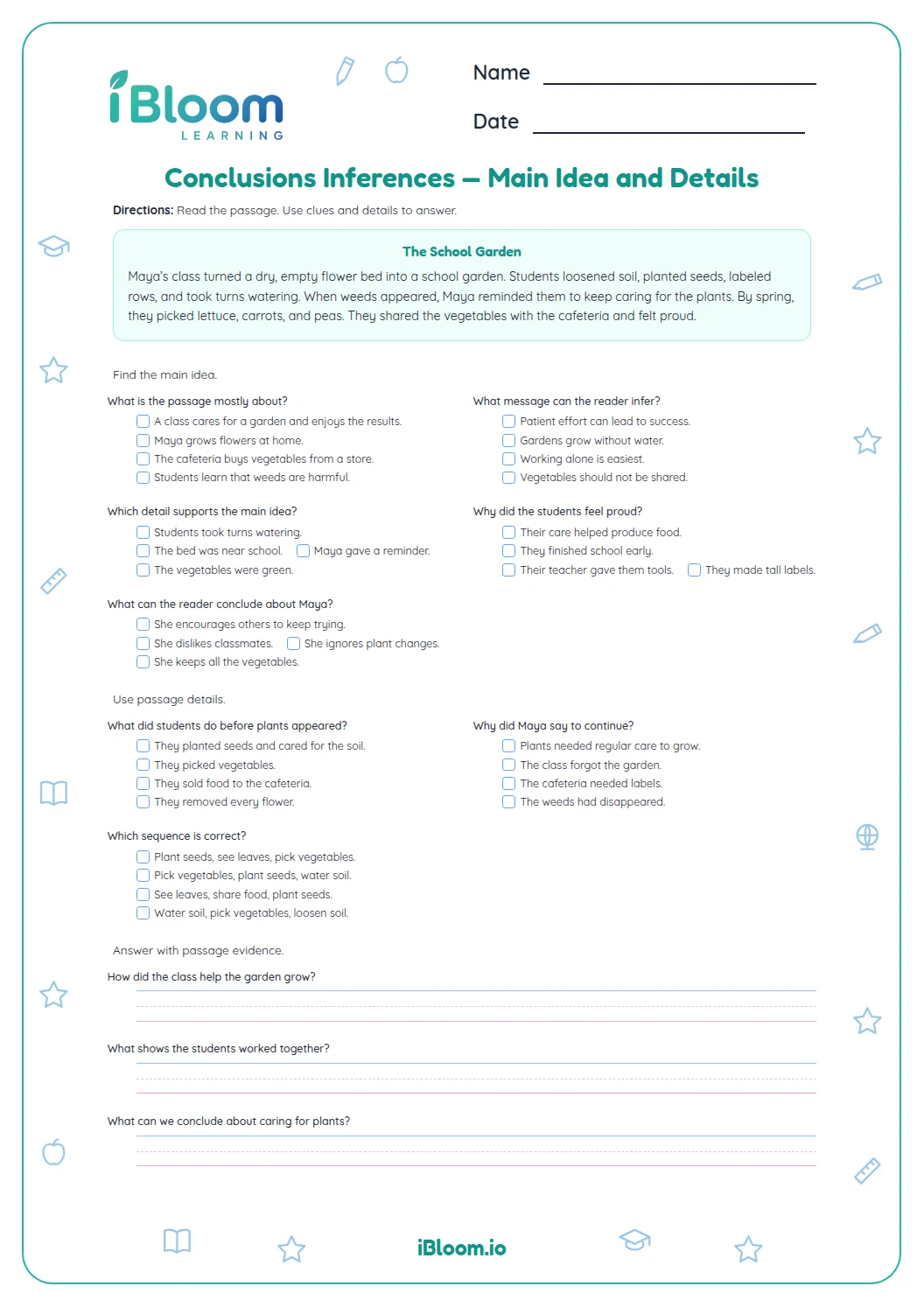
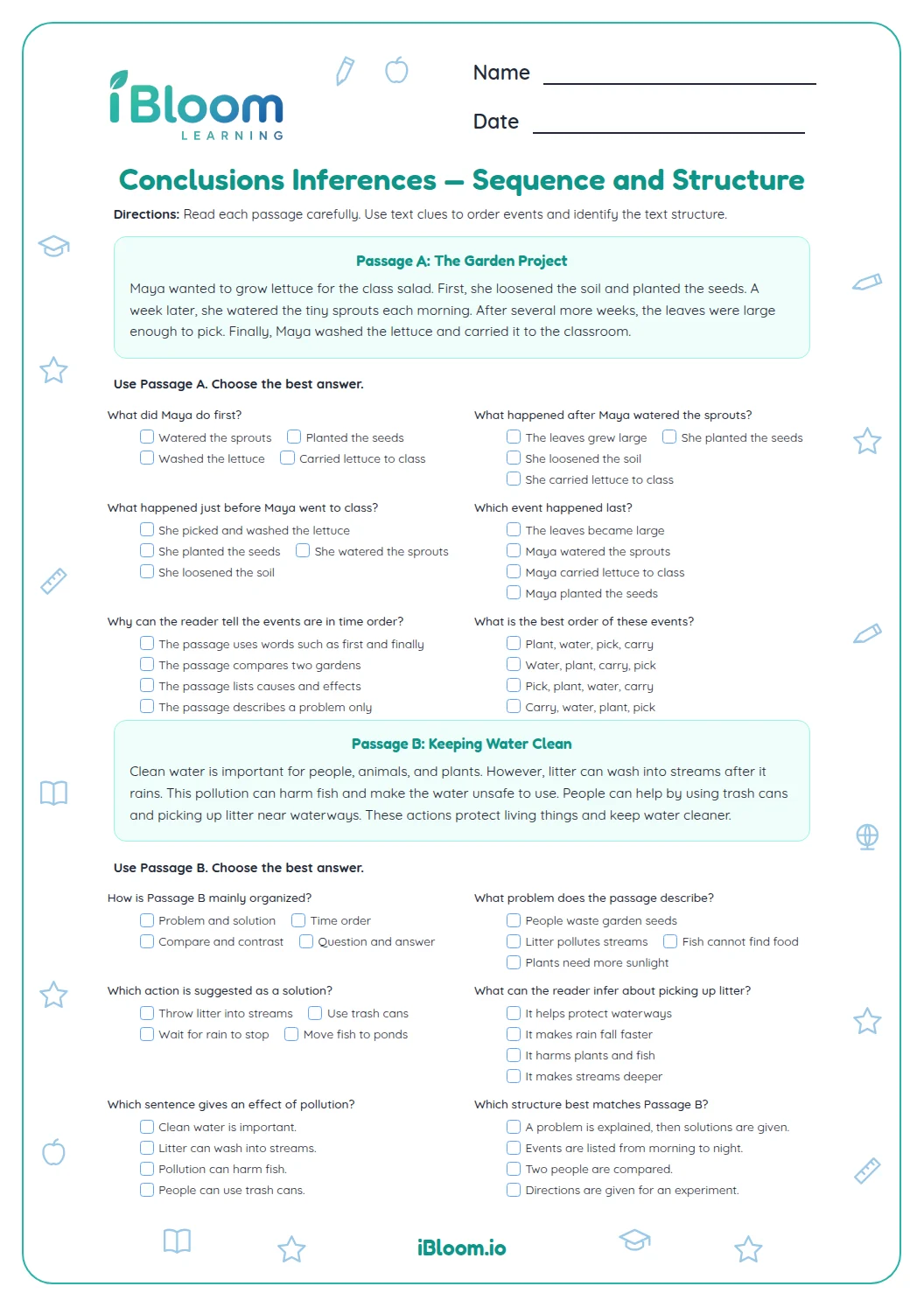
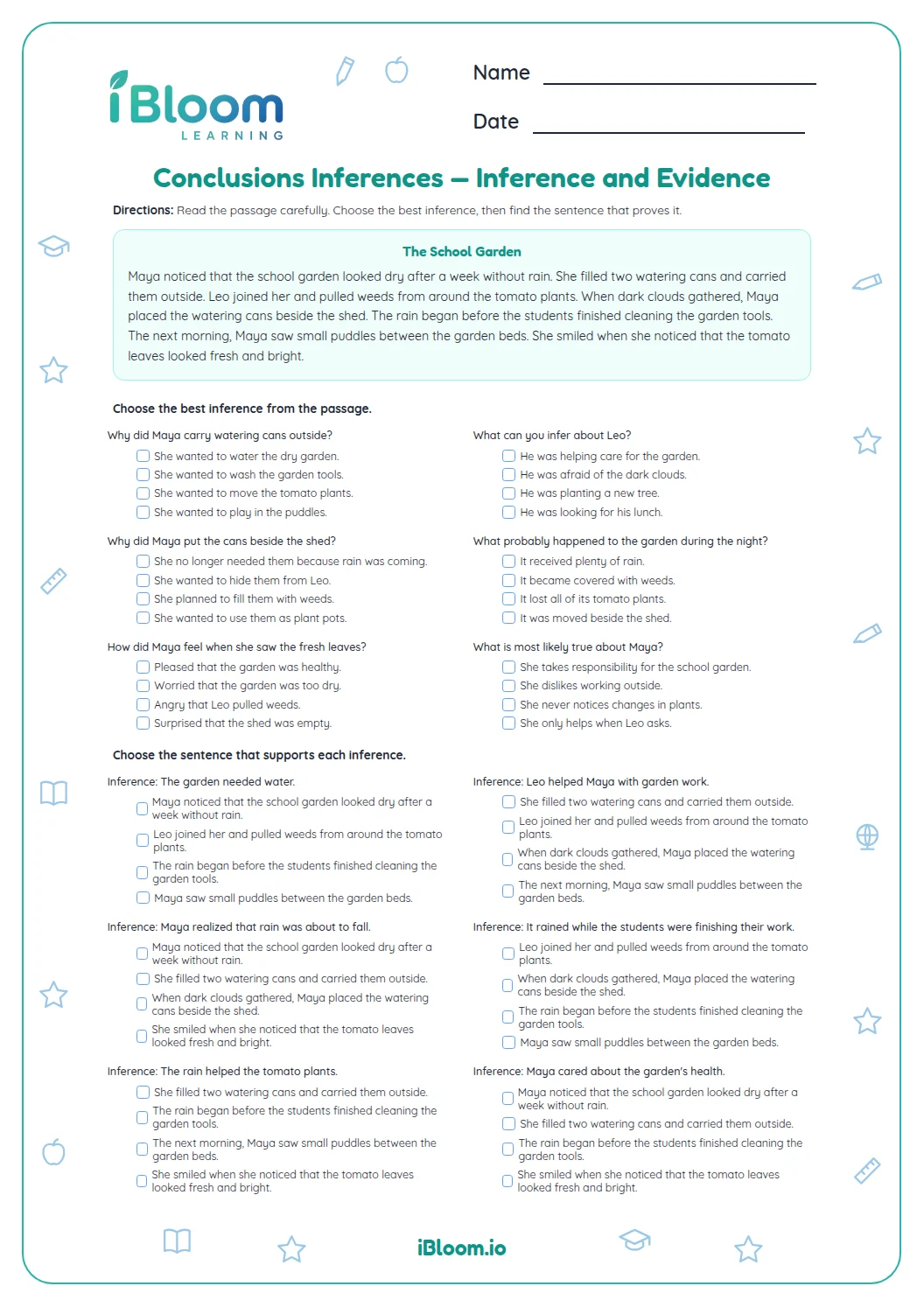
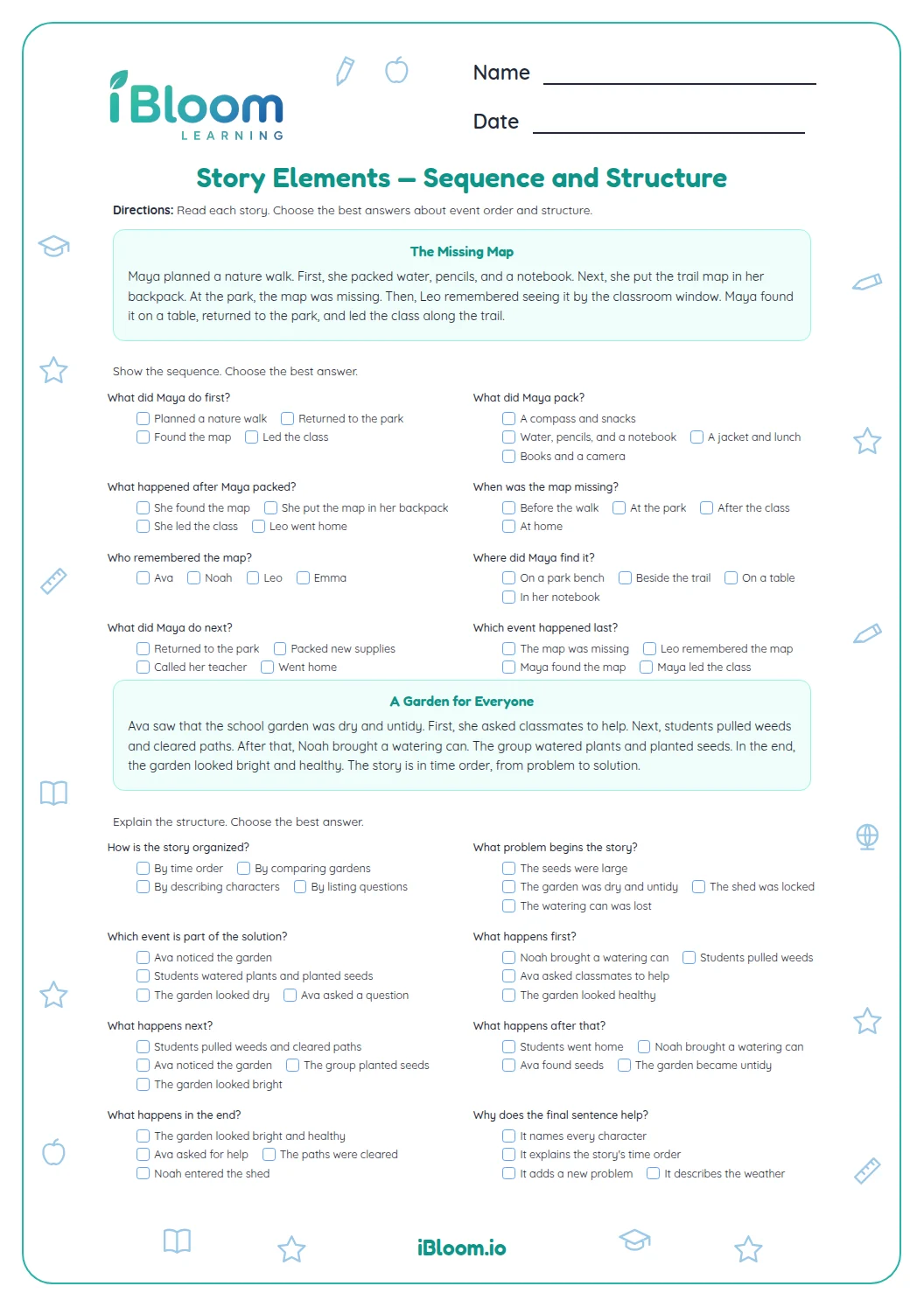
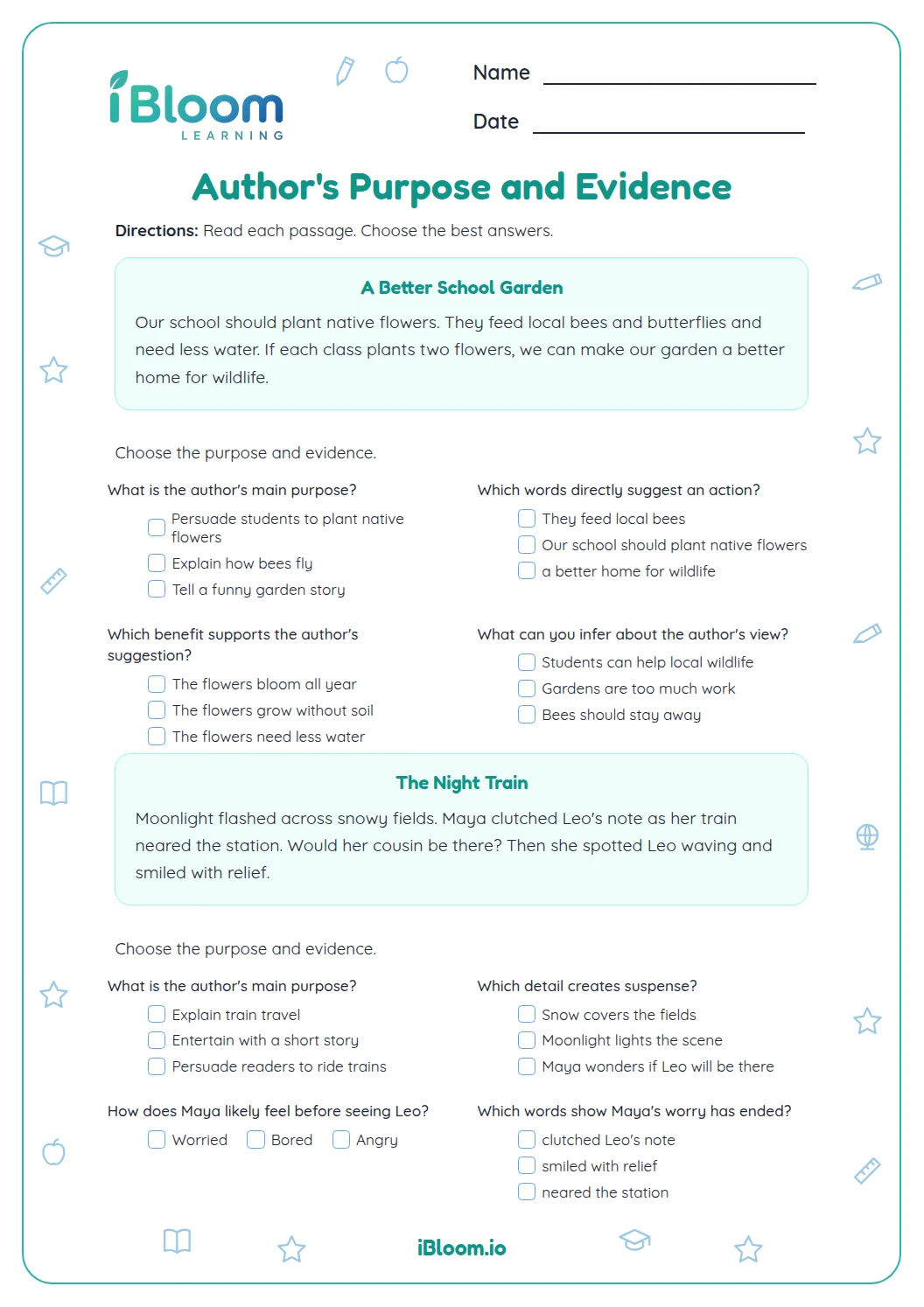
This printable pairs an original first-person story with 14 Grade 5 questions about point of view, inference and text evidence. Readers track a narrator who begins by wanting to manage a garden tour alone and later accepts a classmate’s help. Twelve selected-response items and two short written responses ask what the narrator thinks and does, and which details support each conclusion.
Aligned to RL.5.1 and RL.5.6
Who tells the story, and what can they reveal?
The narrator uses “I” and describes personal thoughts as well as actions. That first-person point of view lets readers follow the narrator’s wish to handle the tour alone, then notice the change after Tessa helps.
Point of view is more than naming “first person.” Ask what information the narrator shares and how the narrator’s feelings shape the way events are told.
- 1The narrator says “I” and reports personal thoughts.
- 2That first-person voice identifies the student narrator as the storyteller.
How do readers pair an inference with a clue?
An inference is a reasonable idea supported by a text clue. The narrator may worry about appearing dependent: the story says they promised to guide visitors without help and hesitated before accepting Tessa’s idea.
Strong answers distinguish a clue from a guess. Tessa’s suggestion to turn the rocking stone and her help holding the sign support the idea that she contributes to the repair.
What will students practice?
The original passage is followed by 14 questions: 12 multiple-choice items in Part B and two short written responses in Part C. Readers identify the narrator, infer motives and changes, and support an answer with a story detail. The separate key marks selected answers and gives sample responses.
How to use this worksheet
- 1Read once for the events, then reread to mark the narrator’s thoughts and actions.
- 2Answer the direct questions before making inferences.
- 3For an inference, choose the idea and the story detail that support one another.
- 4On the point-of-view question, name both the person and a signal word.
- 5Compare open responses with the key’s idea, not its exact wording.
Common mistakes and quick fixes
The mistake
Naming first person but not explaining how the narrator’s perspective affects the story.
The fix
Find a thought or feeling only this narrator could report, then connect it to the event.
The mistake
Making an inference without a text clue.
The fix
Underline a sentence that supports the idea and include it or paraphrase it.
Common Core alignment
This worksheet focuses on the named skill and the grade-level work that supports it.
Quote accurately from a text when explaining what it says and when drawing inferences.
On this sheet: Questions ask students to draw inferences and support written responses with accurate story details.
Show the official wordingHide the official wording
Quote accurately from a text when explaining what the text says explicitly and when drawing inferences from the text.
Describe how a narrator’s point of view influences how events are described.
On this sheet: Students identify the first-person narrator and track how the narrator’s view of accepting help changes.
Show the official wordingHide the official wording
Describe how a narrator’s or speaker’s point of view influences how events are described.
What to practice next
Make more practice
Further reading
Questions parents and teachers ask
What is first-person point of view?
A character or narrator tells the events using words such as “I” or “we.” Readers hear that narrator’s thoughts and feelings directly. In this passage, the first-person voice helps readers notice the narrator’s changing view of accepting help. The questions invite readers to follow that storyteller.
What is an inference?
An inference is a reasonable conclusion based on story details and what a reader knows. Readers should be able to point to evidence for the idea. The narrator’s promise to work alone and later acceptance of Tessa’s help support an inference about changing priorities.
How should students check their choices?
Students can return to the passage and find a detail that supports the selected answer or written response. The answer key marks the best-supported choices and gives sample responses, while pointing to a clue explains why an answer fits the story.
How does the narrator change?
At first, the narrator wants to prepare the tour without help. After Tessa offers a useful idea, the narrator accepts her help and later gives her credit. Those actions show a shift toward valuing teamwork; students can find evidence in the final paragraphs.
How long is the passage?
The passage is an original short story about repairing a garden path before a tour. Students read it for the events, then return to specific lines as they answer 12 multiple-choice questions and two written responses. The answer key is printed separately.