


About this worksheet
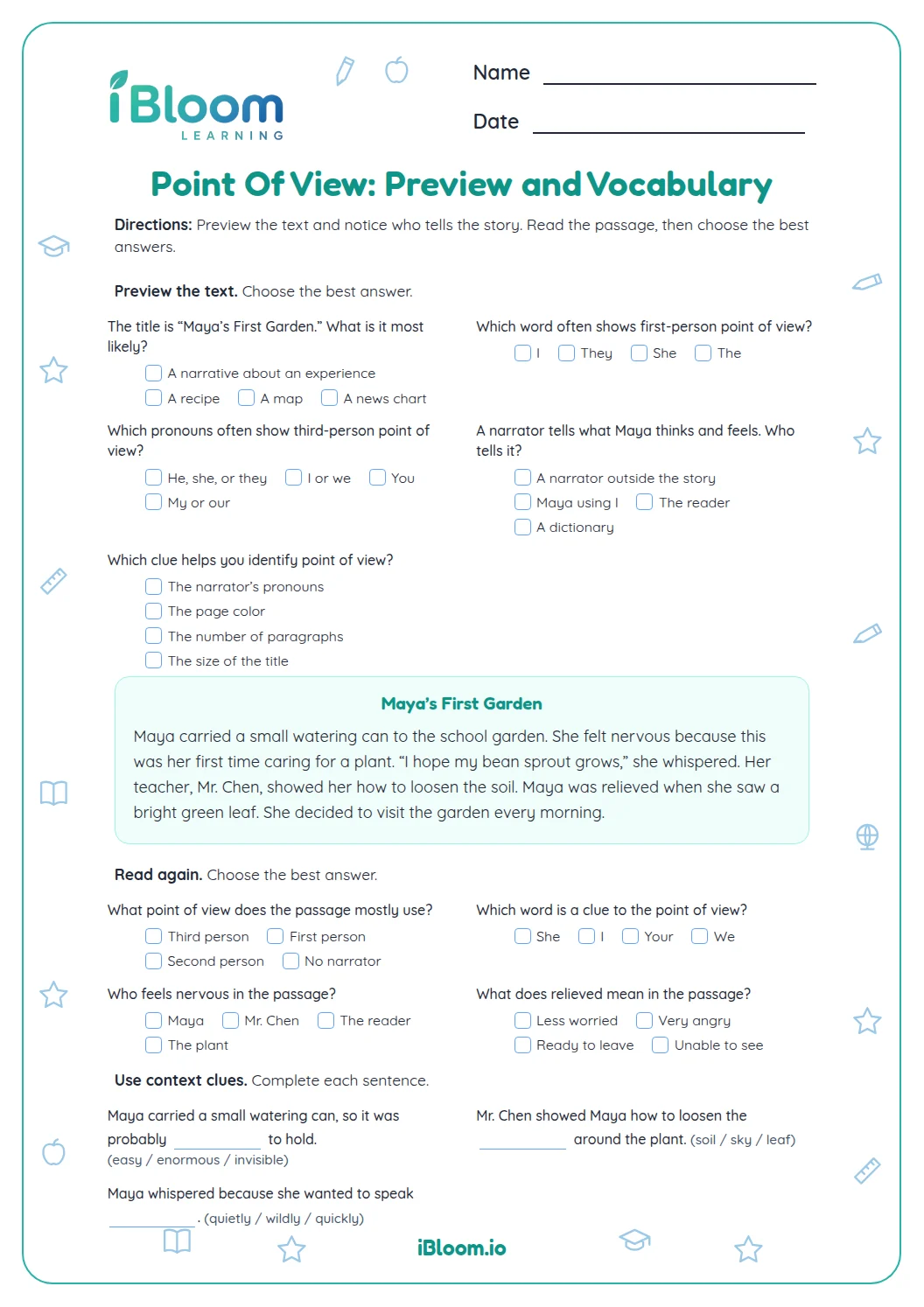
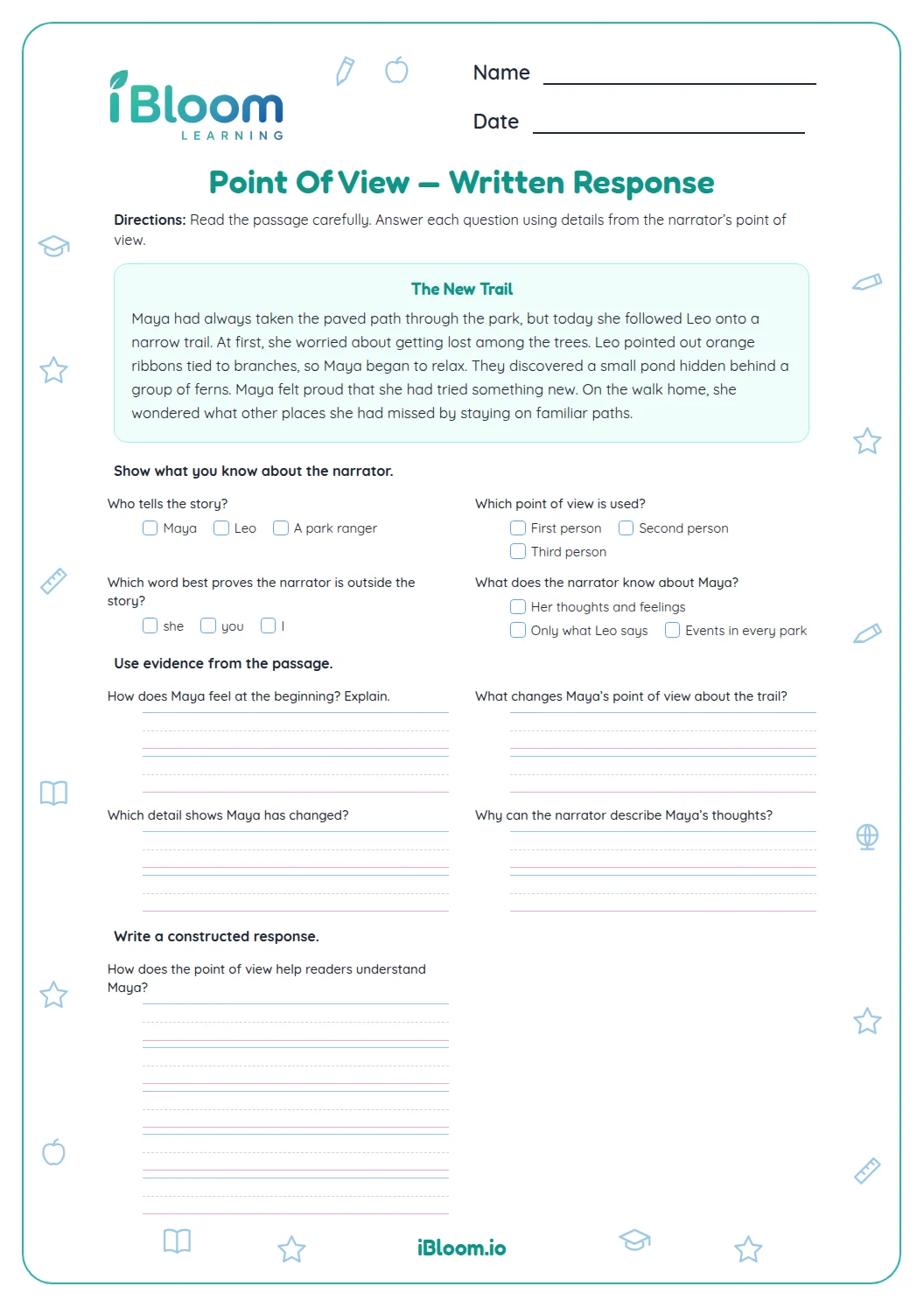
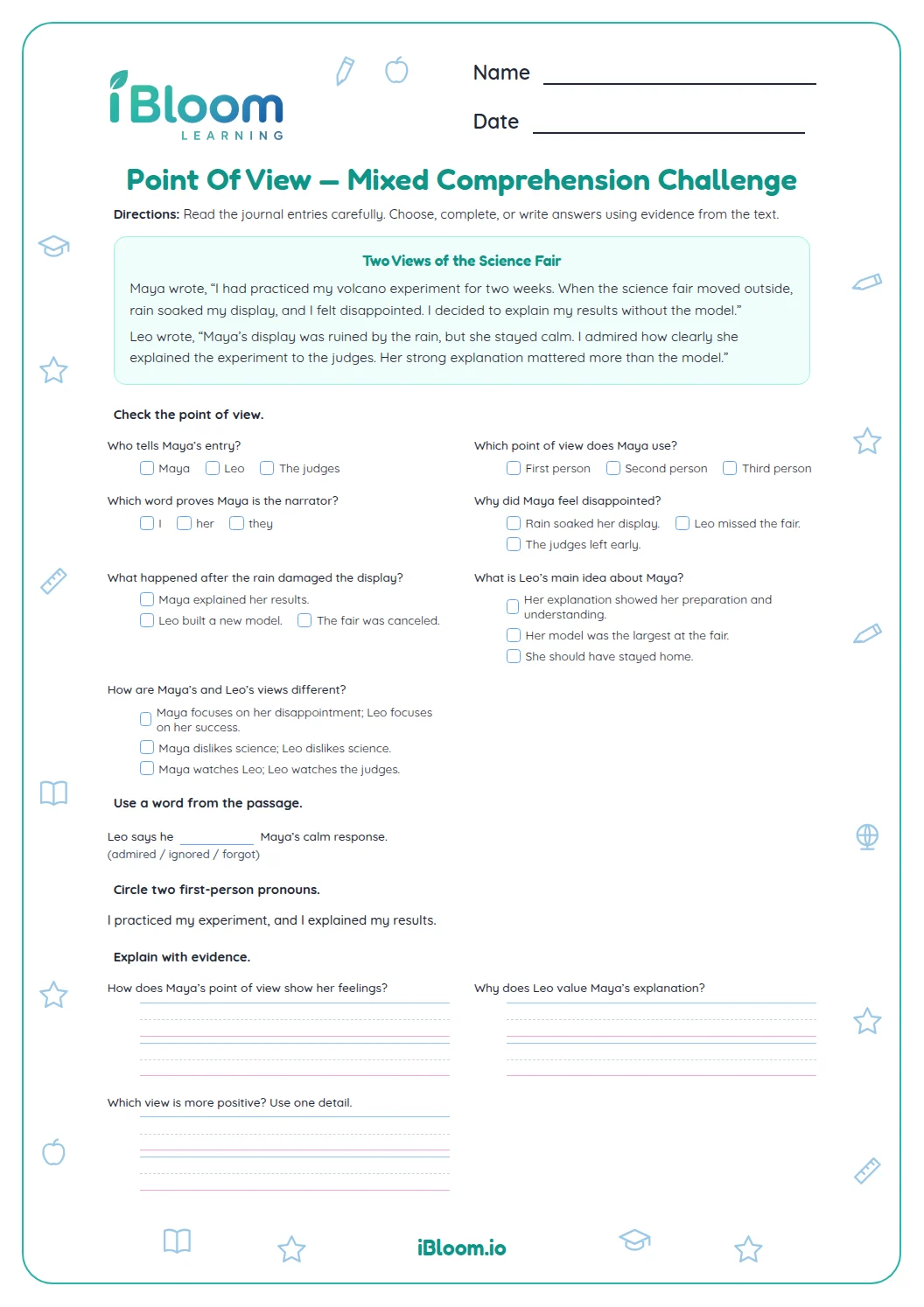
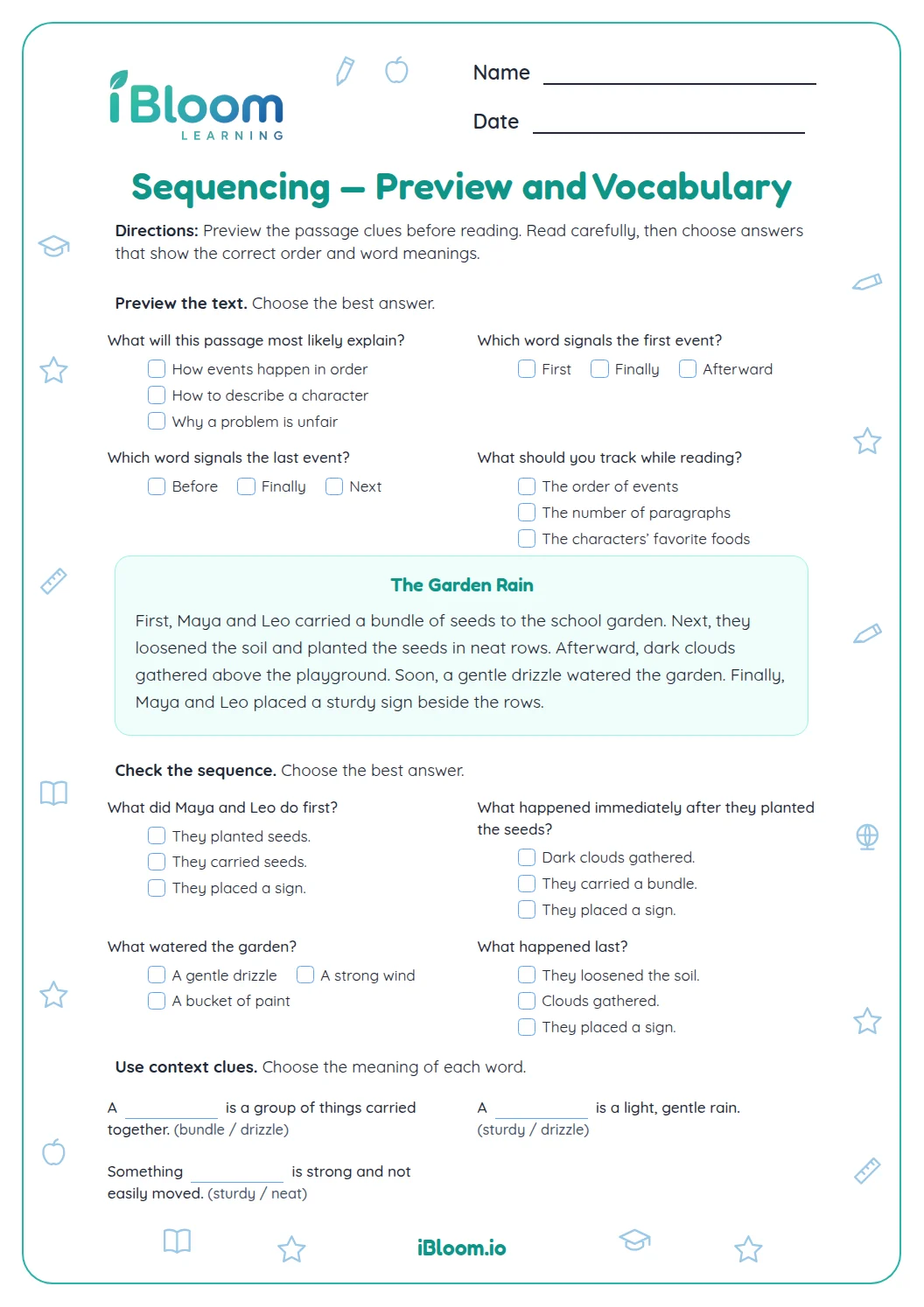
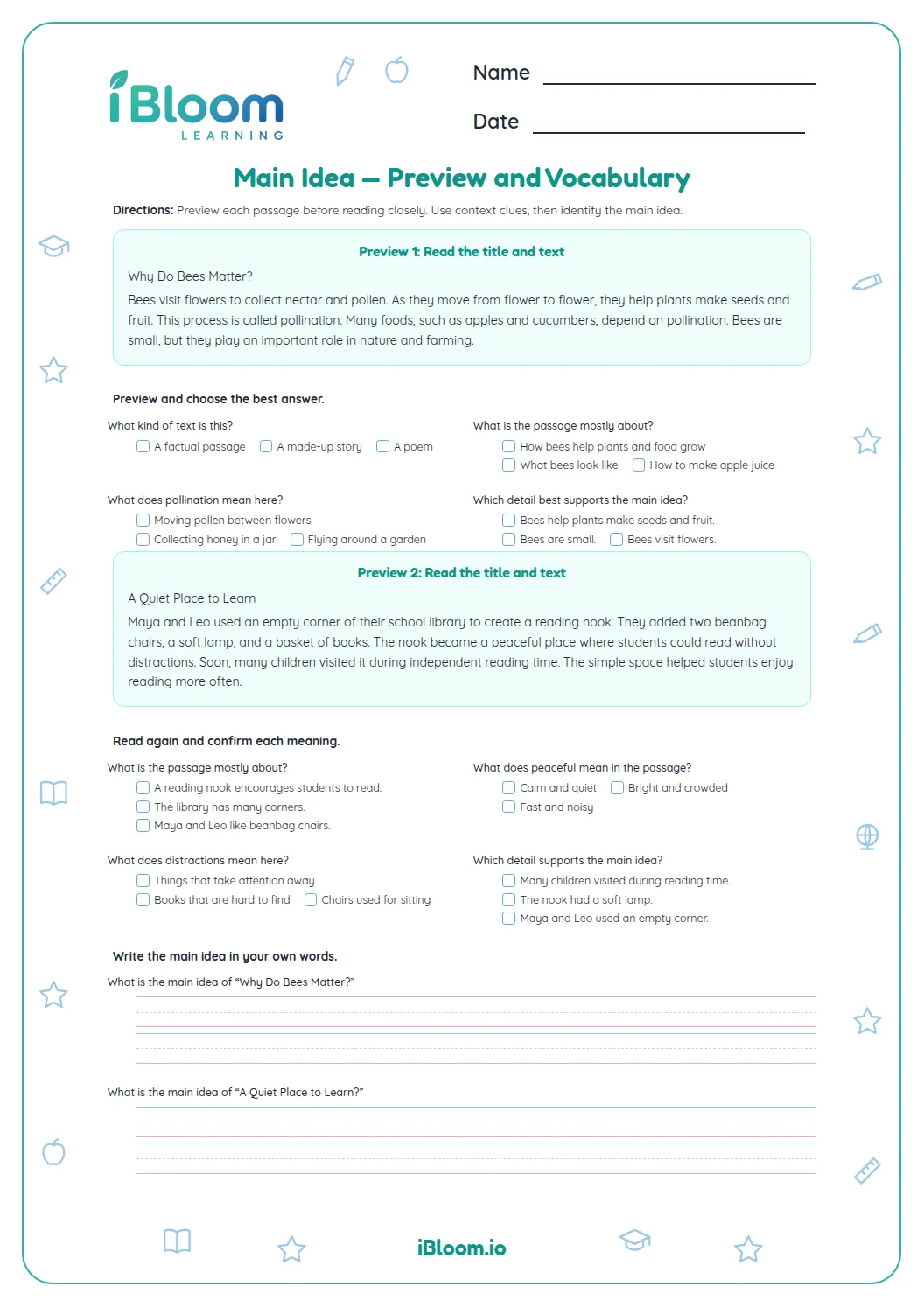
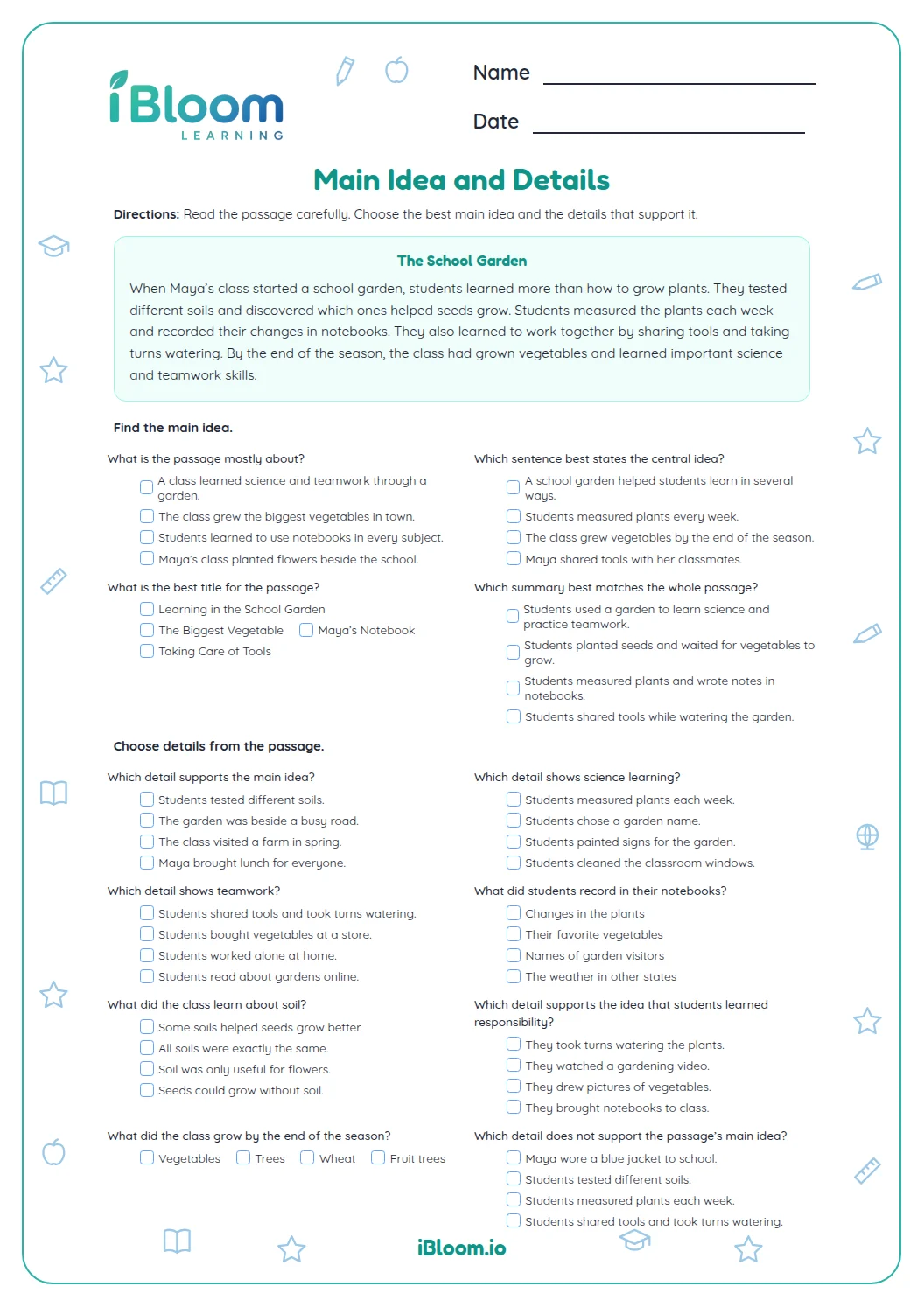
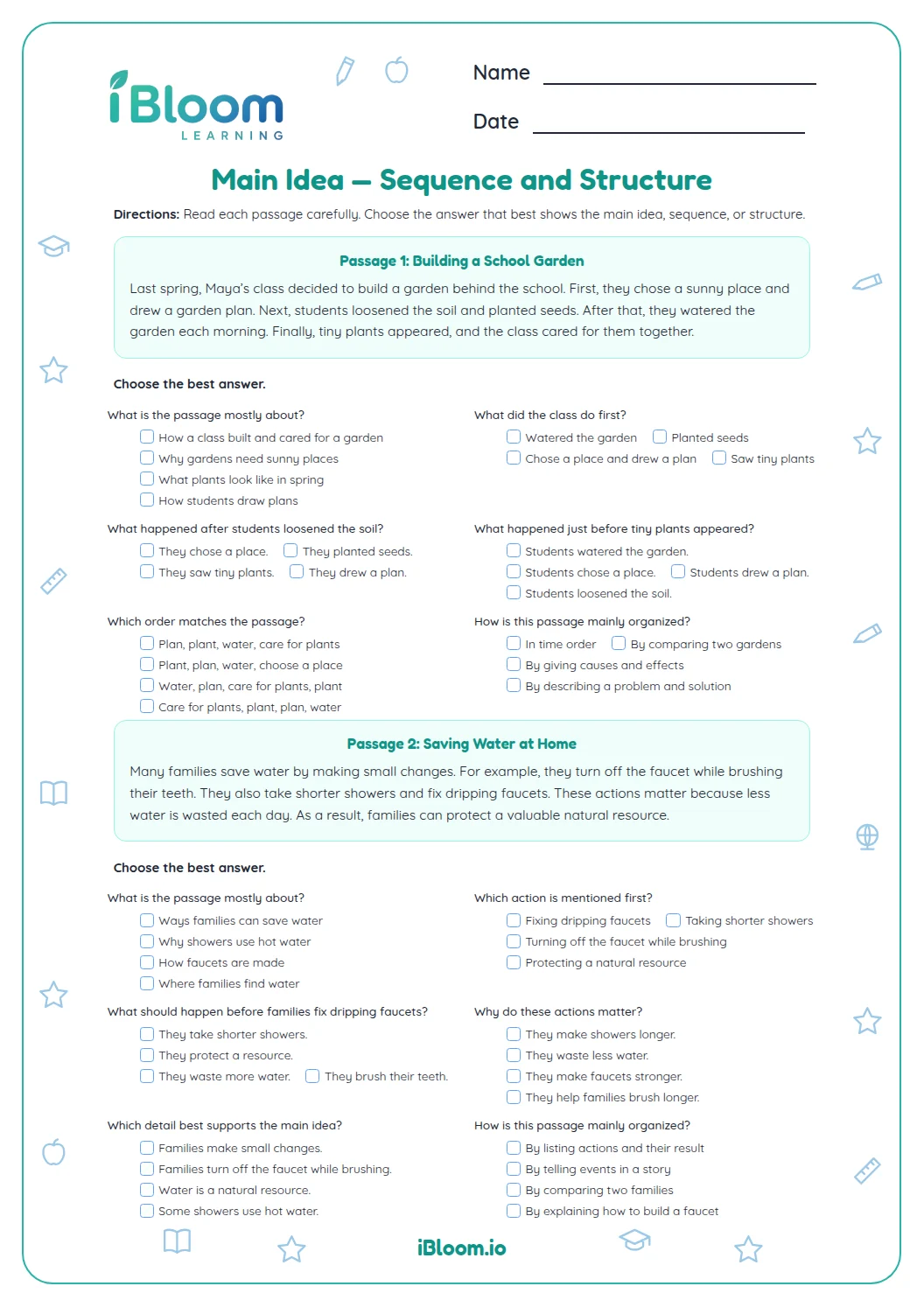
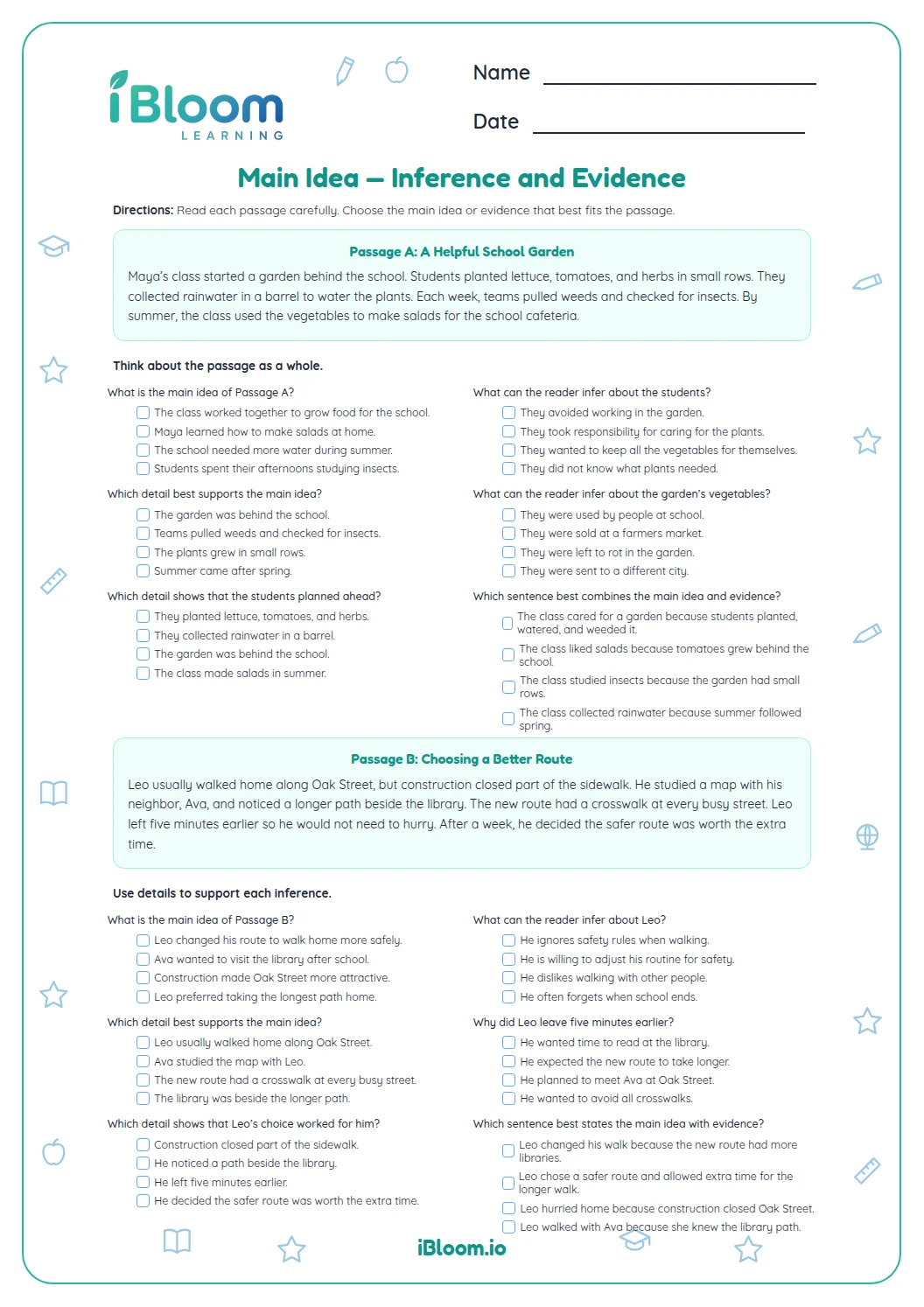
This Grade 5 printable uses two original passages: a first-person story about a garden gate and a third-person explanation of a science demonstration. Students identify each narrator, follow events in order, and recognize how the passages are organized. Fourteen multiple-choice questions ask them to use details from both texts. The page practices CCSS RL.5.6 and includes an answer key.
How does the gate problem unfold?
The worksheet keeps the two passages from the original sheet’s skill mix: a first-person garden story and a third-person science explanation. In the gate story, the narrator notices the problem, finds a loose screw, and sees the latch work after a repair.
- Garden story: first-person narration
- Science explanation: third-person narration
- Both passages: events arranged in a clear order
What clues reveal point of view and structure?
Pronouns help identify who tells a passage. Signal words and event details help readers follow sequence; the way the details fit together reveals the passage’s structure.
- 1The question asks what happened before the hinge was tightened.
- 2Luis held the gate steady while the custodian worked.
- 3That detail places Luis’s action just before the repair is finished.
How should a reader support an answer?
Use evidence that answers the exact question. A point-of-view answer names who tells the events; a sequence answer identifies what came before or after; a structure answer describes how the whole passage is arranged.
How to use this worksheet
- 1Read once to understand why the gate will not close.
- 2Underline words such as I and our to notice who tells the story.
- 3Mark the problem, the clue, and the repair in the passage.
- 4Answer the sequence questions by returning to the event order.
- 5Check the key and point to a passage detail for each answer.
Common mistakes and quick fixes
The mistake
Calling Luis the narrator because he appears in the story.
The fix
Check who says “I checked the latch”; that speaker narrates.
The mistake
Mixing up the loose screw and the original problem.
The fix
The gate will not close; the screw is a clue to its cause.
The mistake
Naming chronology without explaining the overall pattern.
The fix
Notice that the passage moves from a problem to a repair.
What to practice next
Further reading
Questions parents and teachers ask
How many passages and questions are included?
The worksheet has two passages and 14 multiple-choice questions. One passage follows a student helping with a garden gate; the other explains a science demonstration. The questions ask about narrator clues, event order, and how each passage is organized. The answer key is included.
How can a reader tell who narrates the garden story?
Look for the person who uses first-person words such as “I” and “our.” In the garden story, the speaker says “I thought,” “I saw,” and “I checked,” so the narrator is part of the events. The question choices ask students to connect those clues to the narrator.
What structure does the garden-gate passage use?
The gate story centers on a problem and its solution. The gate will not close, the students find a loose hinge screw, and the custodian repairs it. The story also follows time order, so students can use both the larger structure and the sequence of events.
How does the science passage show sequence?
The science passage uses time-order words such as “First,” “Then,” and “Finally.” Those words help readers follow how warm water creates vapor, how the vapor cools, and how drops form. Questions about what happened before another event ask students to use that order.
What should a student do when two choices seem possible?
Reread the sentence that relates to the question and check what it actually says. A question about sequence asks for a specific earlier or later event, while a question about point of view asks who tells the passage. Matching the wording to text evidence helps distinguish the choices.