



About this worksheet
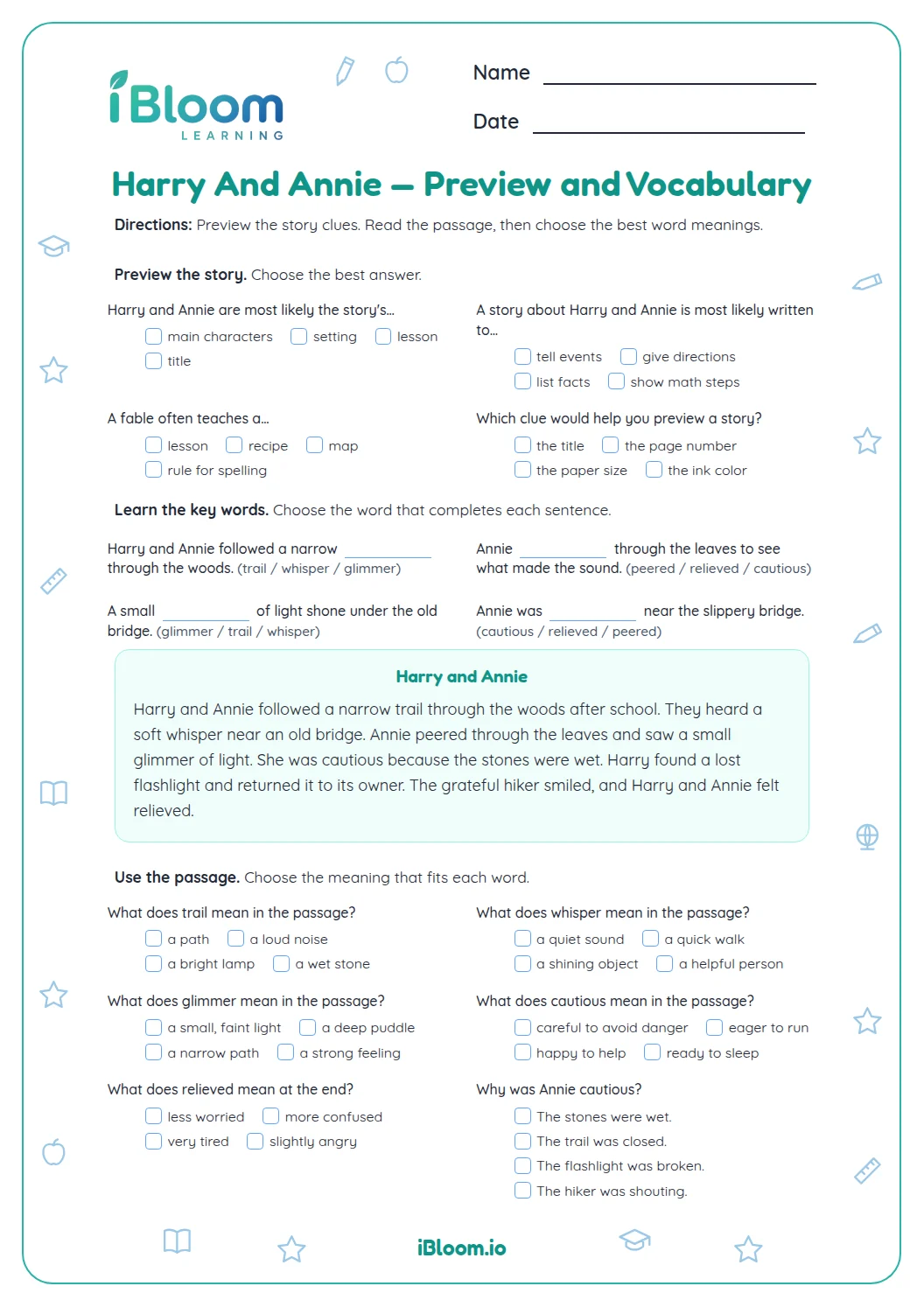
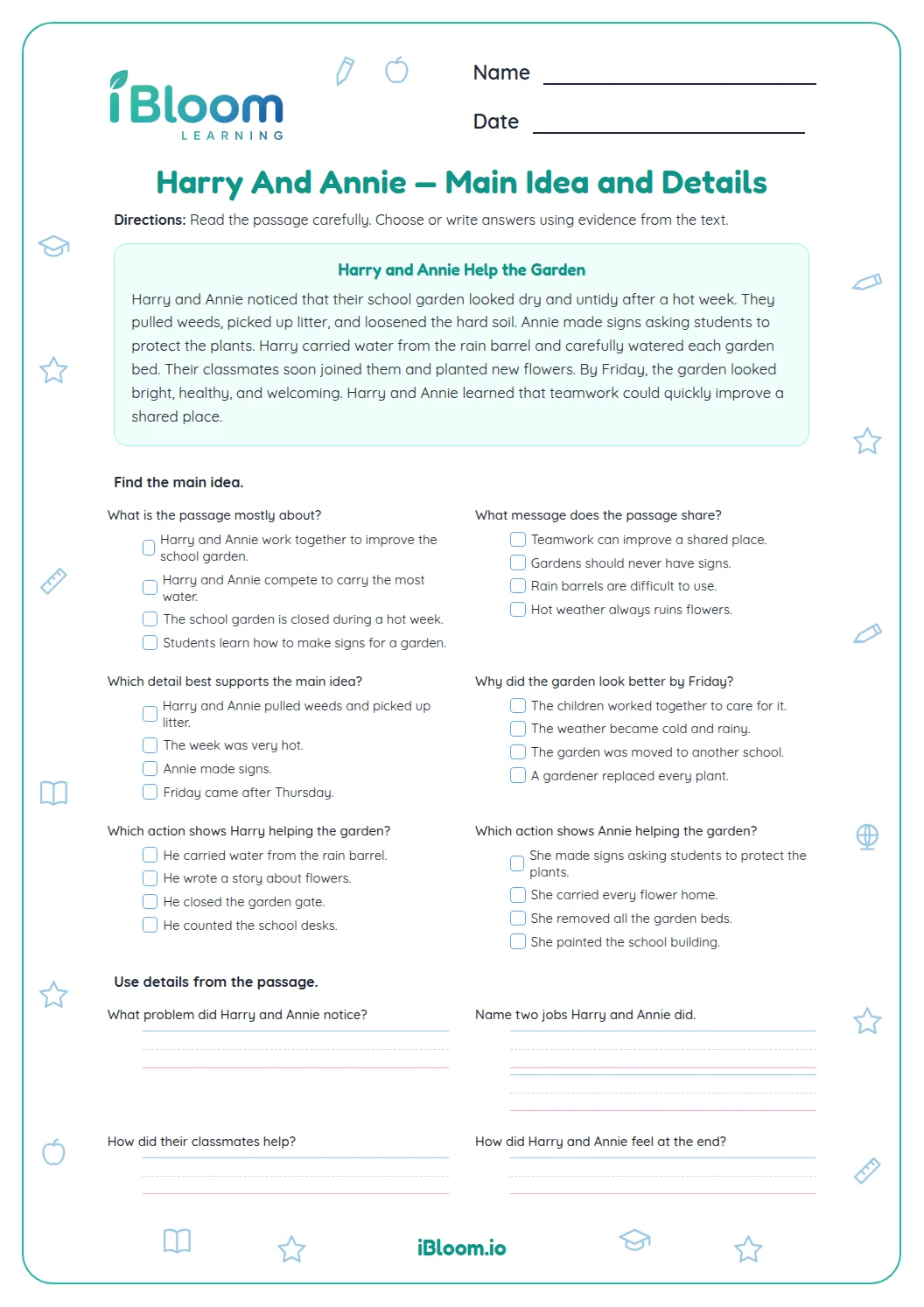
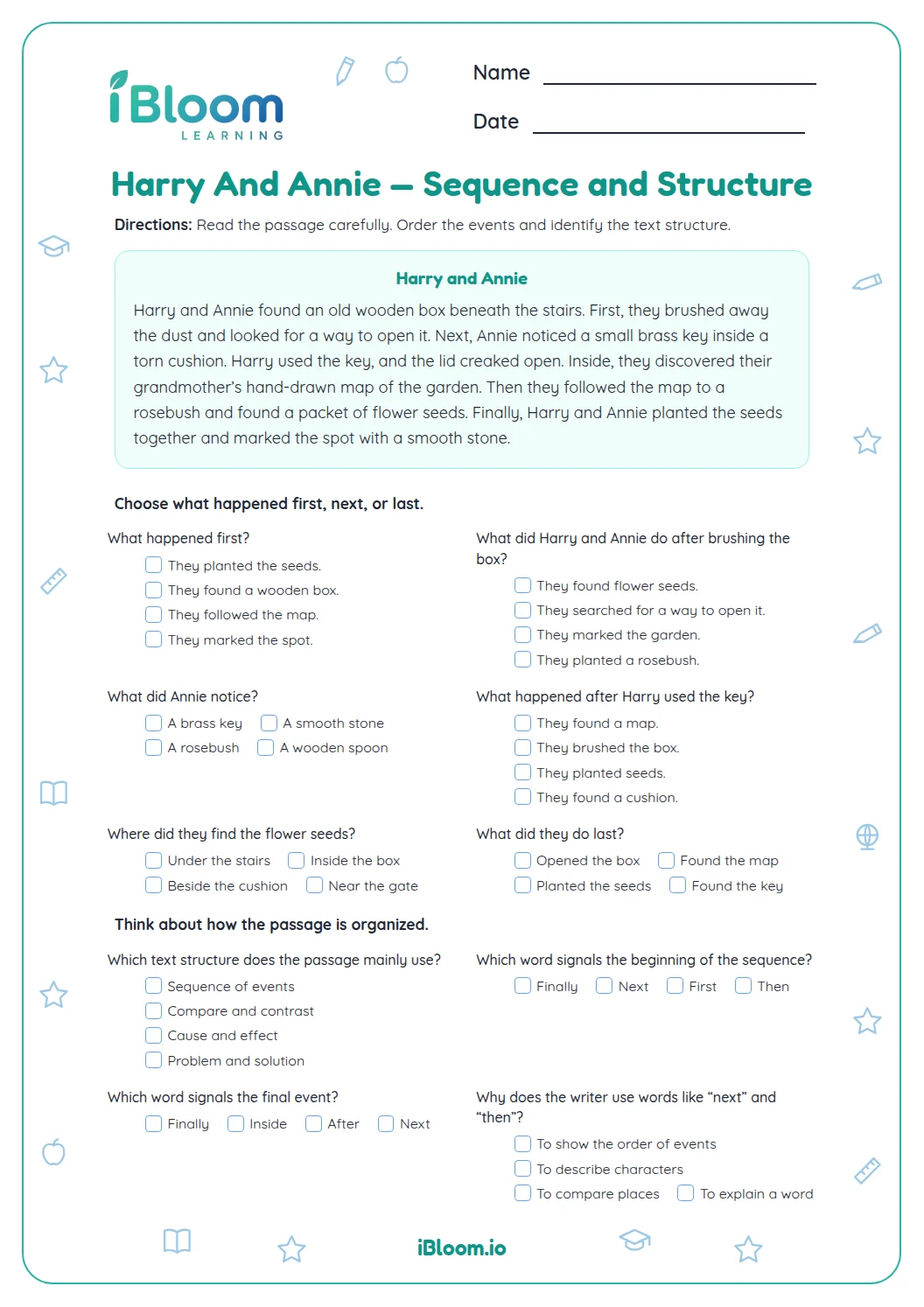
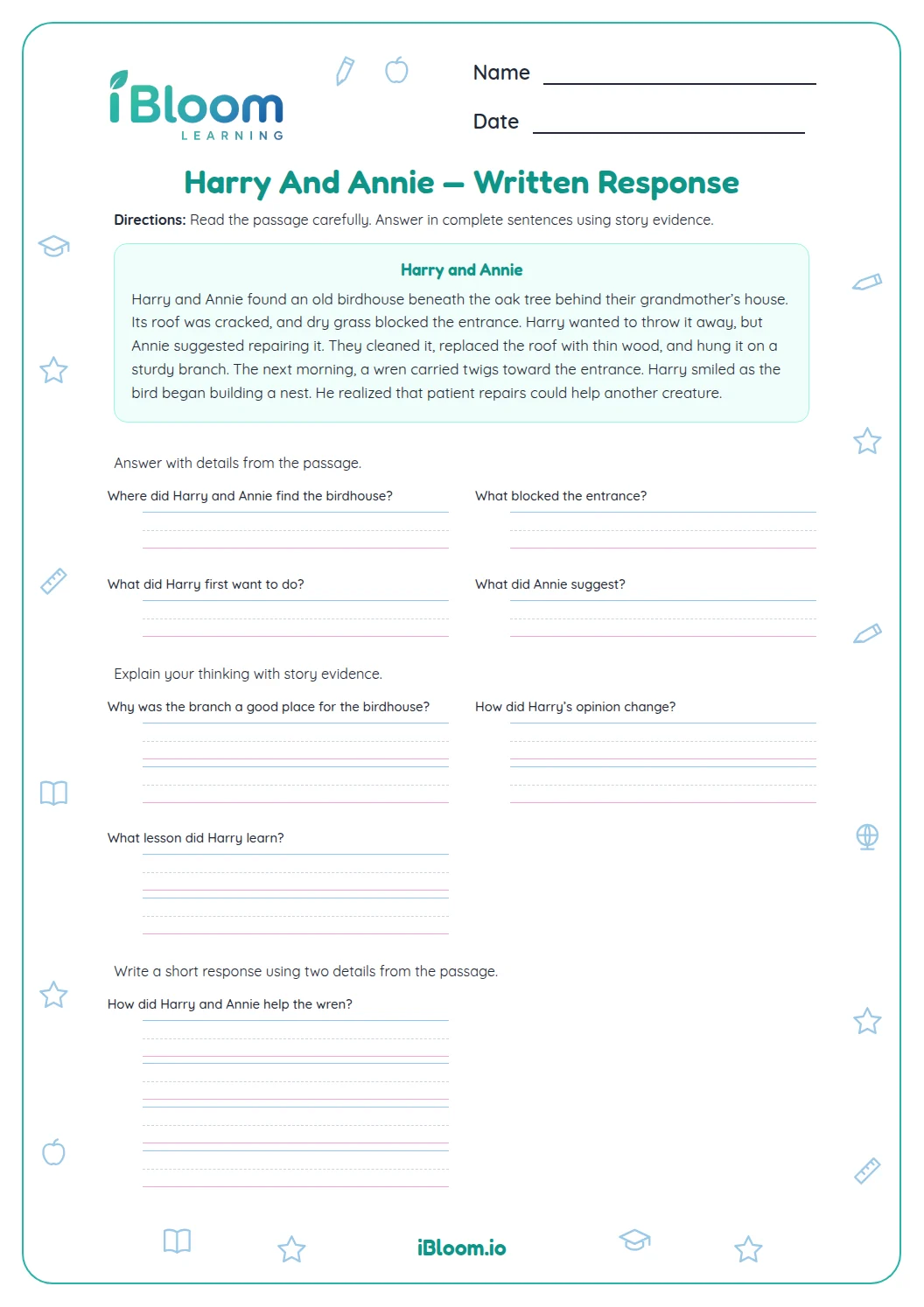
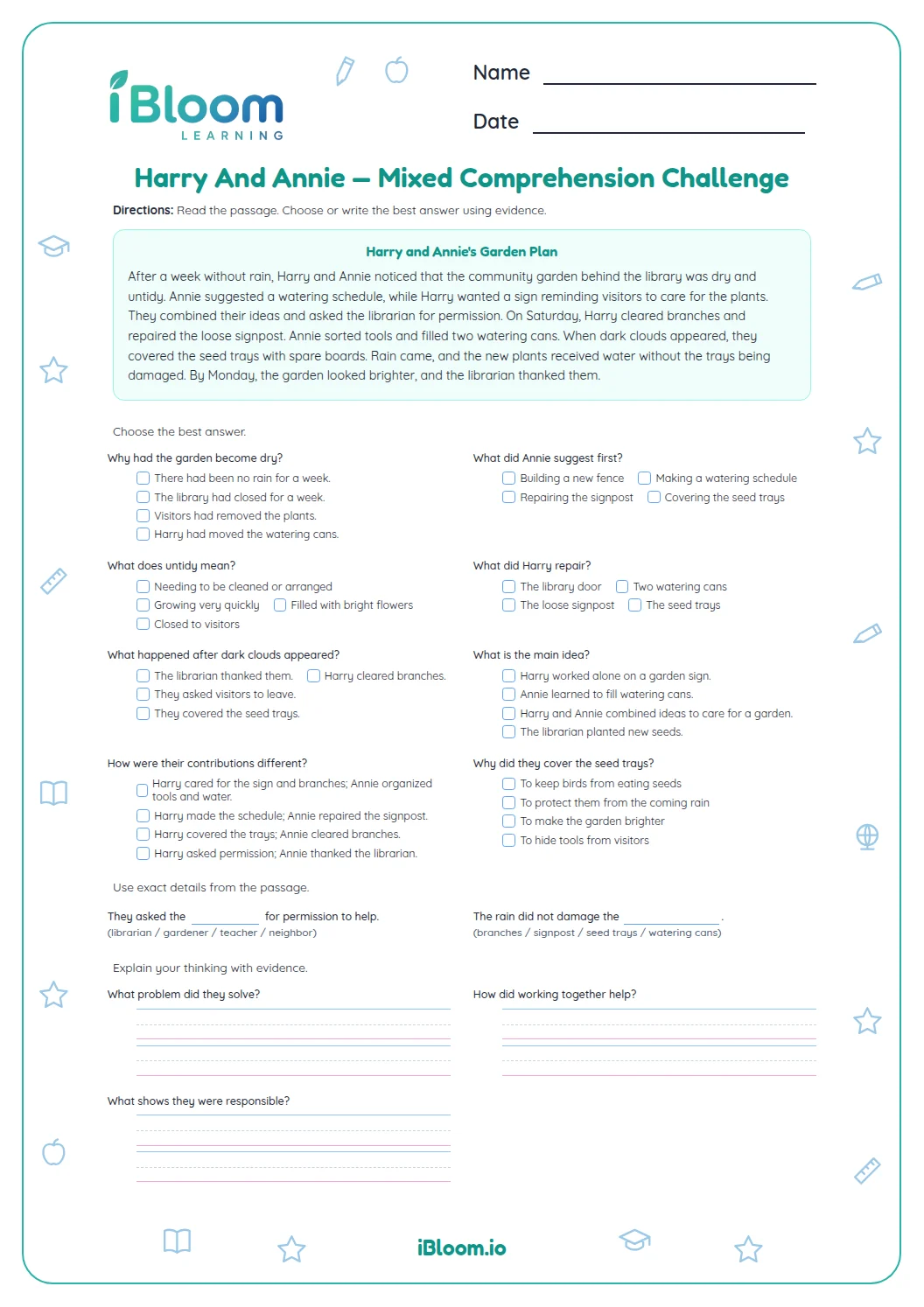
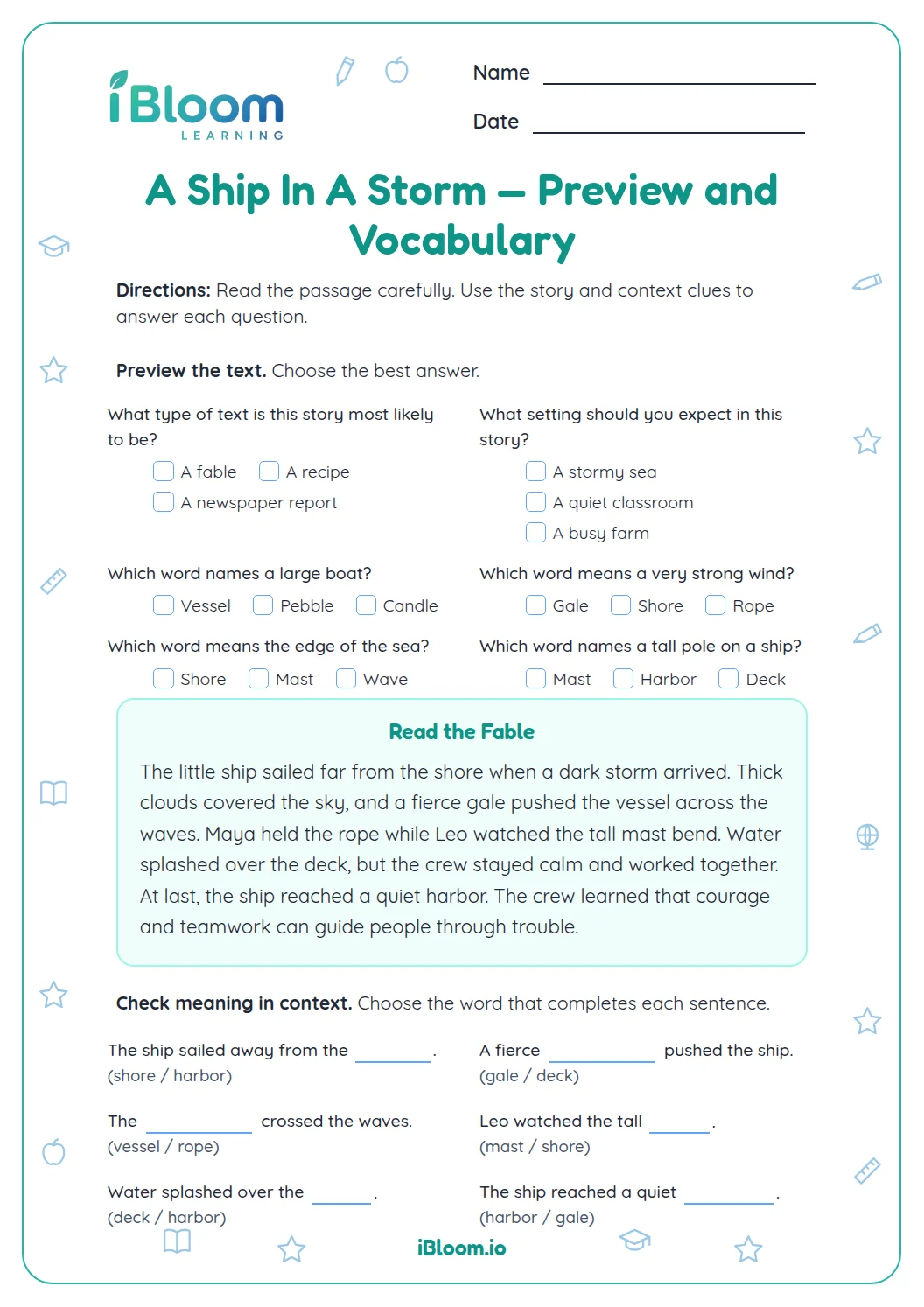
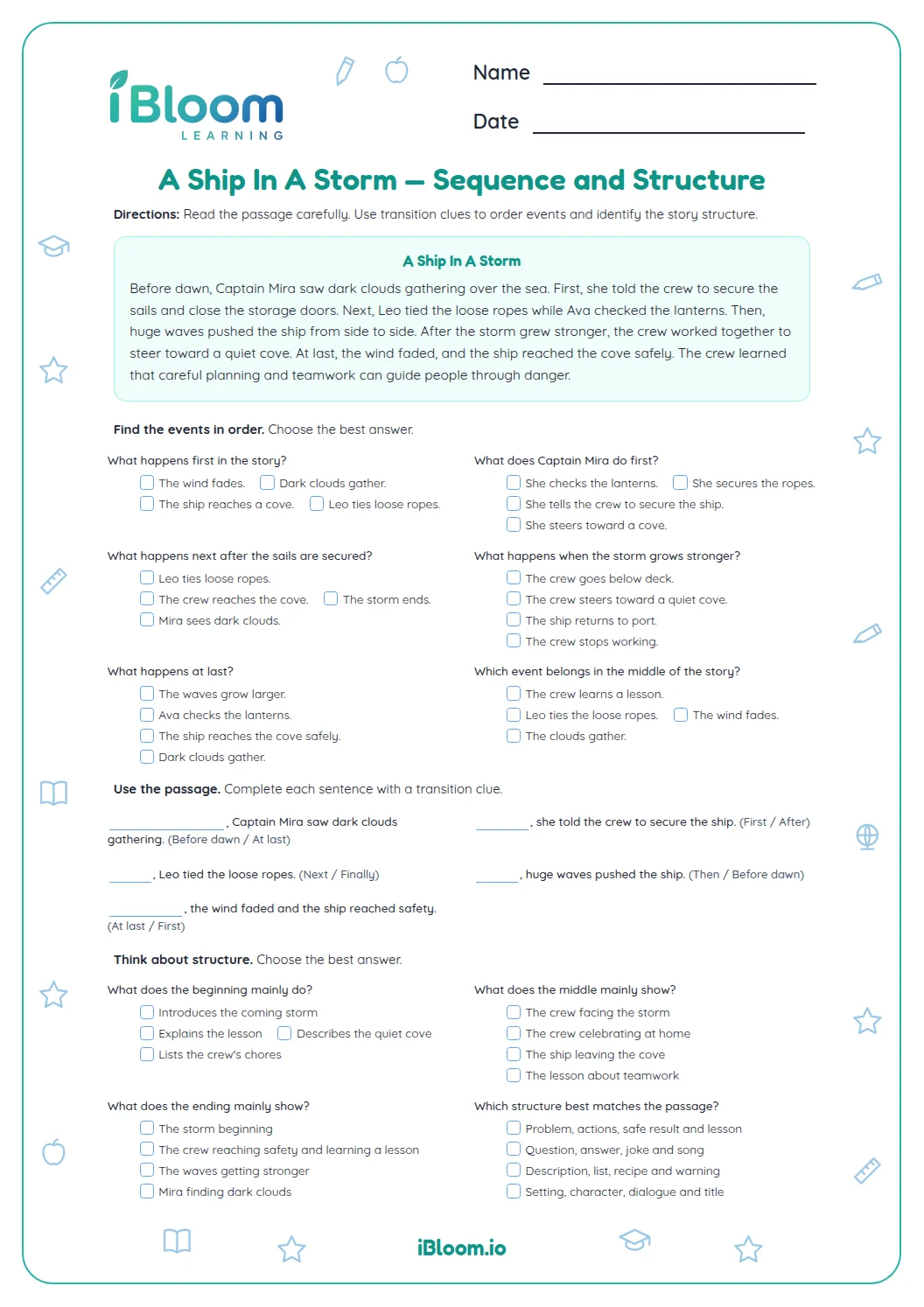
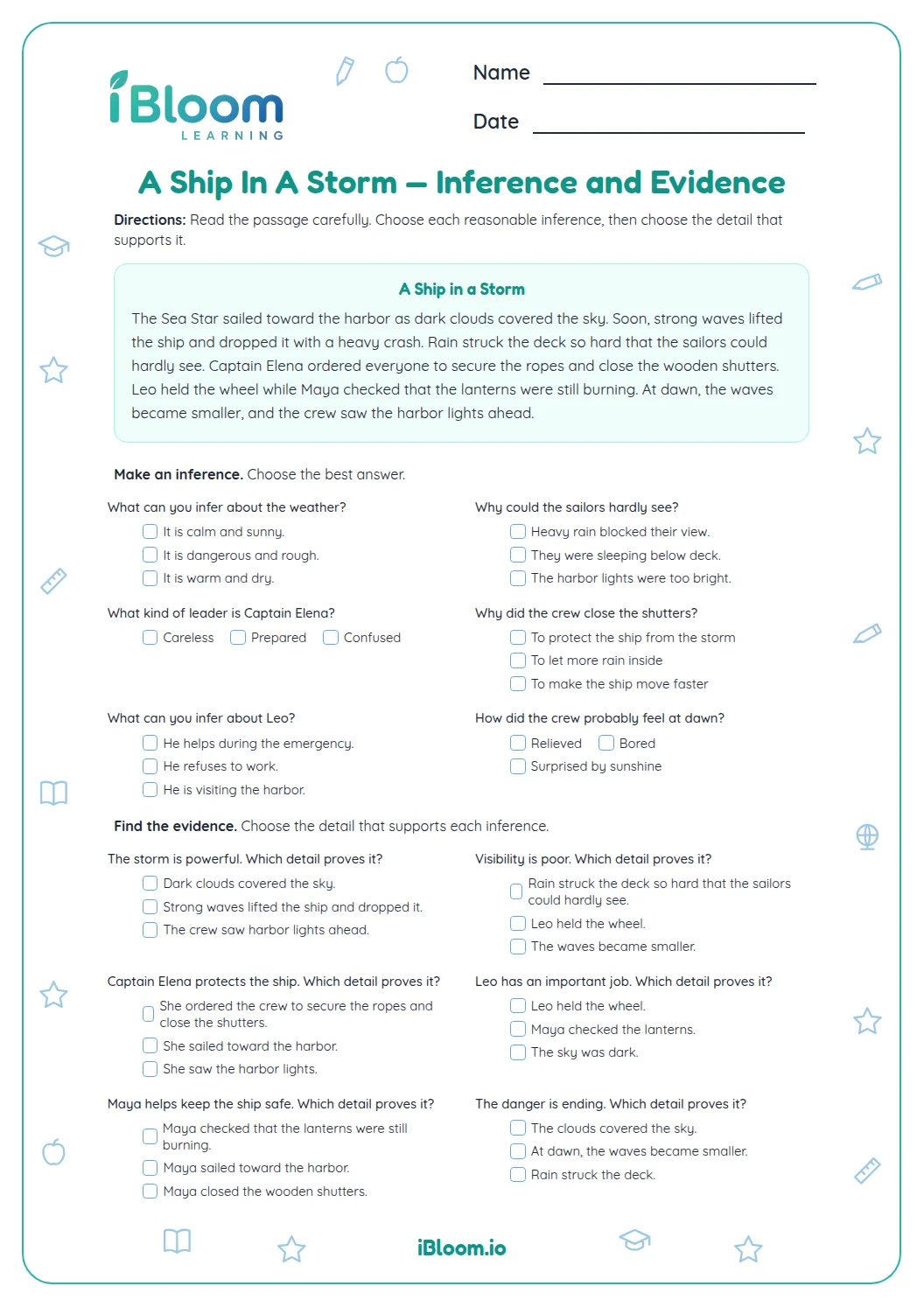
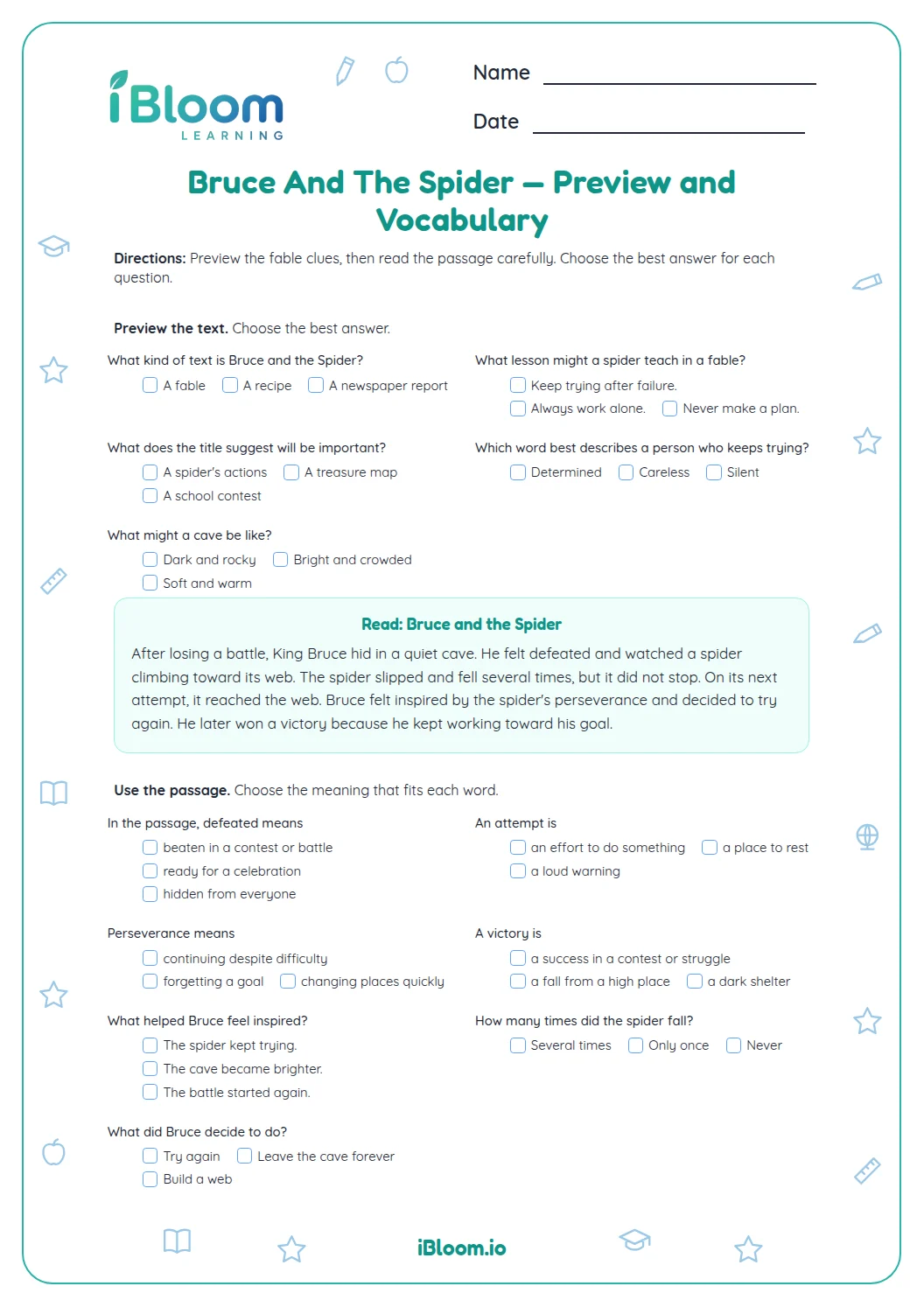
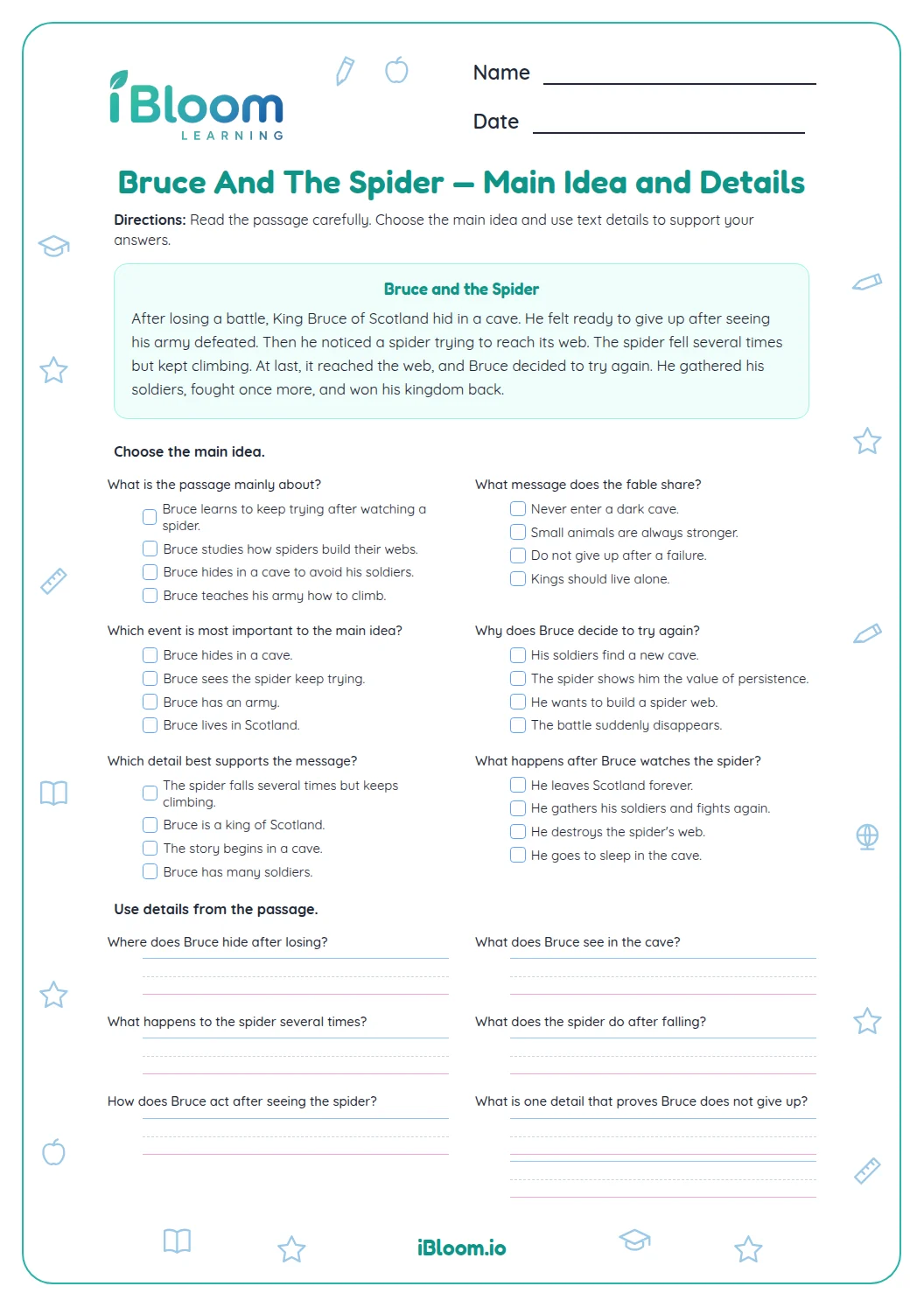
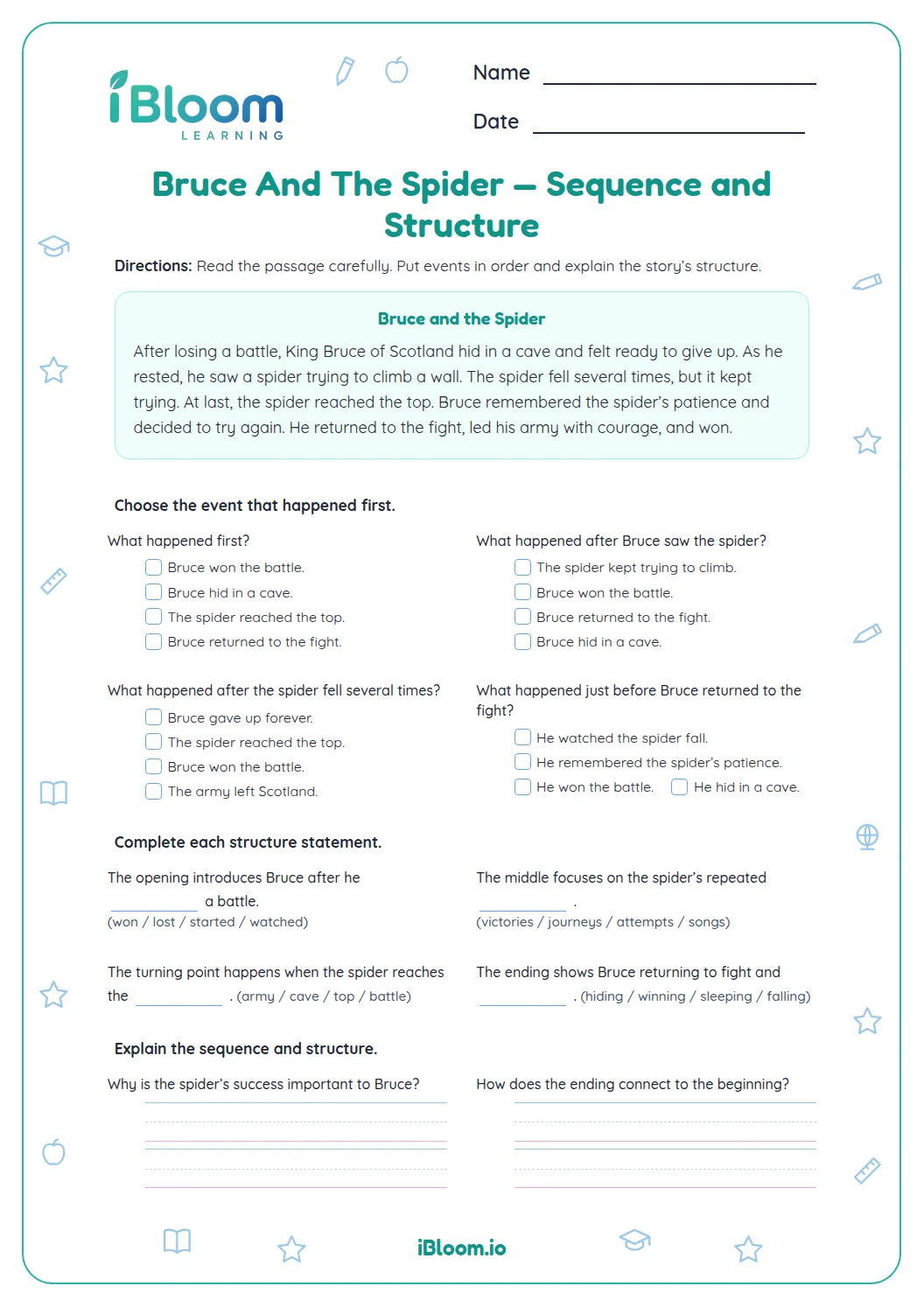
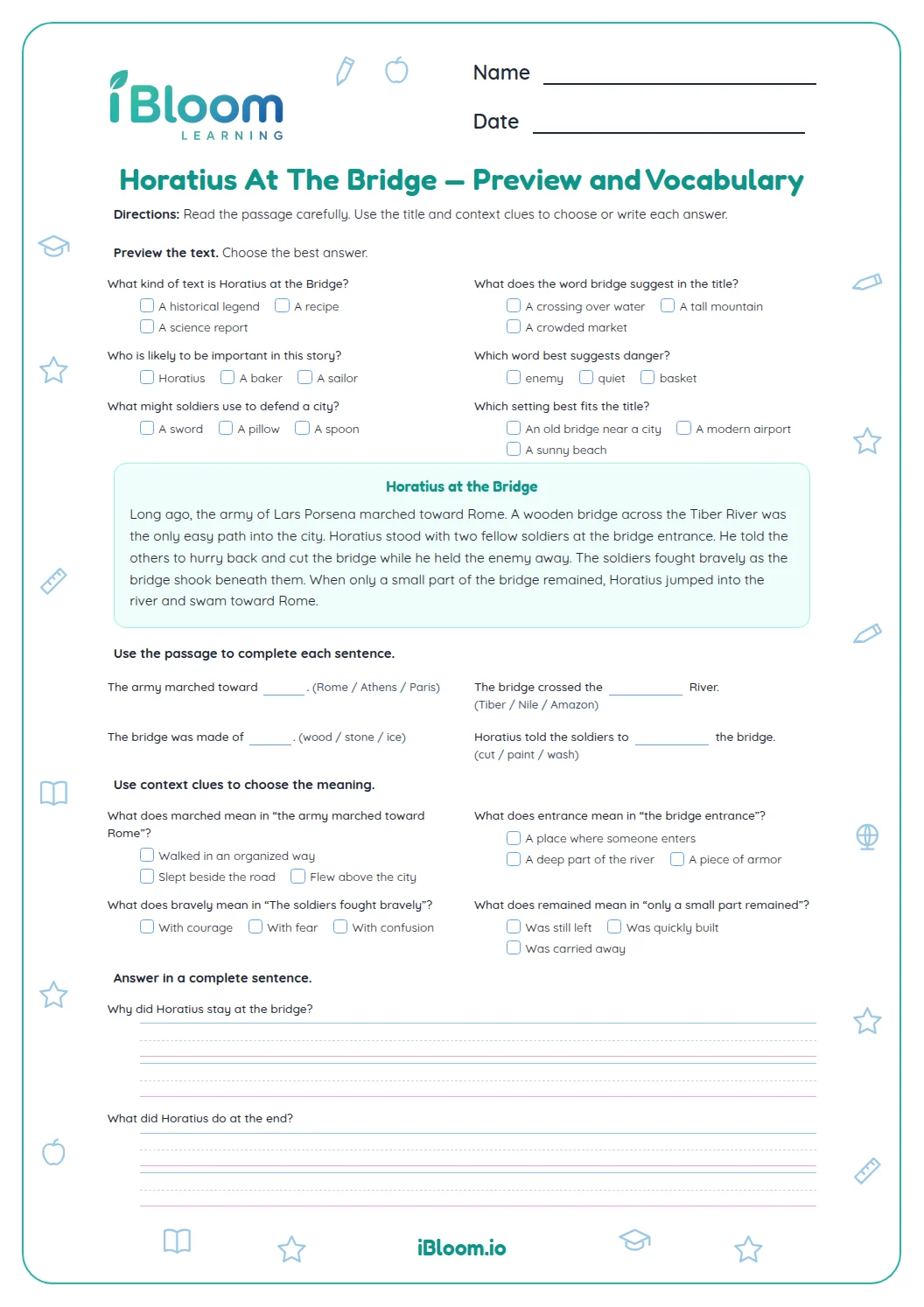
Read a short fable about Harry and Annie, then use clues and details to explain what the characters think and learn. The 15 questions move from inferences to direct evidence and short explanations. This practice supports CCSS RL.5.1 by asking readers to refer to details when they explain what a text states and what they infer. A separate answer key includes sample responses.
Aligned to RL.5.1
How can Grade 5 students support an inference?
Ask what the character’s actions suggest, then point to a detail that supports that idea. In the fable, Annie notices the lantern wick is nearly dry, which supports the inference that she pays attention to useful details.
How should students work through the practice?
Begin with read between the lines, then use the later parts to practice the same skill through the task types printed on the sheet.
How can students check their work?
Reread each item, verify that the response fits the passage or sentence, and compare it with the separate answer key.
How to use this worksheet
- 1Read the direction at the start of each part.
- 2Work through the questions in order.
- 3Reread the passage or sentence when a detail matters.
- 4Check responses with the separate key and revise any answer that needs it.
Common mistakes and quick fixes
The mistake
Choosing an answer from one word alone.
The fix
Reread the complete sentence or story detail.
The mistake
Giving an idea without support.
The fix
Add a specific clue or detail from the text.
The mistake
Rushing past a direction.
The fix
Check each response against the task and passage.
This practice aligns with a Common Core English language arts standard.
Use a story detail to support an idea about a character.
On this sheet: Use details and quotations from the fable to support inferences about Harry and Annie.
Show the official wordingHide the official wording
Quote accurately from a text when explaining what the text says explicitly and when drawing inferences from the text.
What to practice next
Make more practice
Further reading
Questions parents and teachers ask
How can Grade 5 students support an inference?
Ask what the character’s actions suggest, then point to a detail that supports that idea. In the fable, Annie notices the lantern wick is nearly dry, which supports the inference that she pays attention to useful details. This page includes structured practice and a separate key.
What is included on the printable?
The sheet includes 15 questions in three parts and a separate answer key with 4 pages. The parts move from supported choices to independent responses, so students practice the target skill in more than one way. Review each direction before starting that part.
How should a student use the answer key?
Complete the questions first, then compare each response with the key. For an open response, the key is a model rather than the only acceptable wording; accept a clear equivalent idea supported by a relevant detail. Students can revise an answer after checking the passage again.
Can this worksheet be used at home?
Yes. A student can read the directions and complete the printable independently or with an adult. An adult may read instructions aloud, then invite the student to explain a choice or correction. That short discussion helps connect the answer to the skill being practiced.
How long does the worksheet take?
Plan for about 20 minutes, with extra time if the student writes full explanations. Work through one part at a time and revisit the passage or example when needed. The student can pause between parts and finish the remaining questions later.