



About this worksheet
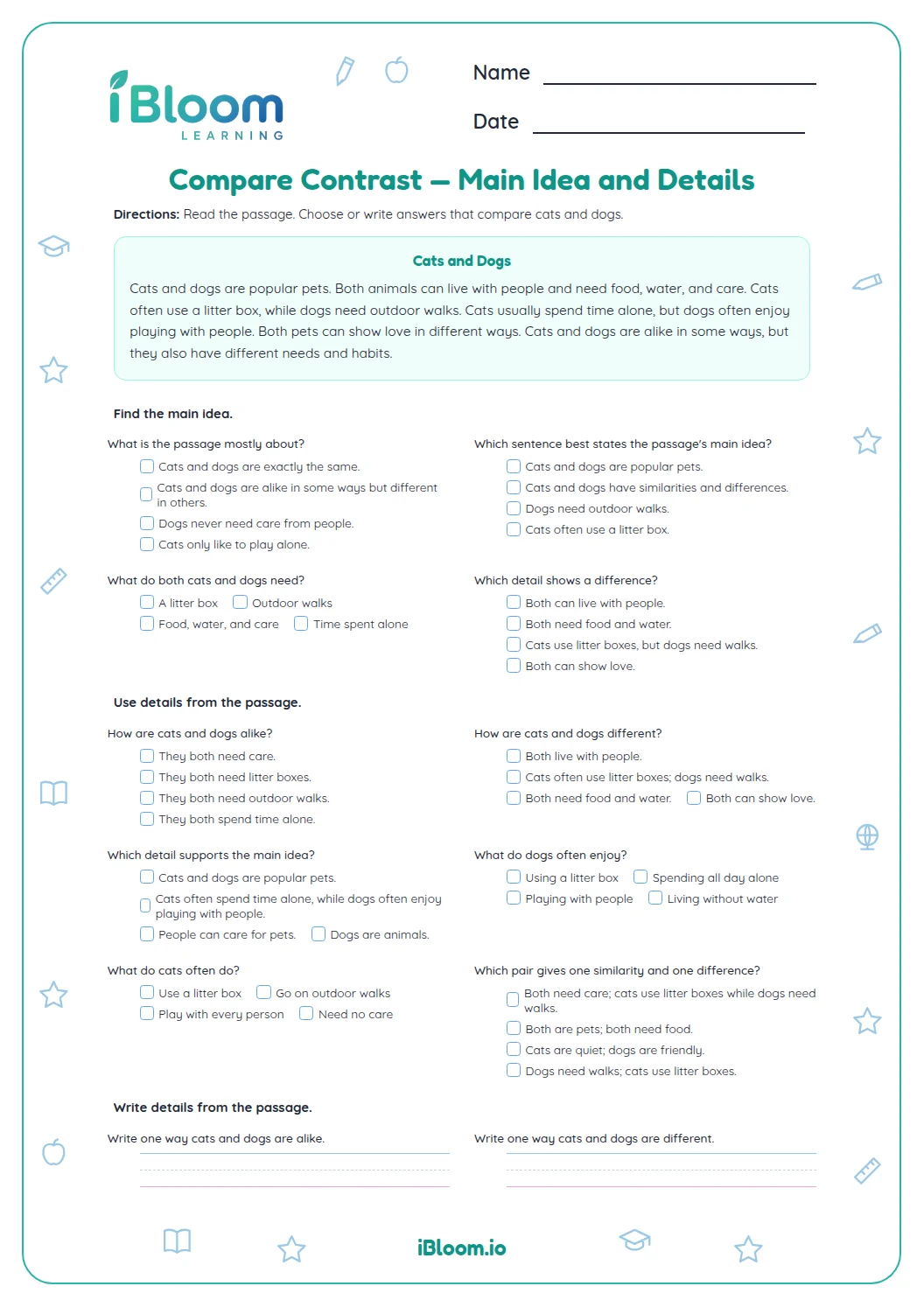
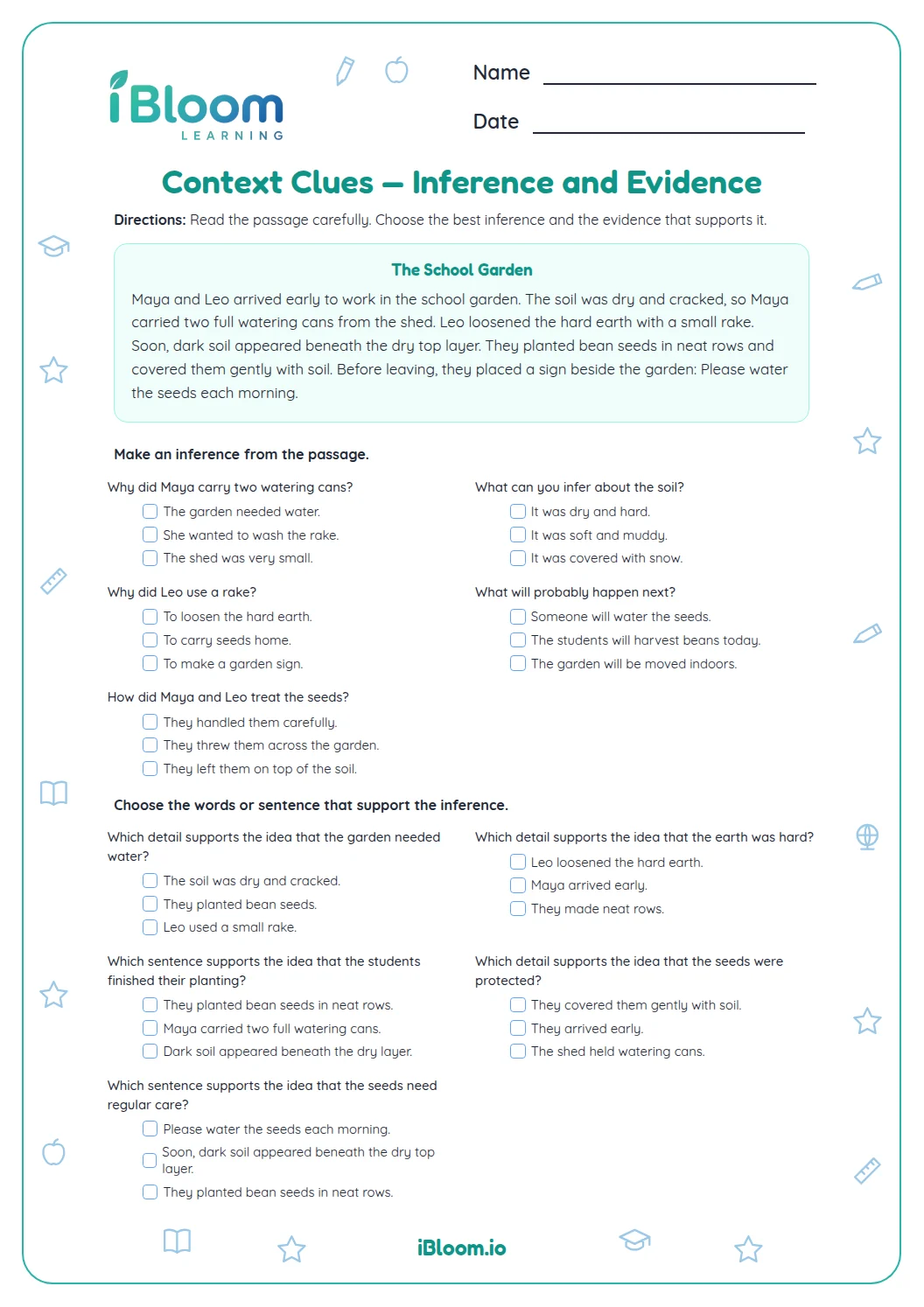
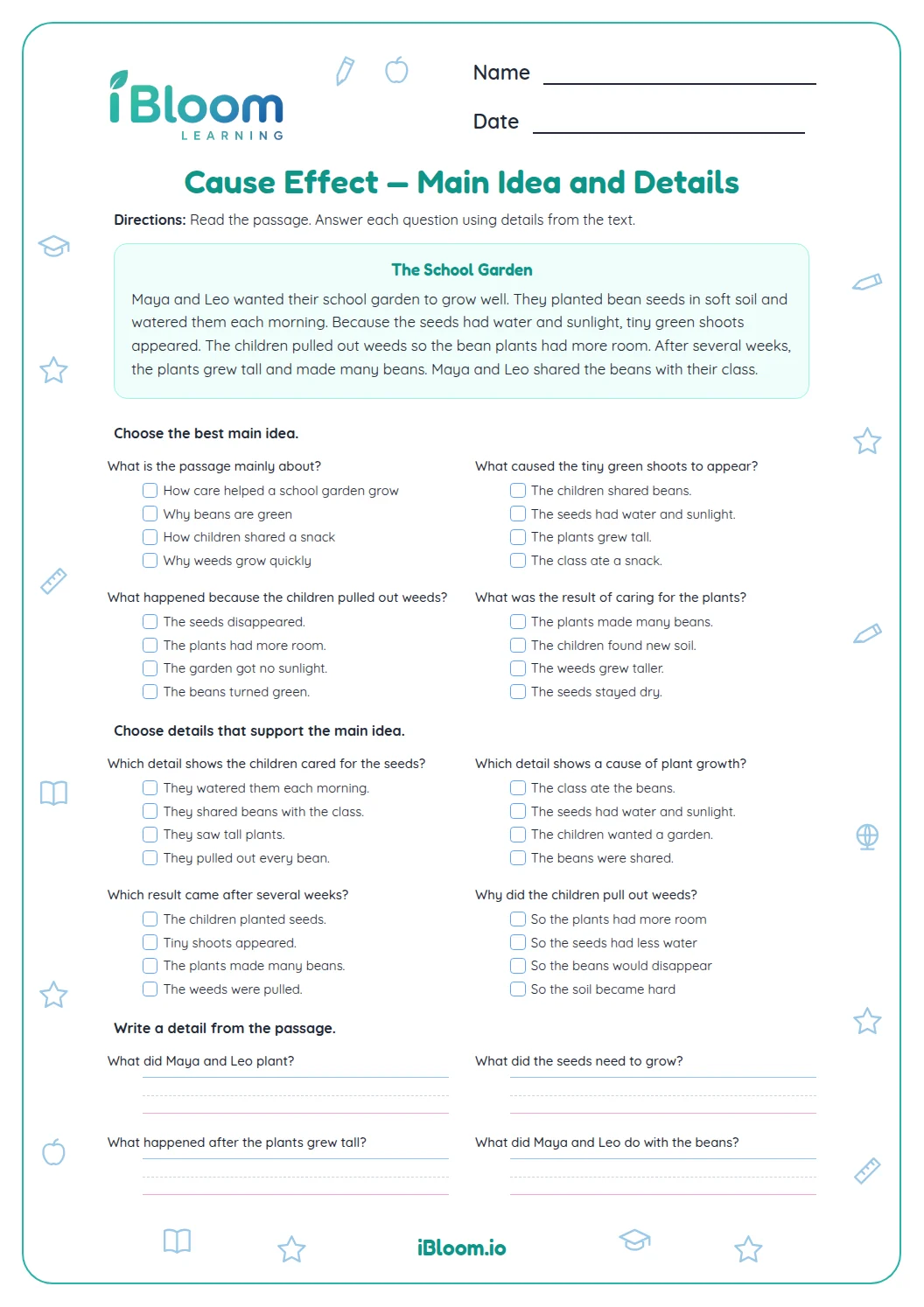
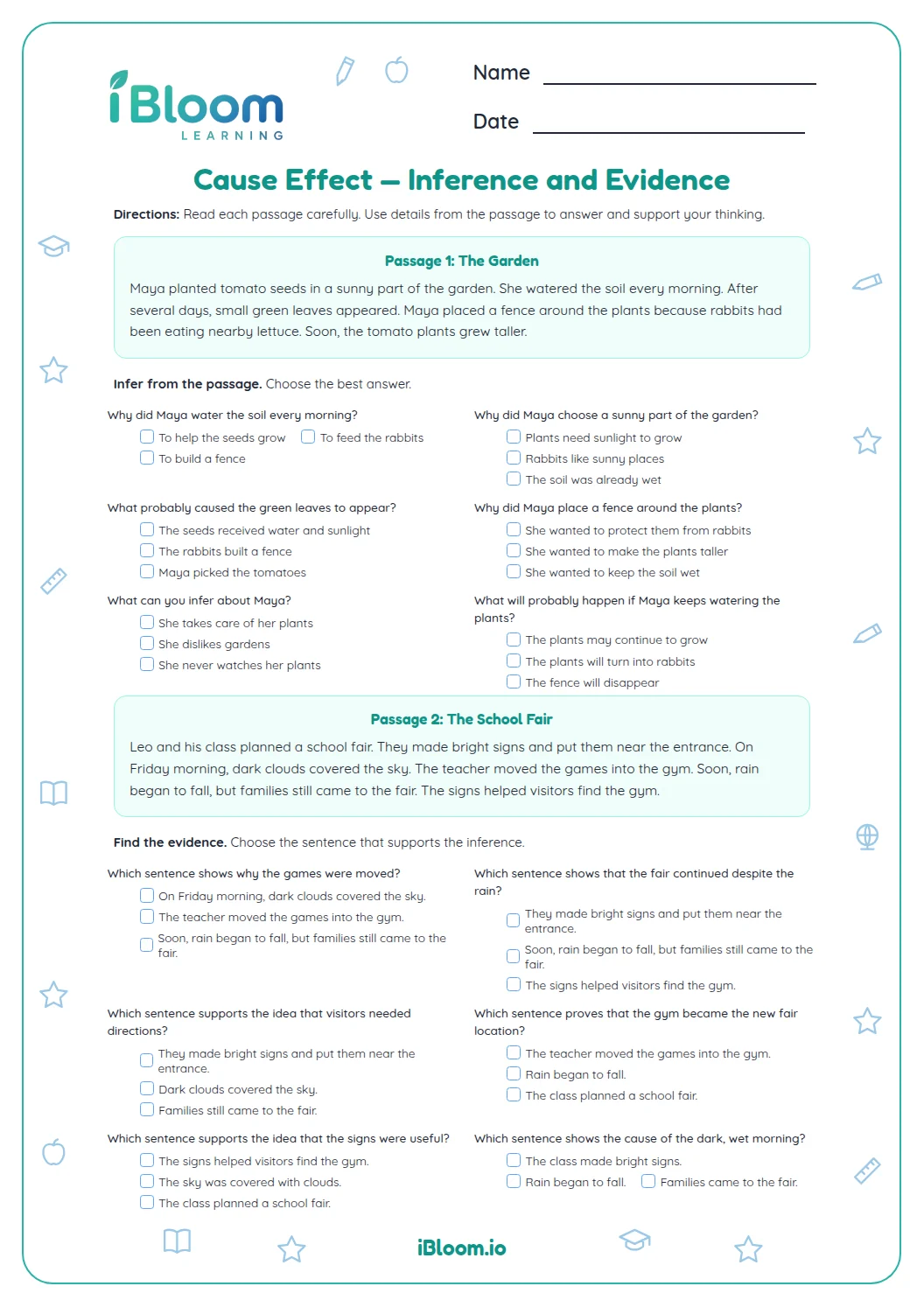
This Grade 3 printable uses two short informational texts about saving water at school and at home. Children preview the topic, infer word meanings from context, and compare the people, settings, and actions across both texts. The questions practice CCSS RI.3.9, and a separate answer key is included.
Aligned to RI.3.9
What are the two texts about?
Text A follows Ana as she waters tomato plants at school and posts a reminder about turning off the tap. Text B describes Ben’s family collecting rain, shortening a shower, and fixing a dripping faucet at home.
How do context clues help with vocabulary?
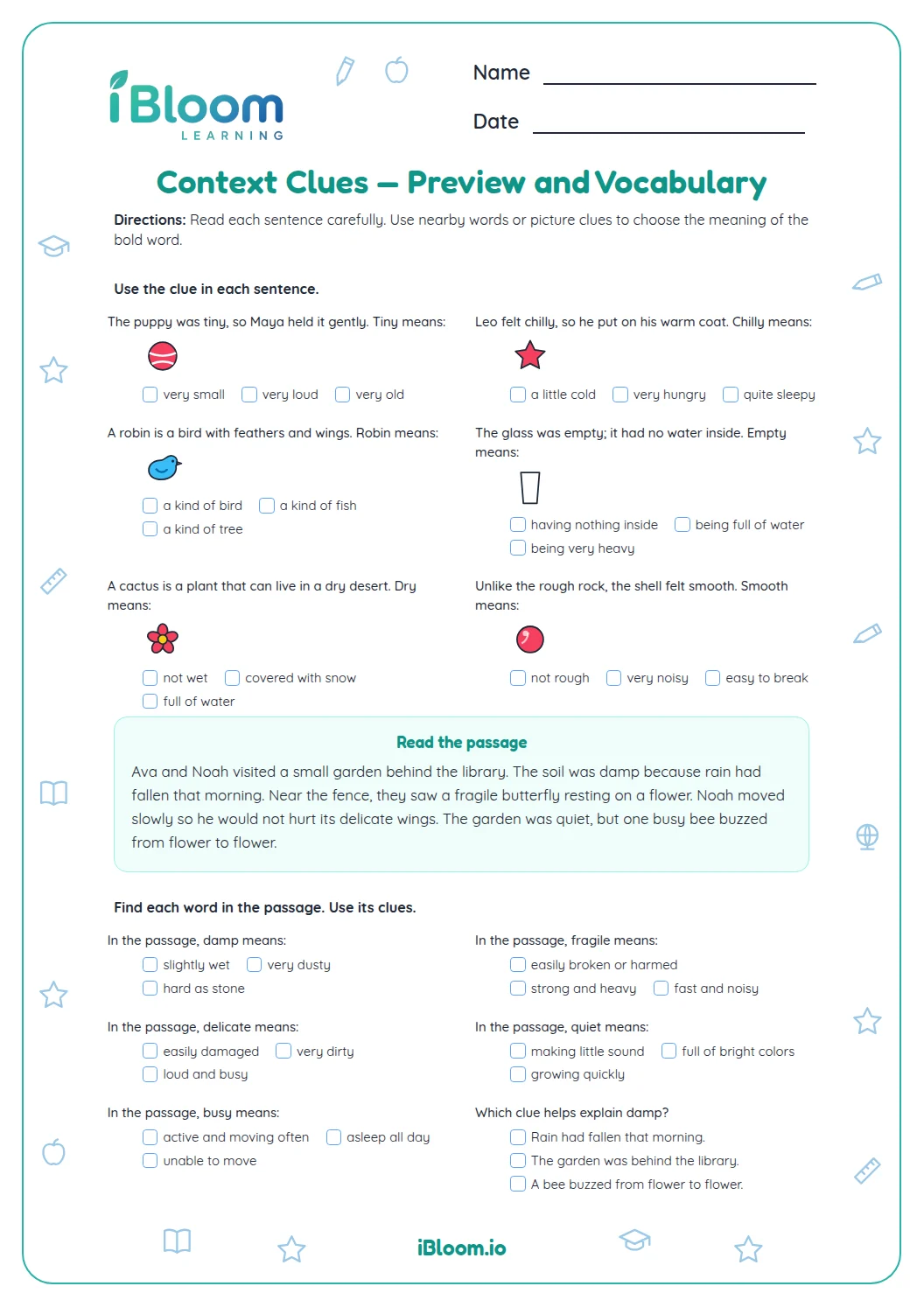
Part B begins with a topic preview and word clues. In Text A, the sign is “reminding” classmates to turn off the tap, so the action helps them remember. In Text B, rain is “collected” in a bucket and then used on flowerpots; the sentence shows that collected means gathered and kept.
How can readers compare details across texts?
Compare one feature at a time: setting, action, or result. Ana acts at school; Ben’s family acts at home. Both efforts conserve water, but the people use different methods.
- 1Ana pours water near plant roots and posts a reminder at school.
- 2Ben’s family collects rain and fixes a faucet at home.
- 3Both texts show people making practical changes to save water.
How to use this worksheet
- 1Read the title and each text before starting the questions.
- 2Use nearby words to infer the meanings of reminding and collected.
- 3Return to the text to verify each detail.
- 4Compare the same feature in both texts before answering an alike/different question.
- 5Use the separate key to check evidence-based responses.
Common mistakes and quick fixes
The mistake
Choosing a detail from only one text for an across-text question.
The fix
Check whether the question asks about Ana, Ben, or both, then reread the relevant text or texts.
The mistake
Treating two different actions as unrelated even though they share a purpose.
The fix
Name each action, then ask what result both people wanted: less water waste.
The mistake
Guessing a vocabulary meaning without using the sentence.
The fix
Read the words around the target word and connect them to what happens in the text.
Common Core alignment
This worksheet asks readers to compare important points and details across two informational texts.
Compare key points and details across two informational texts about saving water.
On this sheet: Questions compare the two texts’ settings, actions, and shared ideas.
Show the official wordingHide the official wording
Compare and contrast the most important points and key details presented in two texts on the same topic.
What to practice next
Make more practice
Further reading
Questions parents and teachers ask
What do children read in this worksheet?
They read two short informational texts about saving water. One describes Ana’s actions in a school garden; the other follows Ben’s family at home. The questions ask children to recall details, use context clues, and compare the texts’ settings and water-saving choices.
How many questions are on the page?
The worksheet has 15 questions in two question parts after the paired texts. The first four preview the topic and explore word meaning in context. The remaining questions ask readers to find details and compare Ana’s and Ben’s efforts.
What does compare and contrast mean here?
Compare means notice what is alike; contrast means notice what is different. Readers can compare where Ana and Ben act, what each person does, and how both efforts relate to saving water. The questions use details stated in the two texts.
How can a child solve a context-clue question?
Read the whole sentence and nearby details before choosing a meaning. Ben puts rain in a bucket and later uses that water on flowerpots. Those actions show that collected means gathered and kept for later use by the family.
Is an answer key included?
Yes. A separate answer key lists the correct choice for each of the 15 questions. For text questions, children can also point to the sentence that supports the answer, which helps them check both the response and the evidence.