




About this worksheet
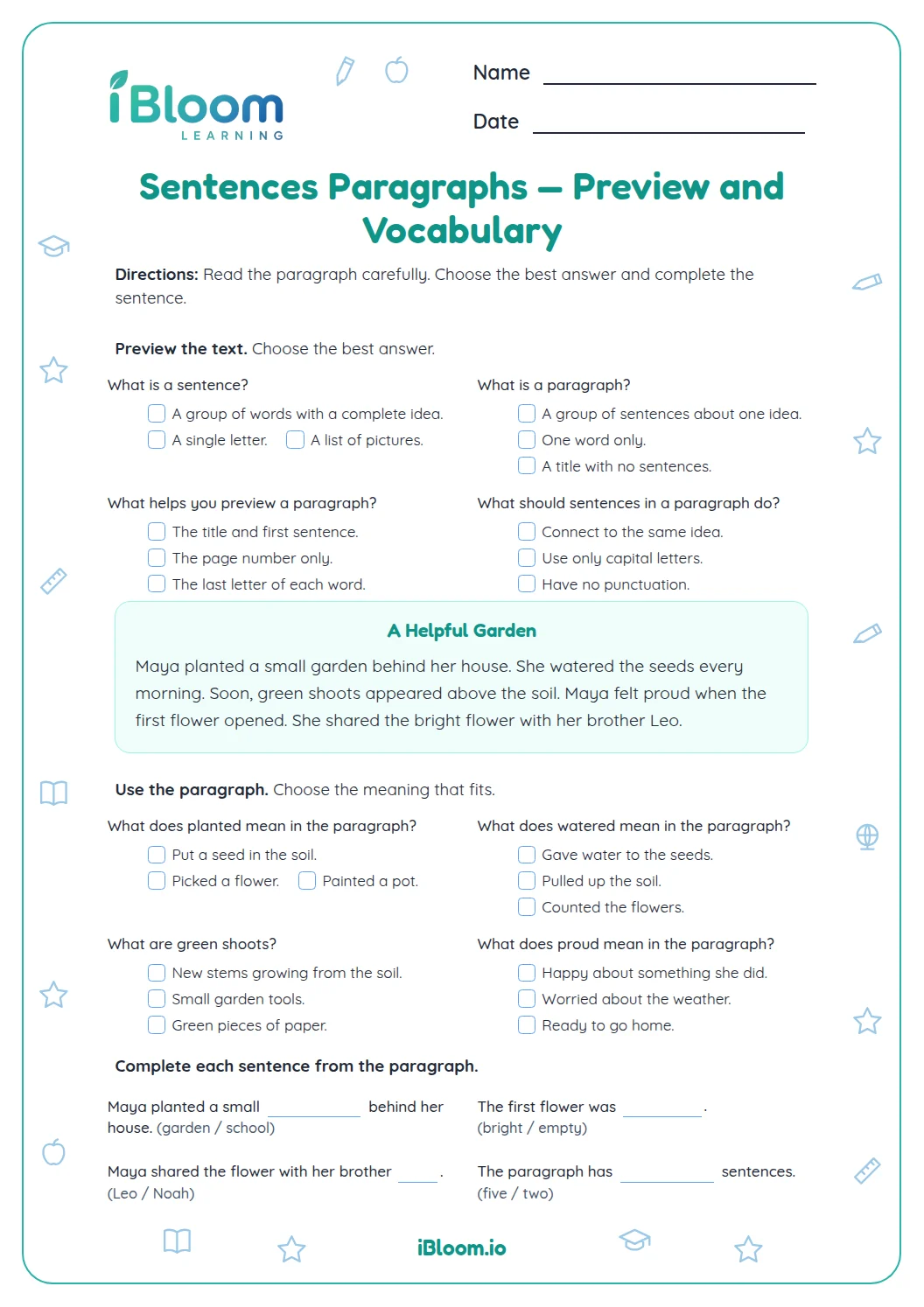
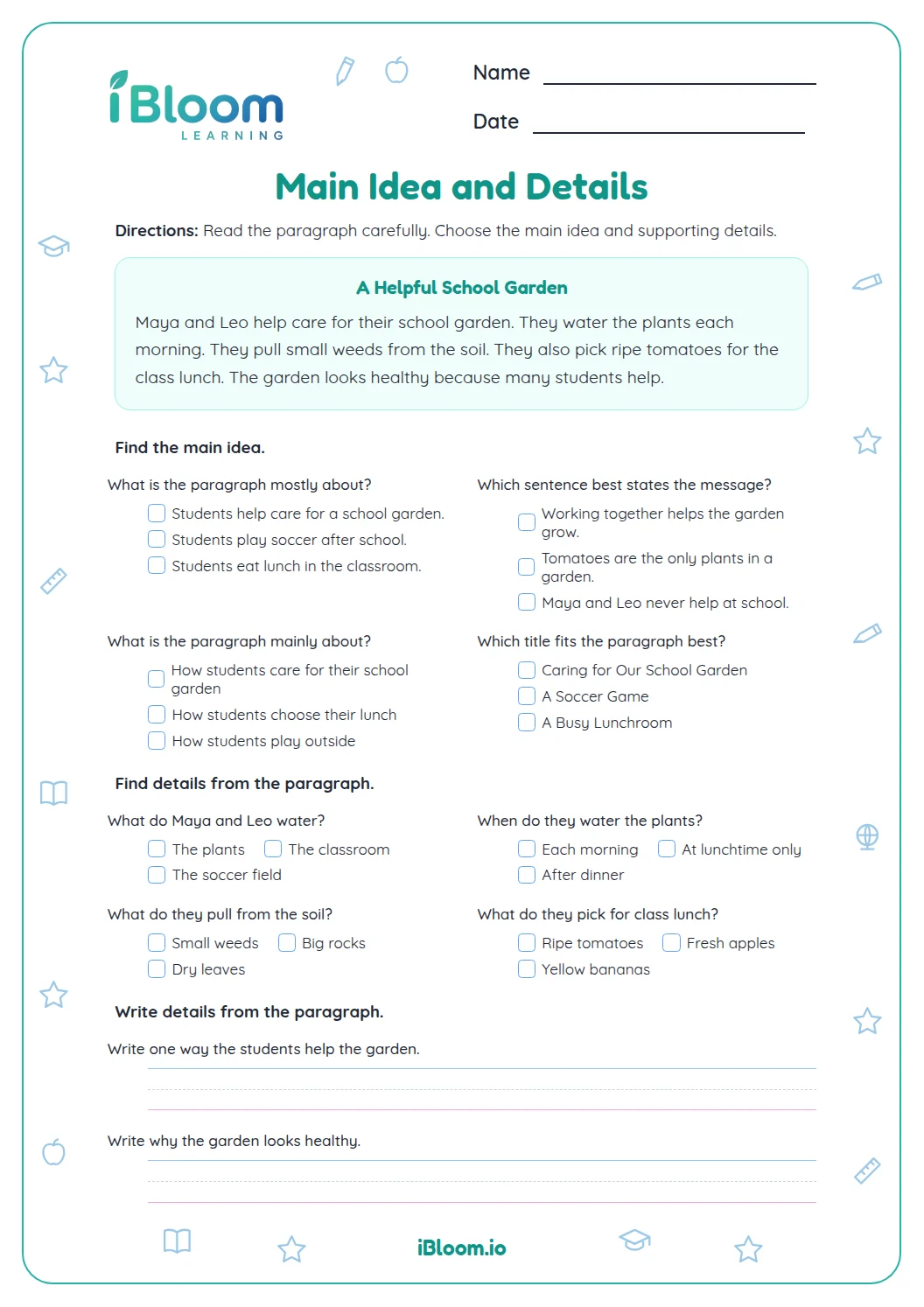
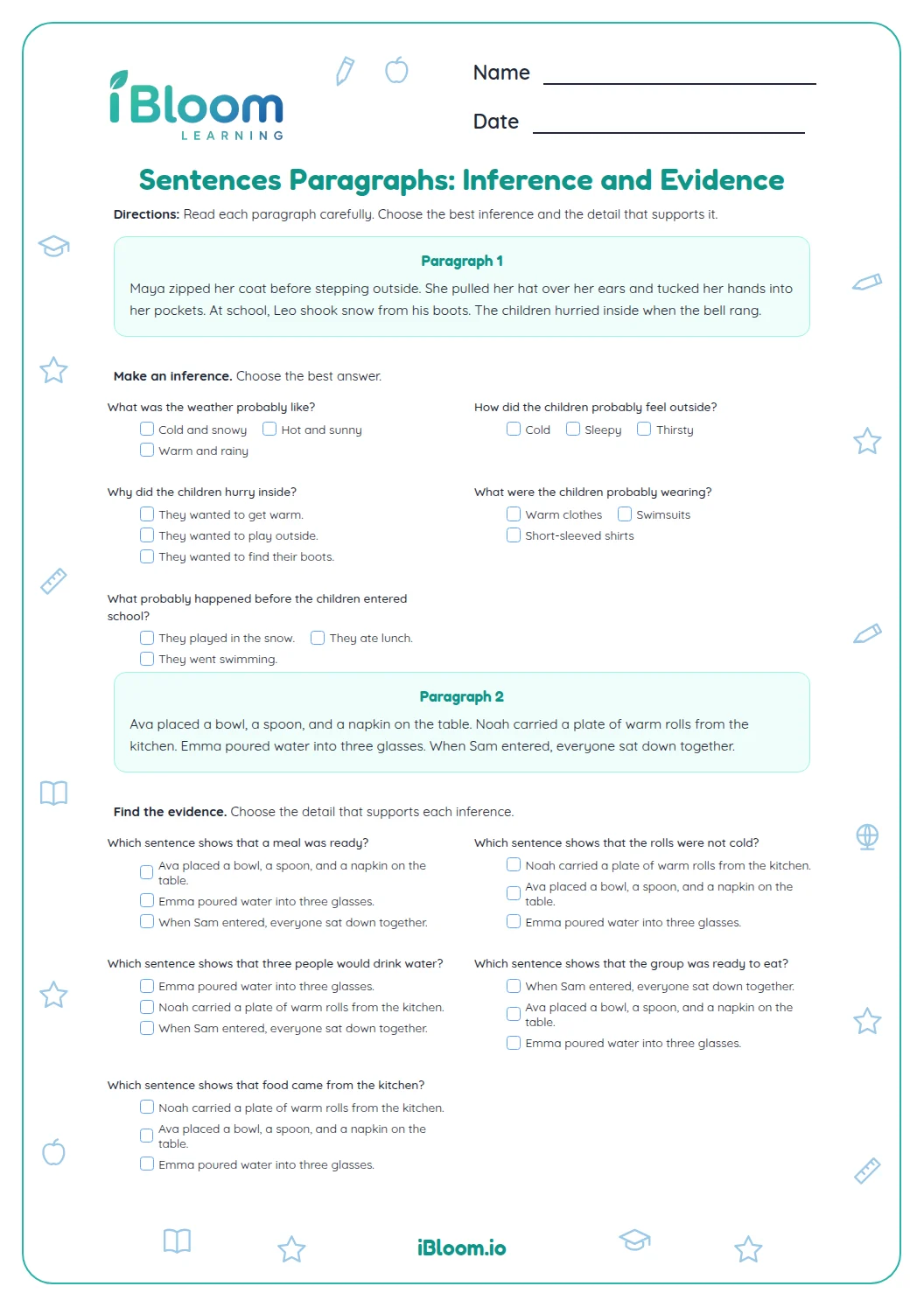
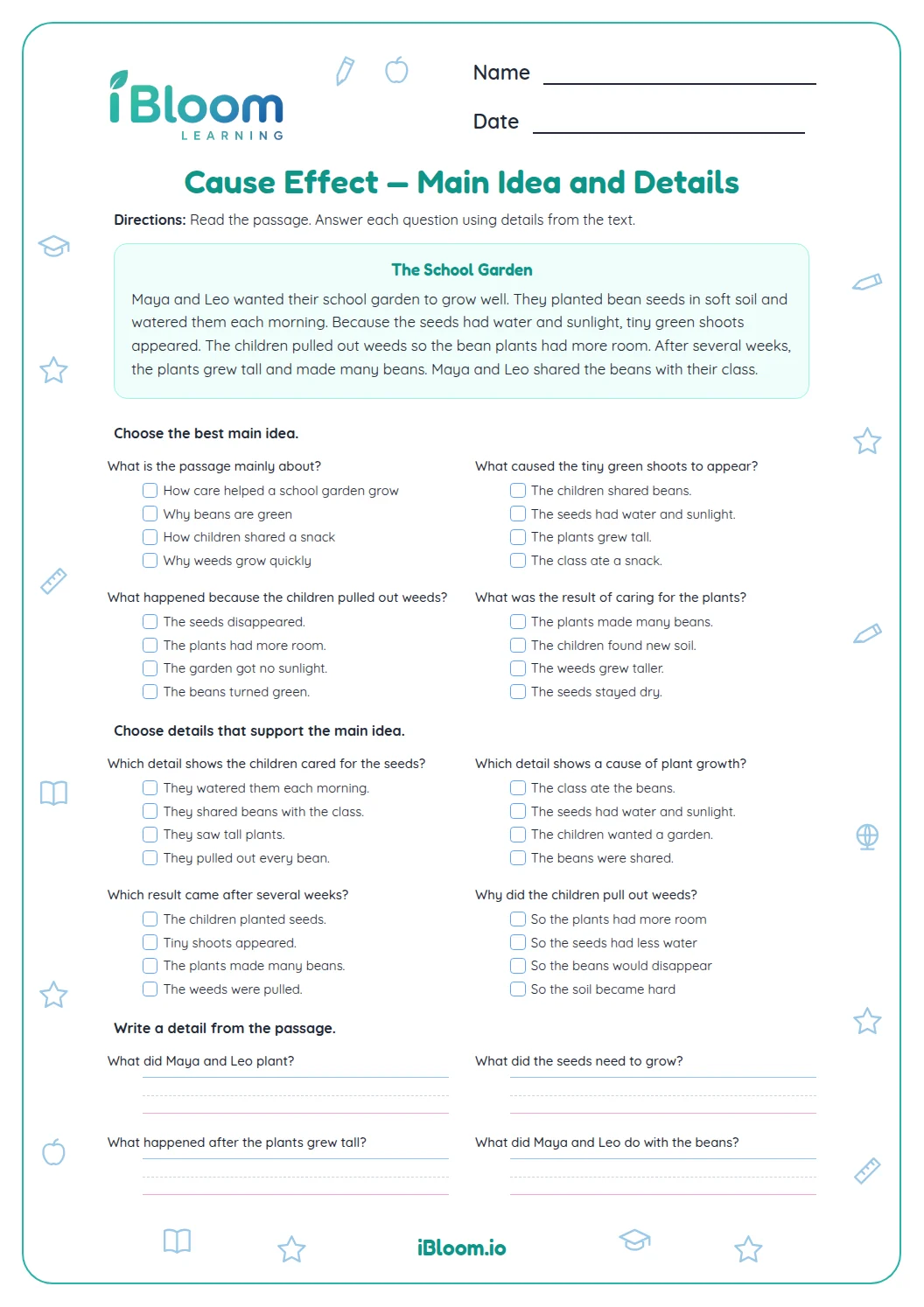
This free printable Grade 3 reading worksheet combines context clues with the order of a procedure. An original passage explains how to make a paper fan and gives clues to words such as narrow, crease, reverse, and secure. Ten questions ask children to select meanings, track the folding steps, identify the text structure, and name the words that reveal a meaning. The passage is Part A, followed by three question parts. Common Core RI.3.4 and RI.3.3 support the vocabulary and sequence work. A separate answer key includes models for the two final written responses.
Aligned to RI.3.4 and RI.3.3
Where should children look for a word clue?
Look in the same sentence first, then read the sentence on either side. This passage often supplies an explanation after the unfamiliar word. “A crease is the line left by the fold” tells the reader exactly what to look for.
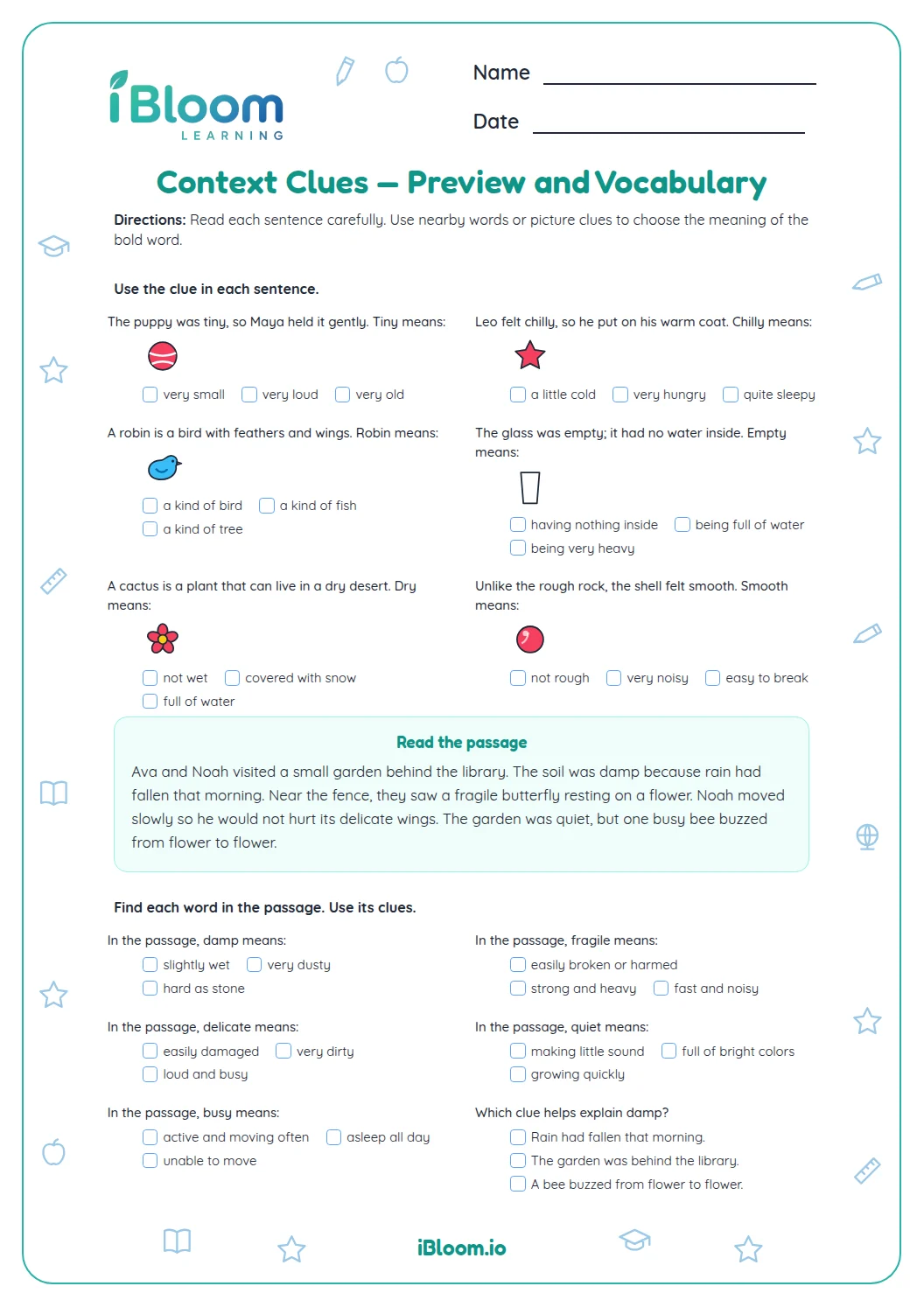
Part B asks for the meanings of narrow, crease, reverse, secure, and gentle. The choices are short, but children should still name a clue before deciding. A word that fits the topic is not always the meaning that fits the sentence.
- 1Question 3: In the passage, what does reverse mean?
- 2Clue: “or turn it over”
- 3Answer: turn over
How does the passage’s structure support understanding?
The text presents a procedure in time order. First introduces the first fold, next leads to pressing it flat, and then signals turning the paper over. The final paragraph tells how to secure and open the fan.
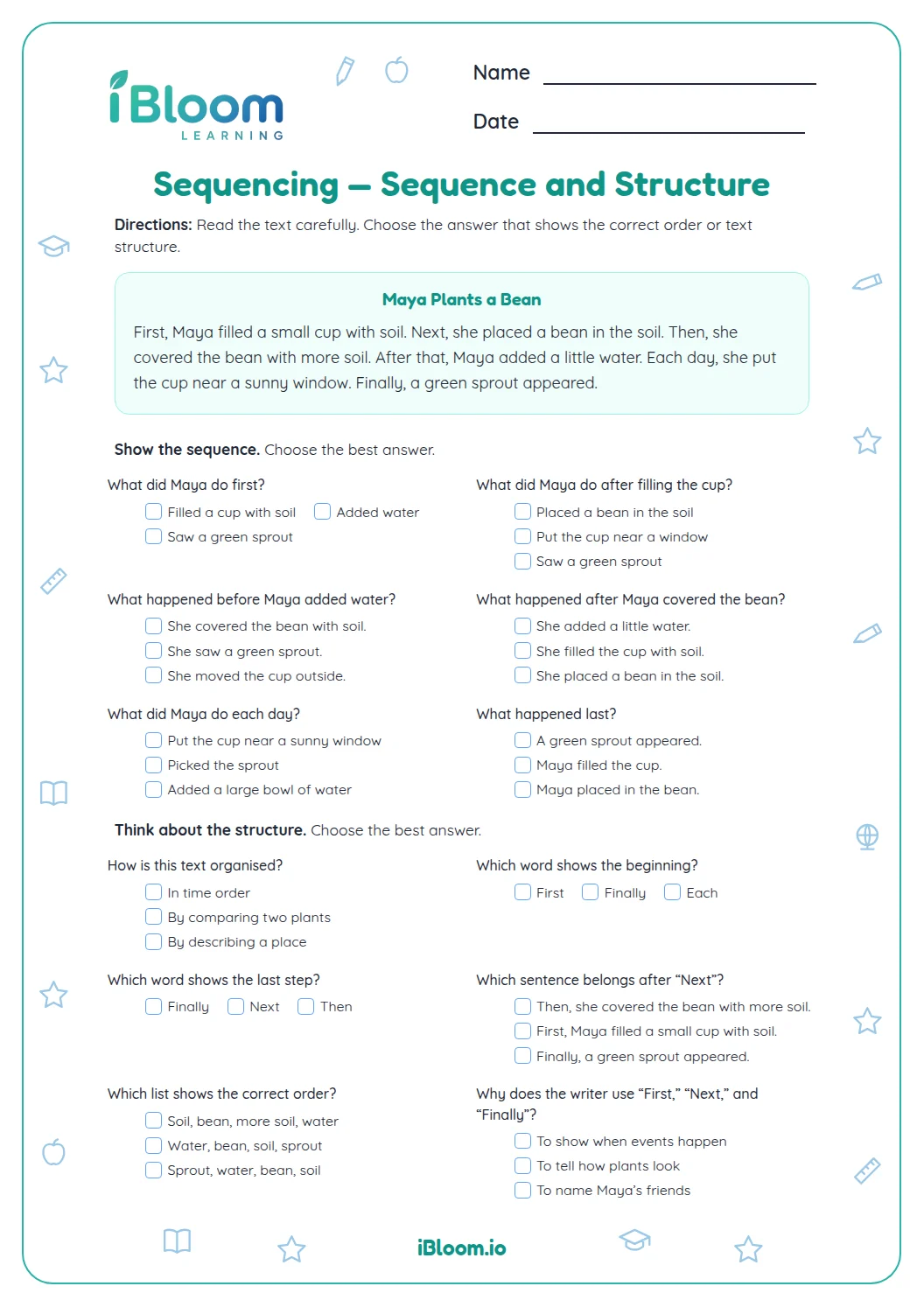
Part C asks children to identify the first fold, the action after turning the paper over, and the organizing pattern of the whole text. Returning to these steps connects word meaning with an action the reader can picture.
What should a written context-clue answer include?
Part D asks children to name the phrase that explains secure and to explain how the final sentence reveals gentle. For secure, “fasten it in place” is the evidence. For gentle, the movement is described as soft rather than a hard shake.
The model answers keep the explanation short. Accept an accurate paraphrase, and ask the child to point to the part of the text that supports it.
How to use the worksheet
- 1Read the title and say what the directions will help the reader make.
- 2Read Part A once for the whole process, then reread its unfamiliar words.
- 3Complete Part B by finding a nearby explanation for each word.
- 4Follow the time words to answer the three Part C questions.
- 5Write the two evidence-based answers in Part D and check them with the models.
Mistakes to check together
The mistake
Choosing “a tear” as the meaning of crease.
The fix
Reread the definition: a crease is a line left by folding, not a tear.
The mistake
Thinking reverse means fold again.
The fix
Use the phrase “or turn it over.” Turning comes before the next fold.
The mistake
Writing only “soft” when asked how the passage explains gentle.
The fix
Connect the meaning to evidence: the passage says a soft motion, not a hard shake.
Common Core alignment
Use the fan-making directions to determine the meanings of unfamiliar words.
On this sheet: Five word-meaning questions and two explanations use clues from the procedure.
Show the official wordingHide the official wording
Determine the meaning of general academic and domain-specific words and phrases in a text relevant to a grade 3 topic or subject area .
Identify the order of actions and the sequence structure of a folding procedure.
On this sheet: Part C asks readers to identify the first and later steps and the procedure’s organization.
Show the official wordingHide the official wording
Describe the relationship between a series of historical events, scientific ideas or concepts, or steps in technical procedures in a text, using language that pertains to time, sequence, and cause/effect.
What to practice next
Make more practice
Further reading
Questions parents and teachers ask
Which words do children learn from context?
The worksheet focuses on narrow, crease, reverse, secure, and gentle. Each word appears in the paper-fan passage with nearby wording that explains its meaning. Five multiple-choice questions check those meanings, and the final written responses ask children to identify or explain the clues for secure and gentle.
Does this worksheet also practice sequencing?
Yes, three questions focus directly on the order and organization of the directions. Children identify the first folding step, decide what follows turning the paper over, and recognize the passage as steps in time order. The vocabulary questions also help them understand the actions within that same sequence.
Do we have to make a paper fan?
No, children can answer every question by reading the passage. Making the fan afterward is an optional way to try the directions. If you do, ask the child to explain words such as crease and reverse while working, and keep the reading questions available for a final reread.
Can children use different words in the written answers?
Yes, accurate paraphrases are welcome in Part D. For secure, a child can copy “fasten it in place” or explain that the tape holds the folds together. For gentle, the explanation should connect the soft motion to the contrast with a hard shake in the last sentence.
How can I help without giving the meanings away?
Ask the child to read the sentence containing the word and then the nearby explanation. Cover the answer choices for a moment and invite a possible meaning. Finally, uncover the choices and test them in context. This keeps the focus on evidence the reader can find independently.