


About this worksheet
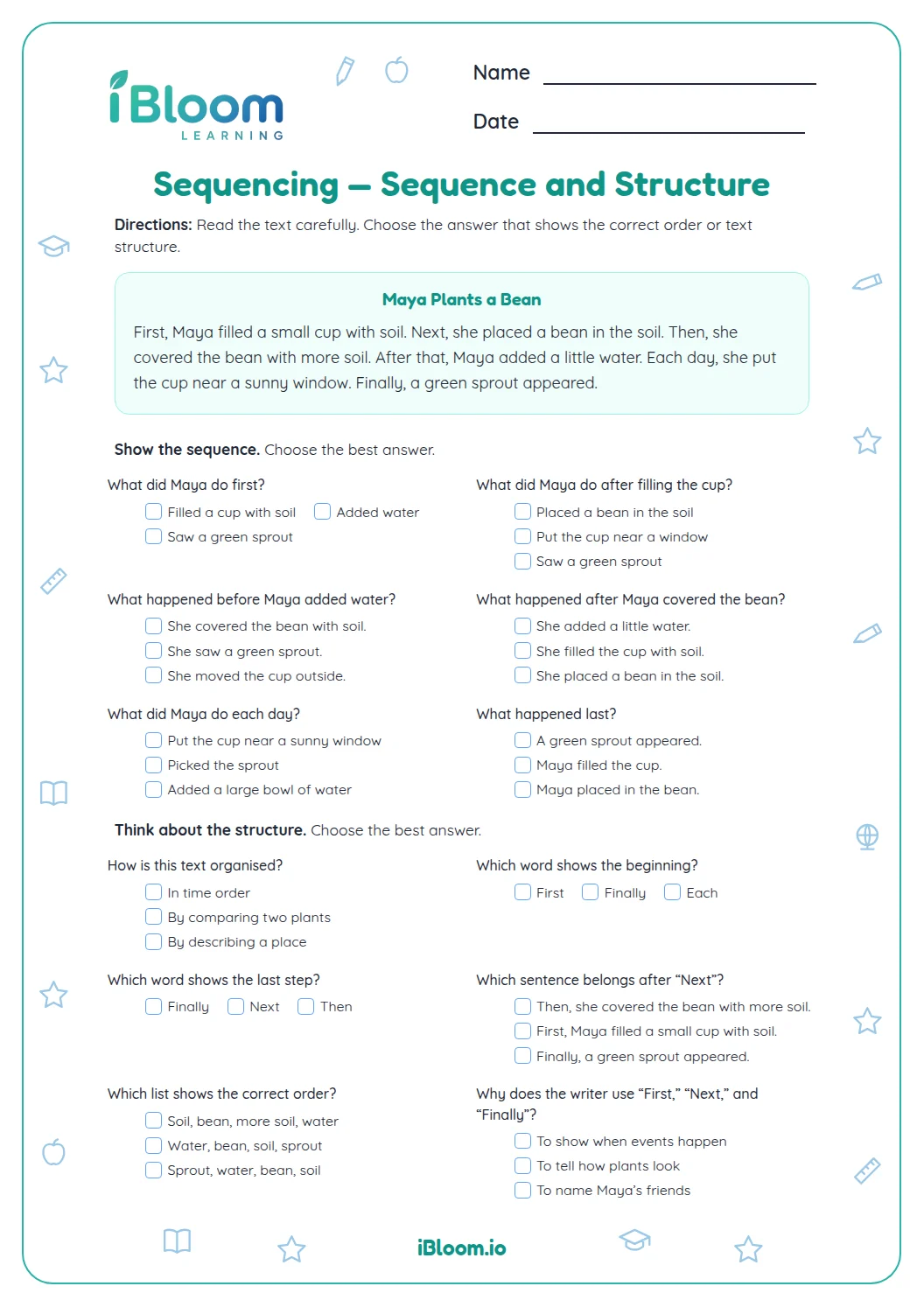
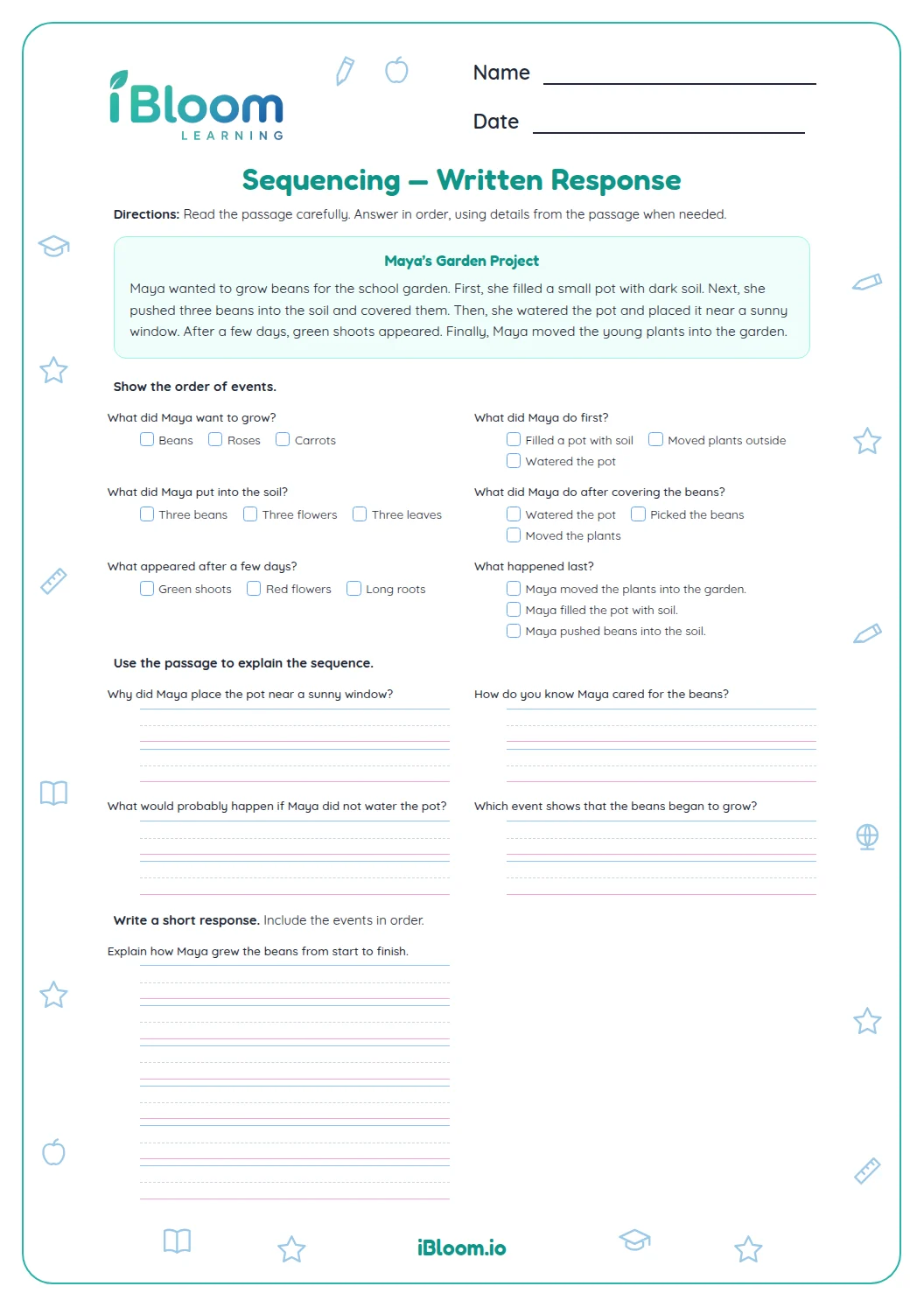
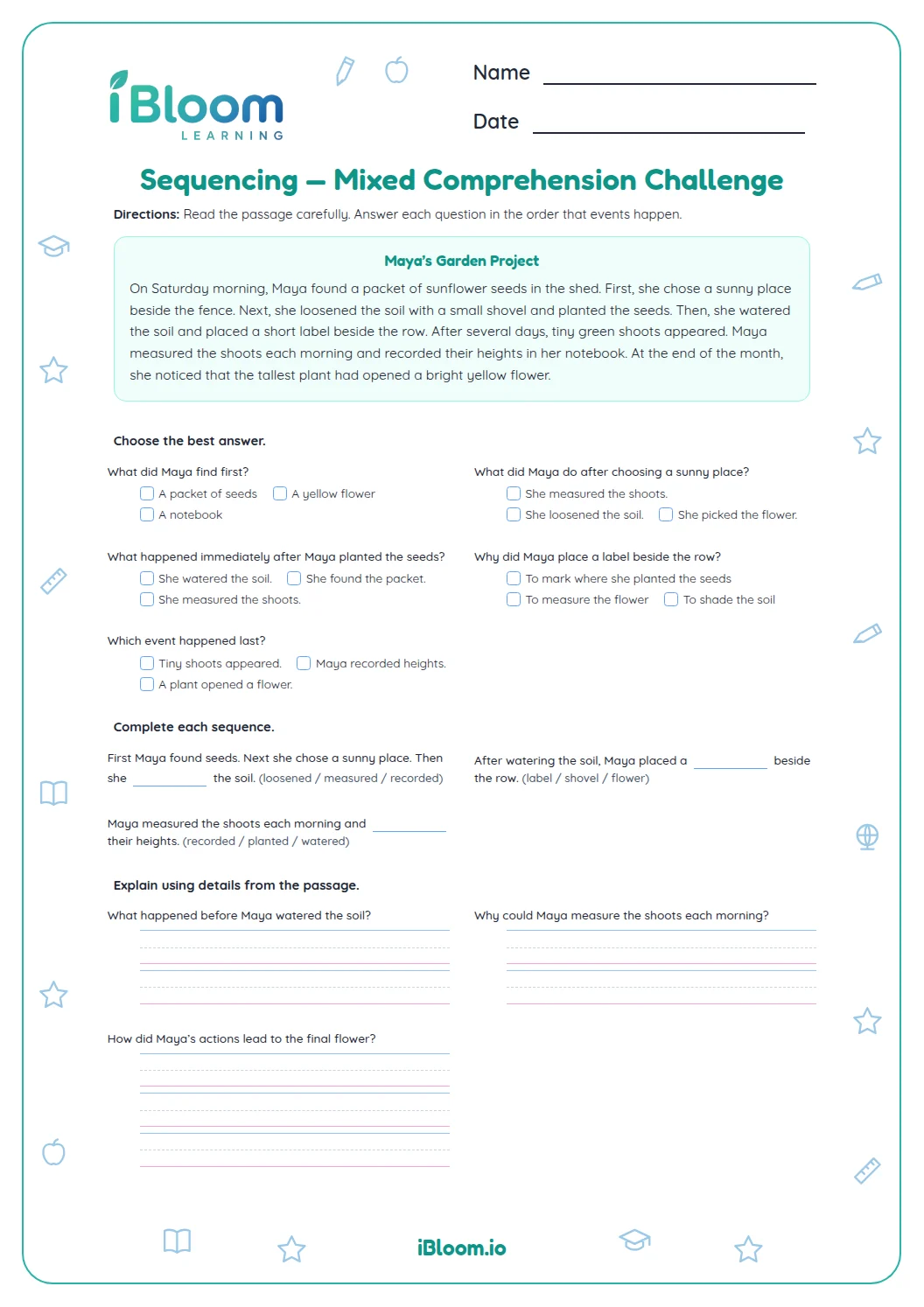
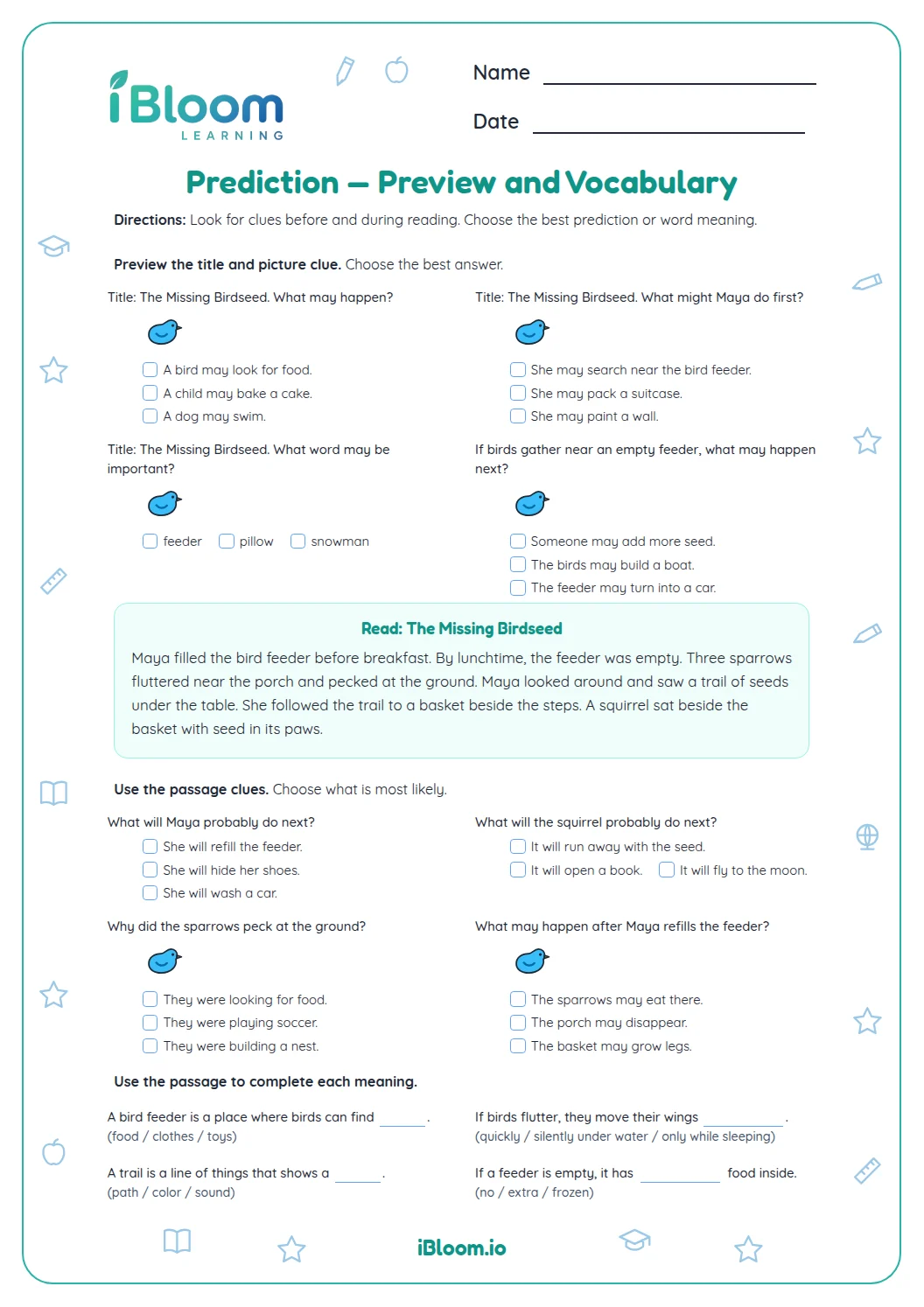
This free printable Grade 2 reading worksheet uses “Milo’s First Bird Feeder” to practice sequencing and vocabulary. Students answer five detail questions, choose the first, next, and last events, then write about event order and the word “visitor.” A final response asks them to identify a lesson from Milo’s project. The separate key includes sample wording for written responses. The story-event and lesson questions practice Common Core RL.2.2.
Aligned to RL.2.2
How do sequence words help retell a story?
Sequence words such as first, next, then, and last show when events happen. In Milo’s story, the carton is rinsed before it dries, and the feeder is hung before the chickadee arrives. Keeping those steps in order helps a reader retell the project clearly.
How can a reader put events in order?
Find the action that happened earliest, then check what the story says came after it.
- 1Dad cut openings in the carton.
- 2After that, Milo poured birdseed through the top.
- 3So the answer is: Milo poured in birdseed.
What does this worksheet ask children to do?
Questions 1–5 check story details. Questions 6–8 ask what happened first, after an event, and last. Questions 9–14 ask children to retell in order, use a clue to explain “visitor,” and think about what Milo learned.
How can an adult support a retelling?
Ask the child to name one event at a time and use a sequence word to connect it to the next. If an event is out of place, reread that part of the story and compare the order of actions.
How to use this worksheet
- 1Read the bird-feeder story from beginning to end.
- 2Notice sequence clues such as first, next, then, and the order of actions.
- 3Answer detail questions by finding the matching sentence.
- 4For order questions, identify what happened before and after each event.
- 5Use a clue in the last sentence to explain the word “visitor.”
- 6Check written retellings and the lesson response with the sample key.
Common reading slips and quick fixes
The mistake
Putting events in the order they are remembered instead of the order in the story.
The fix
Reread the passage and mark what happened first, next, and last.
The mistake
Treating “visitor” as a person only.
The fix
Use the sentence clue: the chickadee came to the feeder.
The mistake
Retelling events without sequence words.
The fix
Connect actions with first, next, then, or last.
Common Core alignment
This worksheet builds close reading through questions about a short story and its details.
Retell story events and identify a lesson supported by the story.
On this sheet: The sequence questions ask students to recount events, and the final response identifies a lesson from Milo’s project.
Show the official wordingHide the official wording
Recount stories, including fables and folktales from diverse cultures, and determine their central message, lesson, or moral.
What to practice next
Make more practice
Further reading
Questions parents and teachers ask
What does this worksheet mean by sequencing?
Sequencing means identifying when story events happen and retelling them in order. Milo asks for supplies, prepares the carton, hangs the feeder, and later sees a chickadee. The questions help children track those events. The passage also offers clues about the meaning of visitor.
How many sequencing questions are included?
The sheet has 14 questions: five about details, three multiple-choice event-order questions, and six written responses about retelling, vocabulary, details, and the story’s lesson. The separate answer key includes sample responses. The passage follows Milo from asking for supplies to seeing a bird.
What does “visitor” mean in Milo’s story?
A visitor is someone or something that comes to a place. The chickadee is the feeder’s first visitor because it lands by the feeder and pecks at the seeds. The story describes a bird arriving at the feeder, so the meaning is clear.
Can children use different wording in written answers?
Yes. The key gives sample wording, and children may answer in their own words if the response fits the passage. For a retelling, check that the events are in order; for the lesson question, check that the idea fits Milo’s project.
How long does this worksheet take?
Plan for about 15 to 20 minutes to read the story, answer the questions, and check the key. Children may reread the event sequence when deciding what happened after Dad cut the openings or just before the chickadee arrived.