


About this worksheet
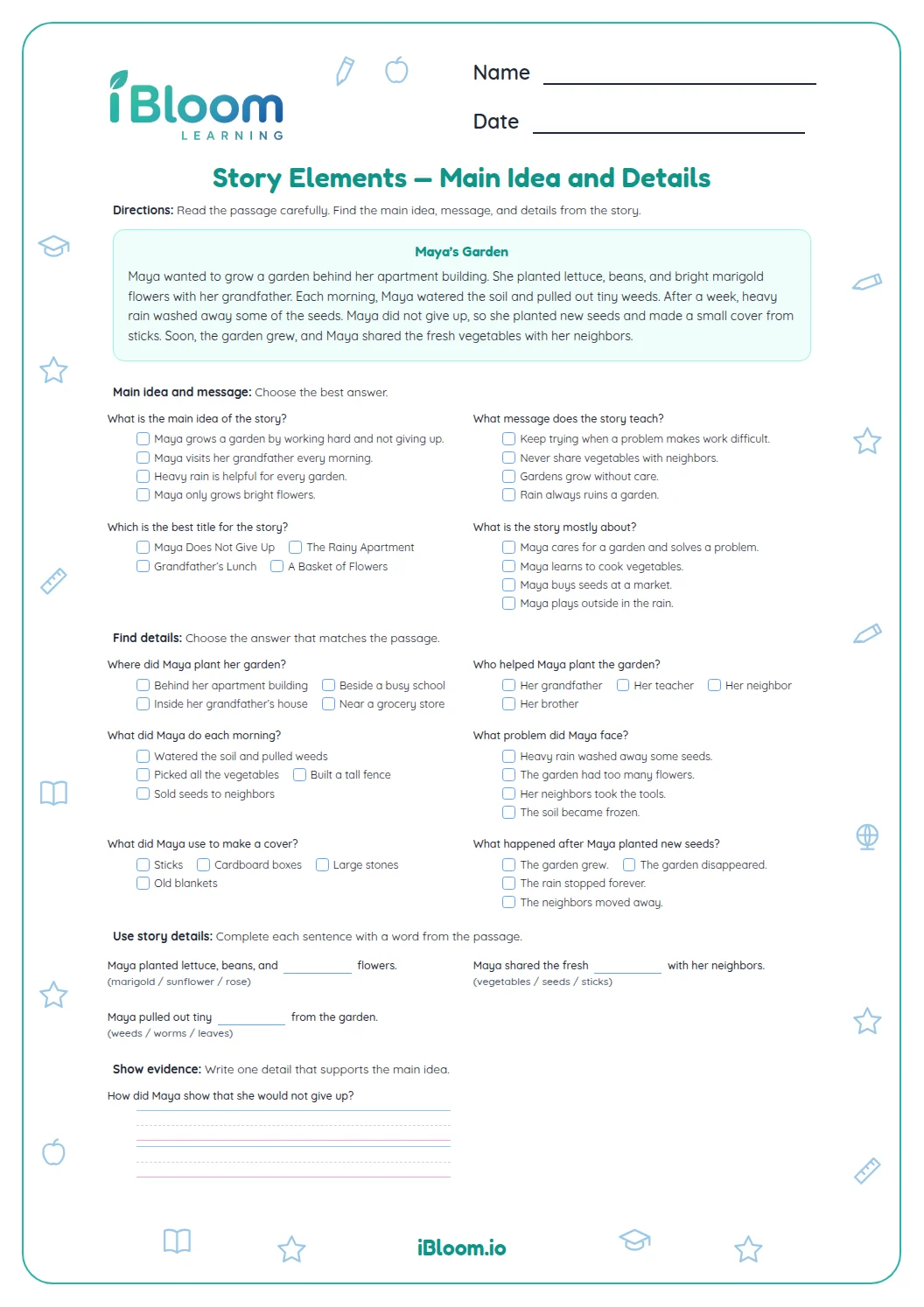
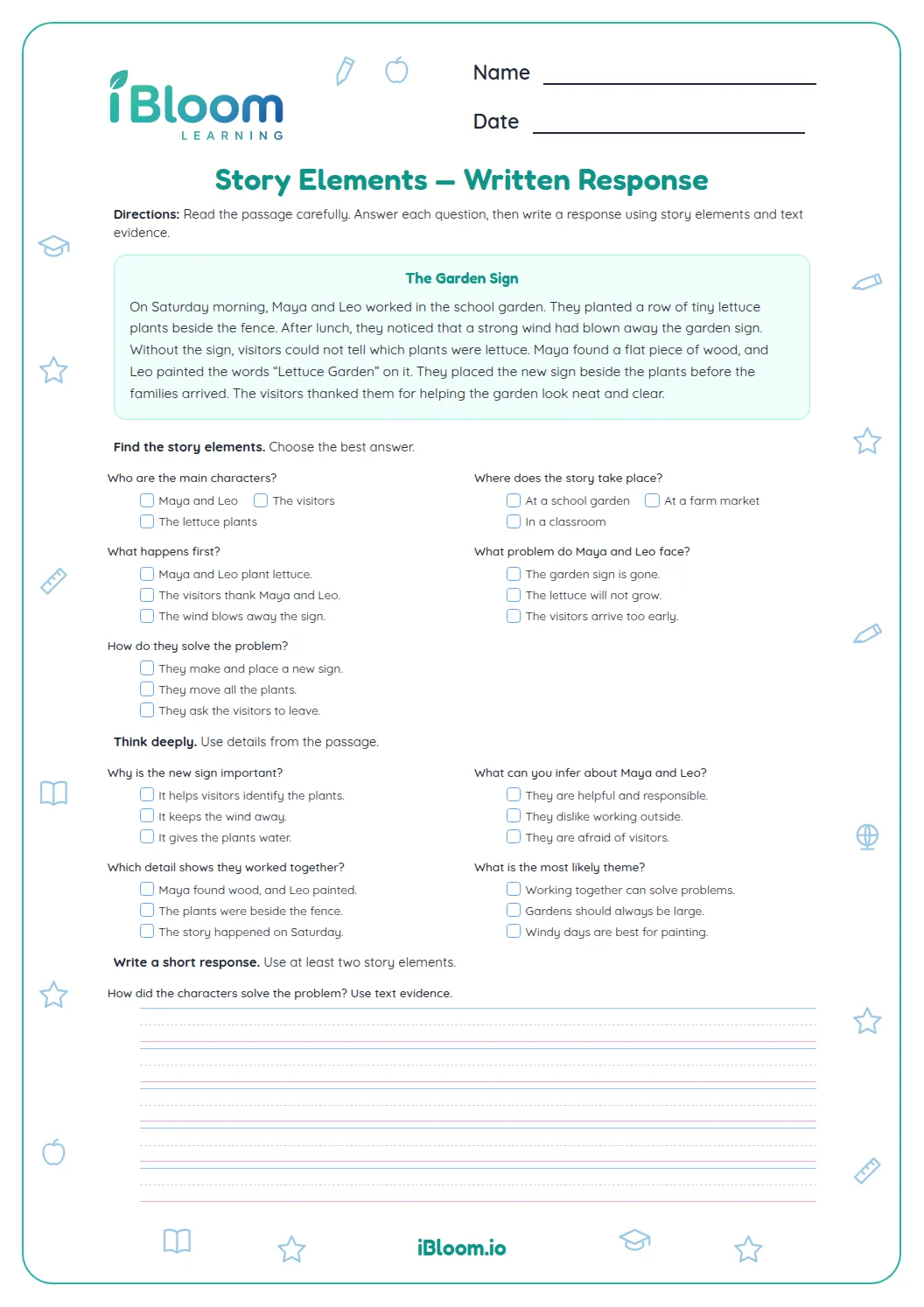
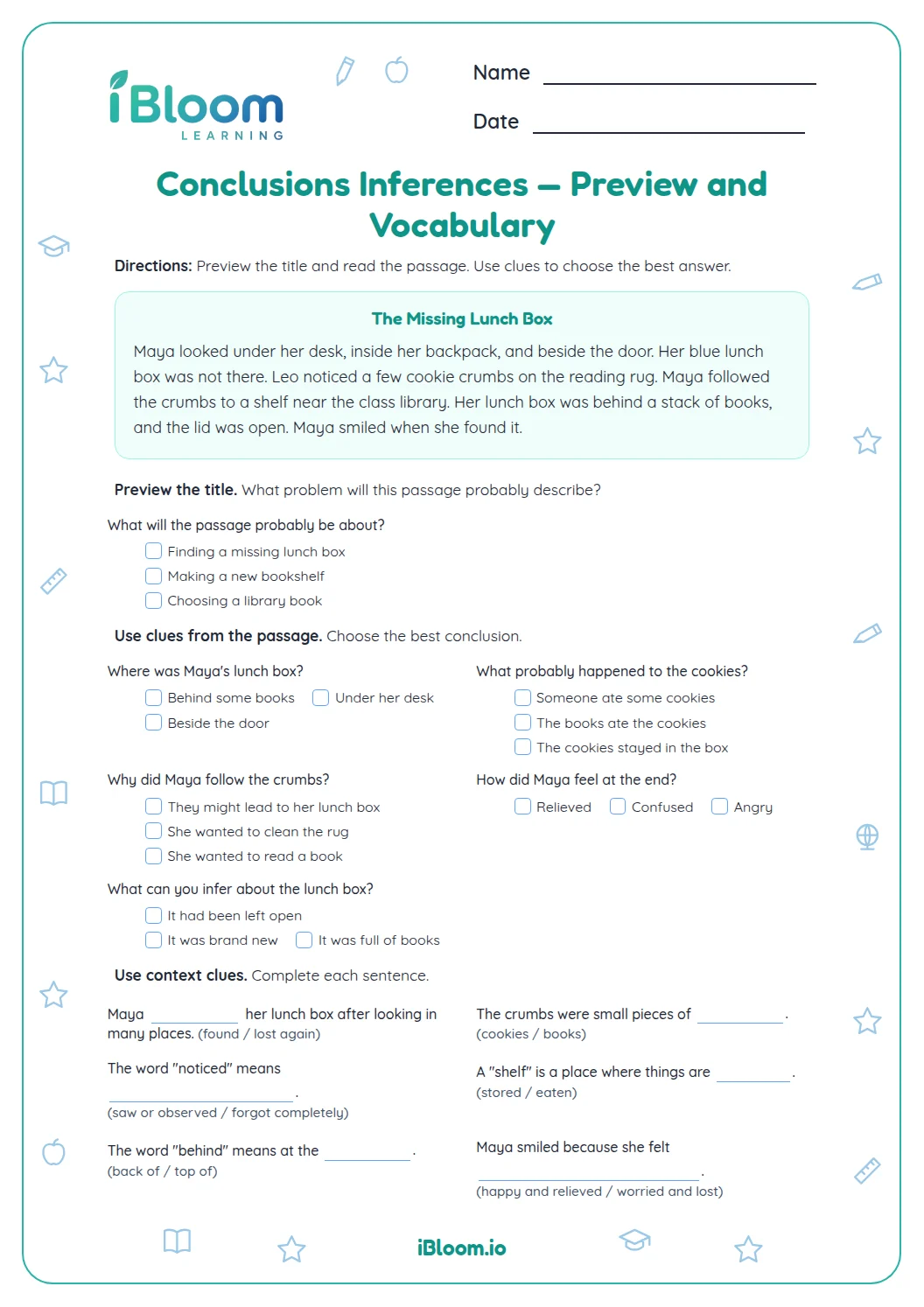
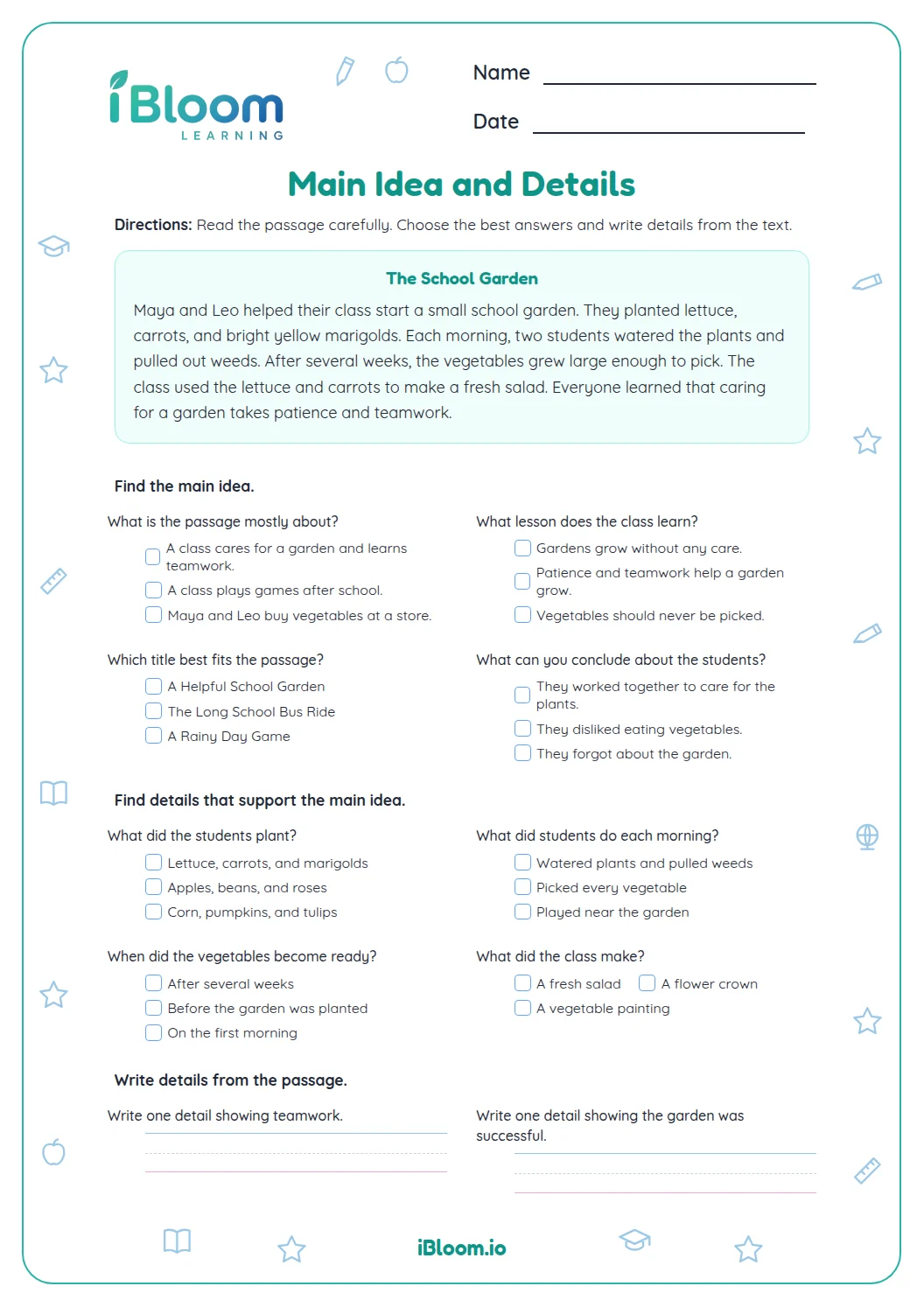
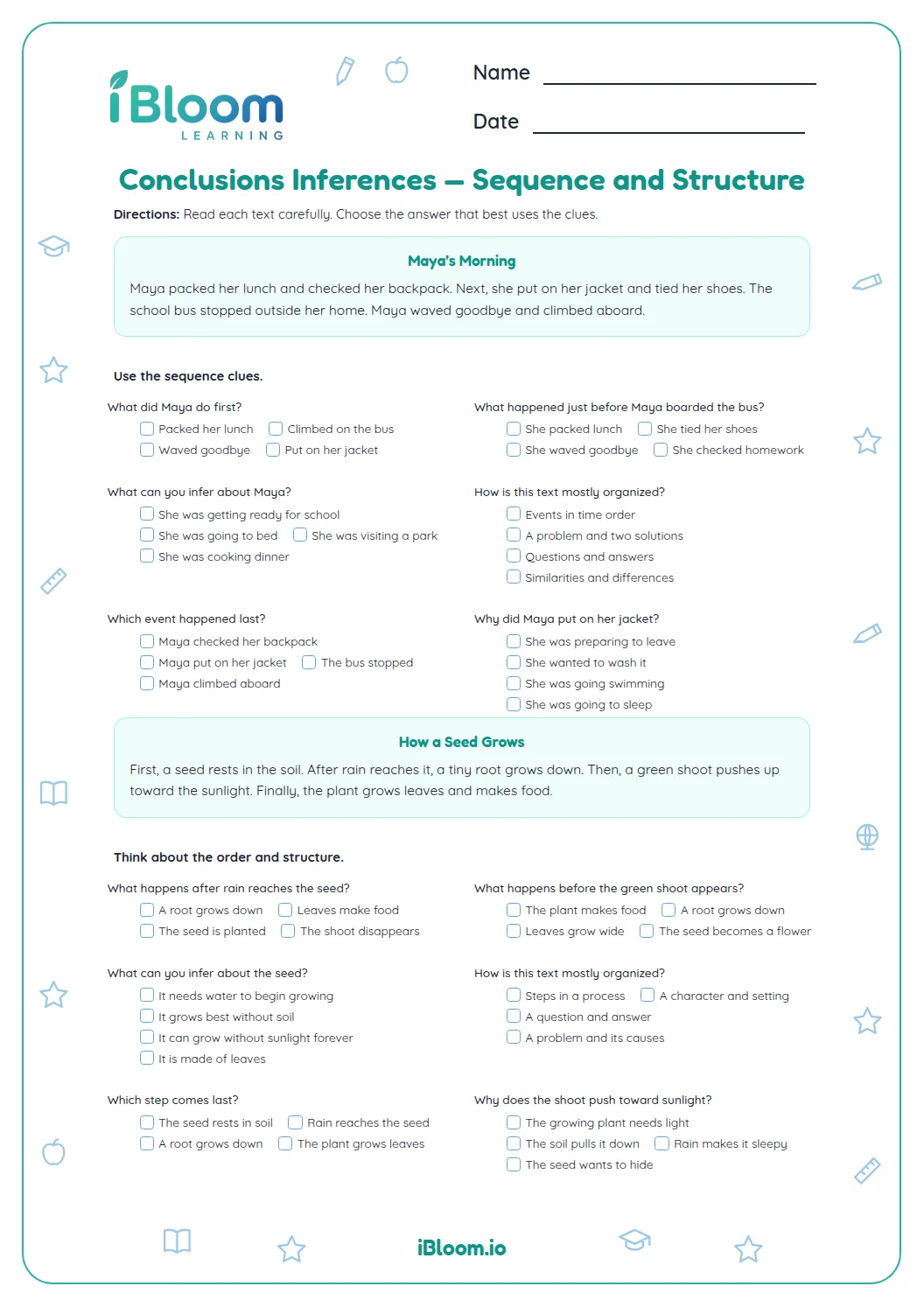
This Grade 3 reading worksheet pairs an original school-garden story with questions about story details and character choices. Readers locate stated information, infer what Maya thinks or plans, and use events as evidence. The questions practice referring explicitly to a text under CCSS RL.3.1.
Aligned to RL.3.1
What is an inference?
A detail is stated directly in a story. An inference is an idea a reader forms by combining one or more details with what the reader knows. Strong answers name a clue so another reader can follow the thinking.
Maya waters each stem, repairs the label, and leaves the can ready for another dry day.
- 1Clues: Maya waters plants and repairs the label.
- 2Inference: She is careful with the garden.
What does the worksheet ask readers to do?
The story follows Maya before and after a rain shower. Questions move from details to evidence-based inferences and connections between events.
- Part A: locate story details
- Part B: choose inferences and supporting details
- Part C: connect events and draw a supported conclusion
How can a reader support an inference?
Point to an action, description, or event in the passage. Then explain how that clue supports the idea.
- 1Clue: Maya puts the can away ready for a dry day.
- 2Inference: She plans to care for the plants again.
How to use this worksheet
- 1Read the passage once to follow what happens.
- 2Reread the sentence named by a question.
- 3Separate details stated in the text from ideas you infer.
- 4Choose the clue that best supports the inference.
- 5Check that each answer fits the whole story.
Common mistakes and quick fixes
The mistake
Choosing an inference with no story clue
The fix
Find an action or sentence that supports the idea.
The mistake
Mixing up the order of events
The fix
Reread the time words and track what happens first.
The mistake
Choosing a true detail that does not answer the question
The fix
Match the clue directly to the feeling, reason, or conclusion asked about.
Curriculum alignment
This printable gives focused practice with the stated skill.
Answer questions and use explicit story details as evidence.
On this sheet: Readers answer questions about the passage and select story details as evidence.
Show the official wordingHide the official wording
Ask and answer questions to demonstrate understanding of a text, referring explicitly to the text as the basis for the answers.
What to practice next
Make more practice
Questions parents and teachers ask
What is the difference between a detail and an inference?
A detail is stated directly in the story. An inference is a conclusion a reader makes by combining one or more details with what the reader already knows. The strongest answers explain the clue that supports the idea. Readers can return to the passage to check that their thinking fits.
How should I support an inference?
Name a clue from the passage and connect it to your idea. For example, Maya waters the drooping plants and fixes their label. Those actions support the inference that she cares for the garden. This answer points to what Maya does as evidence for a character trait.
Can two readers make different inferences?
Readers may suggest different ideas, but each one should fit the story and have evidence. A useful check is to ask, “Which sentence or action led you to that thought?” An unsupported guess does not count as a text-based inference. A clear explanation makes the reasoning easy to follow.
What does evidence mean in reading?
Evidence is a detail from the text that helps show why an answer makes sense. It can be an action, a description, or something a character says. Readers can quote a short clue or explain it in their own words. The passage gives clues about Maya’s choices and feelings.
What is one example of evidence in Maya’s story?
Maya waters each bean plant and repairs the paper label after it slips into the mud. Those actions are details a reader can point to when explaining that she cares for the garden. The question set asks readers to connect a clue with an inference.