Free printable practice
Wind Practice Activities
Grade 1 science worksheets help children observe wind, describe its strength and direction, and connect moving air to everyday weather clues.
Free printable worksheet PDFs
Preview every available page, then download the free worksheet PDF for home, homeschool, tutoring, or classroom practice.
Preview the exact activity before downloading it.
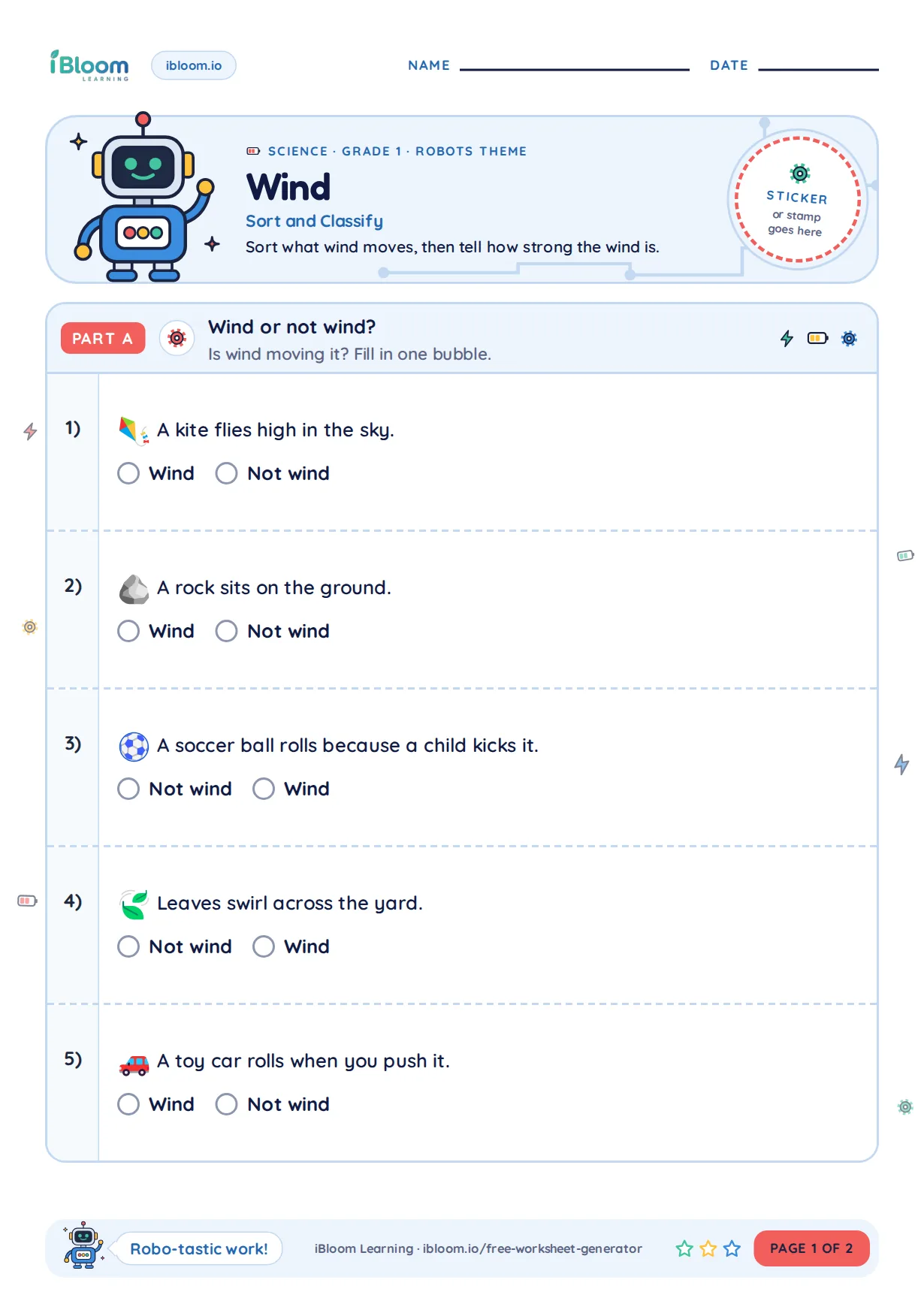 Wind — Sort and ClassifyGrade 1 science worksheets help children observe wind, describe its strength and direction, and connect moving air to everyday weather clues. This sort and classify worksheet provides a distinct, age-appropriate way to practise the same lesson.Grade 1Free PDF preview
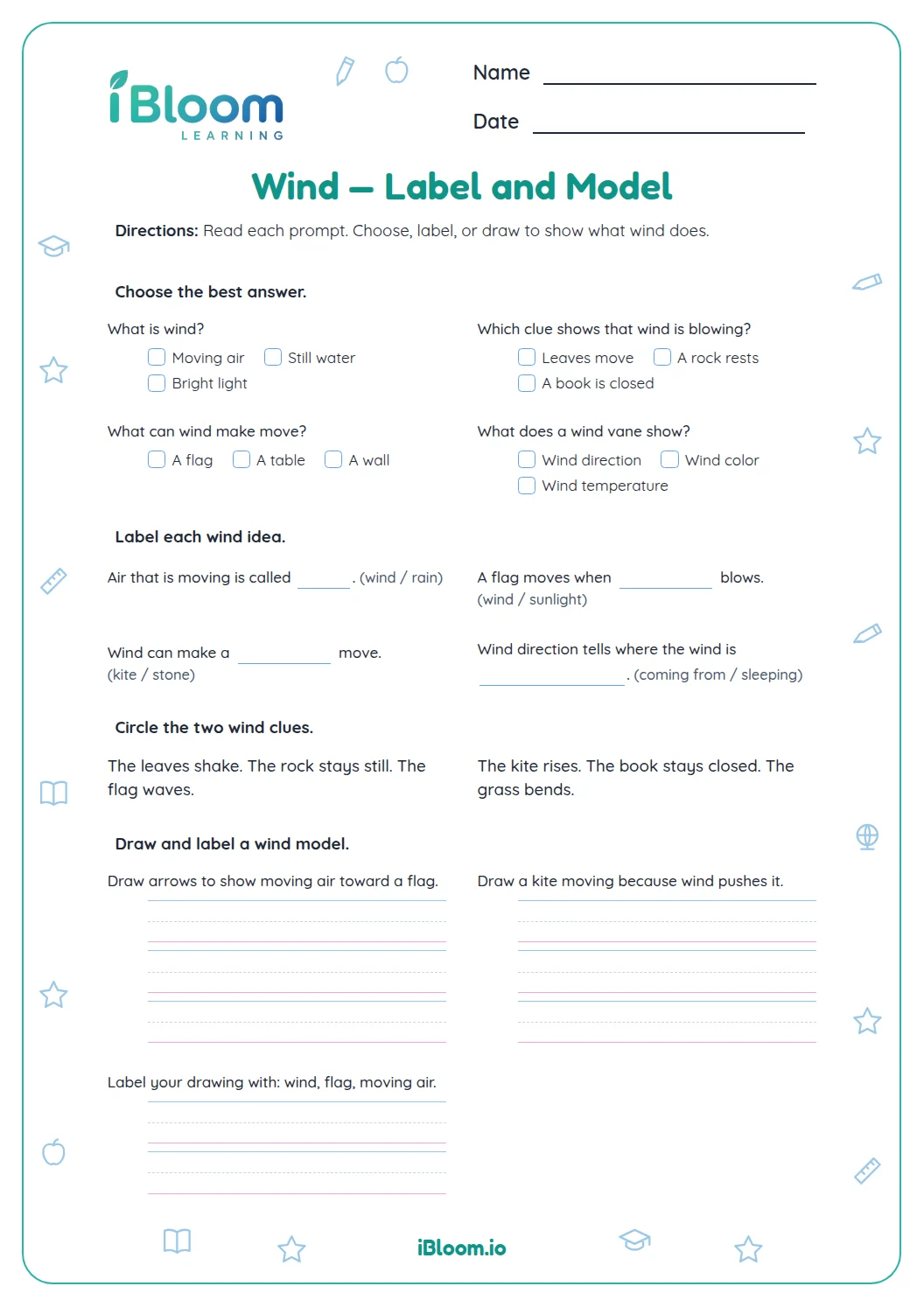 Wind — Label and ModelGrade 1 science worksheets help children observe wind, describe its strength and direction, and connect moving air to everyday weather clues. This label and model worksheet provides a distinct, age-appropriate way to practise the same lesson.Grade 1Free PDF preview
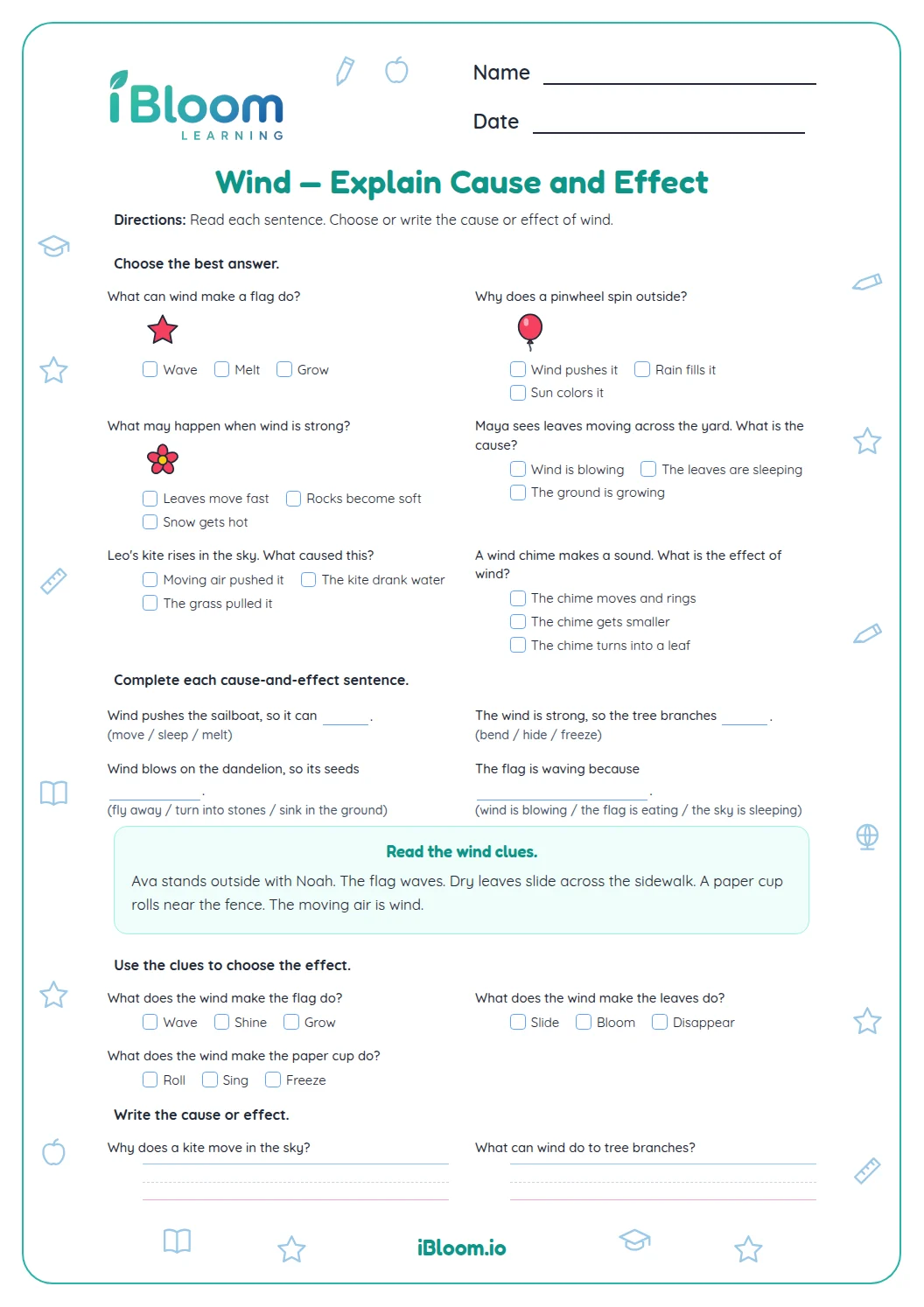 Wind — Explain Cause and EffectGrade 1 science worksheets help children observe wind, describe its strength and direction, and connect moving air to everyday weather clues. This explain cause and effect worksheet provides a distinct, age-appropriate way to practise the same lesson.Grade 1Free PDF preview
 Wind — Apply Science IdeasGrade 1 science worksheets help children observe wind, describe its strength and direction, and connect moving air to everyday weather clues. This apply science ideas worksheet provides a distinct, age-appropriate way to practise the same lesson.Grade 1Free PDF preview
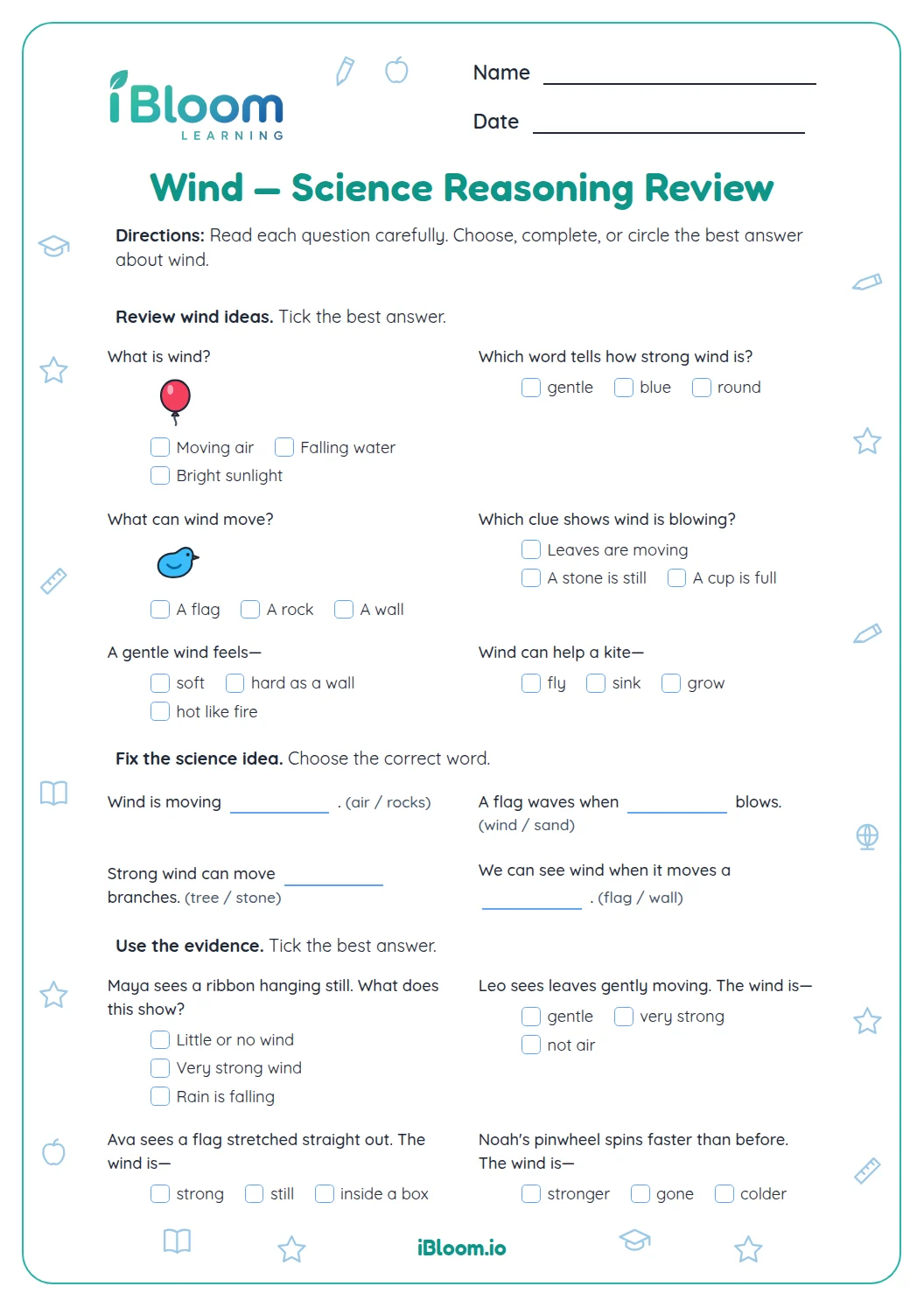 Wind — Science Reasoning ReviewGrade 1 science worksheets help children observe wind, describe its strength and direction, and connect moving air to everyday weather clues. This science reasoning review worksheet provides a distinct, age-appropriate way to practise the same lesson.Grade 1Free PDF preview
Practice that builds confidence
What children learn about wind
These Grade 1 wind worksheets help children understand wind as moving air that can be seen through its effects. Students practise noticing clues such as blowing leaves, flags, hair, clouds, kites, and windsocks, then use simple weather words to describe what they observe.
The printable activities include picture-based sorting, labeling, matching, drawing, short writing prompts, and simple observation tasks. Children build early science skills by comparing calm, breezy, and windy conditions and by thinking about how wind affects people, objects, and outdoor choices.
Wind is hard to see, so first graders learn to look for evidence. These worksheets guide children to notice what wind does: it moves leaves, turns pinwheels, pushes a sailboat, flies a kite, or bends grass. They also practise basic weather vocabulary such as wind, breeze, gust, calm, direction, and windsock in child-friendly contexts.

Building observation skills
The activities move from recognizing wind in pictures to describing real outdoor signs. Children may choose whether a scene shows calm or windy weather, draw objects that can move in wind, or match a wind tool to its use. Some pages invite students to record what they see outside, helping them understand that weather can be observed, described, and compared.
A simple parent routine
On a walk or from a window, ask, “How do you know the air is moving?” Have your child point to three clues: a tree, a flag, clothing, dust, or clouds. Then use a sentence frame: “The wind is moving the ___.” After the worksheet, ask your child to draw one more wind clue from real life. This connects the printable page to everyday weather.

Classroom uses for teachers
Teachers can use these pages during a Grade 1 weather unit, morning weather talks, science centers, or after an outdoor observation. The picture sorts work well for small groups, while drawing and writing pages support independent practice. Students can also compare their answers with a partner and explain the clue that helped them decide.

Common errors to watch for
Some children may think wind is only present during storms. Reinforce that a light breeze is wind too. Others may confuse wind direction with the direction an object moves; using a windsock, flag, or arrow can help. If a child says “the wind is invisible,” agree, then ask what effects make it observable.
Free printable PDF download
Use this grade 1 wind worksheet page to preview the activity, print it, or download it as a PDF for quick practice. It works well for homework, homeschool lessons, tutoring, morning work, revision, and classroom centers.
Answers and answer key support
After the child completes the worksheet independently, parents and teachers can use the answer support or answer key information to check the work, review mistakes, and choose the next practice step.
Why iBloom worksheets help
The iBloom wind collection uses clear visuals, simple language, and repeated science vocabulary so young learners can move from noticing to explaining. A useful strategy for children is: look, name the clue, then tell what the wind is doing. For example, “I see the flag. The wind is blowing it.”
Helpful answers
Frequently asked questions
What does a Grade 1 student need to know about wind?
A Grade 1 student should understand that wind is moving air and that we notice it by seeing its effects, such as flags waving, leaves moving, or kites flying.
How do these worksheets teach wind if air cannot be seen?
The worksheets focus on visible clues. Children look at pictures, sort calm and windy scenes, label wind-related objects, and explain what the wind is moving.
Can these wind activities be used with a real weather observation?
Yes. They work well before or after going outside. Children can observe trees, flags, clouds, clothing, or playground objects, then complete a matching or drawing activity.
What vocabulary is included in these wind worksheets?
Children practise simple weather words such as wind, breeze, gust, calm, direction, blow, move, and windsock, depending on the activity.
How can I help my child describe wind at home?
Ask your child to point to a wind clue and complete a sentence such as, “The wind is moving the leaves.” This helps connect observation with clear science language.
Is this grade 1 wind worksheet free?
Yes. You can preview it for free and use the printable worksheet for home or classroom practice.
Can I download this grade 1 wind worksheet as a PDF?
Yes. Use the worksheet download option to save a printable PDF, or print the worksheet directly from the page.
Does this grade 1 wind worksheet include answers or an answer key?
When the activity has fixed answers, iBloom includes answer support so parents and teachers can check the completed worksheet.