Free printable practice
Energy Practice Activities
Grade 2 science worksheets help children identify energy in everyday life, connect energy sources to uses, and think about saving energy at home and school.
Free printable worksheet PDFs
Preview every available page, then download the free worksheet PDF for home, homeschool, tutoring, or classroom practice.
Preview the exact activity before downloading it.
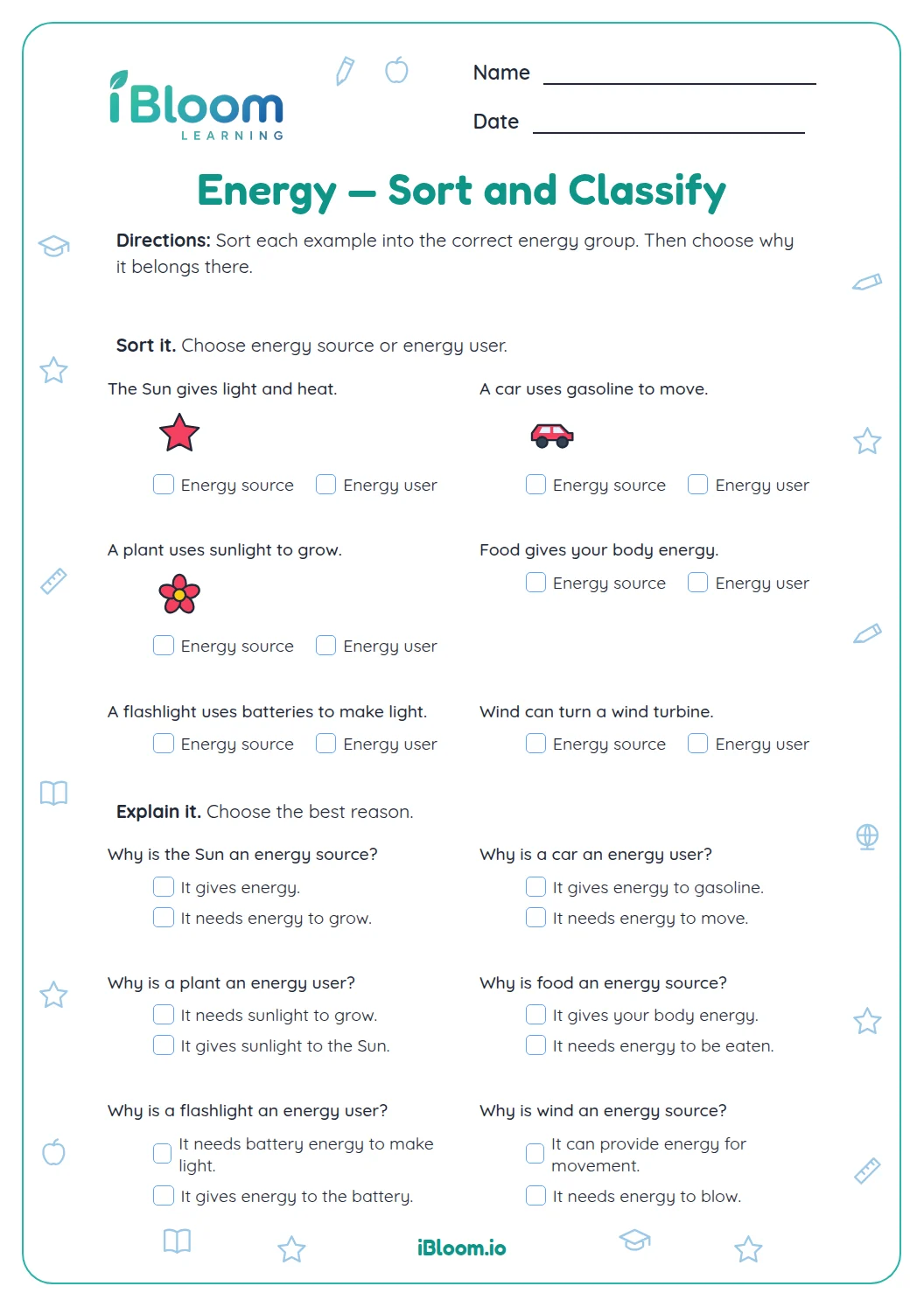 Energy — Sort and ClassifyGrade 2 science worksheets help children identify energy in everyday life, connect energy sources to uses, and think about saving energy at home and school. This sort and classify worksheet provides a distinct, age-appropriate way to practise the same lesson.Grade 2Free PDF preview
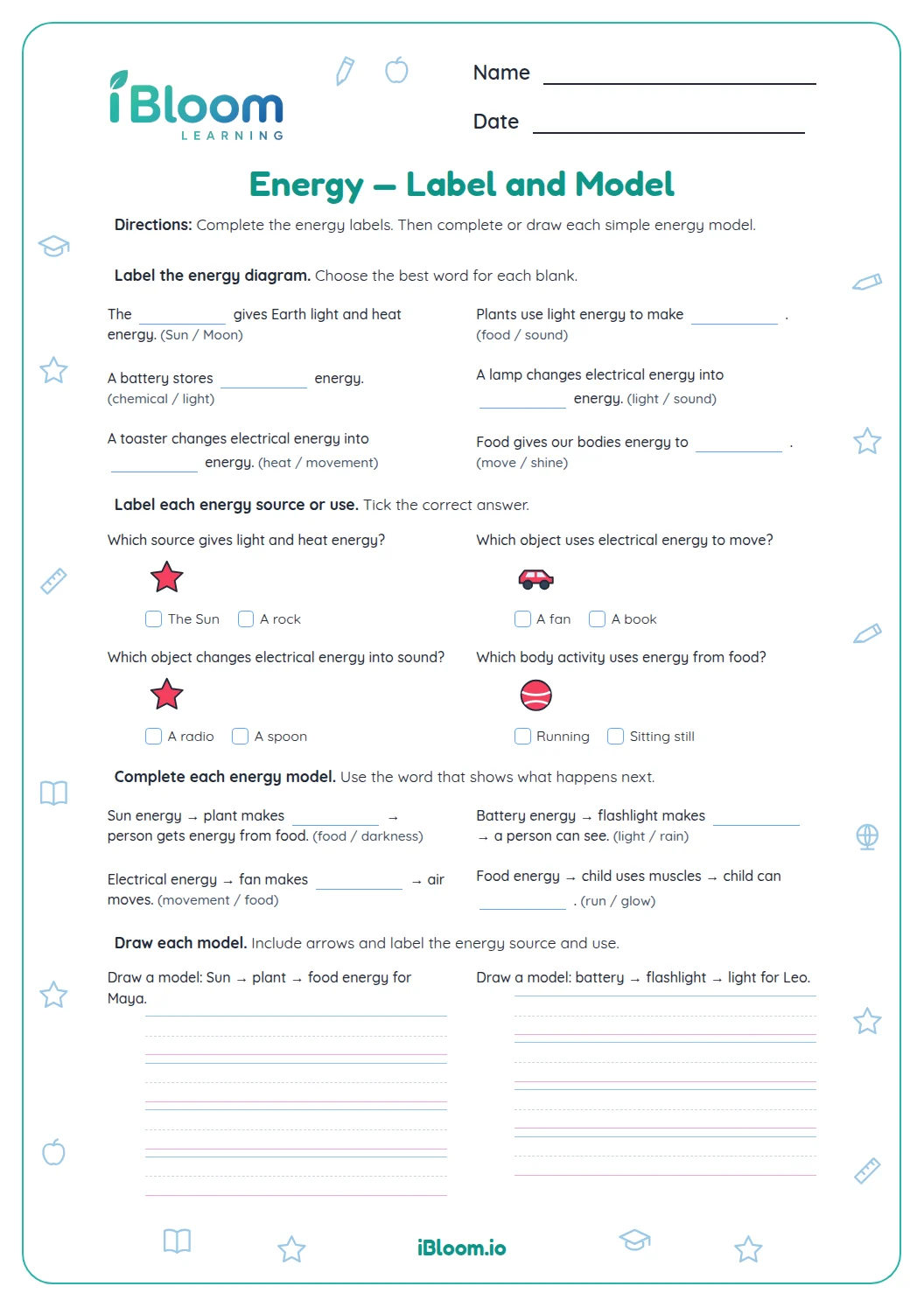 Energy — Label and ModelGrade 2 science worksheets help children identify energy in everyday life, connect energy sources to uses, and think about saving energy at home and school. This label and model worksheet provides a distinct, age-appropriate way to practise the same lesson.Grade 2Free PDF preview
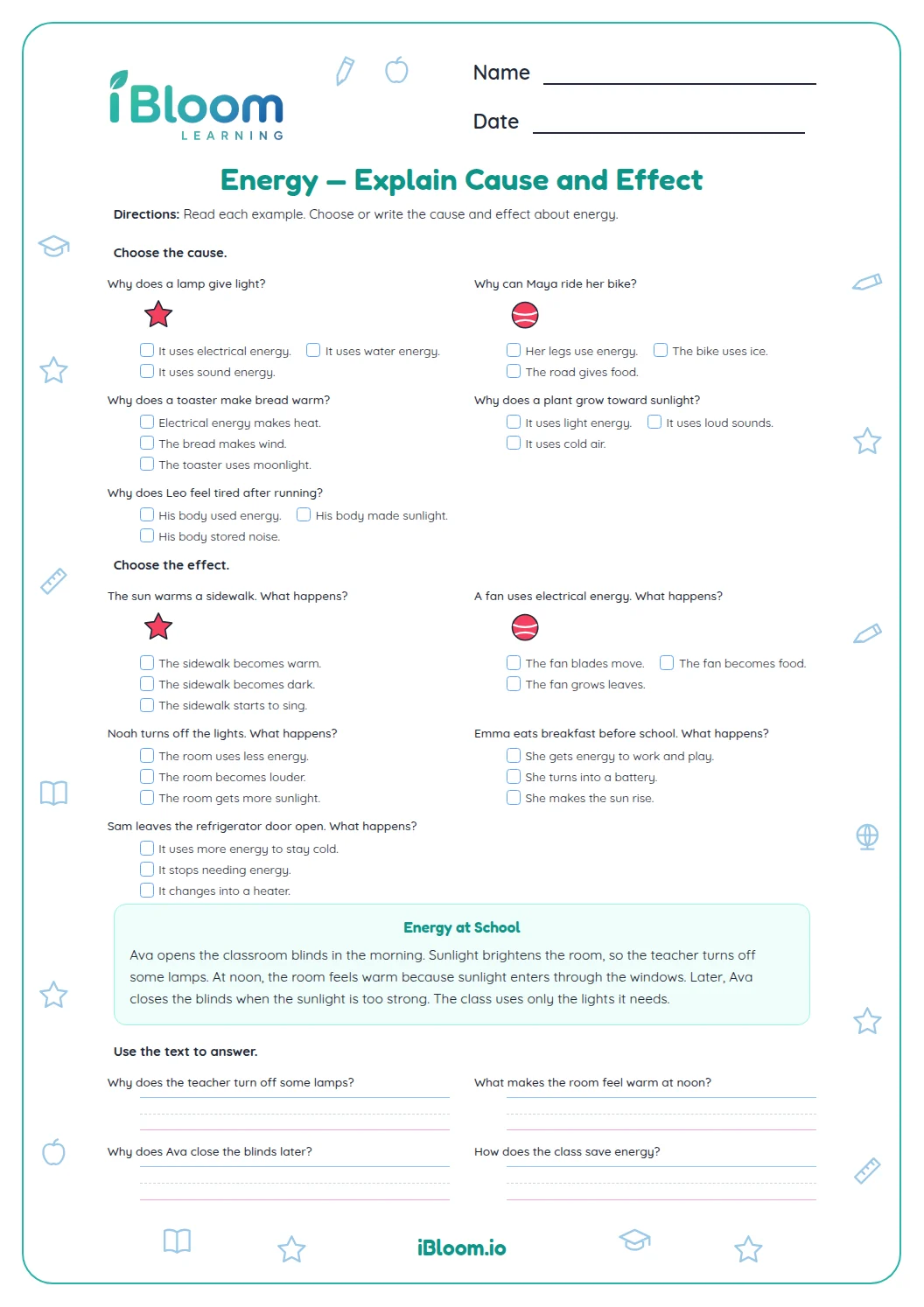 Energy — Explain Cause and EffectGrade 2 science worksheets help children identify energy in everyday life, connect energy sources to uses, and think about saving energy at home and school. This explain cause and effect worksheet provides a distinct, age-appropriate way to practise the same lesson.Grade 2Free PDF preview
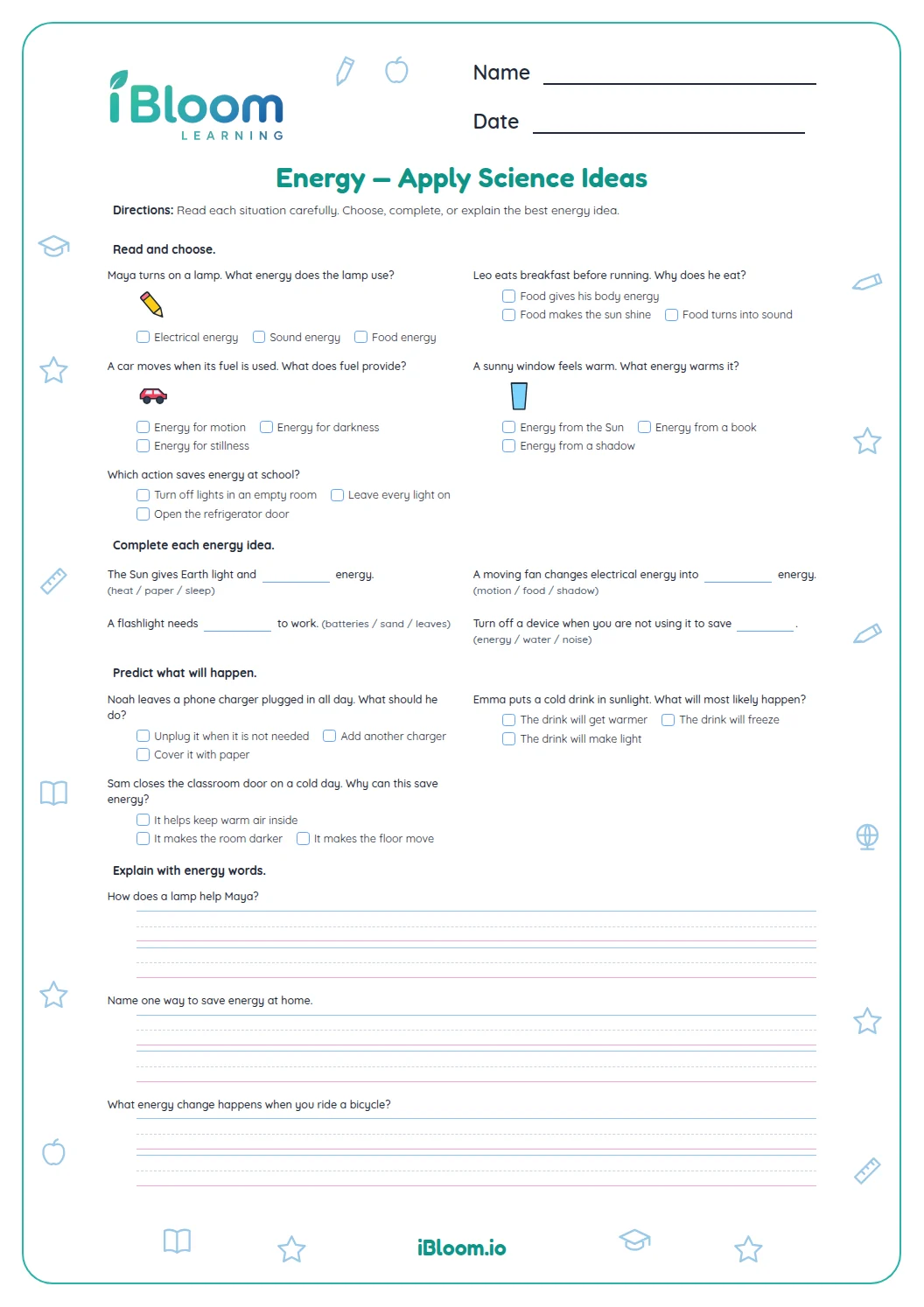 Energy — Apply Science IdeasGrade 2 science worksheets help children identify energy in everyday life, connect energy sources to uses, and think about saving energy at home and school. This apply science ideas worksheet provides a distinct, age-appropriate way to practise the same lesson.Grade 2Free PDF preview
 Energy — Science Reasoning ReviewGrade 2 science worksheets help children identify energy in everyday life, connect energy sources to uses, and think about saving energy at home and school. This science reasoning review worksheet provides a distinct, age-appropriate way to practise the same lesson.Grade 2Free PDF preview
Practice that builds confidence
What Grade 2 Students Learn About Energy
These Grade 2 energy practice activities help children notice that energy is what makes things happen: lights glow, heaters warm, speakers make sound, and moving objects change position. Students practise identifying common forms of energy and matching everyday objects to the energy they use or give off.
The printable worksheets include picture-based sorting, simple labeling, matching, short-answer prompts, and real-life scenarios about energy use in the environment. Children build science vocabulary while learning to observe, compare, and explain energy choices in familiar settings.
At this level, children are ready to connect energy with things they can see, hear, feel, and describe. The activities focus on practical examples such as sunlight warming a sidewalk, a lamp giving light, a drum making sound, a fan moving air, or a battery powering a toy. Instead of memorizing definitions only, students learn to ask, “What is happening, and what energy is involved?”

Building From Observation to Explanation
The worksheets move from recognizing examples to explaining them in simple science language. A child may first circle objects that use electricity, then sort pictures into light, heat, sound, or motion energy, and later write a sentence such as, “The toaster changes electrical energy into heat.” This progression helps children see energy as useful, observable, and connected to daily routines.
Energy and the Environment
Because this page sits within environment science, the practice also encourages thoughtful energy habits. Children may compare turning off unused lights, using sunlight during the day, closing the refrigerator door quickly, or choosing safe ways to use electrical devices. These tasks help students understand that people use energy resources and can make responsible choices.
A Simple Parent Routine
At home, try a quick “energy walk.” Visit the kitchen, living room, or backyard and ask your child to name one thing using energy, one thing giving off light or heat, and one way to save energy. Then use a worksheet to record or match those examples. Keep the conversation concrete: bulb, oven, TV, bicycle, sunlight, battery, plug, switch.

Classroom Uses for Teachers
Teachers can use these printables for science centers, morning review, small-group vocabulary support, or follow-up after a demonstration. Picture tasks work well for independent practice, while short explanation questions can be used for partner talk. They also support cross-curricular writing when students describe cause and effect in complete sentences.

Free printable PDF download
Use this grade 2 energy worksheet page to preview the activity, print it, or download it as a PDF for quick practice. It works well for homework, homeschool lessons, tutoring, morning work, revision, and classroom centers.
Answers and answer key support
After the child completes the worksheet independently, parents and teachers can use the answer support or answer key information to check the work, review mistakes, and choose the next practice step.
Why iBloom Worksheets Help
The worksheets give children repeated practice with varied representations: real-world pictures, word banks, sorting boxes, sentence frames, and scenario questions. Watch for common errors such as calling every powered object “electricity,” confusing heat with light, or thinking energy disappears when a device is turned off. A child-friendly strategy is: “Look for the action—glowing, warming, sounding, or moving—then name the energy.”
Helpful answers
Frequently asked questions
What energy topics are covered in these Grade 2 worksheets?
They focus on everyday forms and uses of energy, including light, heat, sound, motion, electricity, batteries, sunlight, and simple ways to save energy.
Are these worksheets suitable for children who are new to energy concepts?
Yes. The activities begin with familiar objects and pictures, then build toward sorting, matching, labeling, and writing short explanations.
How can I help my child if they confuse heat and light energy?
Use direct examples. Ask whether the object helps us see, makes something warmer, or does both. A lamp mainly gives light, while a toaster gives heat.
Can teachers use these pages in science centers?
Yes. The worksheets work well for independent centers, partner sorting, vocabulary review, or as a follow-up after classroom demonstrations about light, sound, heat, or movement.
Do the activities include energy conservation ideas?
Yes. Some tasks connect energy to responsible choices, such as switching off unused lights, using sunlight when possible, and avoiding wasteful use of electrical devices.
Is this grade 2 energy worksheet free?
Yes. You can preview it for free and use the printable worksheet for home or classroom practice.
Can I download this grade 2 energy worksheet as a PDF?
Yes. Use the worksheet download option to save a printable PDF, or print the worksheet directly from the page.
Does this grade 2 energy worksheet include answers or an answer key?
When the activity has fixed answers, iBloom includes answer support so parents and teachers can check the completed worksheet.