Free printable practice
Natural Resources Practice Activities
Printable Grade 2 science activities that help children identify, sort, and describe natural resources from land, water, air, plants, and animals.
Free printable worksheet PDFs
Preview every available page, then download the free worksheet PDF for home, homeschool, tutoring, or classroom practice.
Preview the exact activity before downloading it.
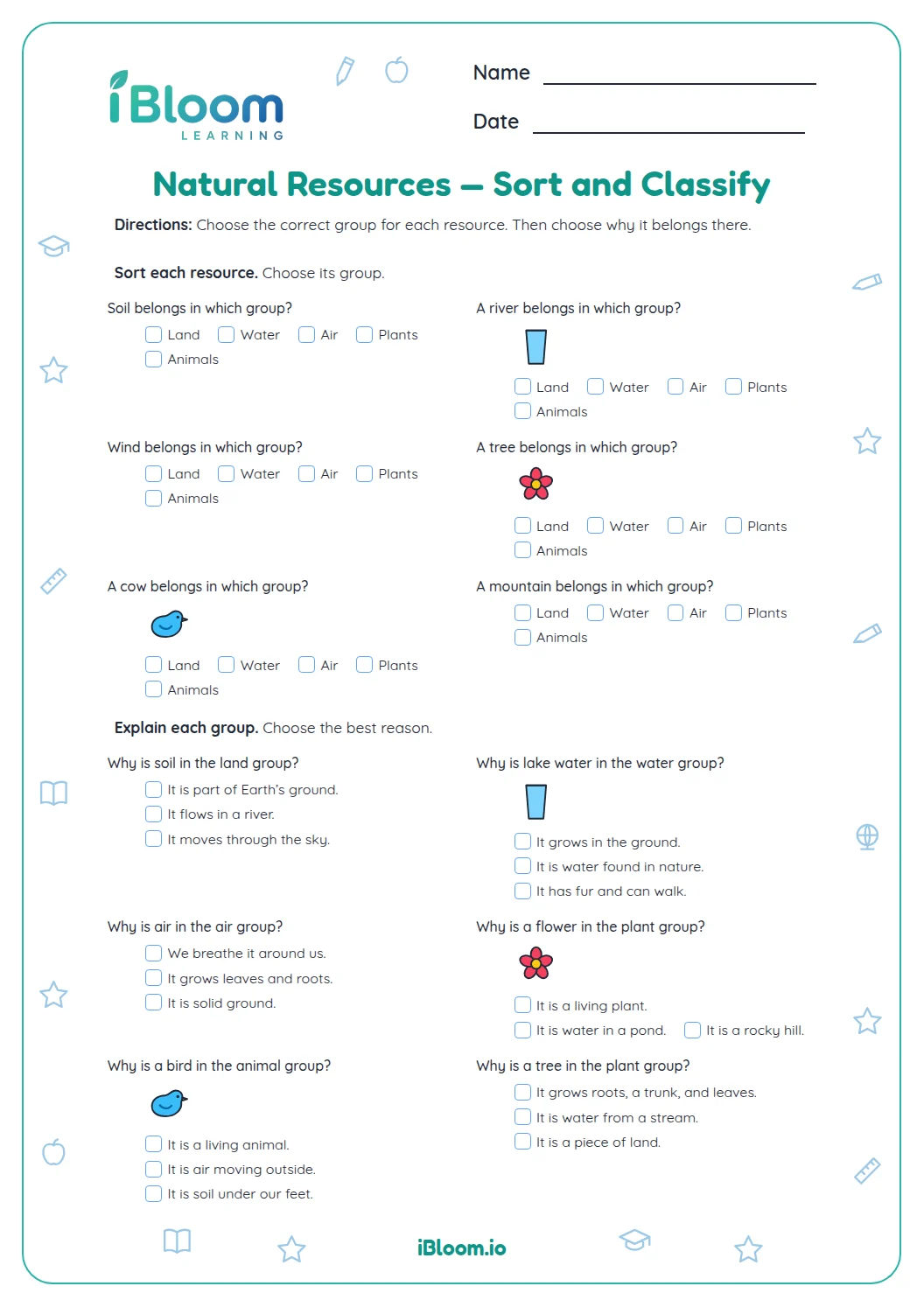 Natural Resources — Sort and ClassifyPrintable Grade 2 science activities that help children identify, sort, and describe natural resources from land, water, air, plants, and animals. This sort and classify worksheet provides a distinct, age-appropriate way to practise the same lesson.Grade 2Free PDF preview4 pages
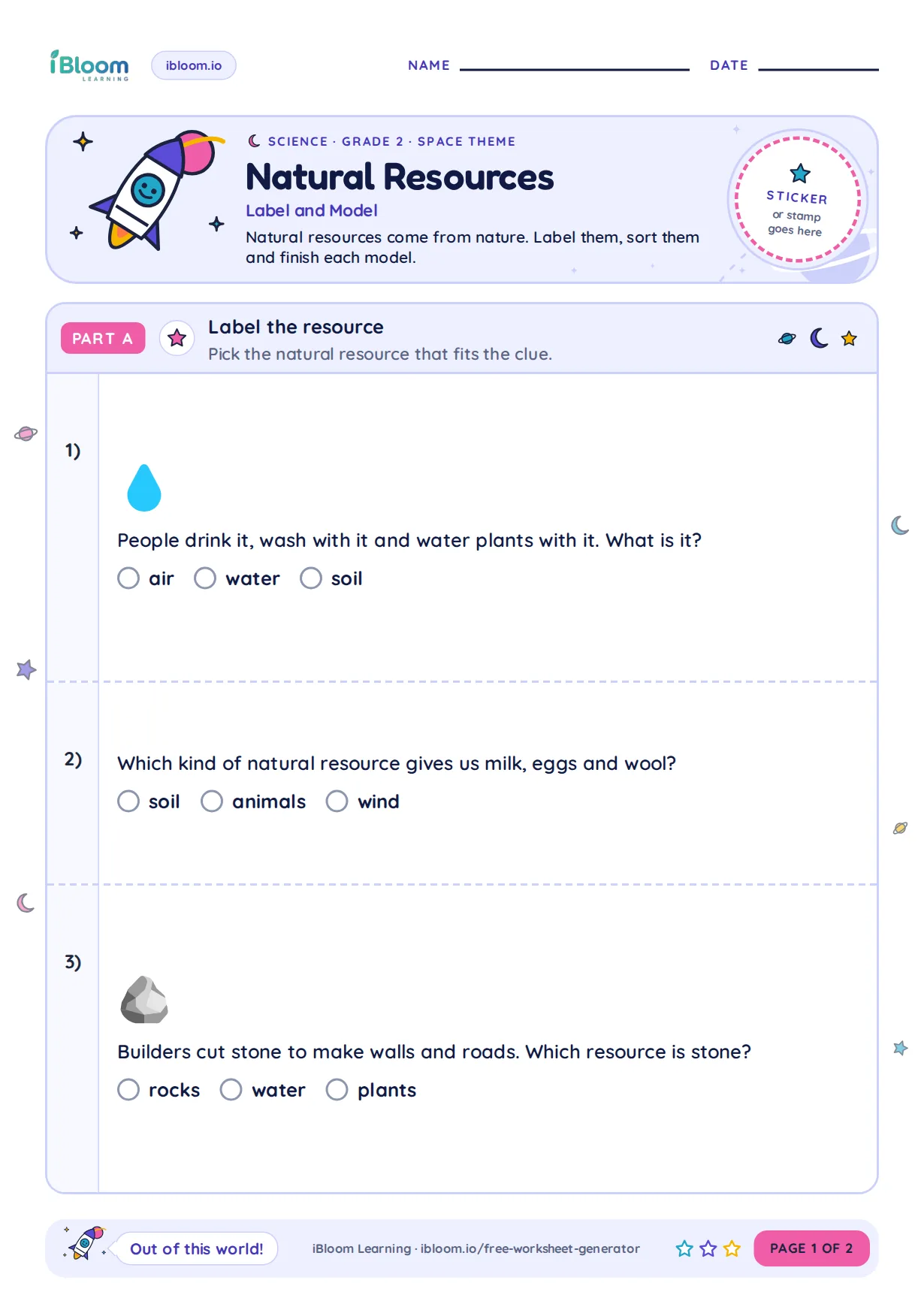 Natural Resources — Label and ModelPrintable Grade 2 science activities that help children identify, sort, and describe natural resources from land, water, air, plants, and animals. This label and model worksheet provides a distinct, age-appropriate way to practise the same lesson.Grade 2Free PDF preview6 pages
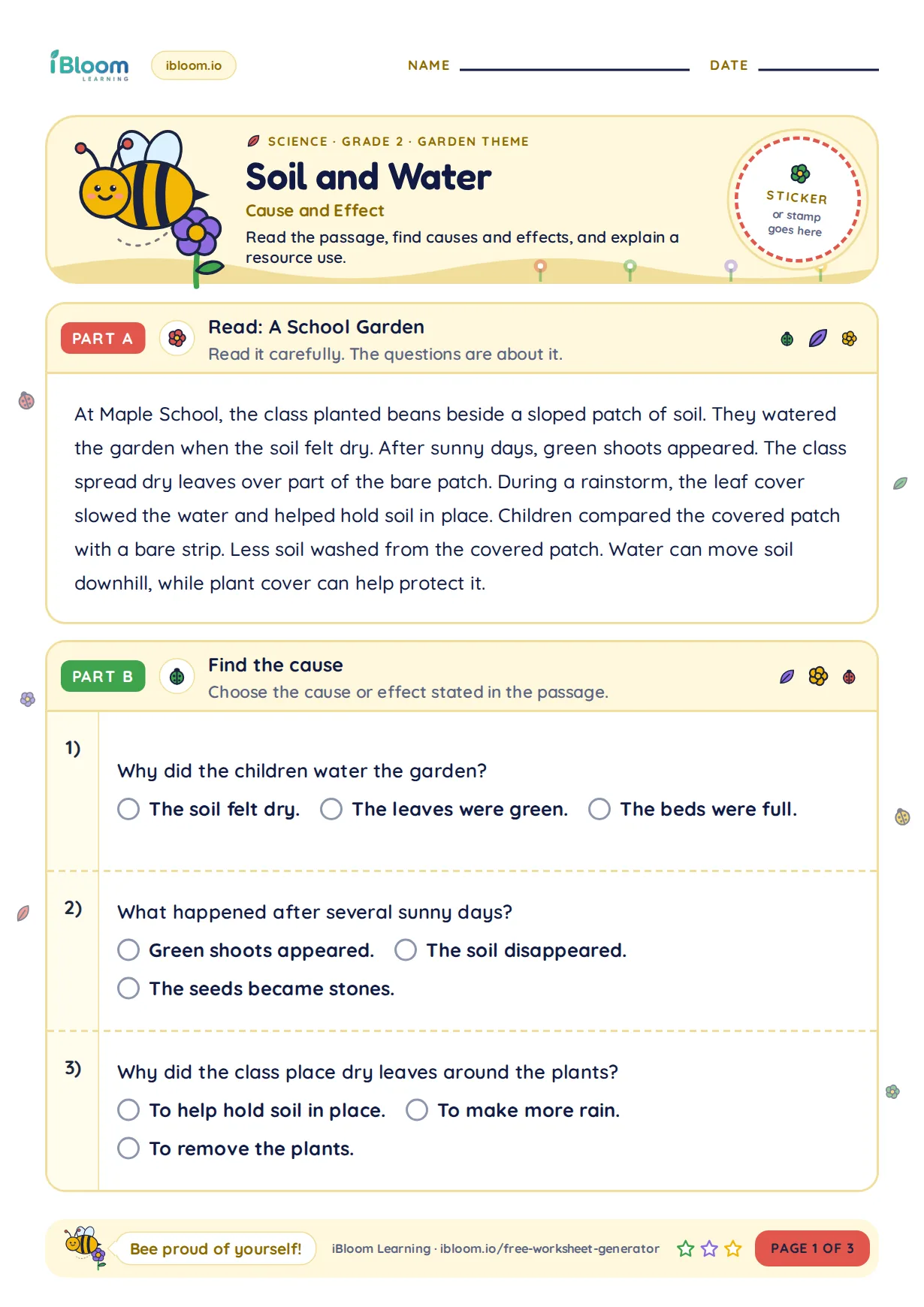 Natural Resources — Explain Cause and EffectPrintable Grade 2 science activities that help children identify, sort, and describe natural resources from land, water, air, plants, and animals. This explain cause and effect worksheet provides a distinct, age-appropriate way to practise the same lesson.Grade 2Free PDF preview
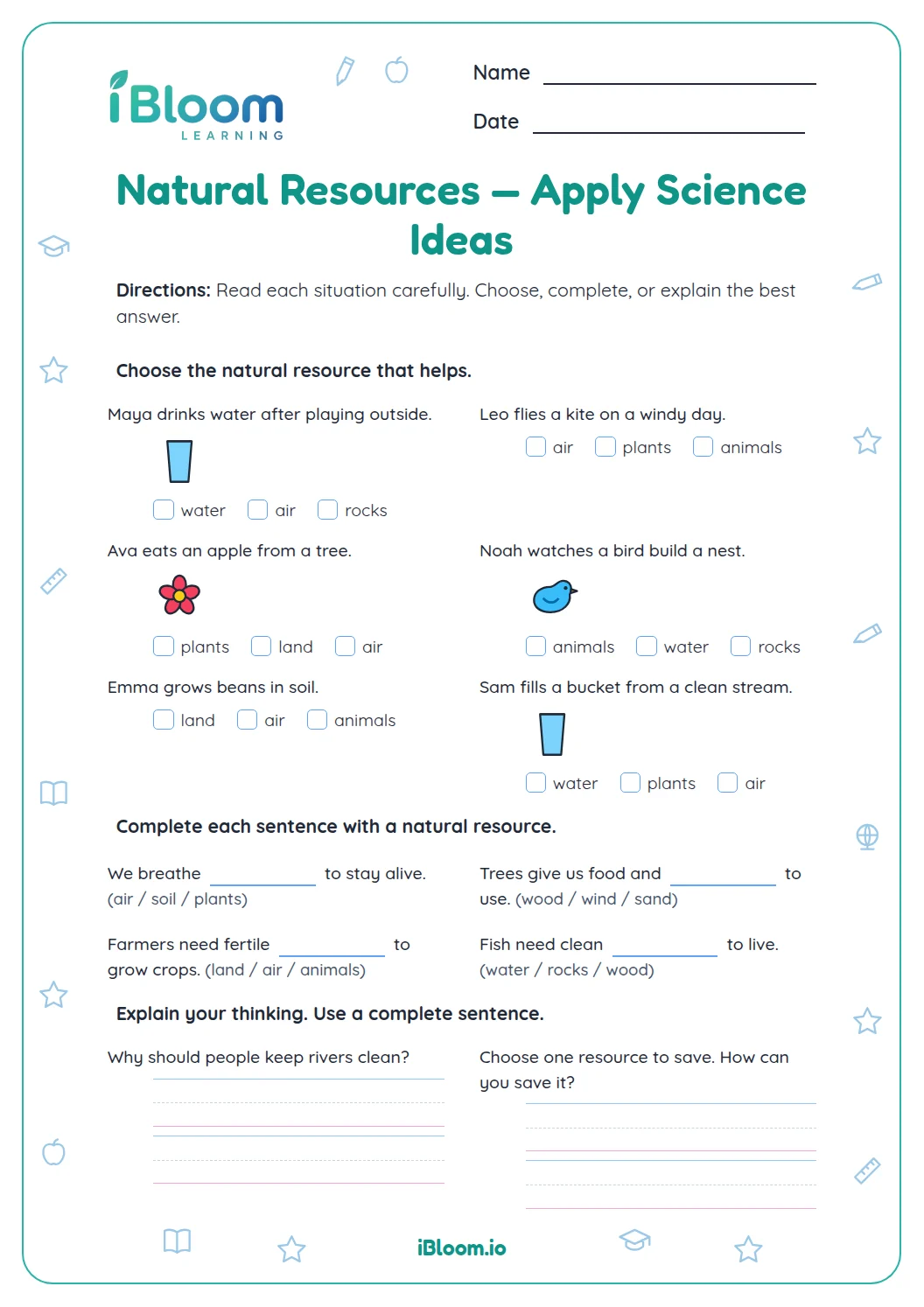 Natural Resources — Apply Science IdeasPrintable Grade 2 science activities that help children identify, sort, and describe natural resources from land, water, air, plants, and animals. This apply science ideas worksheet provides a distinct, age-appropriate way to practise the same lesson.Grade 2Free PDF preview
 Natural Resources — Science Reasoning ReviewPrintable Grade 2 science activities that help children identify, sort, and describe natural resources from land, water, air, plants, and animals. This science reasoning review worksheet provides a distinct, age-appropriate way to practise the same lesson.Grade 2Free PDF preview
Practice that builds confidence
What Grade 2 Students Learn
These Grade 2 natural resources worksheets help children understand that people use materials from Earth every day. Students practice identifying resources such as water, soil, air, sunlight, trees, plants, animals, rocks, and minerals, then connect them to familiar needs like food, shelter, clothing, and energy.
The printable activities include sorting, matching, labeling, short responses, picture-based questions, and simple comparisons. Children build science vocabulary while thinking about where resources come from, how they are used, and why caring for the environment matters.
Natural resources are things found in nature that people, plants, and animals use. At this level, children move beyond naming water or trees and begin explaining how resources support daily life. A worksheet might ask students to match trees to paper and wood, soil to growing food, or sunlight to plant growth. This helps them see that many classroom and home objects begin with materials from nature.

Building the Concept Step by Step
The practice usually starts with observation: Is this item from nature or made by people? Then students sort examples into groups such as land, water, air, plant, animal, and mineral resources. From there, they describe uses: water for drinking, soil for growing crops, rocks for building, and cotton from plants for clothing. Simple cause-and-effect questions can introduce conservation, such as why turning off a faucet saves water.
Parent Routine for Home Practice
Choose three everyday objects, such as a pencil, apple, and glass of water. Ask, “What natural resource helped make this?” Encourage your child to answer in a full sentence: “A tree is used to make the pencil.” Next, walk outside or look through a window and name resources you can see, hear, or feel, including air, sunlight, soil, plants, and water. End by asking one care question, such as, “How can we use this resource wisely?”

Classroom Uses for Teachers
Teachers can use these worksheets after a read-aloud, nature walk, or environment lesson. They work well for science centers, partner sorting, morning review, or an exit ticket after discussing resources. Picture-based pages support developing readers, while short-answer prompts let students explain their thinking with words such as natural, resource, use, conserve, soil, mineral, and environment.

Common Errors to Watch For
Some children think only rare things, like gold, are natural resources. Others may list finished products, such as a chair or shirt, without tracing them back to wood, cotton, wool, or another natural material. Students may also confuse “natural” with “healthy” or “outdoors.” Gently ask, “Did people make it, or did it come from nature first?”
Free printable PDF download
Use this Grade 2 natural resources worksheet page to preview the activity, print it, or download it as a PDF for quick practice. It works well for homework, homeschool lessons, tutoring, morning work, revision, and classroom centers.
Answers and answer key support
After the child completes the worksheet independently, parents and teachers can use the answer support or answer key information to check the work, review mistakes, and choose the next practice step.
Why iBloom Worksheets Help
The activities give children repeated, concrete examples before asking for explanations. Clear visuals, simple categories, and short writing prompts help Grade 2 students connect science vocabulary to real life. A child-friendly strategy is: name it, find its source, tell its use, and share one way to care for it.
Helpful answers
Frequently asked questions
What are natural resources for Grade 2 students?
Natural resources are useful things that come from nature, such as water, air, soil, sunlight, trees, plants, animals, rocks, and minerals. Grade 2 students learn how people use them in everyday life.
What skills do these natural resources worksheets practice?
Children practice identifying natural resources, sorting them into simple groups, matching resources to their uses, labeling pictures, and explaining why resources should be used carefully.
How can I explain the difference between a natural resource and a made object?
Ask whether the item came from nature first or was made by people. For example, a table is made by people, but the wood used to make it comes from trees, which are natural resources.
Are conservation ideas included in this topic?
Yes. Children can connect resources to simple conservation habits, such as saving water, reducing waste, reusing paper, planting trees, and taking care of soil and living things.
How can teachers use these worksheets in a science lesson?
Teachers can use them for science centers, partner work, review after an environment lesson, picture sorting, vocabulary practice, or a quick check of whether students can connect resources to real-world uses.
Is this Grade 2 natural resources worksheet free?
Yes. You can preview it for free and use the printable worksheet for home or classroom practice.
Can I download this Grade 2 natural resources worksheet as a PDF?
Yes. Use the worksheet download option to save a printable PDF, or print the worksheet directly from the page.
Does this Grade 2 natural resources worksheet include answers or an answer key?
When the activity has fixed answers, iBloom includes answer support so parents and teachers can check the completed worksheet.