Free printable practice
Balanced Forces Practice Activities
Printable Grade 3 science activities help children identify balanced forces, compare pushes and pulls, and explain why some objects do not change motion.
Free printable worksheet PDFs
Preview every available page, then download the free worksheet PDF for home, homeschool, tutoring, or classroom practice.
Preview the exact activity before downloading it.
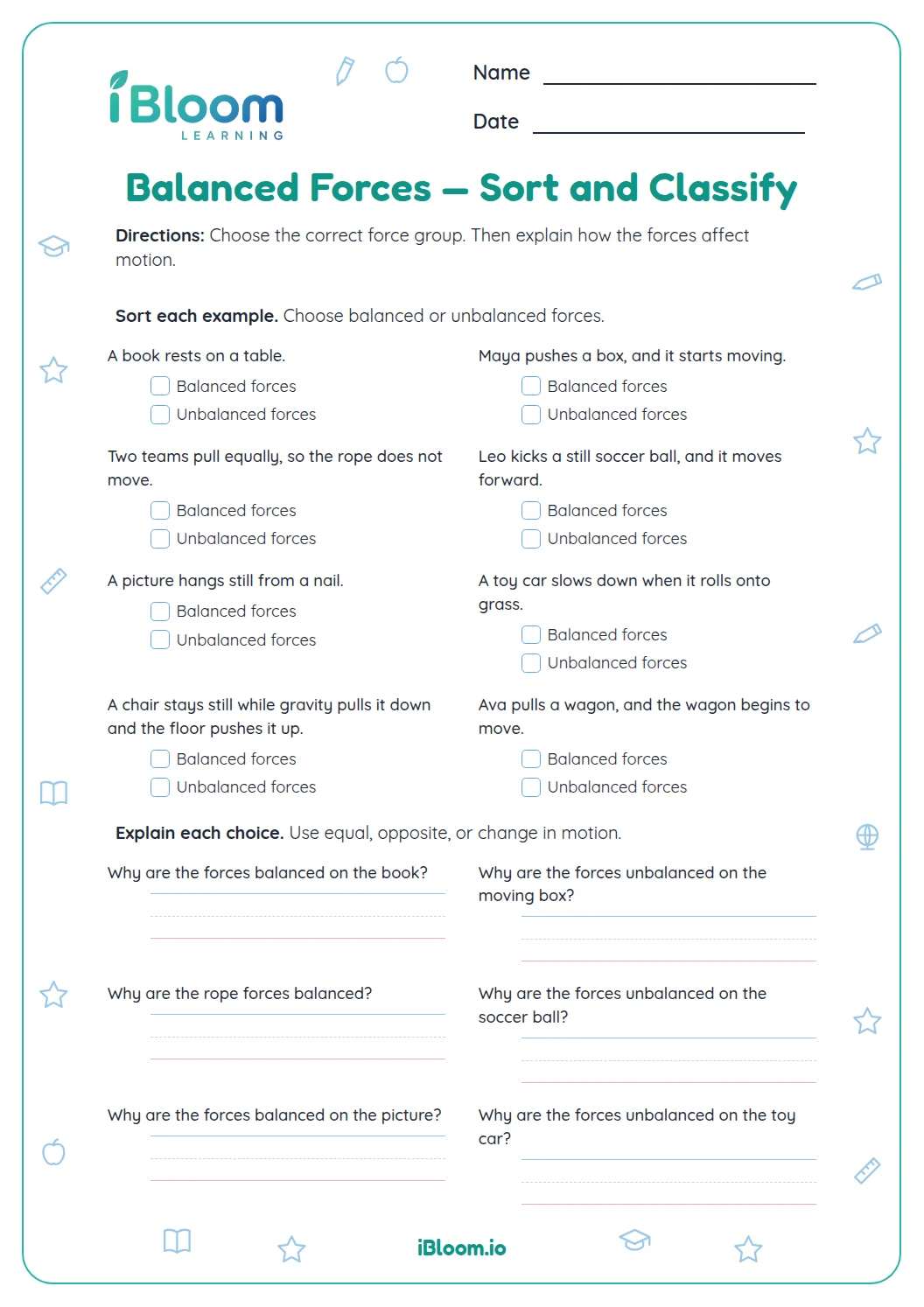 Balanced Forces — Sort and ClassifyPrintable Grade 3 science activities help children identify balanced forces, compare pushes and pulls, and explain why some objects do not change motion. This sort and classify worksheet provides a distinct, age-appropriate way to practise the same lesson.Grade 3Free PDF preview
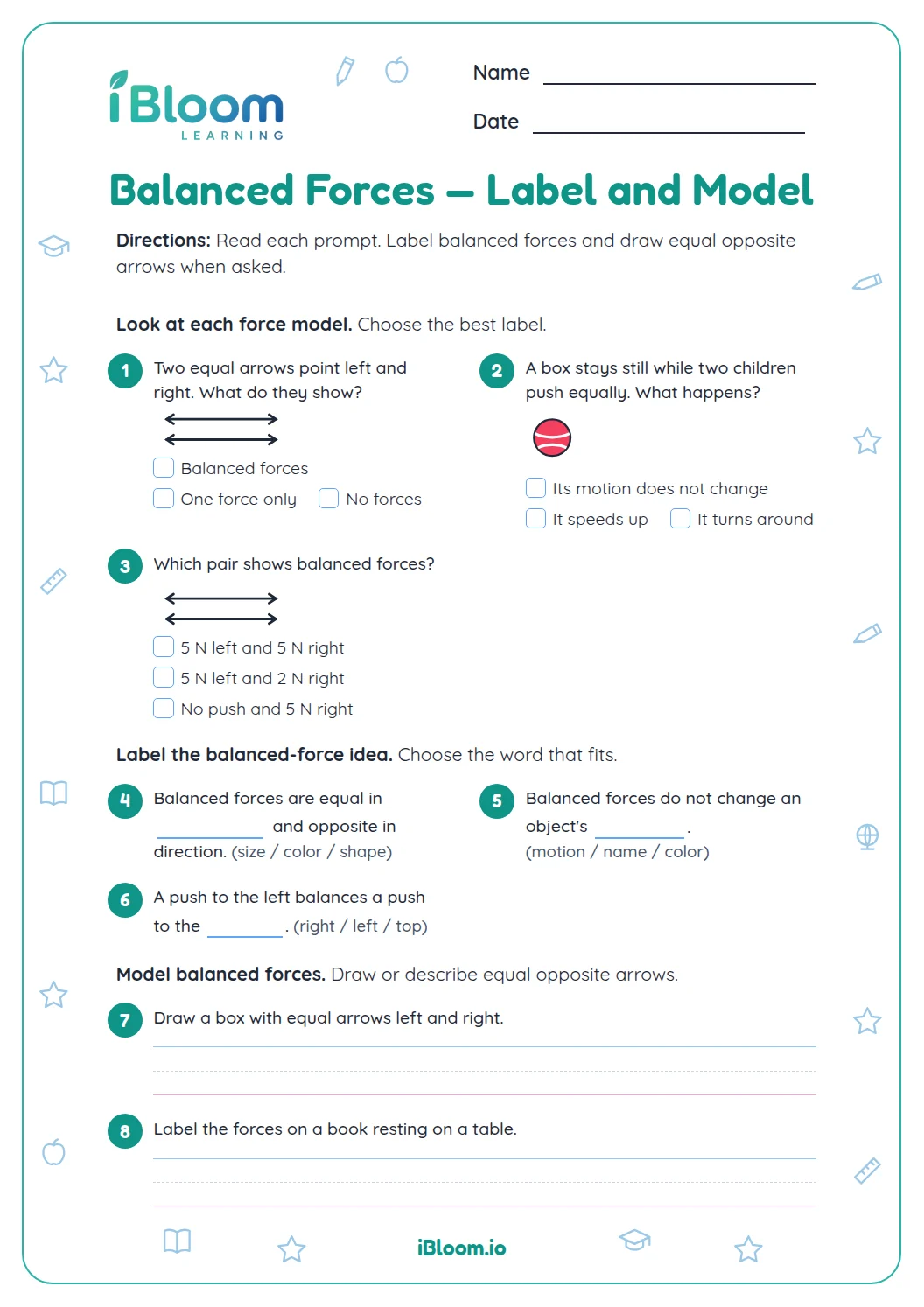 Balanced Forces — Label and ModelPrintable Grade 3 science activities help children identify balanced forces, compare pushes and pulls, and explain why some objects do not change motion. This label and model worksheet provides a distinct, age-appropriate way to practise the same lesson.Grade 3Free PDF preview
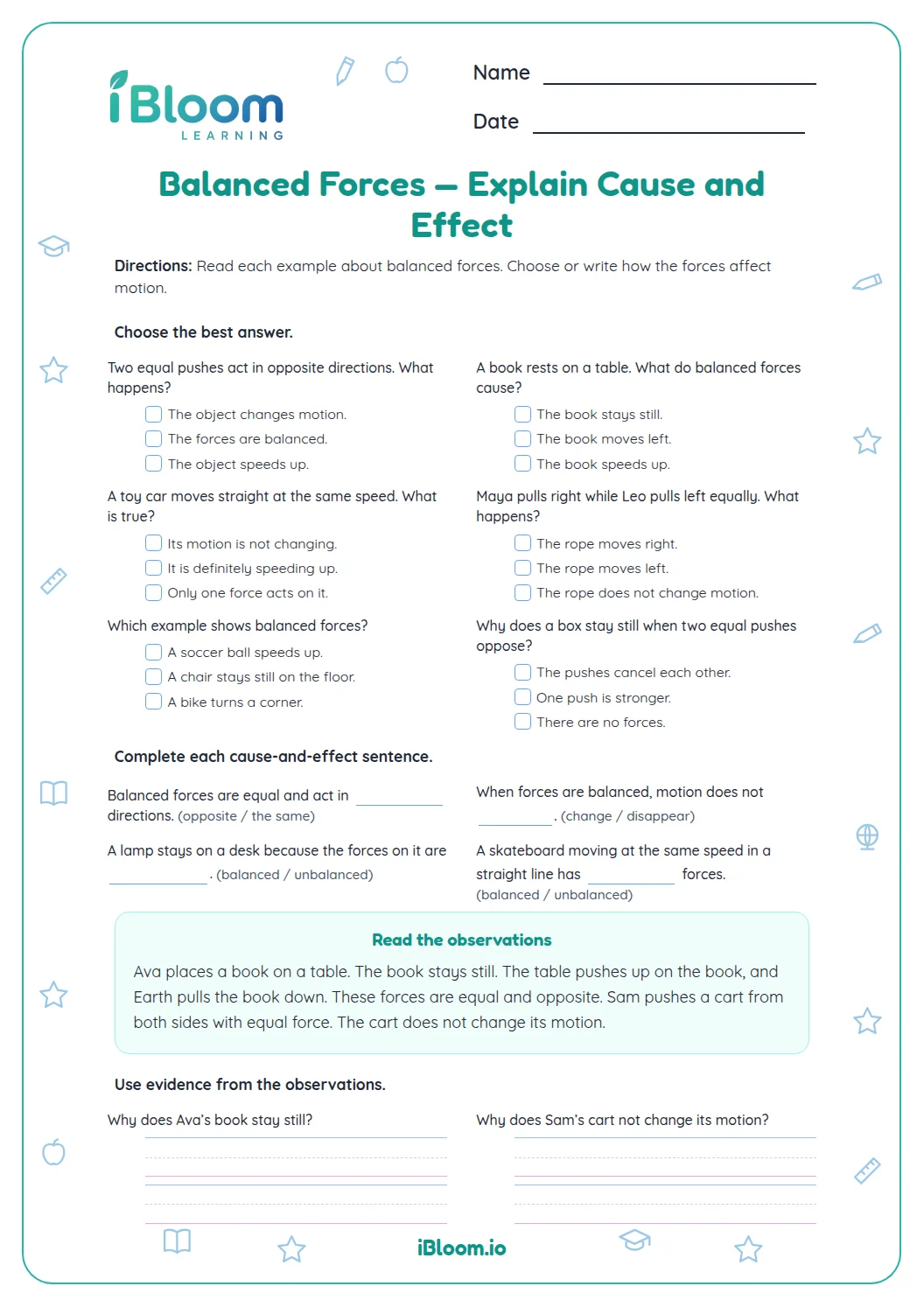 Balanced Forces — Explain Cause and EffectPrintable Grade 3 science activities help children identify balanced forces, compare pushes and pulls, and explain why some objects do not change motion. This explain cause and effect worksheet provides a distinct, age-appropriate way to practise the same lesson.Grade 3Free PDF preview
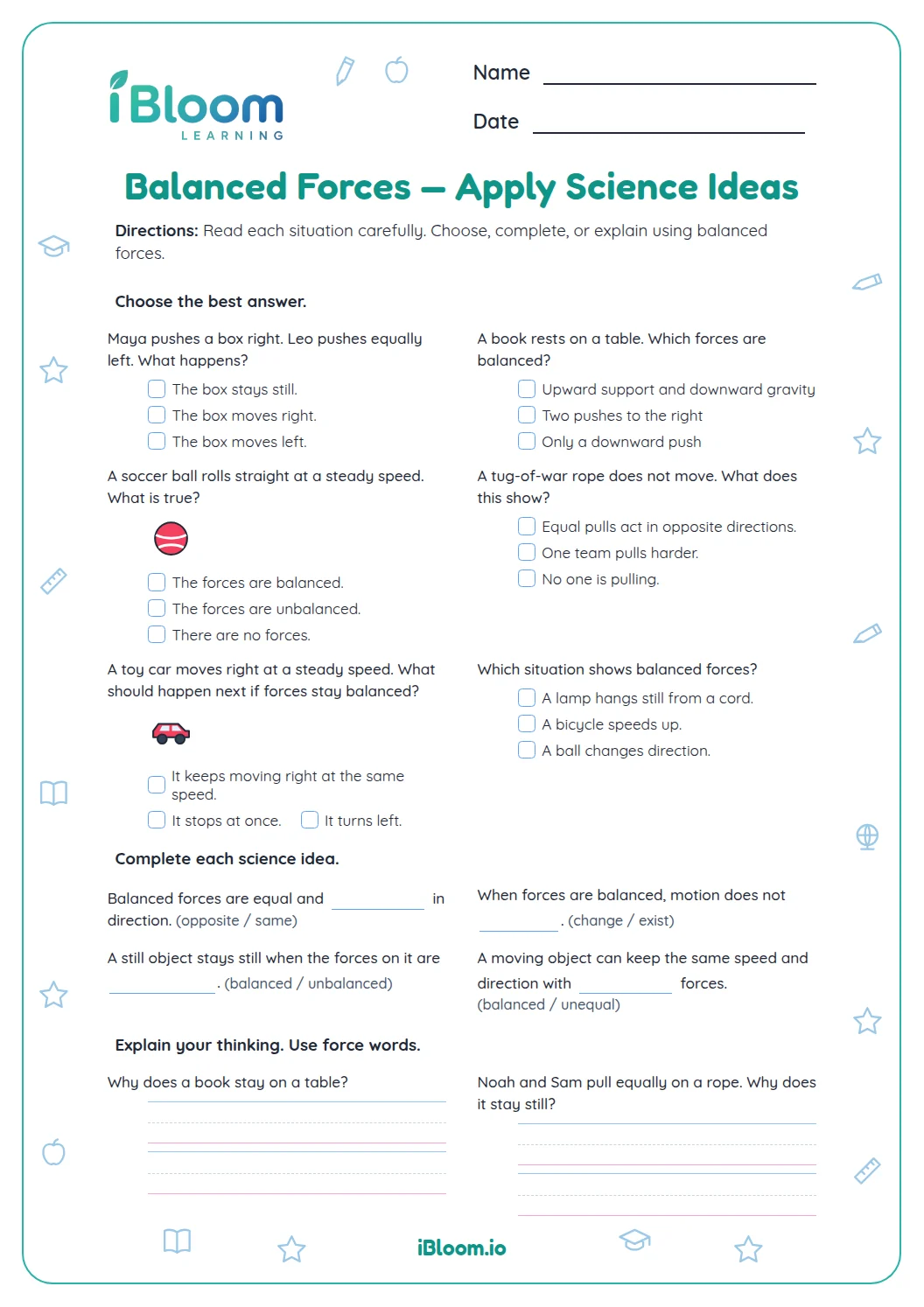 Balanced Forces — Apply Science IdeasPrintable Grade 3 science activities help children identify balanced forces, compare pushes and pulls, and explain why some objects do not change motion. This apply science ideas worksheet provides a distinct, age-appropriate way to practise the same lesson.Grade 3Free PDF preview
 Balanced Forces — Science Reasoning ReviewPrintable Grade 3 science activities help children identify balanced forces, compare pushes and pulls, and explain why some objects do not change motion. This science reasoning review worksheet provides a distinct, age-appropriate way to practise the same lesson.Grade 3Free PDF preview
Practice that builds confidence
Understanding balanced forces
These Grade 3 balanced forces worksheets help children understand what happens when pushes and pulls on an object are equal. Students practise looking at everyday situations, such as a book resting on a table or two people pulling with equal strength, and deciding whether the forces are balanced.
The printable activities include picture-based questions, simple force diagrams, sorting tasks, and short explanations. Children build vocabulary such as push, pull, force, motion, position, direction, equal, opposite, and balanced while learning to connect observations with clear science reasoning.
Balanced forces happen when forces acting on an object cancel each other out. In Grade 3, children usually meet this idea through familiar examples: a chair sitting still on the floor, a pencil resting on a desk, or a tug-of-war that does not move. The key idea is not that there are no forces, but that the forces are equal and opposite, so the object’s motion does not change.
From pictures to explanations
These worksheets move children from noticing what they see to explaining why it happens. A child may first circle whether an object is moving or still, then compare arrows showing pushes or pulls, and finally write a short sentence such as, “The box stays in place because the pushes are balanced.” Visual representations help students understand that direction matters as much as strength.
A simple parent routine
At home, choose one object, such as a toy car, book, or ball. Ask, “What forces could act on it?” Then gently push from both sides with equal pressure and ask whether it moves. Next, push harder from one side so your child can compare balanced and unbalanced forces. Finish by having your child draw arrows and label the forces. This quick routine connects the worksheet to something they can feel and observe.
Classroom uses for teachers
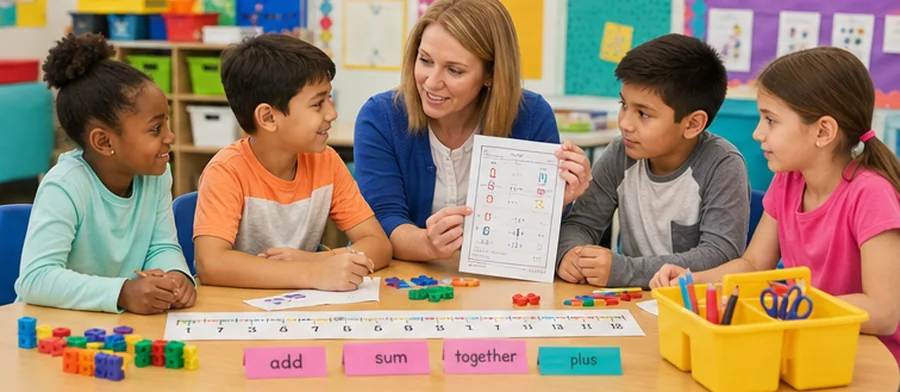
Teachers can use these printables during a forces and motion unit, as science centers, partner discussion prompts, or exit tickets after a demonstration. They also work well before hands-on investigations because they give students the language needed to describe what they notice. For small groups, ask students to justify each answer aloud using the words equal, opposite, and motion.
Common errors to watch for
Many children think a still object has no forces acting on it. Others focus only on the size of a push and forget direction. Some may call any object that is not moving “balanced” without checking the forces. Encourage students to ask, “Are the forces equal? Are they acting in opposite directions? Did the motion change?”
Free printable PDF download
Use this Grade 3 balanced forces worksheet page to preview the activity, print it, or download it as a PDF for quick practice. It works well for homework, homeschool lessons, tutoring, morning work, revision, and classroom centers.
Answers and answer key support
After the child completes the worksheet independently, parents and teachers can use the answer support or answer key information to check the work, review mistakes, and choose the next practice step.
Why iBloom worksheets help
The activities are designed to make an invisible idea visible. Clear drawings, repeated science vocabulary, and short reasoning tasks help children move beyond guessing. A child-friendly strategy is: “Look for arrows, compare strength, check direction, then decide if motion changes.” This gives Grade 3 learners a dependable way to explain balanced forces in words and pictures.
Helpful answers
Frequently asked questions
What does balanced forces mean for Grade 3 students?
Balanced forces means the pushes or pulls on an object are equal and opposite, so the object’s motion does not change. The object may stay still, like a book on a table.
Do these worksheets include force arrows?
Yes. The activities use simple pictures and arrows so children can compare the direction and strength of pushes and pulls.
How can I explain balanced forces at home?
Use a toy car or box. Push gently from both sides with equal force so it stays still, then push harder from one side to show how unbalanced forces cause a change.
What is a common mistake children make with balanced forces?
Many children think that if an object is not moving, no forces are acting on it. These worksheets help them see that forces can be present but balanced.
Can teachers use these pages for science centers?
Yes. The picture sorting, labeling, and short explanation tasks are useful for centers, partner work, review, or quick checks during a forces and motion unit.
Is this Grade 3 balanced forces worksheet free?
Yes. You can preview it for free and use the printable worksheet for home or classroom practice.
Can I download this Grade 3 balanced forces worksheet as a PDF?
Yes. Use the worksheet download option to save a printable PDF, or print the worksheet directly from the page.
Does this Grade 3 balanced forces worksheet include answers or an answer key?
When the activity has fixed answers, iBloom includes answer support so parents and teachers can check the completed worksheet.