Free printable practice
Forces Motion Practice Activities
Printable Grade 3 science activities for exploring forces, balanced forces, gravity, friction, and patterns of motion.
Explore Forces Motion
Free printable worksheet PDFs
Preview every available page, then download the free worksheet PDF for home, homeschool, tutoring, or classroom practice.
Preview the exact activity before downloading it.
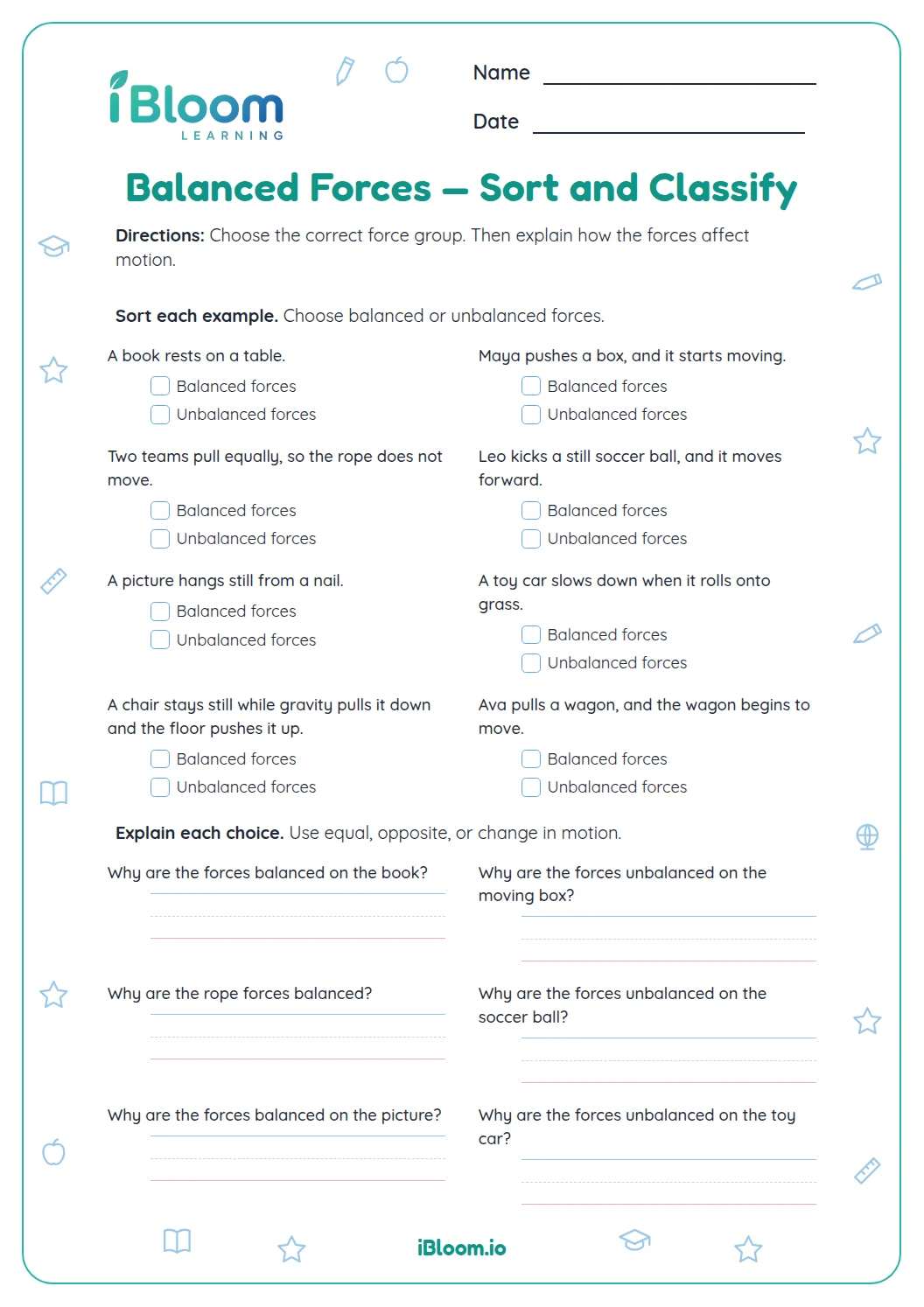 Balanced Forces — Sort and ClassifyPrintable Grade 3 science activities help children identify balanced forces, compare pushes and pulls, and explain why some objects do not change motion. This sort and classify worksheet provides a distinct, age-appropriate way to practise the same lesson.Grade 3Free PDF preview
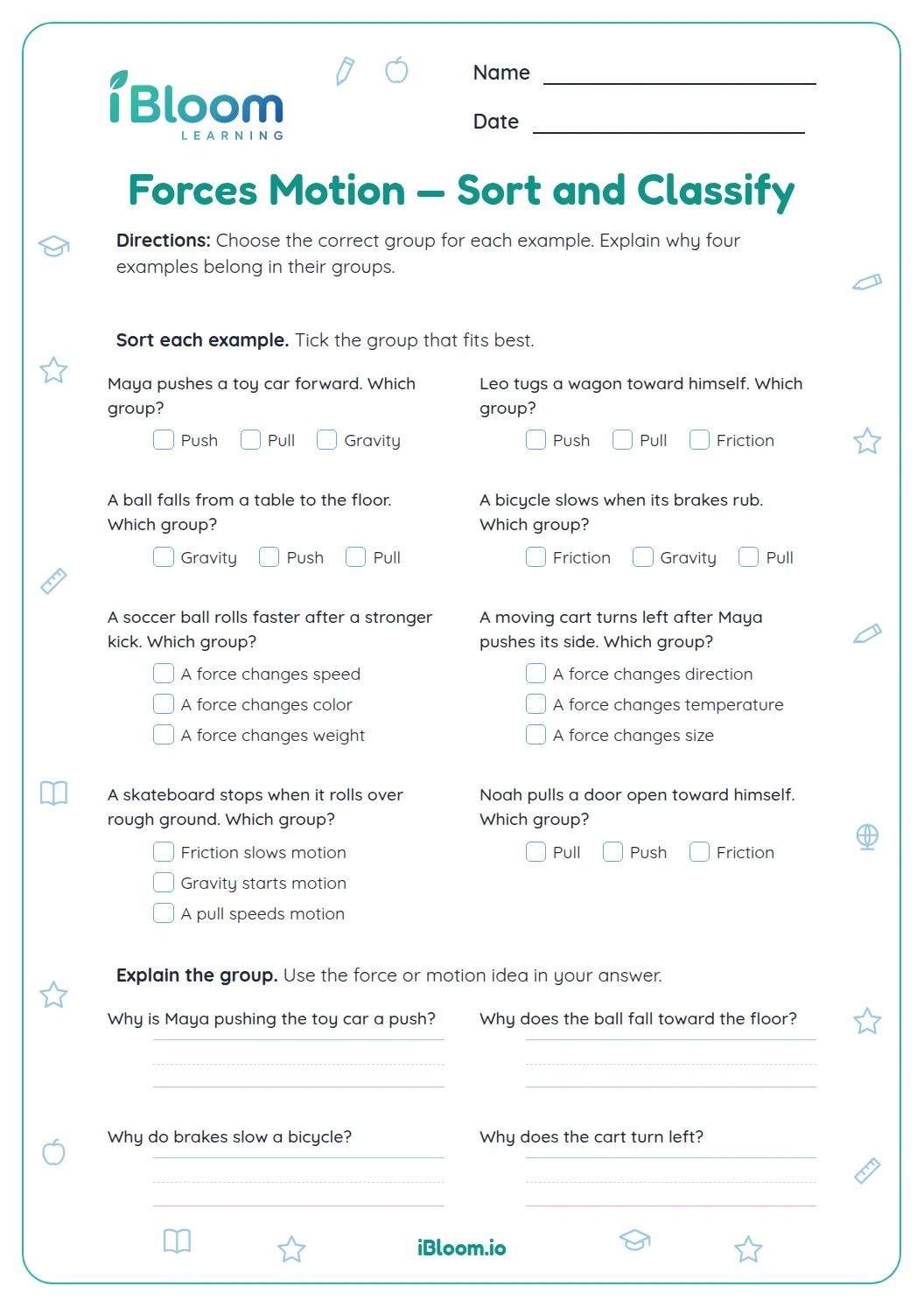 Forces Motion — Sort and ClassifyGrade 3 science worksheets for practicing pushes, pulls, motion, direction, speed, friction, gravity, and how forces change how objects move. This sort and classify worksheet provides a distinct, age-appropriate way to practise the same lesson.Grade 3Free PDF preview4 pages
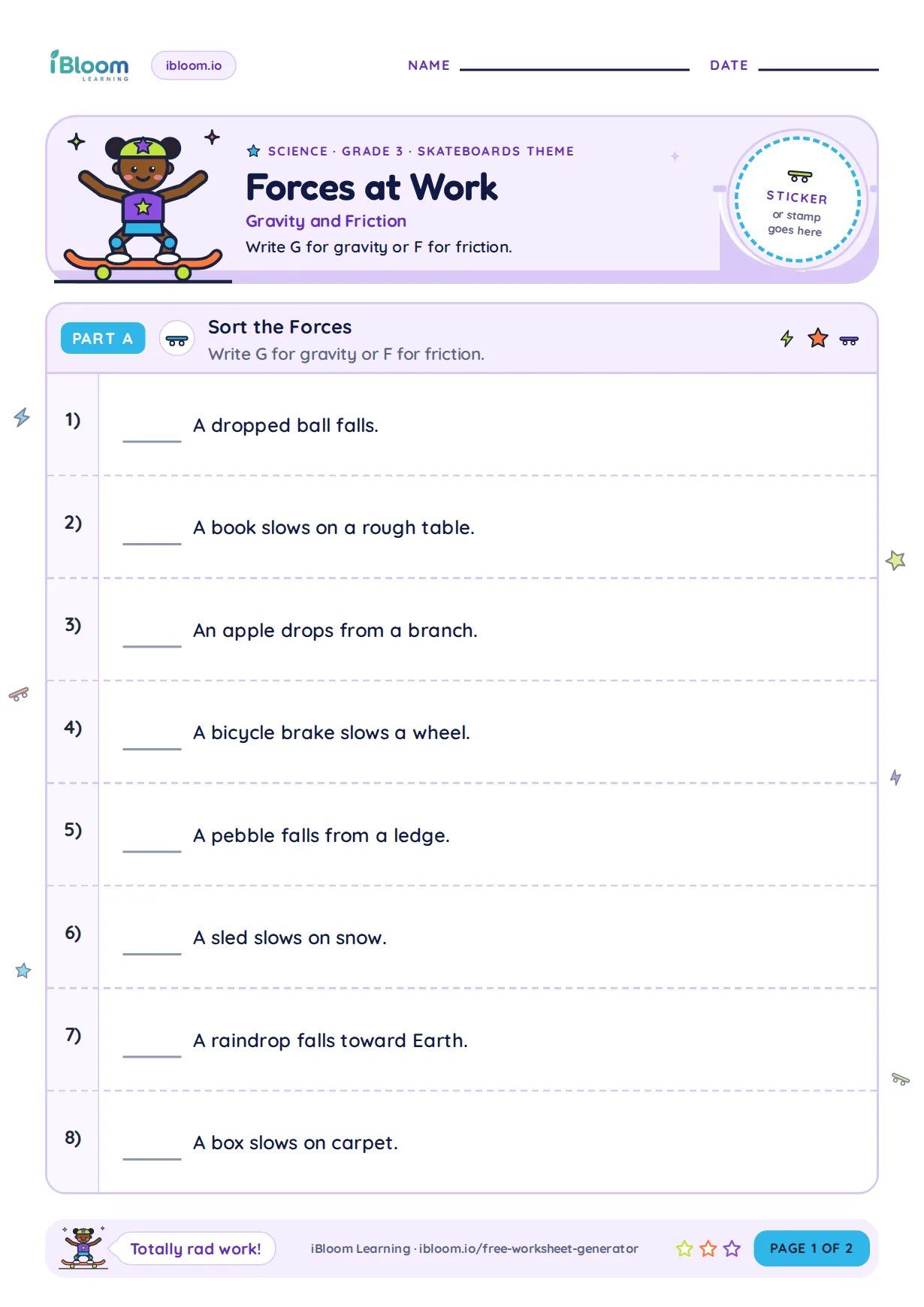 Gravity Friction — Sort and ClassifyExplore gravity friction practice activities within Forces Motion Practice Activities, organised so children, families, and elementary teachers can move from broad learning areas to focused printable practice. This sort and classify worksheet provides a distinct, age-appropriate way to practise the same lesson.Grade 3Free PDF preview
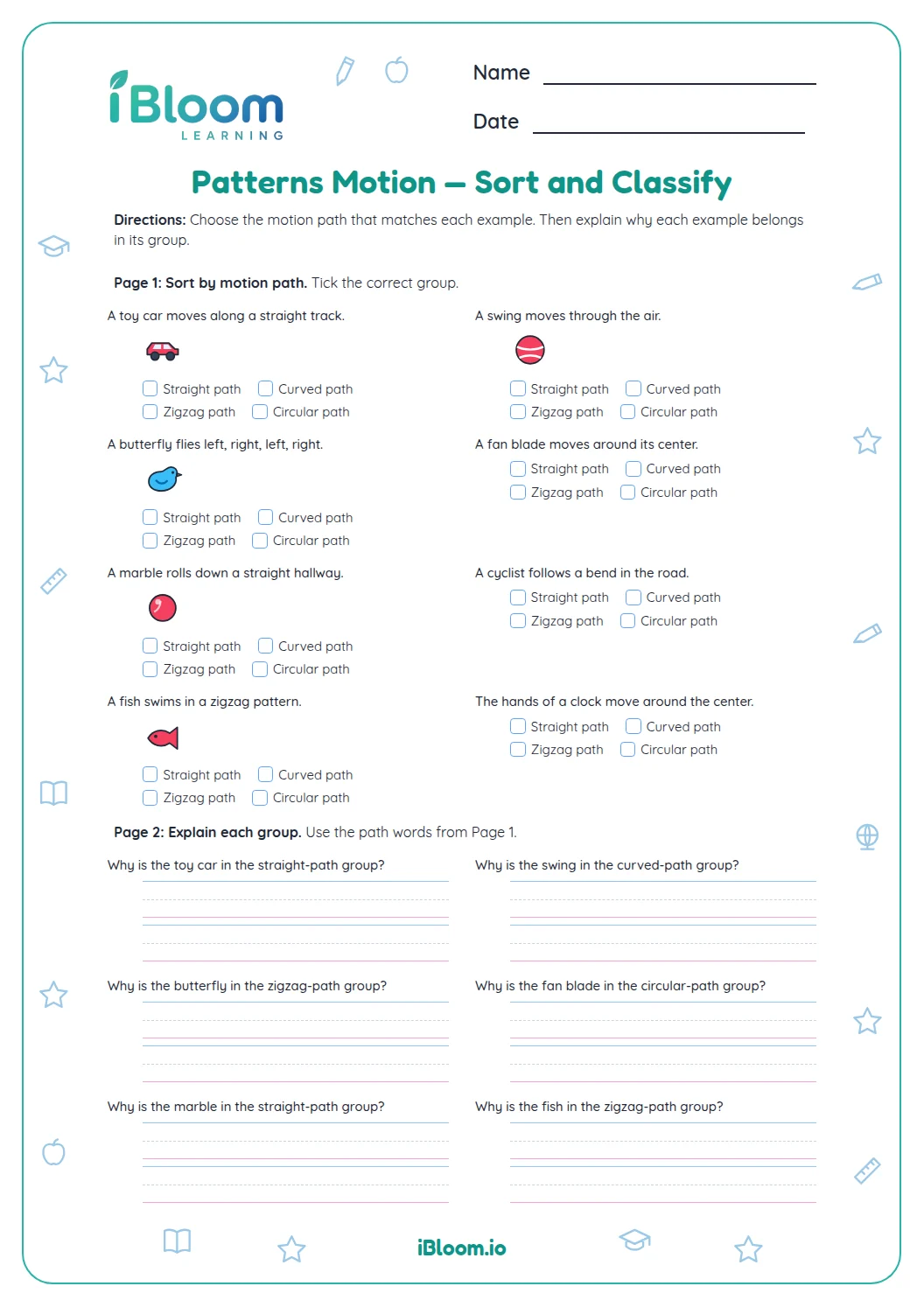 Patterns Motion — Sort and ClassifyExplore patterns motion practice activities within Forces Motion Practice Activities, organised so children, families, and elementary teachers can move from broad learning areas to focused printable practice. This sort and classify worksheet provides a distinct, age-appropriate way to practise the same lesson.Grade 3Free PDF preview
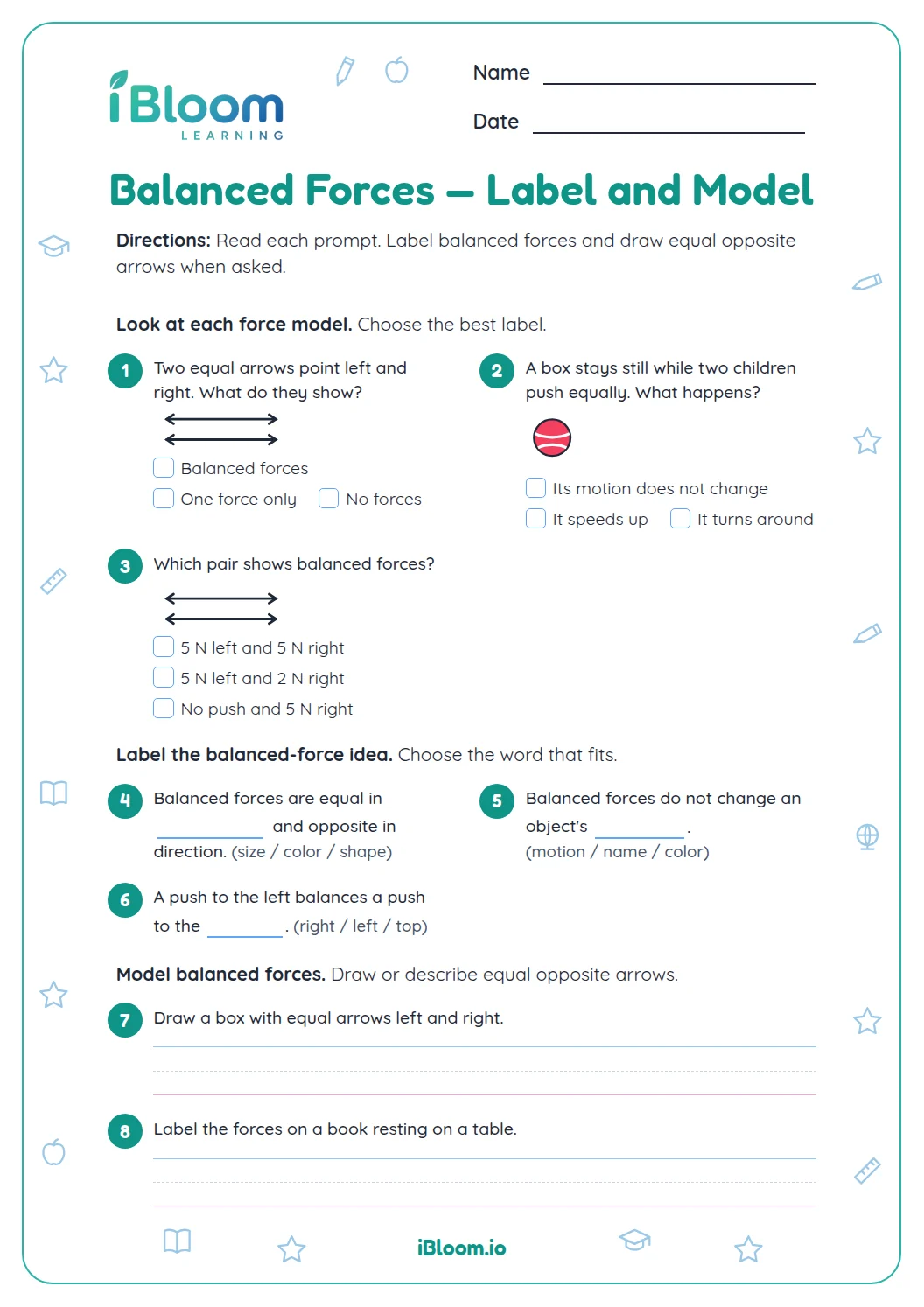 Balanced Forces — Label and ModelPrintable Grade 3 science activities help children identify balanced forces, compare pushes and pulls, and explain why some objects do not change motion. This label and model worksheet provides a distinct, age-appropriate way to practise the same lesson.Grade 3Free PDF preview4 pages
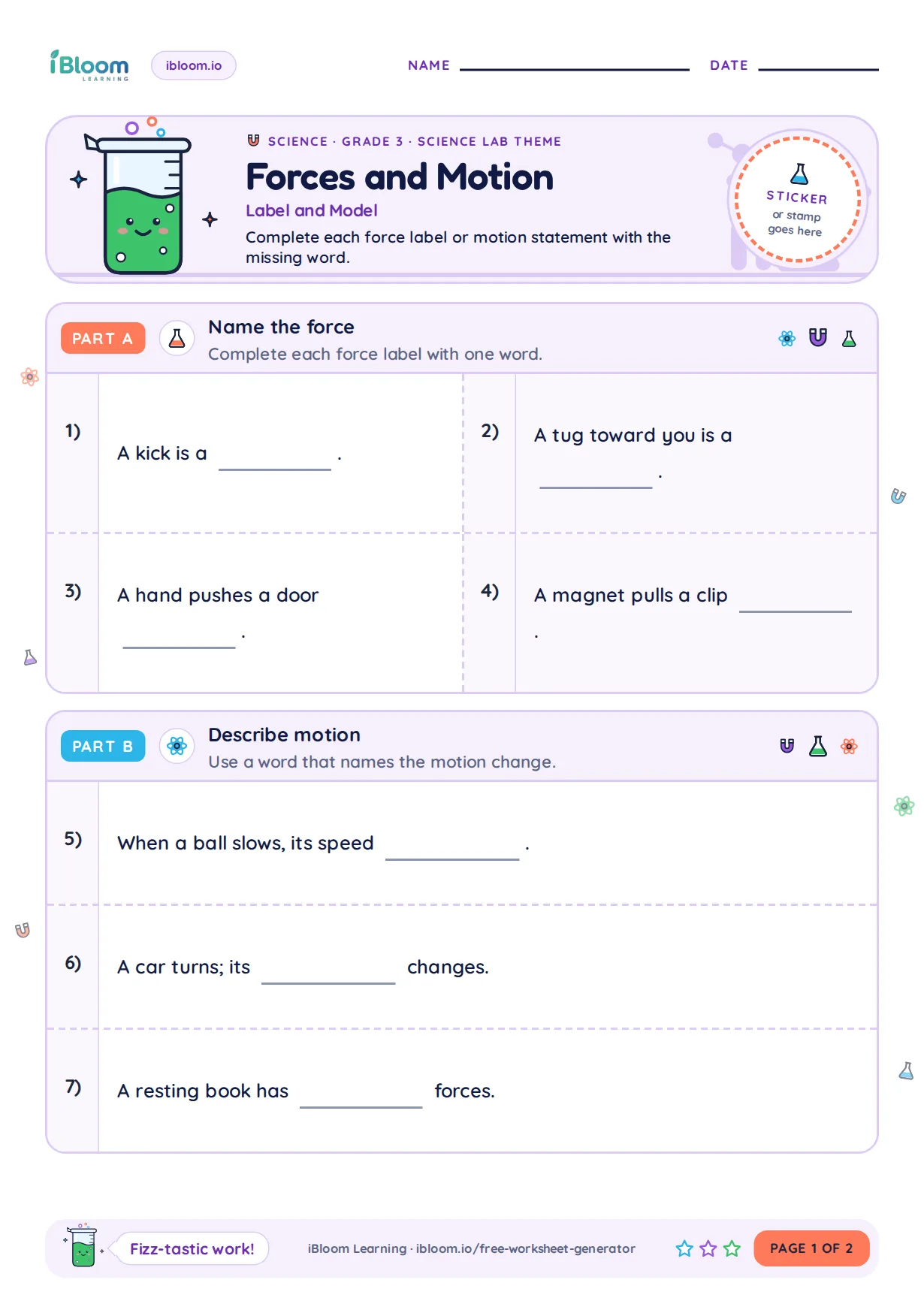 Forces Motion — Label and ModelGrade 3 science worksheets for practicing pushes, pulls, motion, direction, speed, friction, gravity, and how forces change how objects move. This label and model worksheet provides a distinct, age-appropriate way to practise the same lesson.Grade 3Free PDF preview
 Gravity Friction — Label and ModelExplore gravity friction practice activities within Forces Motion Practice Activities, organised so children, families, and elementary teachers can move from broad learning areas to focused printable practice. This label and model worksheet provides a distinct, age-appropriate way to practise the same lesson.Grade 3Free PDF preview
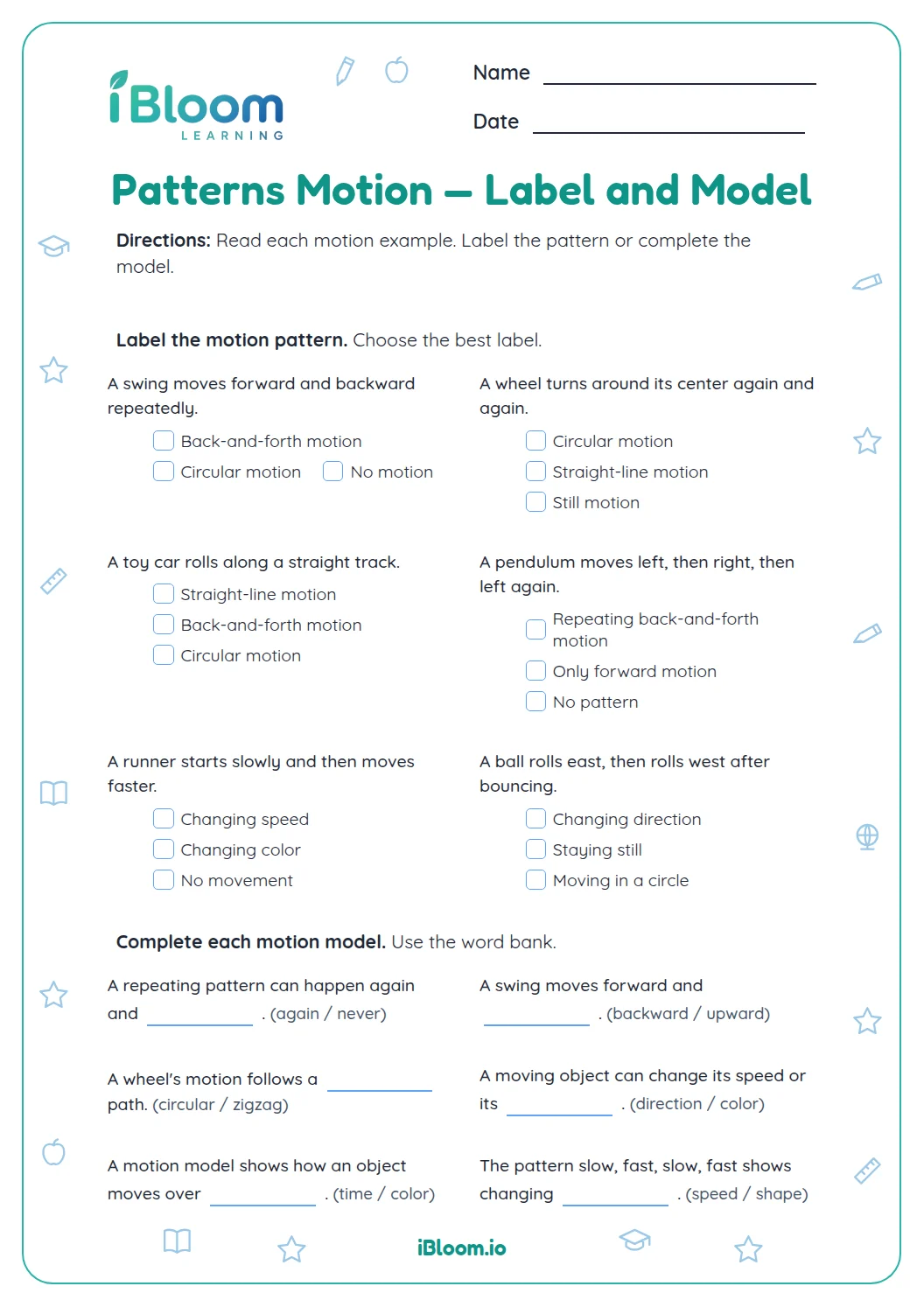 Patterns Motion — Label and ModelExplore patterns motion practice activities within Forces Motion Practice Activities, organised so children, families, and elementary teachers can move from broad learning areas to focused printable practice. This label and model worksheet provides a distinct, age-appropriate way to practise the same lesson.Grade 3Free PDF preview
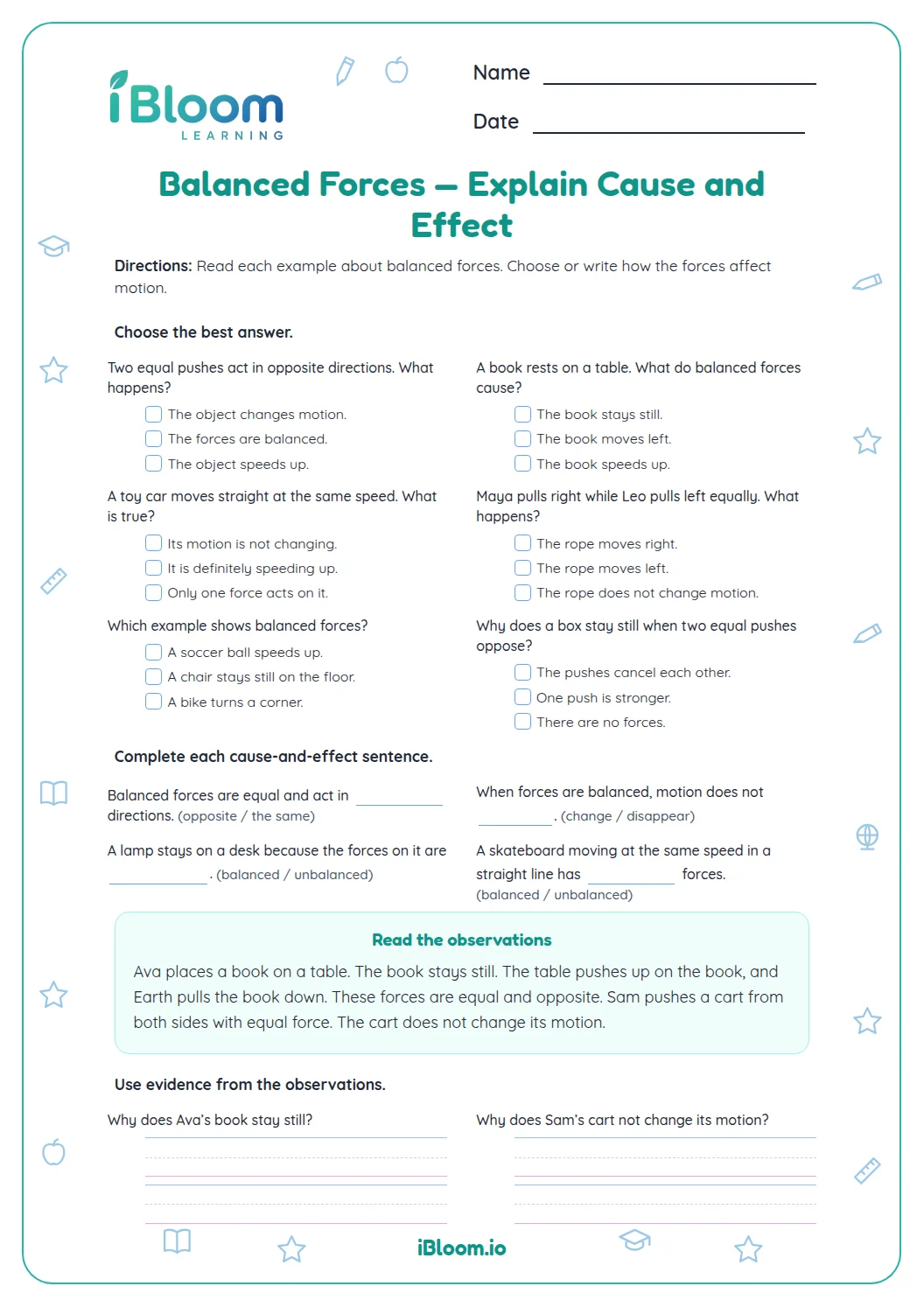 Balanced Forces — Explain Cause and EffectPrintable Grade 3 science activities help children identify balanced forces, compare pushes and pulls, and explain why some objects do not change motion. This explain cause and effect worksheet provides a distinct, age-appropriate way to practise the same lesson.Grade 3Free PDF preview6 pages
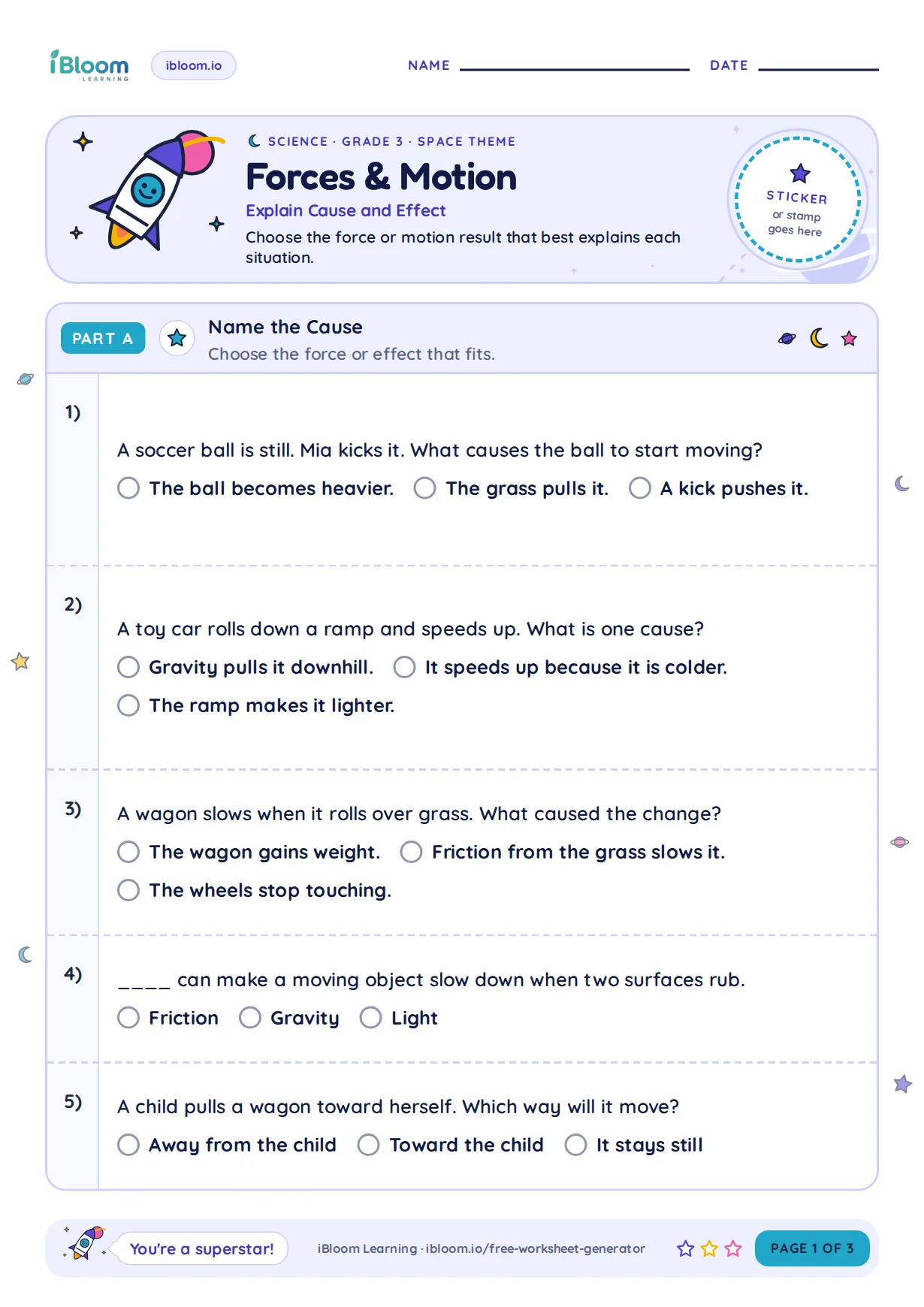 Forces Motion — Explain Cause and EffectGrade 3 science worksheets for practicing pushes, pulls, motion, direction, speed, friction, gravity, and how forces change how objects move. This explain cause and effect worksheet provides a distinct, age-appropriate way to practise the same lesson.Grade 3Free PDF preview
 Gravity Friction — Explain Cause and EffectExplore gravity friction practice activities within Forces Motion Practice Activities, organised so children, families, and elementary teachers can move from broad learning areas to focused printable practice. This explain cause and effect worksheet provides a distinct, age-appropriate way to practise the same lesson.Grade 3Free PDF preview6 pages
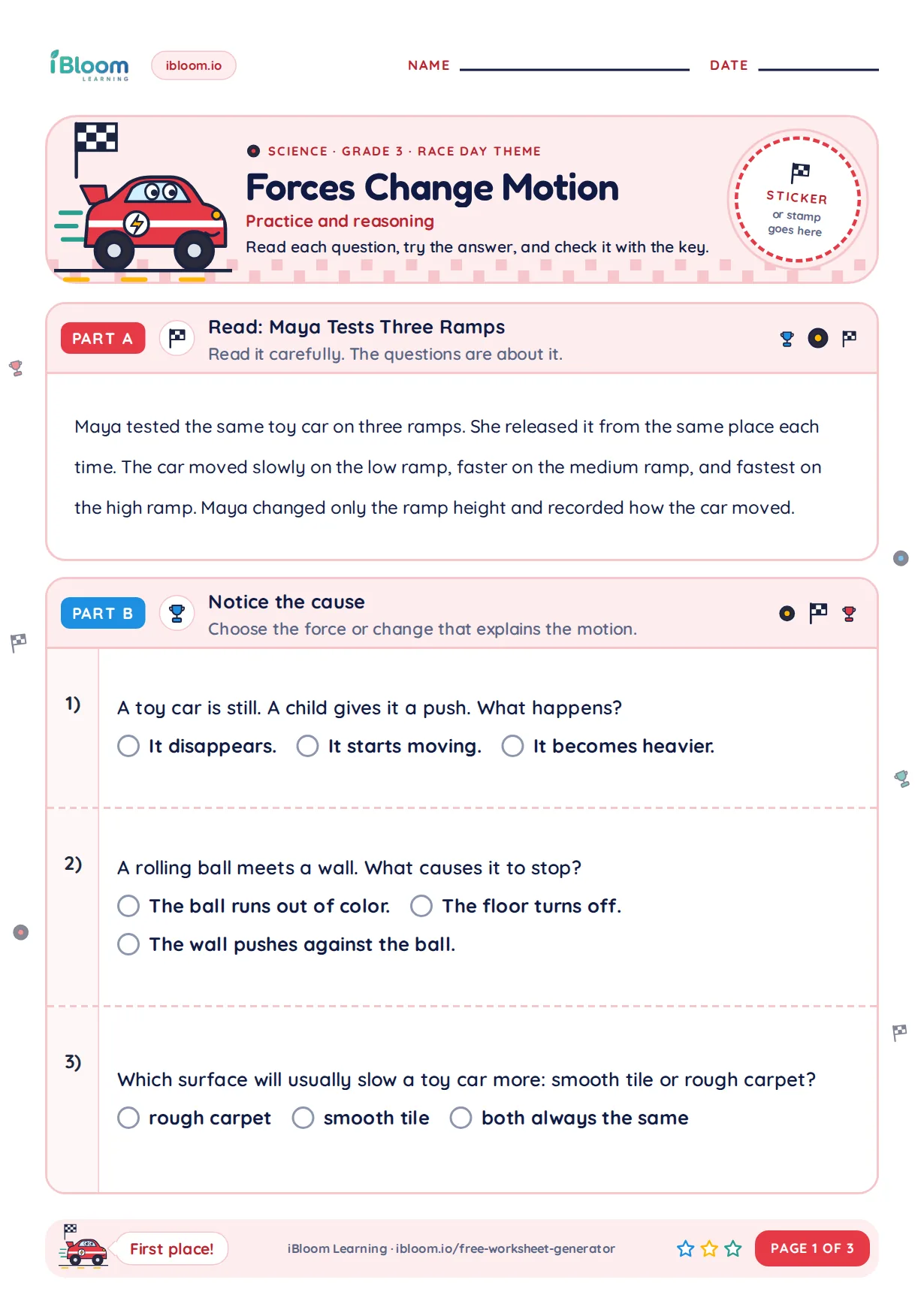 Patterns Motion — Explain Cause and EffectExplore patterns motion practice activities within Forces Motion Practice Activities, organised so children, families, and elementary teachers can move from broad learning areas to focused printable practice. This explain cause and effect worksheet provides a distinct, age-appropriate way to practise the same lesson.Grade 3Free PDF preview
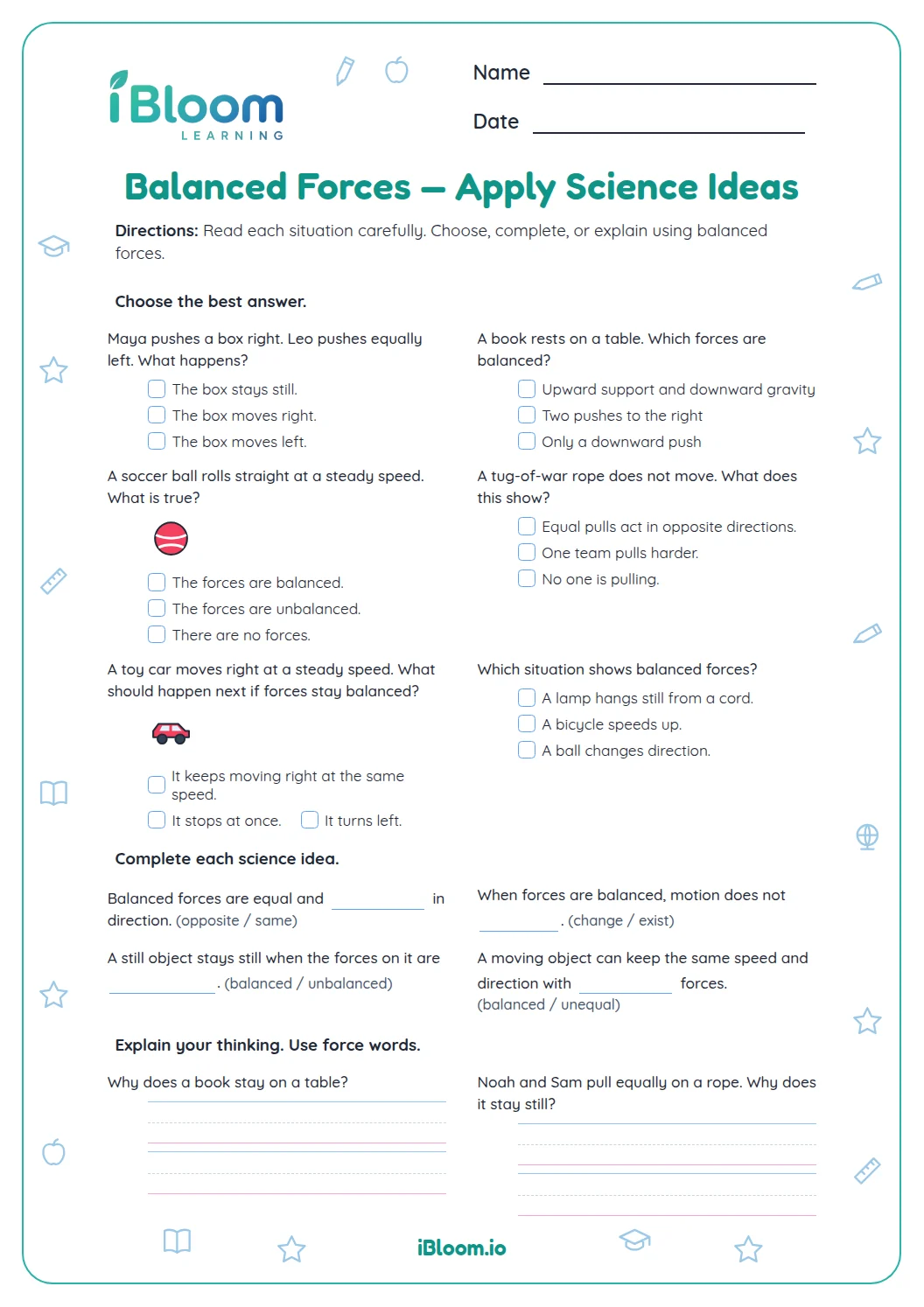 Balanced Forces — Apply Science IdeasPrintable Grade 3 science activities help children identify balanced forces, compare pushes and pulls, and explain why some objects do not change motion. This apply science ideas worksheet provides a distinct, age-appropriate way to practise the same lesson.Grade 3Free PDF preview
 Forces Motion — Apply Science IdeasGrade 3 science worksheets for practicing pushes, pulls, motion, direction, speed, friction, gravity, and how forces change how objects move. This apply science ideas worksheet provides a distinct, age-appropriate way to practise the same lesson.Grade 3Free PDF preview4 pages
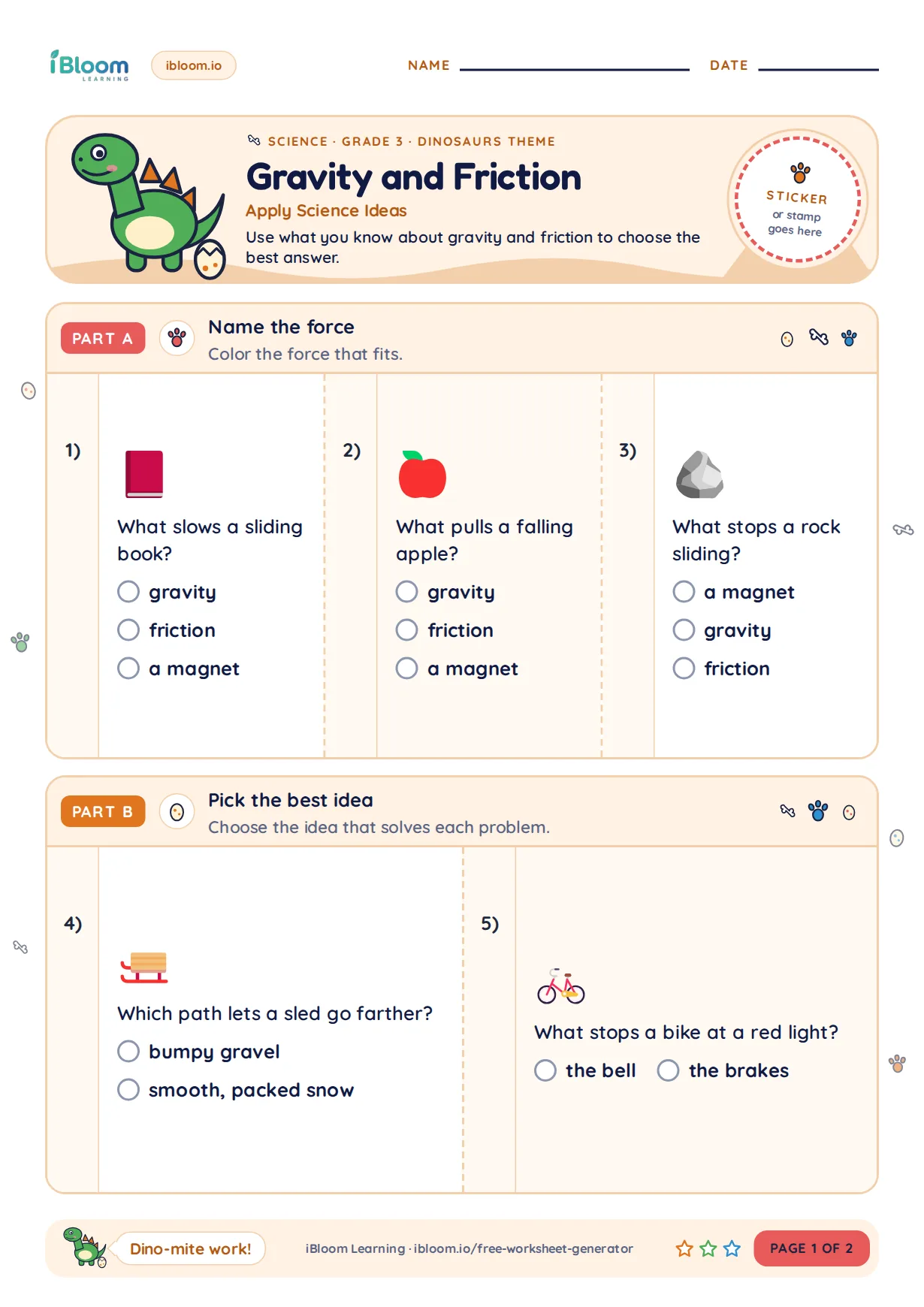 Gravity Friction — Apply Science IdeasExplore gravity friction practice activities within Forces Motion Practice Activities, organised so children, families, and elementary teachers can move from broad learning areas to focused printable practice. This apply science ideas worksheet provides a distinct, age-appropriate way to practise the same lesson.Grade 3Free PDF preview
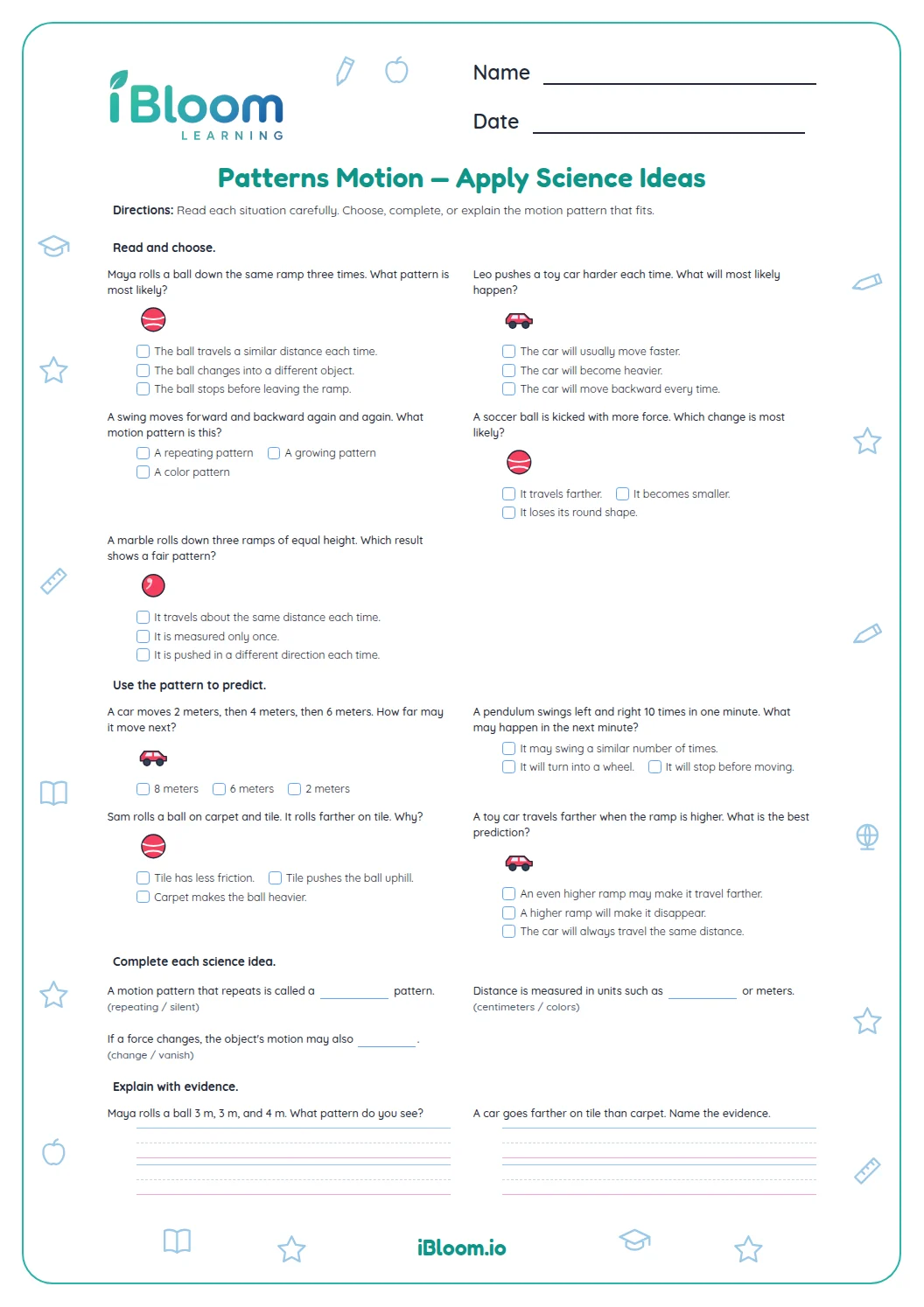 Patterns Motion — Apply Science IdeasExplore patterns motion practice activities within Forces Motion Practice Activities, organised so children, families, and elementary teachers can move from broad learning areas to focused printable practice. This apply science ideas worksheet provides a distinct, age-appropriate way to practise the same lesson.Grade 3Free PDF preview
 Balanced Forces — Science Reasoning ReviewPrintable Grade 3 science activities help children identify balanced forces, compare pushes and pulls, and explain why some objects do not change motion. This science reasoning review worksheet provides a distinct, age-appropriate way to practise the same lesson.Grade 3Free PDF preview
 Forces Motion — Science Reasoning ReviewGrade 3 science worksheets for practicing pushes, pulls, motion, direction, speed, friction, gravity, and how forces change how objects move. This science reasoning review worksheet provides a distinct, age-appropriate way to practise the same lesson.Grade 3Free PDF preview4 pages
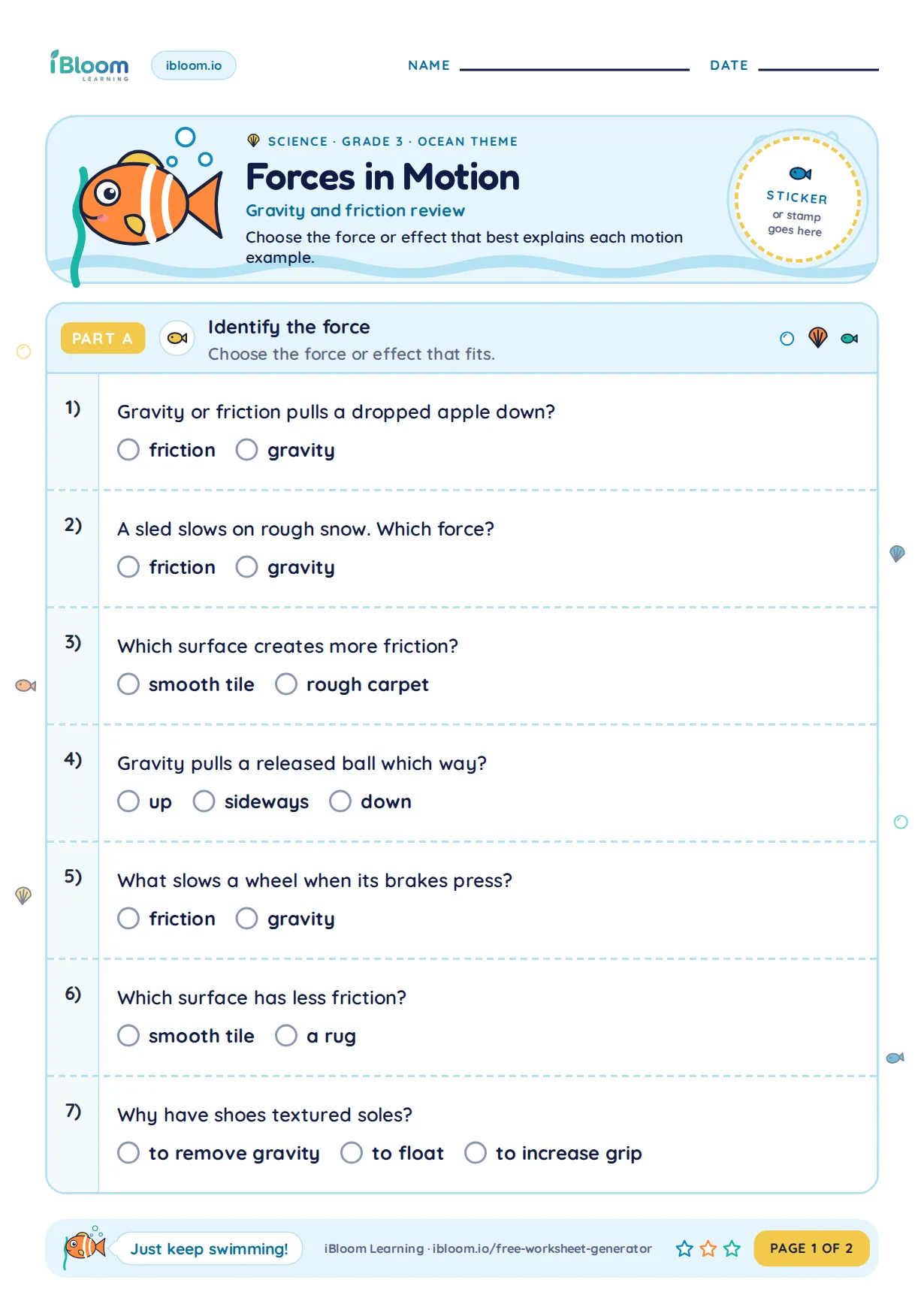 Gravity Friction — Science Reasoning ReviewExplore gravity friction practice activities within Forces Motion Practice Activities, organised so children, families, and elementary teachers can move from broad learning areas to focused printable practice. This science reasoning review worksheet provides a distinct, age-appropriate way to practise the same lesson.Grade 3Free PDF preview
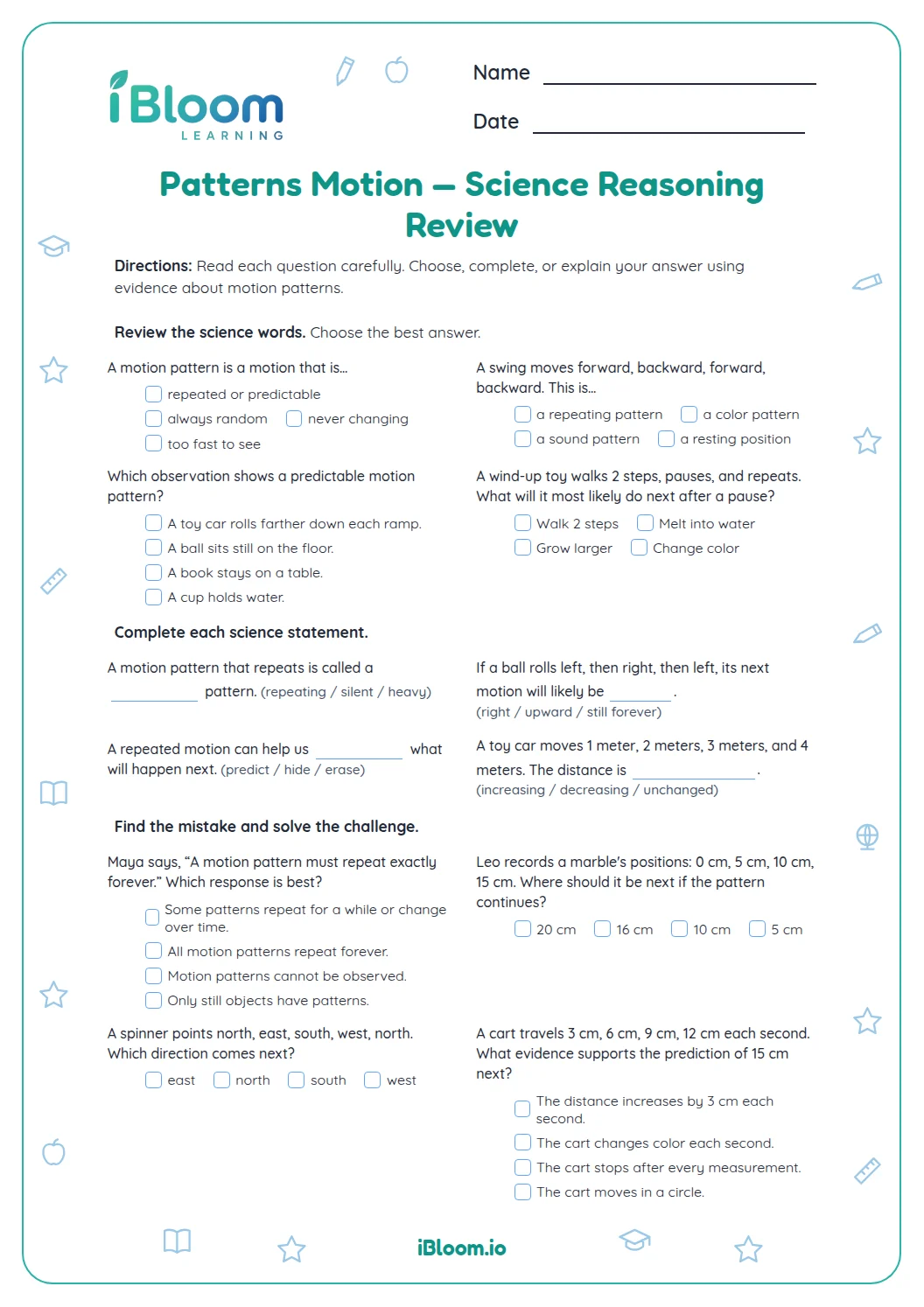 Patterns Motion — Science Reasoning ReviewExplore patterns motion practice activities within Forces Motion Practice Activities, organised so children, families, and elementary teachers can move from broad learning areas to focused printable practice. This science reasoning review worksheet provides a distinct, age-appropriate way to practise the same lesson.Grade 3Free PDF preview
Practice that builds confidence
What students learn
These Grade 3 forces and motion worksheets help children connect everyday movement with science ideas: pushes, pulls, speed changes, direction changes, gravity, friction, and repeated motion patterns. Students practise observing what happens when forces act on objects and explaining those changes with clear science vocabulary.
The printable activities include sorting tasks, short-response questions, picture-based examples, prediction prompts, and simple scenarios involving balanced forces, gravity, friction, and patterns of motion. They are designed for use after hands-on demonstrations, in science centers, or as independent review.
In this Grade 3 science collection, children build a practical understanding that a force is a push or pull. They look at how forces can start motion, stop motion, speed objects up, slow objects down, or change direction. The activities keep examples familiar, such as balls, carts, swings, ramps, shoes, and playground movement.

From simple motion to balanced forces
The progression begins with identifying forces and motion, then moves into balanced forces. Students learn that when forces are balanced, an object may stay still or keep moving without a noticeable change. When forces are unbalanced, motion changes. Worksheets may ask children to compare two people pushing, choose the stronger force, or explain why an object does not move.
Gravity, friction, and motion patterns
Gravity is treated as the force that pulls objects toward Earth, while friction is shown as a force that resists motion between surfaces. Children compare smooth and rough surfaces, think about why objects fall, and describe back-and-forth, circular, or repeated motion. Pattern questions help students notice that some motion can be observed, described, and predicted.
A simple parent routine
At home, start with one real object, such as a toy car or ball. Ask, “What force made it move?” then “What could slow it down?” Try the same push on a rug and a smooth floor, then complete a worksheet item that matches the observation. Encourage your child to answer in a full sentence using words like push, pull, gravity, friction, balanced, and unbalanced.
Classroom uses and common errors
Teachers can use these printables after demonstrations, in science centers, for partner discussion, or as quick checks before a quiz. Watch for children who think force only means a hard push, that still objects have no forces acting on them, or that gravity only works when something is falling. Ask students to point to the evidence in the picture or scenario before choosing an answer.
Free printable PDF download
Use this grade 3 forces and motion worksheet page to preview the activity, print it, or download it as a PDF for quick practice. It works well for homework, homeschool lessons, tutoring, morning work, revision, and classroom centers.
Answers and answer key support
After the child completes the worksheet independently, parents and teachers can use the answer support or answer key information to check the work, review mistakes, and choose the next practice step.
Why iBloom worksheets help
The pages combine pictures, vocabulary, and short explanations so Grade 3 learners practise both observation and reasoning. A child-friendly strategy is: name the object, name the force, then tell how the motion changes. For example, “The hand pushes the cart, so the cart moves forward.” This keeps answers specific and scientific.
Helpful answers
Frequently asked questions
What forces and motion topics are covered in these Grade 3 worksheets?
They cover basic pushes and pulls, balanced and unbalanced forces, gravity, friction, and patterns of motion using age-appropriate examples and picture-based questions.
How can I make balanced forces easier for a third grader to understand?
Use a simple example such as two equal pushes from opposite sides of a box. If the box does not move, the forces are balanced; if one push is stronger and the box moves, the forces are unbalanced.
Do these worksheets require lab equipment?
No. They can be completed as printables, but they work especially well after simple demonstrations with classroom or home objects such as balls, toy cars, ramps, paper, rugs, or smooth floors.
What is a common mistake students make with friction?
Many students think friction only happens when something stops. These worksheets help them see that friction acts between touching surfaces and can slow motion, make movement harder, or affect how far an object travels.
Can teachers use these pages in science centers?
Yes. The mix of sorting, observation, prediction, and explanation tasks makes the worksheets useful for centers, partner work, review folders, or quick formative checks during a Grade 3 forces and motion unit.
Is this grade 3 forces and motion worksheet free?
Yes. You can preview it for free and use the printable worksheet for home or classroom practice.
Can I download this grade 3 forces and motion worksheet as a PDF?
Yes. Use the worksheet download option to save a printable PDF, or print the worksheet directly from the page.
Does this grade 3 forces and motion worksheet include answers or an answer key?
When the activity has fixed answers, iBloom includes answer support so parents and teachers can check the completed worksheet.