


About this worksheet
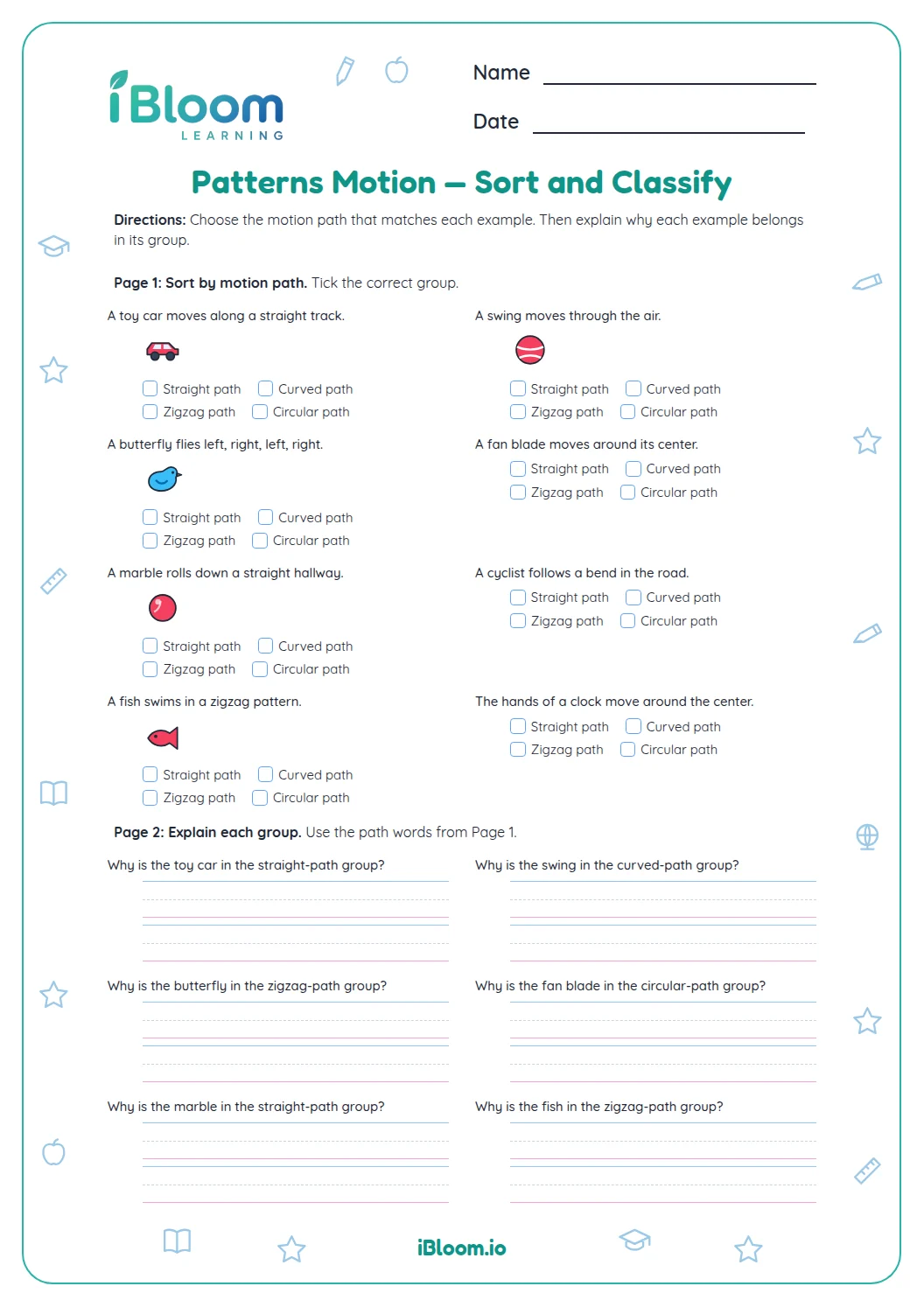
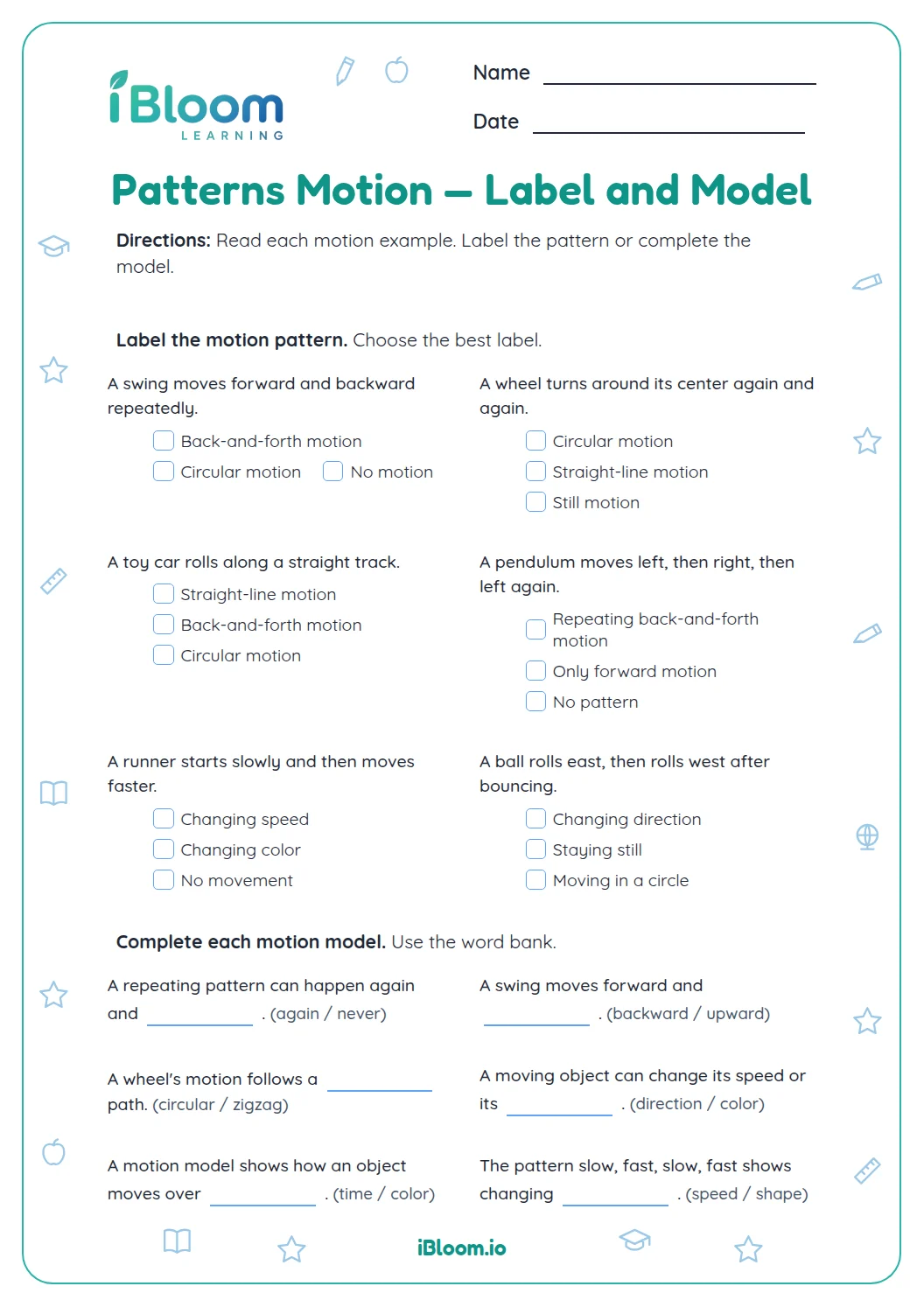
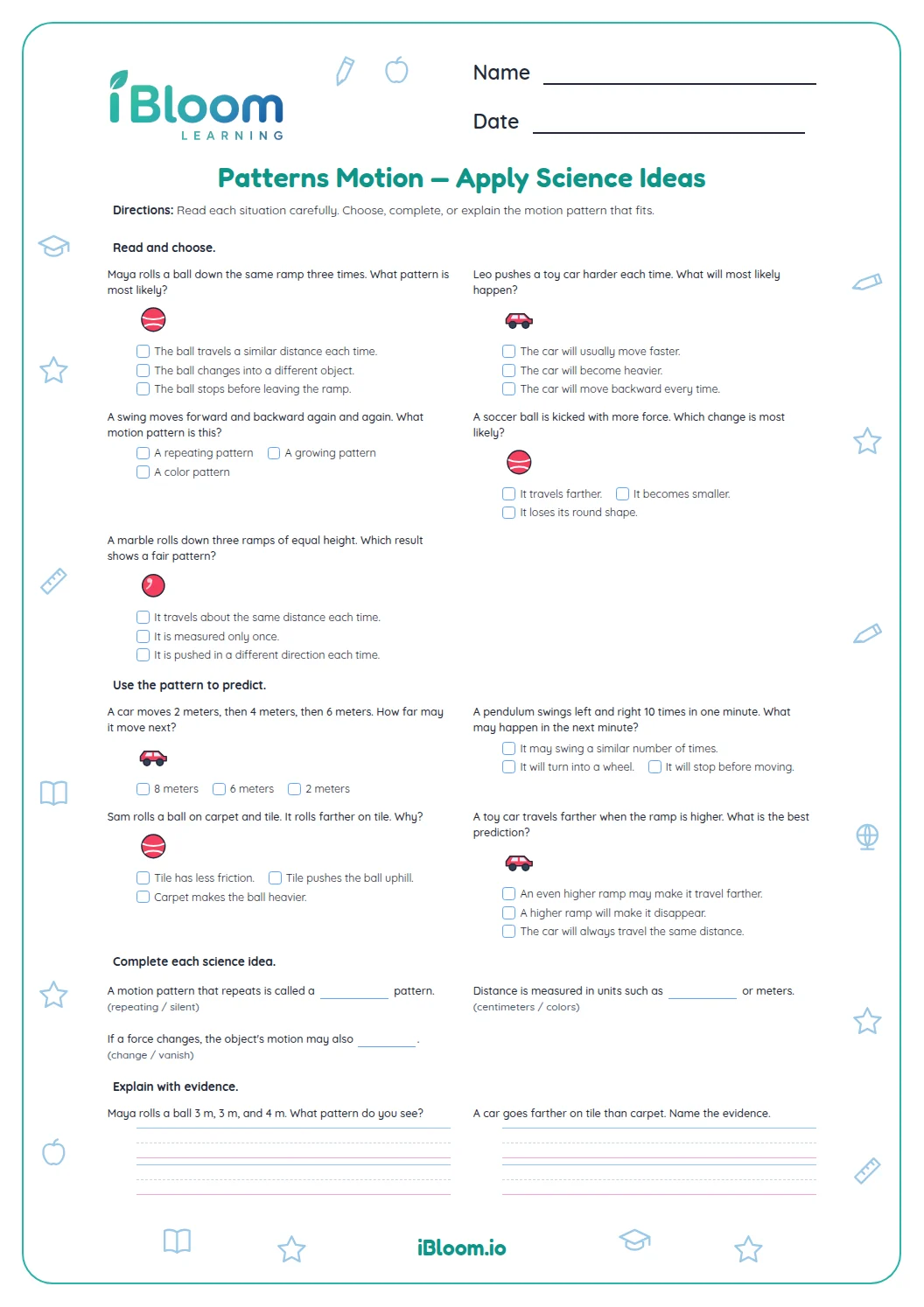
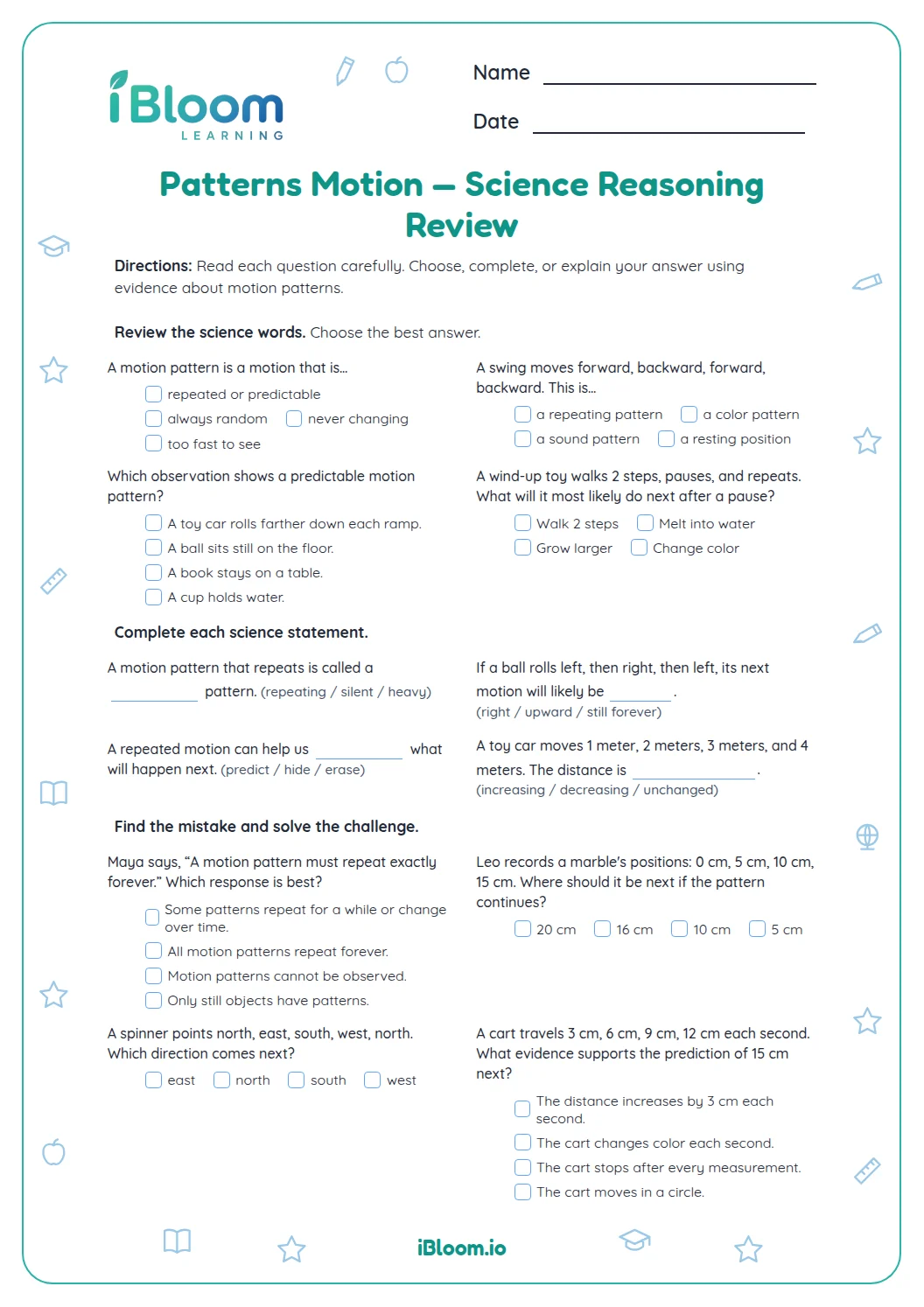
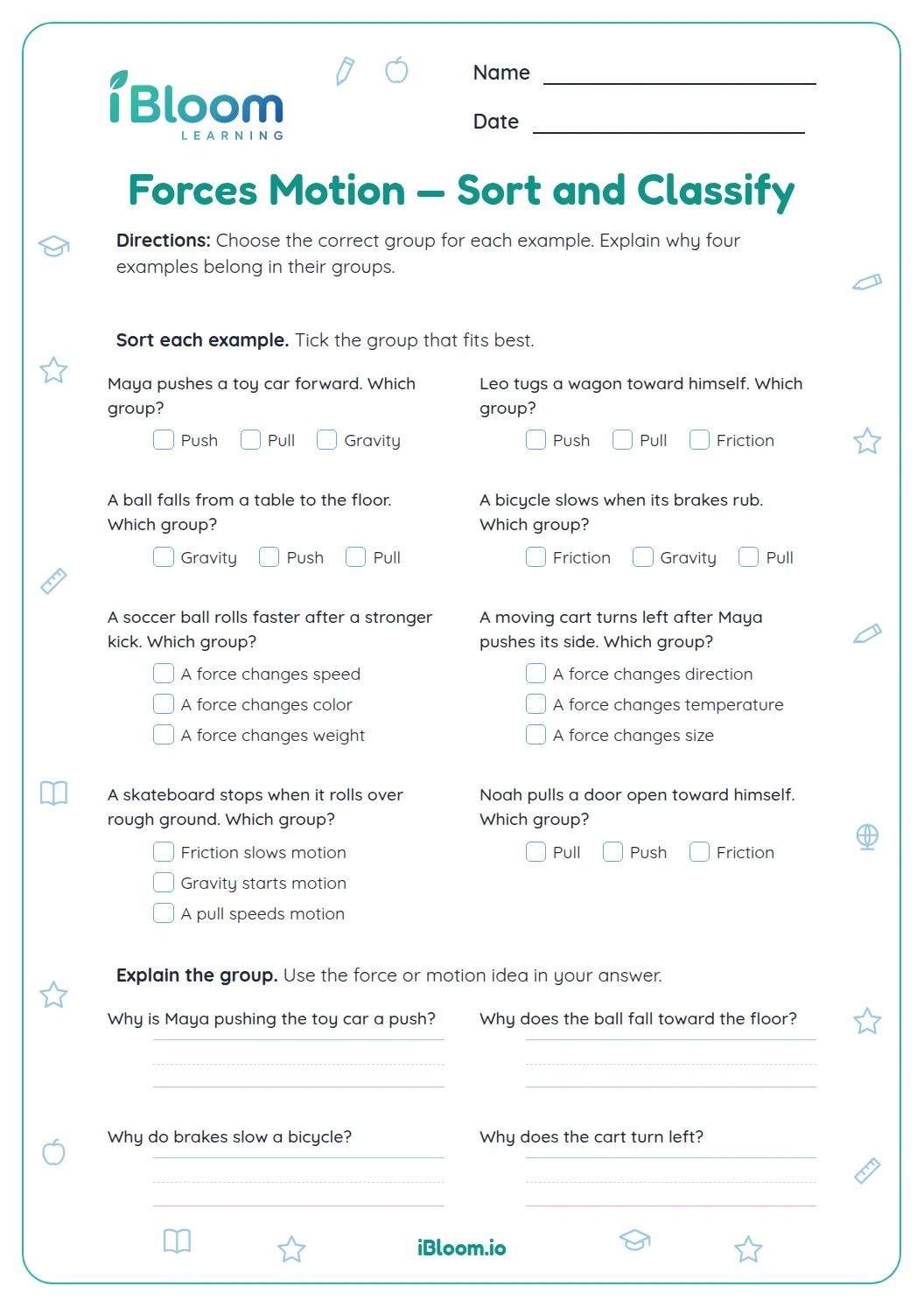
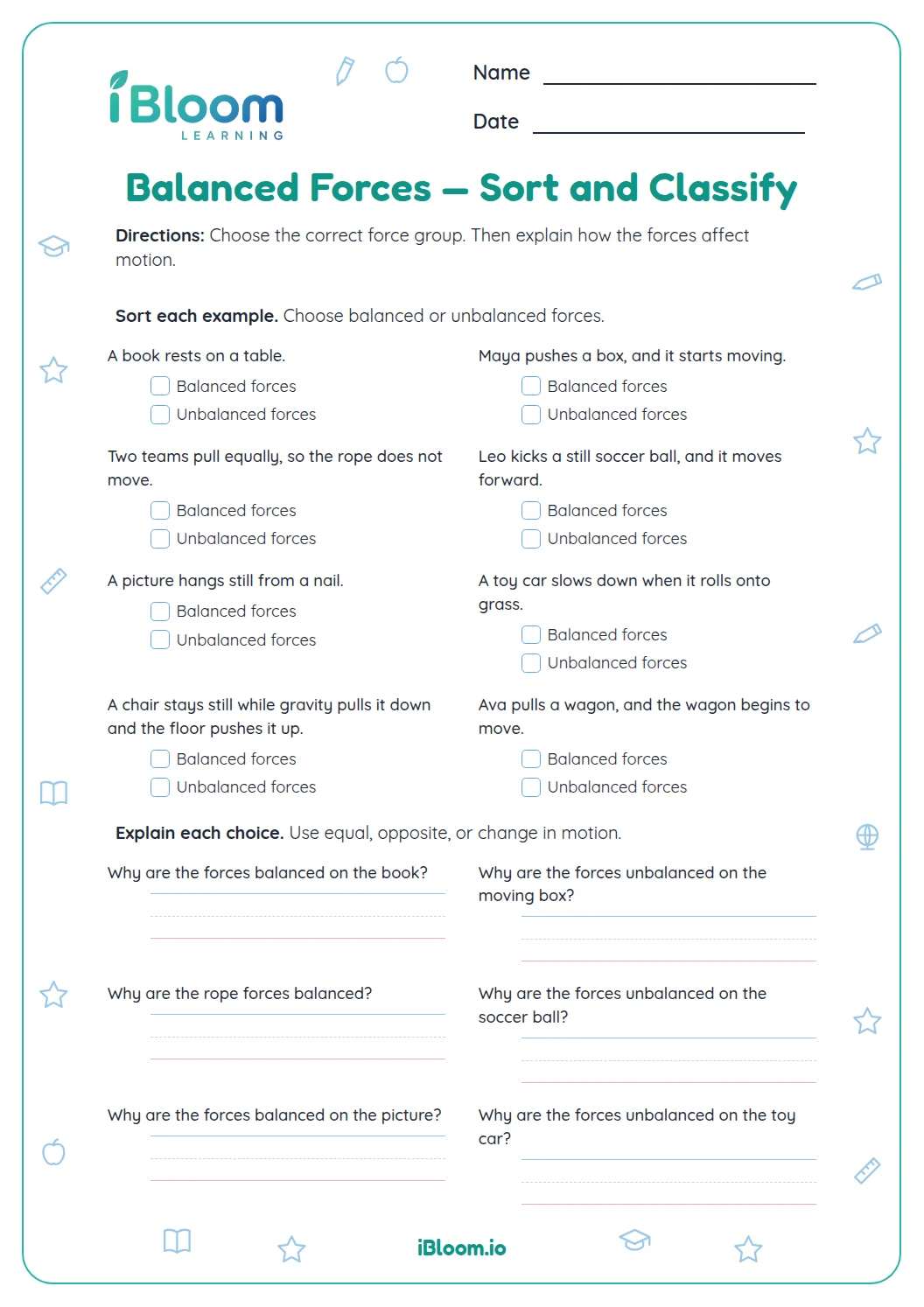
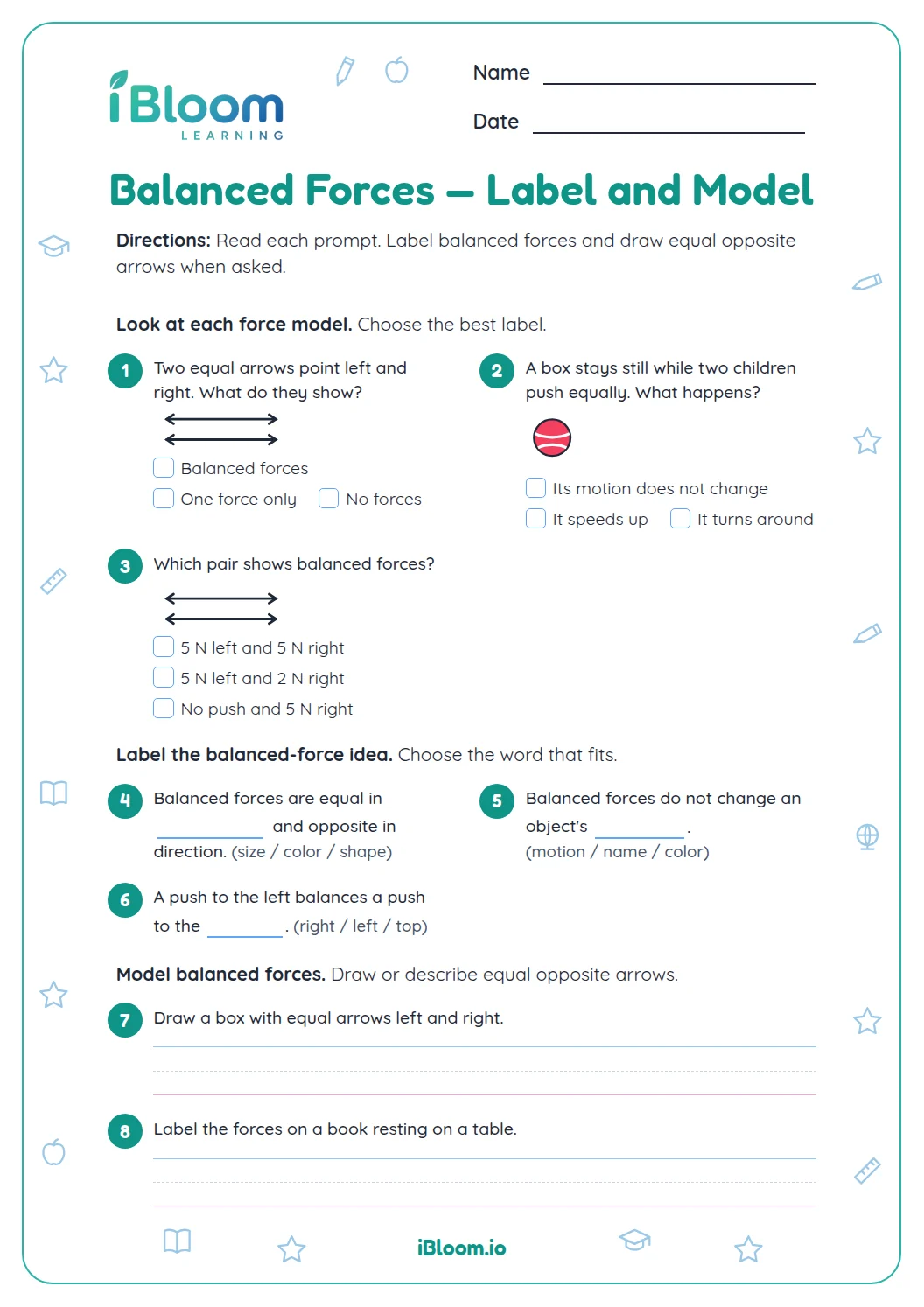
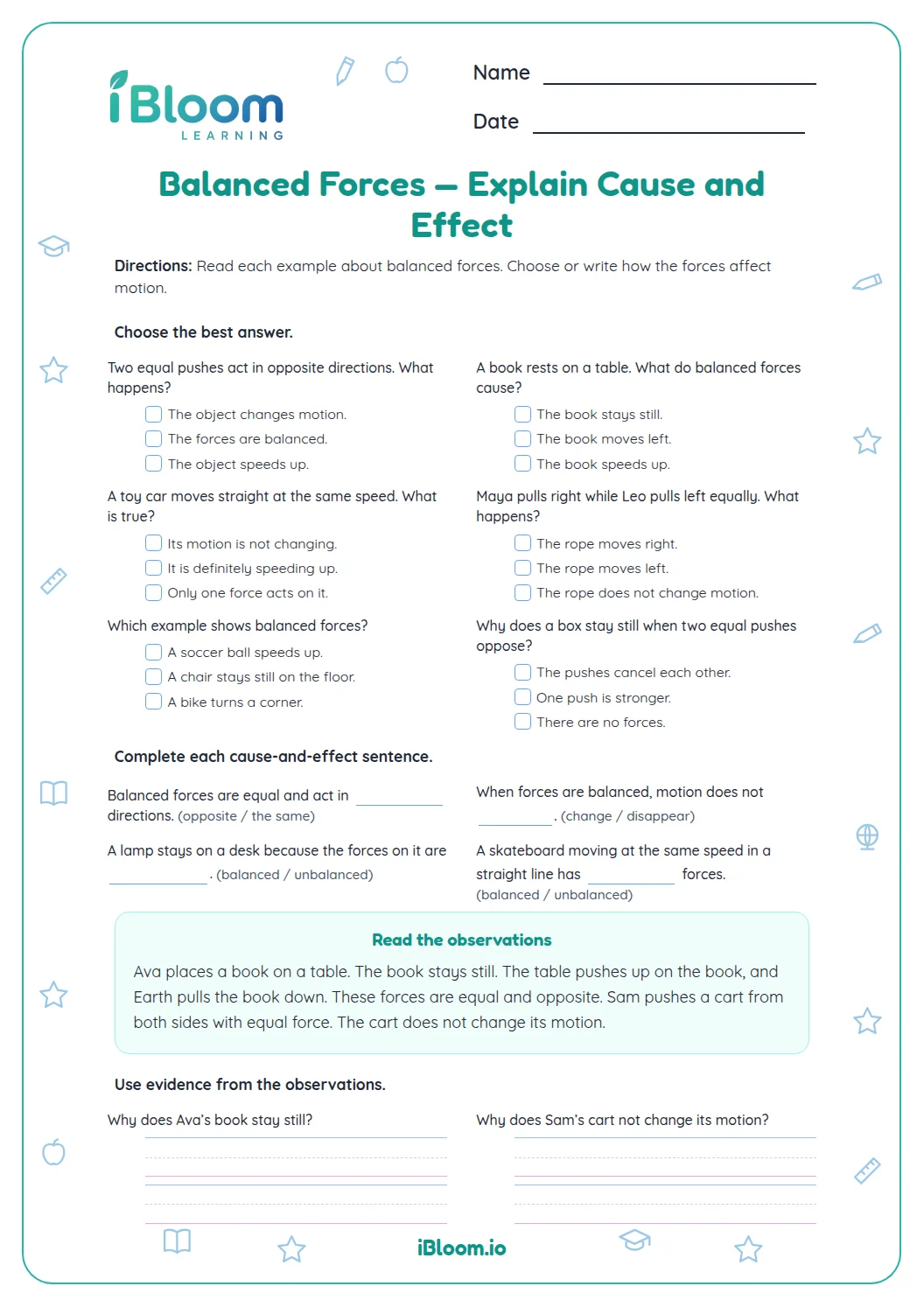
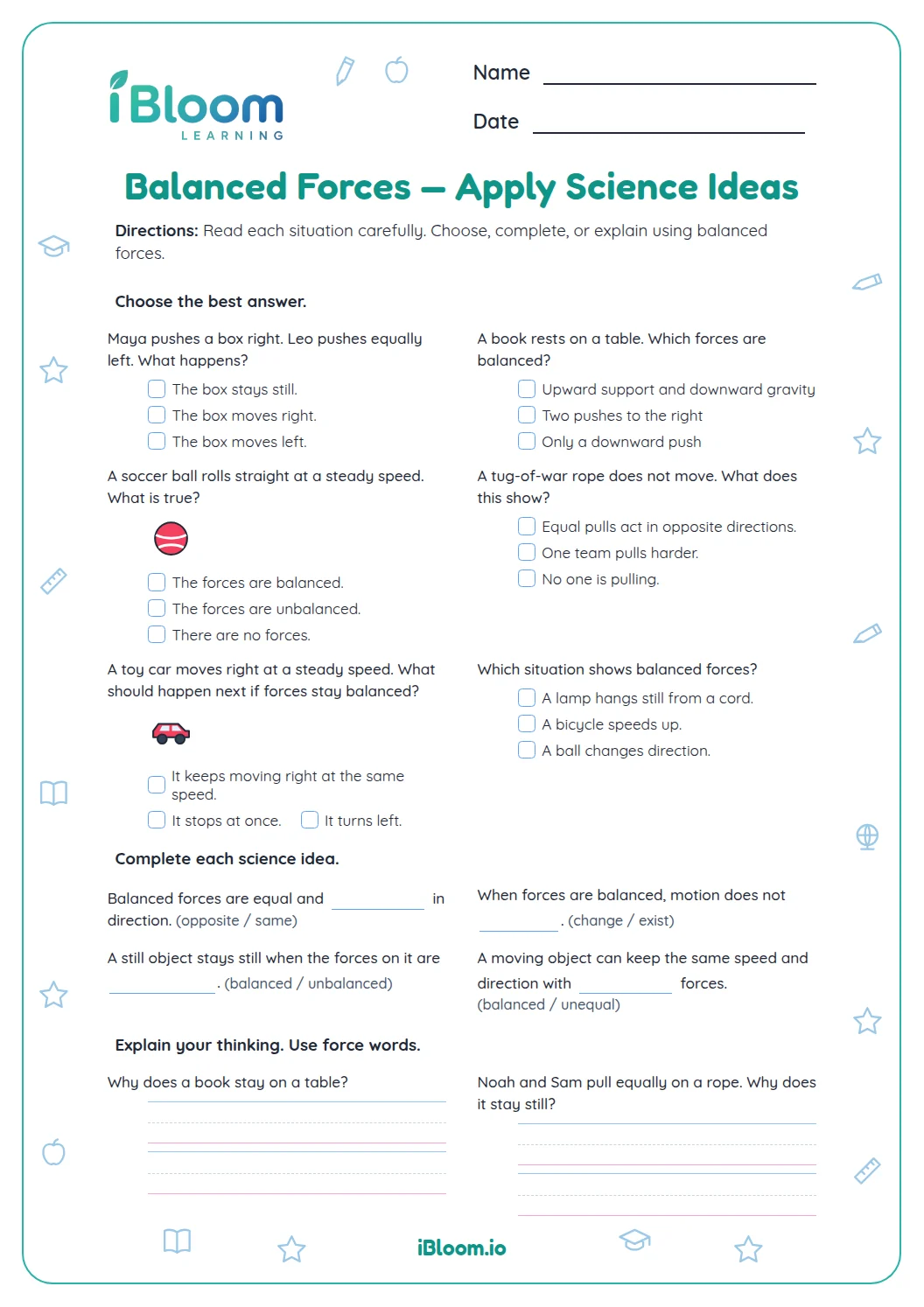
This Grade 3 science worksheet connects forces and surfaces with changes in motion. Children answer questions about pushes, gravity, friction, and balanced forces, then read about Maya testing the same toy car on three ramps. They use the results to identify a motion pattern and consider how to test a surface fairly. The 14 questions and answer key connect force ideas with cause and effect. The investigation reasoning aligns with NGSS 3-PS2-1.
Aligned to 3-PS2-1
What will children practice?
Children connect pushes, gravity, and friction with changes in motion, then use a short ramp test to notice a pattern. The passage shows the same car moving faster as the ramp gets steeper. Question 11 asks what pattern Maya observed as the ramp became steeper.
- 1A toy car is still. A child gives it a push. What happens?
How can children check their thinking?
State what the object was doing, identify the force or surface, and describe the resulting change. In the test question, use the passage evidence rather than guessing.
How is the worksheet arranged?
The worksheet opens with eight force-and-motion questions, followed by a ramp-test passage and six questions about causes, effects, and evidence. Children use the passage to identify a pattern and consider how to test a surface fairly.
How to explain a motion change
- 1Describe how the object is moving at the start.
- 2Find the push, pull, gravity, or surface named.
- 3Explain what changes in the motion.
- 4Use friction when surfaces rub and slow an object.
- 5For the ramp test, compare the results described in the passage.
- 6Keep test conditions the same except for the factor being tested.
Common mistakes and quick fixes
The mistake
Saying a still object has no forces.
The fix
Balanced forces can act while motion stays the same.
The mistake
Calling every slowdown a push.
The fix
Contact between surfaces can create friction.
The mistake
Changing more than one test condition.
The fix
Keep the car and starting point the same while testing a surface.
These standards connect the practice to grade-level learning.
Children connect pushes, friction, and balanced forces with changes in motion.
On this sheet:
Show the official wordingHide the official wording
Plan and conduct an investigation to provide evidence of the effects of balanced and unbalanced forces on the motion of an object.
What to practice next
Further reading
Questions parents and teachers ask
How many questions are on the worksheet?
There are 14 questions across three worksheet pages, plus a separate answer key. Children choose explanations, complete short cause-and-effect answers, and use evidence from Maya’s ramp test. The items connect forces and surfaces with observed motion and patterns.
What kinds of forces are included?
The questions describe pushes, a magnet’s pull, gravity on a ramp, friction between surfaces, and balanced forces. Children connect each situation with an observed change or no change in motion, then use those ideas in a test question about a rolling car.
What does the ramp test show?
In the passage, the same car rolls slowly on the low ramp, faster on the medium ramp, and fastest on the high ramp. Children identify this pattern and use it to explain why the car moved fastest. Maya keeps the same car and starting point.
How does the worksheet practice a fair test?
In the passage, the same car rolls slowly on the low ramp, faster on the medium ramp, and fastest on the high ramp. Children identify the pattern and use it to explain why the car moved fastest. The passage states that the car was released from the same place each time.
Is an answer key included?
Yes. The key follows the worksheet and gives the expected choices and short explanations. For the test-design item, it accepts an answer that keeps the car and starting point the same while changing the surface. This helps isolate the factor being compared.