


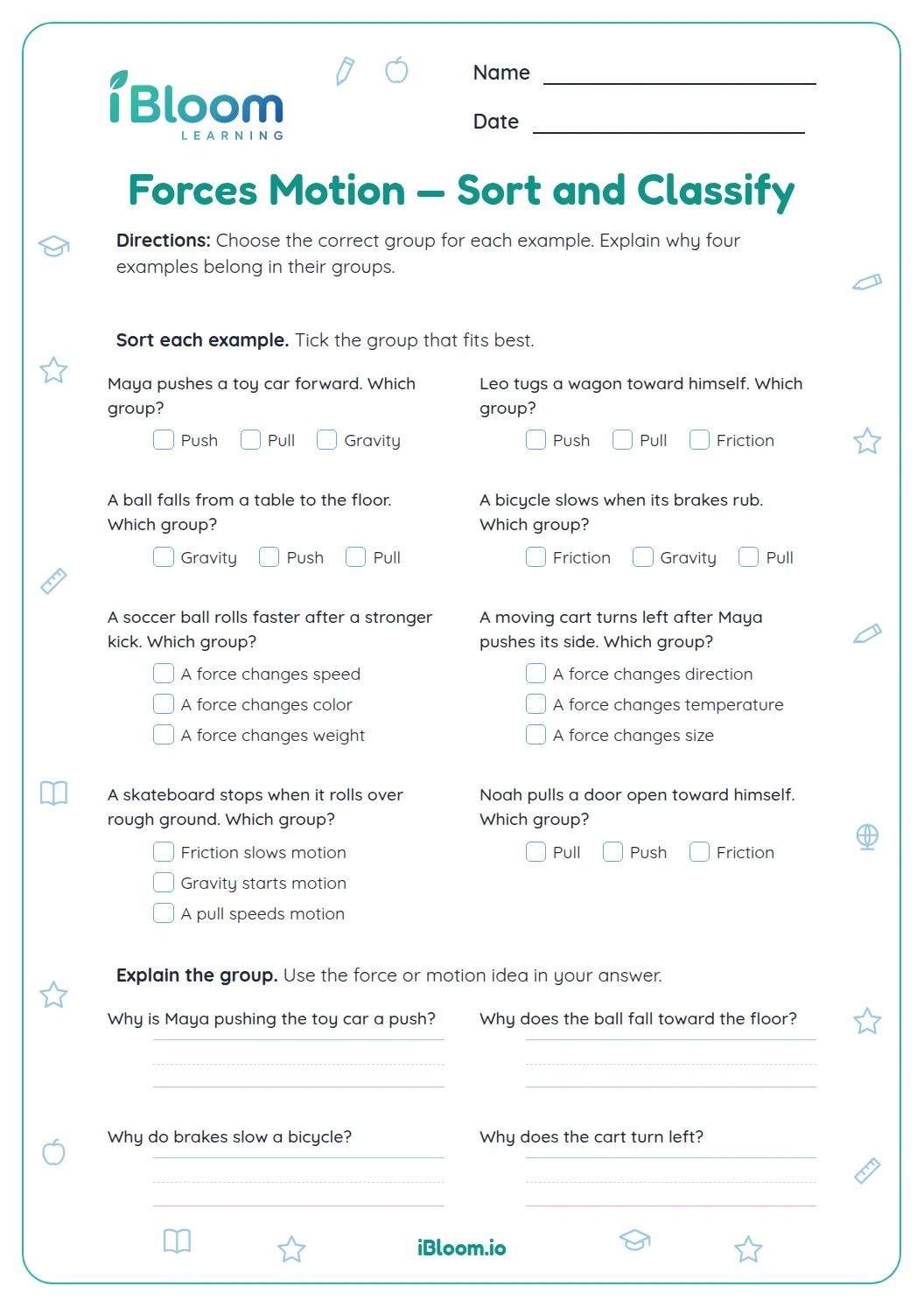

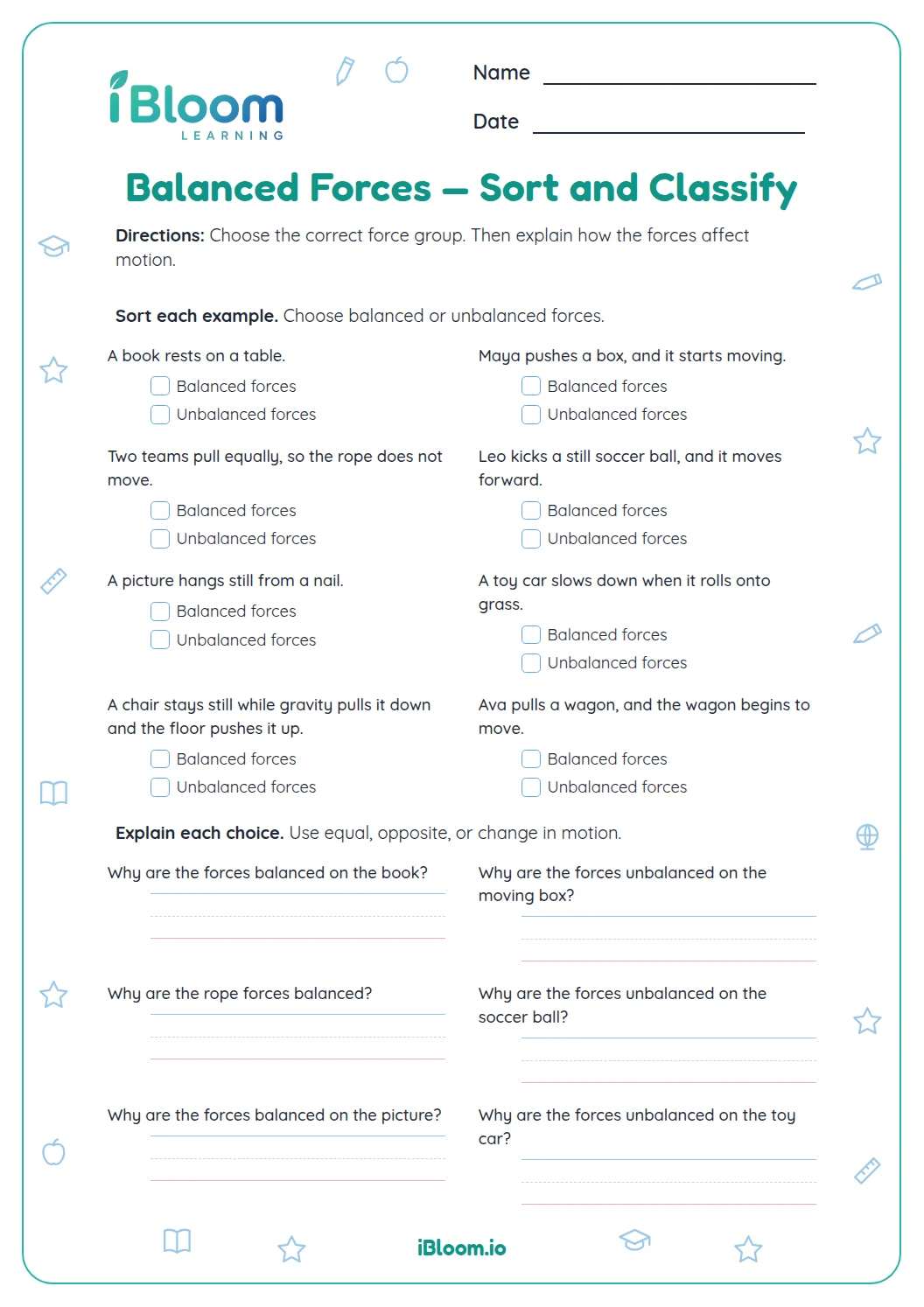
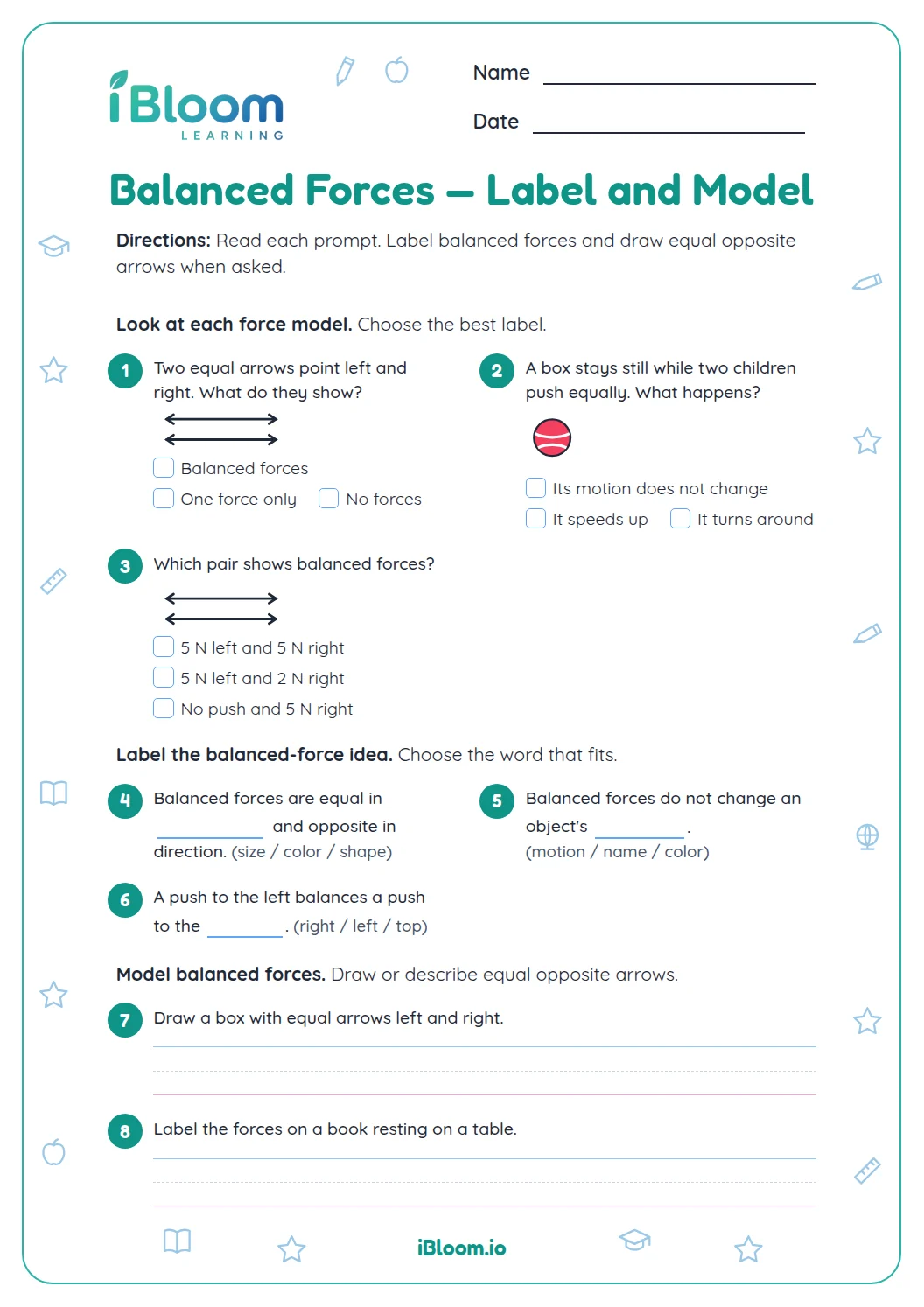
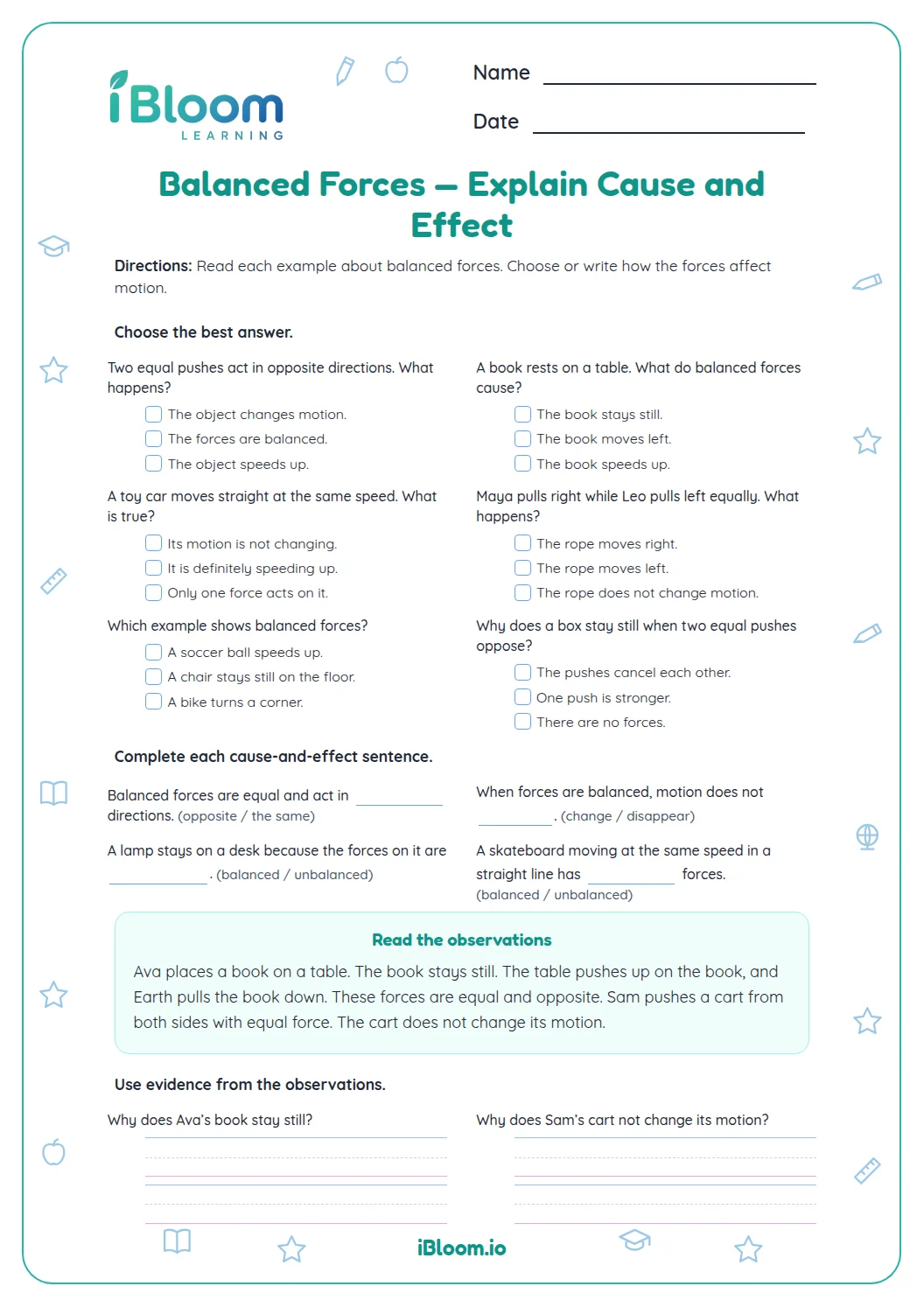
About this worksheet
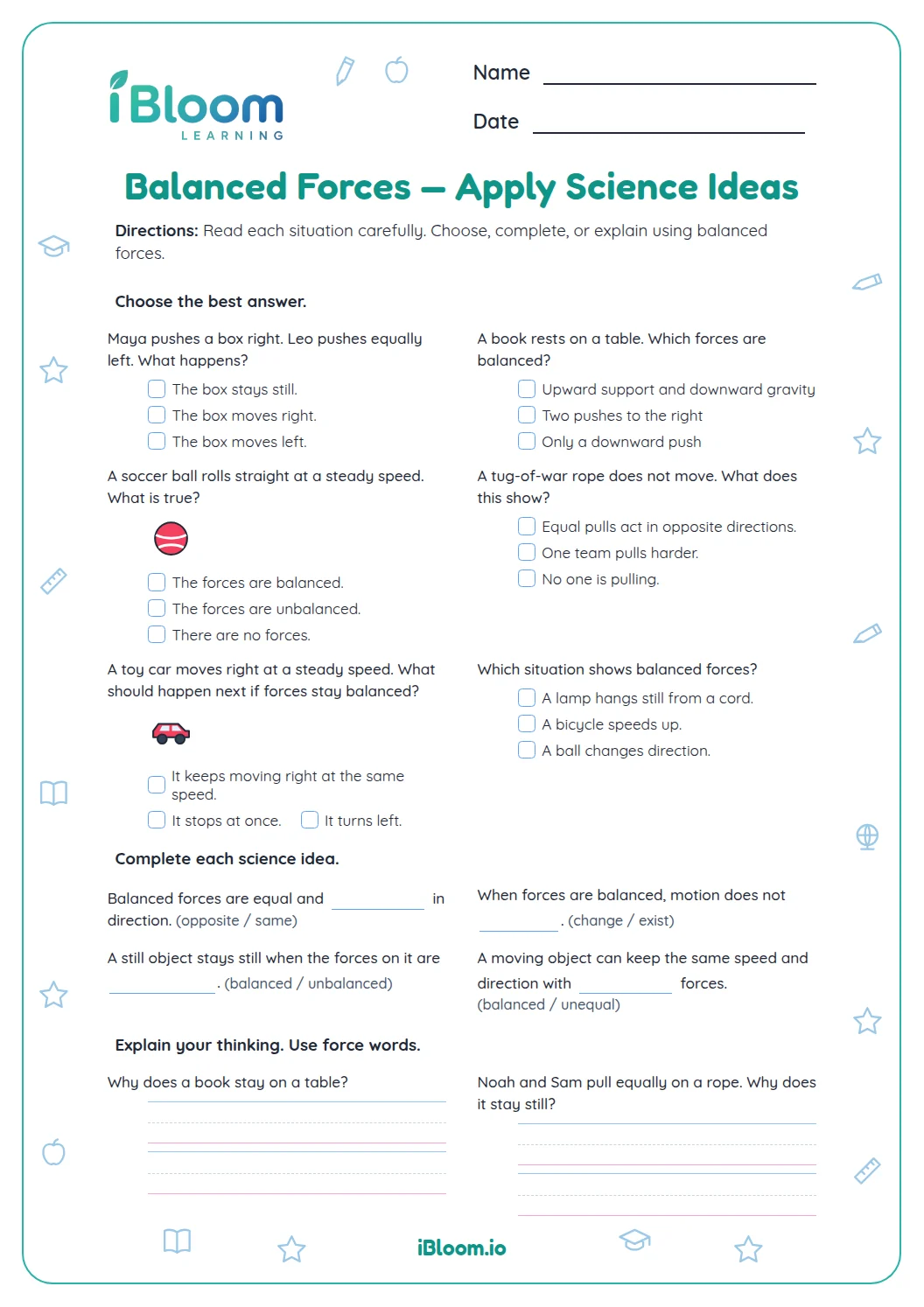
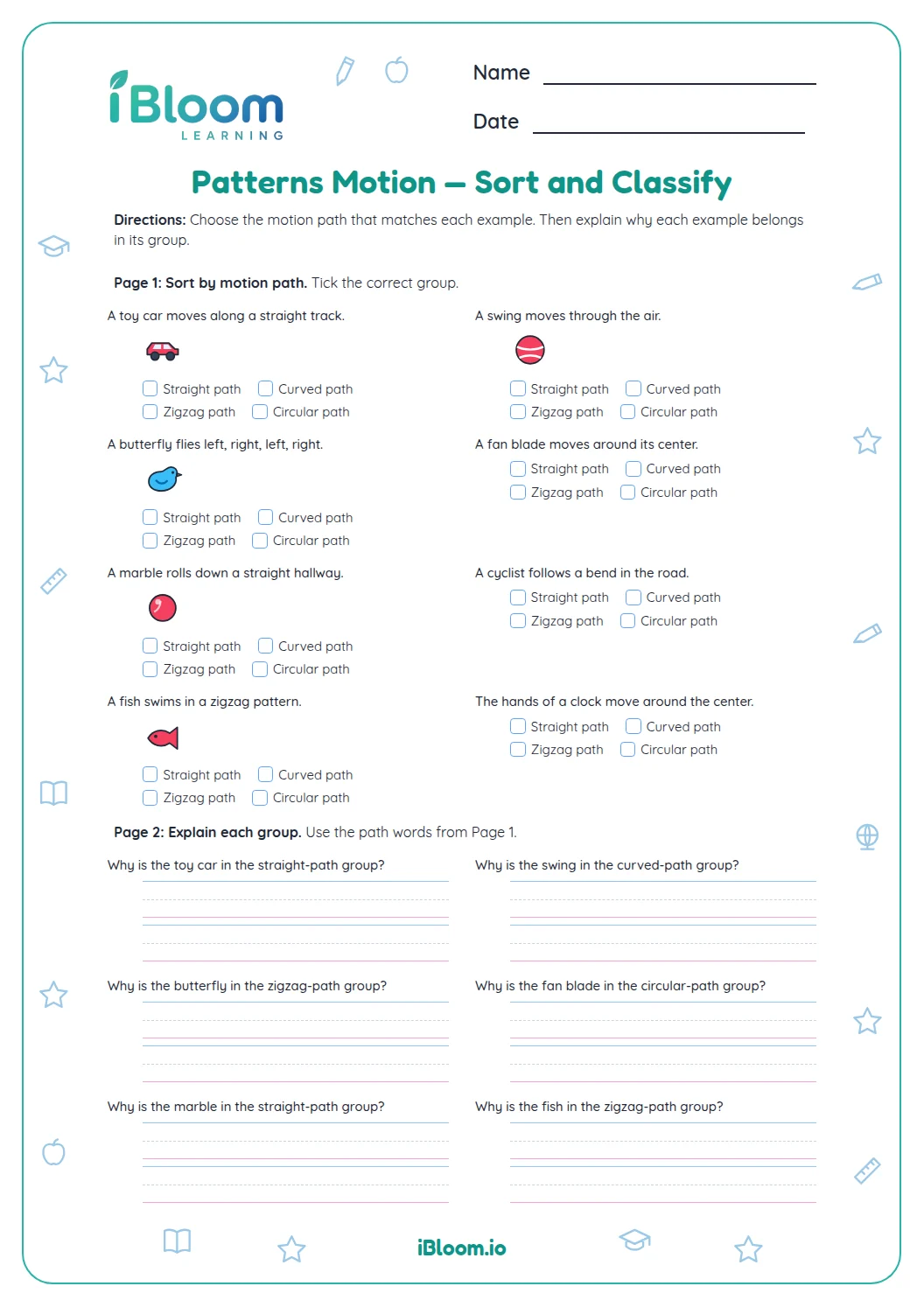
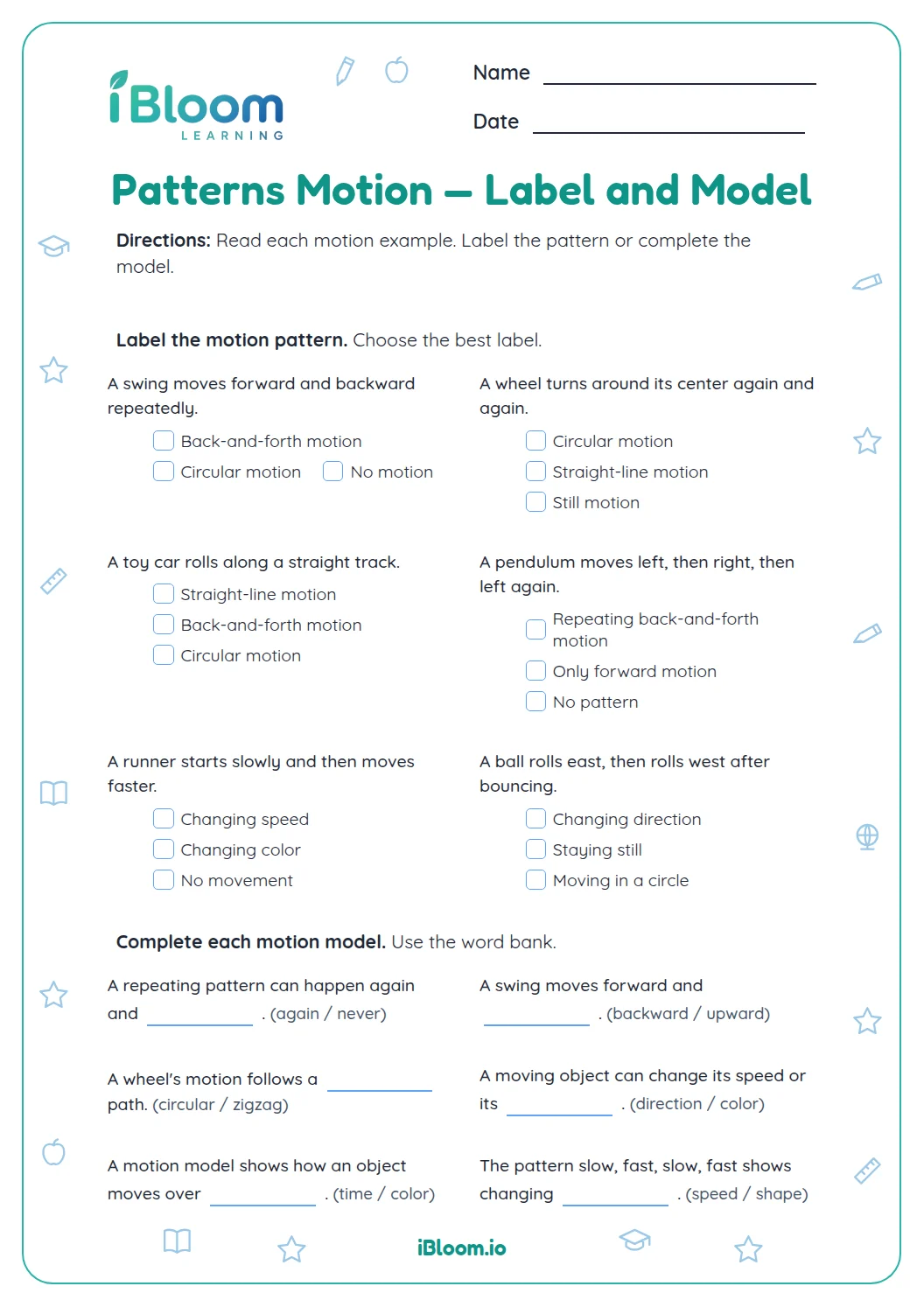
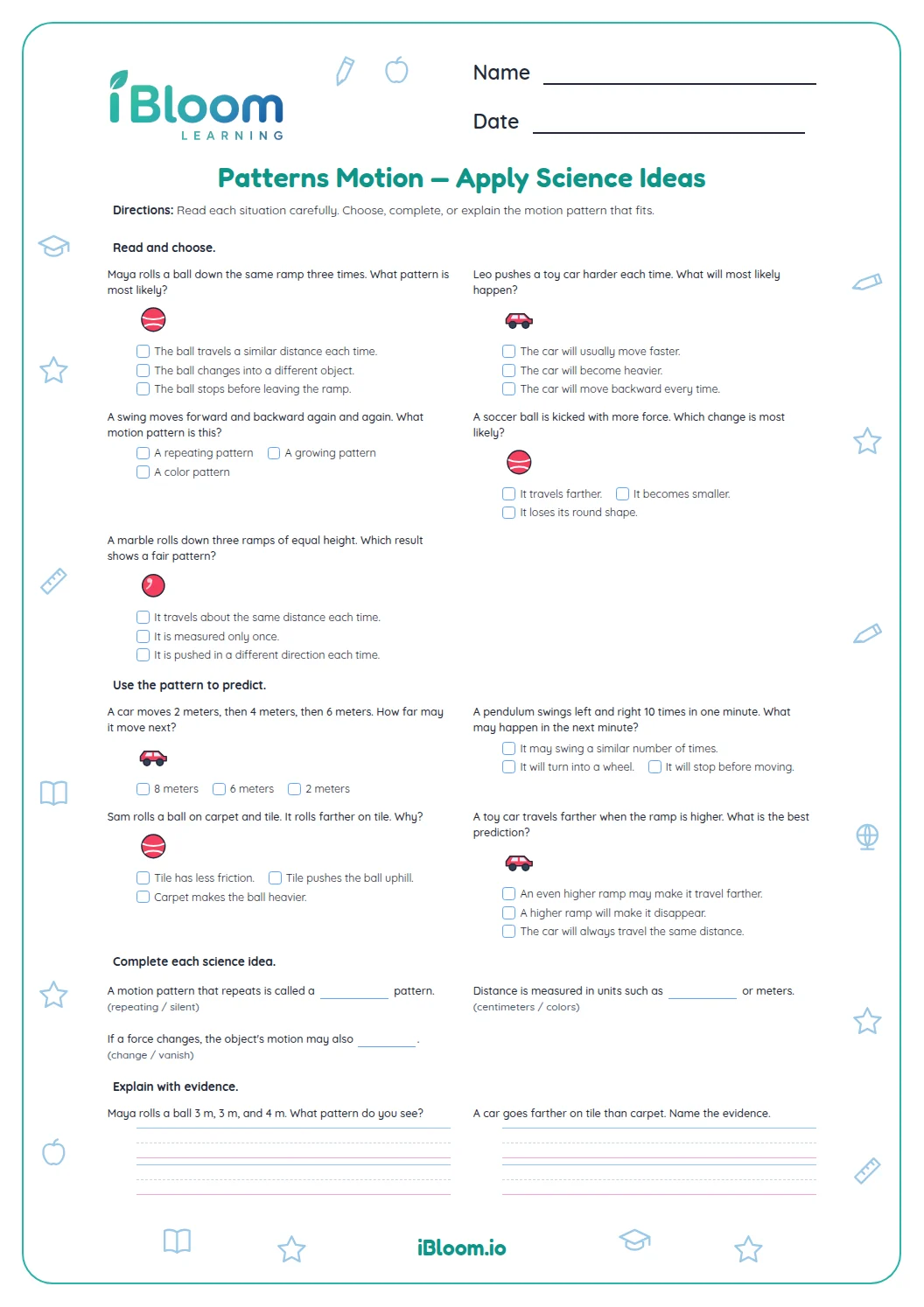
This Grade 3 science worksheet reviews gravity, friction, and how surfaces affect motion. Students identify forces in familiar situations, compare rough and smooth surfaces, and explain cause and effect. The final question asks how to make a fair comparison of a toy car’s travel. There are 14 questions and a separate answer key. It connects to NGSS 3-PS2-1 through reasoning about forces and motion.
Aligned to 3-PS2-1
How does gravity affect an object?
Gravity pulls objects toward Earth. A dropped apple or released ball moves downward because of gravity. The first questions ask students to identify this pull in familiar situations.
- 1A dropped apple moves toward the ground.
- 2Force: gravity
- 3Gravity pulls it down toward Earth.
How does friction affect motion?
Friction acts where surfaces touch. It often slows sliding, and a rougher surface can create more friction than a smoother one. A sled may travel farther on packed snow than on rough grass because it meets less friction.
How can a student make a fair comparison?
To compare surfaces, change the surface and keep other conditions the same. Use the same toy car, same starting point, and same release method. That way, a difference in travel distance can be connected to the surface.
Reason about forces
- 1Identify the object that is moving or being released.
- 2Ask whether gravity pulls it toward Earth.
- 3Look for touching surfaces that create friction.
- 4Compare rough and smooth surfaces before predicting how far an object slides.
- 5For a fair test, change one condition and keep the others the same.
Force and motion mix-ups
The mistake
Calling gravity the force that slows a sliding book.
The fix
Look at the contact between the book and table; friction opposes sliding.
The mistake
Saying a rough surface makes an object slide farther.
The fix
Rougher contact usually creates more friction and slows a slider sooner.
The mistake
Changing several test conditions at once.
The fix
Keep the object, start point, and release method the same while changing only the surface.
Next Generation Science Standards
Students use everyday examples to reason about how forces affect motion.
Reason about how forces affect an object’s motion.
On this sheet: Students reason about gravity, friction, and a fair comparison of motion.
Show the official wordingHide the official wording
Plan and conduct an investigation to provide evidence of the effects of balanced and unbalanced forces on the motion of an object.
What to practice next
Make more practice
Further reading
Questions parents and teachers ask
What is gravity?
Gravity is a force that pulls objects toward Earth. When an apple or ball is released above the ground, gravity pulls it downward. Several questions ask students to recognize this pull and describe its direction using familiar examples. Its pull acts even when an object is resting on the ground, as question 10 asks students to recognize.
What is friction?
Friction is a force between surfaces that touch. It can resist motion, such as when a book slides across a table or a brake pad presses a bicycle wheel. Rougher contact can slow a sliding object sooner. Contact between surfaces matters.
Why does a sled move differently on different surfaces?
A surface with more friction can slow a sled sooner. Packed snow is smoother than rough grass, so it may let the sled travel farther. Students use this relationship to explain a comparison in one written-response question. The key gives a model explanation.
How can students test which surface changes motion?
Change only the surface and keep the same toy car, starting point, and release method. This makes the comparison fair because other conditions are held steady. The final worksheet prompt asks students to name one condition to keep the same.
Does the worksheet include an experiment?
The page asks students to reason about how a fair test could compare motion on two surfaces, but the printable itself is a question-and-answer review. The answer key includes a sample fair-test response and the correct choices for the force questions.