

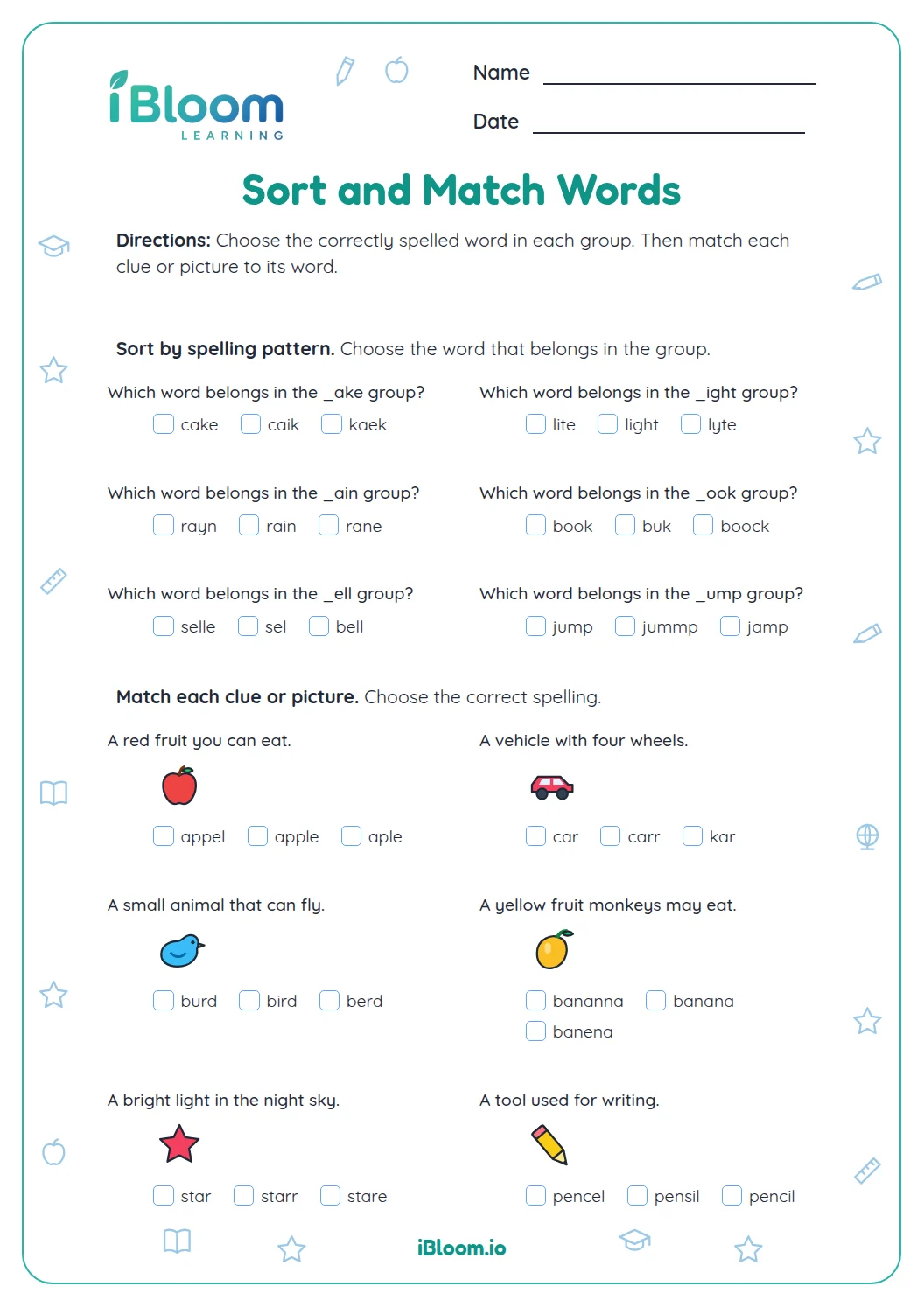
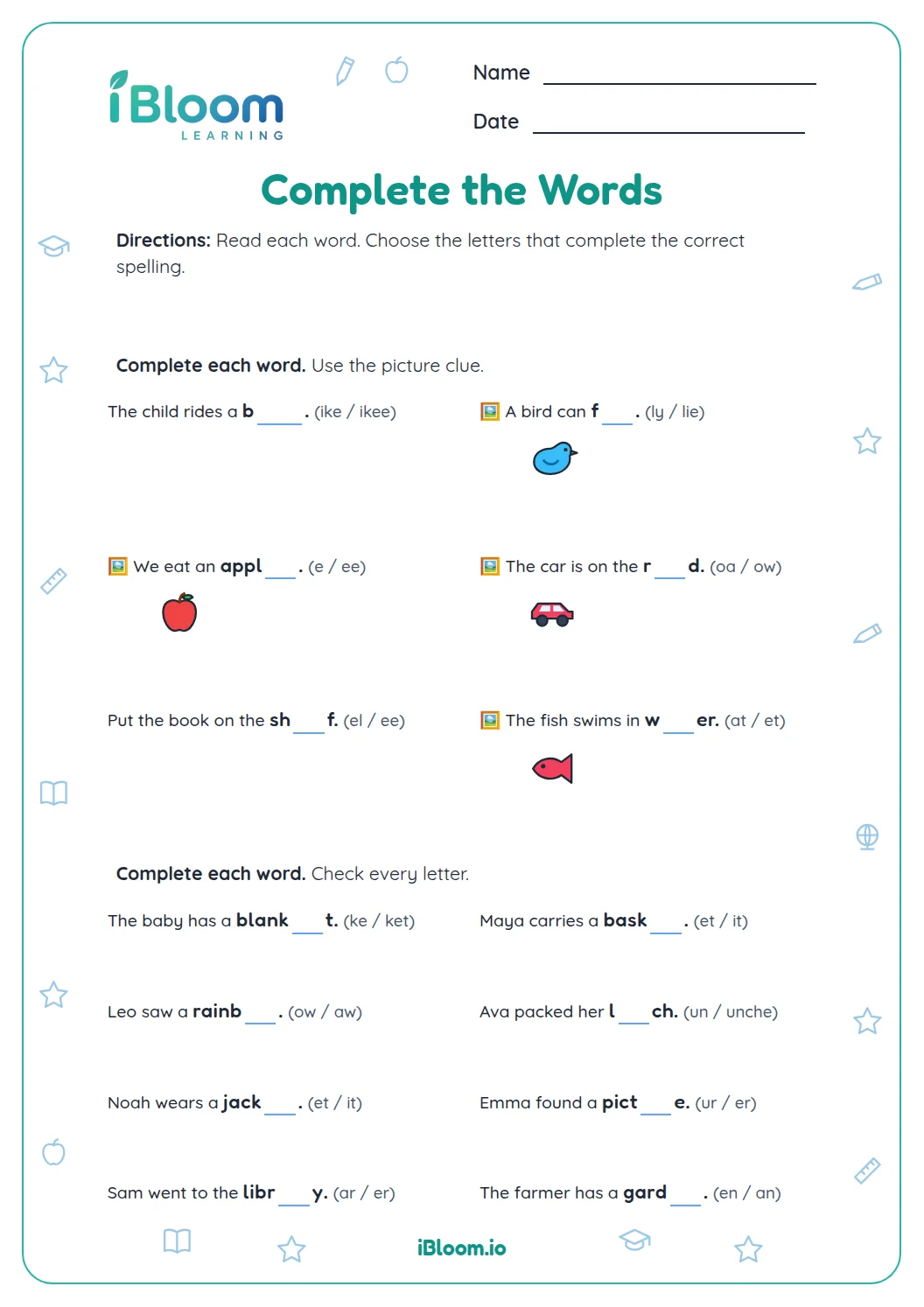
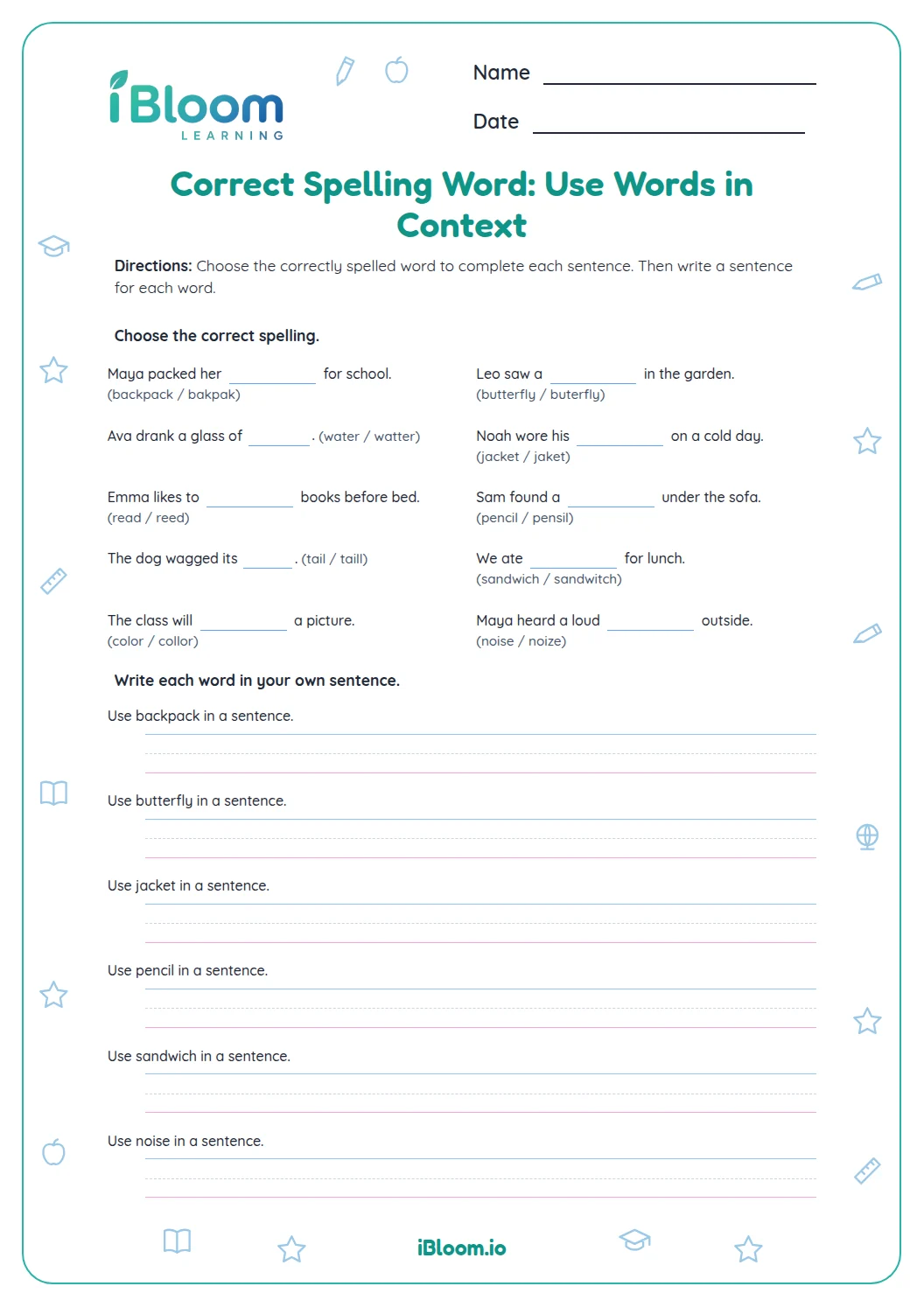
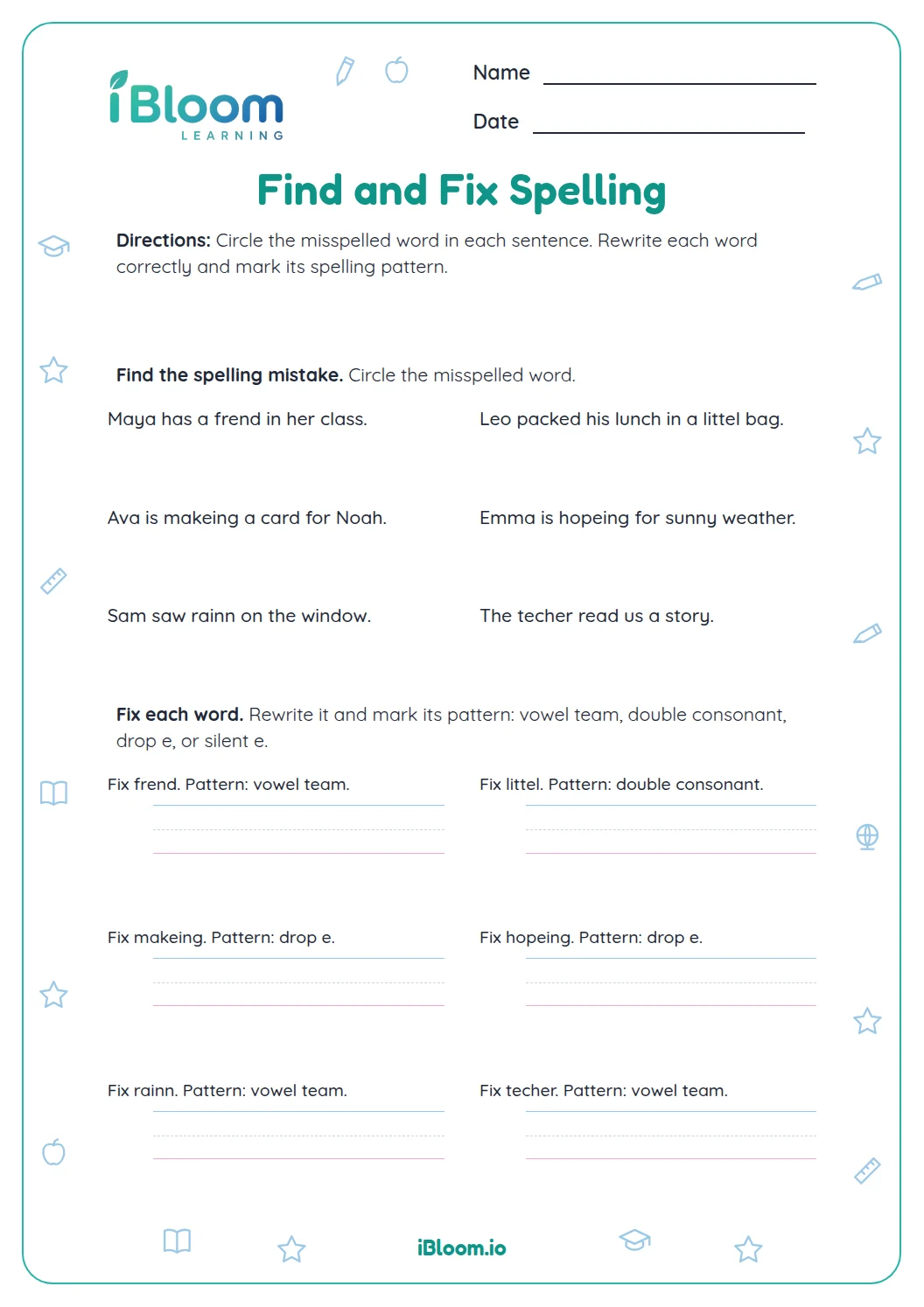
About this worksheet
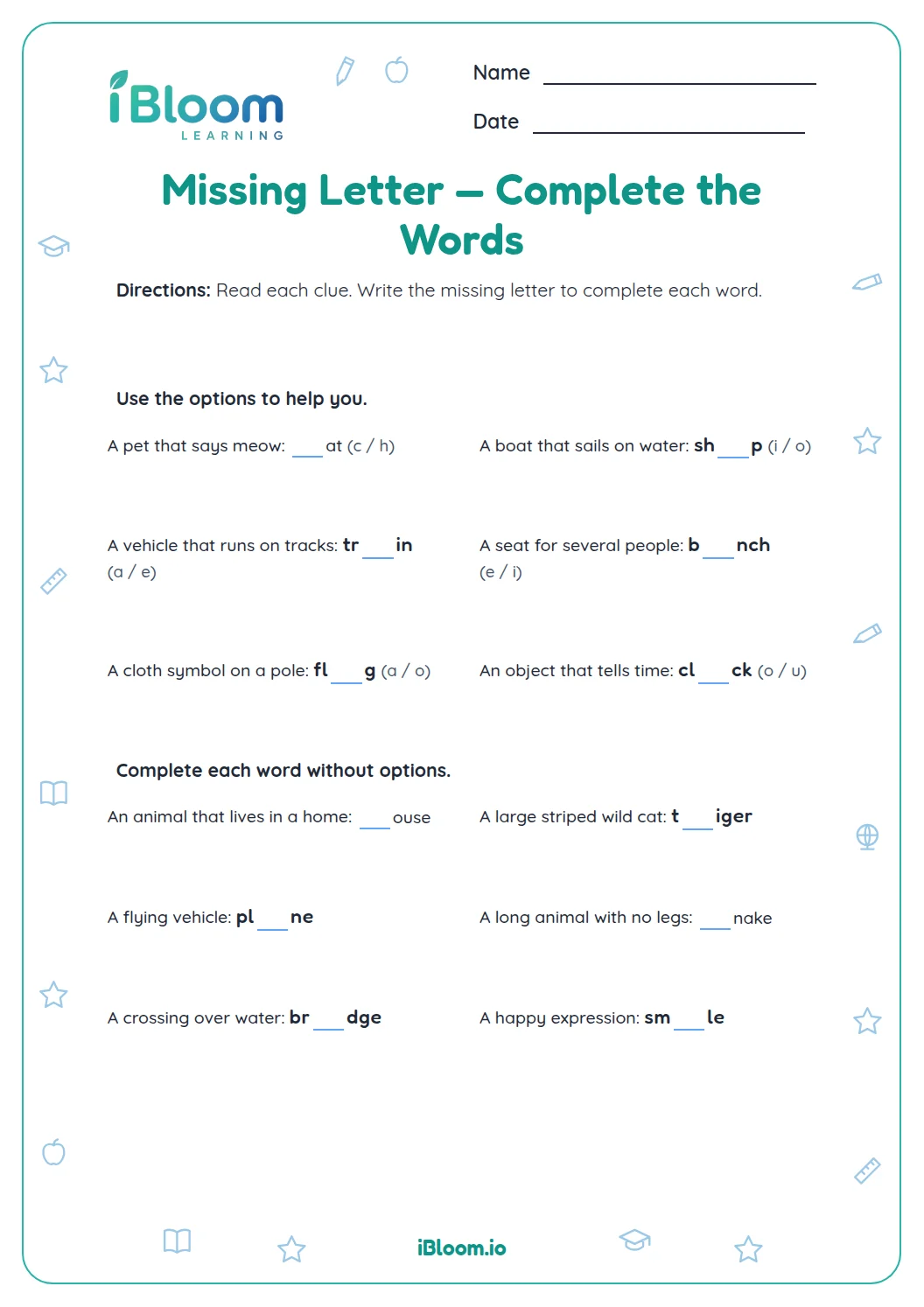
This Grade 2 spelling worksheet gives children 16 ways to complete familiar words. The first eight use sentence clues and missing letters; the next eight offer spelling choices. Children practice vowel teams, blends, and word endings, then check their work with the separate answer key.
Aligned to L.2.2d
What does complete the word practice?
A missing-letter word is a spelling puzzle: the child reads the clue or partial word, supplies the letters, then reads the finished word. This connects sounds to common written patterns.
The first part asks children to recall letters from a clue. The second part gives three letter groups, so children can compare spellings and check which one forms a real word.
How can a child check a completed word?
Read the whole word aloud after filling the gap. Check that it matches the clue and that every sound has a spelling. For example, “sheep” needs the vowel team ee before p.
How to use this worksheet
- 1Read the clue and say the target word aloud.
- 2Stretch the word into sounds and write the missing letters.
- 3For the choice questions, try each letter group in the word.
- 4Read each completed word and compare it with the answer key.
- 5Practice tricky words by writing the whole word once more.
Common mistakes and quick fixes
The mistake
Leaving out one letter in a vowel team such as ee in sheep.
The fix
Say the whole word slowly and check that each sound has its letters.
The mistake
Filling the blank with a sound but making a different word.
The fix
Read the completed spelling in its sentence clue.
The mistake
Rushing past a zero or a repeated letter pattern.
The fix
Read the completed answer carefully and check each place or letter.
The mistake
Rushing past a zero or a repeated letter pattern.
The fix
Read the completed answer carefully and check each place or letter.
The mistake
Rushing past a zero or a repeated letter pattern.
The fix
Read the completed answer carefully and check each place or letter.
Common Core alignment
This worksheet practices Grade 2 spelling conventions through familiar words and letter patterns.
Use conventional spelling patterns when writing words.
On this sheet: Children supply missing letter patterns in familiar words such as sheep, clock, and playing.
Show the official wordingHide the official wording
Generalize learned spelling patterns when writing words (e.g., cage → badge; boy → boil).
What to practice next
Make more practice
Further reading
Questions parents and teachers ask
Should children write only the missing letters?
Yes. Each blank stands for the letters needed to complete the word. After filling it, read the full word aloud and check that it matches the sentence clue. The first eight items ask children to supply letters; the last eight offer spelling choices.
What spelling patterns appear here?
The words practice vowel teams, consonant blends, double consonants, and endings such as -ing. Examples include peach, clock, sheep, playing, and crawl. Ask your child to point out which letters work together to spell a sound, then reread the complete word.
Is an answer key included?
Yes. A separate answer-key page shows the completed spelling for all 16 items. Children can first try each word on their own, then use the key to check and rewrite any word they want to practice again. The key follows the worksheet order.
How can I help if a word is difficult?
Read the sentence clue together and say the likely word slowly. Have your child listen for the sounds around the blank, fill in the letters, and read the whole sentence again. The sentence context helps confirm whether the spelling makes sense.
How long does this worksheet take?
Plan for about 15 minutes, with a little more time if your child rewrites missed words. The two parts ask for eight missing-letter completions and eight spelling choices, alternating between recalling a spelling and recognizing it. Review any tricky pattern together.