


About this worksheet
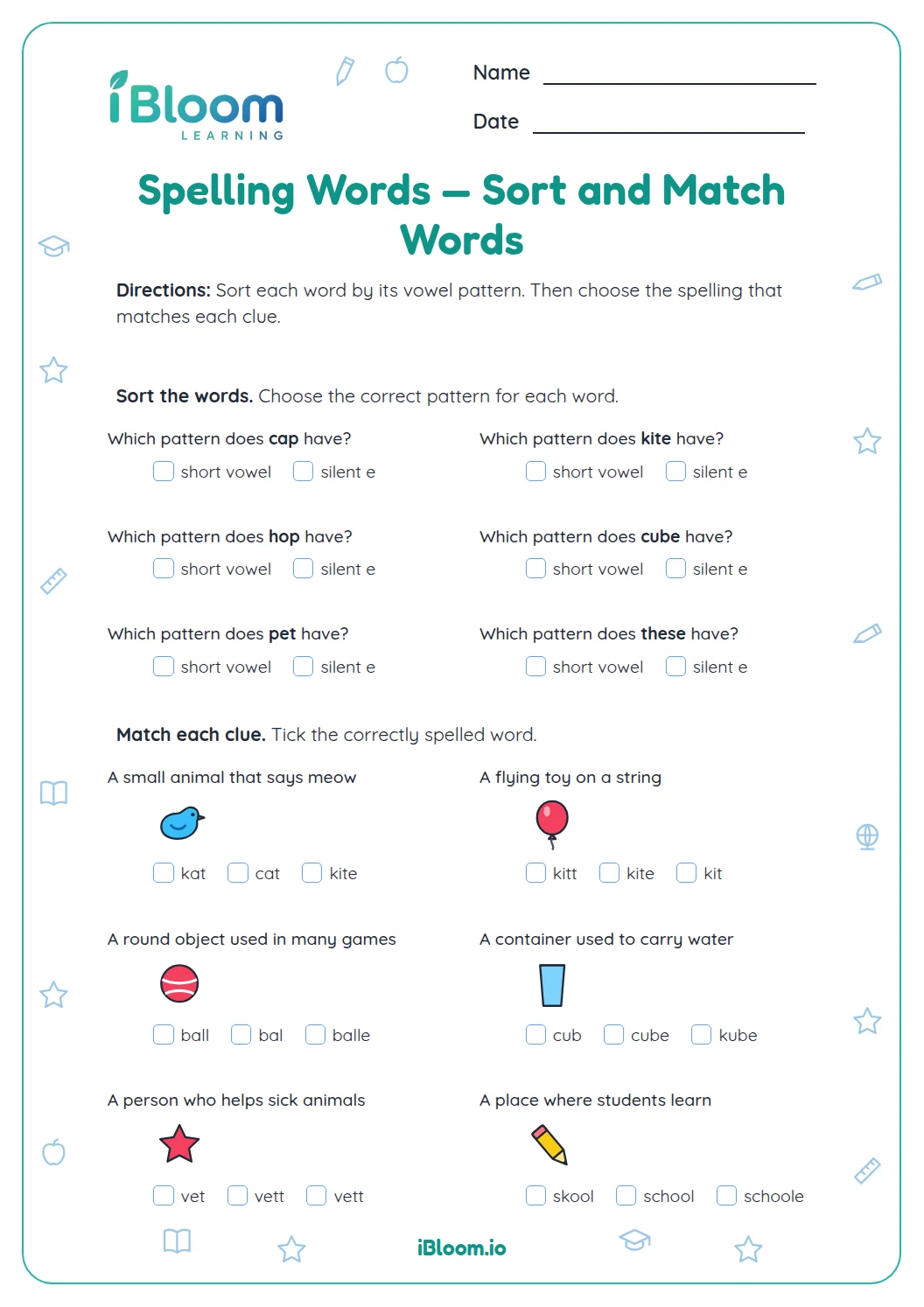
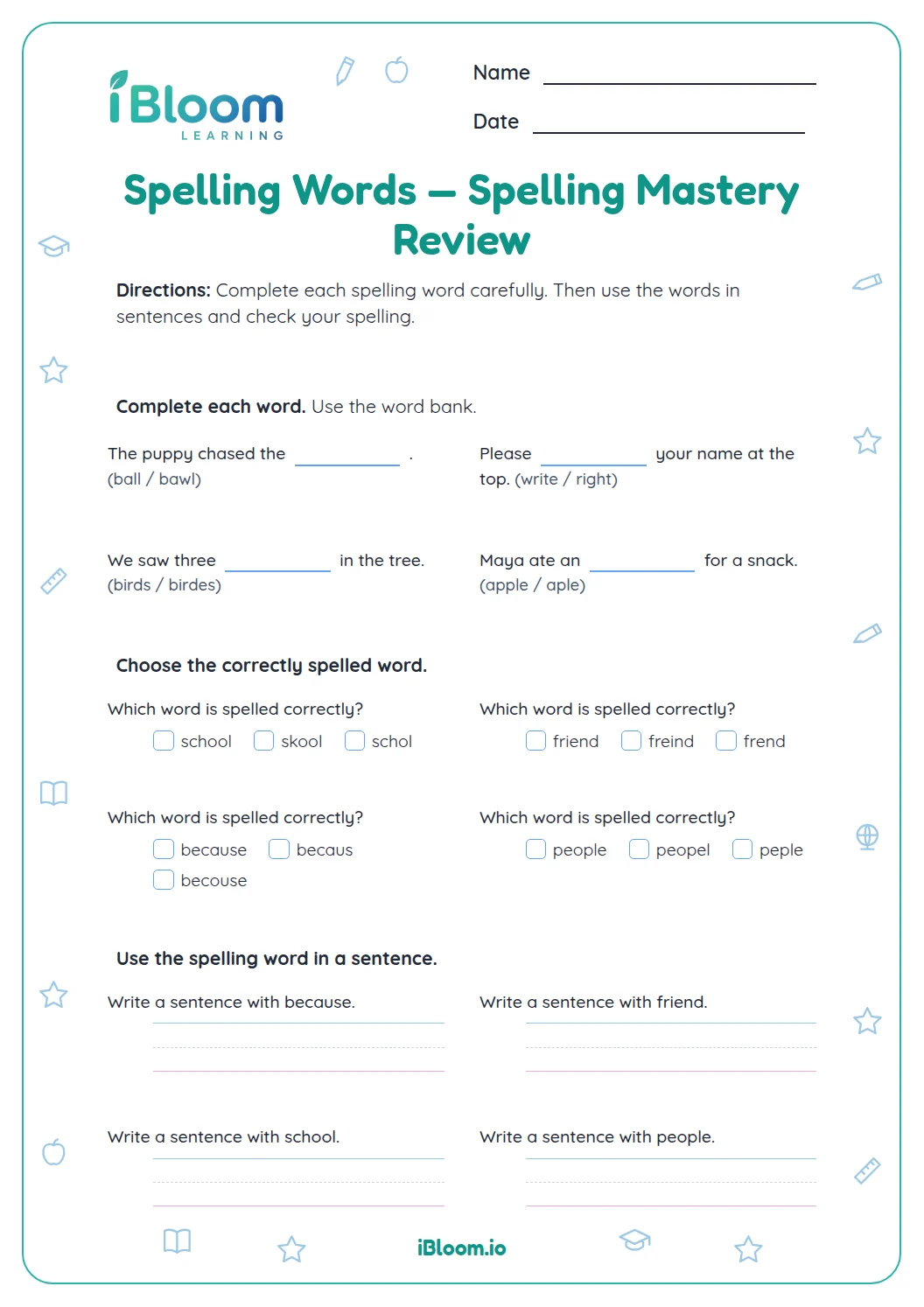
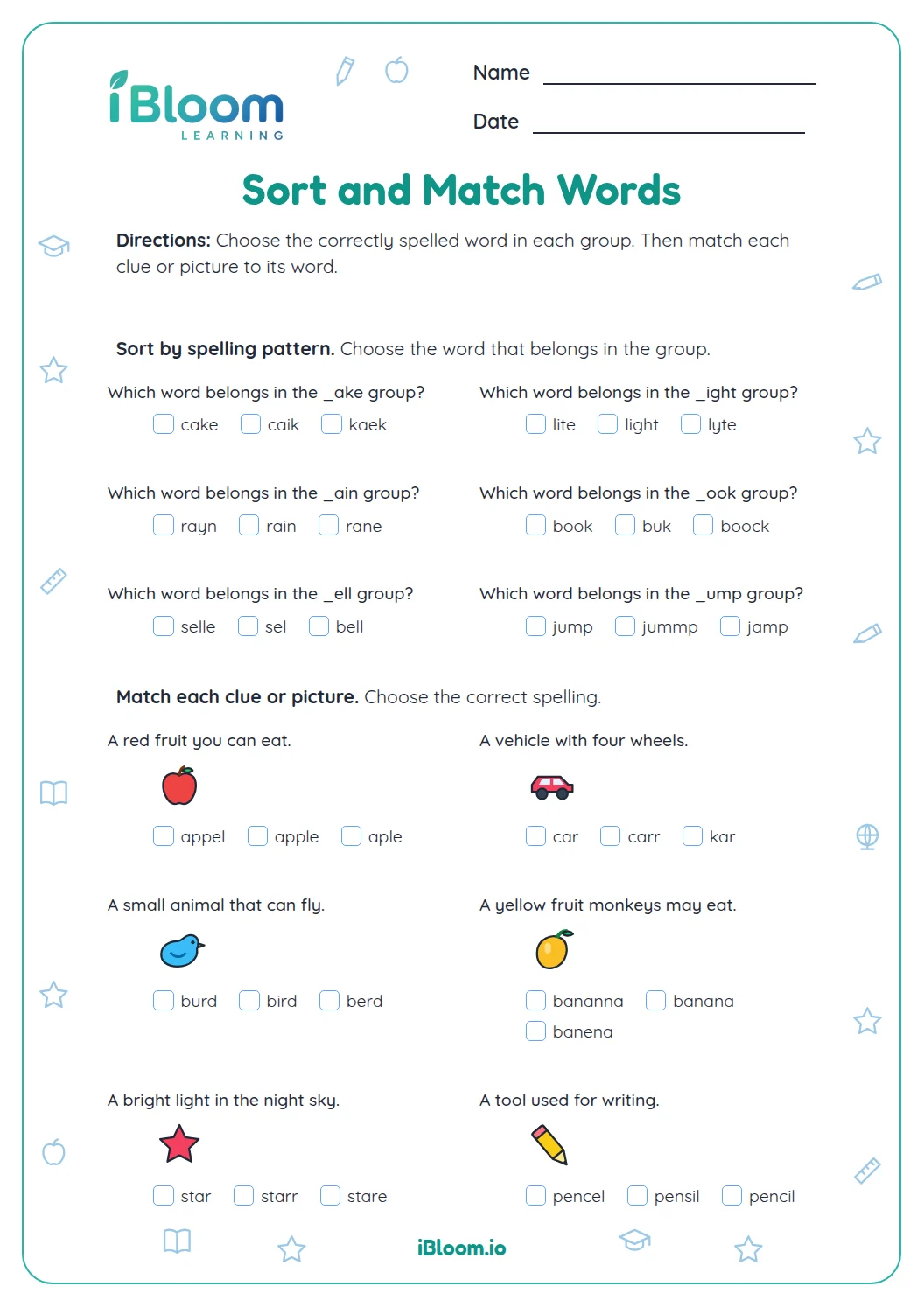
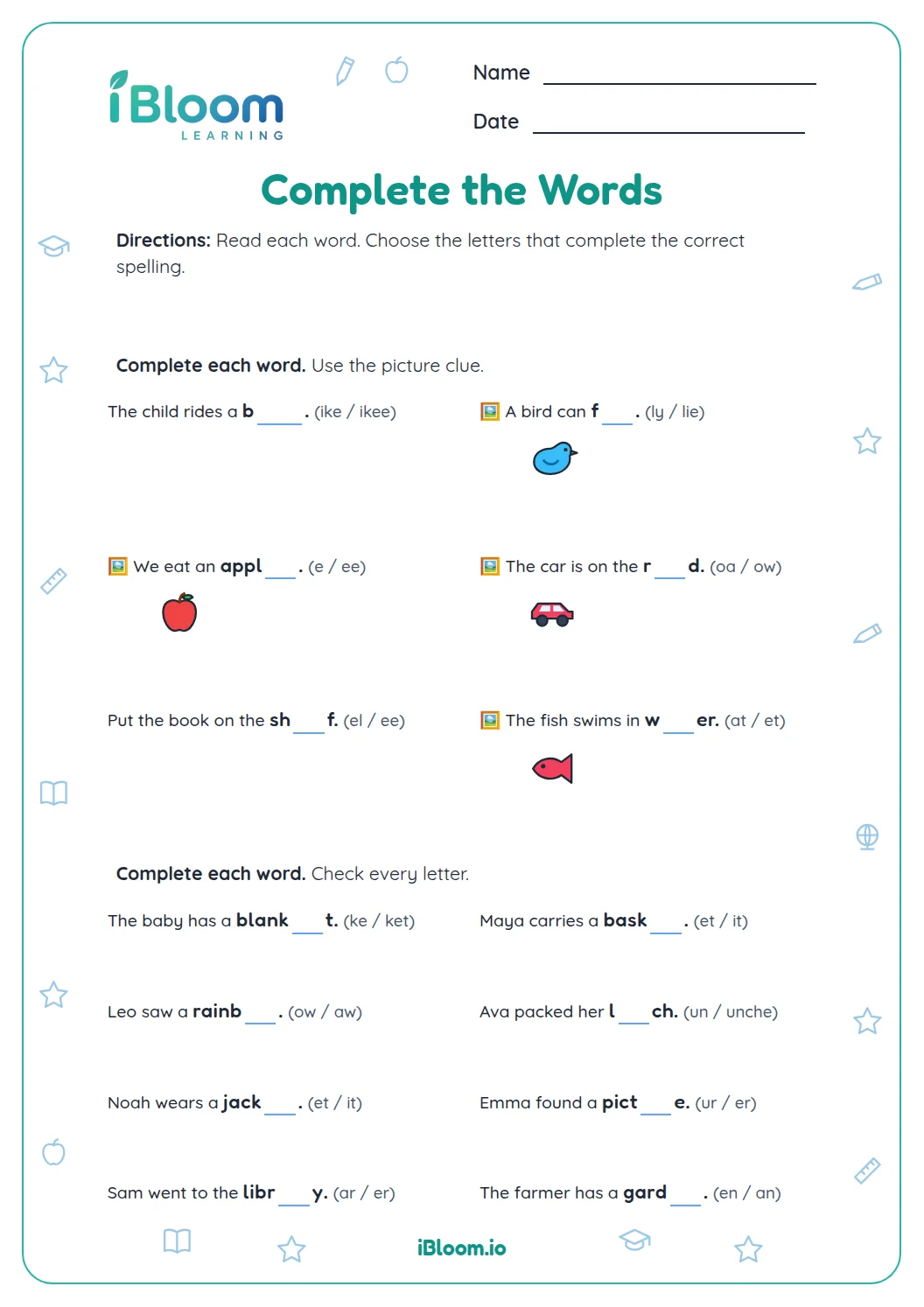
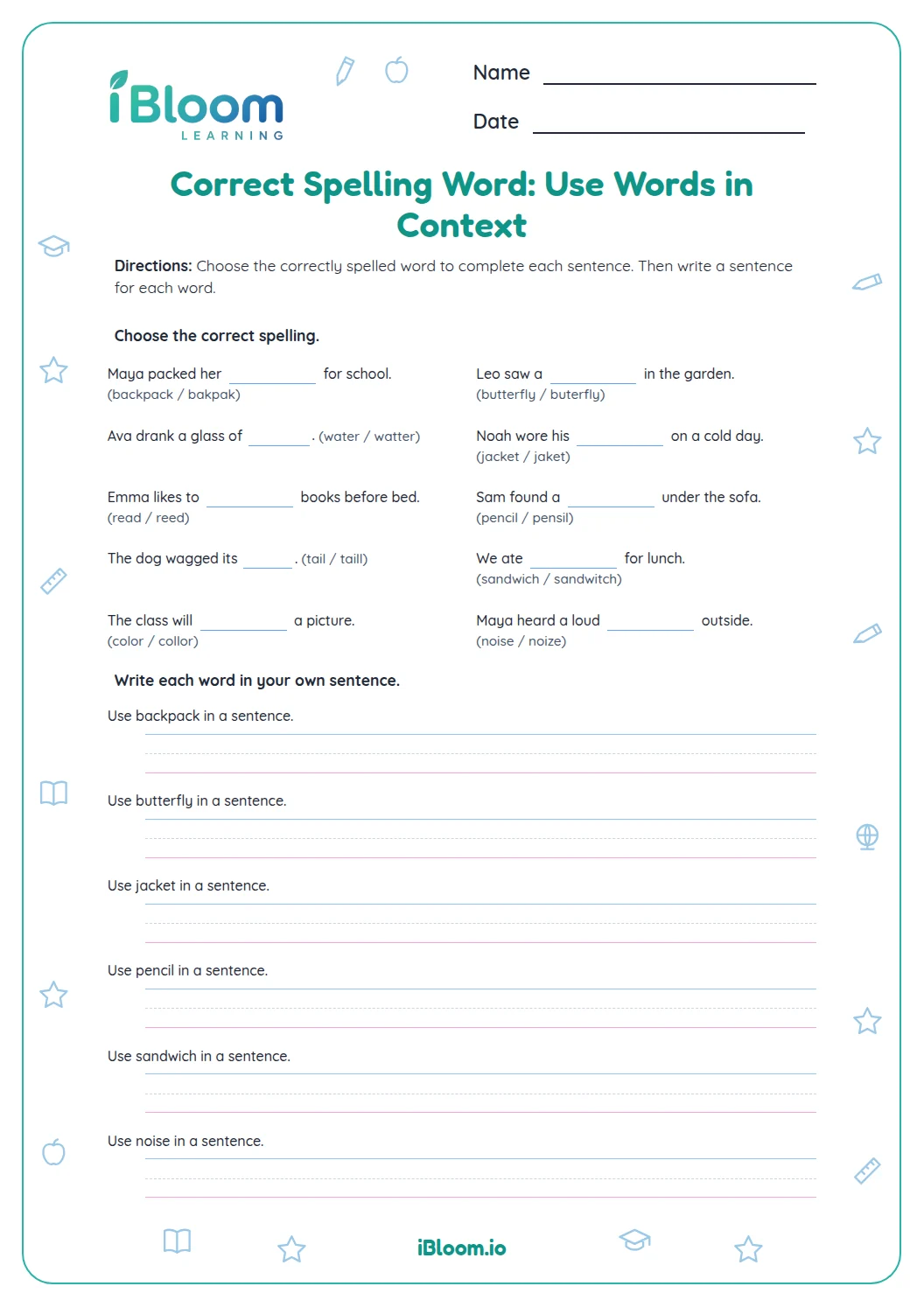
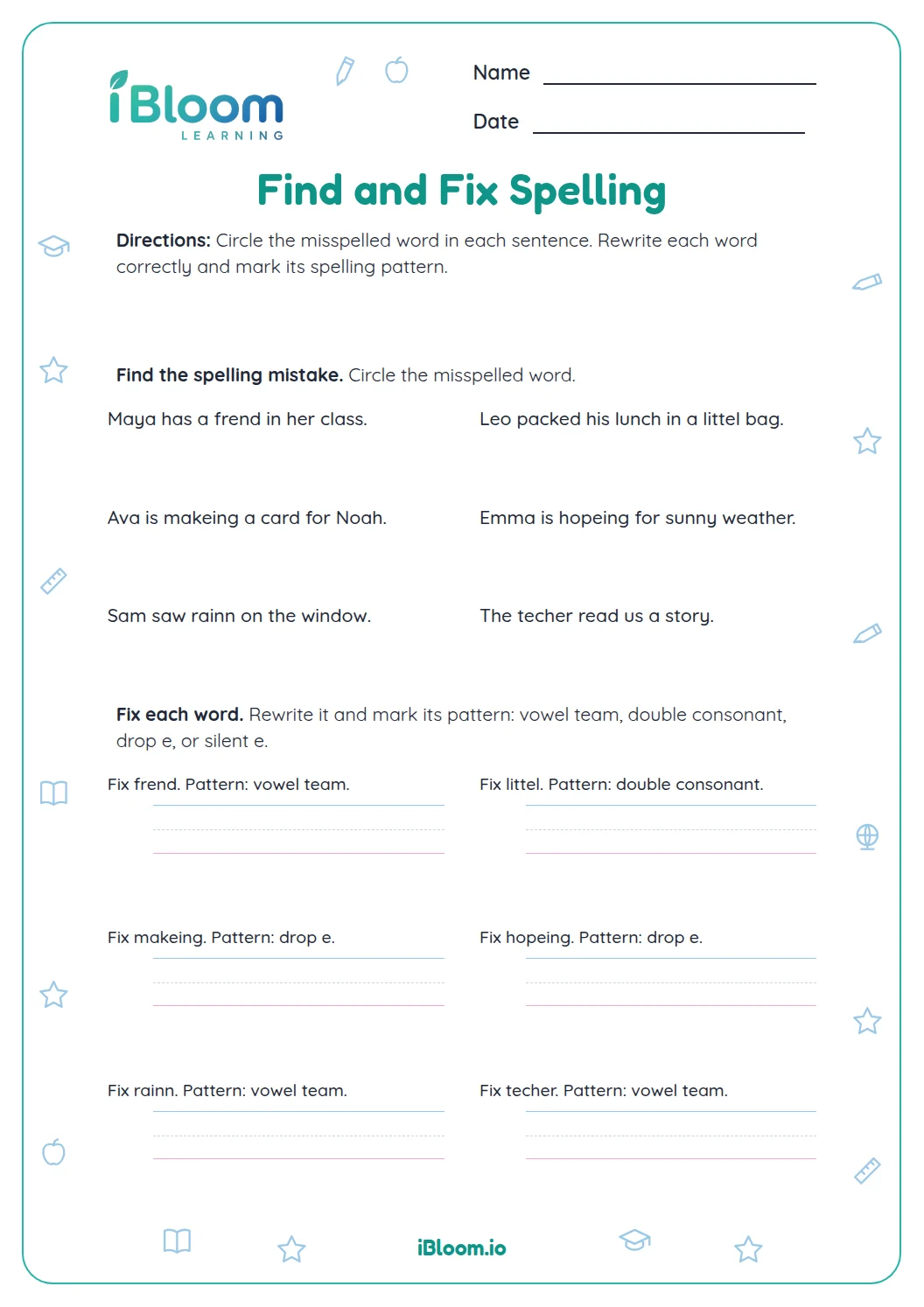
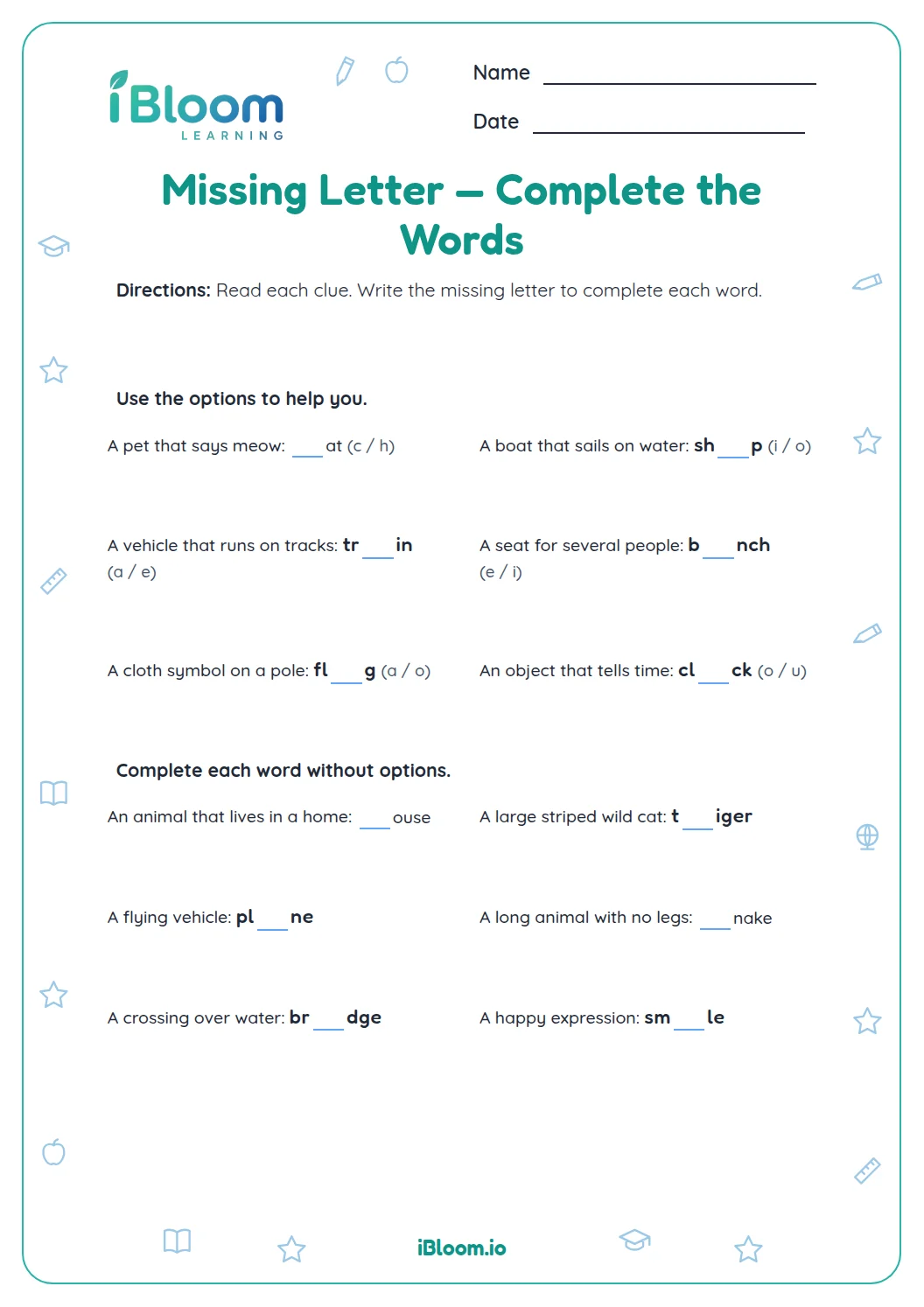
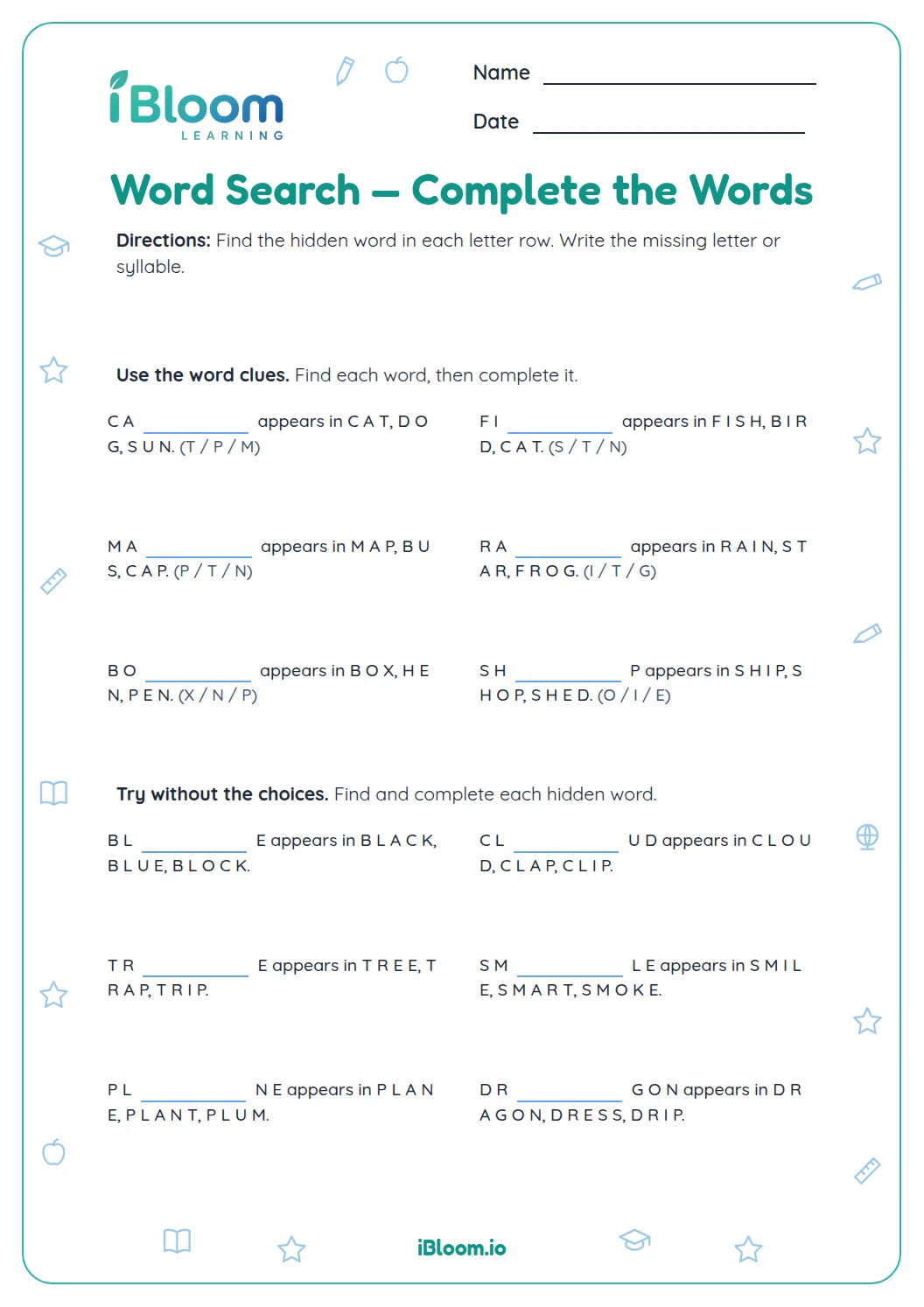
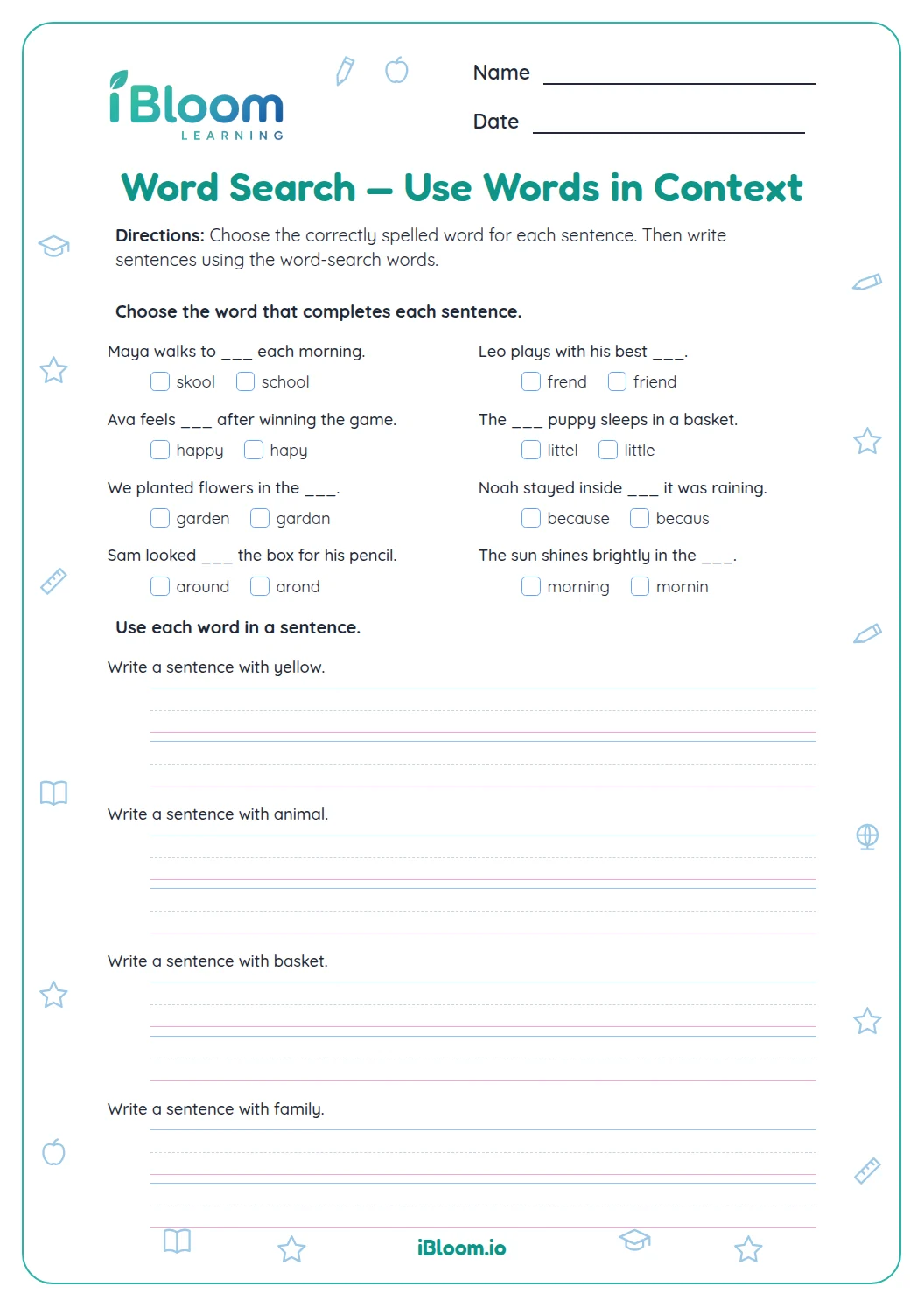
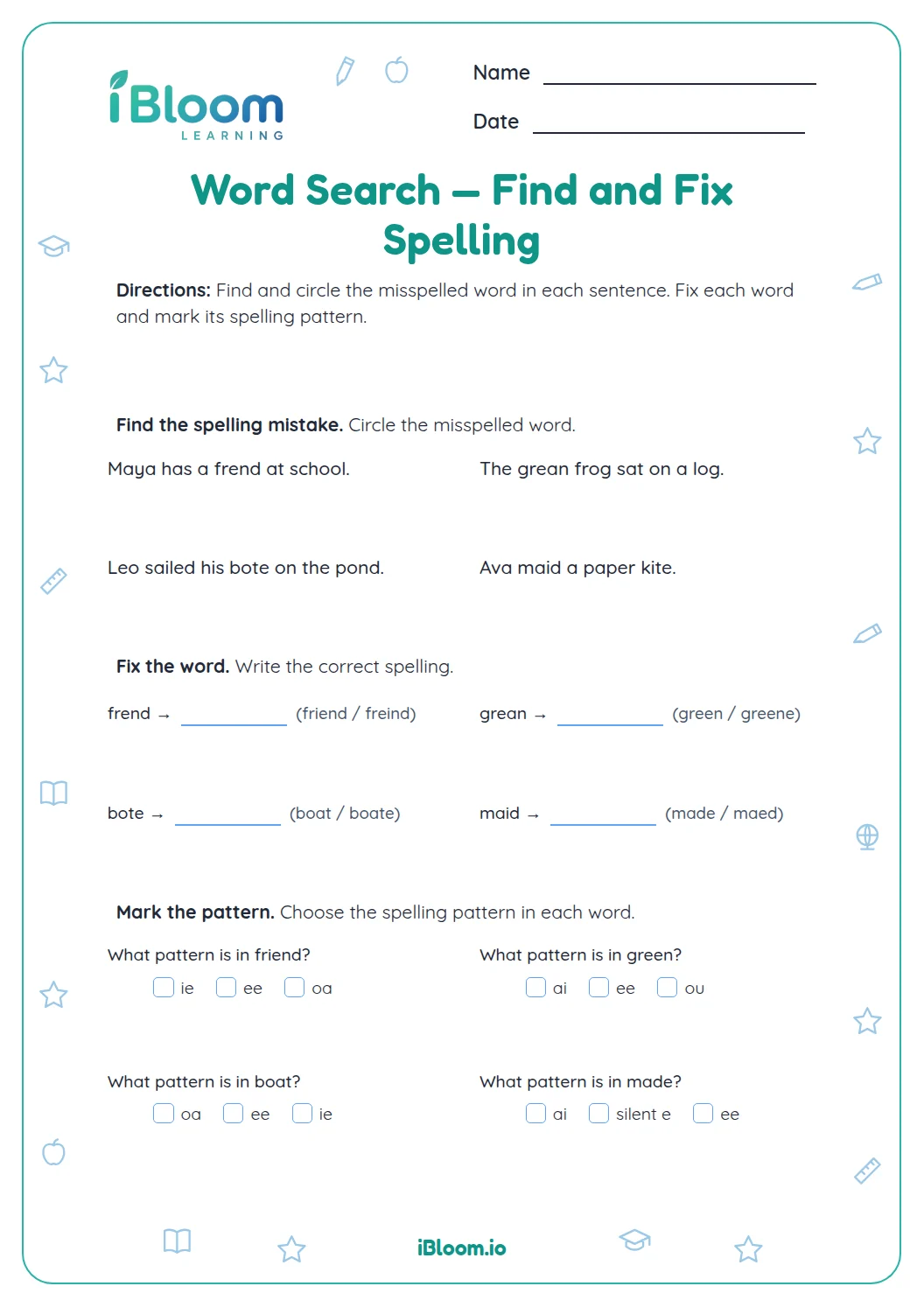
This spelling practice asks second graders to notice common spelling patterns in familiar words. Children first pick a correct spelling, then repair a misspelled word in context, and finish by checking sentences and using a word themselves.
Aligned to L.2.2.e and L.2.2.d
Notice the spelling pattern?
A misspelled word can look almost right. Read each choice from left to right and check the letters that make the sound. For example, friend has i before e, and a doubled consonant can matter in words such as puddle.
The first part of the worksheet gives a correctly spelled option among close look-alikes. Reading the whole sentence helps children make sure the chosen word also makes sense.
Find the word that needs a fix?
In the next part, one word in each sentence is spelled incorrectly. Say the word, compare its sounds with its letters, and write the corrected spelling.
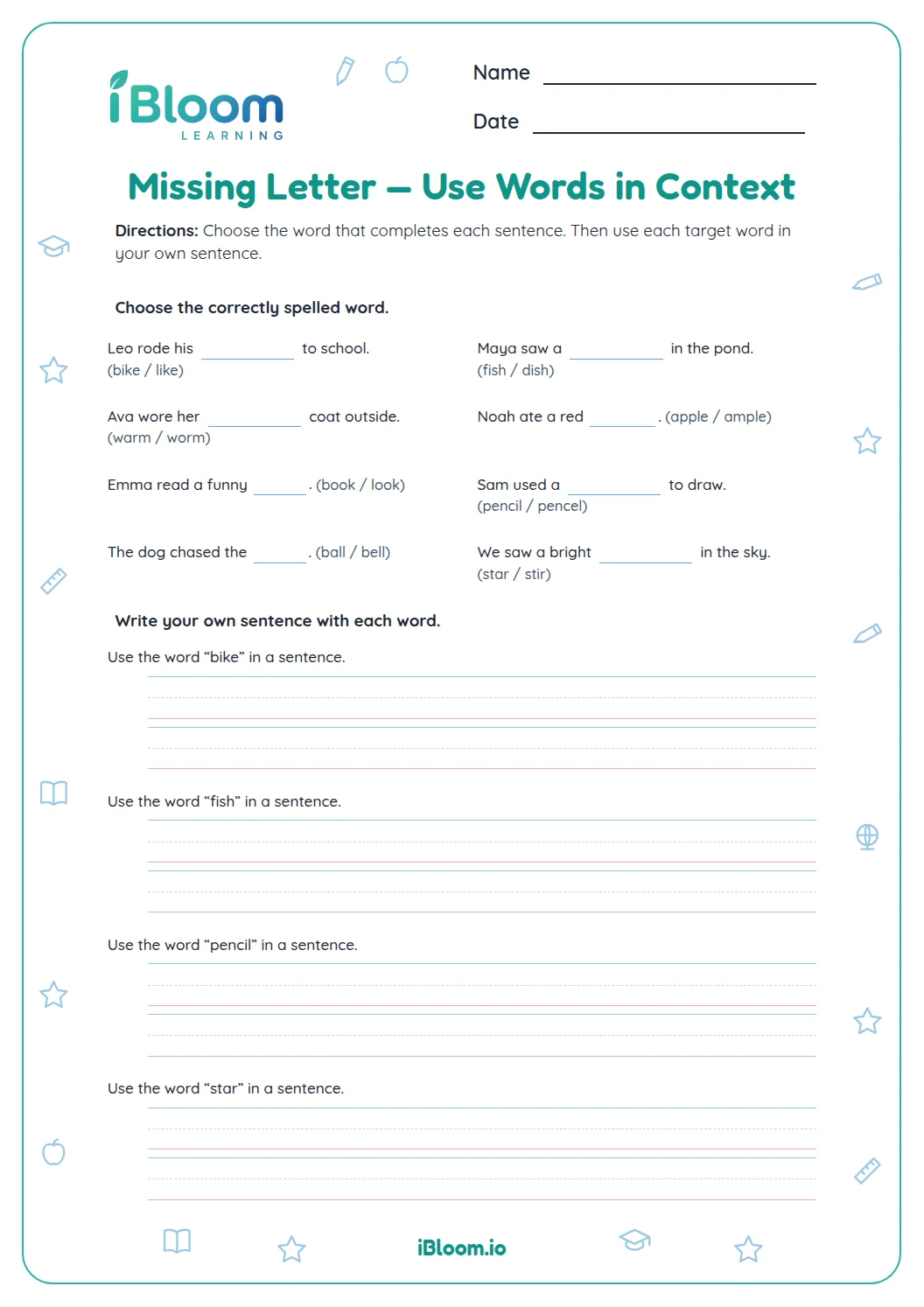
The final questions ask children to check a complete sentence and then use a spelling word in their own sentence. That last step connects accurate spelling with everyday writing.
How to use this worksheet
- 1Read the full sentence before choosing.
- 2Say each word slowly and look at the letters that spell its sounds.
- 3In the repair section, rewrite only the misspelled word.
- 4Read your own sentence again and check the spelling word.
Common mix-ups
The mistake
Choosing a word because it looks familiar without checking every letter.
The fix
Point to each letter while saying the word, then reread it in the sentence.
The mistake
Changing a correct word while fixing the misspelled one.
The fix
Find the single word that looks wrong and write its standard spelling.
The mistake
Leaving out a letter in a longer word such as sandwich.
The fix
Say the word slowly, then check each written letter.
The mistake
Leaving out a letter in a longer word such as sandwich.
The fix
Say the word slowly, then check each written letter.
The mistake
Leaving out a letter in a longer word such as sandwich.
The fix
Say the word slowly, then check each written letter.
Curriculum alignment
This worksheet gives focused practice with the skill named in its title.
Use spelling patterns and generalizations when writing words.
On this sheet: Learners identify and correct spelling errors in familiar words.
Show the official wordingHide the official wording
Consult reference materials, including beginning dictionaries, as needed to check and correct spellings.
Generalize learned spelling patterns.
On this sheet: The choice questions contrast common spelling patterns.
Show the official wordingHide the official wording
Generalize learned spelling patterns when writing words.
What to practice next
Make more practice
Further reading
Questions parents and teachers ask
How should a child check a spelling?
Children recognize standard spellings among close choices, repair misspellings in context, and use a spelling word in a sentence. The varied practice encourages careful reading of letter patterns rather than relying only on a word looking familiar at first glance.
Should children rewrite each full sentence?
For the correction questions, write the corrected word in the response space. There is no need to copy the full sentence. The final prompt is different: it asks the learner to make a new sentence with one correctly spelled word.
What can I do if my child is unsure?
Ask the learner to say the word slowly and point to the letters that seem tricky. Offer a dictionary or classroom word wall as a reference, then have the child reread the sentence to confirm the word makes sense.
What skills does this page practice?
Children recognize standard spellings among close choices, repair misspellings in context, and use a spelling word in a sentence. The varied practice encourages careful reading of letter patterns rather than relying only on a word looking familiar at first glance during a quick read.
How can an adult help with this page?
Read the directions aloud and let the learner try each item before offering a clue. Ask the child to point to the part of the word, picture, or sentence that supports the answer. The answer key can help an adult check responses and talk through any uncertain item.