



About this worksheet
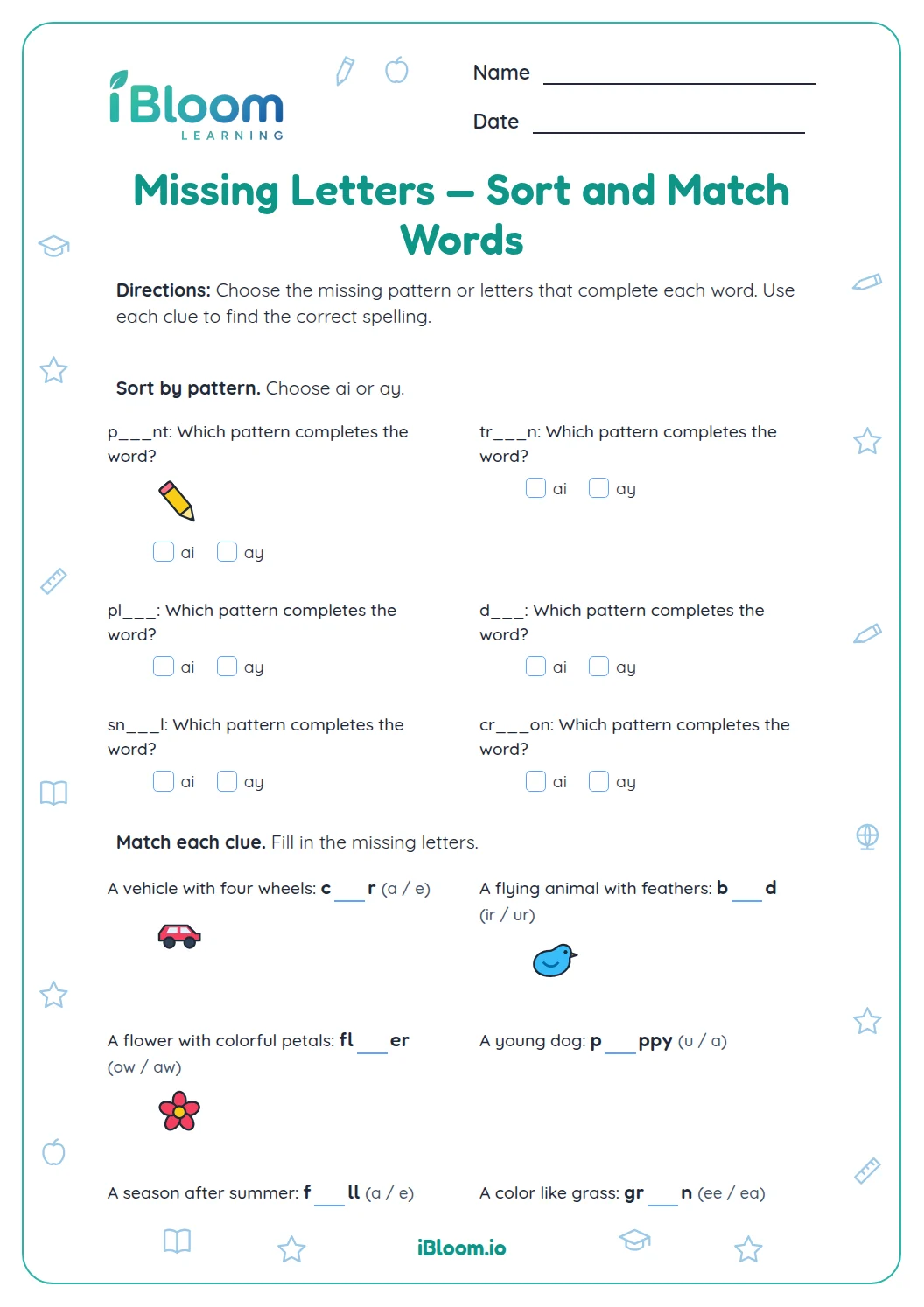
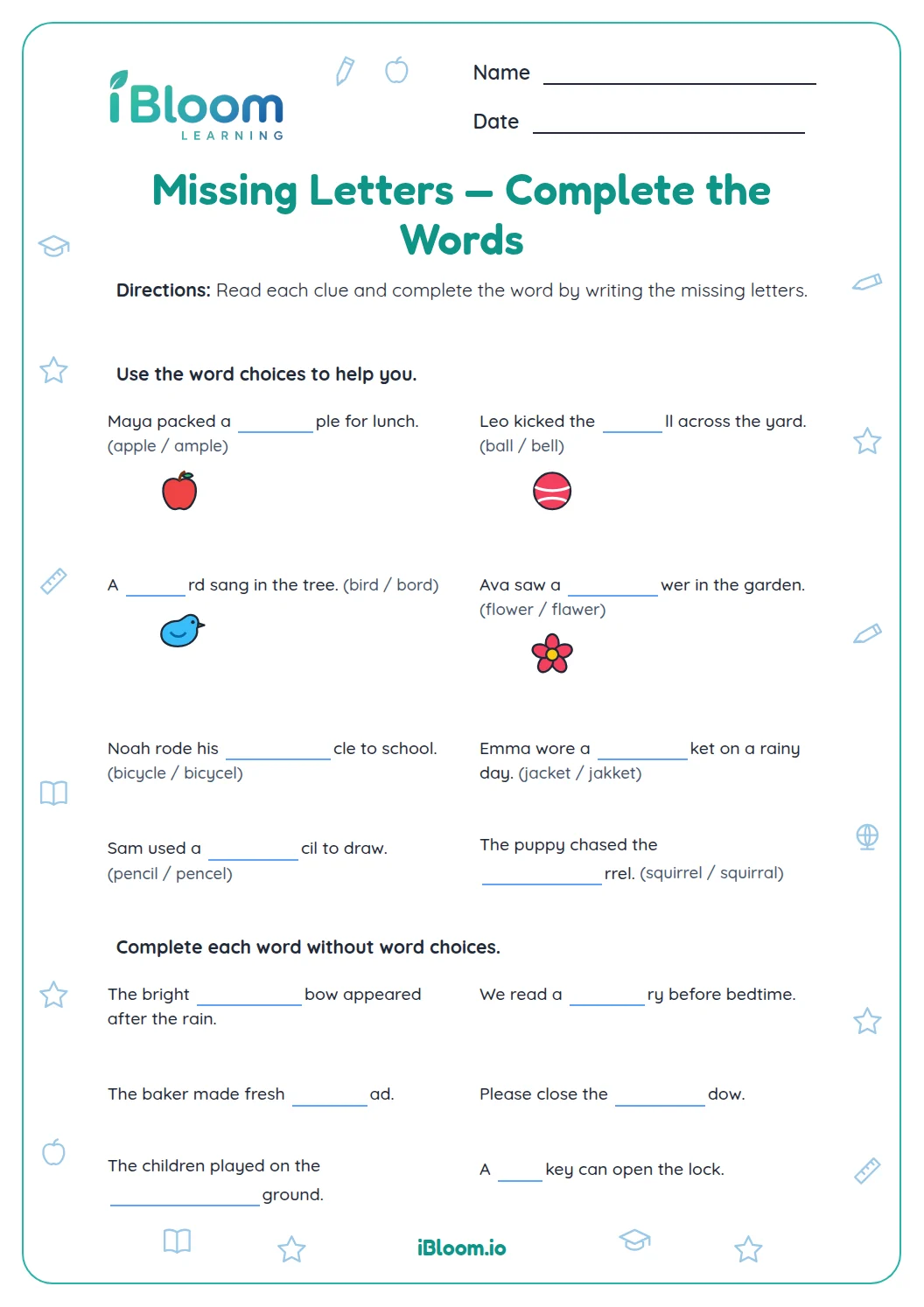
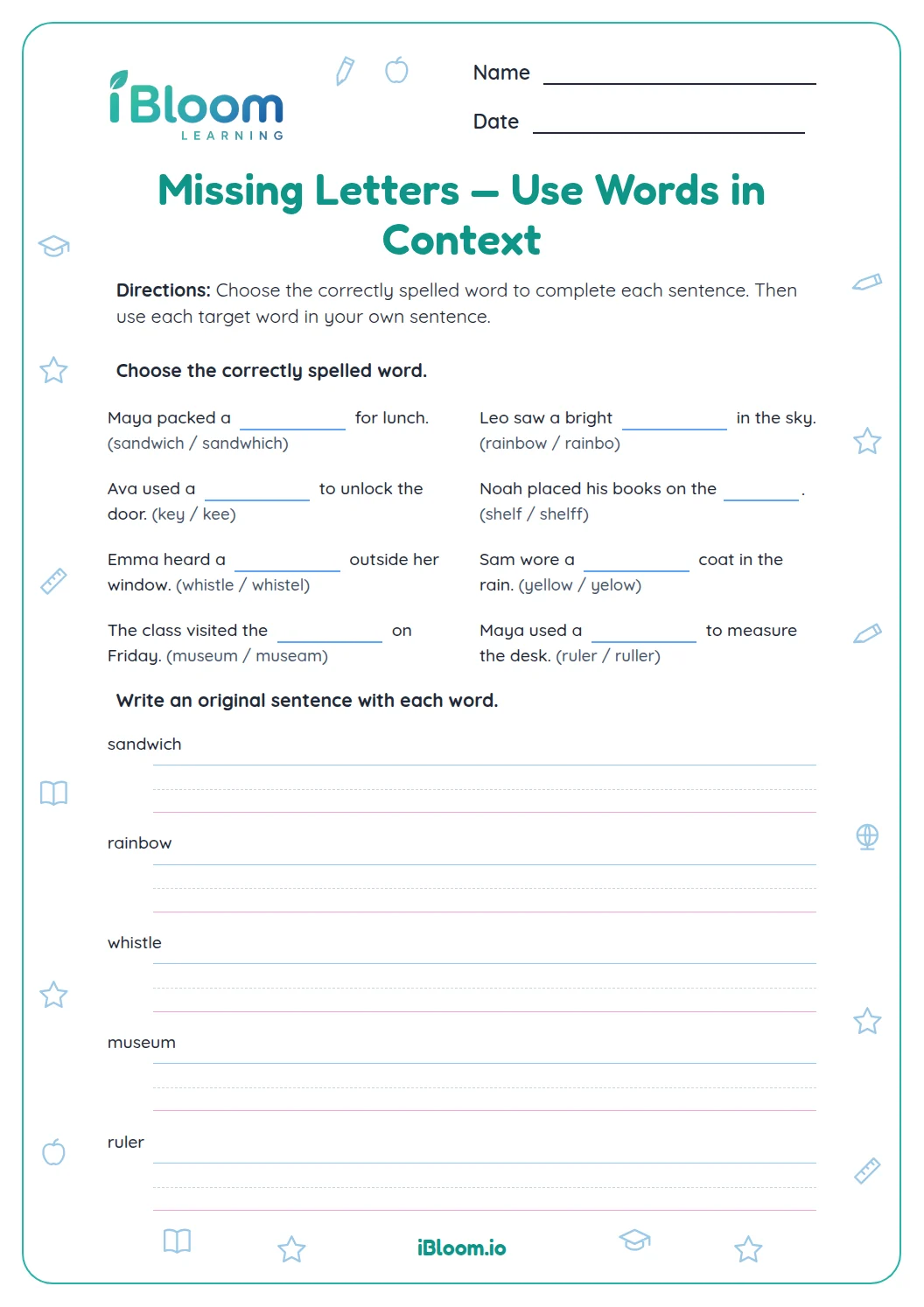
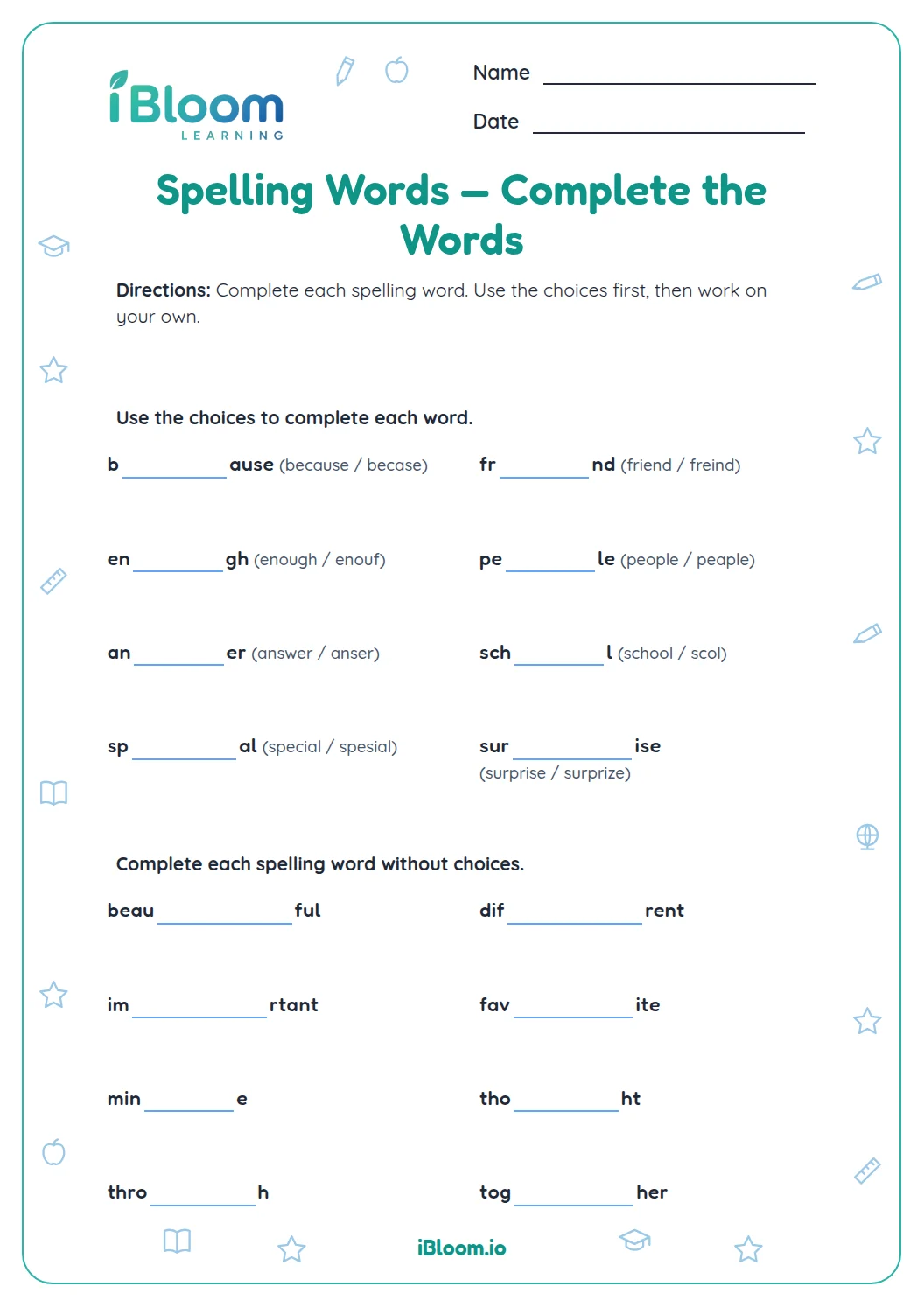
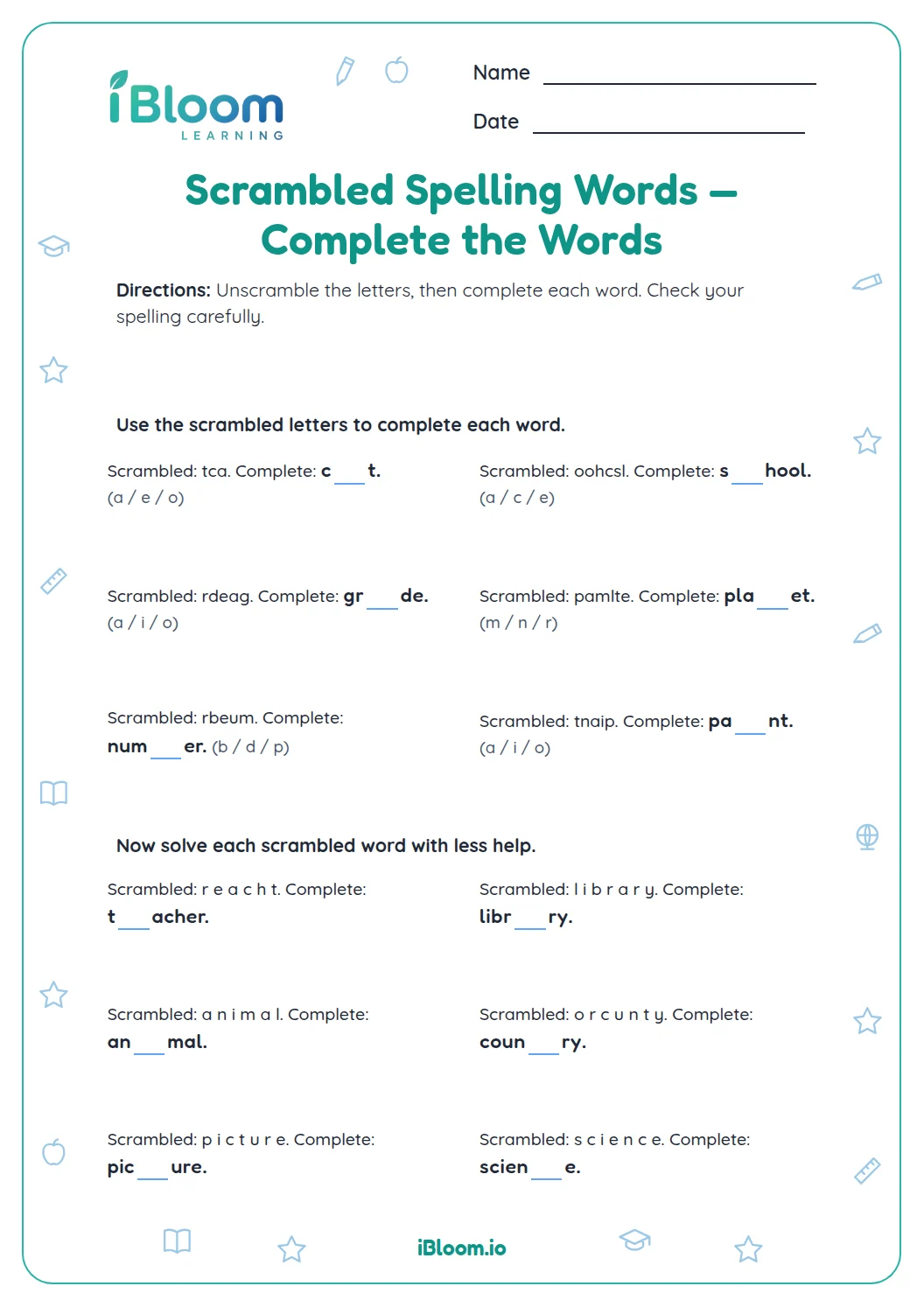
This Grade 3 printable gives students 18 chances to complete familiar words with missing letters. Part A uses definitions, Part B uses sentence meaning, and Part C mixes direct word clues with sentence context. The answer key shows the finished spelling for every prompt.
Aligned to CCSS.ELA-Literacy.L.3.2.f
How do the three parts use clues?
Part A gives a definition, such as “A person who teaches,” before the incomplete word. Part B places the incomplete word in a sentence. Part C mixes both approaches, so students need to read the clue and check the completed spelling.
How does a sentence clue help?
In Part B, “Ava used a pe___il to draw a map” points to pencil. Reading the whole sentence and then the completed word confirms the missing letters are nc.
How should families check the words?
After a part is complete, compare each whole word with the key. For a missed item, cover the key and ask the student to reread the clue, spell the word aloud, and write it again.
How to use this worksheet
- 1Read the definition or full sentence before filling letters.
- 2Say the complete word aloud.
- 3Write only the missing letters in the blank.
- 4Reread the whole word in its clue.
- 5Check the spelling with the answer key after finishing a part.
Common mistakes and quick fixes
The mistake
Filling in letters that make a different word.
The fix
Use the definition or sentence to name the intended word first.
The mistake
Checking only the blank instead of the whole spelling.
The fix
Read every letter in the completed word from left to right.
The mistake
Skipping the sentence meaning.
The fix
Reread the sentence and confirm the word makes sense there.
Curriculum alignment
This practice aligns with the following Common Core standard.
Students use spelling patterns and generalizations to complete words.
On this sheet: The worksheet asks students to practice this skill across its questions.
Show the official wordingHide the official wording
Use spelling patterns and generalizations (e.g., word families, position-based spellings, syllable patterns, ending rules, meaningful word parts) in writing words.
What to practice next
Make more practice
Further reading
Questions parents and teachers ask
What does this Grade 3 missing-letters worksheet include?
It has 18 incomplete words in three parts. Students use definitions in Part A, sentence context in Part B, and a mixture of both clue types in Part C; a two-page key lists the completed words. Invite the student to say the complete word, reread its clue, and explain how the letters fit.
How do students know which letters to add?
They read the clue to identify the whole word, then use the letters already printed to see what is missing. Rereading the completed word and sentence helps confirm both spelling and meaning. Invite the student to say the complete word, reread its clue, and explain how the letters fit.
Can a student complete the sheet independently?
Yes, once the student understands the directions. An adult may model one definition clue, then let the student work through the sentence clues and use the key after completing a part. Invite the student to say the complete word, reread its clue, and explain how the letters fit.
How should I use the answer key?
Check the key after the student finishes a group of prompts. If a spelling differs, return to its definition or sentence and have the student identify the word before correcting the missing letters. Invite the student to say the complete word, reread its clue, and explain how the letters fit.
How long does this worksheet take?
Plan for about 15 minutes, with extra time if the student writes each complete word for additional practice. The three parts can also be completed separately, with the answer key used after each part. Invite the student to say the complete word, reread its clue, and explain how the letters fit.