



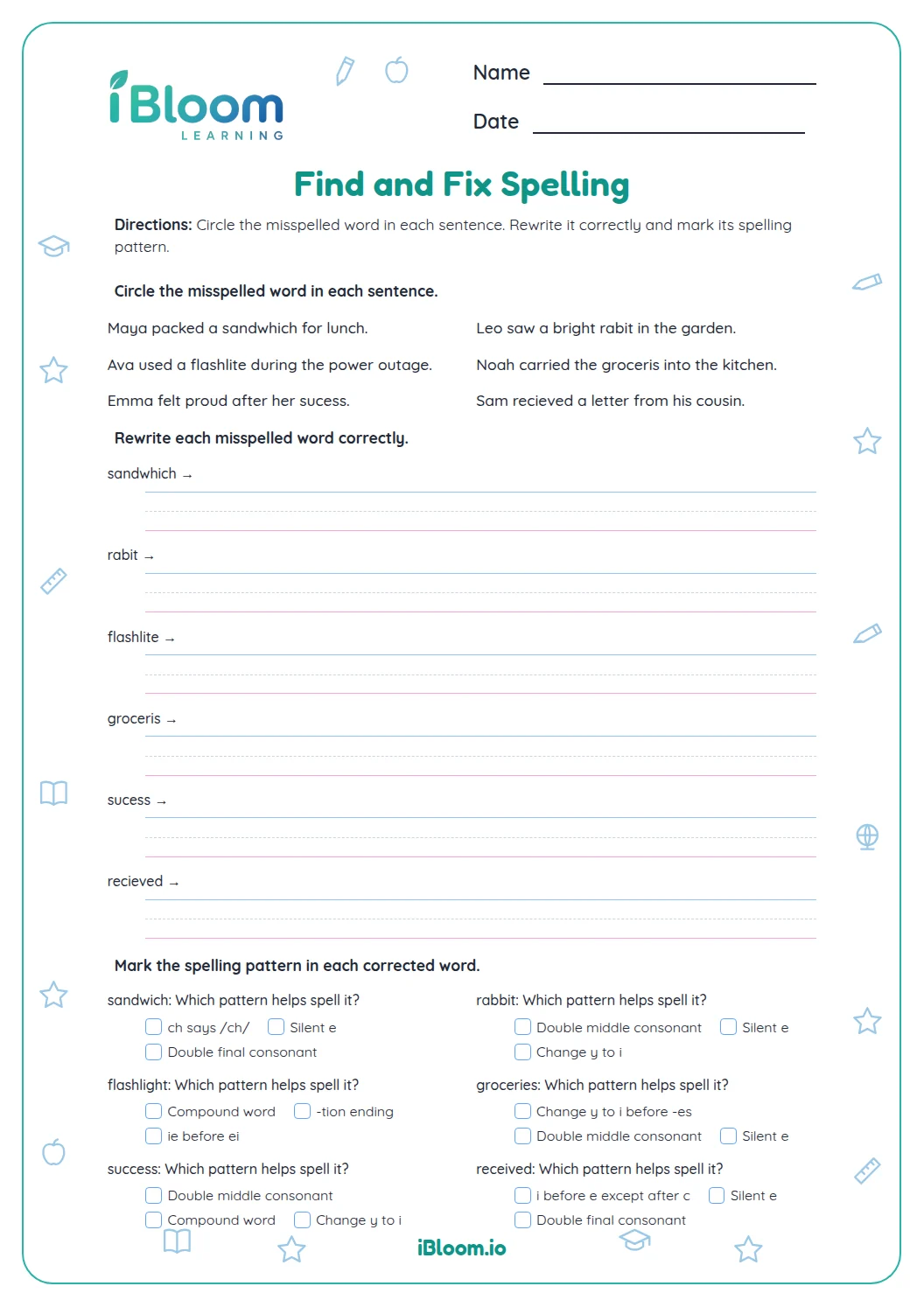
About this worksheet
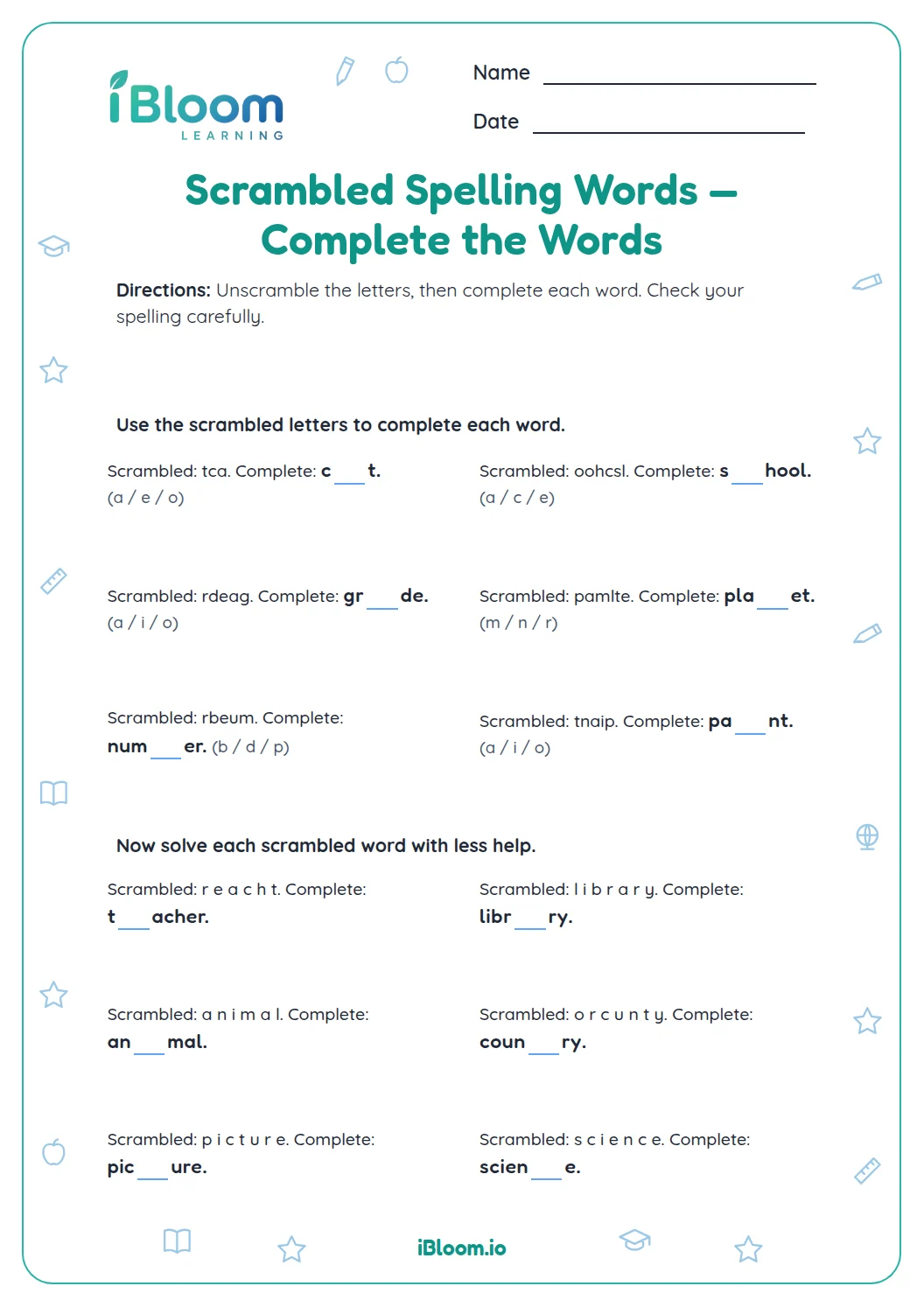
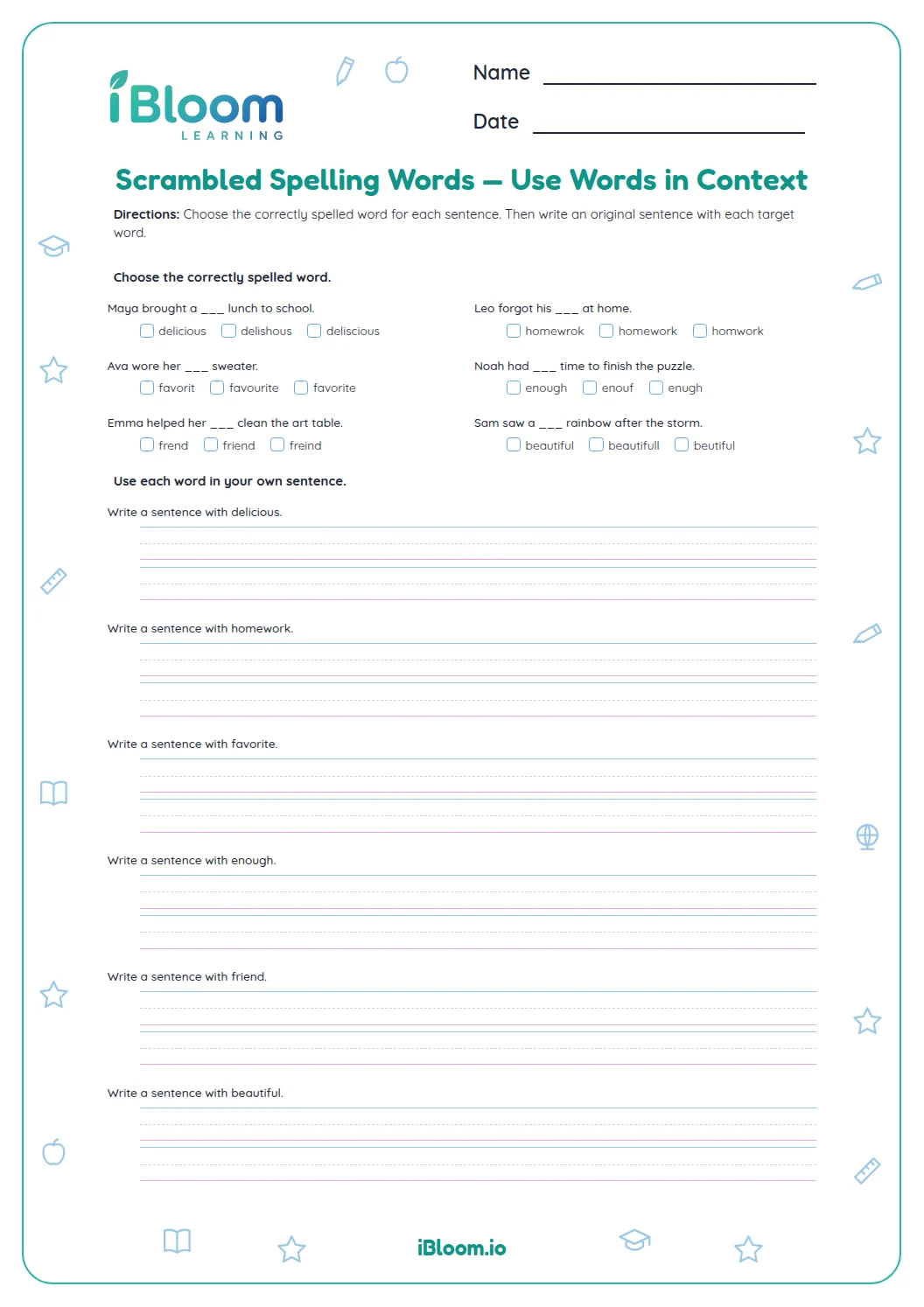
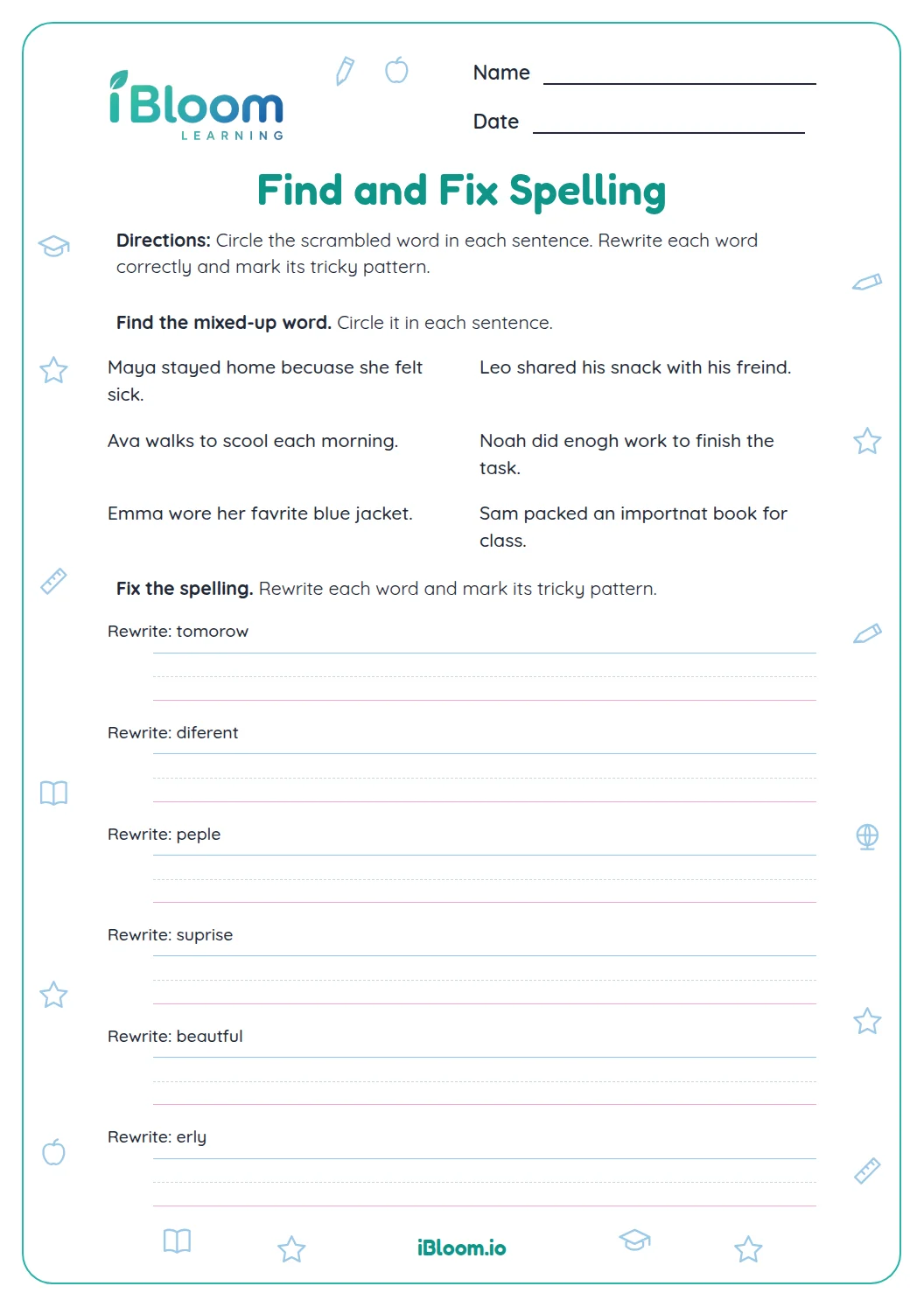
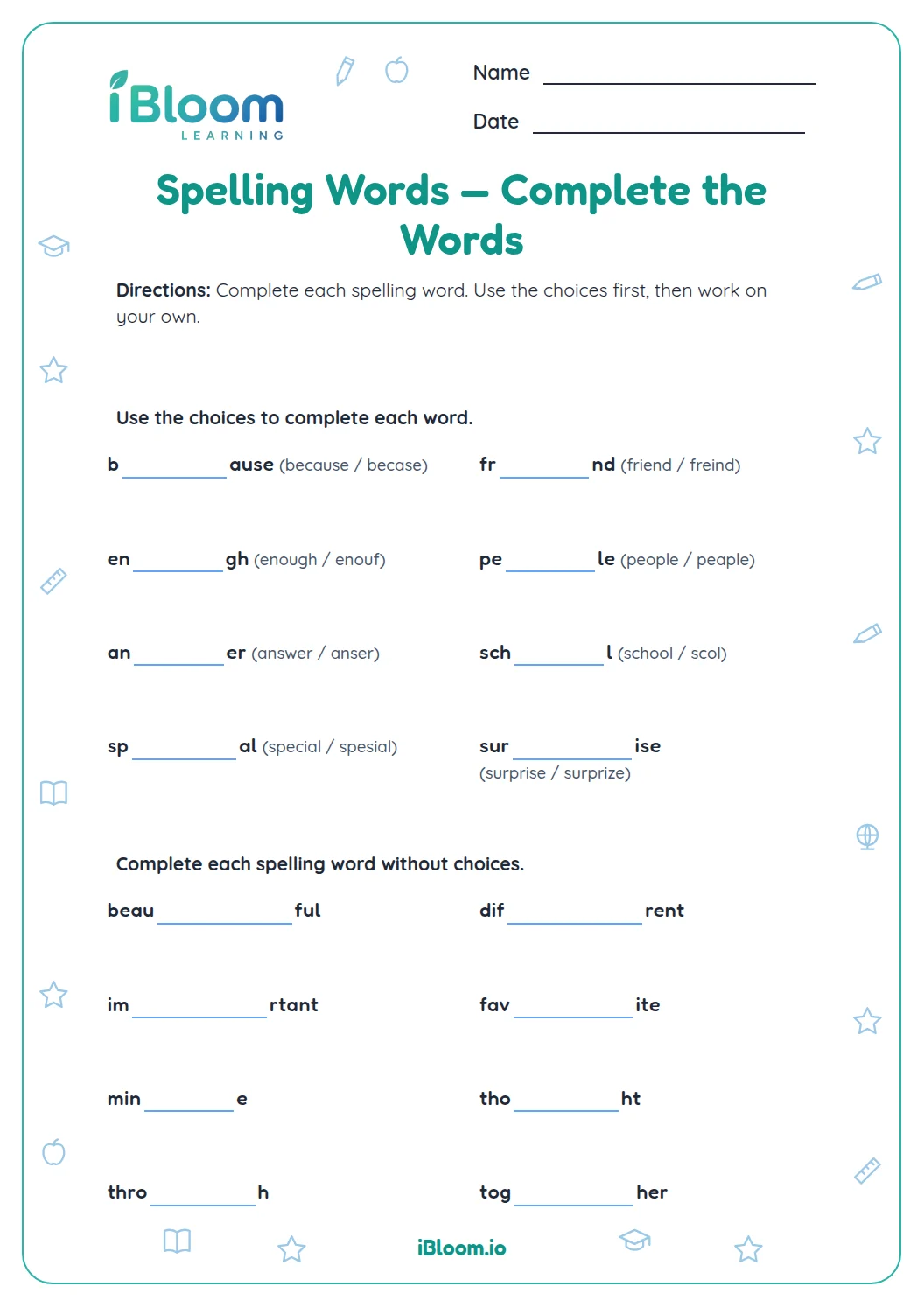
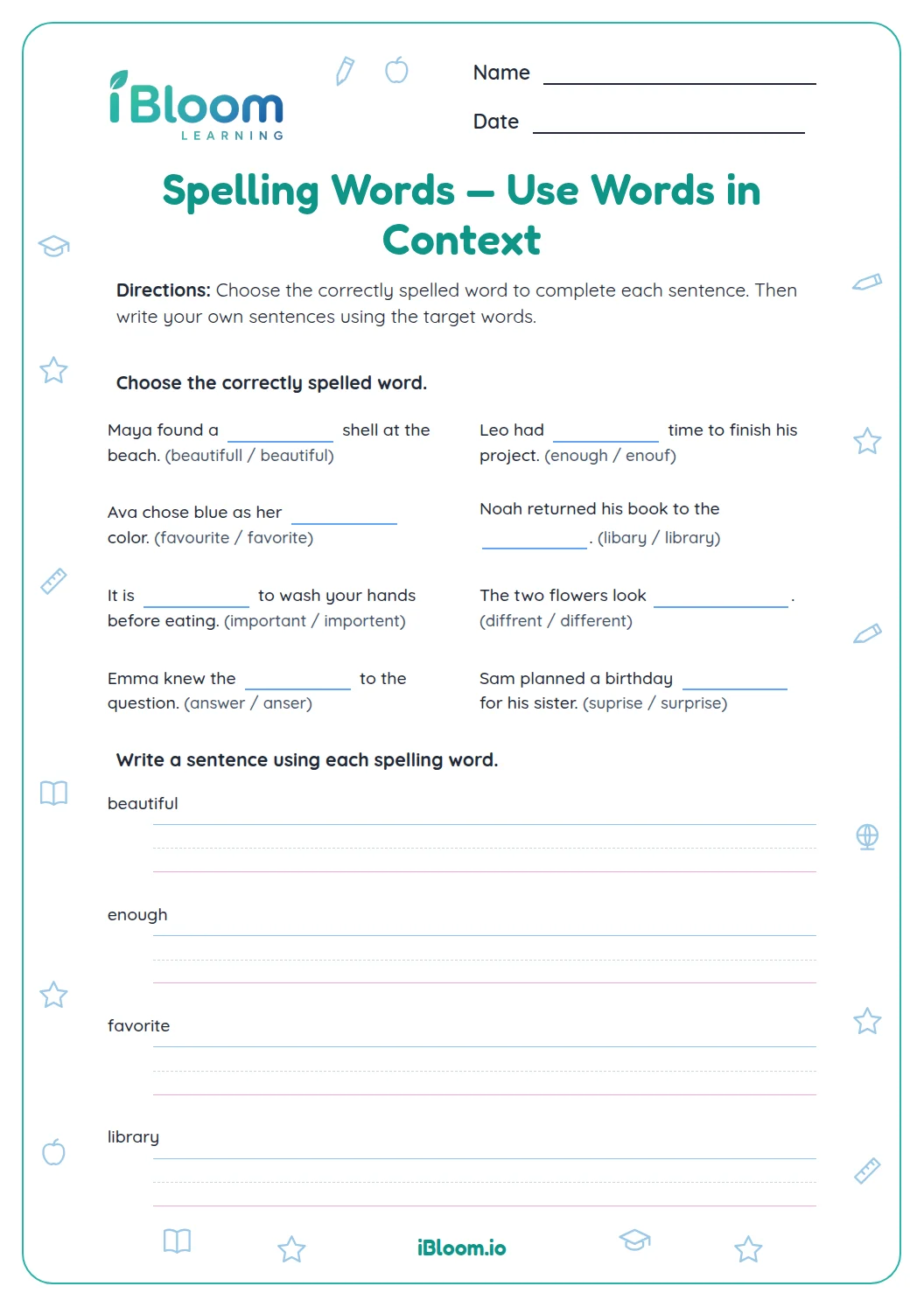
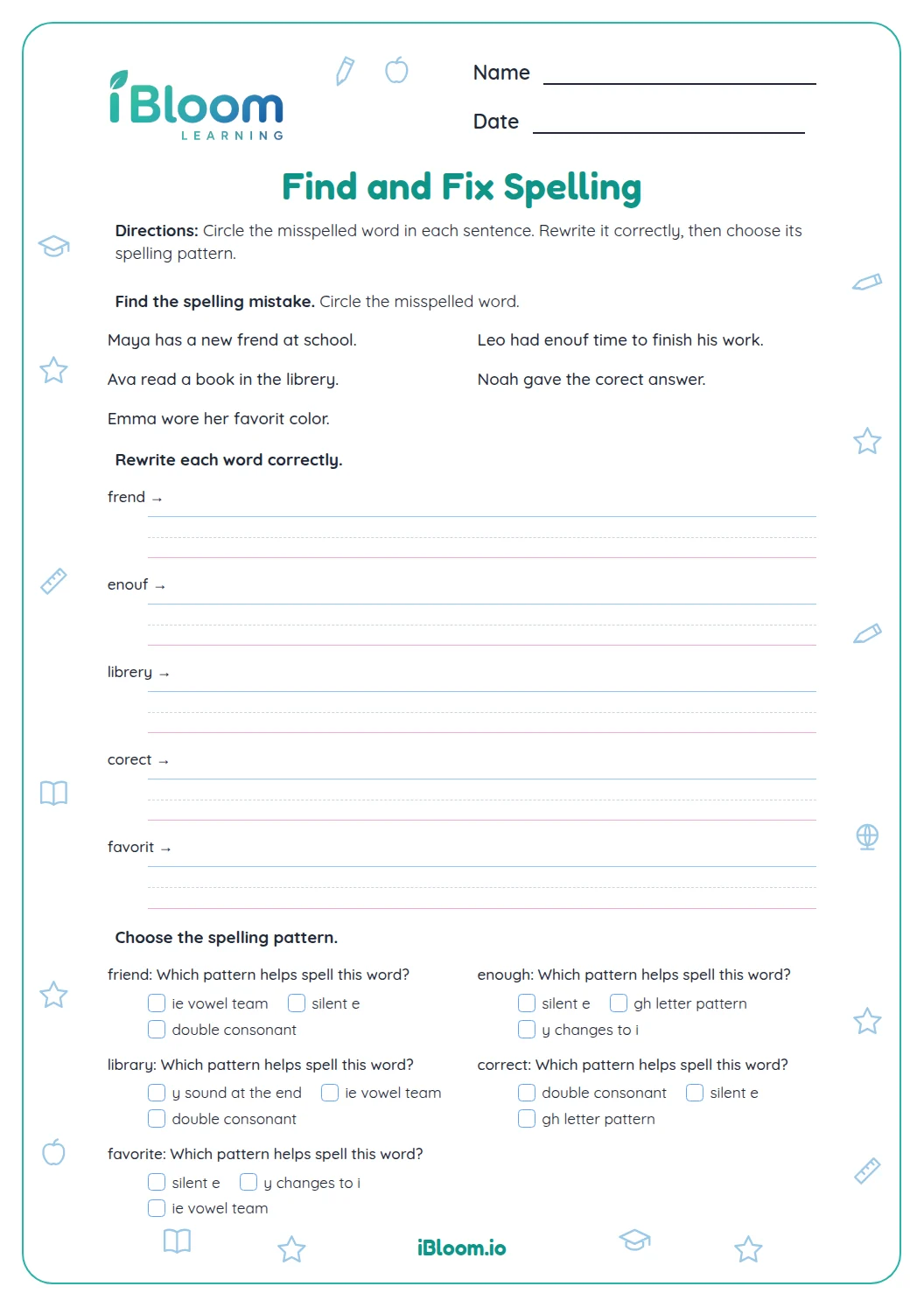
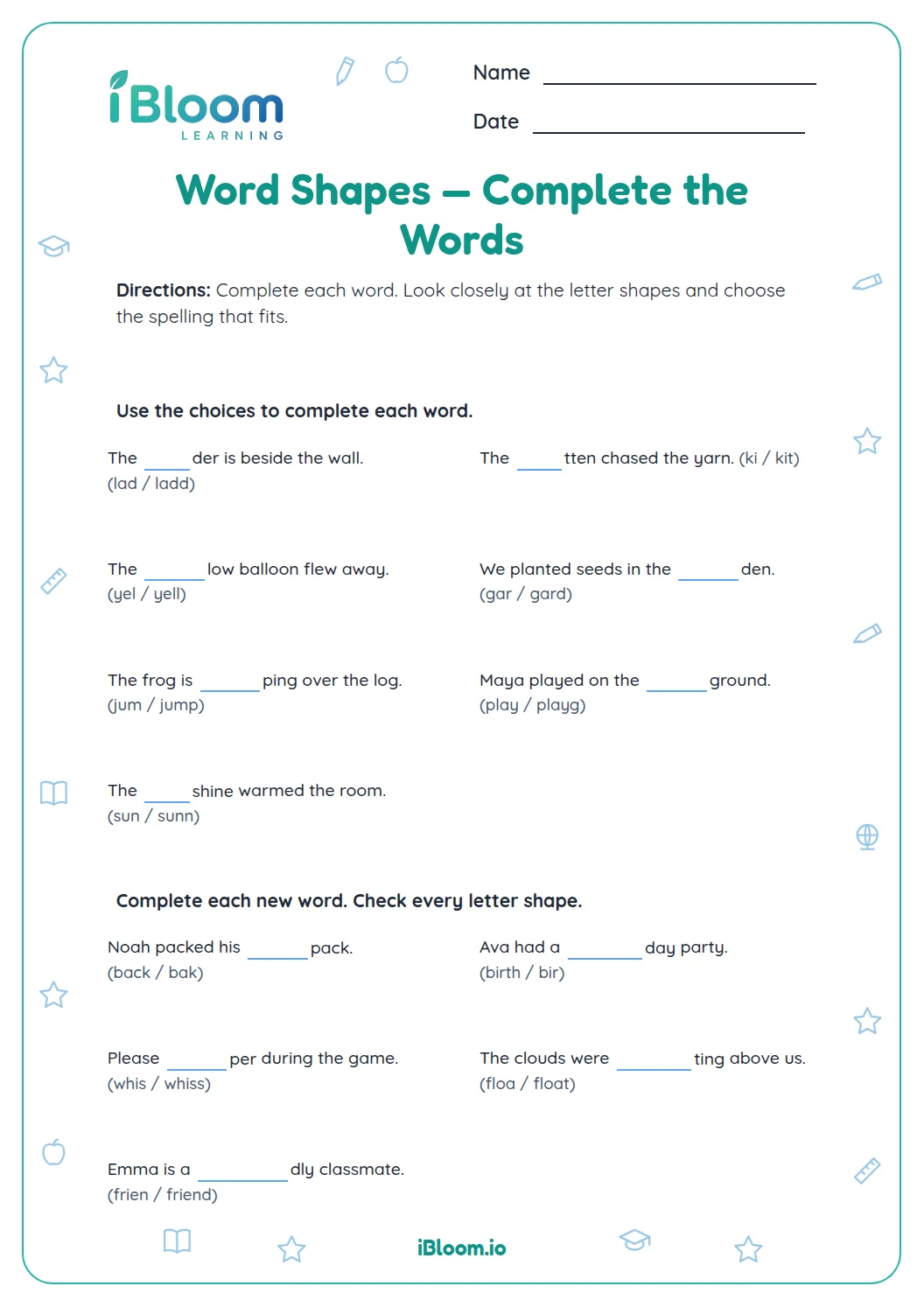
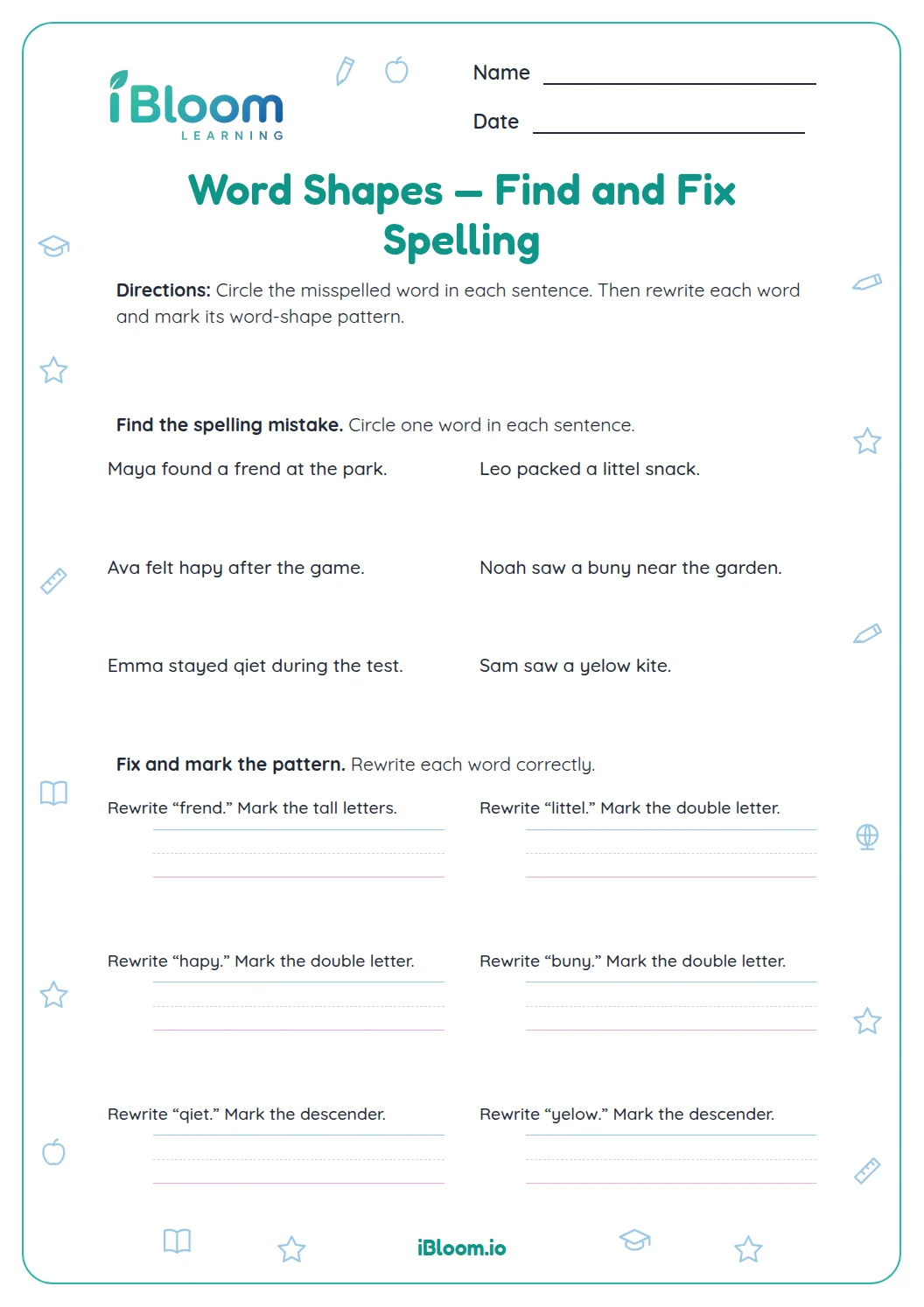
This Grade 3 spelling worksheet replaces the minimal original prompt with 15 target words. Students unscramble five words, identify spelling patterns in five solved words, and match five definitions to correctly spelled words. The practice supports conventional spelling in writing, including Common Core L.3.2.e. A separate answer key lists the words and correct choices.
Aligned to L.3.2.e
How can I solve a scrambled spelling word?
Look for a vowel pattern or a letter pair that often stays together. Rearrange the letters, then read the candidate word aloud and check that every letter is used once. For question 1, d-e-n-g-r-a rearranges to garden.
In Part B, sort the completed words by their vowel sound. In Part C, write each word in a sentence so its spelling is used in context.
- 1Scramble: dengra
- 2Try the ending -en and beginning g-
- 3Rearrange: g-a-r-d-e-n
- 4Answer: garden
What should I notice after unscrambling?
After solving a word, look for a spelling feature such as silent e, a vowel team, or a familiar letter group. In Part B, select the vowel pattern present in each target word. This checks attention to letter sequences as well as whole-word spelling.
How does matching a definition support spelling?
In Part C, read each clue and choose the correctly spelled word that matches its meaning. The other choices are target words from the page, so students need to connect the clue to the right word and check its spelling.
How can I use this worksheet?
- 1Copy the scrambled letters carefully.
- 2Try common vowel teams and consonant blends.
- 3Rearrange each letter exactly once.
- 4Read the word and check its spelling.
- 5Use each word in a complete sentence in Part C.
Common mistakes and quick fixes
The mistake
Leaving out a letter while rearranging.
The fix
Compare the letters in the answer with the original scramble one by one.
The mistake
Choosing a word that fits only some letters.
The fix
Use every letter exactly once and reread the result.
The mistake
Changing a word spelling in a sentence.
The fix
Copy the solved word into the sentence and check it again.
Curriculum alignment
This worksheet practices the skills described in these Common Core standards.
Use conventional spelling patterns and generalizations when writing words.
On this sheet: Students reconstruct familiar grade-level words and apply their spelling in writing.
Show the official wordingHide the official wording
Use conventional spelling for high-frequency and other studied words and for adding suffixes to base words (e.g., sitting, smiled, cries, happiness).
What to practice next
Make more practice
Further reading
Questions parents and teachers ask
What does the spelling worksheet ask students to do?
Students first unscramble five words, then identify the vowel spelling pattern in five words, and finally match five definitions to correctly spelled choices. The answer key lists the solved words, pattern choices, and definition matches. These sections move from spelling a word to noticing how its vowel sound is written.
Which spelling patterns appear in the sort?
The pattern choices include silent e, ai or ay, ee or ea, and oa or ow. Students identify the pattern in shine, paint, sleep, yellow, and stone. The key shows the intended choice for each word. Some choices group more than one spelling, so check the target word carefully.
Does the worksheet include an answer key?
Yes. The separate key gives the five unscrambled words, the pattern choice for each of the next five questions, and the correctly spelled word for each definition. Students can use it to check one section at a time. Students can review each section separately at their own pace.
How can a student check an unscrambled word?
Use every letter exactly once, then read the result and check that it is a familiar word. For example, the letters in “dengra” can be rearranged to make “garden.” The key confirms each target word after the student finishes. It is a useful check before moving on to another word list.
Can I use this page for spelling practice at home?
Yes. A student can complete the three sections independently, or an adult can read the definitions aloud. Ask the learner to explain which letters or vowel pattern helped, then use the answer key to review any missed item. The adult can help confirm the meaning without giving away spelling.