





About this worksheet
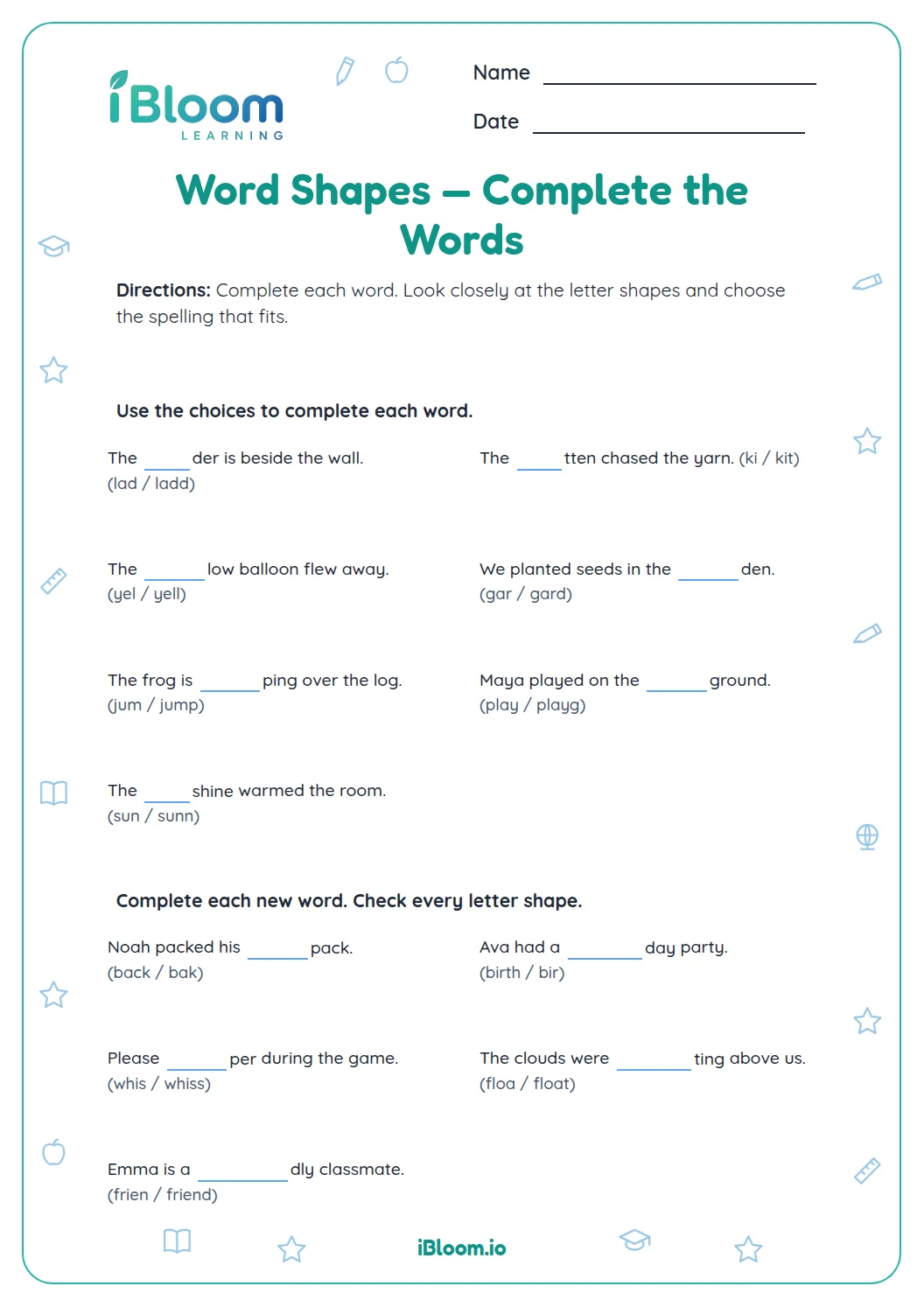
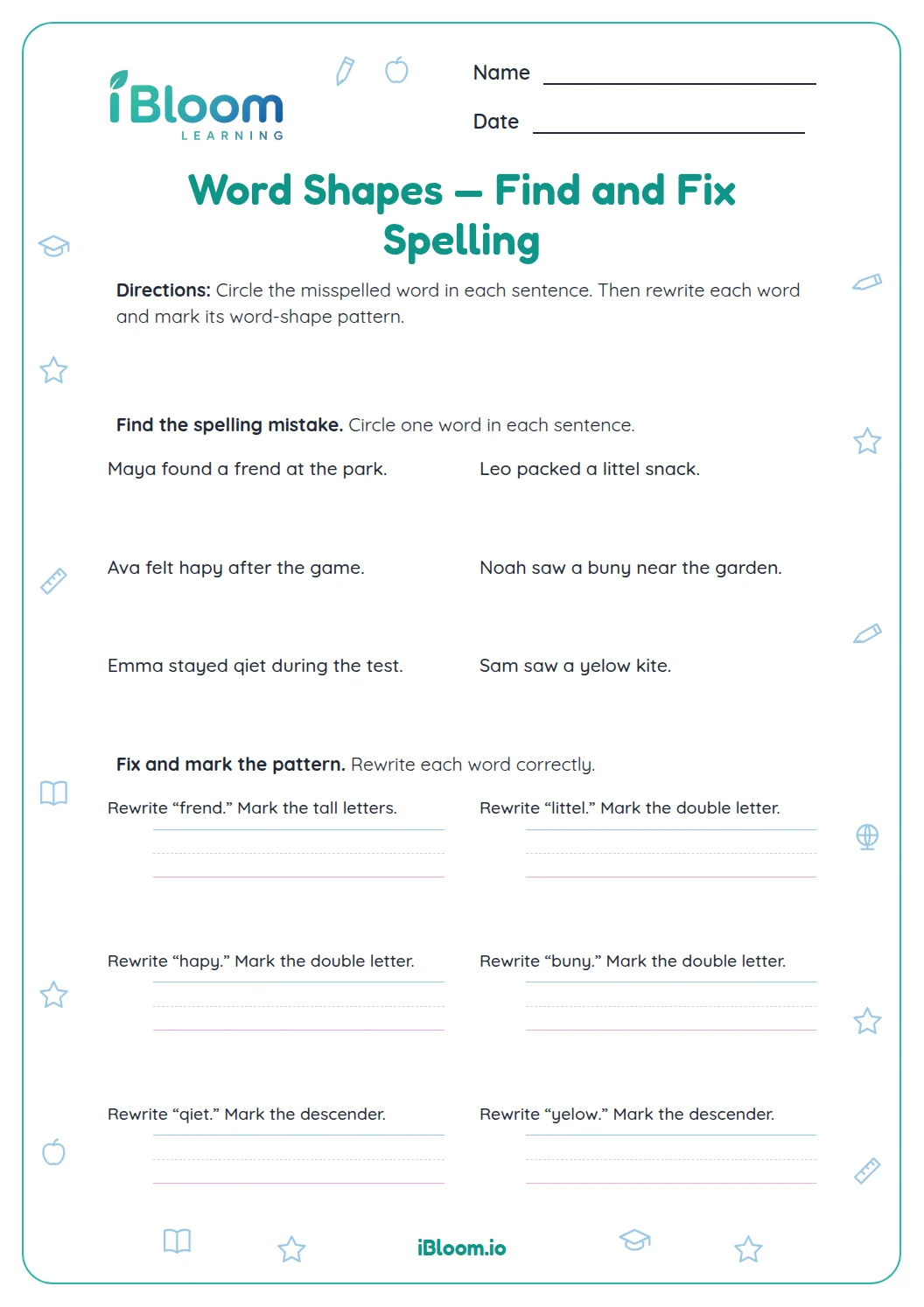
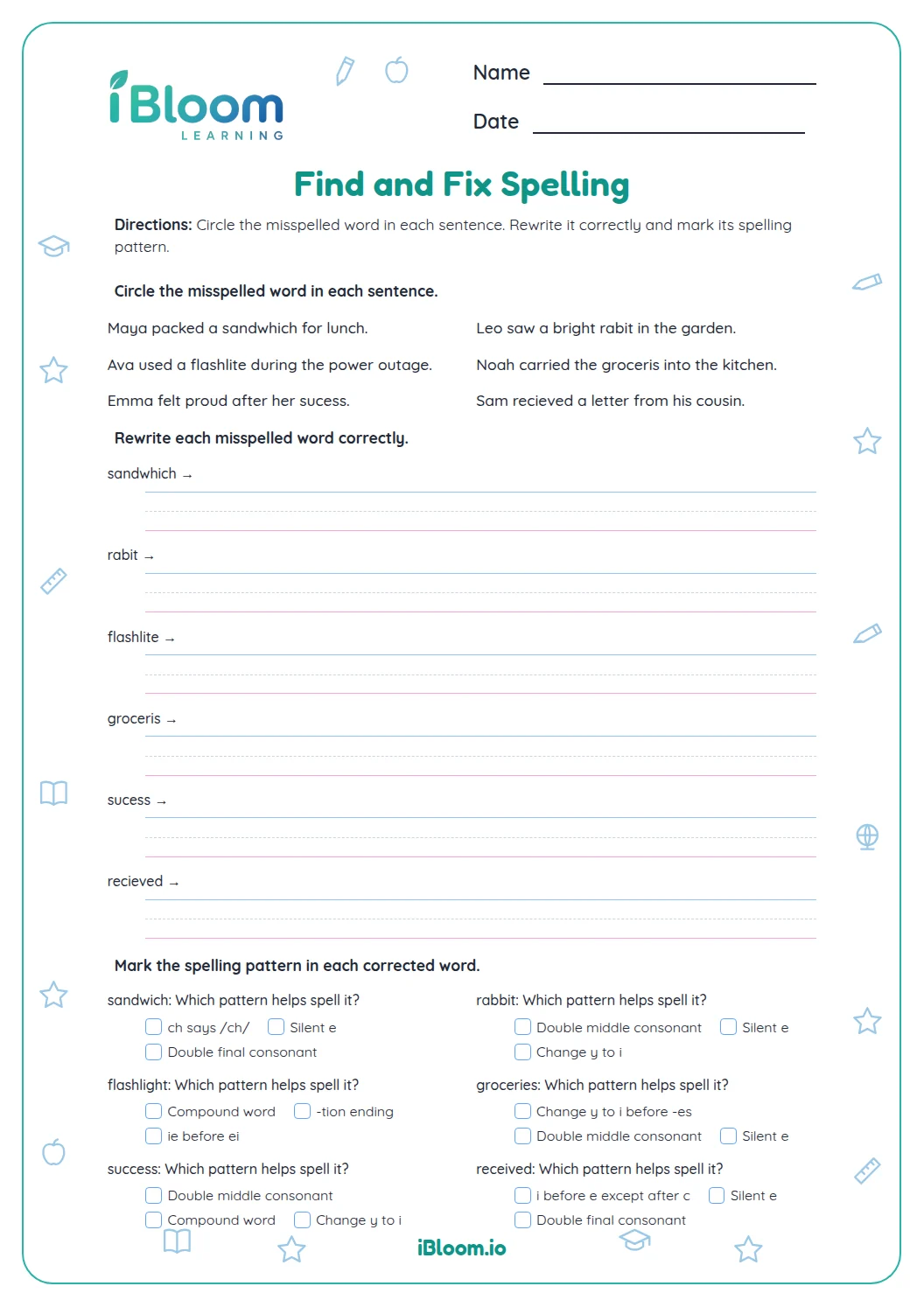
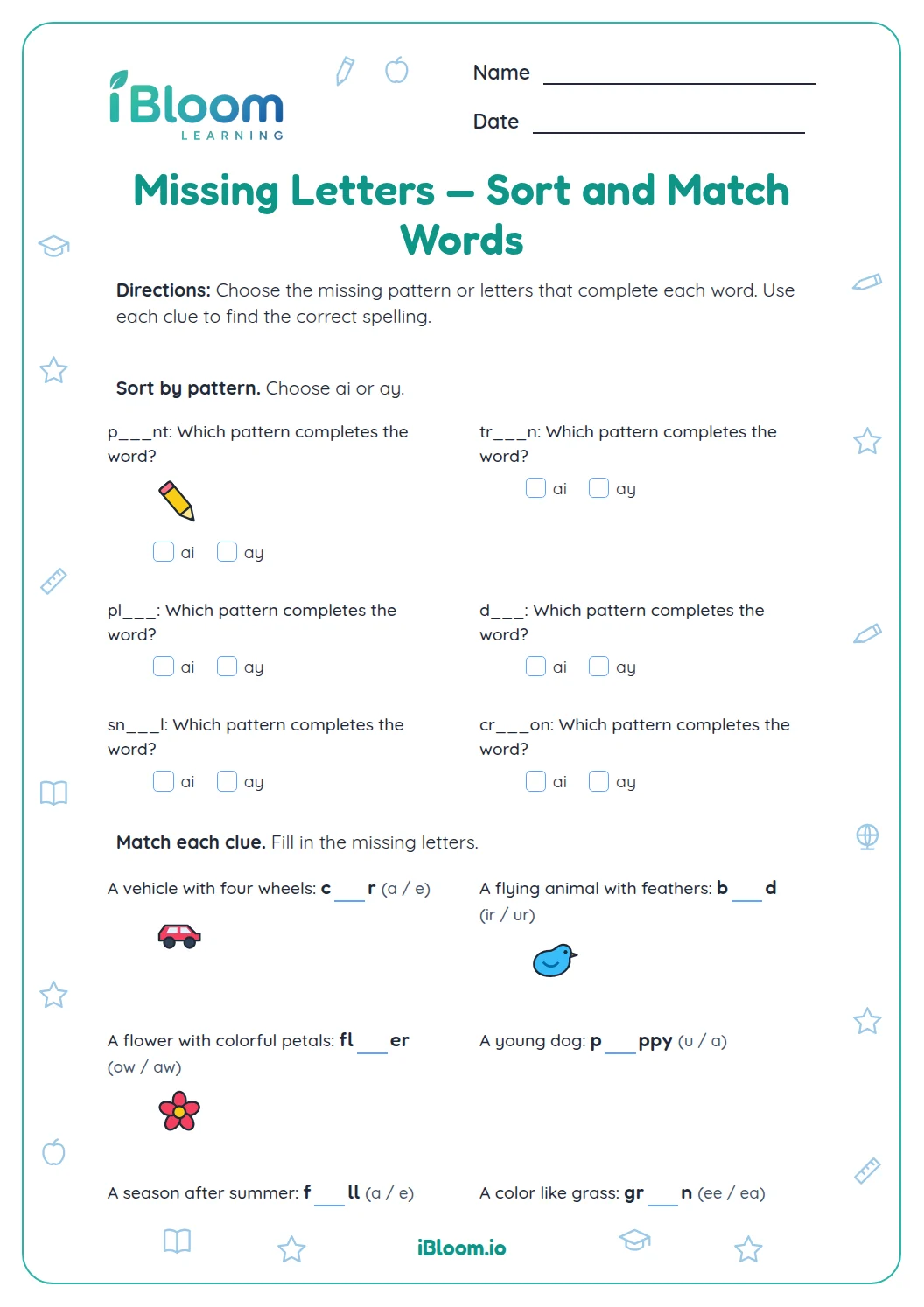
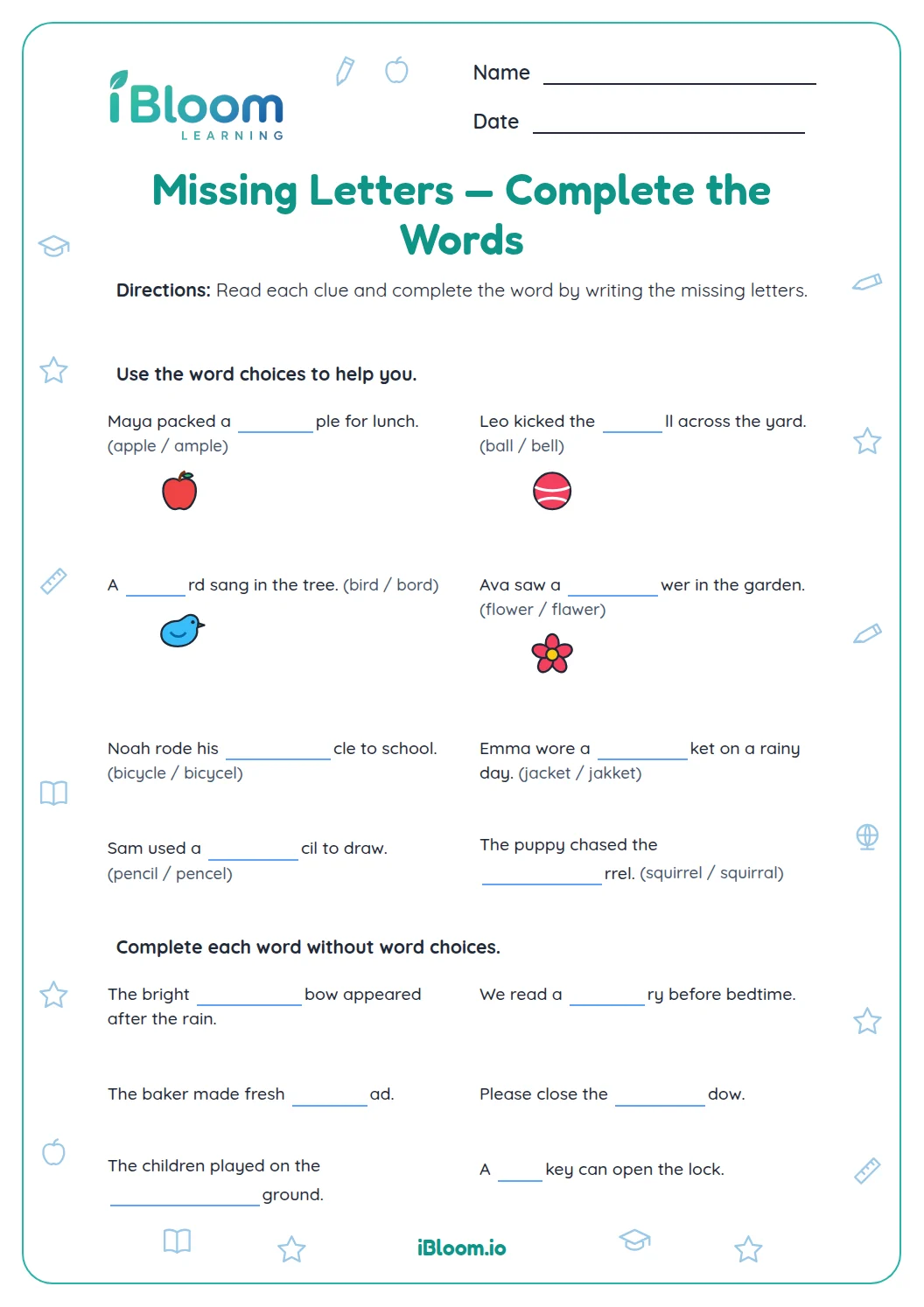
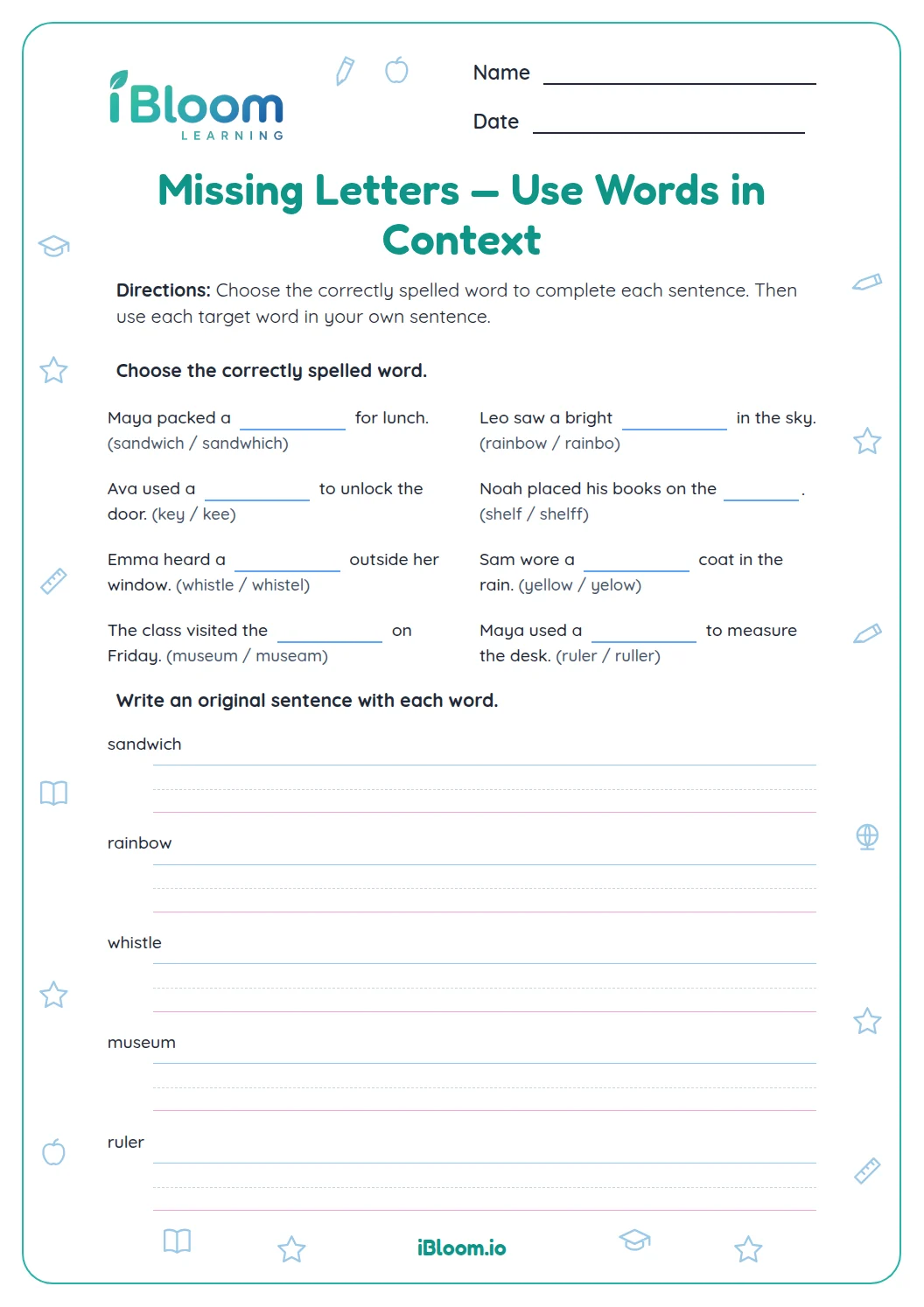
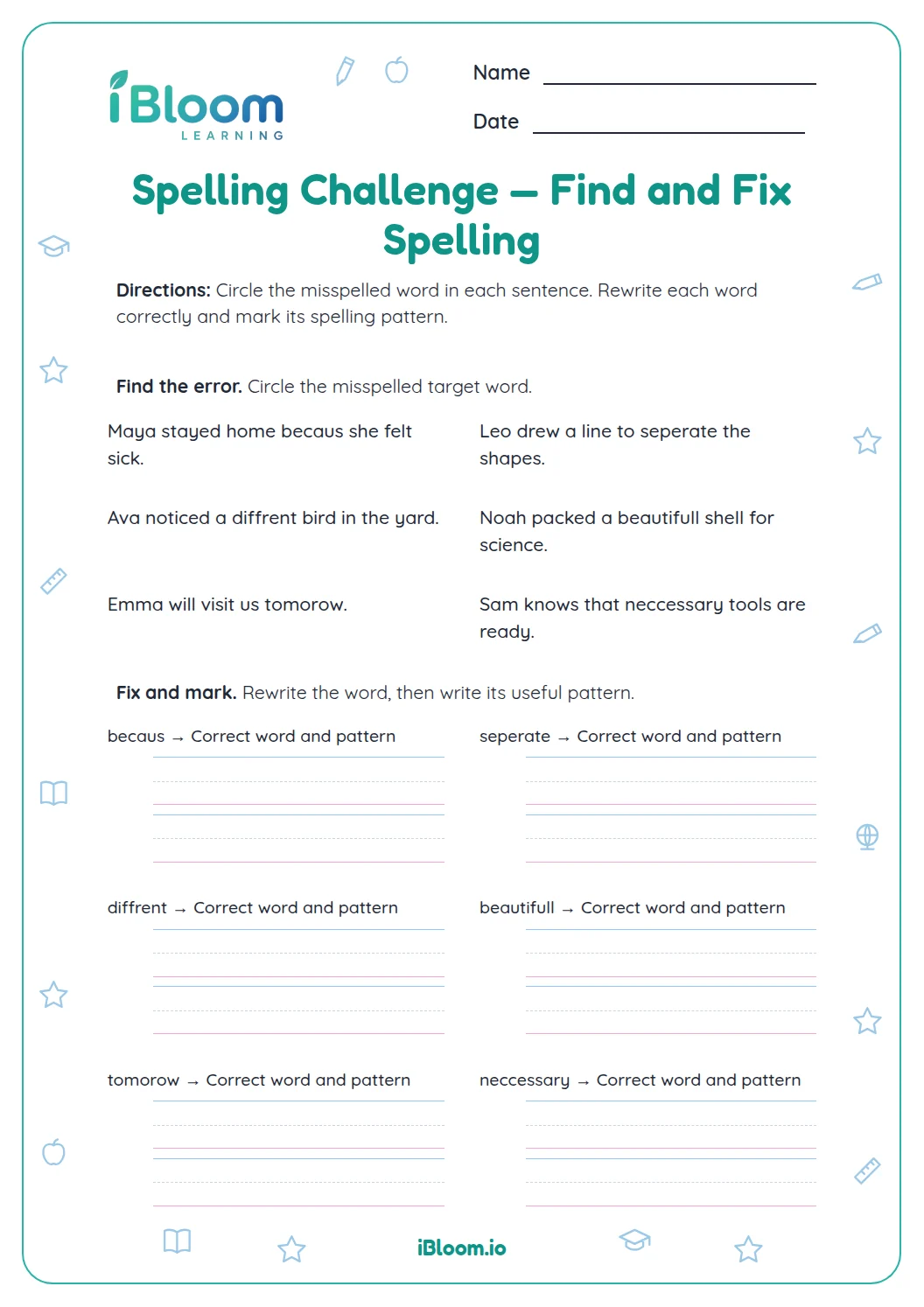
This Grade 3 spelling worksheet gives students 14 sentences with three spellings to compare. In Part A, they choose among spellings of bright, climb, funny, yellow, jumping, garden, and friend; Part B revisits those words in new sentence contexts. The separate answer key lists the correct word for every item. Students practice checking a word’s letter pattern while using sentence meaning to confirm the choice. The sheet practices CCSS L.3.2 conventions of spelling.
Aligned to L.3.2
How do students check a spelling in a sentence?
Part A uses seven target words. Children read the whole sentence, compare the three spellings, and select the conventional form that fits.
- 1Maya saw a ___ bird beside the tree. → bright
- 2The sentence points to the word, and the letters distinguish bright from brite and brigt.
Why do the same words appear in new sentences?
Part B uses the same seven spellings in different sentence contexts. Students can check whether they recognize the spelling across more than one sentence.
How to use this worksheet
- 1Read the complete sentence.
- 2Use its meaning to identify the intended word.
- 3Compare every letter in the choices.
- 4Reread the sentence with the selected spelling.
Common mistakes and quick fixes
The mistake
Choosing a spelling that sounds right but has a missing letter.
The fix
Compare the whole written word with a familiar spelling.
The mistake
Picking a word before reading the sentence.
The fix
Use the sentence meaning to identify the intended word.
The mistake
Overlooking a doubled or misplaced letter.
The fix
Scan the spelling from first letter to last.
This sheet practices the following standard.
Students select conventional spellings in complete sentence contexts.
On this sheet:
Show the official wordingHide the official wording
Demonstrate command of the conventions of standard English capitalization, punctuation, and spelling when writing.
What to practice next
Make more practice
Further reading
Questions parents and teachers ask
What does “word shape” mean on this page?
Here it means noticing the pattern made by a word’s letters. Students compare three spellings of a familiar word and choose the form that fits the sentence. The task focuses on spelling in context, not drawing or tracing letter outlines.
How many questions are on the worksheet?
There are 14 multiple-choice questions across two parts. Part A introduces seven target words, and Part B uses those same words in different sentences. The separate answer key lists one correct spelling for every item for quick checking.
Do students write their own sentences?
No. Each question asks students to select a spelling from three choices. They read the sentence for meaning, then compare letters in the options. The key gives the selected word, so students can review a spelling without writing a model sentence.
What should I do if a student chooses the wrong spelling?
Ask the student to read the sentence and say the word aloud, then compare the choices one letter at a time. This helps separate understanding the sentence from remembering the word’s conventional spelling. The key shows the correct form for review.
How can I use the answer key?
Use the separate key to check the selected word for each of the 14 items. If an answer is incorrect, invite the student to find the letter difference and reread the sentence with the correct spelling. This connects the spelling choice to its sentence.