



About this worksheet
This Grade 3 spelling review gives students three ways to work with words. Part A asks them to rearrange scrambled letters, Part B contrasts correct spellings with plausible misspellings, and Part C uses words in short sentence contexts. The 16 items move from reconstructing a word to recognizing and applying a spelling. A separate answer key supports independent checking and quick reteaching.
Aligned to L.3.2
How do students solve a scrambled word?
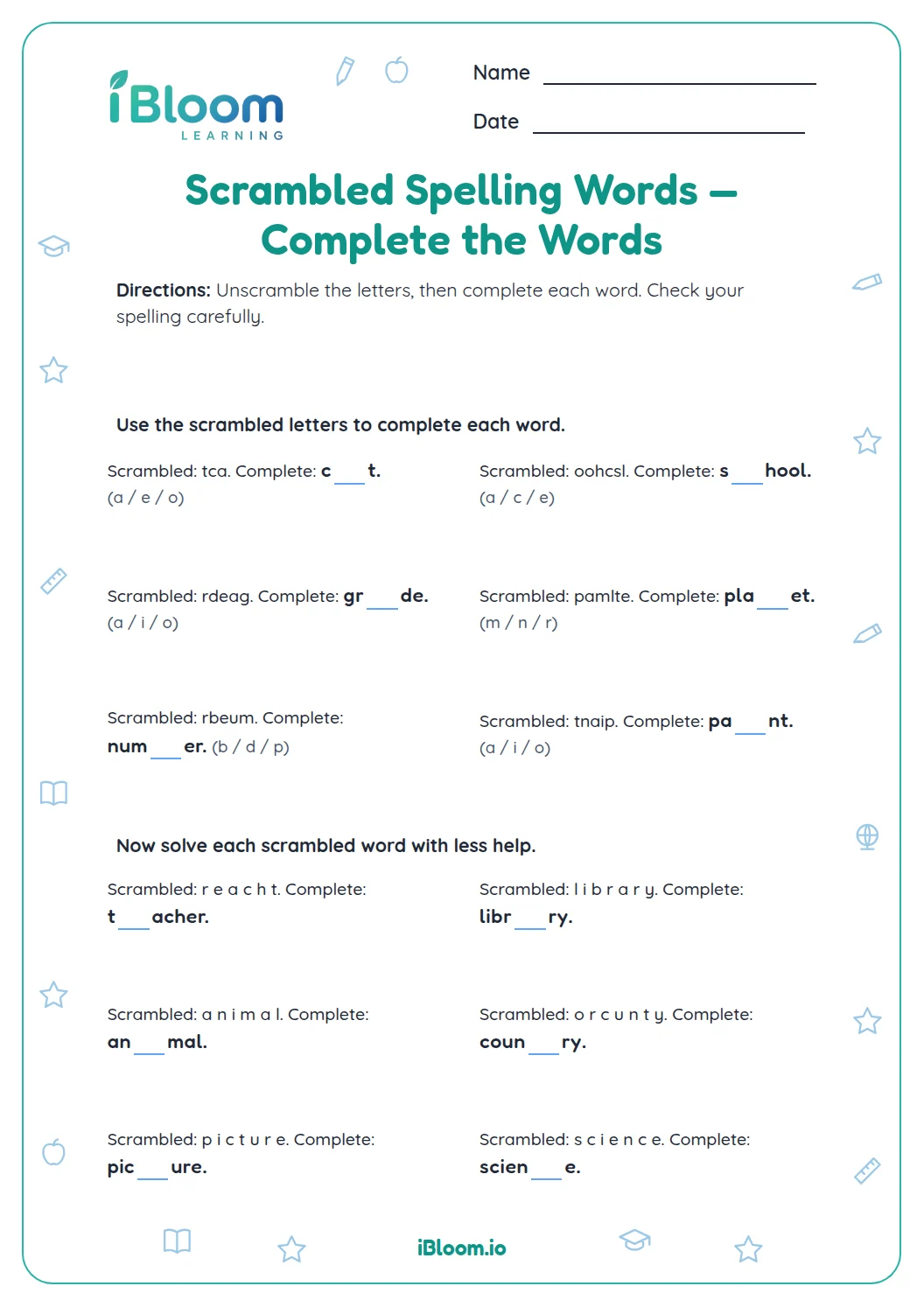
Students rearrange the letters without adding or dropping any. In question 1, tac rearranges to cat; checking that all three letters are used helps confirm the answer.
- 1Scramble: tac
- 2Letters: t, a, c
- 3Rearrange the letters: c, a, t
- 4Answer: cat
What spelling patterns appear?
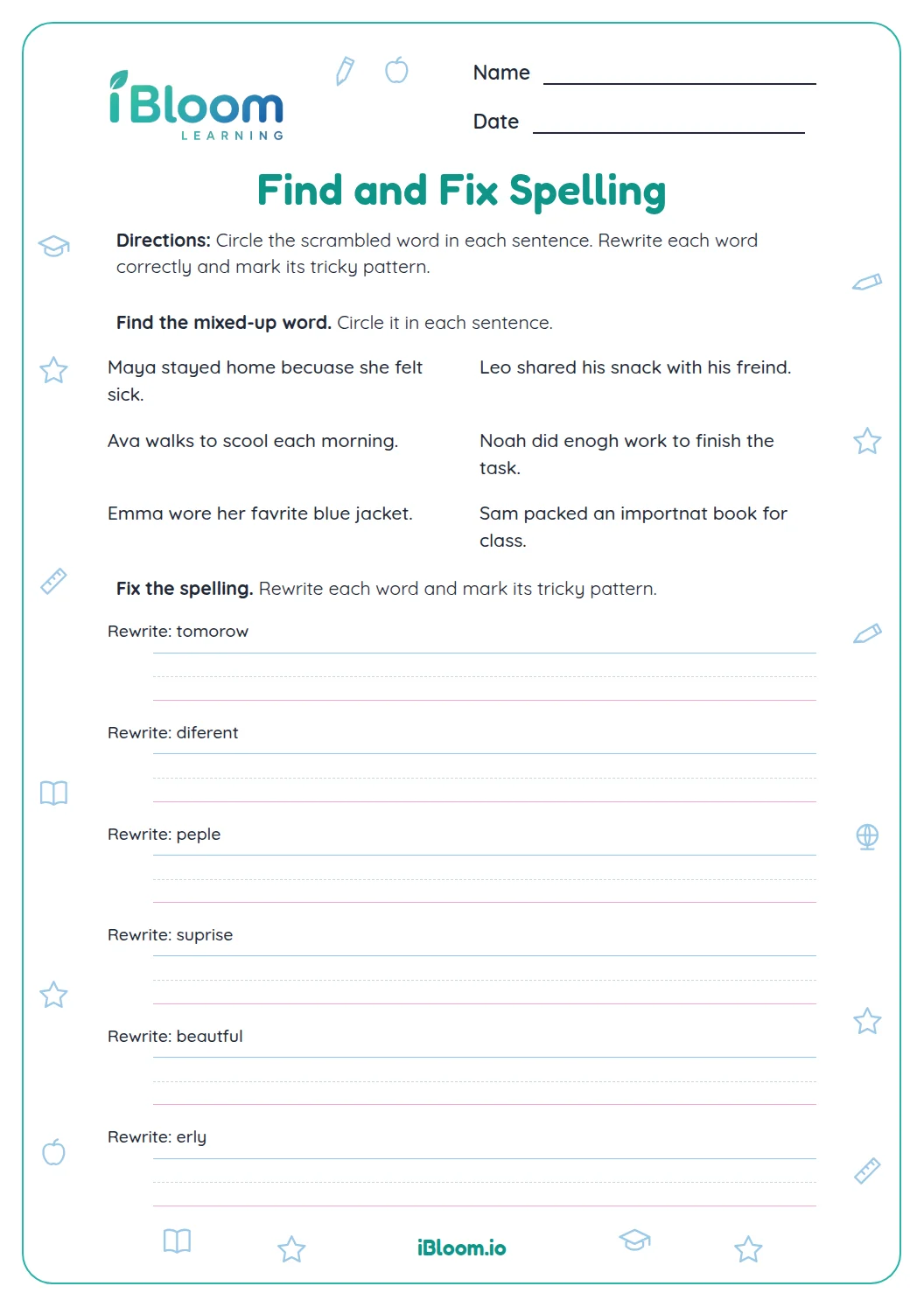
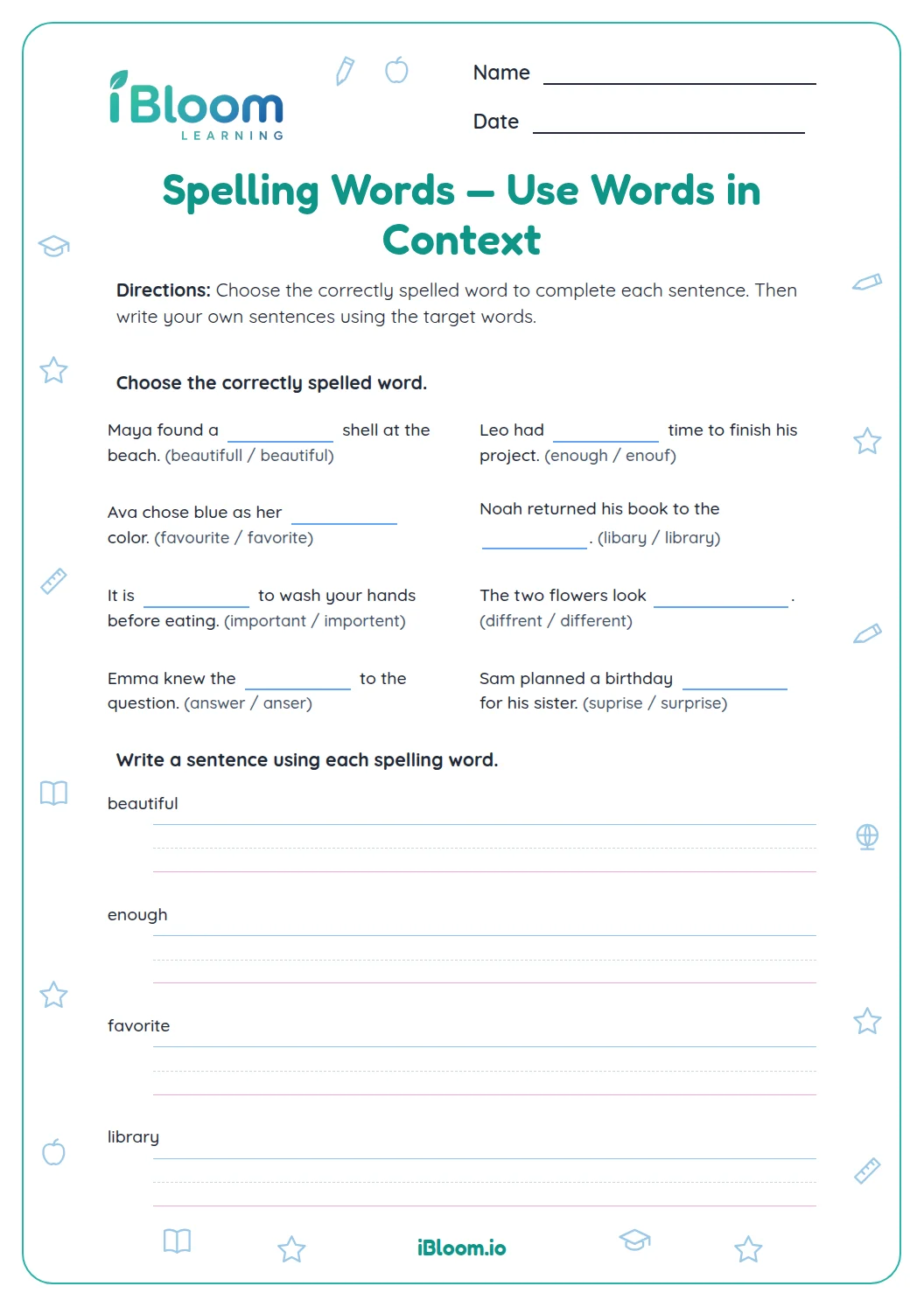
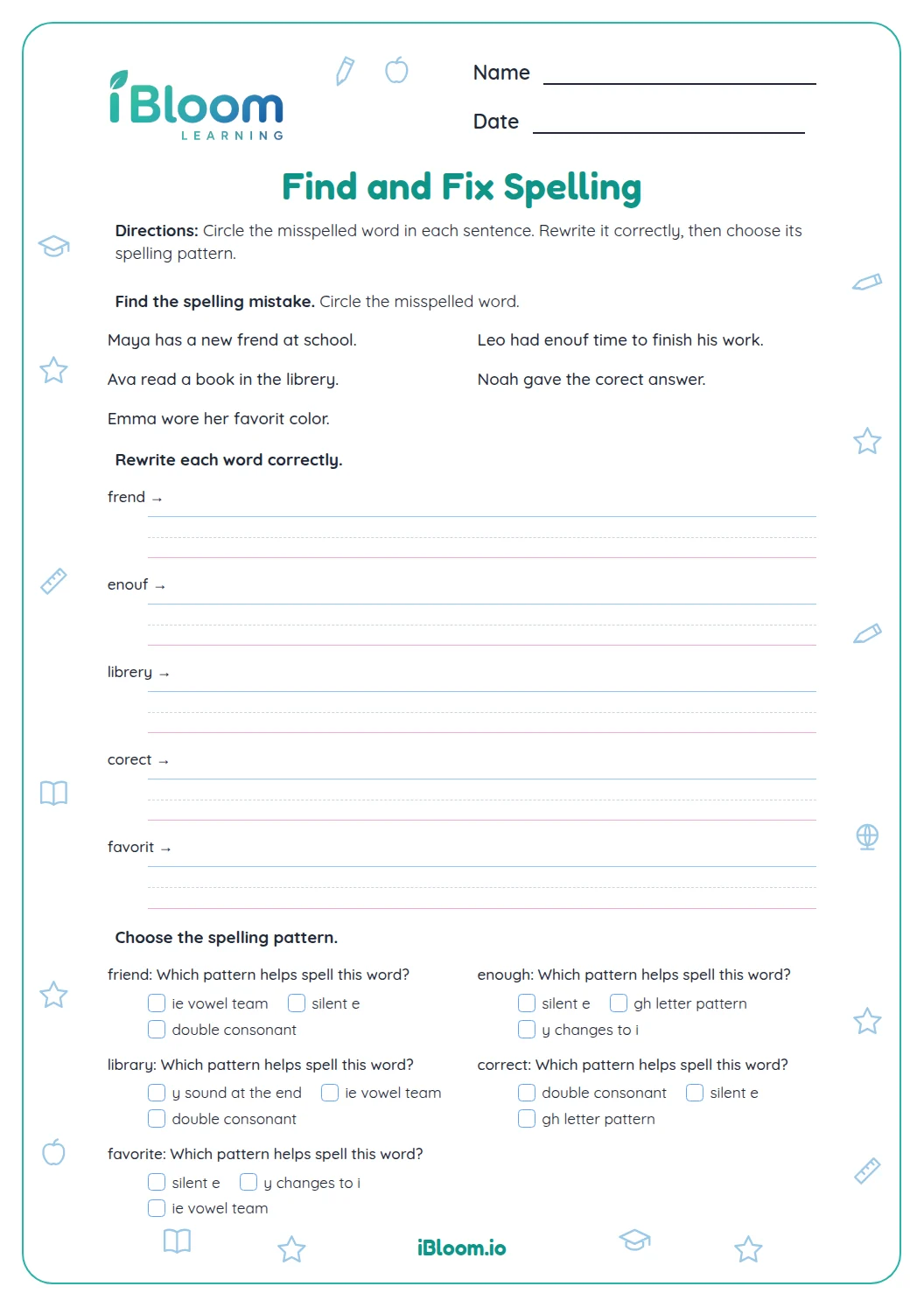
The word set includes familiar everyday words and less predictable spellings such as friend and neighbor. Part B makes students inspect the full spelling rather than rely only on a familiar sound.
- Part A: 6 scrambled words
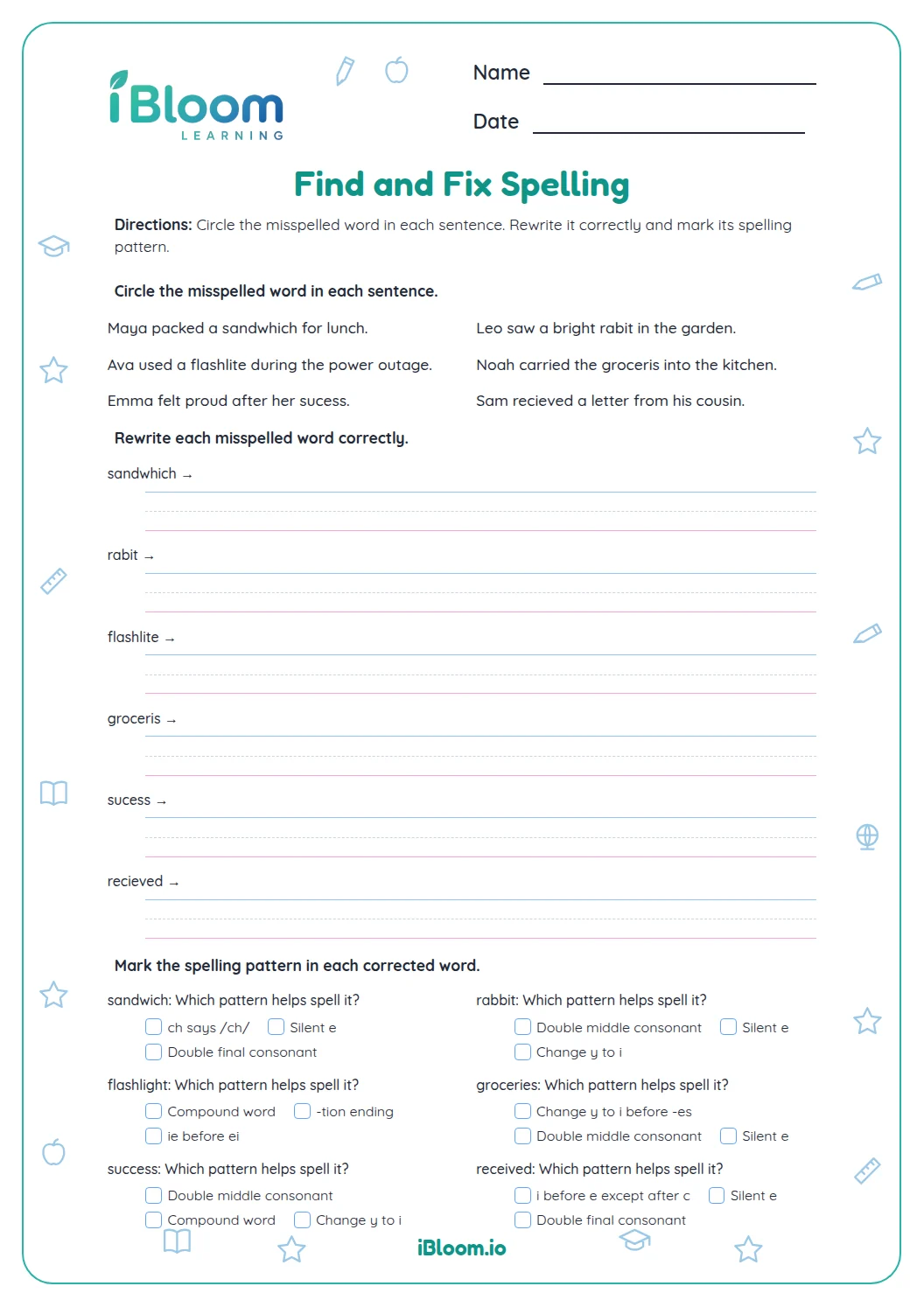
- Part B: 6 spelling choices
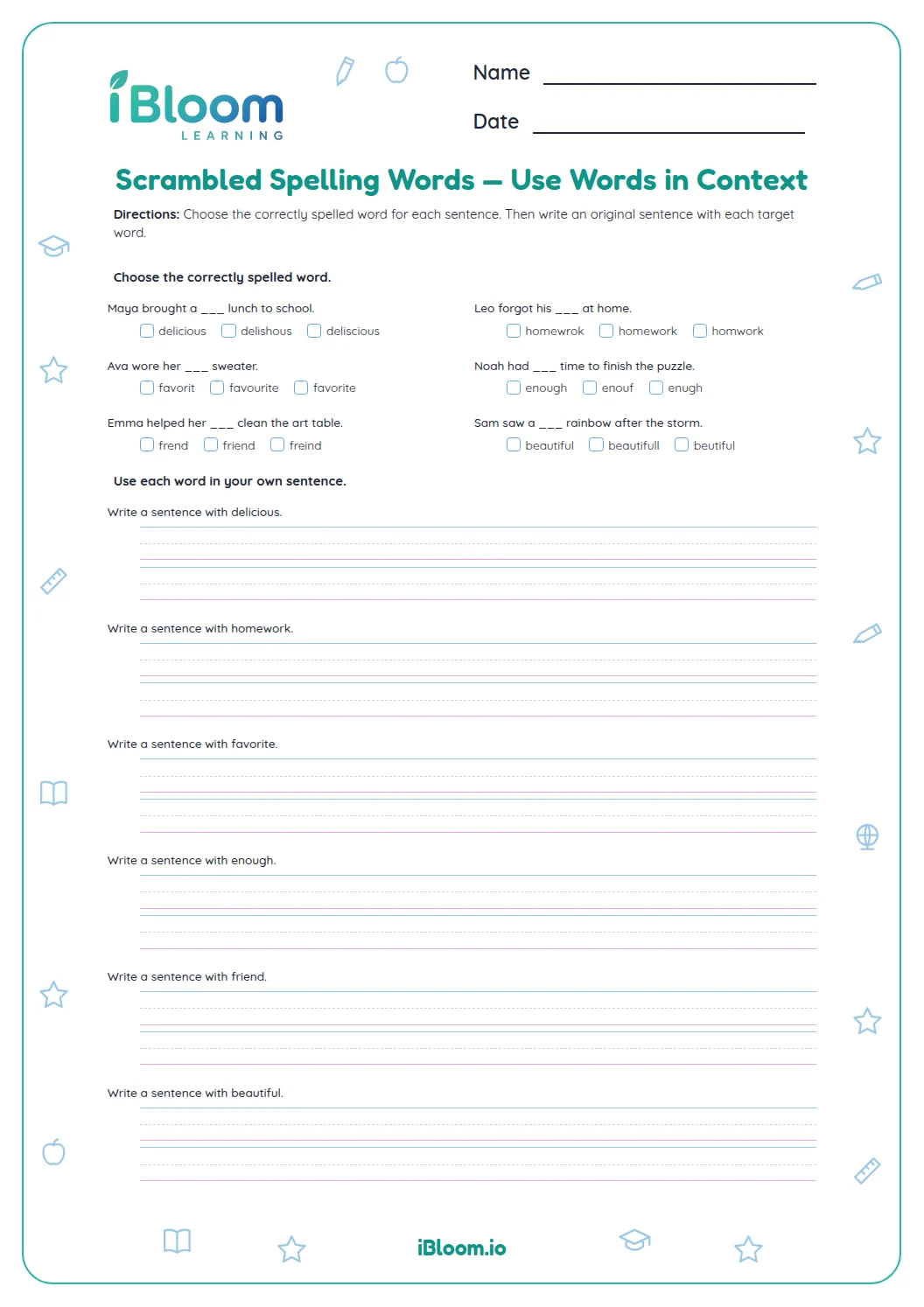
- Part C: 4 sentence blanks
Why use a sentence after spelling practice?
A sentence gives a meaning clue that helps distinguish the intended word. Students can reread the completed sentence to check both the spelling and whether the word fits.
How to use this worksheet
- 1For each scramble, count the letters before rearranging them.
- 2Write a possible word and compare every letter with the scramble.
- 3In Part B, inspect the whole word, including its middle and ending.
- 4Use the sentence meaning to choose the right word in Part C.
- 5Check answers and rewrite any misspelled word correctly.
Common mistakes and quick fixes
The mistake
Leaving out or repeating a letter in the scramble.
The fix
Cross off each letter as it is used once.
The mistake
Choosing a spelling because it looks familiar.
The fix
Compare the exact letter sequence with the standard spelling.
The mistake
Writing a word that is spelled correctly but does not fit the sentence.
The fix
Reread the sentence with the word in place and check its meaning.
Common Core alignment
This worksheet gives students direct practice with a grade-level Common Core skill.
Use standard English spelling when writing words.
On this sheet: Students reconstruct, recognize, and write grade-level words with attention to their spelling.
Show the official wordingHide the official wording
Demonstrate command of the conventions of standard English capitalization, punctuation, and spelling when writing.
What to practice next
Make more practice
Further reading
Questions parents and teachers ask
How many words does the review include?
There are 16 questions across three parts. Students unscramble six words, select correct spellings for six prompts, and complete four sentence blanks. The answer key gives the expected spelling for each question. The key supplies the expected spelling for all 16 prompts, including the four words used in sentence context.
What should students do if a scramble seems impossible?
Have them say the letters aloud, group likely letter pairs, and check that every supplied letter is used exactly once. A student can try a likely word, then compare each letter with the scramble before writing a final answer. Have the student mark each letter as it is used, then compare the completed word with the clue and the original letters.
Why are there misspelled choices in Part B?
The choices ask students to notice the exact sequence of letters in a word. Comparing similar spellings can help a learner spot a missing, changed, or misplaced letter before selecting the standard spelling. For example, library is spelled with one r after the b; the other choices change its standard spelling.
How does Part C use context?
Each sentence provides a meaning clue for the word that belongs in the blank. Students write the word, then reread the sentence to check that the spelling is correct and the word makes sense. For example, “picnic” fits the lunch sentence. Rereading each completed sentence checks that its word makes sense.
Can students use the answer key to self-check?
Yes. After completing the questions, students can compare each word with the separate key. For extra practice, ask them to rewrite any missed word once and use it in a new sentence. A useful follow-up is to rewrite a missed word and say its letters while checking them against the key.