

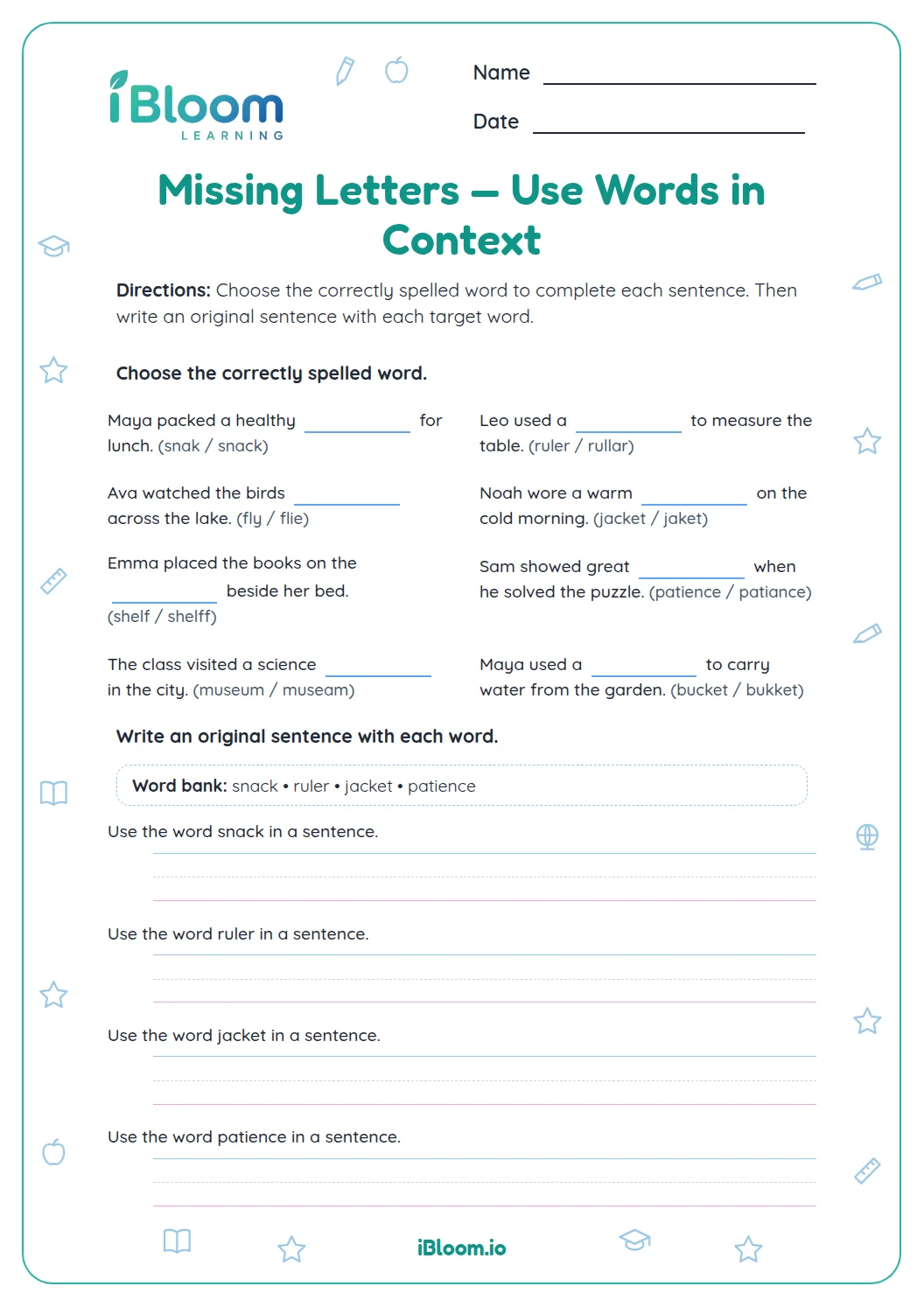

About this worksheet
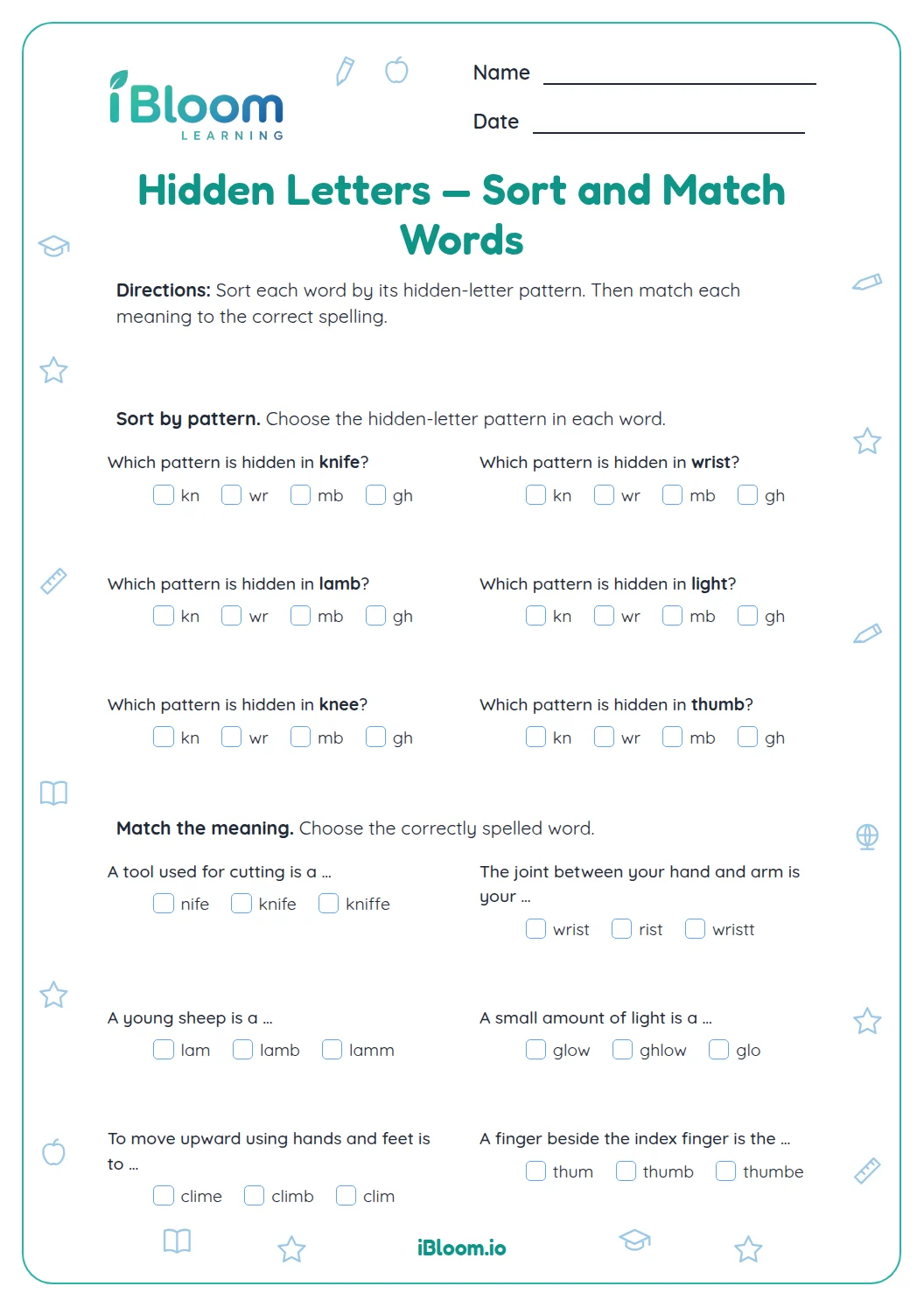
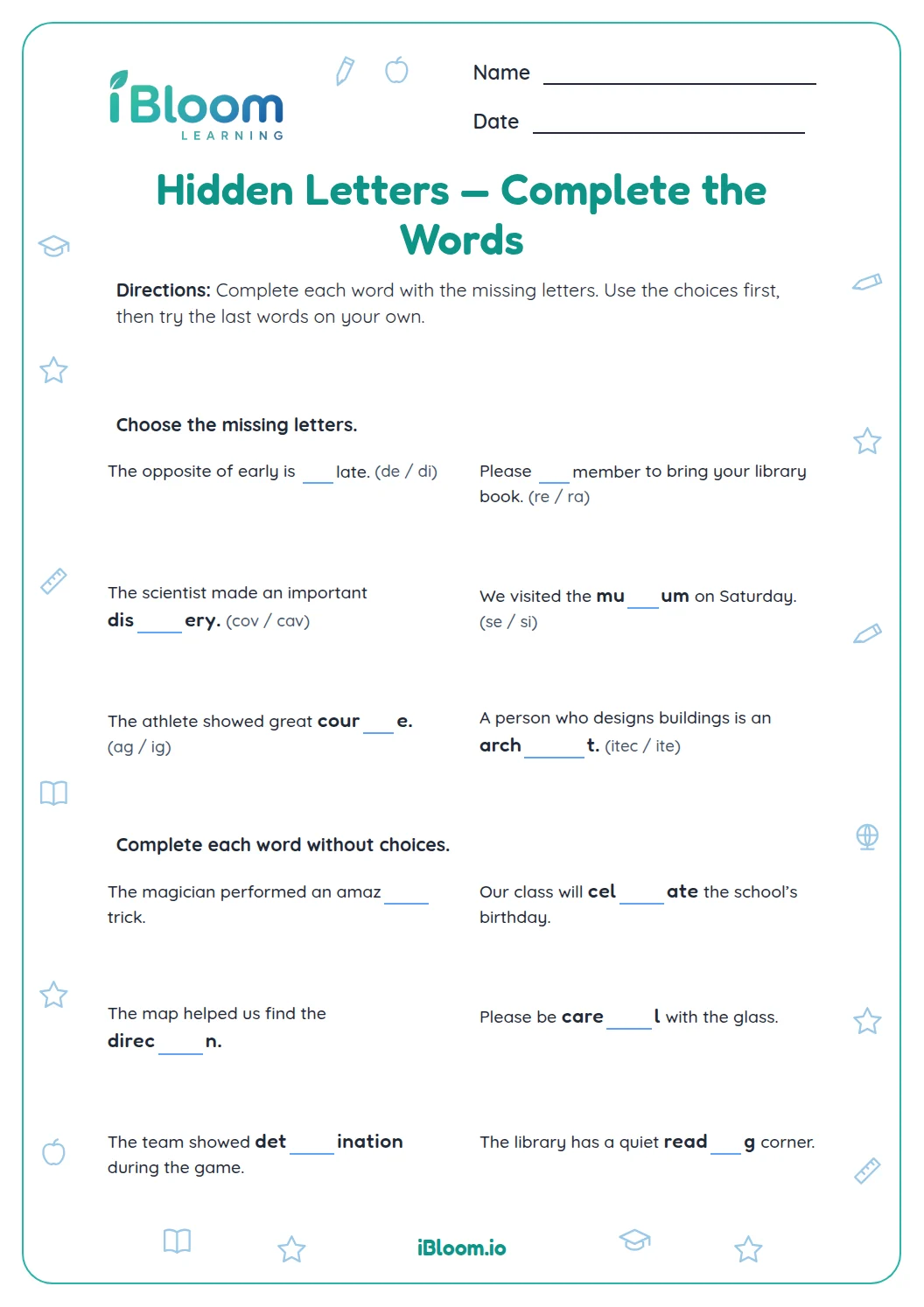
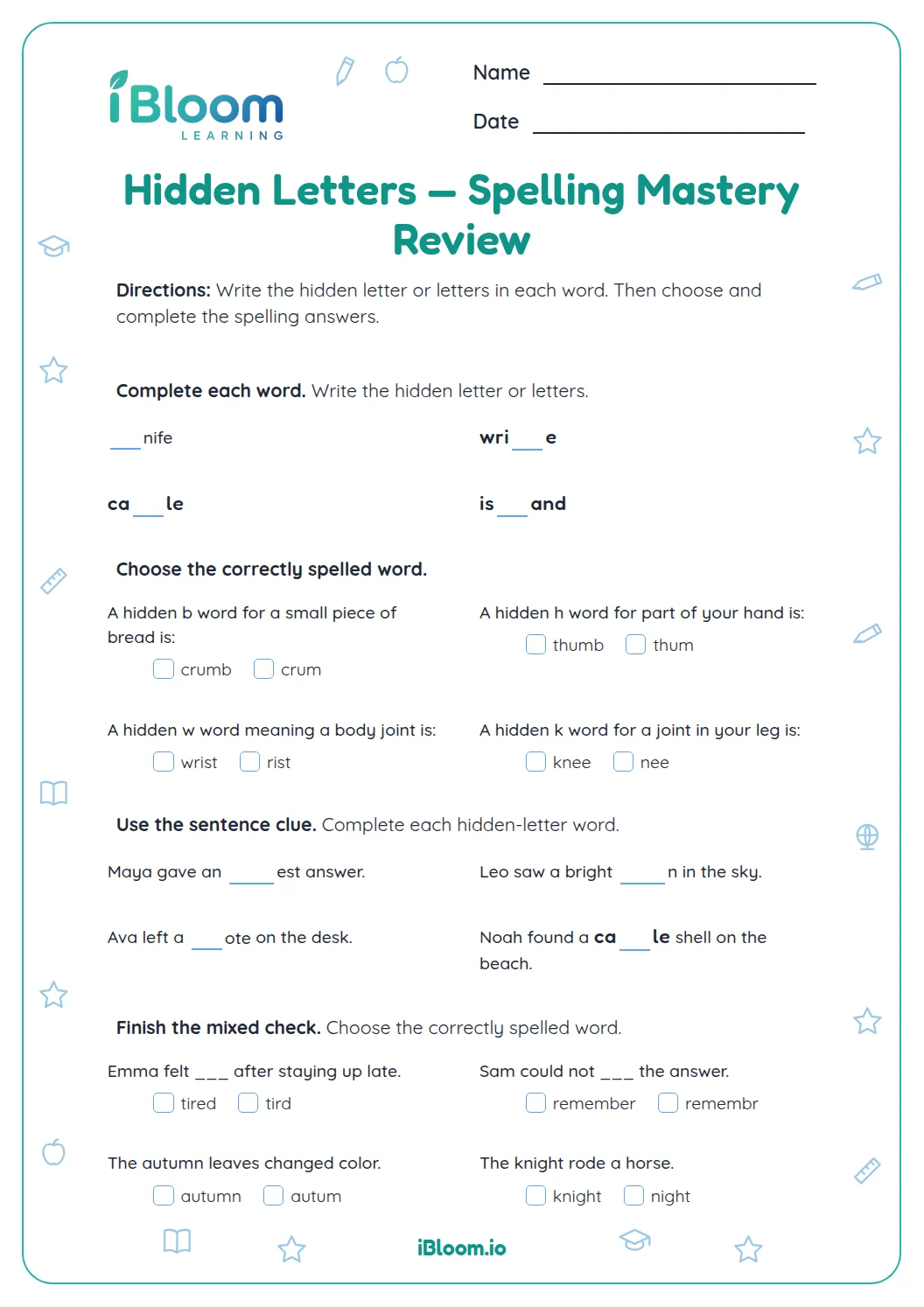
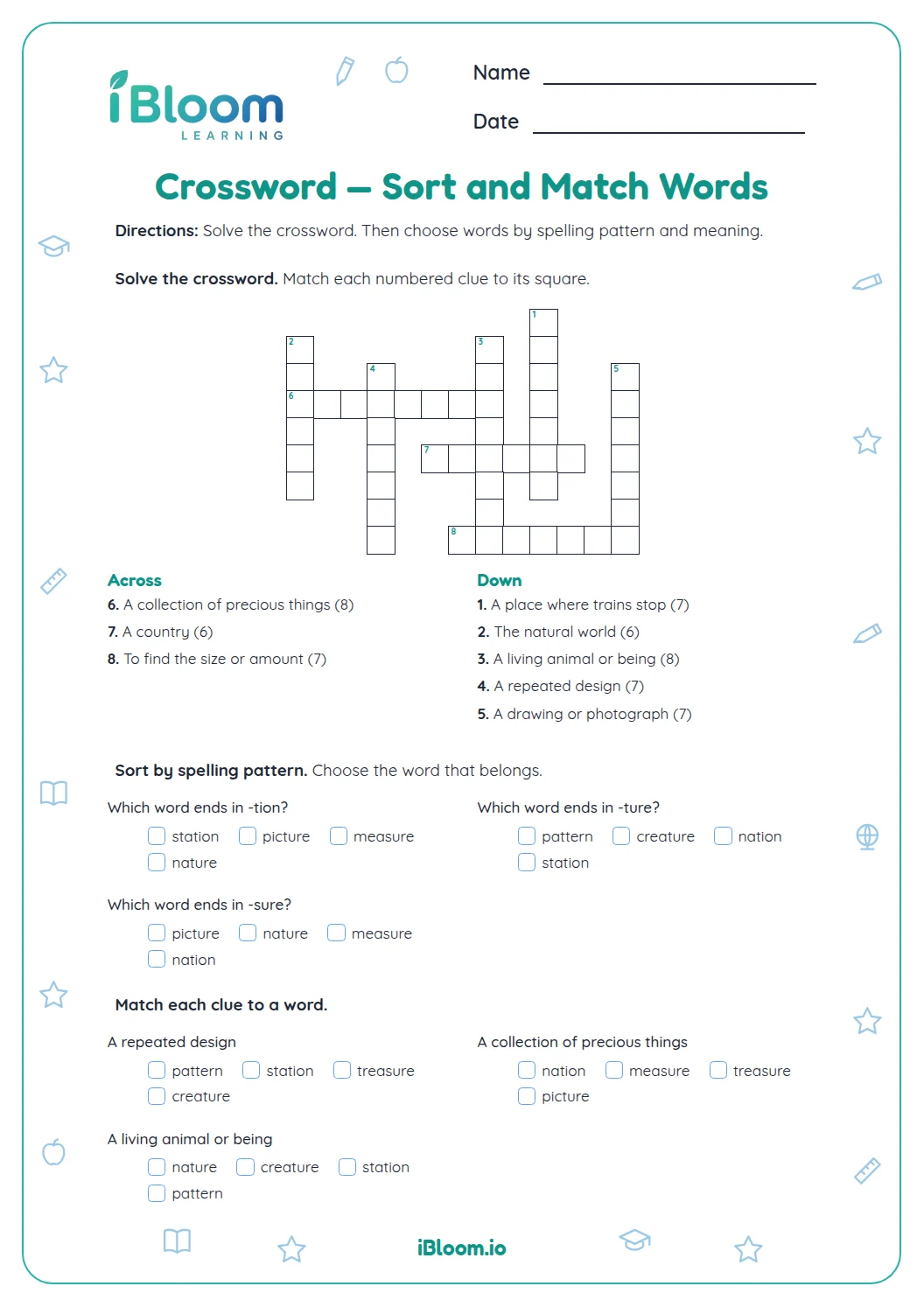
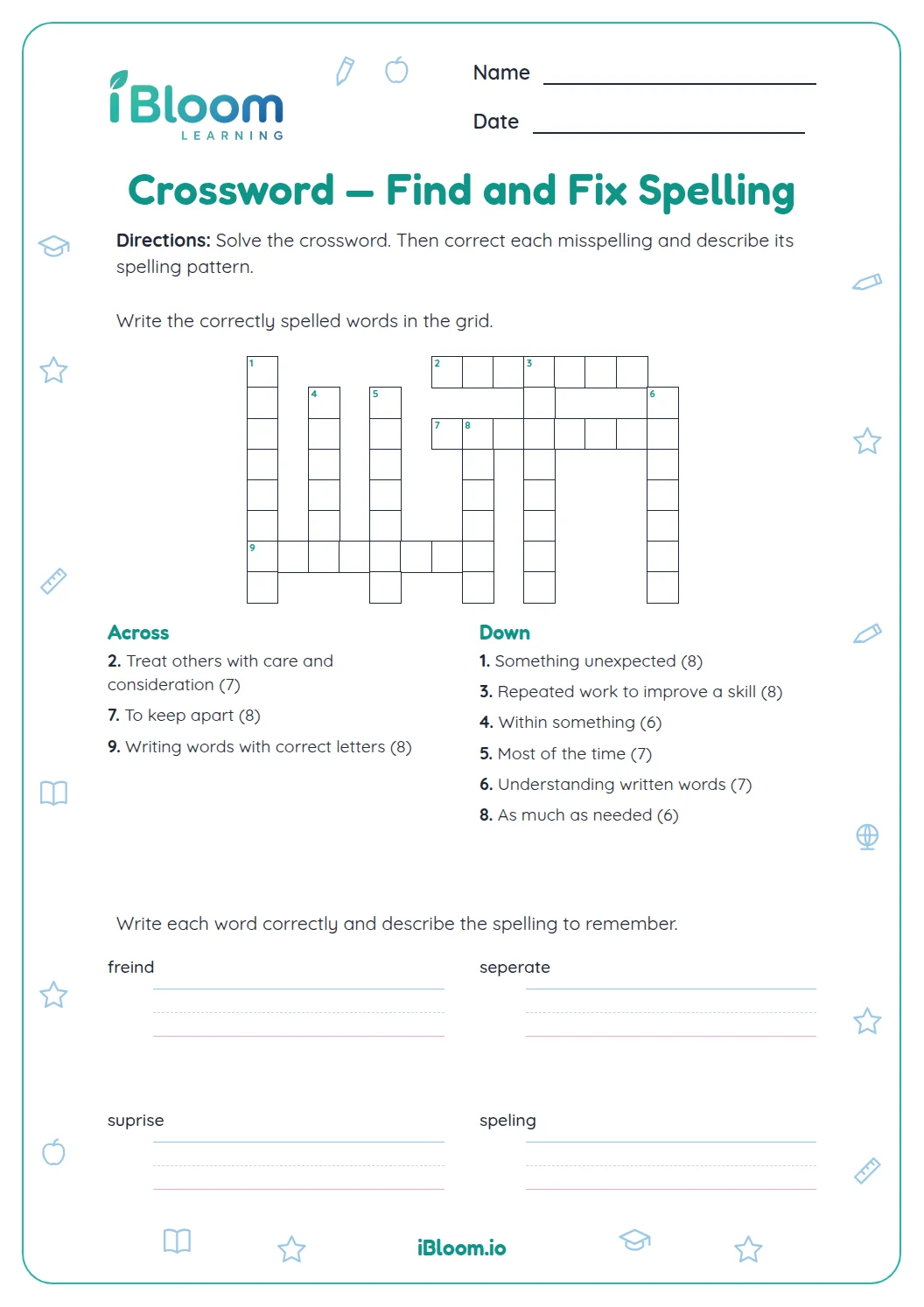
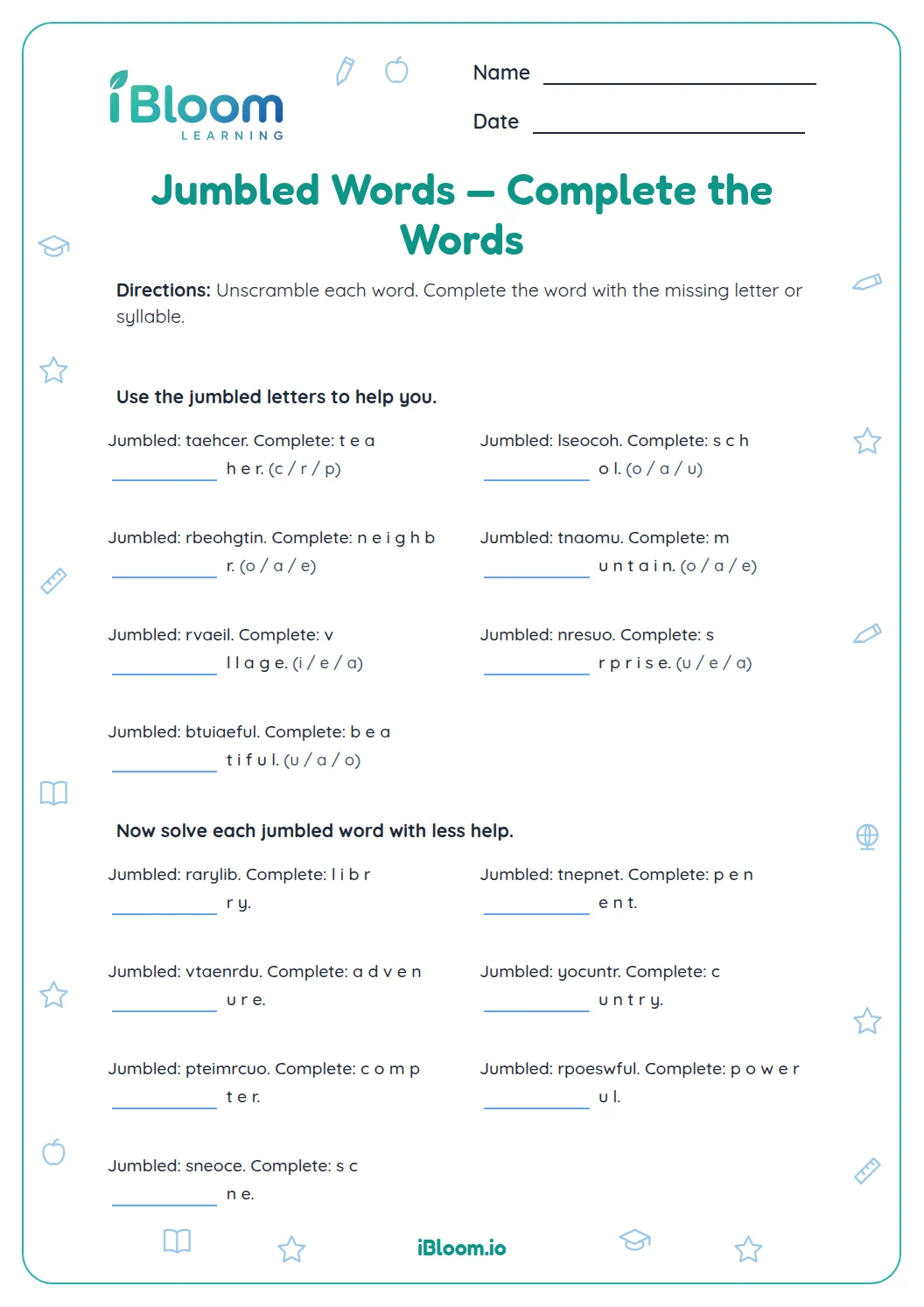
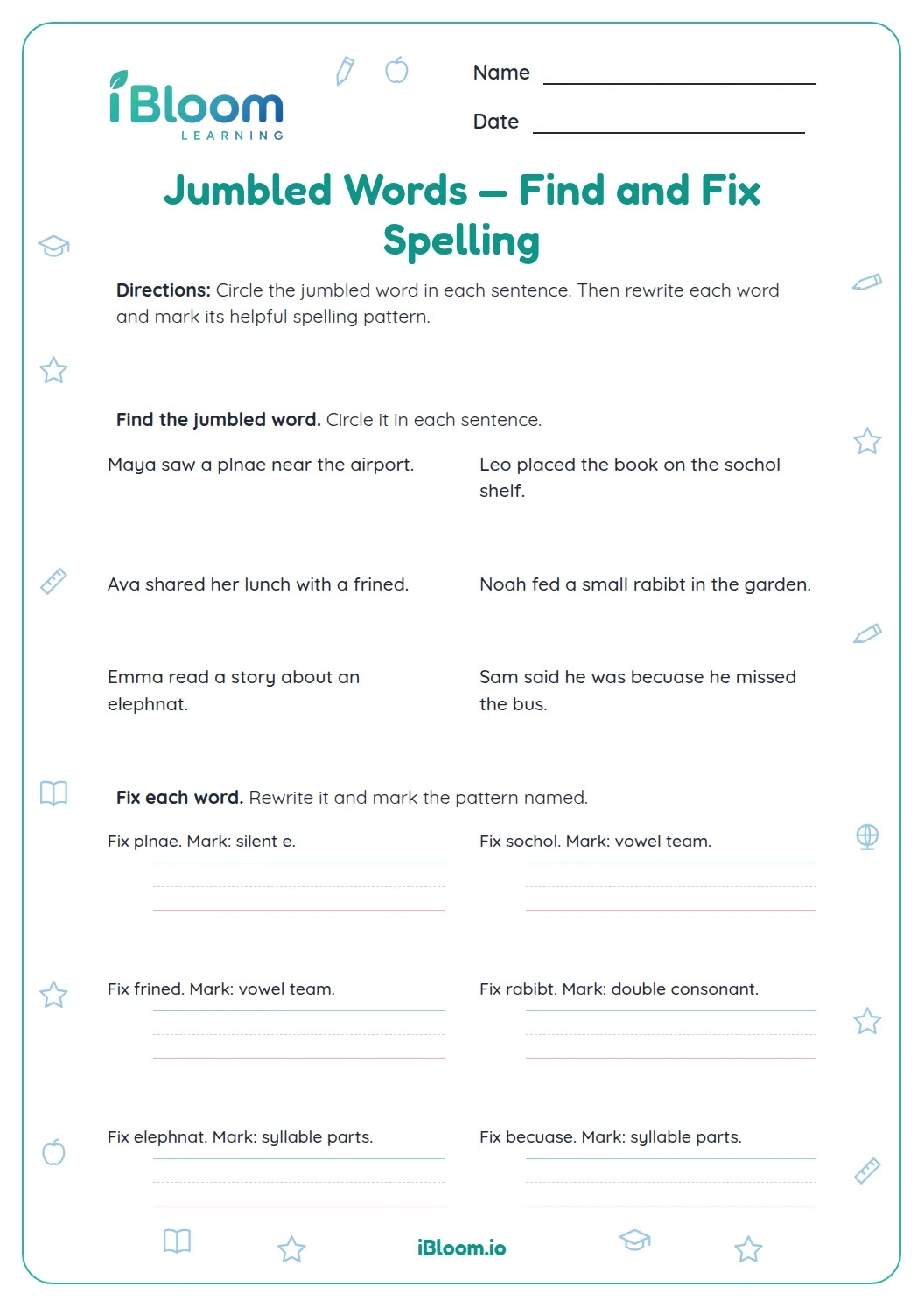
This Grade 4 printable focuses on hidden-letter spelling errors inside familiar words. Students first locate the misspelled word in a sentence, then rewrite a set of words correctly. The answer key gives the corrected spellings. The sentence context helps students check meaning while they inspect each word one letter at a time.
Aligned to L.4.2.d
How does this spelling page work?
Part A places each error inside a sentence so meaning helps you locate the word. Part B isolates the misspelled words so you can focus on the letters and rewrite the standard spelling.
- 1In Part A, “Mina carried her umbrela in the rain” points to umbrella because the sentence is about rain. The spelling needs a second l.
- 2In Part B, “breez” becomes “breeze” by adding the final e.
How can context help you find a hidden-letter error?
Read the whole sentence first. The sentence meaning narrows down the likely word, then compare its spelling with the letters printed in the error.
What is a useful checking routine?
Say the word, look for a missing or misplaced letter, write the corrected spelling, and reread the sentence to make sure the word still fits.
How to work through this page
- 1Read the sentence for meaning.
- 2Identify the word that does not look right.
- 3Compare the printed letters with the correct spelling.
- 4Rewrite the complete corrected word and reread the sentence.
Common mistakes and quick fixes
The mistake
Changing a word but leaving another letter wrong
The fix
Compare every letter in the corrected word with a reliable spelling.
The mistake
Ignoring the sentence meaning
The fix
Use the sentence to decide which word belongs there.
The mistake
Writing only the missing letter
The fix
Write the complete corrected word, then check its letter order.
Common Core alignment
This worksheet gives students focused practice with the named skill.
Spell grade-appropriate words correctly, consulting references as needed.
On this sheet: Students identify and correct grade-appropriate spelling errors.
Show the official wordingHide the official wording
Spell grade-appropriate words correctly, consulting references as needed.
What to practice next
Make more practice
Further reading
Questions parents and teachers ask
What is a hidden-letter spelling error?
A hidden-letter spelling error has a letter missing, added, or placed incorrectly. Part A uses sentence context; Part B gives a new misspelled word to correct. For instance, “libary” is missing the second r from “library.” Comparing the corrected spelling letter by letter helps students spot what changed.
Should students rewrite the whole word?
Yes. Part B asks students to write the complete corrected word so they can check the sequence of letters. For example, change “calender” to “calendar,” writing all eight letters in order. Then compare the result with the key.
How can a sentence help with spelling?
The surrounding words suggest which word belongs in the sentence. Students can then focus on its spelling and reread the sentence for meaning. For example, “The class visited the libary” points to a place the class visited. Context narrows the intended word, while its spelling still needs checking.
Why do some errors have a space inside the word?
A space can split a word that should be written as one word. Join the parts, then check the spelling of the complete word. For example, “umb rela” should be joined as “umbrella.” After joining it, check the full word rather than only removing the space.
What should a student do after finishing?
Read each corrected word and compare its letters with the answer key. Reread Part A with the corrected spelling to check the sentence. Part A uses each word in a sentence, and Part B adds different words for another correction round. This makes the second section fresh practice.