



About this worksheet
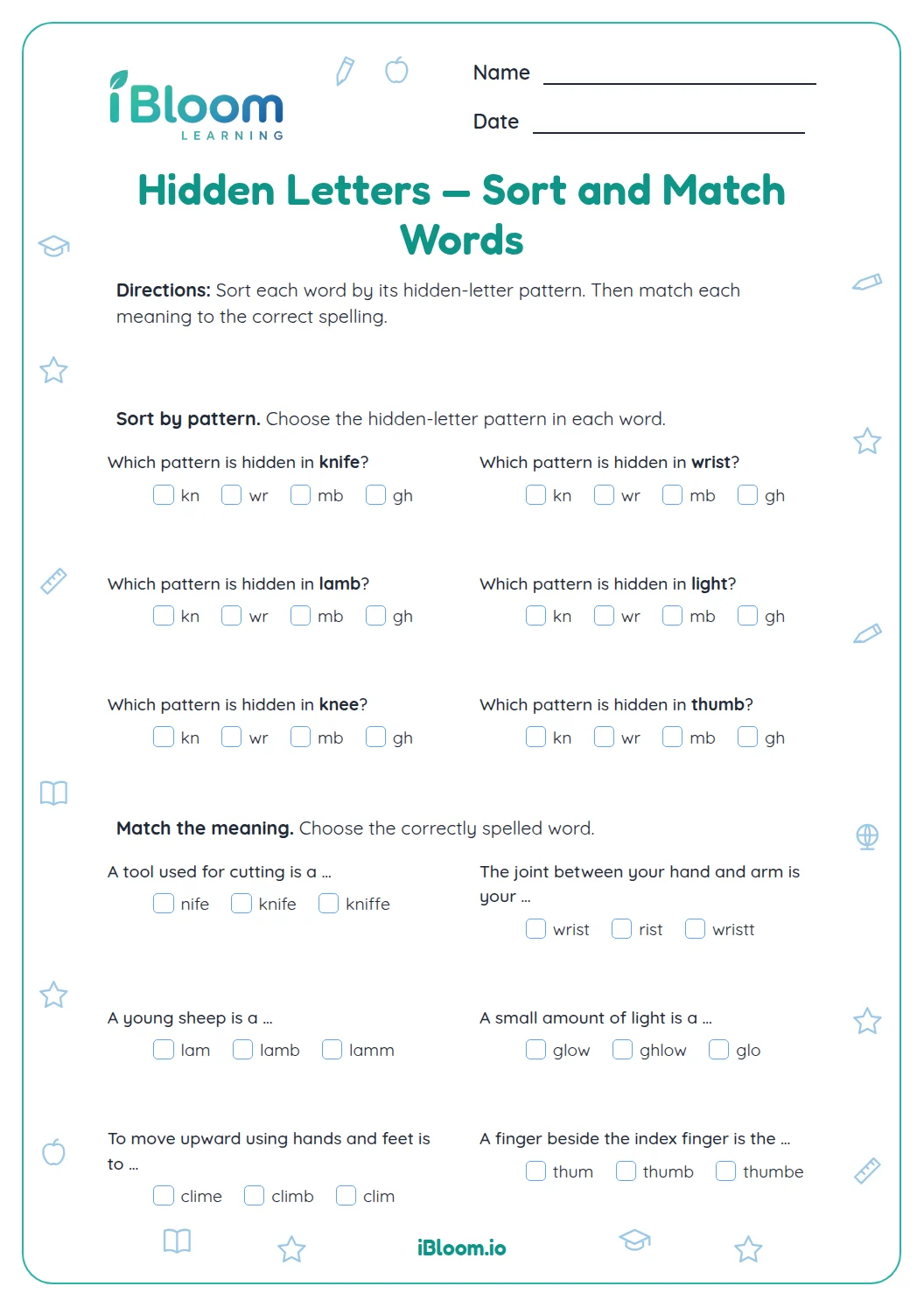
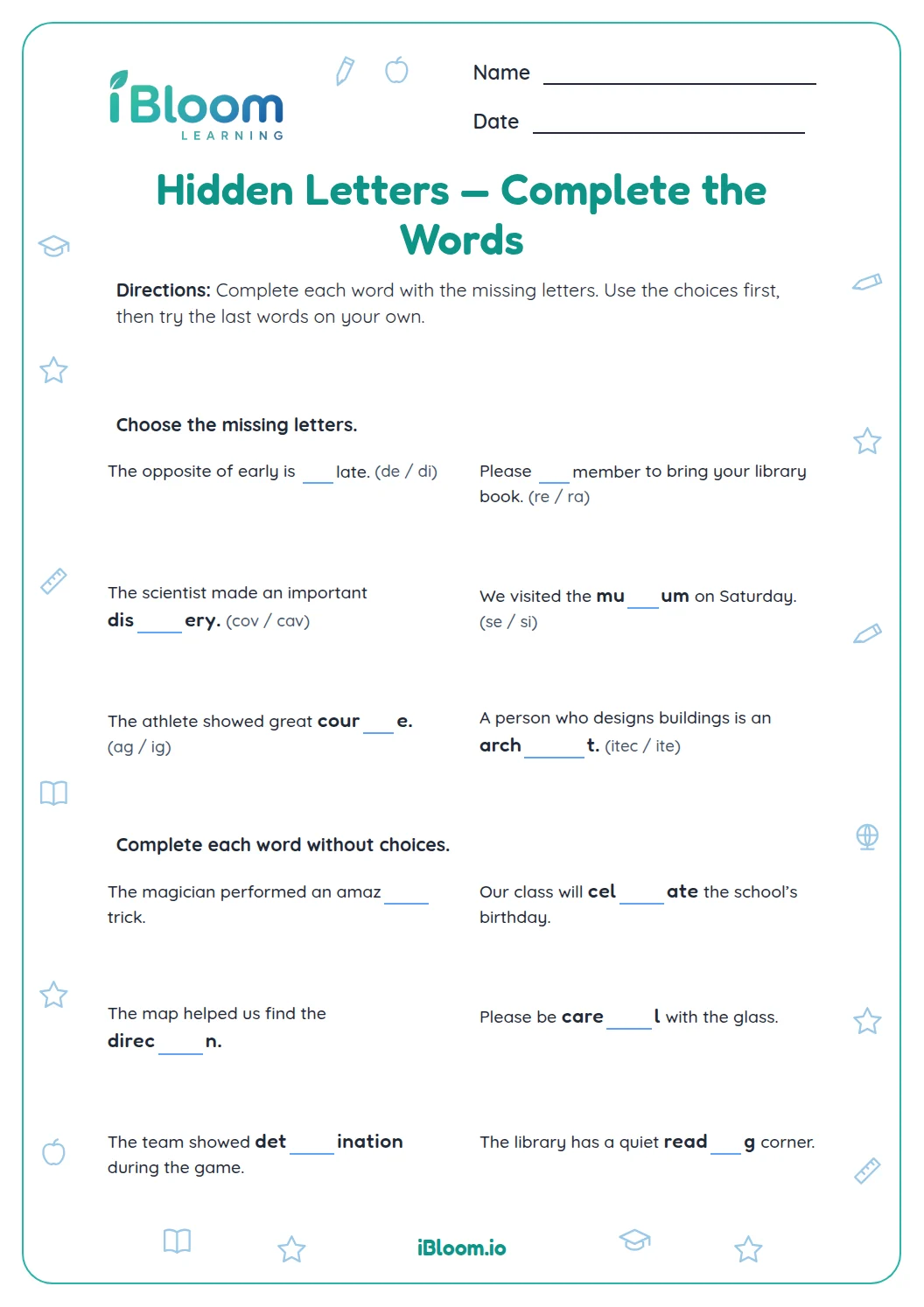
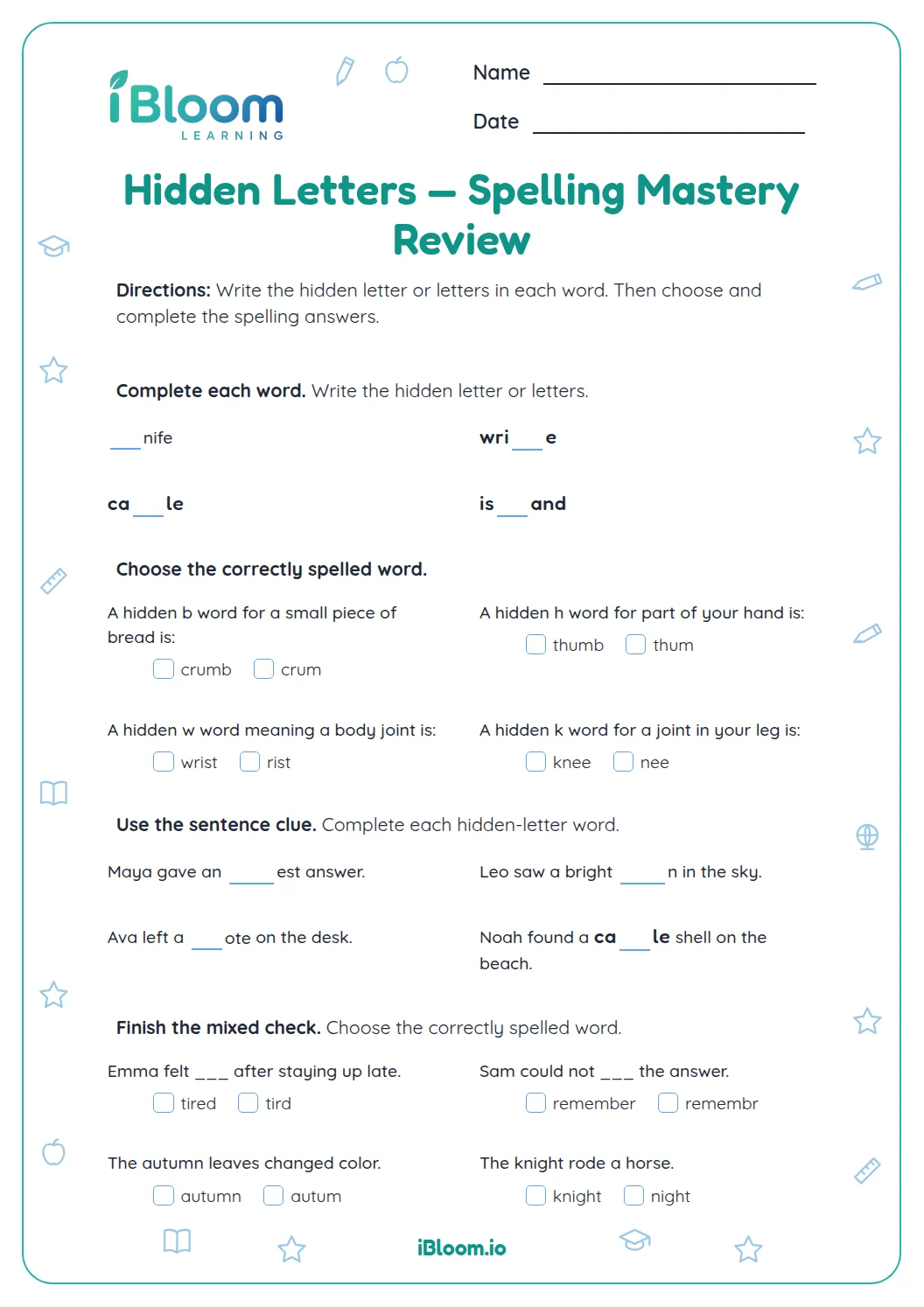
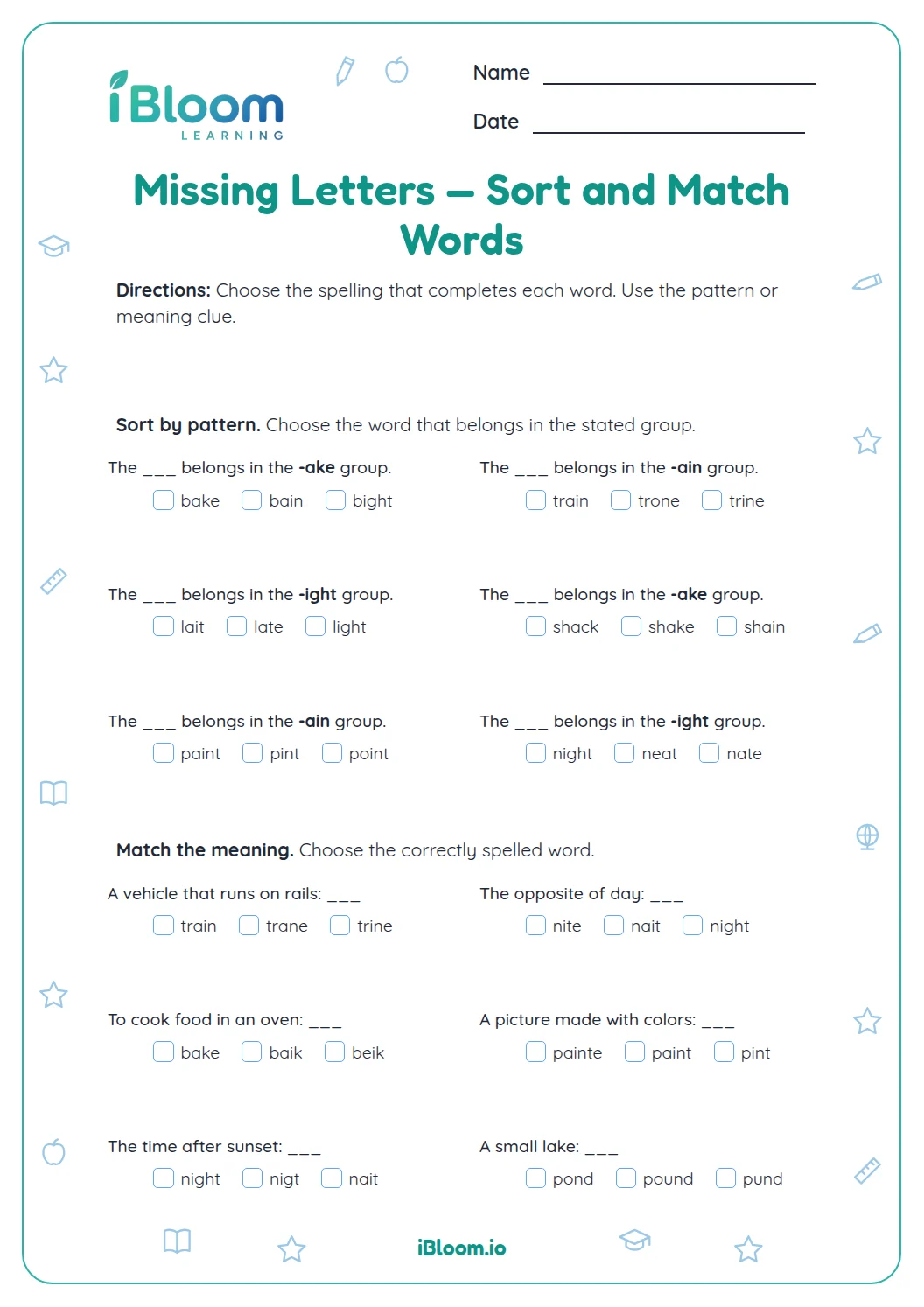
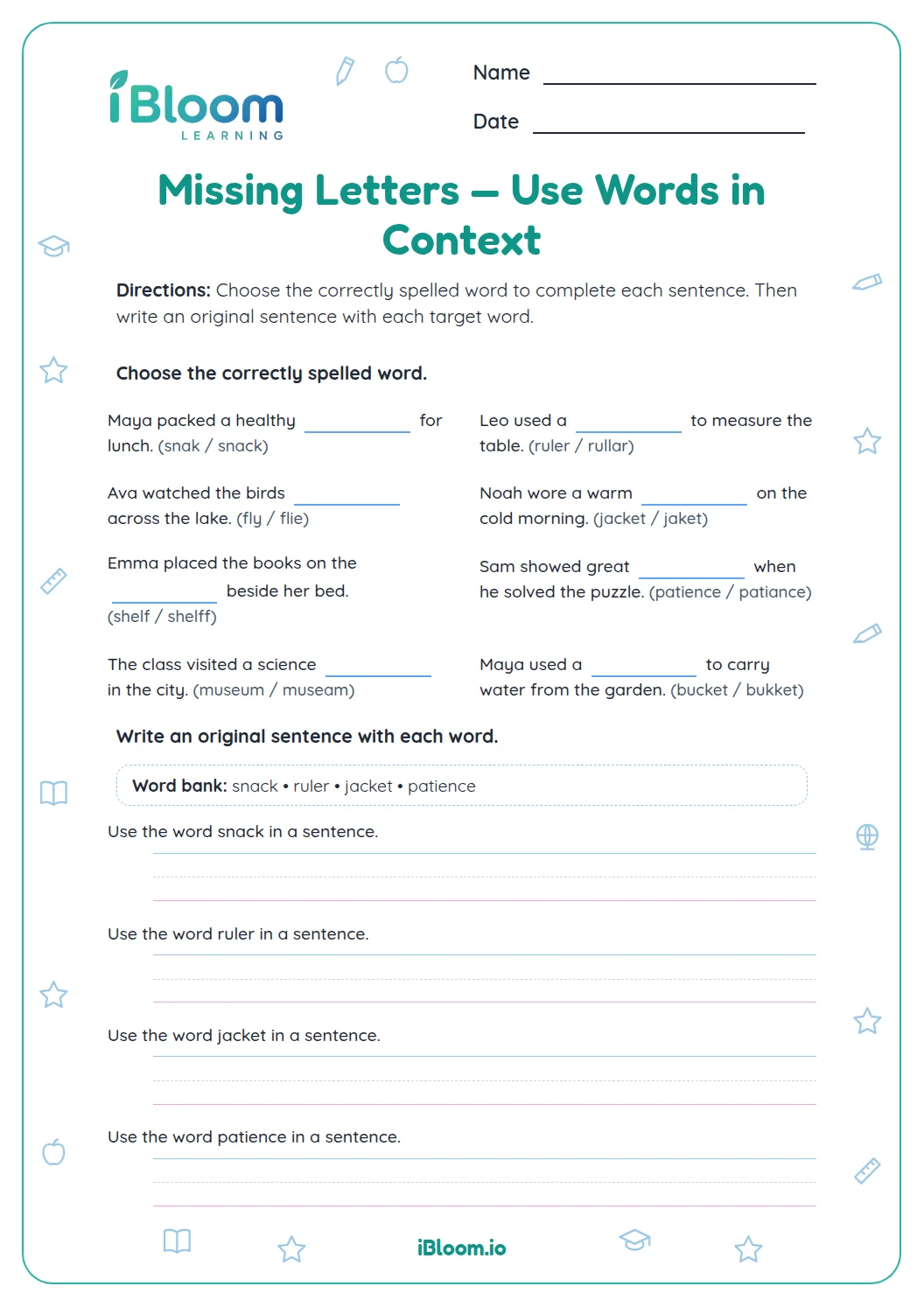
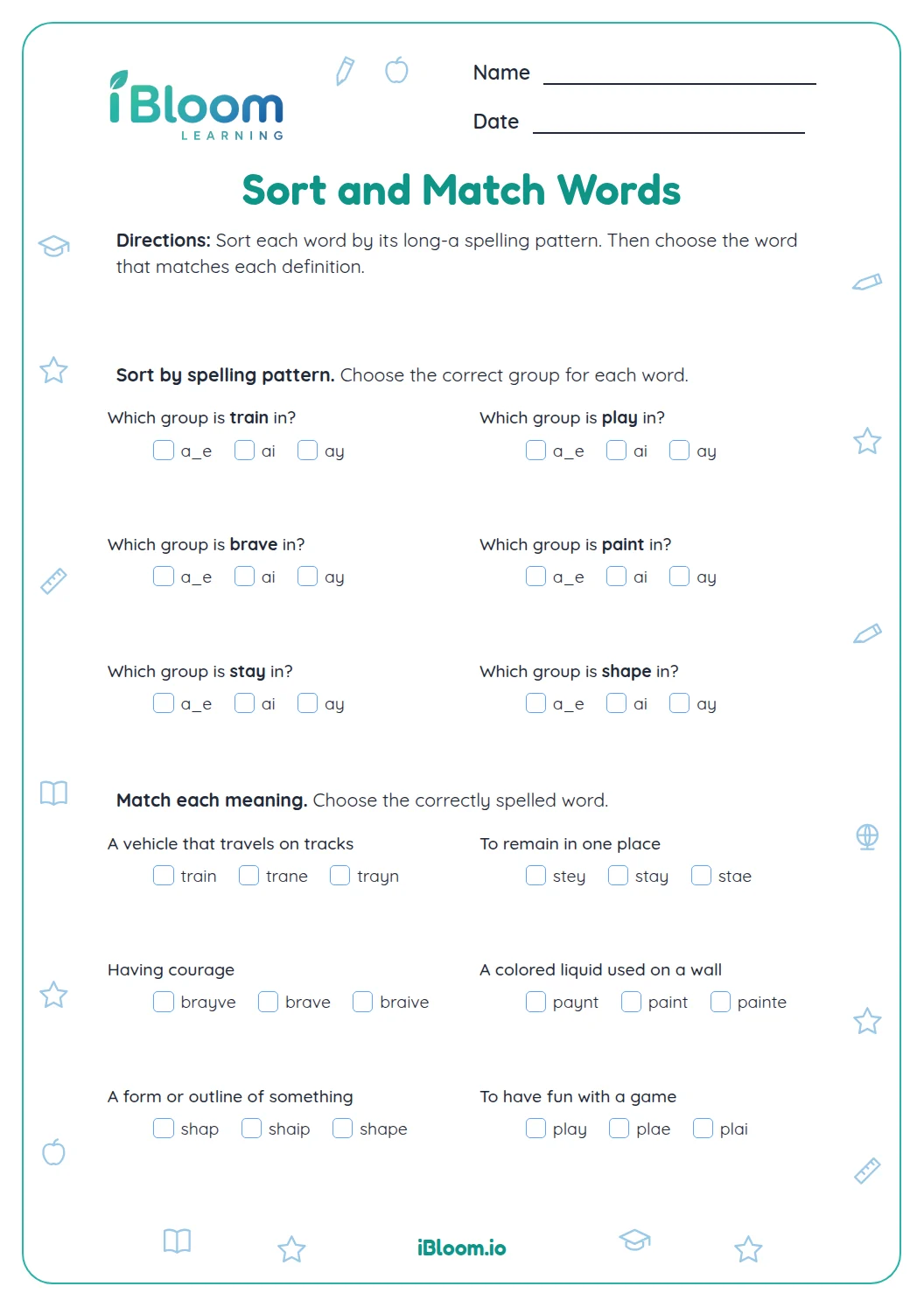
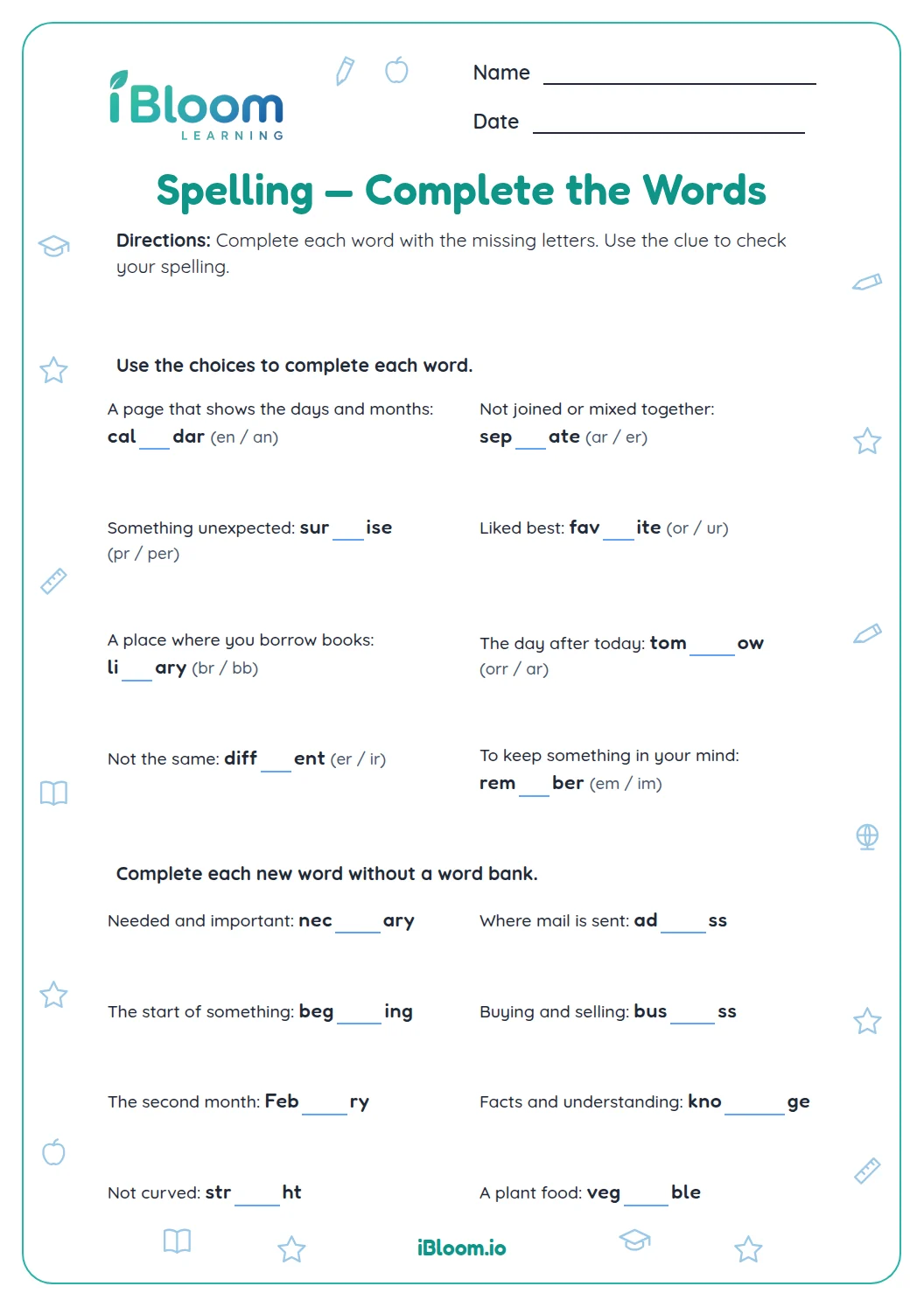
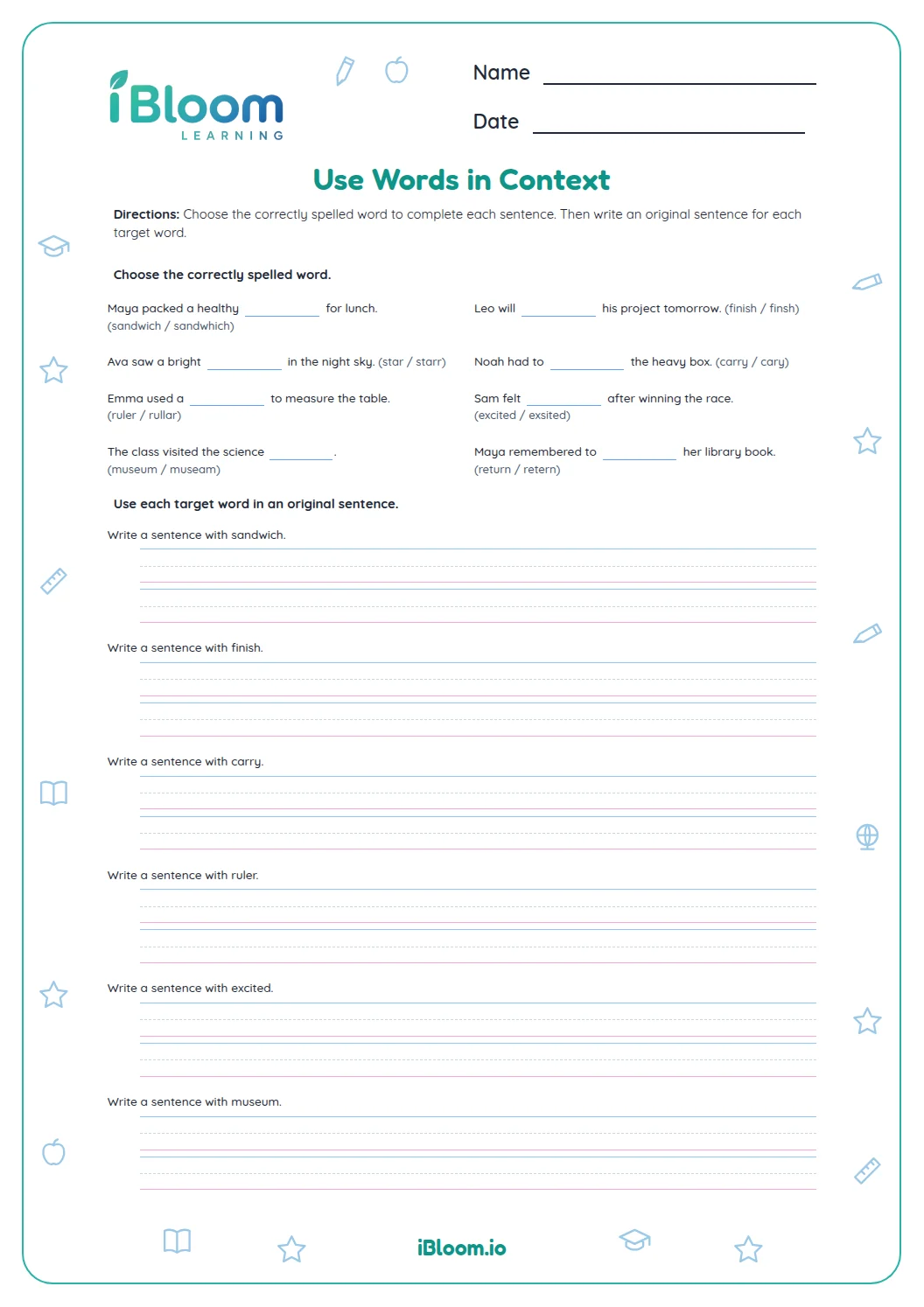
This free Grade 4 spelling worksheet practices words with silent letters in context. Students use sentence meaning to spell eight target words, then complete eight new sentences with those words. The two-page printable includes a separate answer key.
Aligned to L.4.2.d
How does a sentence help with spelling?
A sentence supplies meaning and grammar clues for the target word. In question 1, “I ____ the answer to the riddle” calls for know, the verb meaning to understand. Students choose the correct spelling, then use each target word in a new sentence.
- 1I ____ the answer to the riddle. (know / no)
- 2Know means to understand; no means the opposite of yes.
What should students do when a word is long?
The second half asks students to complete sentences with the target words. Context gives clues: a body part bends, a comb smooths hair, and an island has water around it. Read the completed sentence to check that both meaning and spelling fit.
How can students check each answer?
Read the sentence with the completed word. Check that the meaning fits, then inspect the spelling from first letter to last. This combines vocabulary and spelling review in each item.
How can a student work through the page?
- 1Read the sentence and the meaning clue.
- 2Say the target word and think about its syllables.
- 3Write the complete spelling in the blank.
- 4Reread the sentence to confirm the meaning.
- 5Check every letter against the target word clue.
What should students check?
The mistake
Writing a related word that does not fit the sentence.
The fix
Use both the meaning clue and sentence grammar to identify the target.
The mistake
Leaving out a repeated or unstressed letter.
The fix
Say the word in syllables and inspect the spelling from beginning to end.
The mistake
Copying the clue without checking its sentence form.
The fix
Reread the sentence and make sure the written word fits as used.
Students spell grade-level words correctly while using sentence context to select each word.
On this sheet:
Show the official wordingHide the official wording
Spell grade-appropriate words correctly, consulting references as needed.
What to practice next
Make more practice
Further reading
Questions parents and teachers ask
How many spelling prompts are on the worksheet?
There are 16 prompts across two worksheet pages: eight spelling choices and eight sentence completions. The second part uses the same eight target words in new contexts, including a bent body part, a baby sheep, and a truthful answer. A separate key lists the correct spelling for each blank.
What does “hidden letters” practice mean here?
The old activity used spelling choices and target words in sentences. This rebuilt version keeps both parts: students choose the correct spelling in the first eight prompts, then use sentence meaning to retrieve each target word in the second part. The answer key lists each response.
Should students copy the clue word directly?
The first eight prompts provide two spellings to compare, so students choose the word that fits the sentence. In the second half, they use context clues to retrieve and spell a target word. Rereading helps check that the spelling and meaning both fit.
How can students check long words?
Say the word slowly, divide it into syllables, and inspect the spelling from first letter to last. Students can then reread the sentence and compare their spelling with the clue. Saying a longer word in syllables can help students inspect its spelling.
Why practice spelling inside a sentence?
A sentence adds a meaning cue and helps students decide which word belongs. Writing the word in that context supports checking both the spelling and how it is used. The sentence provides a meaning cue for retrieving and spelling the target.
What can students practice next?
Students can try missing-letter spelling practice next, or use a broader spelling review page. This worksheet focuses on eight target words, first in sentence choices and then in original sentences. A different format can help students revisit the same spellings in another way.