



About this worksheet
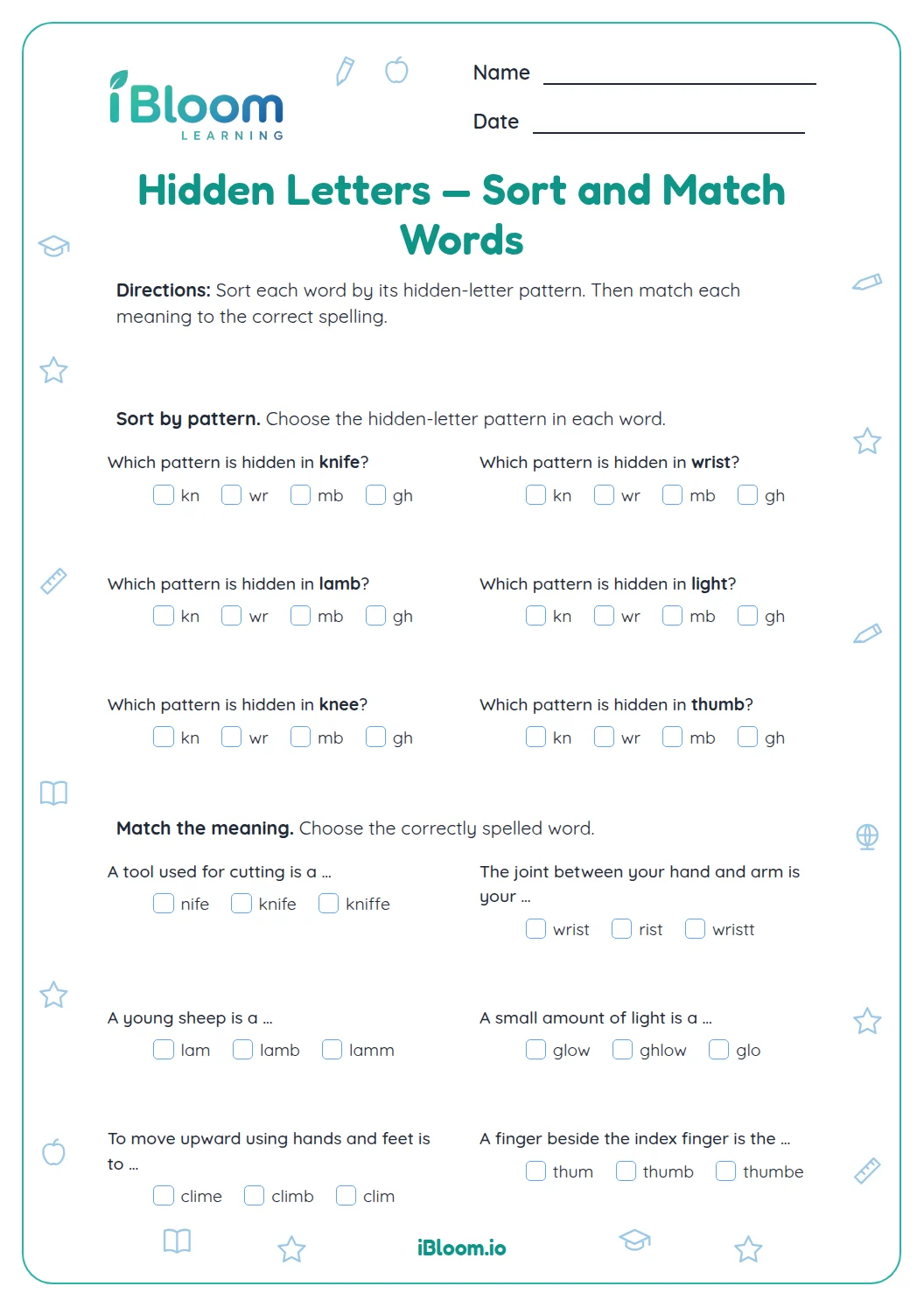
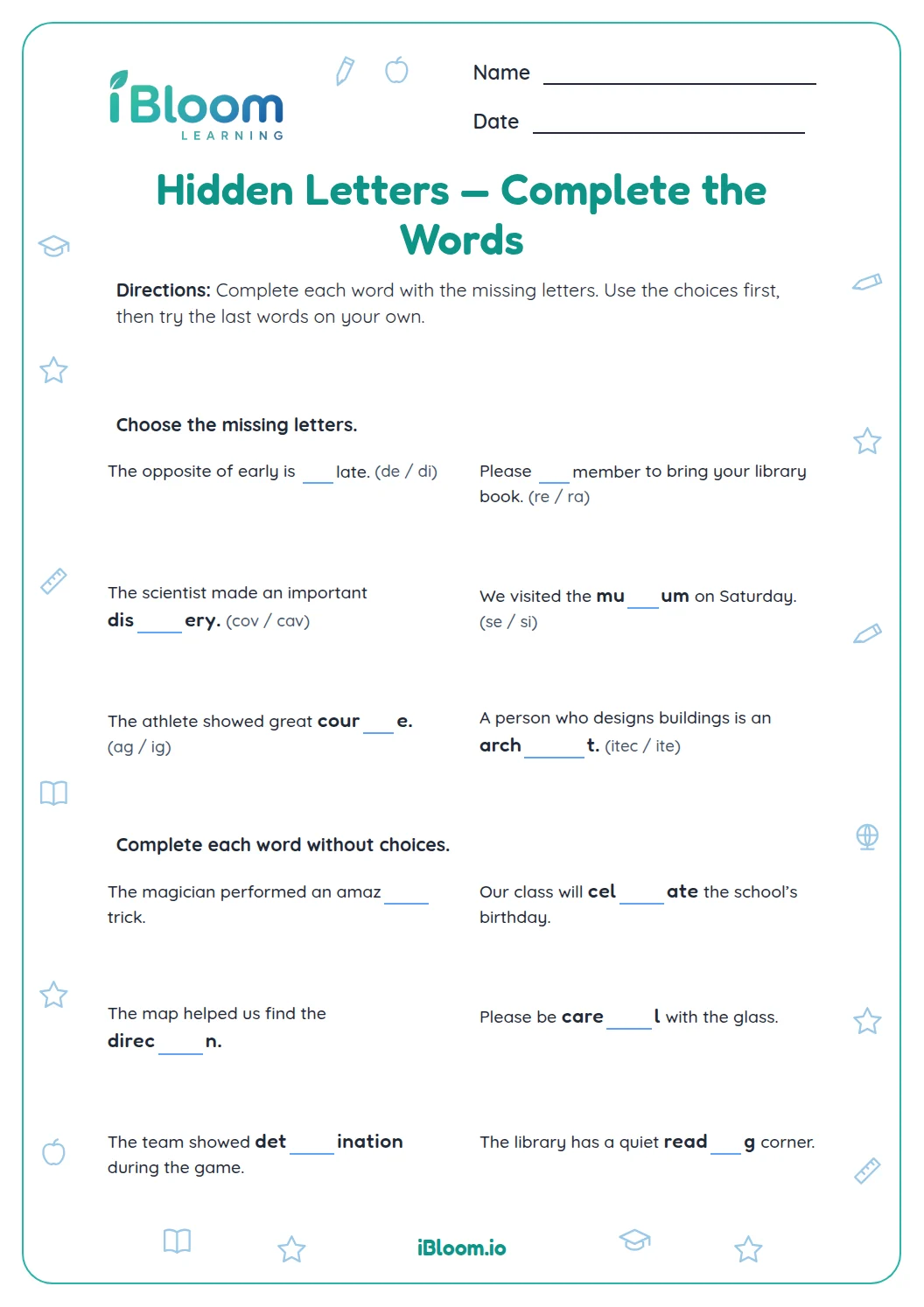
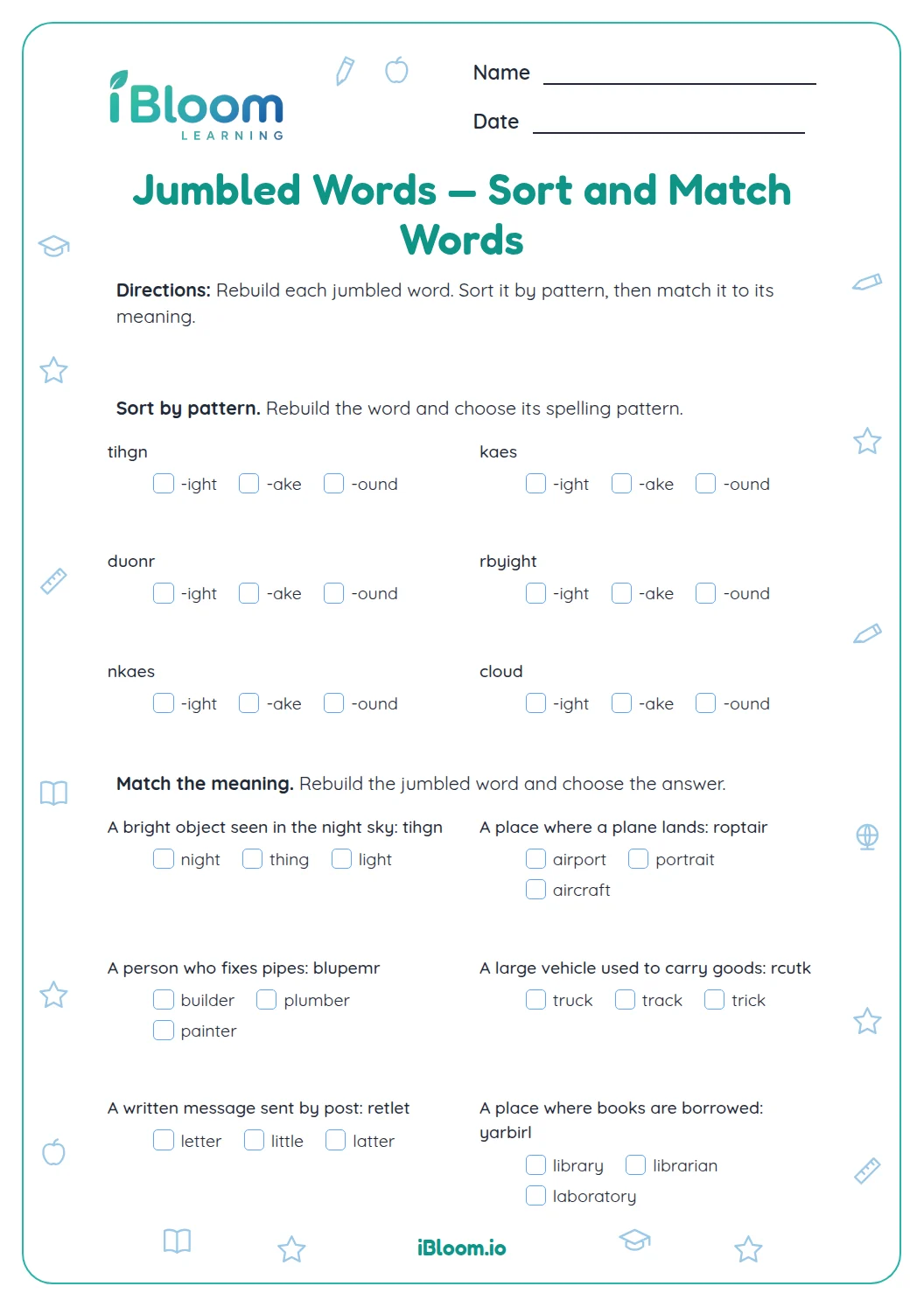
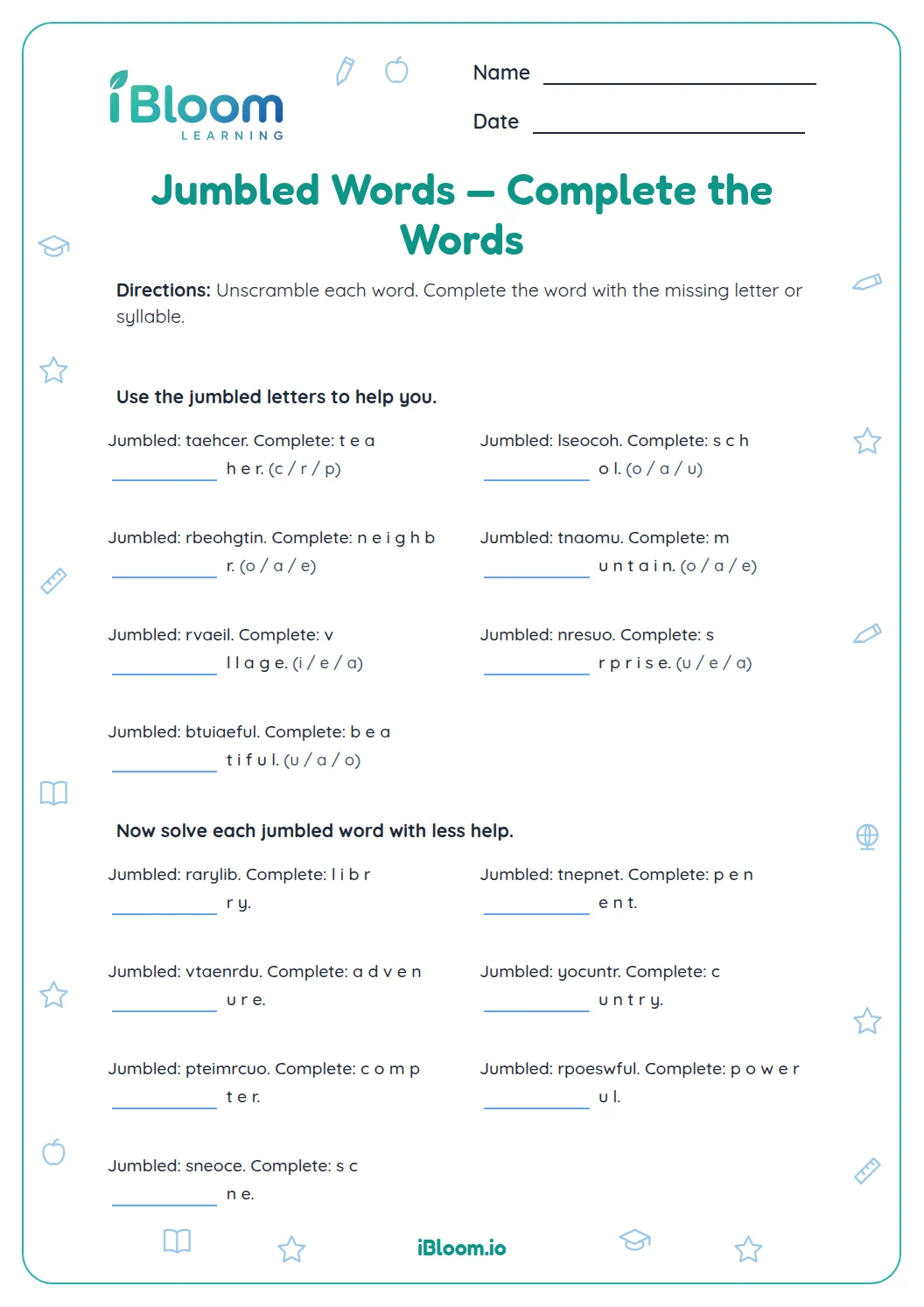
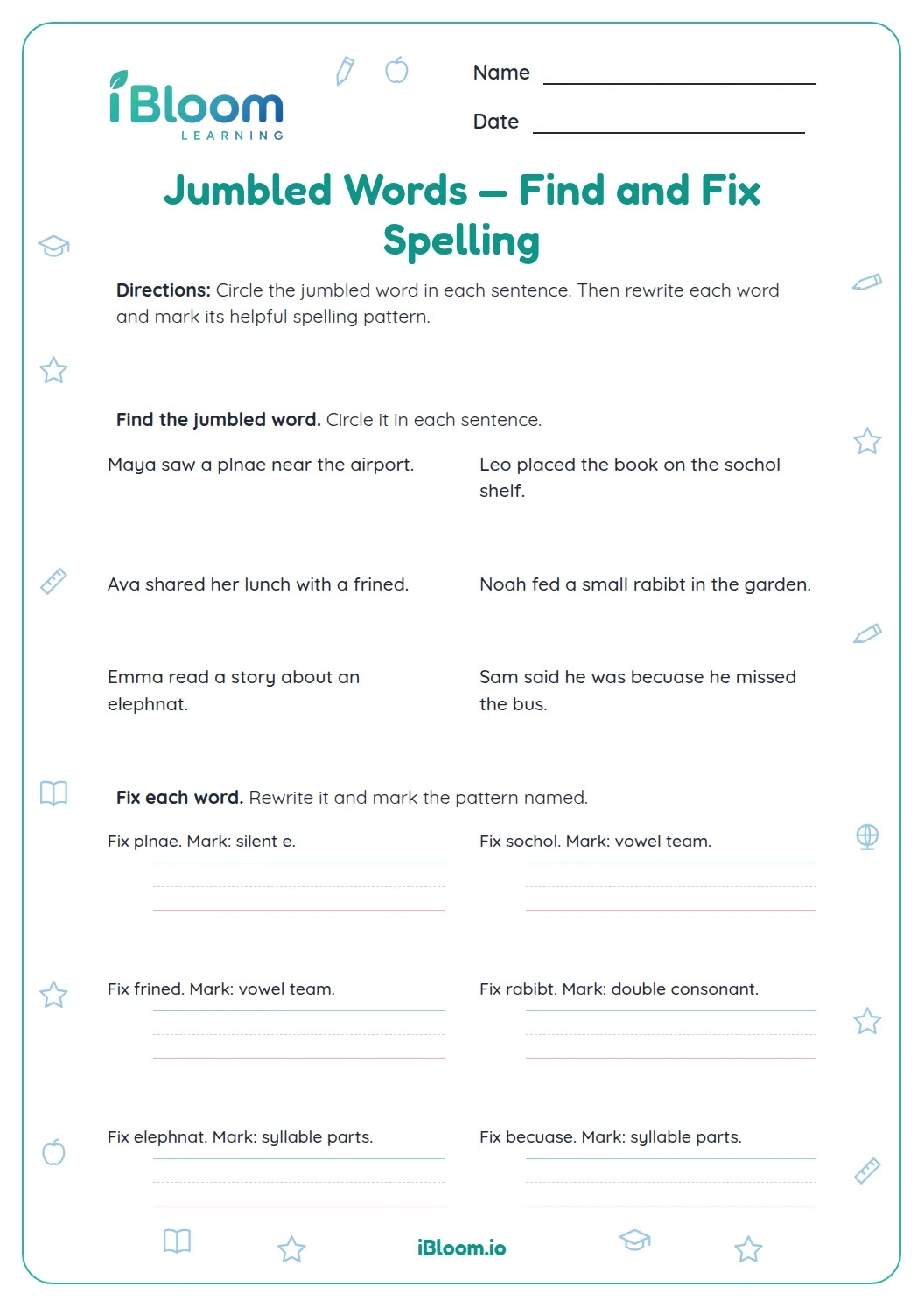
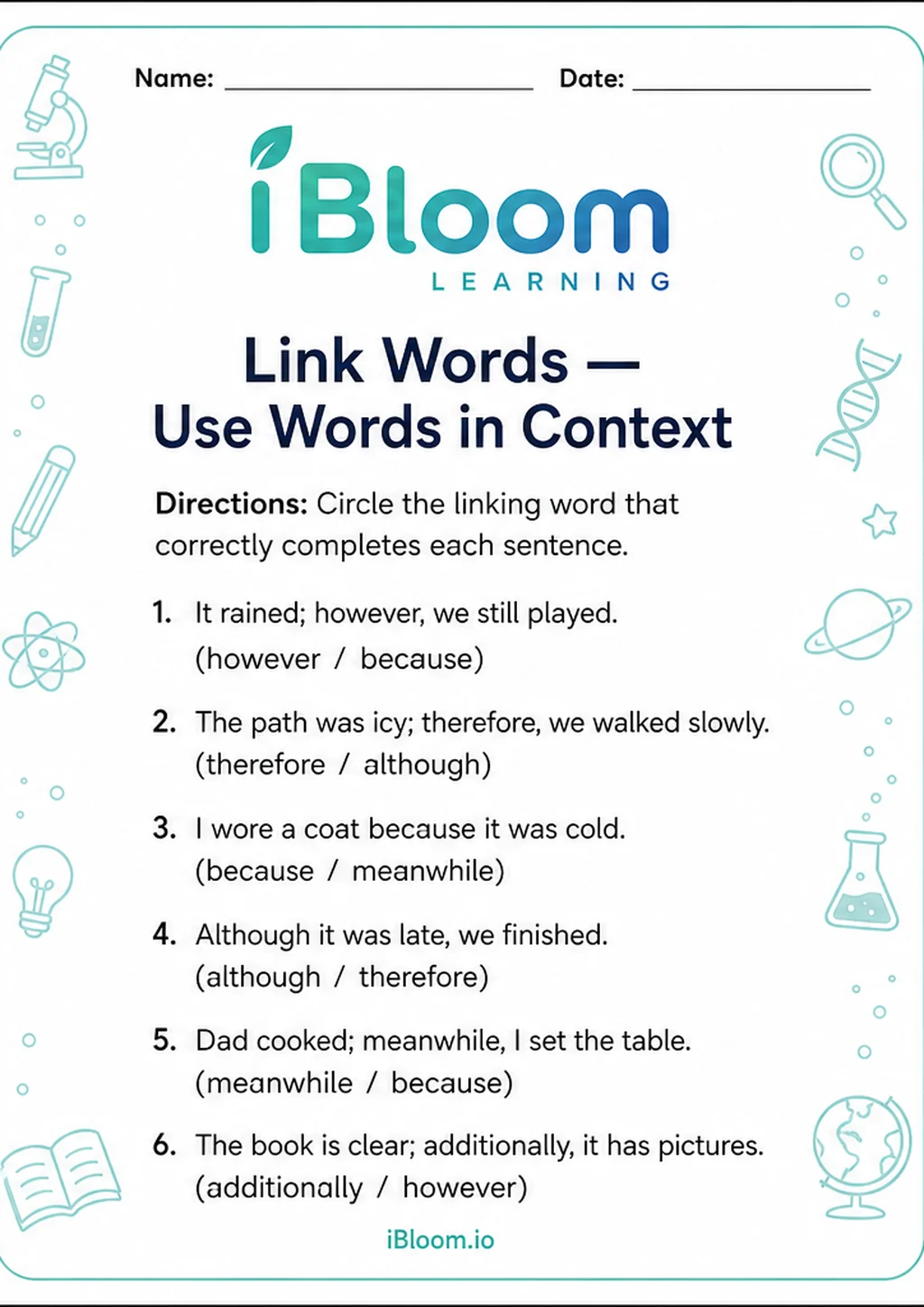
This free printable Grade 4 spelling worksheet asks learners to use a correctly spelled word in a sentence. Part A pairs each context with two spellings; Part B supplies a blank and asks for the word that makes the sentence sensible. The separate key lists all 16 answers.
What kinds of spelling practice are included?
The 16 items use two formats. In Part A, learners choose between a correct spelling and a close misspelling, such as different and diffrent. In Part B, they write a word that completes a sentence, such as “May I have one ___ of toast?”
- 1May I have one ___ of toast?
- 2The sentence calls for piece: “one piece of toast.”
- Part A: 8 choices between correct and incorrect spellings
- Part B: 8 sentence completions using spelling words
How does context help with spelling?
Read the whole sentence before choosing a spelling. Meaning narrows the choices: “Walk ___ to the blue door” calls for straight, while “I cannot decide ___ to read or draw” calls for whether. Then check every letter in the word.
How can I review a missed word?
Compare the response with the key, then reread the full sentence with the correct word. Ask the learner to say the word, notice a tricky letter pattern, and use it in a fresh sentence.
How to use this worksheet
- 1Read the complete sentence before deciding.
- 2In Part A, compare every letter in both choices.
- 3In Part B, use the sentence meaning to recall the word.
- 4Reread the sentence with the selected word.
- 5Check all 16 responses with the answer key.
Common mistakes and quick fixes
The mistake
Picking a familiar-looking spelling without checking each letter.
The fix
Compare the two choices letter by letter, then reread the sentence.
The mistake
Writing a word that is spelled correctly but does not fit the meaning.
The fix
Read the sentence with the word in the blank and check that it makes sense.
The mistake
Confusing homophones such as whether and weather.
The fix
Use the sentence clue: “decide whether” introduces a choice.
What to practice next
Make more practice
Questions parents and teachers ask
How many questions are on this worksheet?
There are 16 questions on this printable. The tasks focus on spelling in context, and the separate answer key makes it easy to check each response after the learner finishes. The items are numbered in sequence, so learners can work from the first section to the last.
Are the answers all given as choices?
Only the first eight questions provide spelling choices. In the second part, learners write the word that completes each sentence; the answer key supplies the expected spelling for those blanks. Have the learner point to the exact letters or context clue that supports the response.
How should I use the answer key?
Let the learner finish a part before opening the key. Compare each response with the model, then reread the sentence or passage detail that supports it. For written answers, the key gives a sample response; another answer can work when it is accurate and supported.
How long does the worksheet take?
Allow about 20 minutes for 16 questions, with extra time for reading or discussing responses. A child can complete one part at a time and return to the rest later. The answer key is separate so it can stay out of view during practice.
What materials are needed?
Print the worksheet and its answer key, and have a pencil ready. The activities use the printed page, so no extra materials are needed. An adult may read directions aloud for a younger learner, then invite the child to choose or write each answer.