





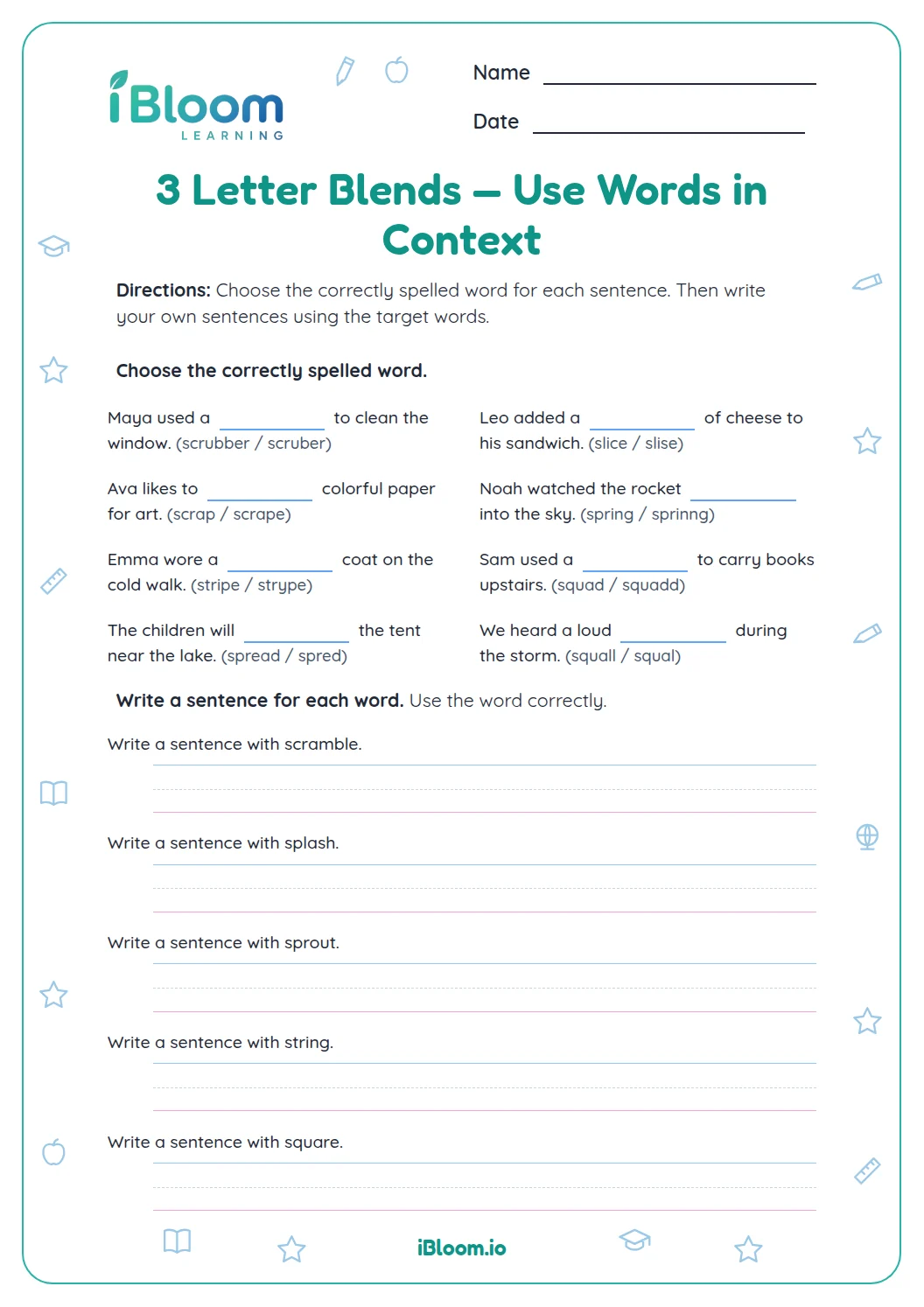
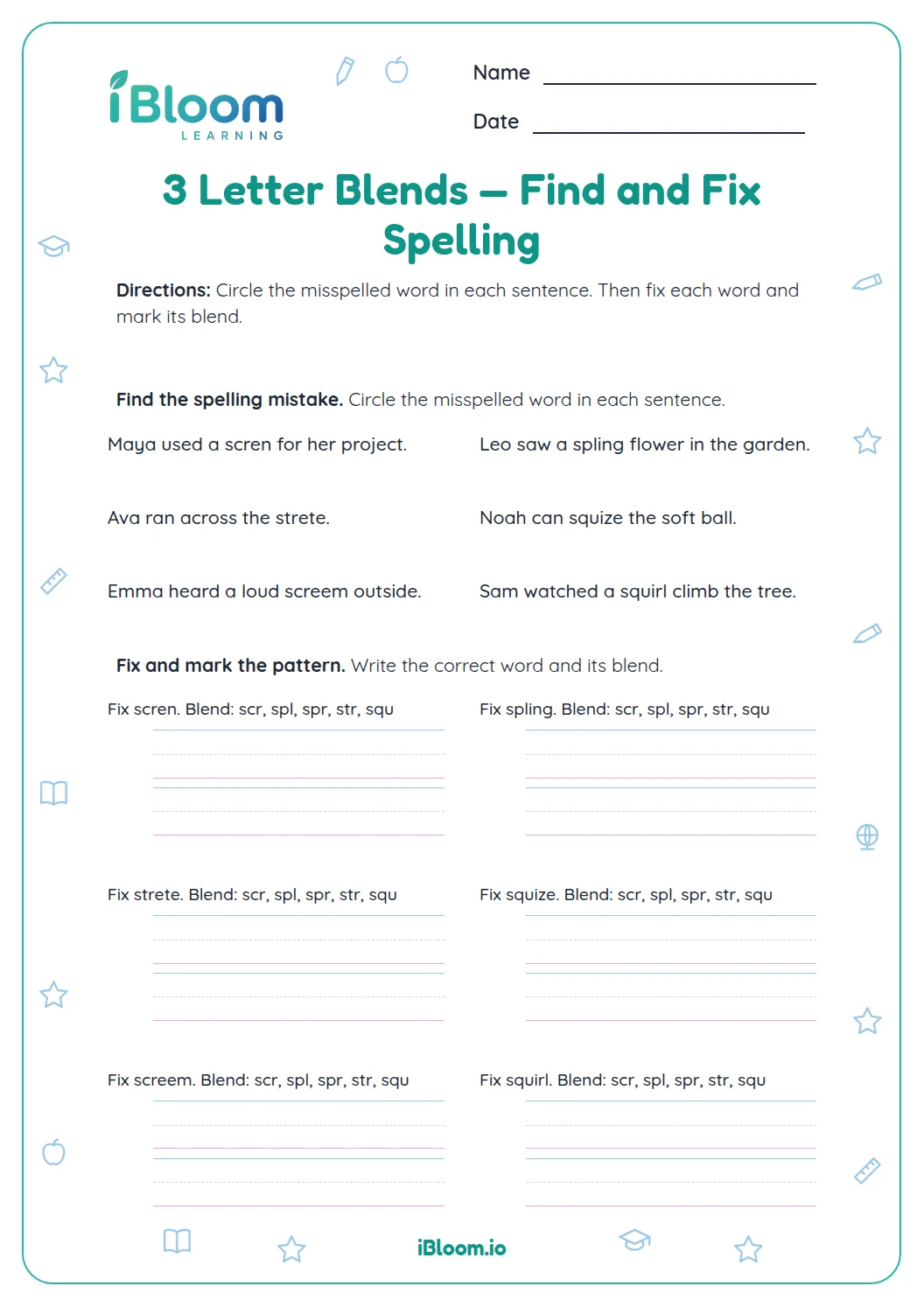
About this worksheet
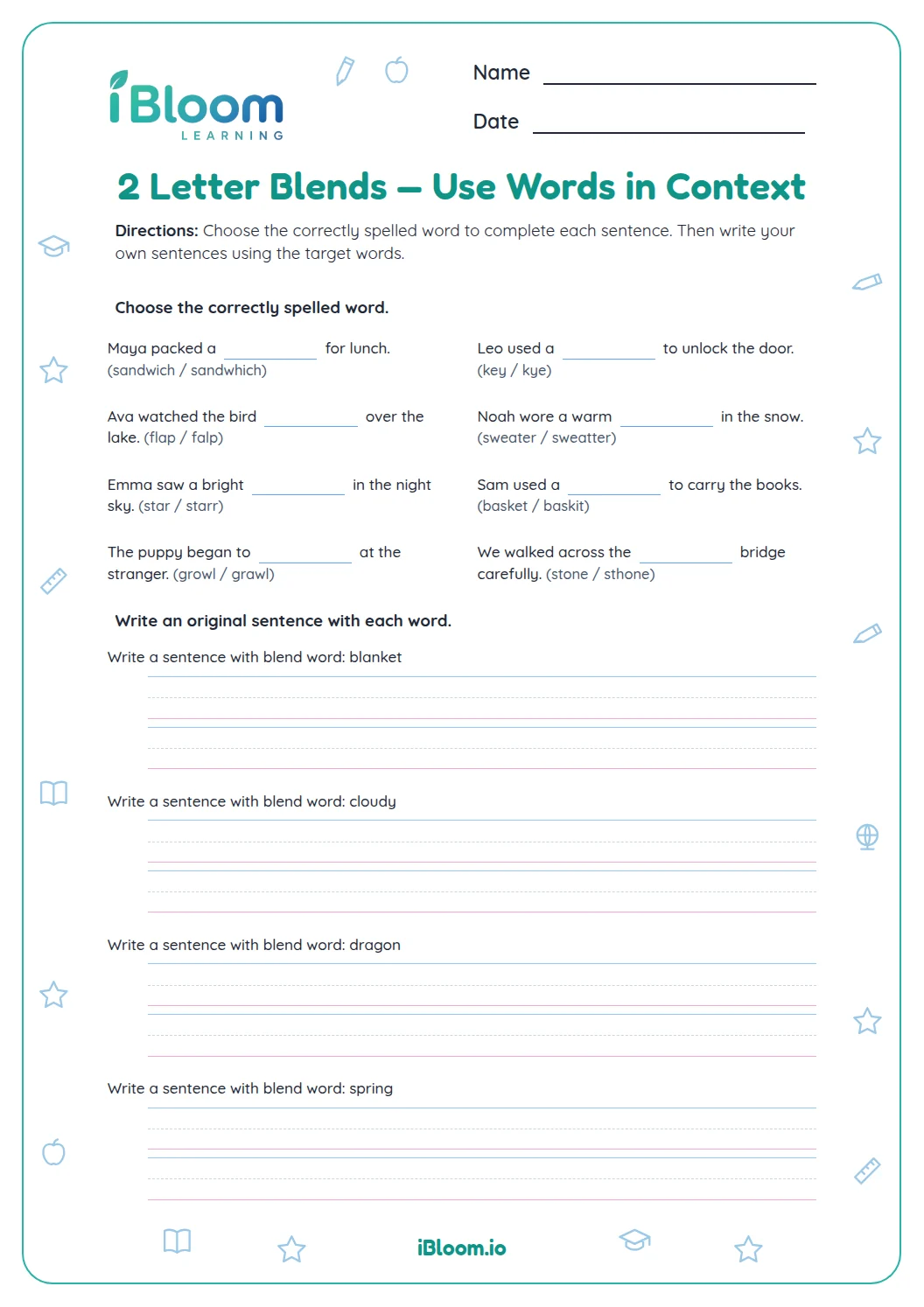
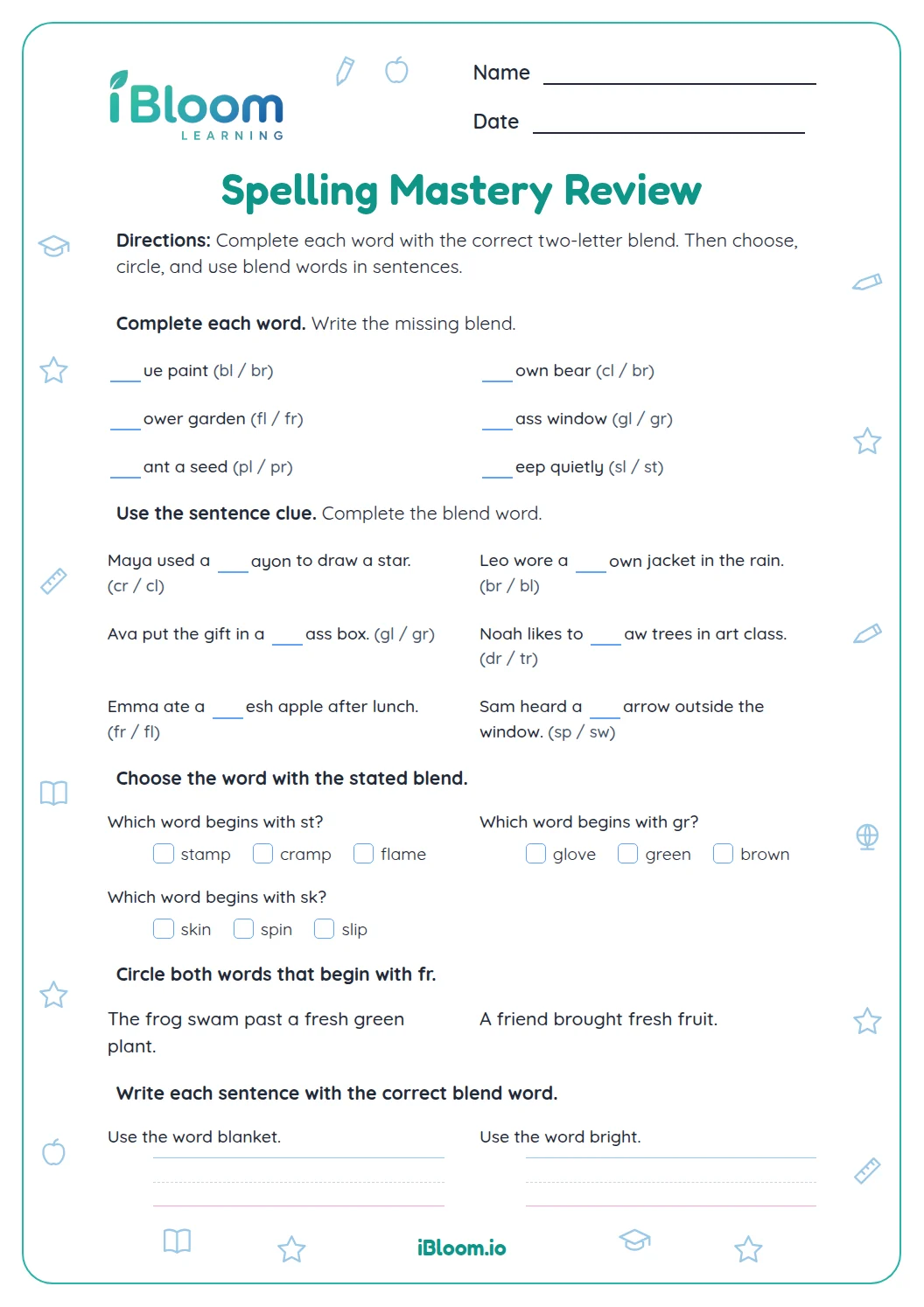
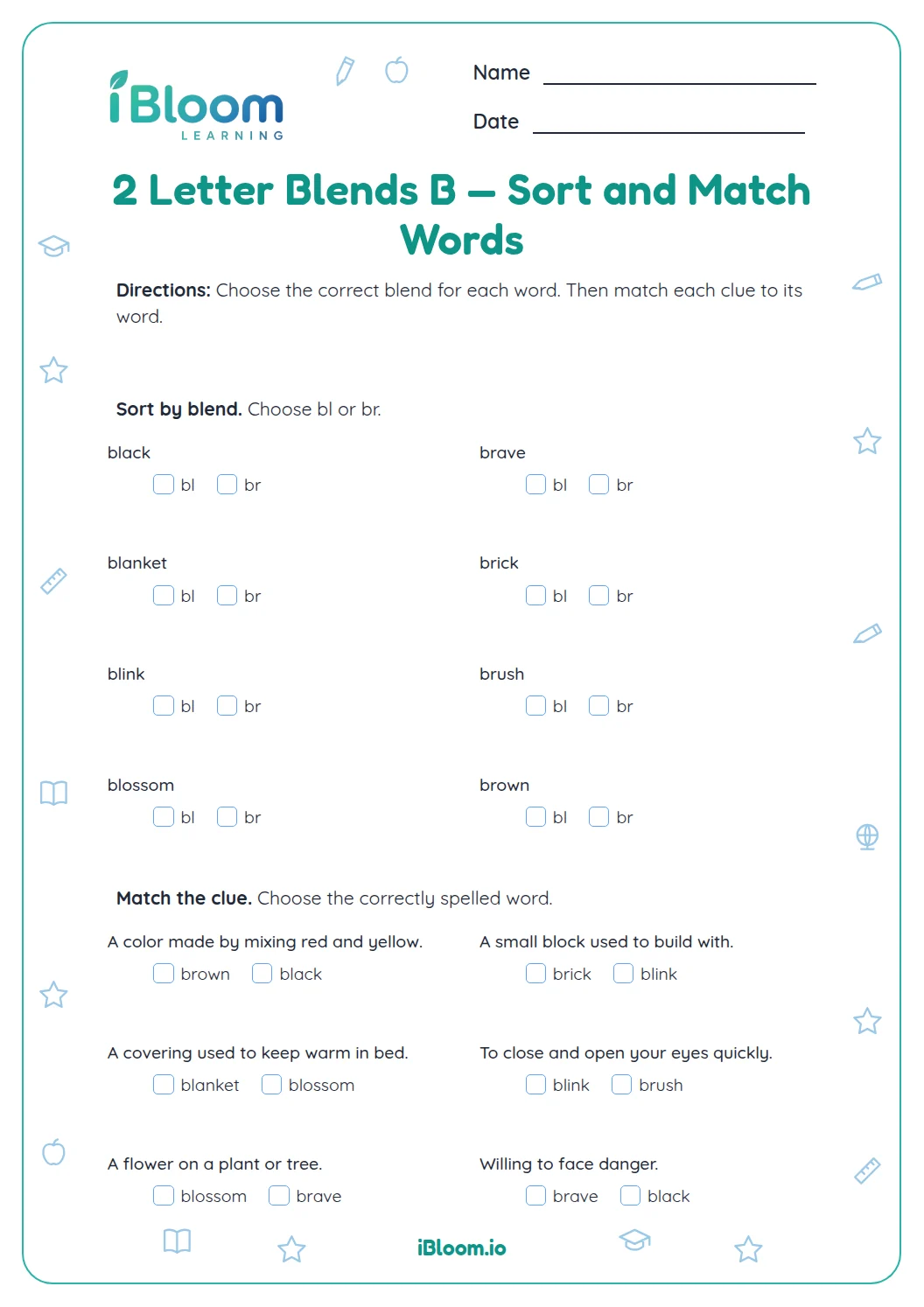
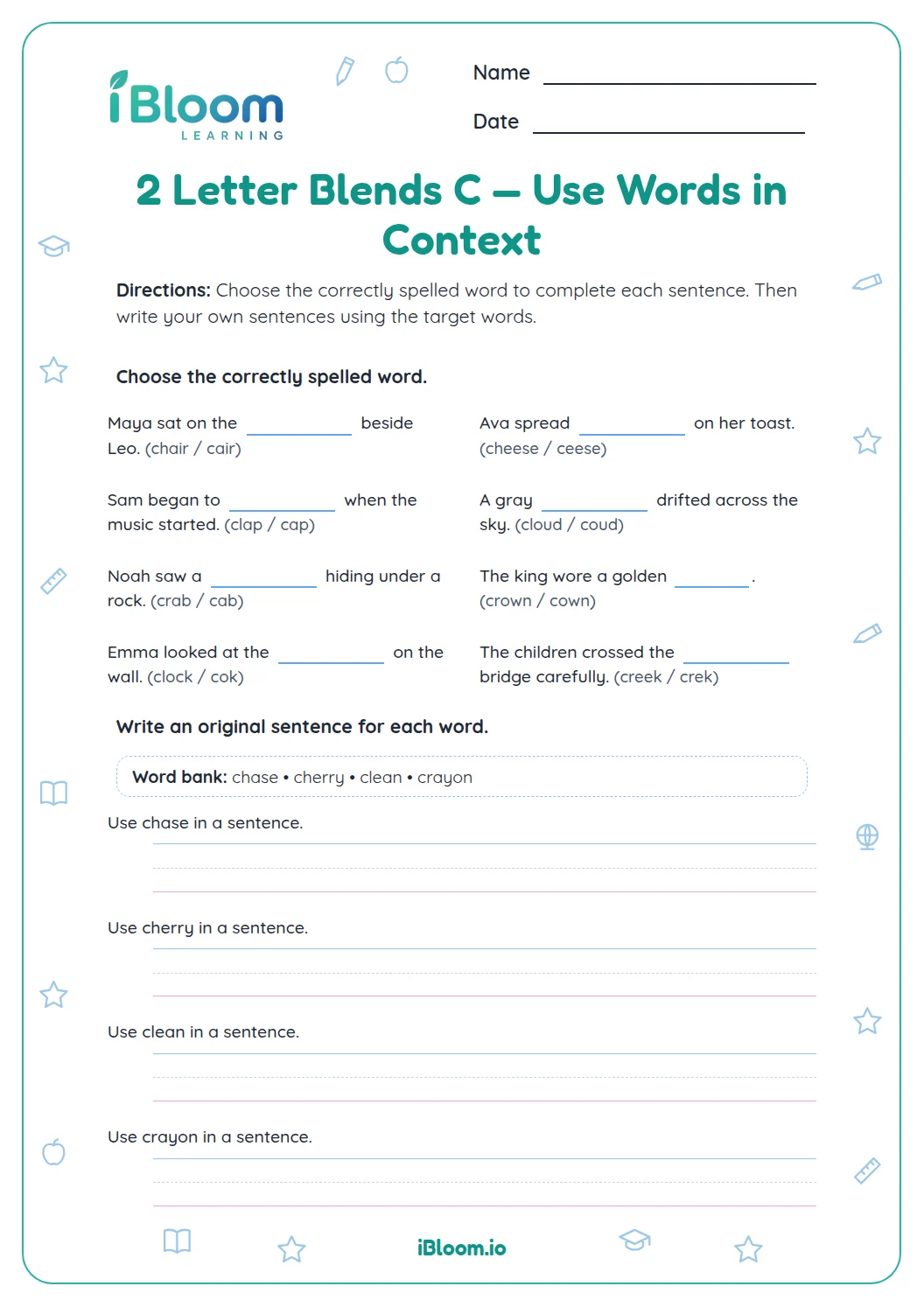
This free Grade 4 spelling worksheet gives students 16 ways to work with two-letter consonant blends. They identify the opening blend in familiar words, supply missing beginning letters, and check each completed word against a clue. The two parts move from recognizing a blend to spelling it in a full word. The page practices Common Core L.4.2.d, spelling grade-appropriate words correctly. A separate answer key lists each response.
Aligned to L.4.2.d
What makes a consonant blend different?
In a blend, each consonant keeps its own sound, and the sounds run together. The br in “brush” is a blend because you can hear /b/ and /r/. In contrast, sh usually represents one sound.
Part A asks students to identify the opening blend in eight words. Part B supplies the rest of a word so students can spell its two-letter beginning.
- 1Question 1: “brush” begins with b followed by r.
- 2Choose br, because both consonant sounds can be heard.
- 3Do not choose bl; that would make a different word.
How can students complete a word from its clue?
Read the clue first, then say the word and listen for its first two consonants. In question 9, the clue points to “flag,” so the missing beginning is fl. Check that the completed spelling makes a real word and fits the clue.
Part B connects spelling with a short clue. Read the whole word after filling the blank to make sure it matches the meaning.
How should students check their blend spelling?
Have the student say the blend and the rest of the word, then write the full word once. For a missed item, cover the choices and try spelling it again from the clue. This checks whether the spelling is remembered, not just recognized.
How to use this worksheet
- 1Read the whole word before choosing its blend.
- 2Say the first two consonant sounds in order.
- 3In Part B, use the clue to identify the word before filling the blank.
- 4In Part C, reread the sentence with your choice in place.
- 5Use the key to revisit any spelling that did not fit the clue.
Common mistakes and quick fixes
The mistake
Treating a blend like one sound, as in sh.
The fix
Say each consonant in “brush” separately: /b/ then /r/.
The mistake
Writing a blend that makes a different word.
The fix
Use the clue and reread the completed word to check its meaning.
The mistake
Choosing a familiar spelling without checking the sentence.
The fix
Read the whole sentence with the word inserted; its meaning should fit.
Common Core alignment
This page asks students to spell and recognize Grade 4 words with consonant blends.
Spell the blend words correctly in choices and completions.
On this sheet: Questions practice spelling familiar words with two-letter consonant blends.
Show the official wordingHide the official wording
Spell grade-appropriate words correctly, consulting references as needed.
What to practice next
Make more practice
Further reading
Questions parents and teachers ask
What is a two-letter blend?
A two-letter blend has two consonants next to each other, and each consonant keeps its sound. The br in “brush” is a blend because you can hear /b/ and /r/. In contrast, sh usually represents one sound. The worksheet focuses on hearing and spelling the consonants that start a word.
How many questions are on the blend worksheet?
There are 16 questions in two parts. Students identify beginning blends in eight words, then supply a missing beginning in eight more words. Every completion uses a two-letter consonant blend and a short clue. This progression checks listening and spelling accuracy together.
Why are some choices real words but still incorrect?
A spelling choice can make a different word and still fail the sentence clue. For example, “grass” and “glass” are both words, but only “grass” fits the sentence about growing beside a path. Students should check both the letters and the meaning.
Should students say the sounds aloud?
Yes. Saying a word can help students hear both consonants at its beginning. They can say “crisp” slowly, listen for /c/ followed by /r/, and then write the blend. Rereading the clue helps confirm that the completed word fits. Listen for both sounds in order.
What does the answer key include?
The key lists the correct blend for all 16 questions. In Part B, it gives the two missing beginning letters, such as fl for “flag.” Students can then say and write the full word to review the spelling pattern. This makes a quick review routine.
What can students practice next?
The linked 2 Letter Blends B and C pages give more practice with the same pattern, and the 3 Letter Blends page adds another consonant at the beginning. A useful next step is to ask the student to sort a few new words by their starting sounds.