





About this worksheet
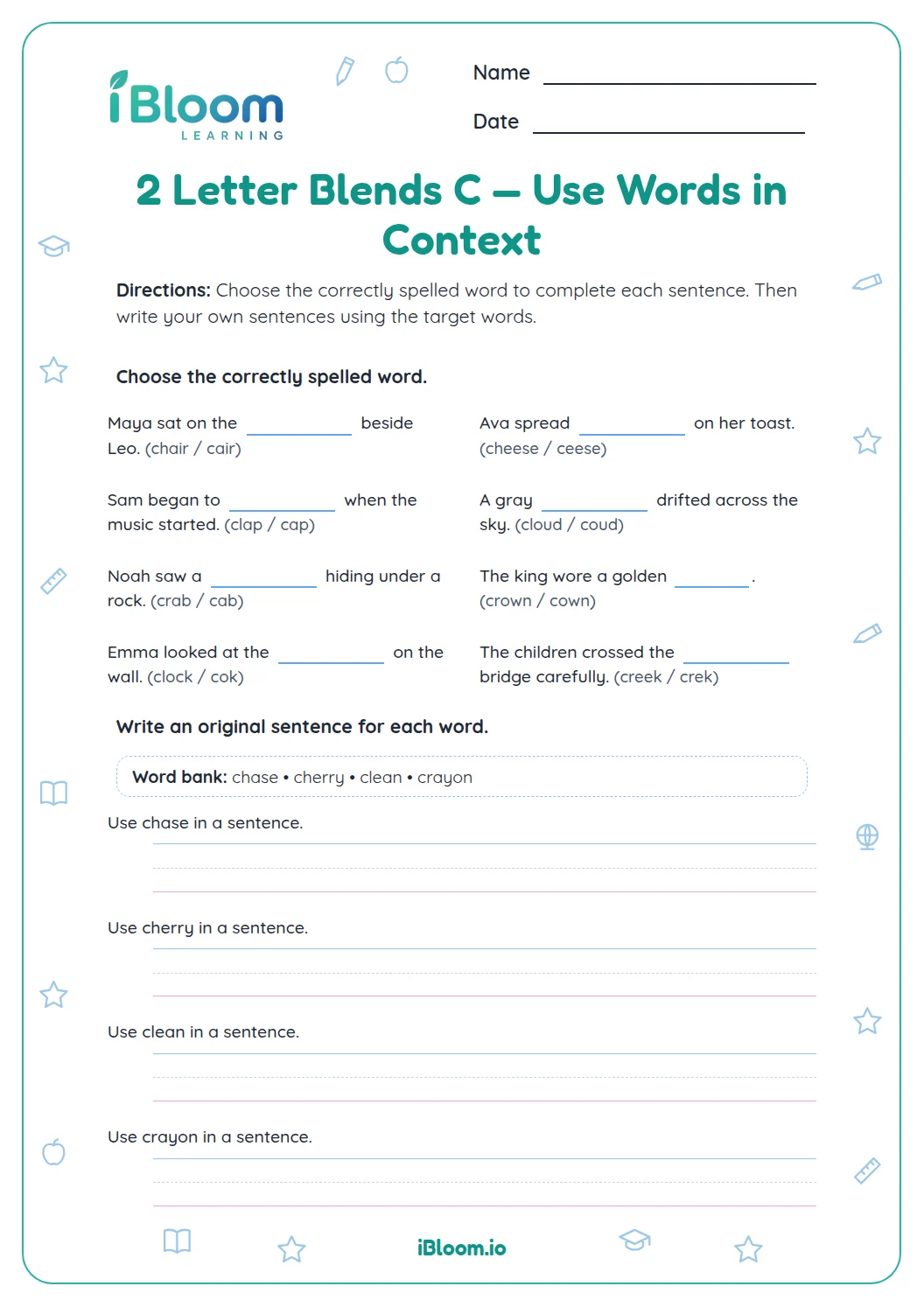
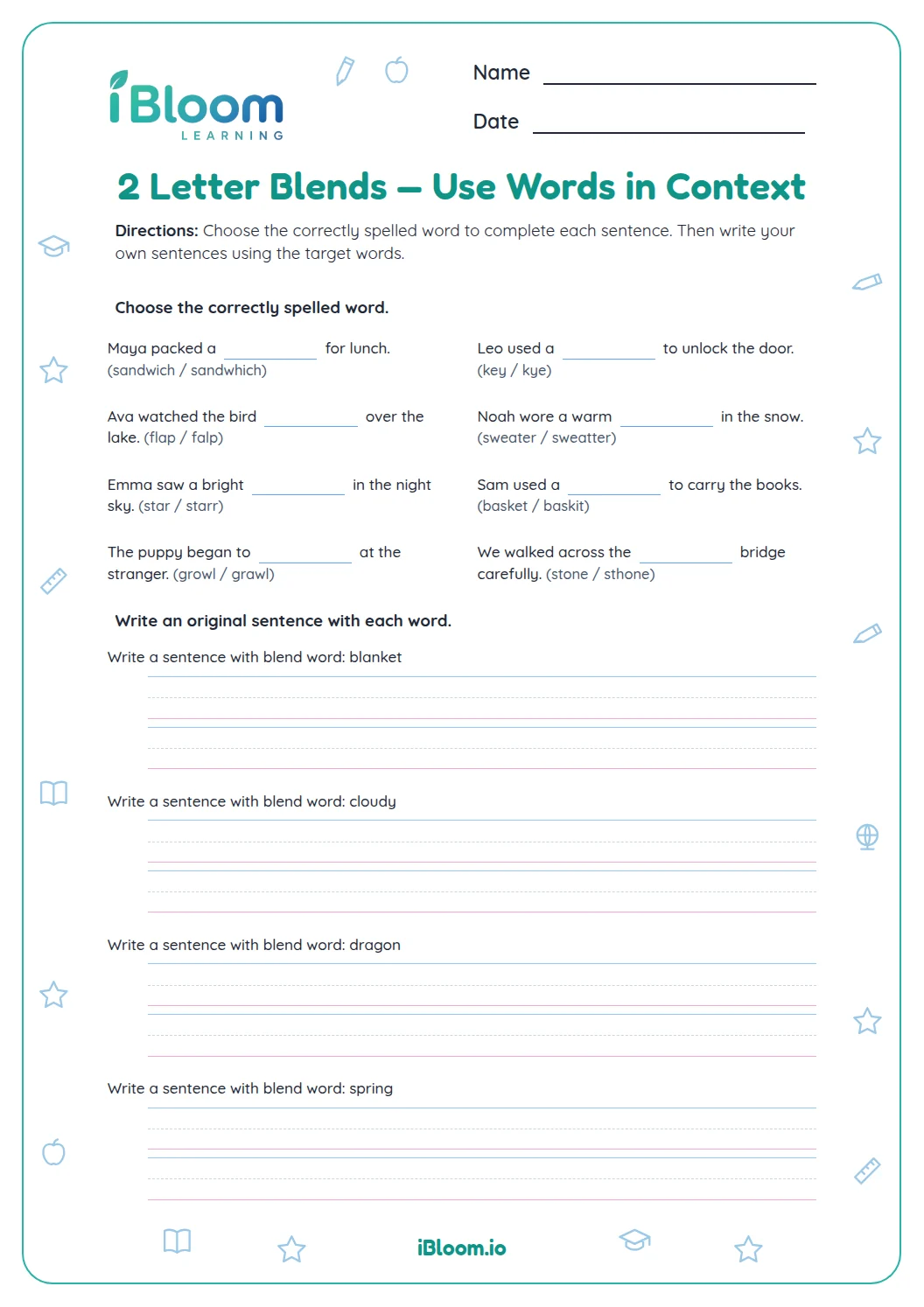
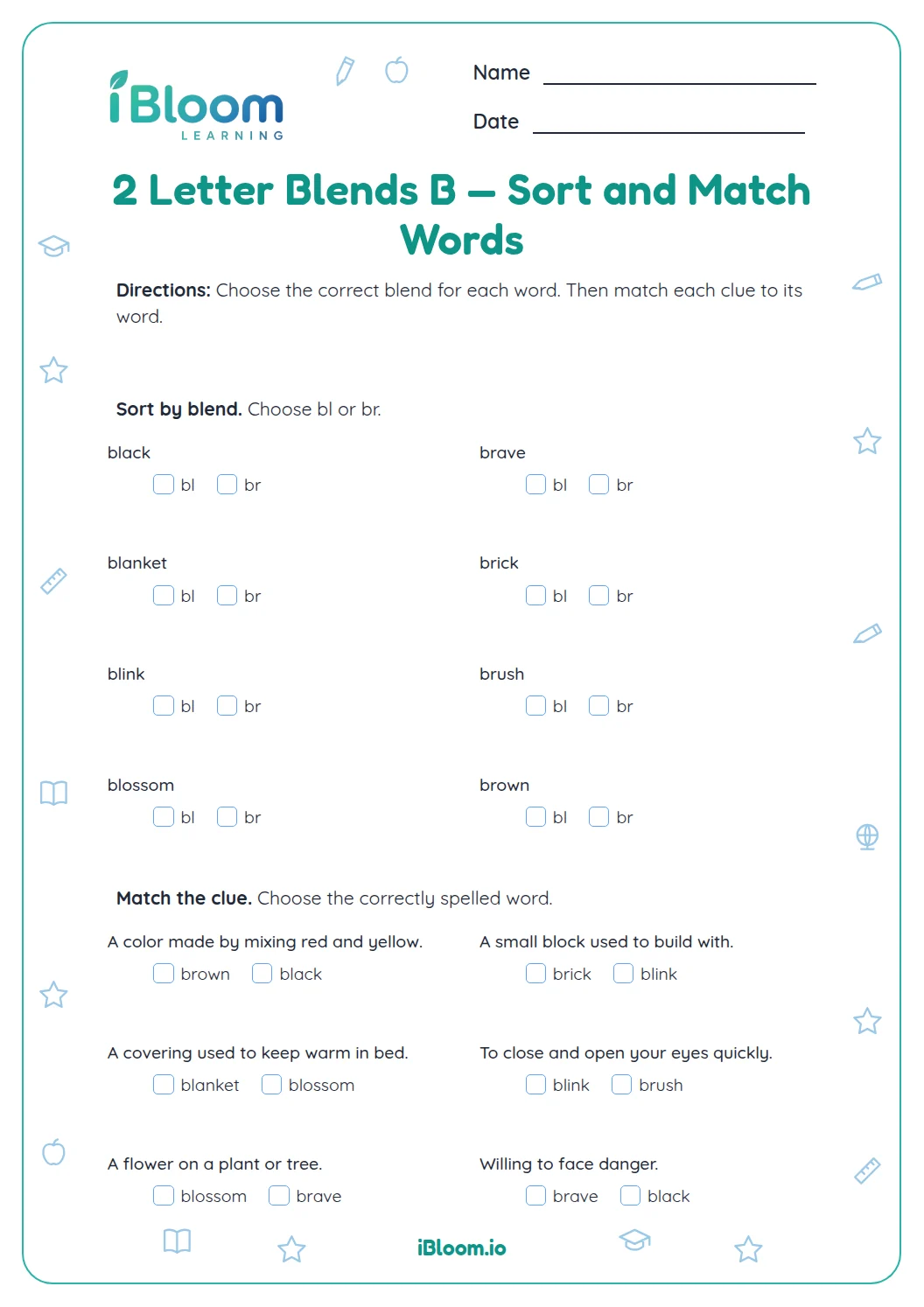
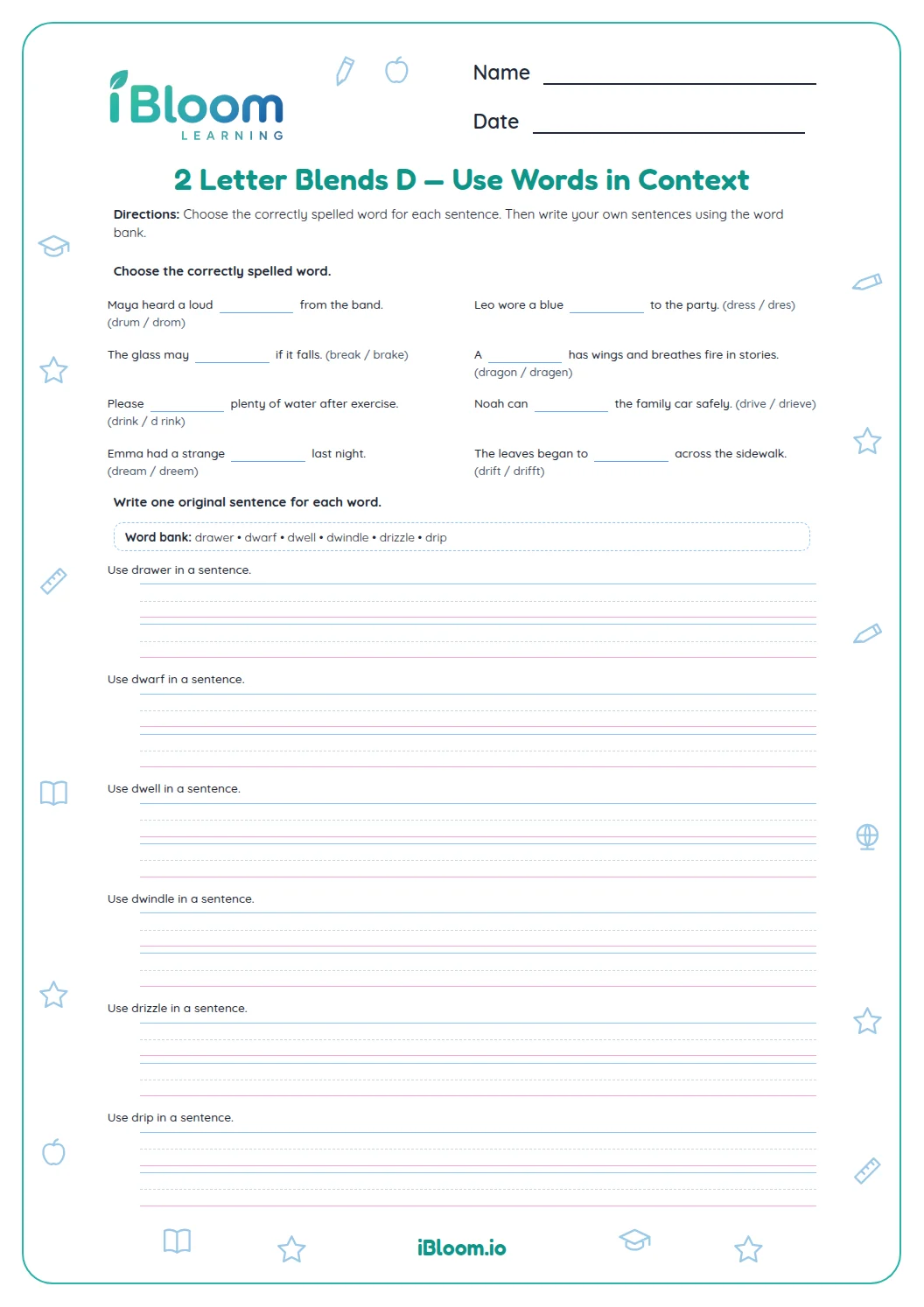
This Grade 4 spelling-list worksheet practices the cl and cr beginning blends. Students identify the first two consonants in familiar words, sort four words by their starting blend, and add a new example. The 14 questions focus on the C-list pattern, with a separate answer key for checking responses. This work practices foundational phonics and word analysis described in CCSS RF.2.3.
Aligned to RF.2.3
How can students spot a beginning blend?
Say the word slowly and listen to its first two consonant sounds. In clap, both /c/ and /l/ are heard at the beginning, so cl is the blend. The first 12 questions ask students to identify cl or cr in a word.
How do cl and cr words differ?
The second consonant is the clue: cl words begin with c followed by l; cr words begin with c followed by r. The sorting item asks students to place each word under its matching pair of letters.
- 1cliff begins with cl.
- 2crane begins with cr.
How can students check a new blend word?
For the final item, think of a real word beginning with cl or cr, then say and spell the whole word. The sample key response is clam; other correctly spelled cl or cr words also work.
How to use this worksheet
- 1Read the whole word aloud.
- 2Listen to the first two sounds before choosing a blend.
- 3Check that both letters appear together at the start.
- 4For the sort, read each word and place it in the cl or cr group.
- 5For the last item, choose a new word and spell it carefully.
- 6Check fixed choices with the key; accept any correctly spelled new word with cl or cr.
Common mistakes and quick fixes
The mistake
Choosing letters by appearance alone
The fix
Say the first sound sequence and check that both consonants are heard.
The mistake
Mixing cl and cr
The fix
Look at the second consonant: l belongs to cl, while r belongs to cr.
The mistake
Repeating a word from the question as a new example
The fix
Think of a different word and confirm its spelling in a trusted word list if unsure.
Curriculum alignment
Students identify common consonant blends in spoken and written words.
Identify common consonant blends while reading and sorting words.
On this sheet: Students identify and sort words by their beginning consonant blends.
Show the official wordingHide the official wording
Know and apply grade-level phonics and word analysis skills in decoding words.
What to practice next
Further reading
Questions parents and teachers ask
Which blends are practiced here?
The main focus is cl and cr, the beginning blends in this C-list practice. Students identify each blend in a word, sort examples by the two-letter beginning, and write a new word that starts with one of them. The page keeps its examples centered on the listed C-patterns.
How many questions are on the page?
There are 14 questions across three rendered pages: 12 multiple-choice blend identifications, one sorting question, and one prompt to supply a new cl or cr word. The answer key is provided on a separate page. Students can revisit the word and listen for its first two sounds before checking the key.
What is a consonant blend?
A consonant blend is a group of consonants where each sound can still be heard. In clap, the opening cl keeps both the /c/ and /l/ sounds as the word begins. Sorting offers a second way to show the same blend knowledge beyond selecting an answer.
Can a student give a different answer for the last question?
Yes. The key gives clam as a sample response. Any correctly spelled new word beginning with cl or cr answers the prompt, so the student does not need to match that one example. The sample is only one possible response; the spelling and starting letters matter.
Why does the alignment name RF.2.3?
The worksheet practices identifying common beginning consonant blends, a foundational phonics skill described in CCSS RF.2.3. The page is filed in the Grade 4 spelling sequence, while the standard describes the phonics skill being practiced. The cited standard describes phonics and word analysis skills in decoding words.