





About this worksheet
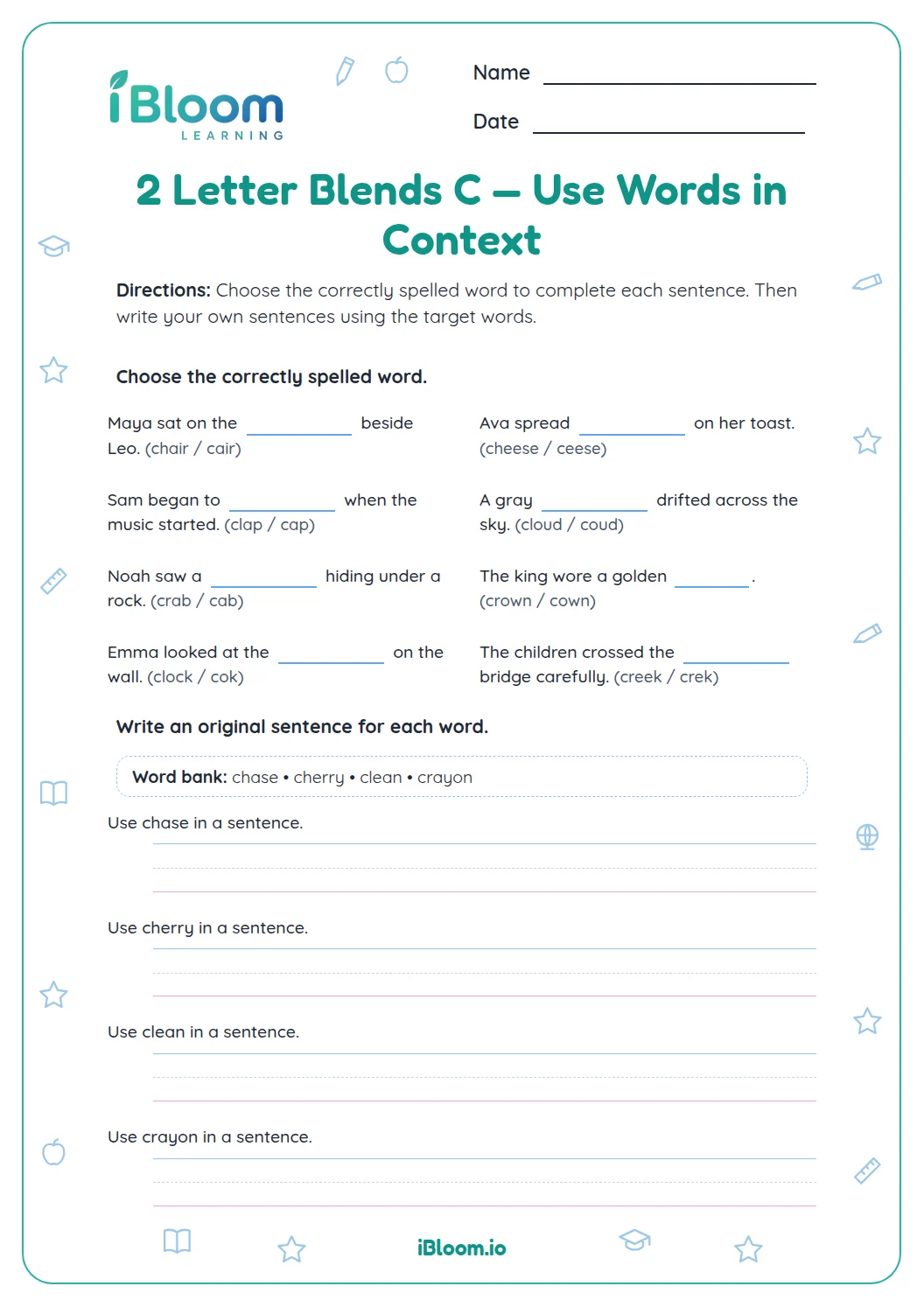
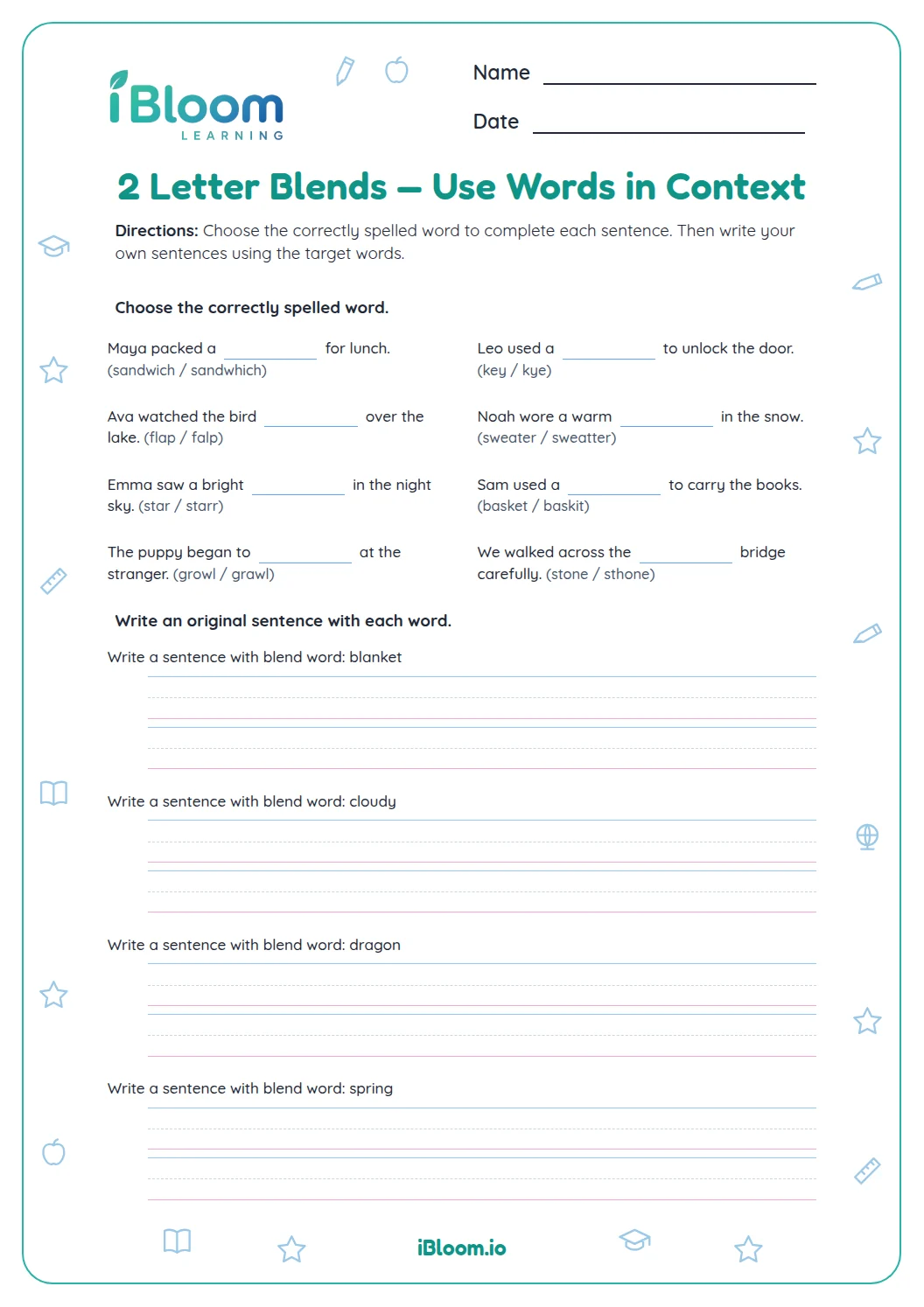
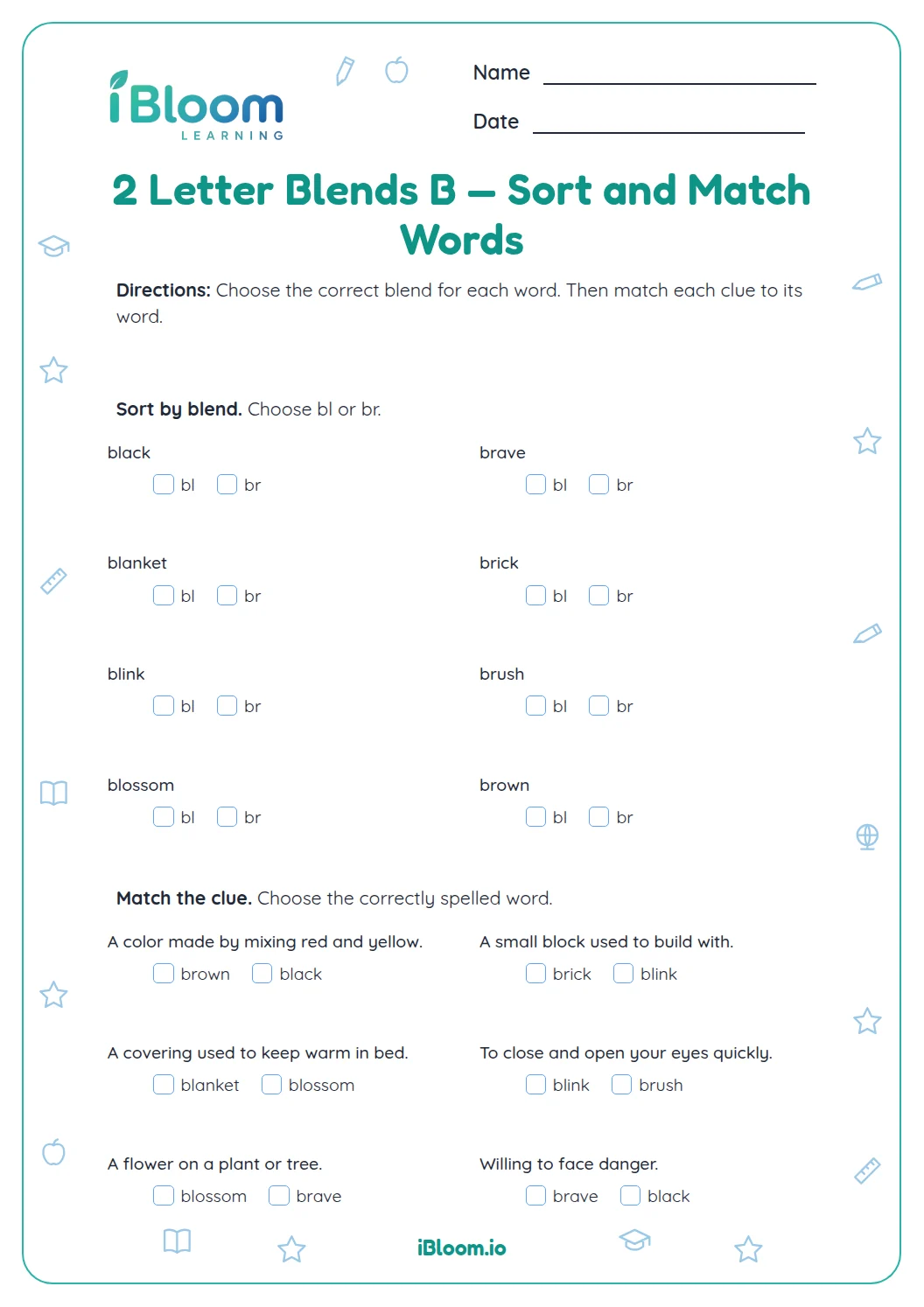
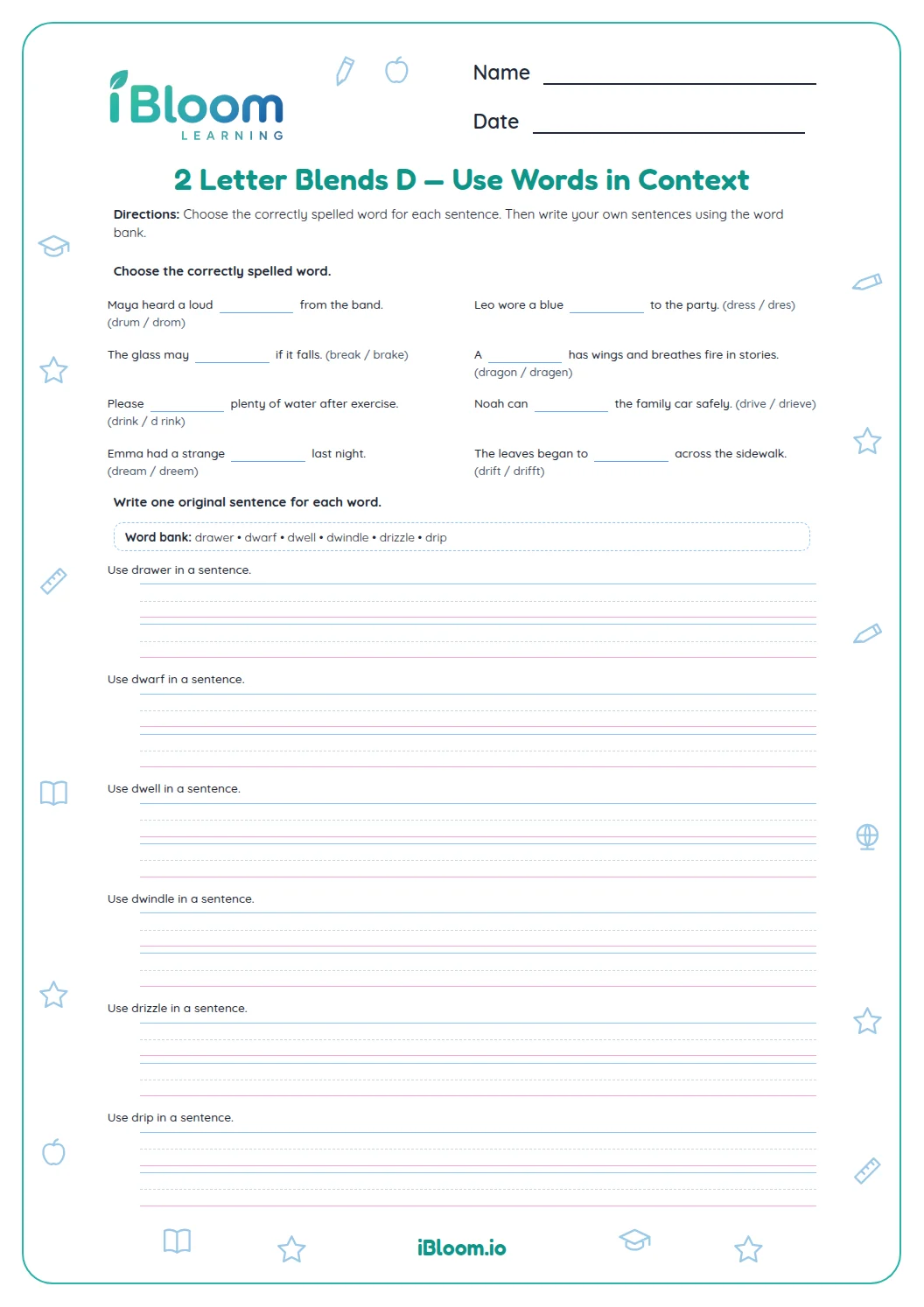
This Grade 4 spelling review focuses on two-letter consonant blends that begin with c: cl and cr. Students choose correctly spelled words from clues, then complete words in sentences by using context and the beginning blend. The 18 items include familiar examples such as class, crack, climb, and crab, with an answer key for checking each spelling.
What is a two-letter consonant blend?
A blend has two consonants side by side, and each sound can still be heard. In class, the opening c and l keep their sounds; in crab, c and r do too.
- 1The clue “a small sea animal” points to crab.
- 2Say the start slowly: /k/ then /r/. Keep both sounds.
How can context help you spell a blend word?
A sentence clue narrows the word choice. “The bell rang for ___ass” points to class. Listening for the opening blend and reading for meaning work together.
How should students check a blend word?
Read the word aloud, identify both consonants at the start, and check that the word fits the clue or sentence. A blend keeps both sounds, unlike a digraph that uses two letters for one sound.
How to use this worksheet
- 1Read the full sentence or word clue.
- 2Say the candidate word aloud.
- 3Listen for both consonant sounds at the start.
- 4Write the whole word and reread the sentence to check meaning.
Common mistakes and quick fixes
The mistake
Writing only c and leaving out l or r
The fix
Say the blend slowly and listen for both sounds.
The mistake
Switching cl and cr
The fix
Check whether the second consonant is l or r before writing.
The mistake
Choosing a word that fits the spelling but not the sentence
The fix
Reread the sentence and test the word's meaning.
What to practice next
Make more practice
Further reading
Questions parents and teachers ask
Which blends does this page review?
It reviews cl and cr at the beginnings of words. In clap, the c and l sounds are both heard; in crab, the c and r sounds are both heard. Students practice both patterns in word choices and sentence completions, using spelling and meaning clues to check each response.
What is the difference between a blend and a digraph?
In a blend, both consonant sounds can be heard, as in cl or cr. A digraph uses two letters for one sound, as in sh. This page focuses on blends where the letters keep their own sounds. For example, class names a group of students, while crass describes rude behavior. Read the clue carefully and compare both spellings.
How can a student decide between clock and crab?
Read the clue and listen for the second consonant in the beginning blend. Clock starts with cl, while crab starts with cr; the second sound changes the word. On this page, students use definitions and sentence meaning to select or complete cl and cr words, then check the full spelling against the key.
Should students write only the missing letters?
Some questions provide a beginning blend, but the response is the complete word. Writing every letter gives practice remembering the full spelling and makes it easier to check the word in context. Cover the completed word, write it from memory, and compare every letter. Then use it in an original sentence to make its meaning stick.
How can I review these words after the worksheet?
Read each completed word aloud, cover it, and try spelling it from memory. Then use it in a new sentence. Pay special attention to the second letter in cl and cr, since that letter distinguishes the patterns. Compare your spelling with the key to catch a missing or switched consonant.