





About this worksheet
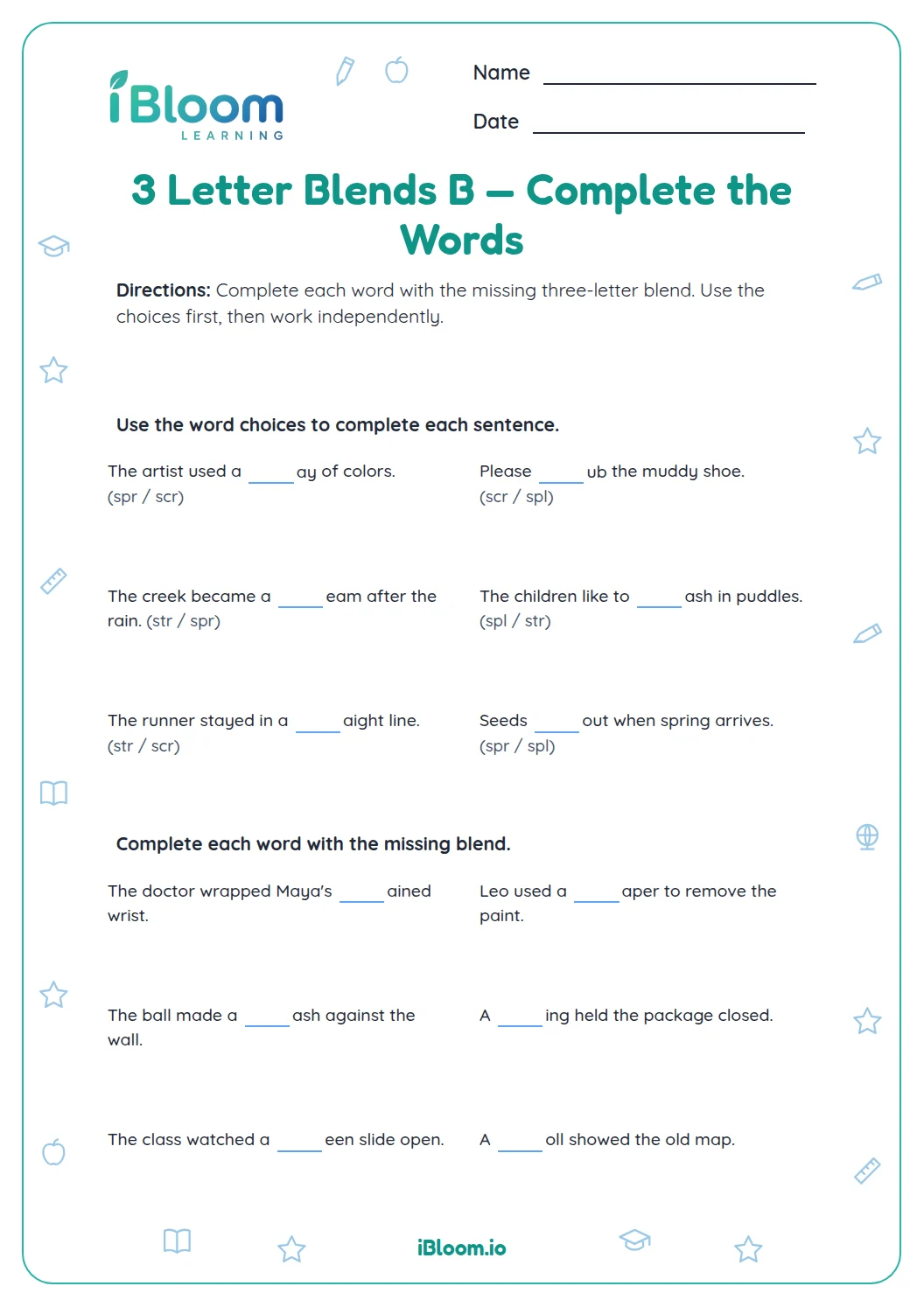
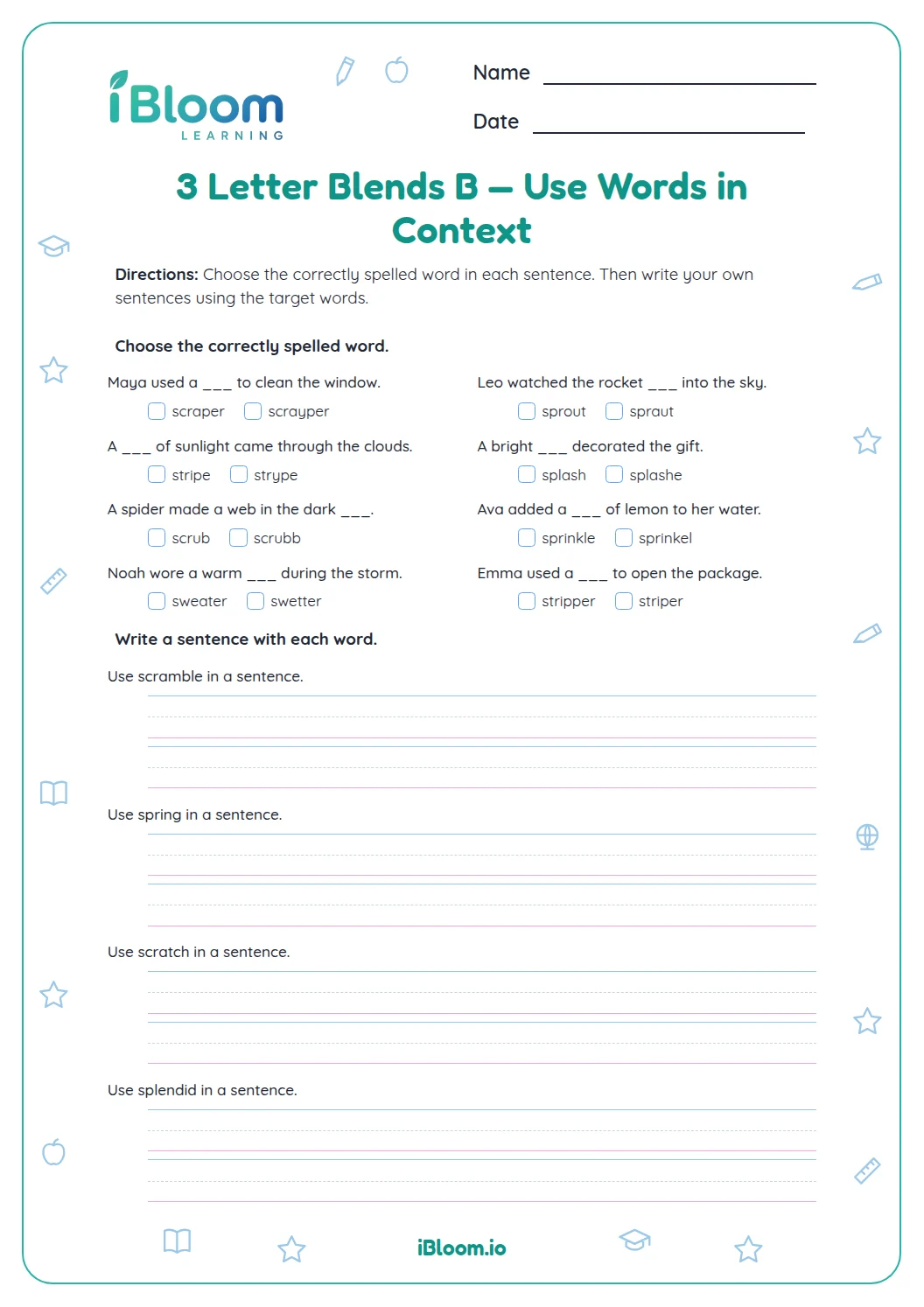
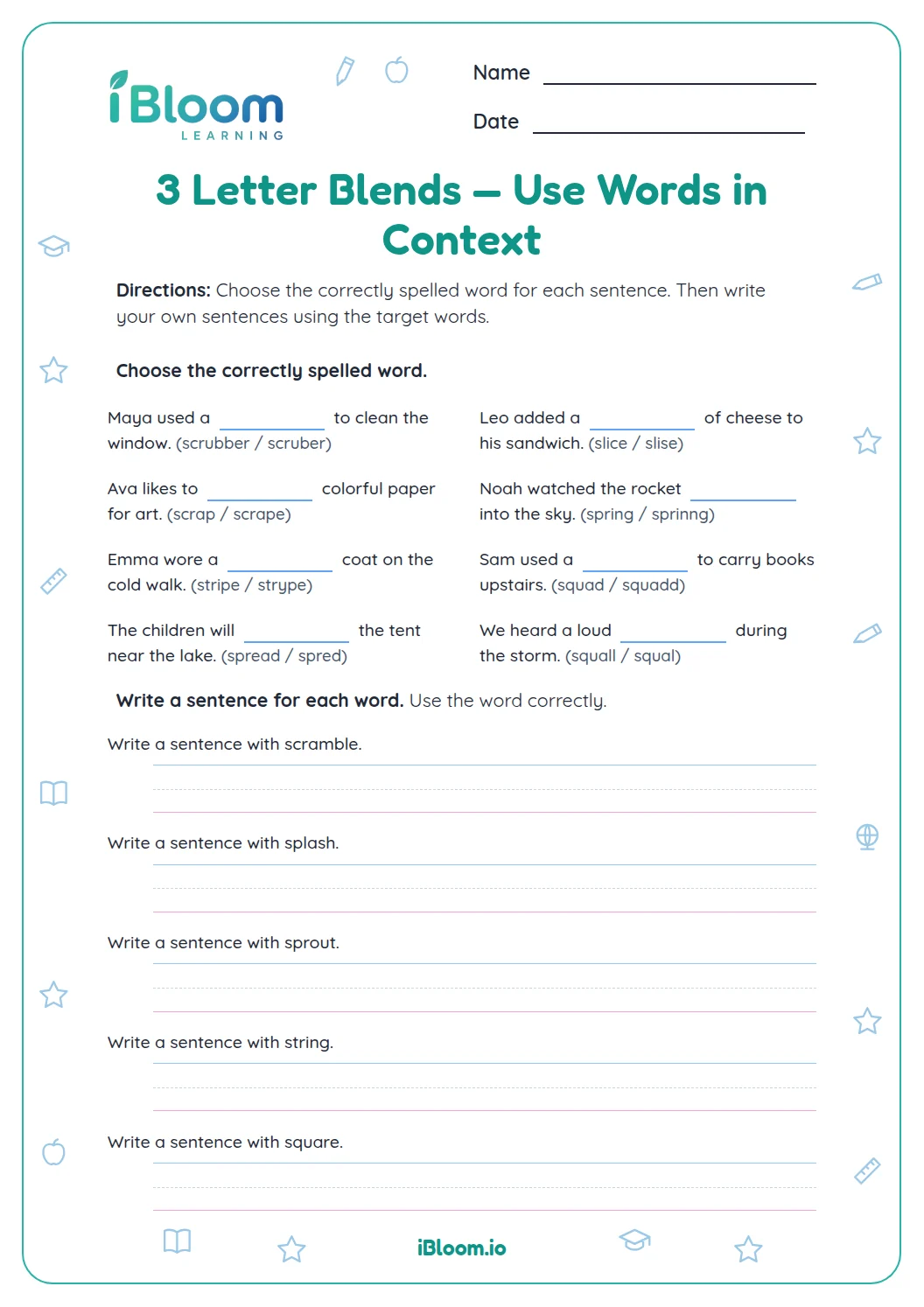
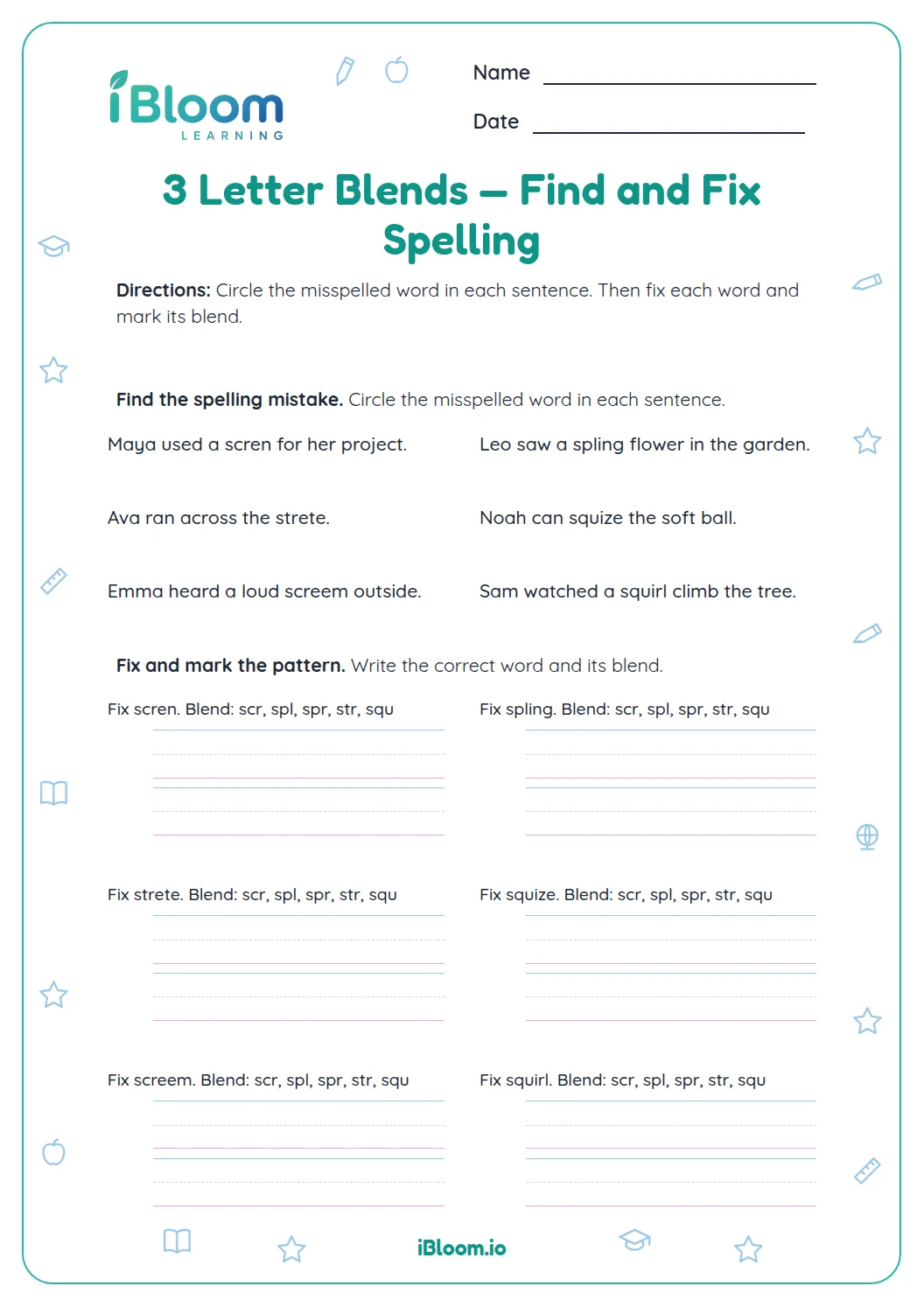
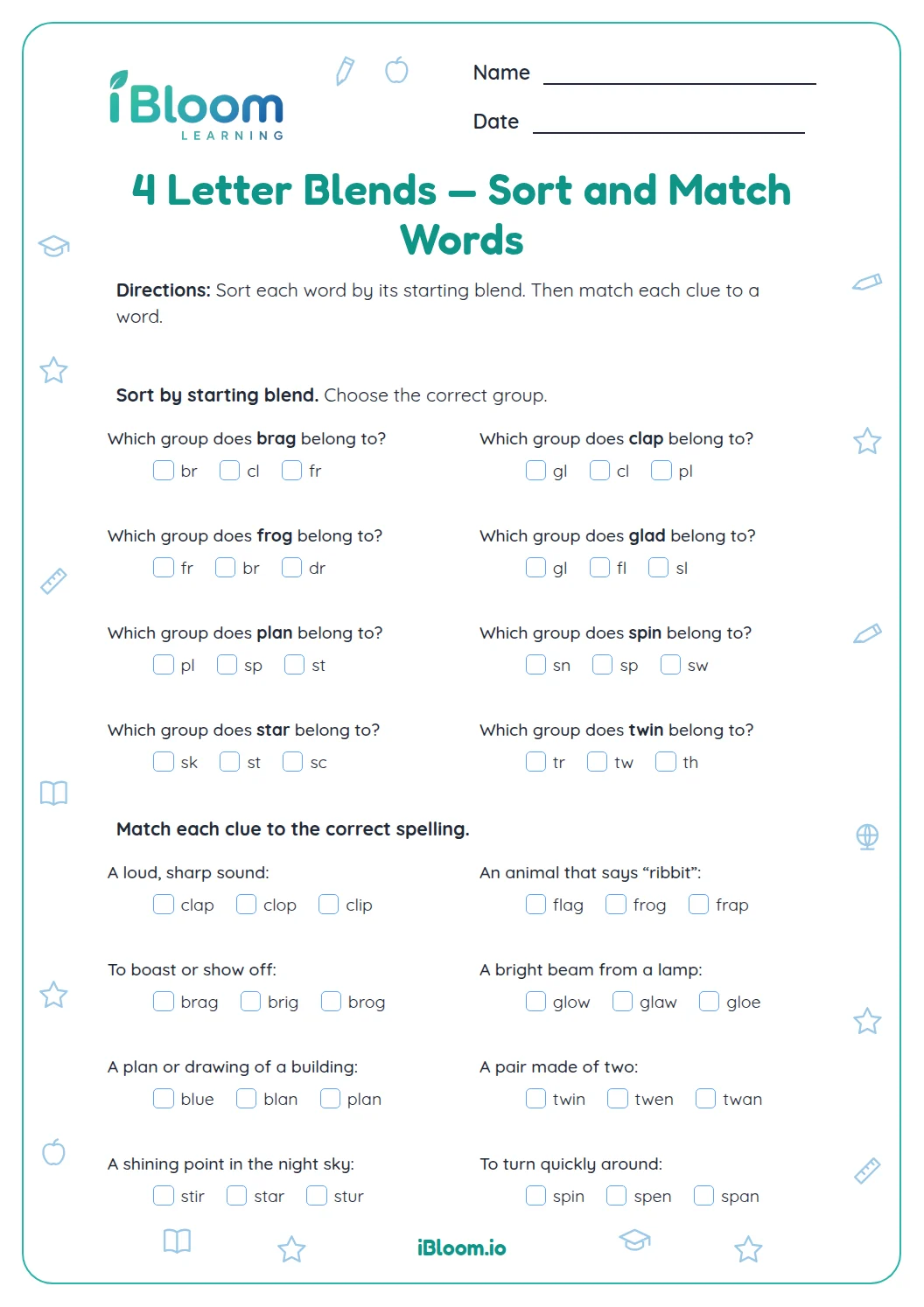
This Grade 4 spelling page practices the four patterns on the original sheet: str, spr, scr and spl. Students first recognize a word with a target beginning, then write the three letters that start a word, and finally match a clue to a correctly spelled word. The answer key lists each response so a child can review the spelling pattern and reread the example word.
Aligned to L.4.2.d
Which blends appear here?
The worksheet uses four beginning patterns: str, spr, scr and spl. Question 1 asks which choice begins with str; “street” is the match because its first three letters are s-t-r.
Each pattern appears in a direct recognition item and a word-completion item, then returns in a clue.
How do the missing-blend questions work?
In Part B, the full word is printed and the first three letters are left blank. In question 5, “strong” begins with str, so the answer is str. This asks students to connect the spelling pattern to the whole word.
How do word clues help with spelling?
Part C gives a meaning clue and three spellings. In question 9, a road in town is a street. Read the chosen word and compare its first three letters with the target patterns to check the match.
How to use this worksheet
- 1Read the three-letter pattern before looking at the answer choices.
- 2Say each candidate word slowly and listen for its beginning sounds.
- 3In Part B, copy the first three letters exactly as they appear in the word.
- 4For Part C, read the full sentence before selecting a spelling.
- 5Use the key to find patterns that need another look, then spell those words aloud.
- 6Try the 3 Letter Blends worksheet next, then compare it with 3 Letter Blends C.
Common mistakes and quick fixes
The mistake
Dropping one letter from a blend, as in writing “sreet” for “street.”
The fix
Say each opening sound and check that all three letters are written in order: s-t-r.
The mistake
Confusing str and spr because both start with s.
The fix
Look at the second letter: t in str, p in spr. Reread the whole word after choosing.
The mistake
Leaving out one letter from a three-letter beginning, such as writing “splash” as “spash.”
The fix
Check the first three letters in order: spl in “splash,” then reread the whole word.
Common Core alignment
Students spell and review grade-appropriate words with common three-letter beginnings, using recognition, word completion, and sentence context.
Spell grade-appropriate words correctly, consulting references as needed.
On this sheet: Students recognize and spell words that begin with str, spr, scr, and spl.
Show the official wordingHide the official wording
Spell grade-appropriate words correctly, consulting references as needed.
What to practice next
Make more practice
Further reading
Questions parents and teachers ask
Which blends does this page practice?
The page practices str, spr, scr, and spl at the beginning of words. Each pattern appears in a direct recognition item and a missing-blend question, then appears again in a meaning clue. The key lists both the target pattern and each full word.
Why are there spelling choices beside each clue?
The last six questions give a meaning clue and three spellings. Students need to recognize the target blend and read the clue carefully. For example, a road in town is a street. The answer key identifies the correctly spelled word for each clue.
What should my child do after missing a blend?
Ask the child to say the word slowly, write its first three letters, and compare them with str, spr, scr, or spl. Then reread the whole word. This links the beginning pattern to a complete word instead of practicing the letters in isolation.
Are all the choices real words?
Some distractors are misspellings, while a few are real words that do not match the clue or target beginning. Students should check both the spelling pattern and the meaning. The key shows the intended response, so review why it fits the clue.
Does the worksheet teach four different blend patterns?
Yes. The first part asks students to identify str, spr, scr, and spl. The next part asks them to write those three-letter beginnings, and the final part checks the same spellings through short meanings. This repeated practice helps students compare similar-looking openings.
How long should this spelling review take?
Plan for about 20 minutes. The first two parts move quickly, while the meaning clues take a little longer because students compare spelling and definition together. Reviewing missed words with the key can add a few minutes of useful word study.