



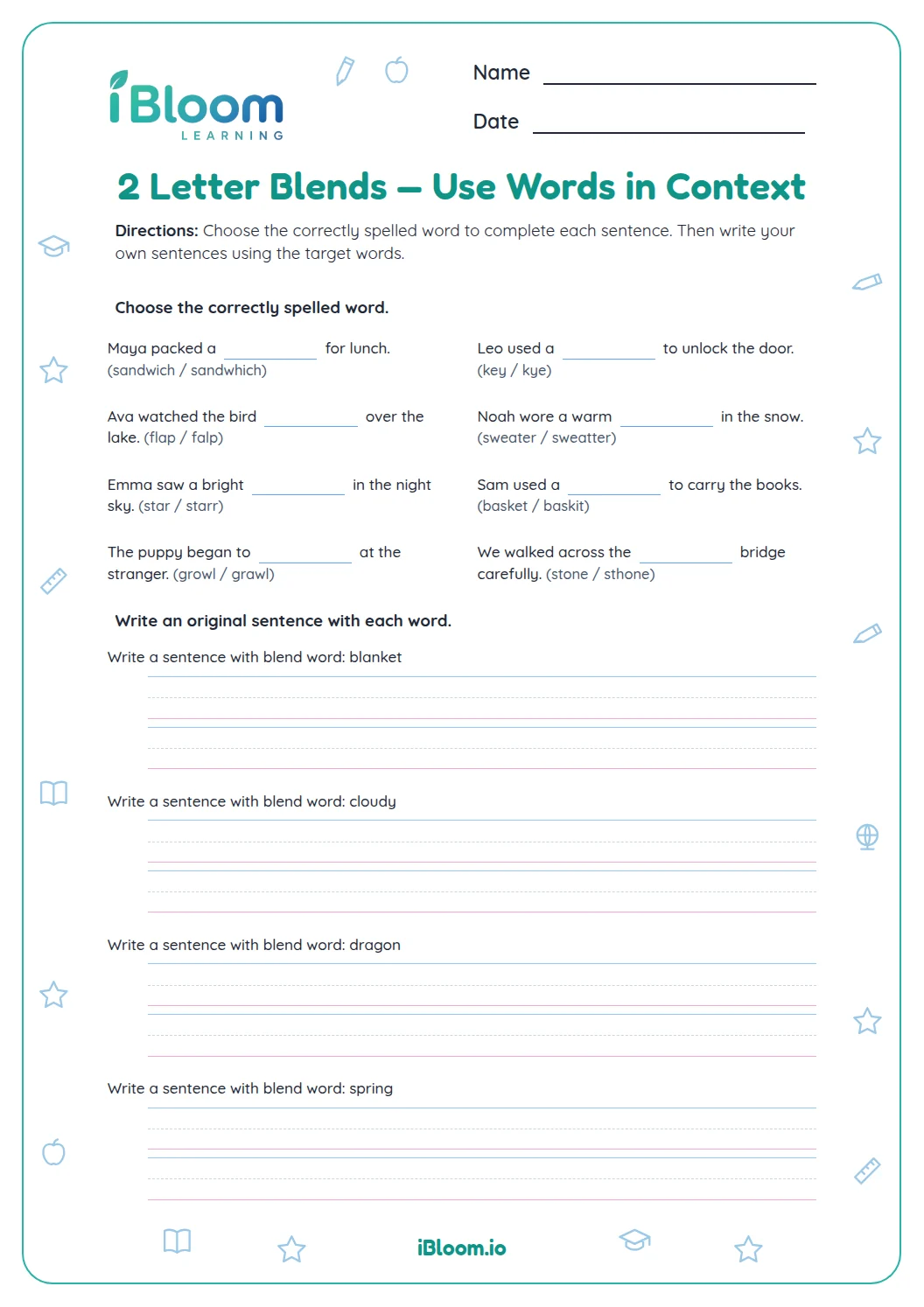


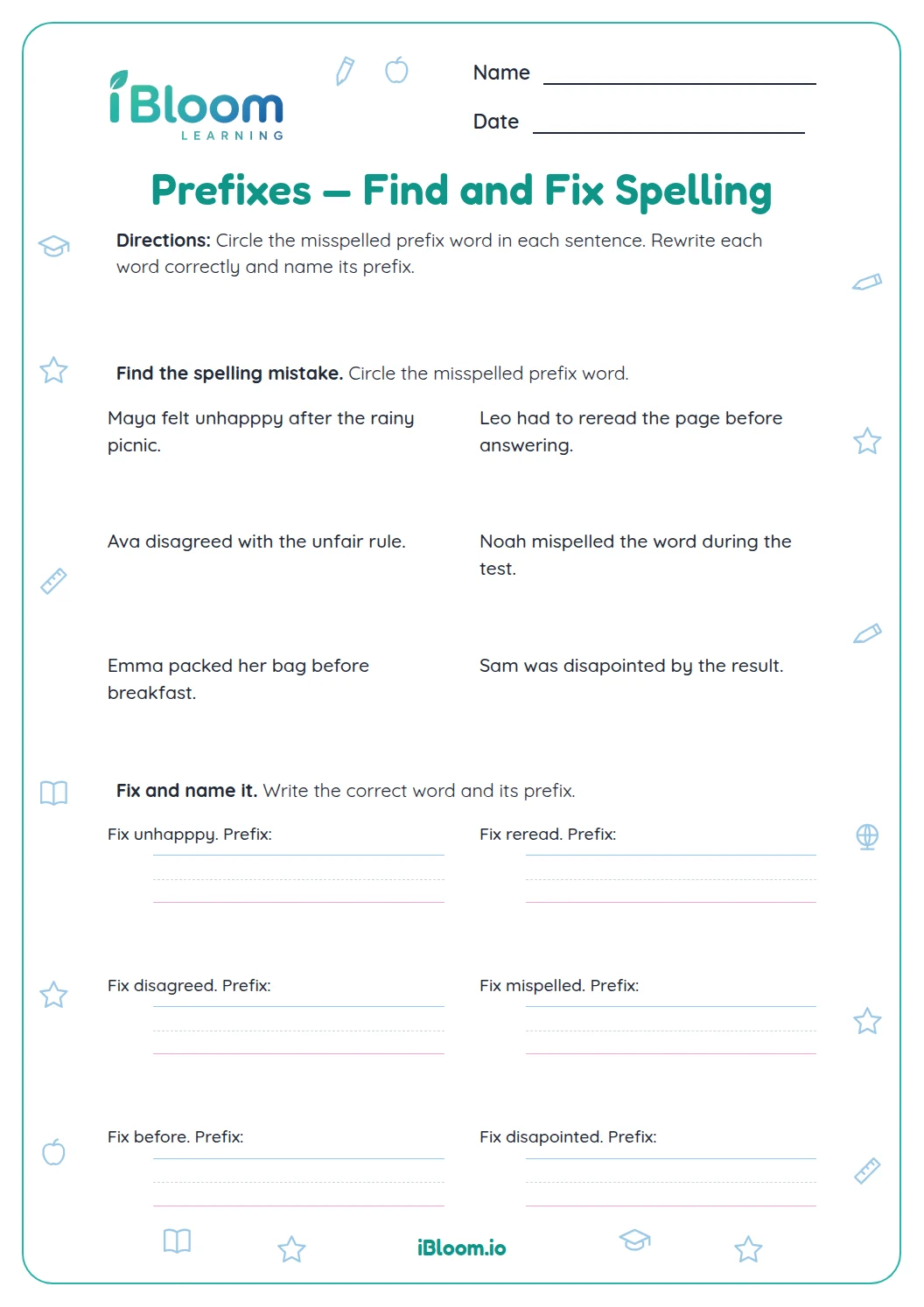
About this worksheet
This Grade 4 spelling worksheet asks students to restore beginning consonant blends in four-letter words using sentence meaning and letter patterns. Prompts include cl, cr, fl, fr, gr, pl, sl, st, sw, and tr in words such as clam, frog, and swim. Students write the missing letters, then use the complete word to check that it fits the sentence. The answer key is included.
Aligned to L.4.2.d
What words does the worksheet practice?
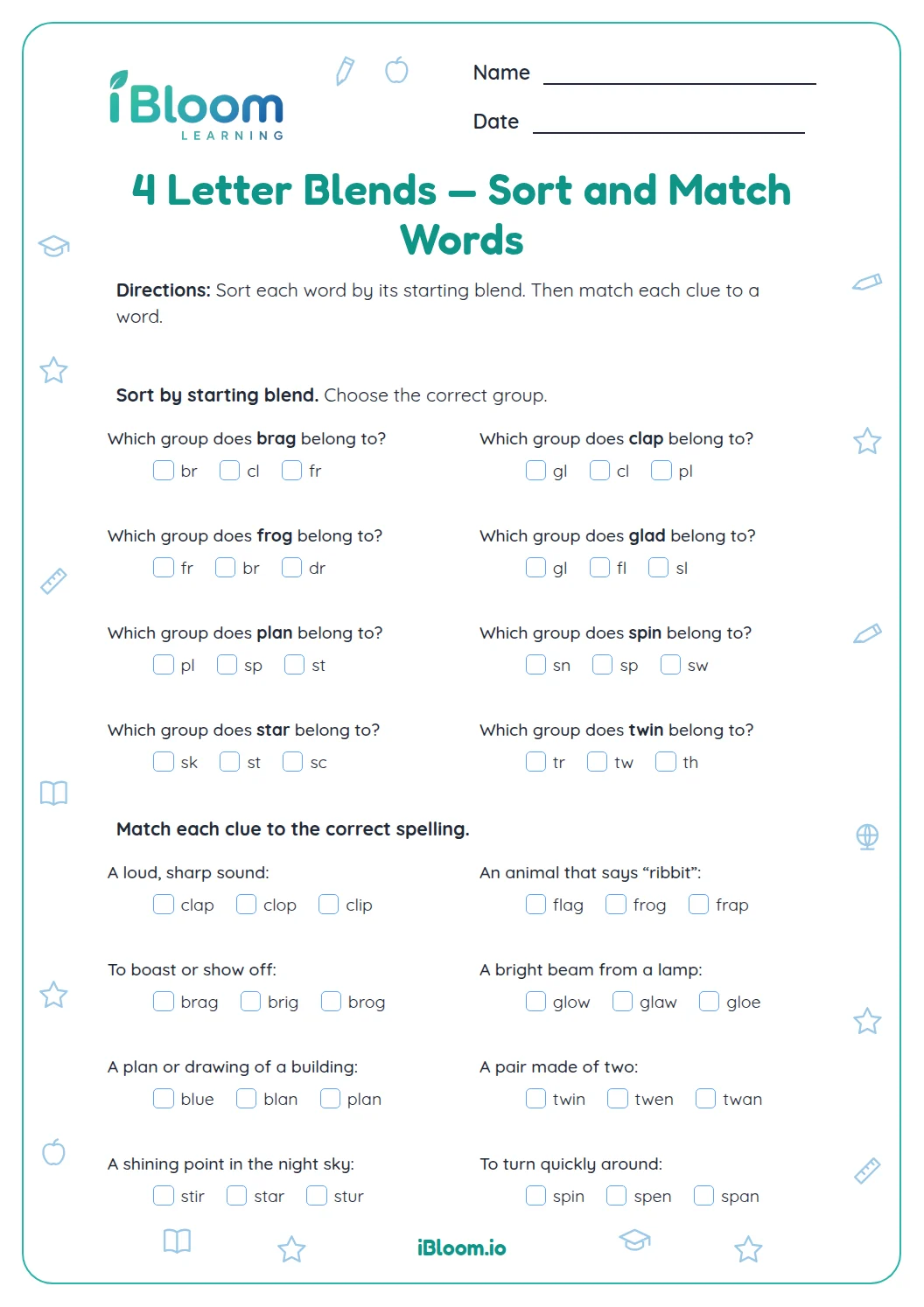
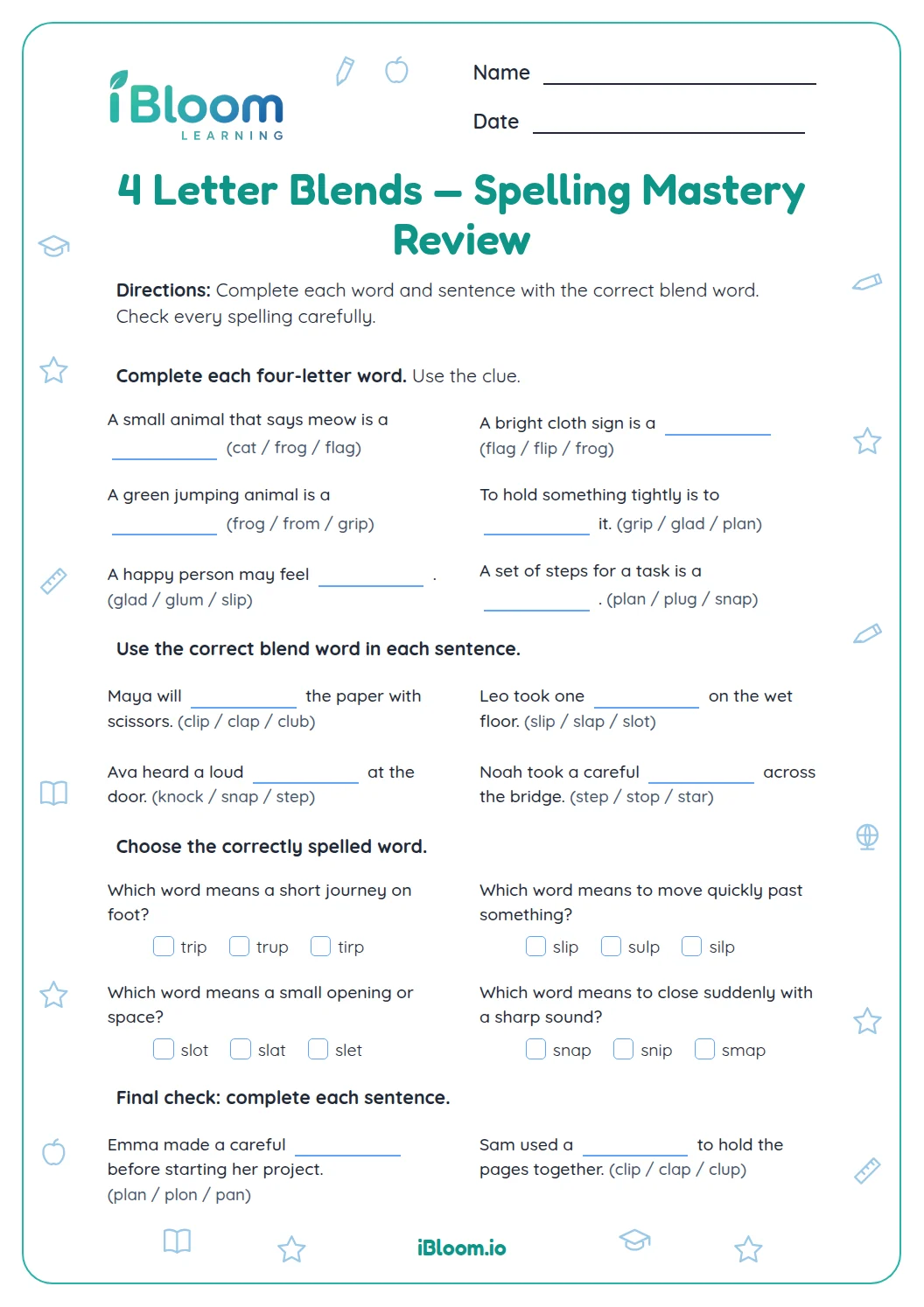
Students restore two-letter beginning blends in four-letter words such as clam, crab, clip, frog, and swim. Each sentence gives a meaning clue, while the visible ending letters help reveal the word.
- Part A gives a choice of blends for the first eight words.
- Part B asks students to supply the blend without choices.
- There are 16 completion items.
- The key lists each missing letter pair.
How can students use a consonant blend?
Read the two consonants together and listen for both sounds. In swim, the beginning letters sw form a blend before the vowel. Students can say the full word slowly, then write the missing pair and reread the sentence.
- 1The ___am hid in a shell.
- 2The word is clam, and the missing beginning blend is cl.
- 3Write cl in the blank.
How do sentence clues help with spelling?
A sentence narrows down which word fits. In “A ___ab crawled on the sand,” the clue and the visible ab point to crab, so the missing blend is cr. Use both meaning and spelling pattern; guessing from the first sound alone may leave out a consonant.
How should students check each word?
After filling in the letters, read the complete word and sentence aloud. Check that the spelling is a real word, the consonants match the sound, and the sentence meaning still makes sense.
How to complete the words
- 1Read the whole sentence for a meaning clue.
- 2Look at the letters that remain after the blank.
- 3Say the likely word slowly and listen for its consonant sounds.
- 4Write the missing blend, then reread the sentence.
- 5Check spelling with the answer key and correct any missing consonant.
Spelling mistakes to watch for
The mistake
Writing only the first consonant of a blend.
The fix
Say each sound in the opening cluster and include all the letters.
The mistake
Choosing a word that fits the first sound but not the sentence.
The fix
Use the whole sentence clue and reread the completed word in context.
The mistake
Leaving out a consonant in a longer cluster such as str.
The fix
Tap each consonant sound while spelling the word slowly.
Common Core alignment
The spelling practice asks students to write grade-appropriate words correctly in context.
Spell grade-level words correctly while completing words in context.
On this sheet: Students complete and spell words with consonant clusters using sentence clues.
Show the official wordingHide the official wording
Spell grade-appropriate words correctly, consulting references as needed.
What to practice next
Make more practice
Further reading
Questions parents and teachers ask
Which consonant clusters are practiced?
The worksheet practices two-letter beginning blends: cl, cr, sl, st, sw, tr, dr, fr, fl, and gr. They appear in words such as clam, crab, swim, frog, and grin. Students supply the missing pair, using the remaining letters and the sentence clue.
How many words are on the page?
There are 16 complete-the-word prompts split across two parts. Each one gives a sentence clue and a partial word. Students write the missing beginning consonant group, then reread the full sentence to check the spelling and meaning. The answer key lists every intended letter group.
Why use sentence clues for spelling?
A sentence gives meaning that can help distinguish among possible words. Students combine that clue with the letters already printed and the sounds they hear. This builds a checkable routine: read, infer the word, spell its missing consonants, and reread.
Are blends and digraphs the same?
No. In a blend, each consonant sound can be heard, as in the beginning of swim. In a digraph, two letters represent one sound. This worksheet focuses on two-letter consonant blends, and students listen for both sounds as they complete each word.
What should I do if a different word seems to fit?
Use the visible letters and sentence meaning together. The answer key gives the intended word for each blank. If a student suggests another real word, check whether it fits every printed letter and makes sense in the sentence before accepting it.