








About this worksheet
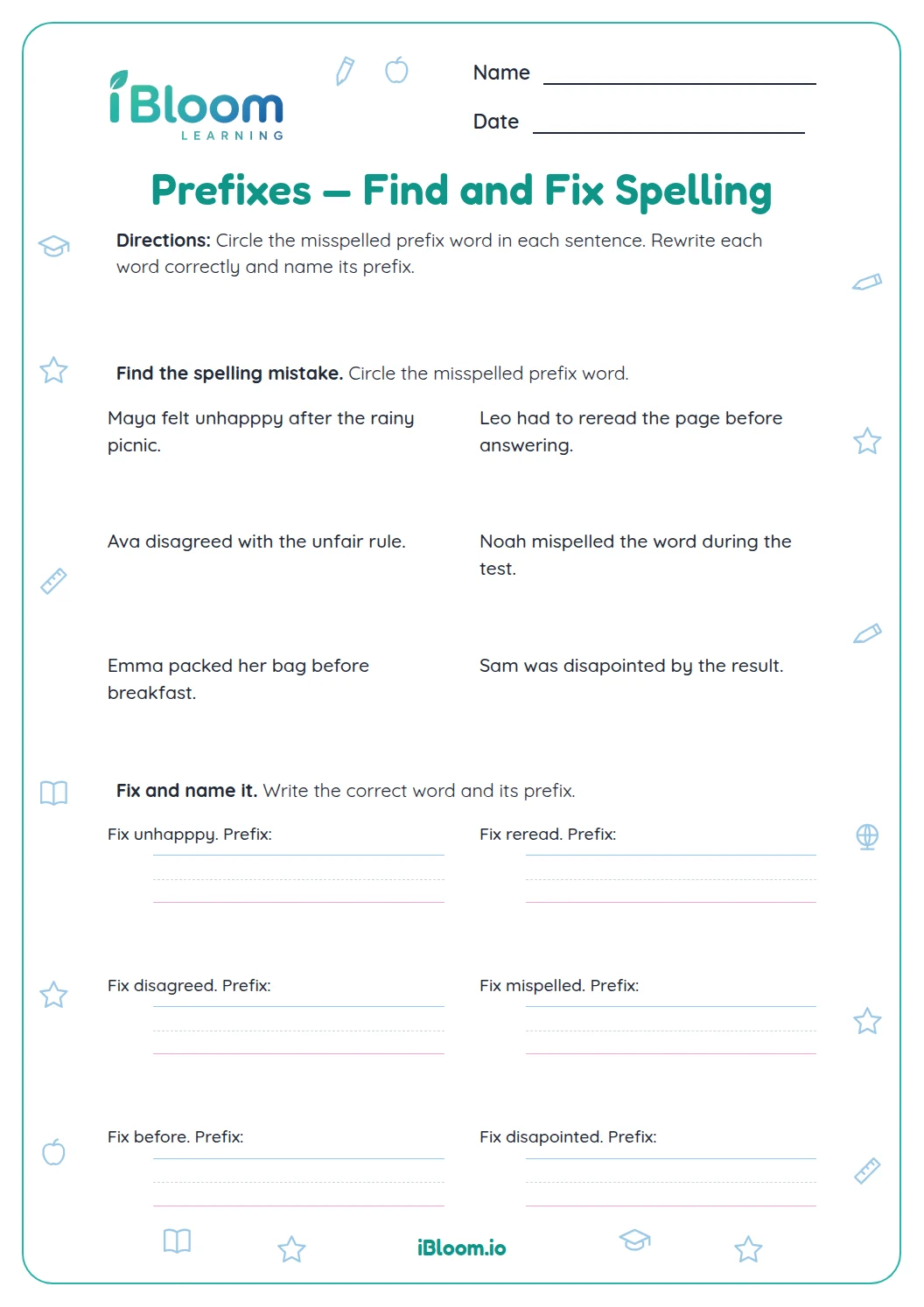
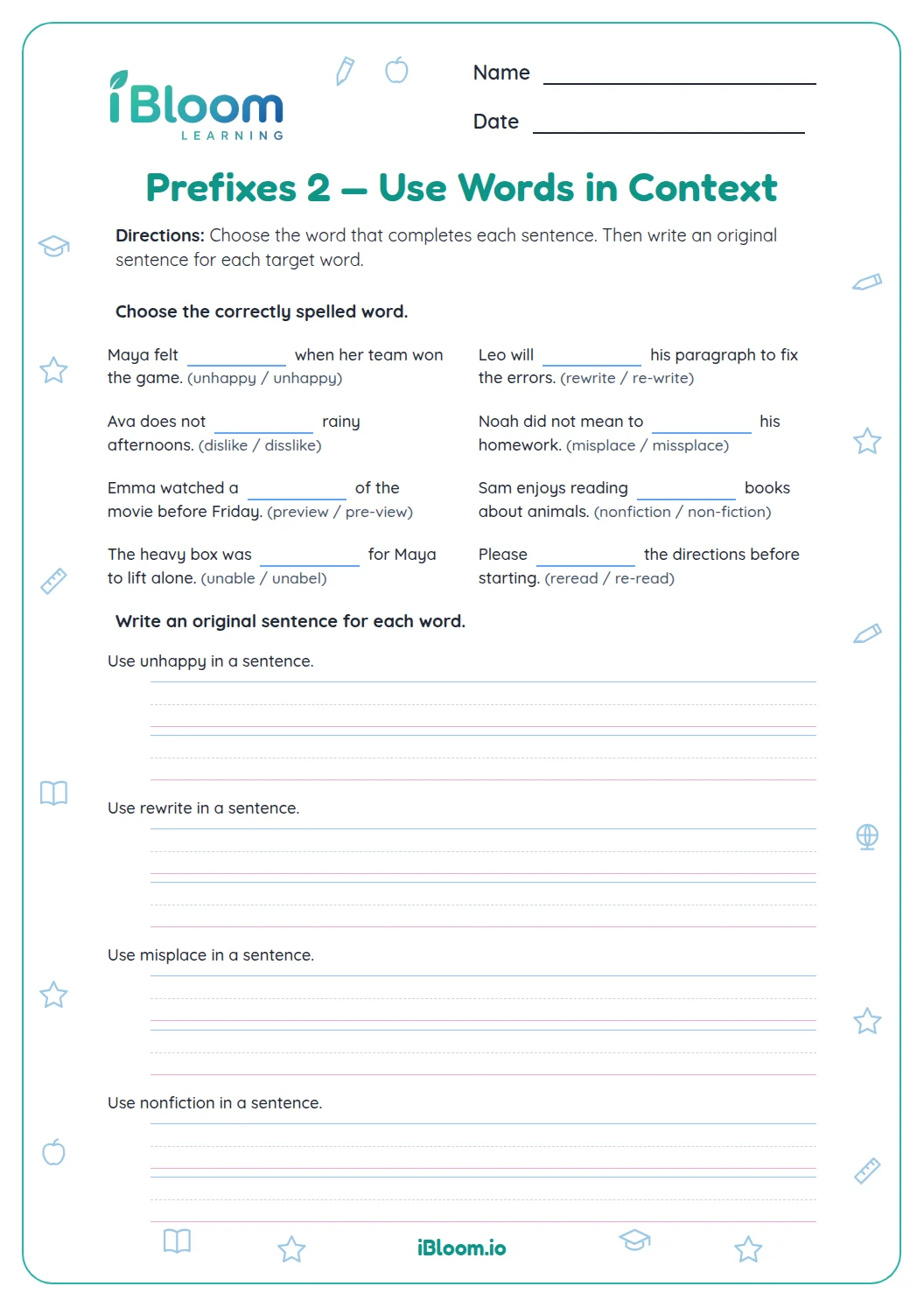
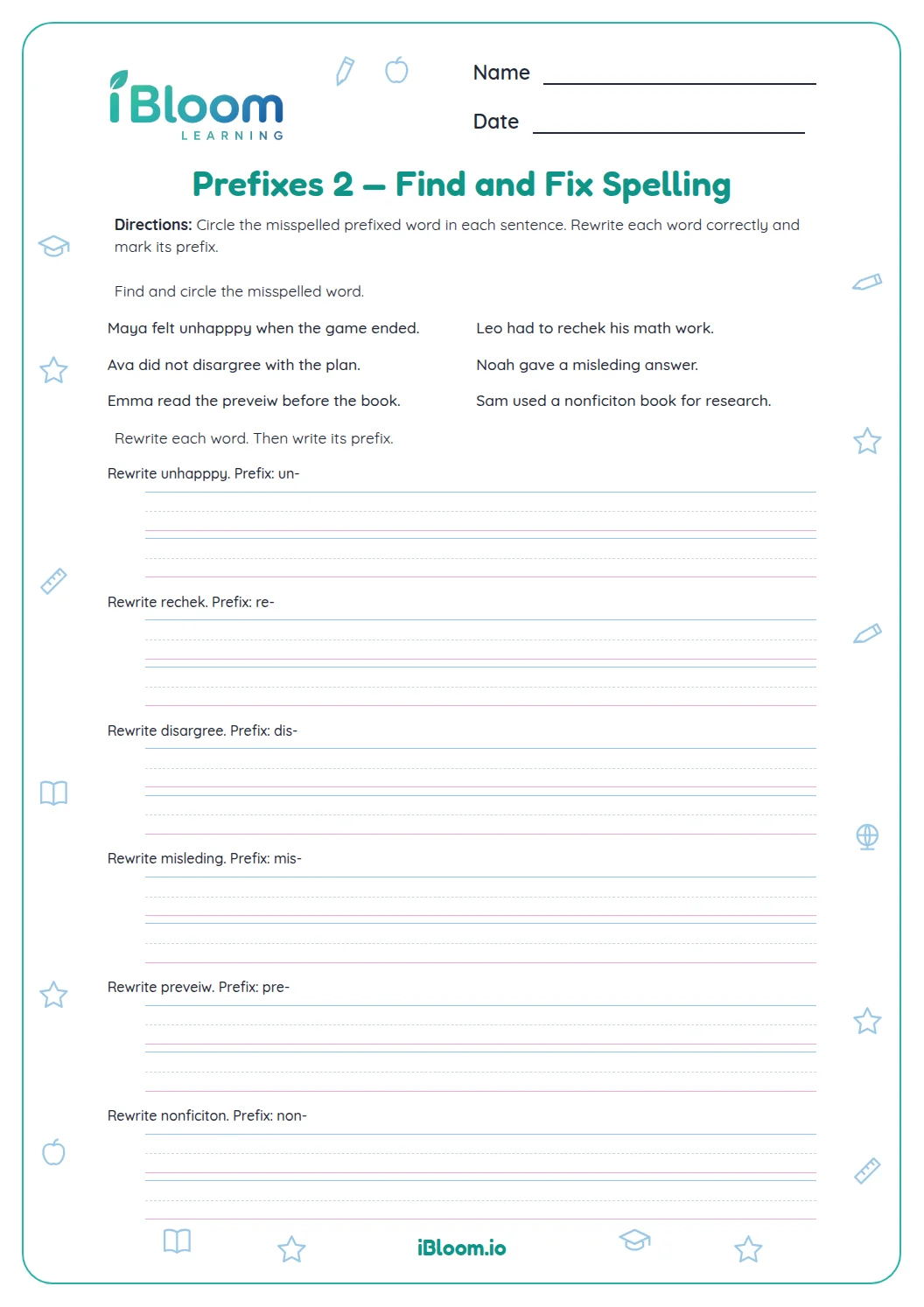
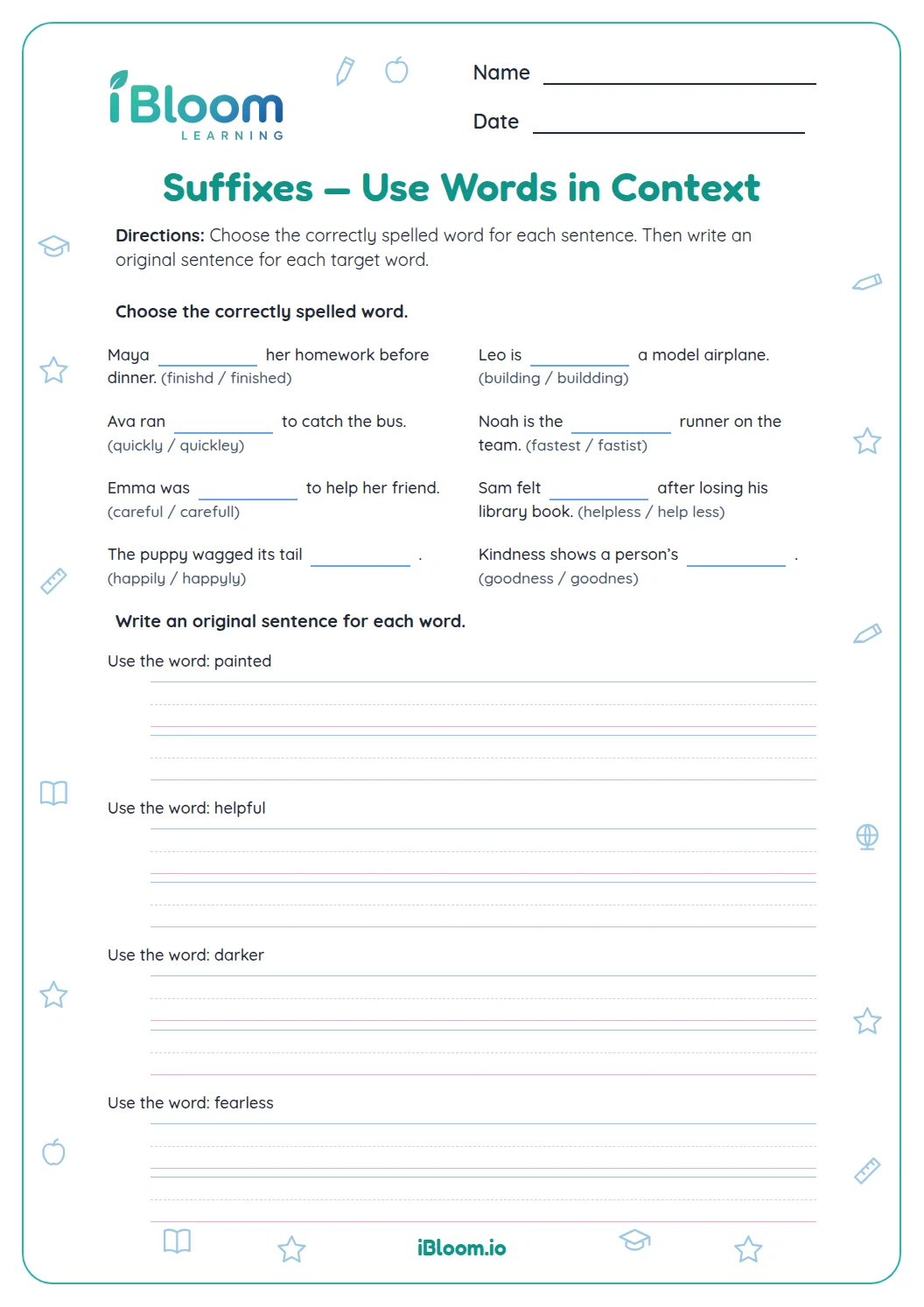
This Grade 4 spelling worksheet practices common prefixes through sentence clues and original writing. Students choose correctly spelled words that fit a context, then write sentences using target words such as reread and unfair. Fourteen questions include an answer key. The work supports using affixes and context as clues to word meaning under CCSS L.4.4.b.
Aligned to L.4.4.b
What can a prefix tell you?
A prefix at the beginning of a word changes its meaning. Re- can mean again, pre- can mean before, and mis- can mean wrongly.
- 1“Please ___ the word you spelled wrong.”
- 2Rewrite means write again, so rewrite fits.
How do context clues narrow a choice?
Read the whole sentence with each choice. The correct word must fit both the meaning and the spelling pattern.
- 1“To ___ means to spell incorrectly.”
- 2Misspell matches the meaning and sentence.
How to use this worksheet
- 1Read the model or direction at the start of each part.
- 2Work through the questions in order, showing steps where useful.
- 3Reread each answer in the context of its question.
- 4Use the answer key to check and correct your work.
Common mistakes and quick fixes
The mistake
Choosing a word because its prefix looks familiar.
The fix
Read the whole sentence and check the word’s meaning.
The mistake
Confusing reread with misread.
The fix
Re- means again; mis- means wrongly.
The mistake
Selecting a misspelled choice that sounds right.
The fix
Check the complete spelling before choosing.
Common Core alignment
This worksheet gives focused practice with the standard below.
Use common prefixes and sentence context to select and spell the intended word.
On this sheet: Use common prefixes and sentence context to select and spell the intended word.
Show the official wordingHide the official wording
Use common, grade-appropriate Greek and Latin affixes and roots as clues to the meaning of a word (e.g., telegraph, photograph, autograph).
What to practice next
Make more practice
Further reading
Questions parents and teachers ask
What is a prefix?
A prefix is a word part added to the beginning of a base word. In this worksheet, prefixes such as re-, pre-, and mis- help change a word’s meaning and give clues in each sentence. This gives students a chance to explain the choice, check the relevant detail, and connect the answer with the skill practiced on this printable.
How does sentence context help?
The sentence gives a clue about which meaning belongs in the blank. Students should reread the completed sentence to see whether the word makes sense and is spelled correctly. This gives students a chance to explain the choice, check the relevant detail, and connect the answer with the skill practiced on this printable.
Which prefixes appear on the sheet?
The questions use common words beginning with re-, pre-, mis-, un-, and dis-. Students choose a word that fits the sentence clue and check how the prefix affects its meaning. This gives students a chance to explain the choice, check the relevant detail, and connect the answer with the skill practiced on this printable.
How many questions are on this spelling page?
The printable contains 14 questions in two parts. Students first choose a correctly spelled word to match a sentence, then write original sentences that show the meanings of target words. Students can reread each completed sentence and explain why its word fits.
Does the worksheet have an answer key?
Yes. A separate answer key lists the intended word for each sentence so students can check their spelling and context choices. Review the prefix meaning when an answer needs correction. This gives students a chance to explain the choice, check the relevant detail, and connect the answer with the skill practiced on this printable.