



About this worksheet
This review starts with a real letter-grid search for fox, nest, leaf, tree, log, and owl. The remaining questions use short clues and simple categories so children think about what each word means and how forest words connect. The word-search answers are placed across and down, and the key lists the vocabulary responses.
How does the review work?
Part A is a letter grid containing fox, nest, leaf, tree, log, and owl, placed across or down. Part B uses short clues and word relationships to check those words in context.
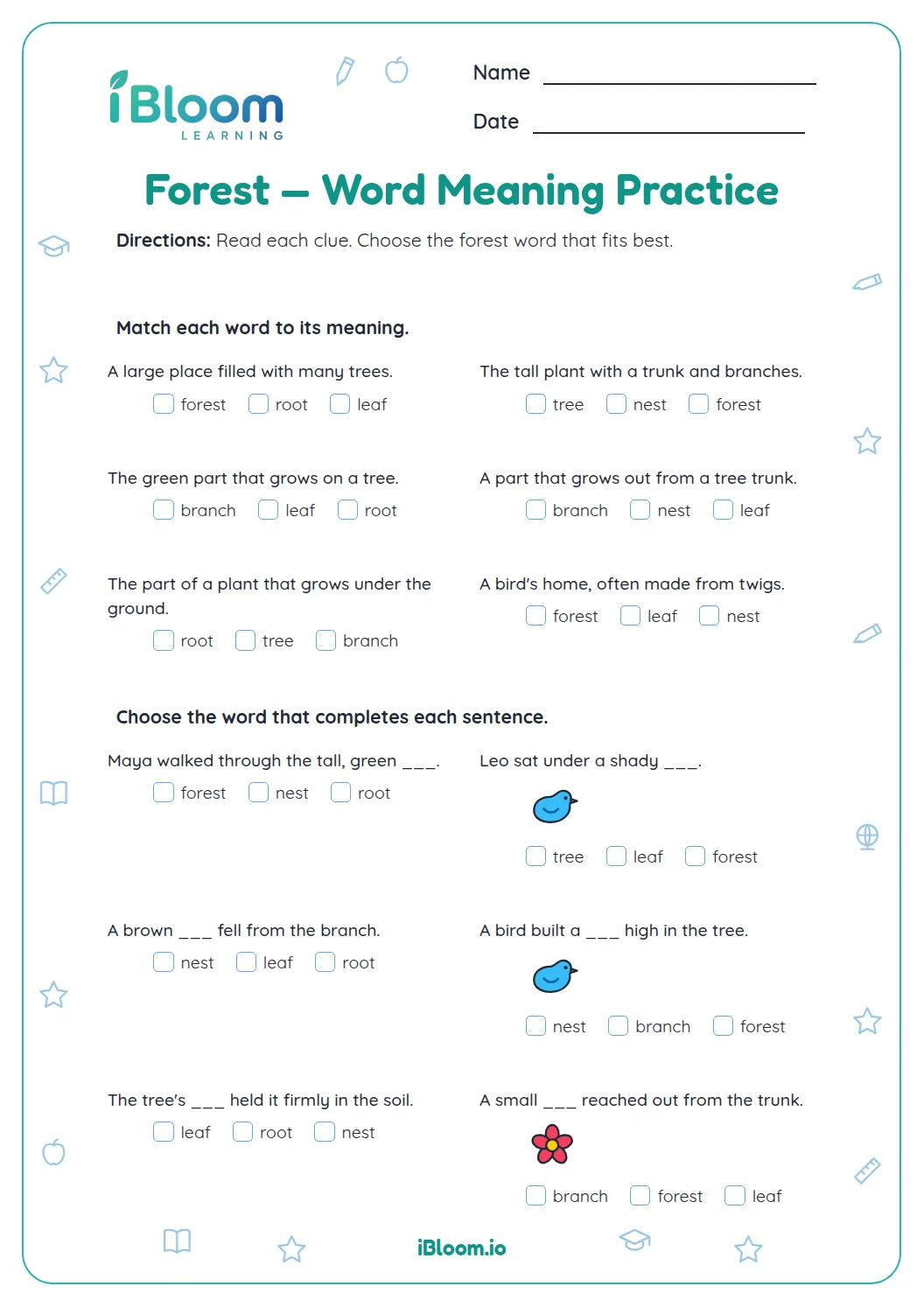
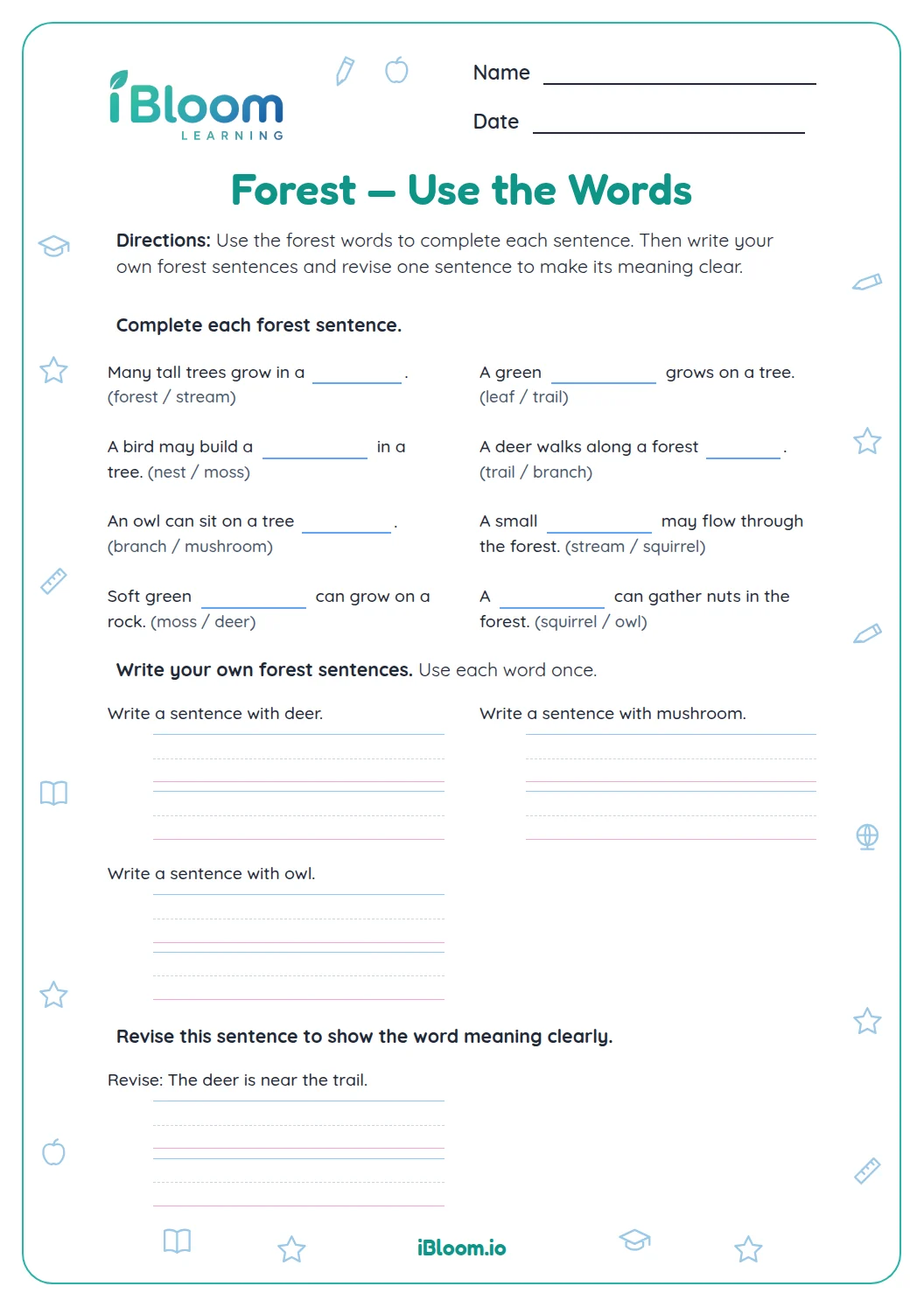
For example, “A green part that grows on a tree is a ___” points to leaf. Children can reread the complete sentence with their answer to check that it makes sense.
- Find six named words in the grid
- Use context to complete short forest clues
- Sort animal and plant words
How to use the worksheet
- 1Read or say the six search words before starting the grid.
- 2Find and circle each word, checking letters in order.
- 3Read the clue questions aloud if needed.
- 4Ask the child to explain one word pair in their own words.
Common word-search slips
The mistake
Circling a string of letters that almost spells the target word.
The fix
Point to each letter in the word list while checking the grid spelling.
The mistake
Choosing a word that fits the topic but not the clue.
The fix
Read the whole sentence and check that the choice makes sense in that exact place.
What to practice next
Make more practice
Questions parents and teachers ask
Which words should children find in the letter grid?
The grid contains fox, nest, leaf, tree, log, and owl. Each word runs from left to right or from top to bottom. Children can cross off each word on the list after circling it in the grid. Check the letters in order so a nearly matching string is not counted by mistake.
What vocabulary skills does the forest review include?
Children recognize six written forest words, use short sentence clues, and think about how words relate. They decide which words name animals, plants, places, or things and check whether a choice fits its sentence. These varied tasks build meaning and word recognition without asking first graders to write long explanations.
Can an adult read the clues aloud?
Yes. Reading a clue aloud lets a beginning reader focus on meaning and choices. Invite the child to explain why the selected word fits, then reread the complete sentence with that word in place. An adult can also point to the letters in the word search as the child checks each target.
What words are hidden in the grid?
The grid contains fox, nest, leaf, tree, log, and owl. Each listed word appears from left to right or from top to bottom. Children can cross off words as they find them and check that every letter matches the list before circling the word.
How can an adult support the clue questions?
Read each short clue aloud and ask the child to say the completed sentence. Then reread it with the chosen word in place. This helps children check whether a word fits both the meaning and the grammar of the clue rather than choosing it just because it belongs in a forest.