


About this worksheet
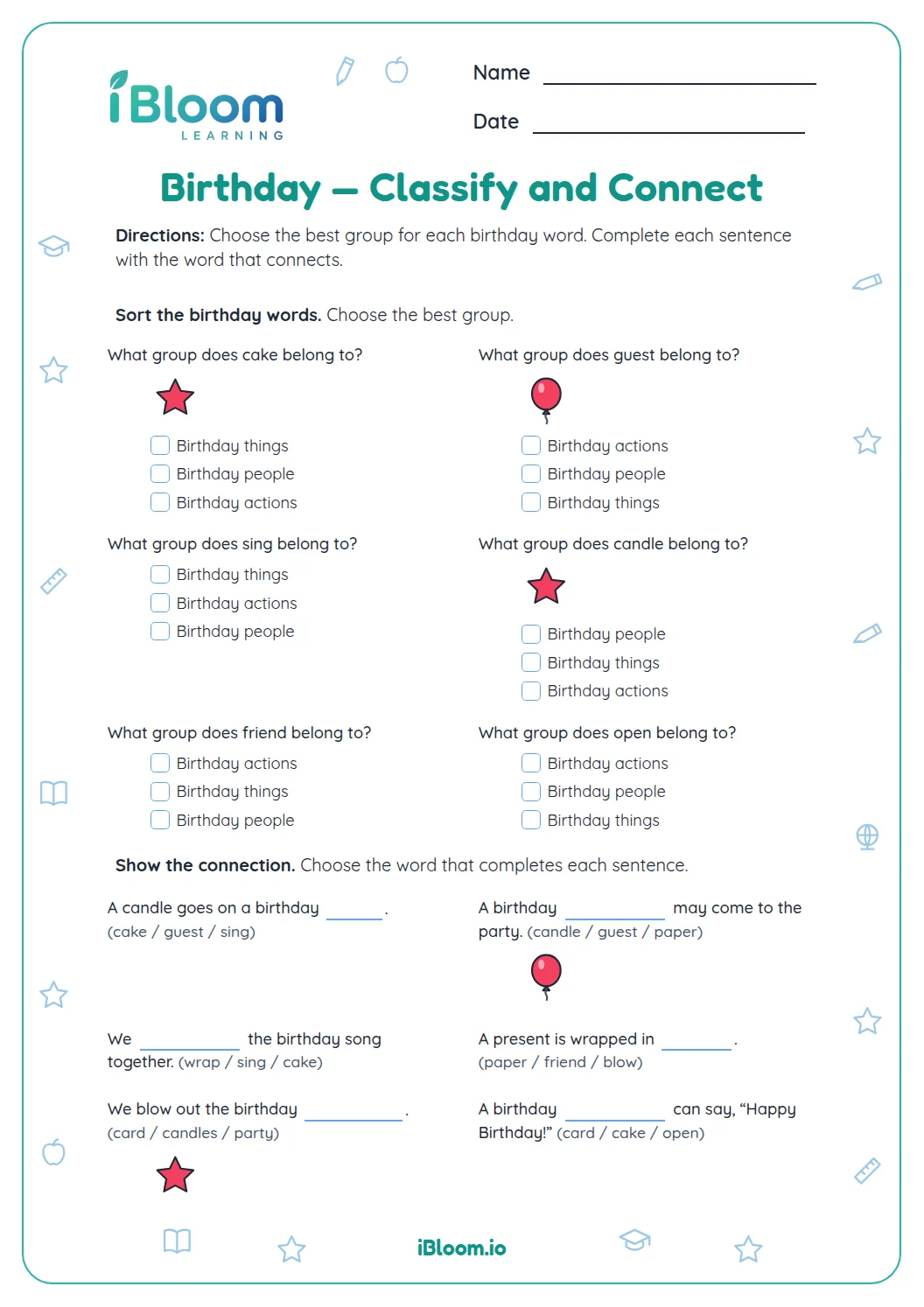
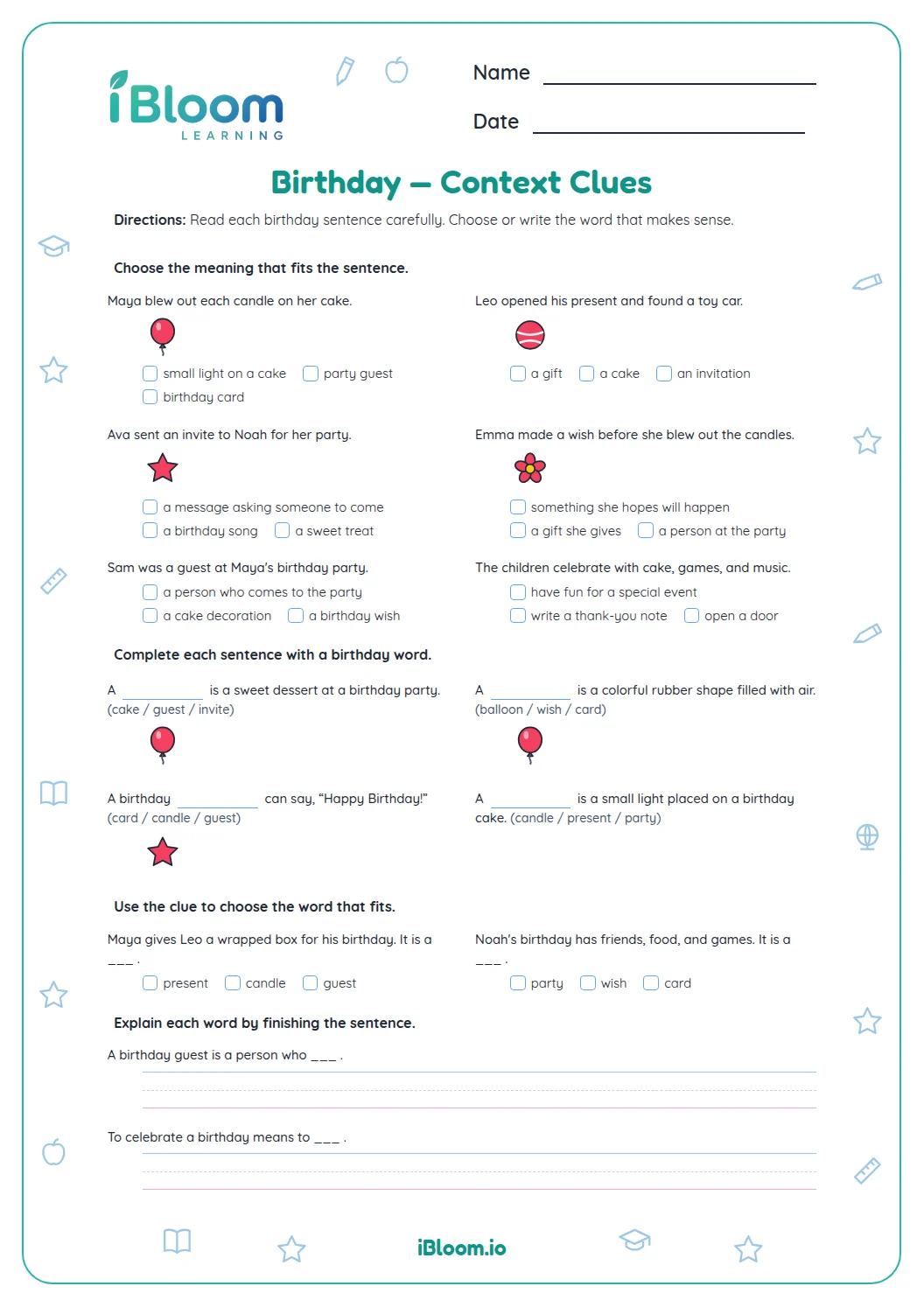
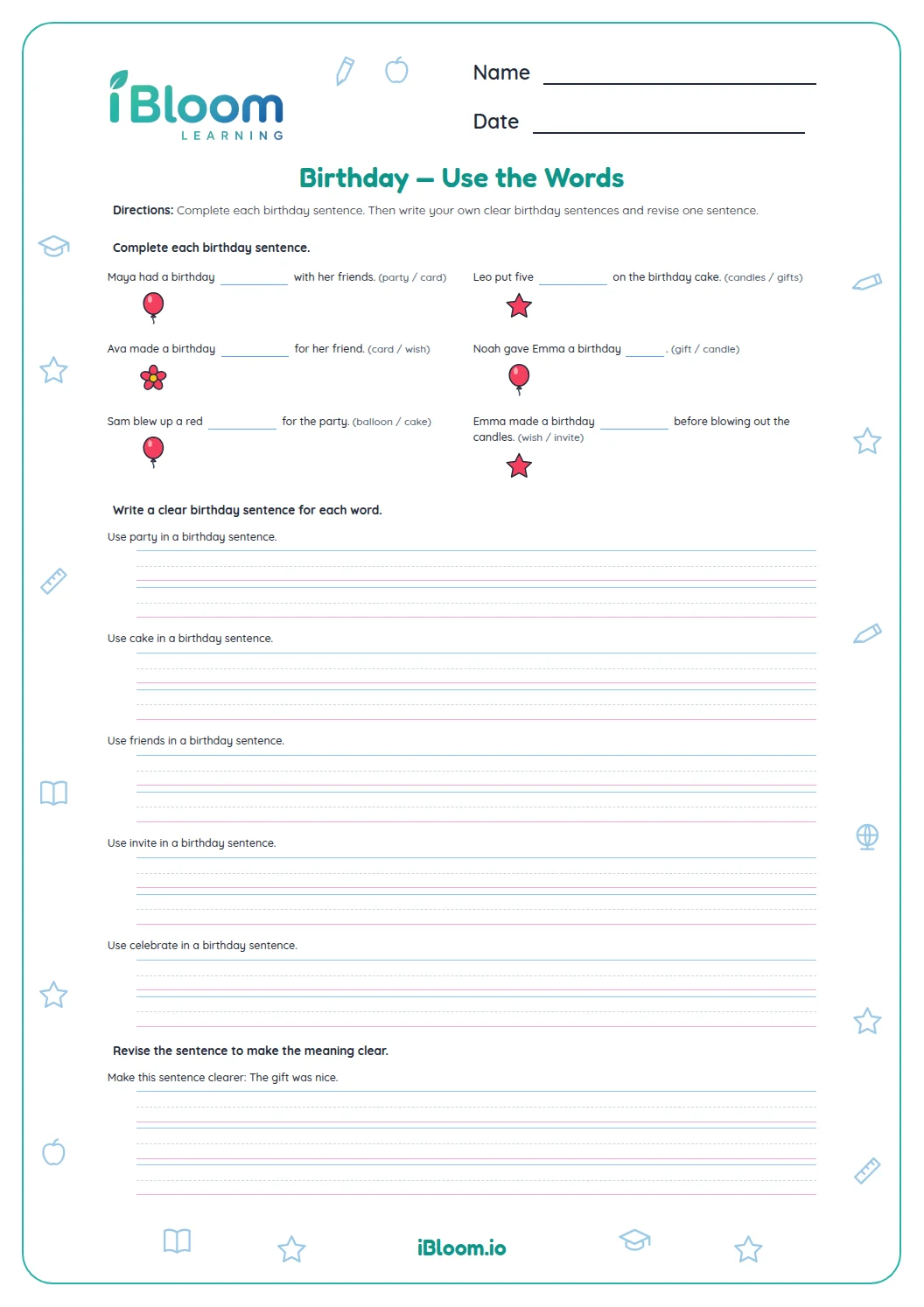
This Grade 1 vocabulary worksheet uses winter words to practice sorting and meaning. Students classify clothing and weather terms, connect words such as frost and flurry to their definitions, and complete sentences with a matching word. The 15 questions include a separate answer key and align with CCSS L.1.5.a.
Aligned to L.1.5.a
Which winter words appear on the sheet?
Part A sorts scarf, frost, mittens, snow, and coat as clothing or weather. Part B matches words including flurry and icicle to short definitions. Part C uses the vocabulary in sentence clues.
- Part A: clothing or weather
- Part B: match a word to its meaning
- Part C: complete a sentence with a winter word
How can a student choose a word from its meaning?
Look for the key detail in the clue, then compare it with the meaning of each choice. “A short, light fall of snow” points to flurry, while icicle means a pointed piece of ice.
- 1Which word means a short, light fall of snow?
- 2Answer: flurry
- 3A flurry is a brief snowfall.
How do sorting and sentence clues work together?
Sorting groups words by what they name: scarf and mittens are clothing, while frost and snow are weather. Sentence clues add context, such as wearing mittens on hands or seeing frost on grass.
How can we review a winter word?
After checking an answer, use the word in a fresh sentence or explain its category. For a tricky pair such as frost and flurry, ask what each word describes.
How to use this worksheet
- 1Sort each Part A word as clothing or weather.
- 2Read each Part B definition and underline its key clue.
- 3Compare the clue with the choices before selecting a word.
- 4Use the full Part C sentence to find a word that makes sense.
- 5Check the key and explain one word’s meaning in your own sentence.
Common mistakes and quick fixes
The mistake
Sorting a warm-weather item as winter clothing.
The fix
Use the actual word: scarf, mittens, and coat are clothing; frost and snow describe weather.
The mistake
Mixing up frost and flurry.
The fix
Frost is ice crystals on a surface; a flurry is a brief fall of snow.
The mistake
Choosing a word that fits the topic but not the sentence.
The fix
Read the whole sentence and check that the chosen word fits its meaning clue.
Common Core alignment
This worksheet gives focused practice with a Common Core language or writing skill.
Group winter words by category and connect each word with its meaning.
On this sheet: Group winter words by category and connect each word with its meaning.
Show the official wordingHide the official wording
Sort words into categories (e.g., colors, clothing) to gain a sense of the concepts the categories represent.
What to practice next
Make more practice
Further reading
Questions parents and teachers ask
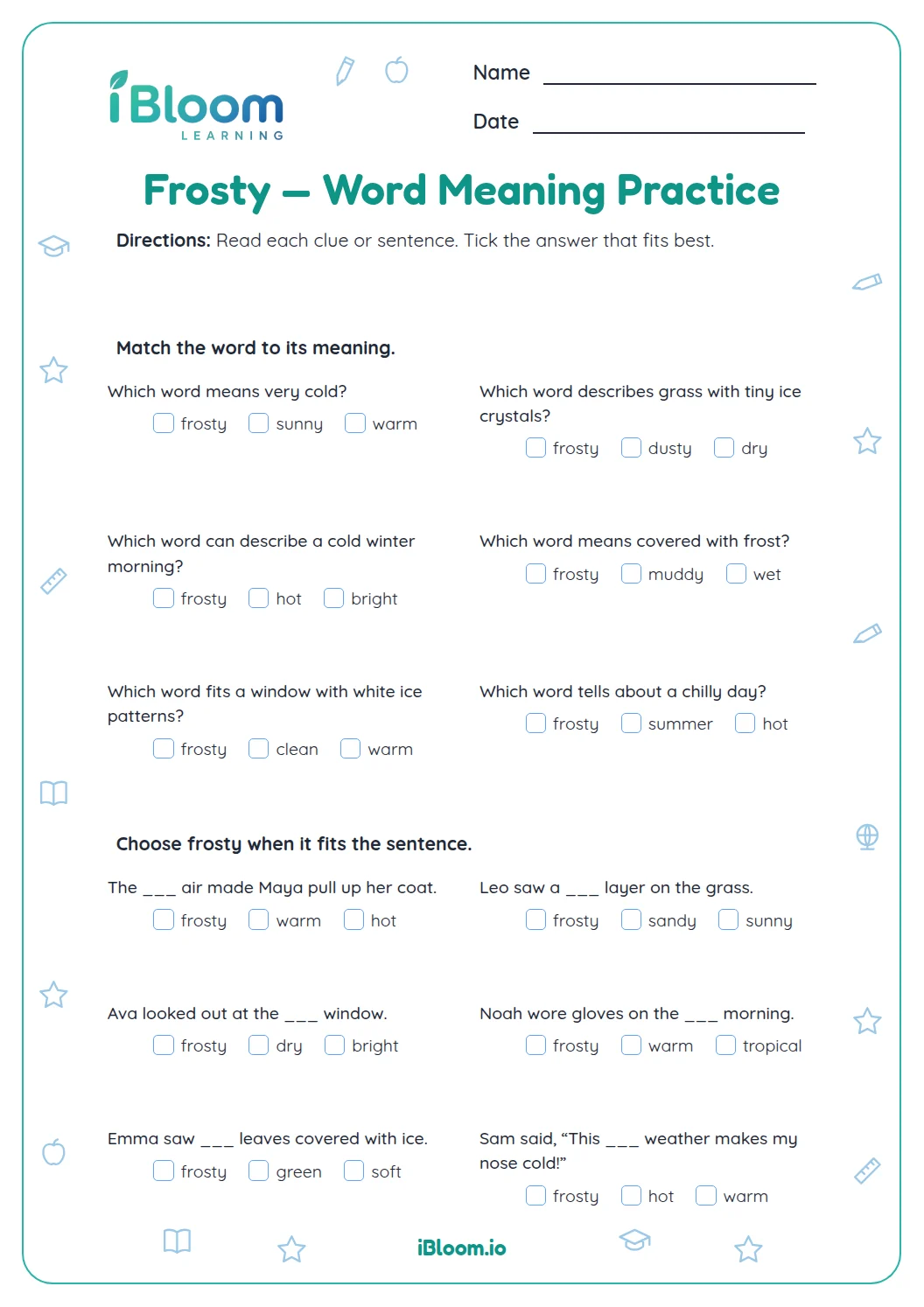
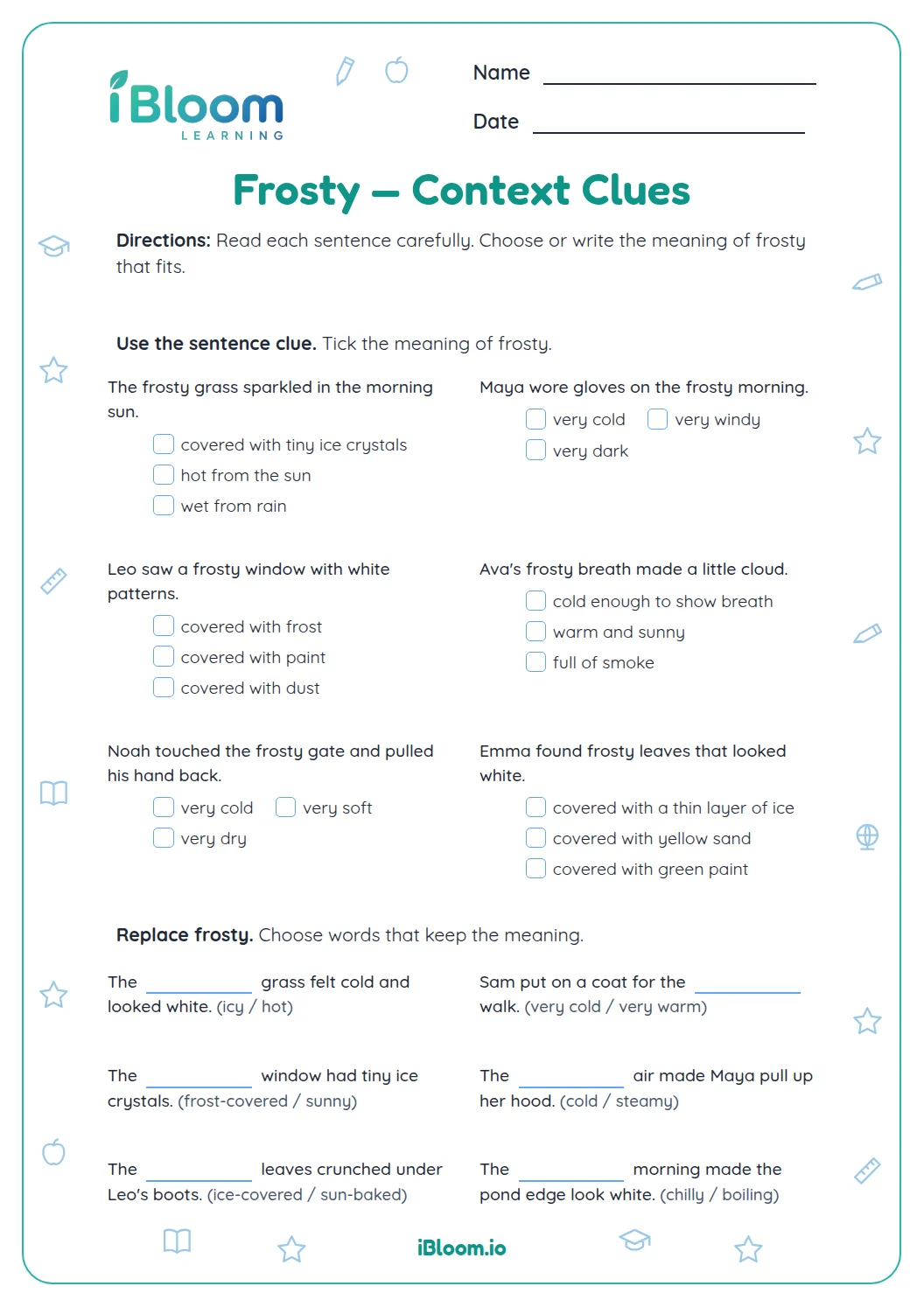
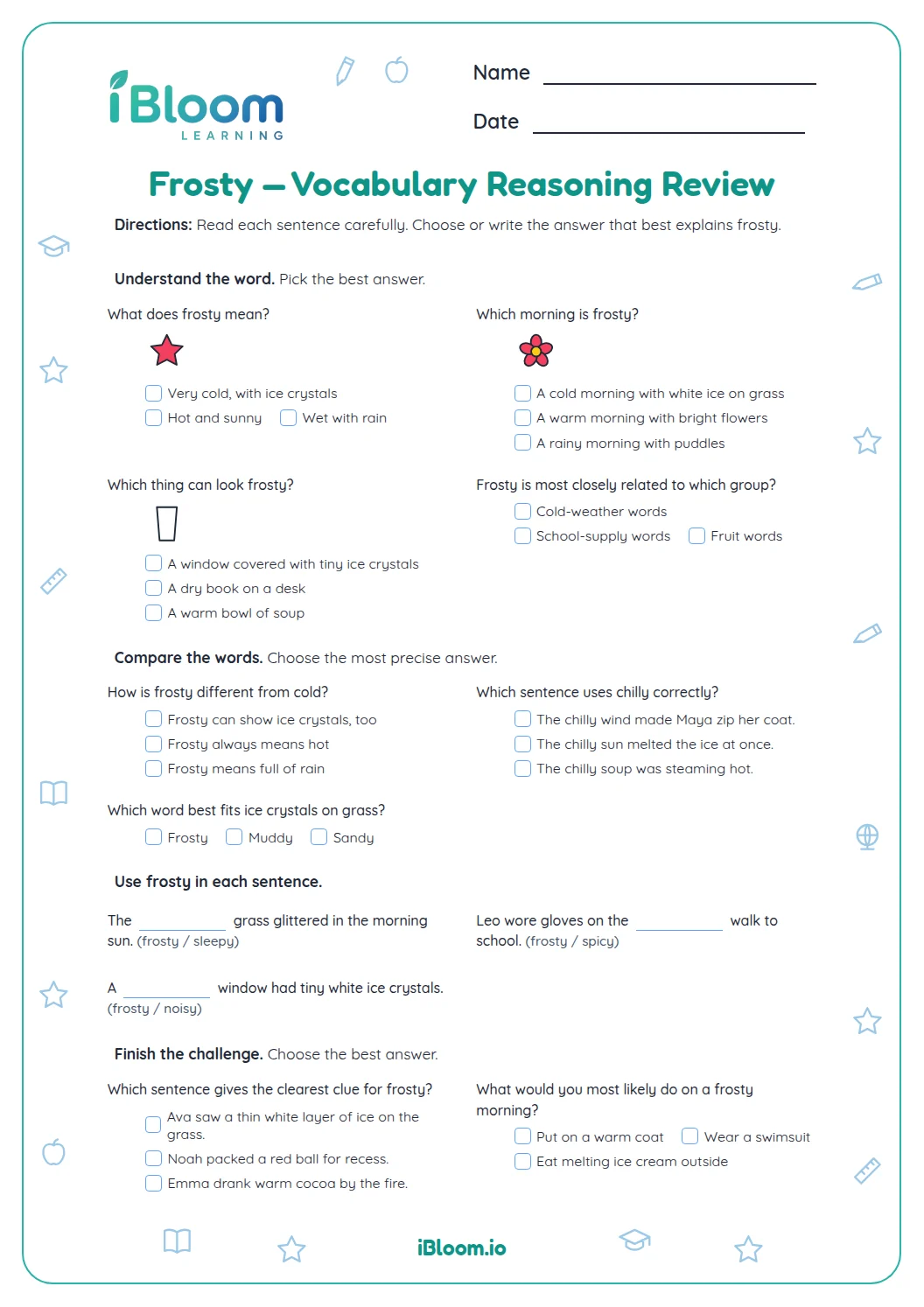
What does “frosty” mean on this worksheet?
Frosty describes very cold conditions and can refer to a thin layer of ice crystals. The worksheet uses winter terms such as frost, snow, and icicle, then asks students to sort or match them using clues. Ask the learner to point to the clue that supports the answer.
How many questions are on the page?
There are 15 questions in three parts. Students sort five words as clothing or weather, match five words to meaning clues, and complete five winter sentences. A separate answer key lists the expected answers. Ask the learner to point to the clue that supports the answer.
What is the difference between frost and a flurry?
Frost is a thin layer of ice crystals that forms on a surface. A flurry is a short, light fall of snow. Part B asks students to use those definitions to select the word that matches each clue. Ask the learner to point to the clue that supports the answer.
What does the answer key show?
The key gives the clothing or weather category for Part A, the vocabulary choice for Part B, and the missing winter word for Part C. Students can check a response by matching it to the clue in the question. Ask the learner to point to the clue that supports the answer.
How can we practice these words after the sheet?
Ask the student to use a word such as scarf, frost, or flurry in a new sentence. They can also explain whether it names clothing or weather, then compare that answer with another winter word. Ask the learner to point to the clue that supports the answer.