



About this worksheet
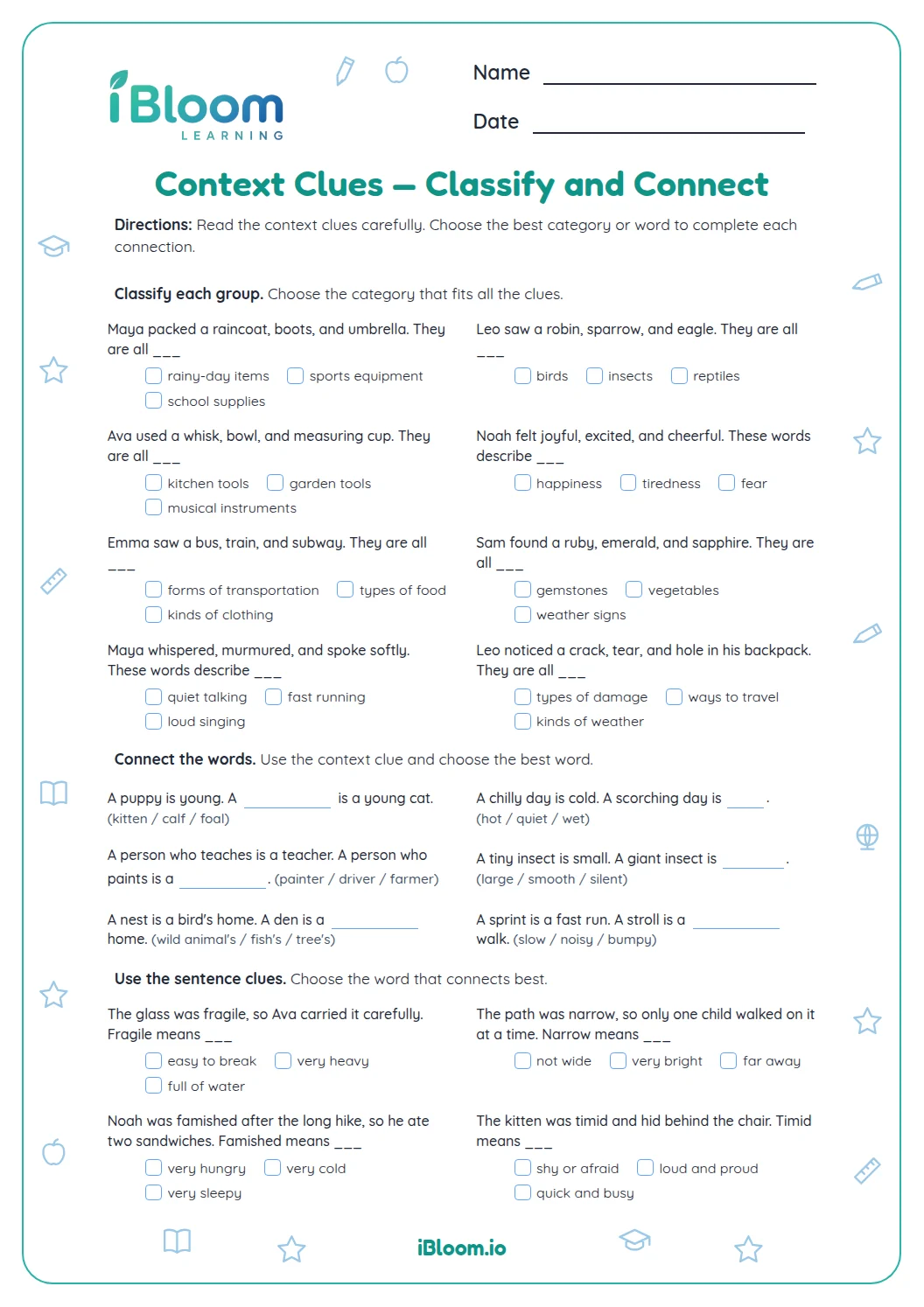
Sixteen vocabulary questions use short, grade-appropriate contexts to select and explain word meanings. The printable includes a separate answer key and focused practice that moves from direct work to reasoning.
Aligned to L.3.4
Let the sentence help
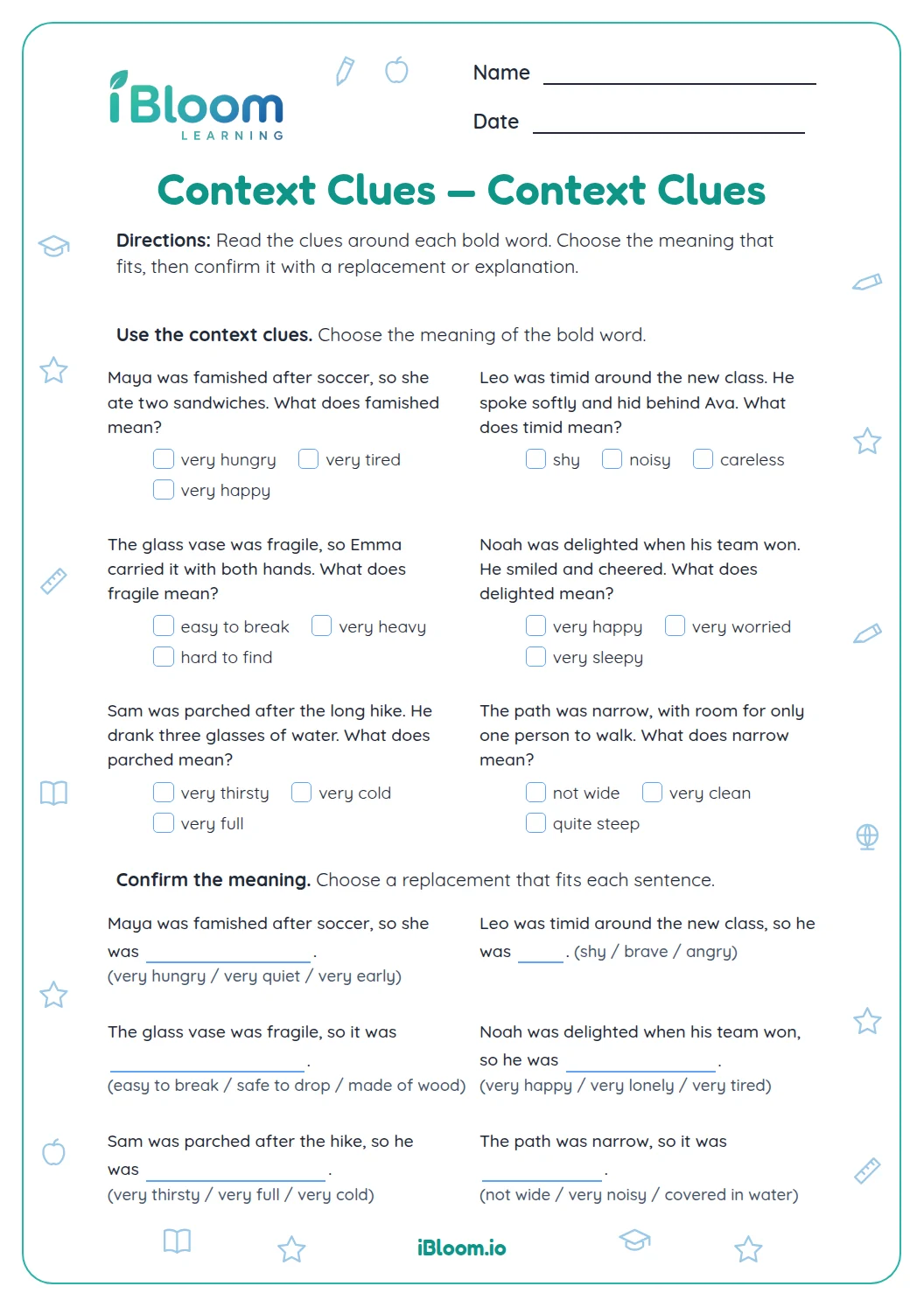
Context clues are nearby words or details that help a reader work out meaning. In “The glass vase was fragile, so we carried it carefully,” the careful handling hints that fragile means easy to break.
- 1Word: fragile
- 2Clue: carried it carefully
- 3Meaning: easy to break
Try the meaning in place
After you make a guess, reread the sentence with that meaning in place. If the sentence still makes sense, the clue is likely a good fit.
Practice in three ways
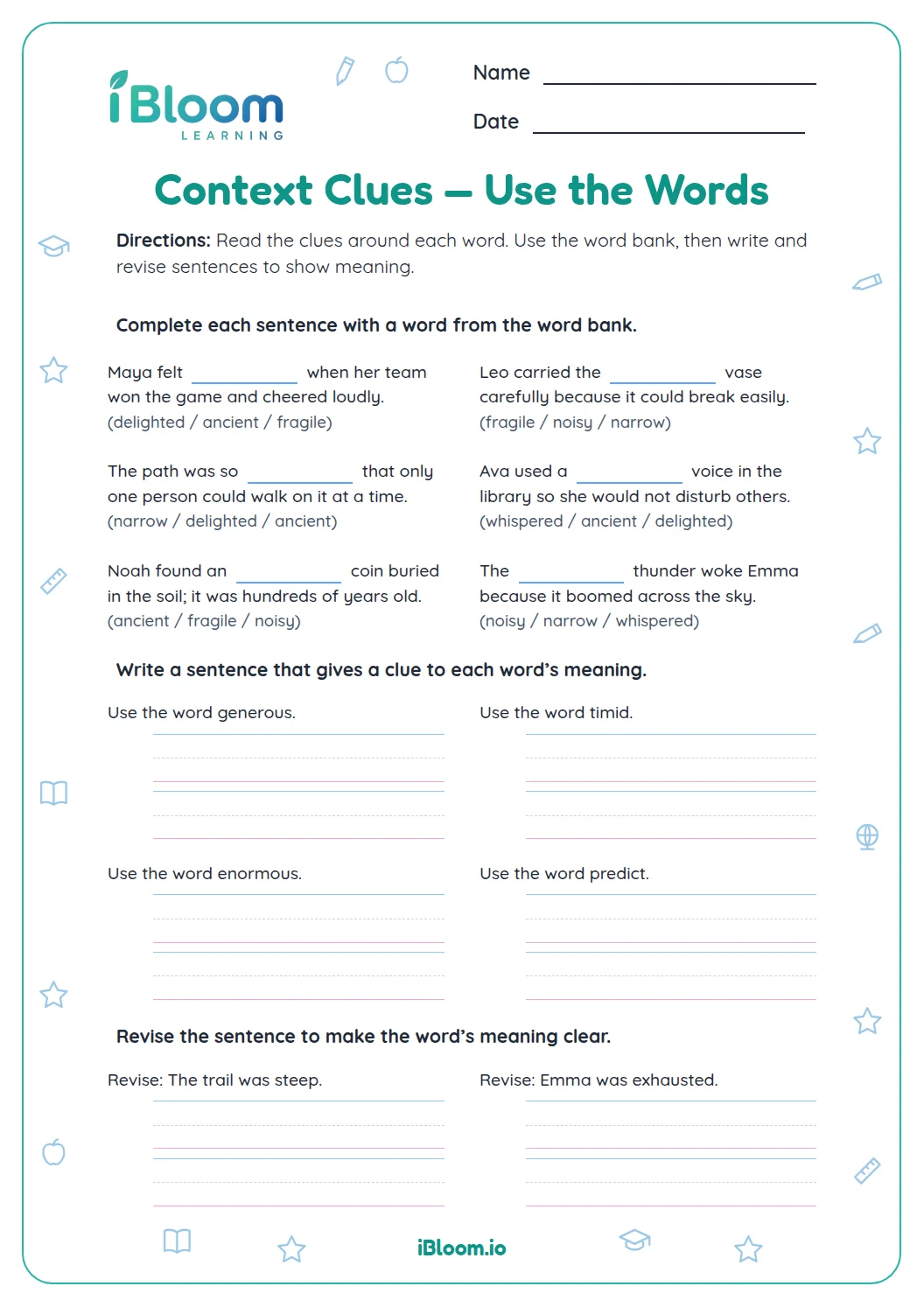
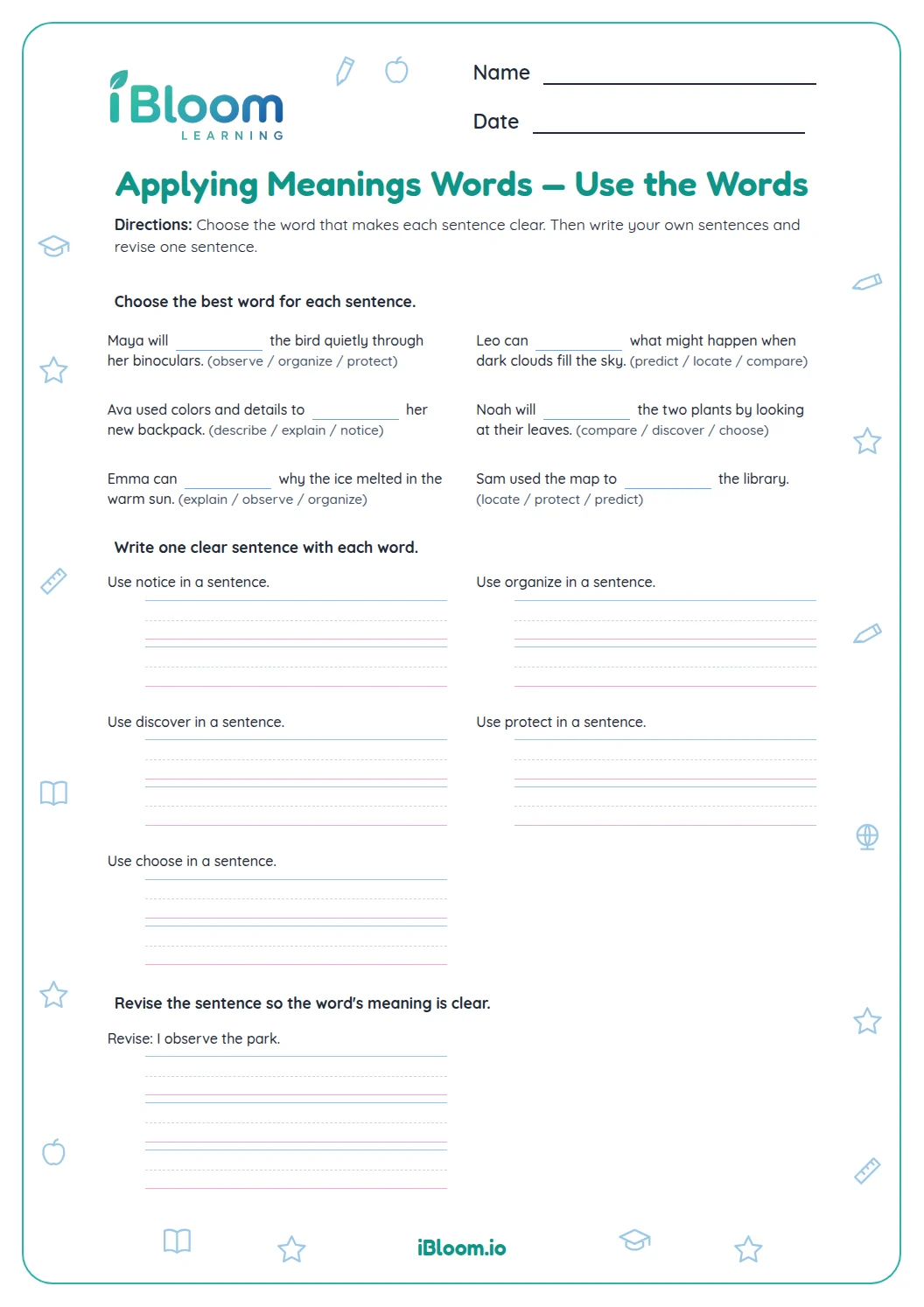
Part A provides answer choices. Part B asks for a short meaning without choices. Part C mixes both formats and asks learners to point to evidence.
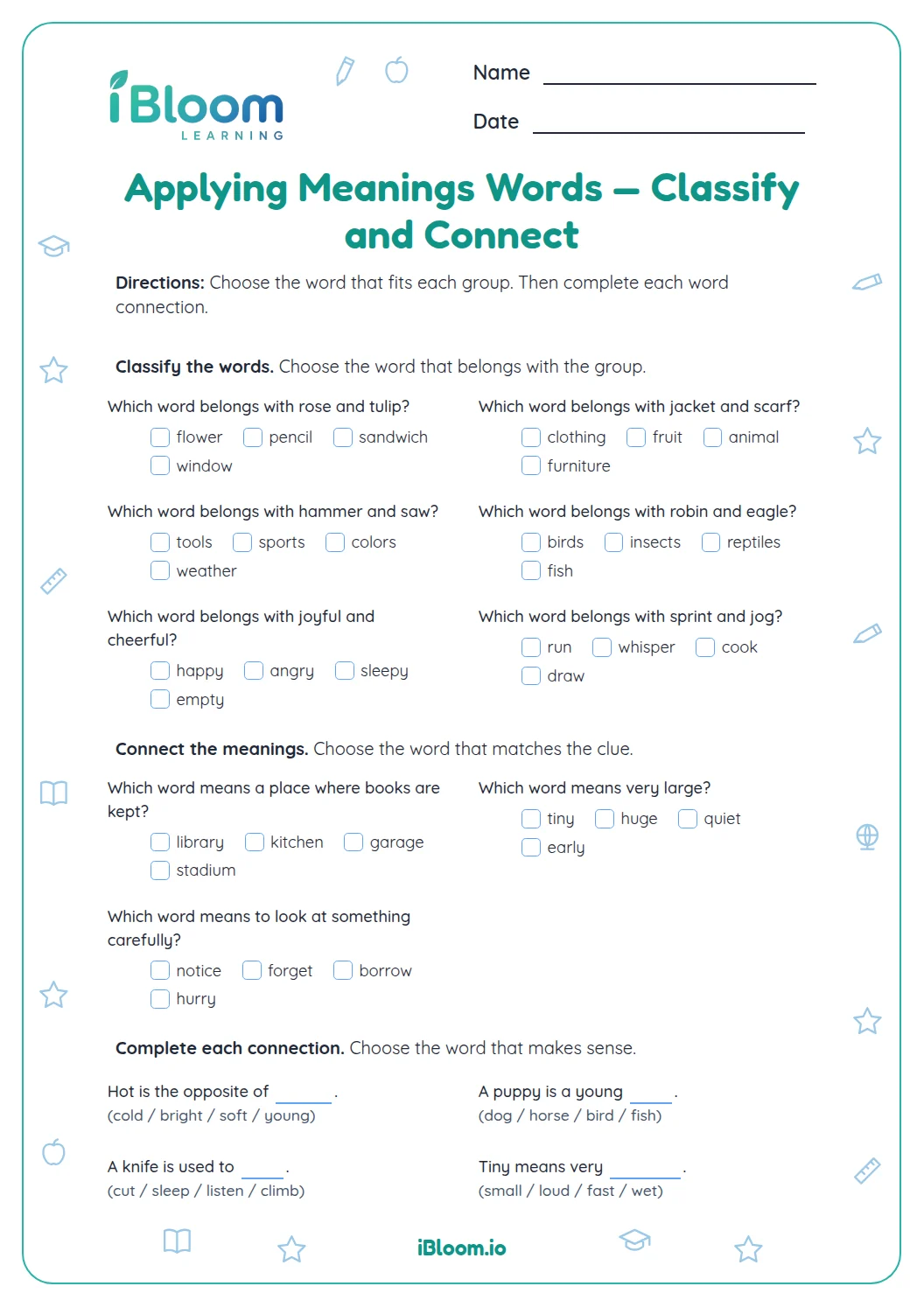
- Part A: select meanings from context
- Part B: write concise meanings
- Part C: apply and explain a clue
How to use this worksheet
- 1Read the whole sentence before guessing what the target word means.
- 2Notice the nearby action or detail that gives a clue.
- 3For a written meaning, use a short phrase that fits the sentence.
- 4For a choice, reread the sentence with the selected meaning in place.
- 5Use the key to compare the meaning and, for the last item, the supporting clue.
Common mistakes and quick fixes
The mistake
Choosing a meaning from memory that does not fit the sentence.
The fix
Reread the whole sentence and test whether the meaning makes sense there.
The mistake
Skipping clue words such as so, because, or but.
The fix
Notice how the clue and the unknown word connect.
The mistake
Choosing a meaning that fits the word but not the sentence clue.
The fix
Replace the target word with your guess and reread the sentence.
Curriculum alignment
This worksheet practices the following Common Core skills.
Determine or clarify the meaning of unknown and multiple-meaning words and phrases.
On this sheet: Learners use context clues to determine meanings of unfamiliar words.
Show the official wordingHide the official wording
Determine or clarify the meaning of unknown and multiple-meaning word and phrases based on grade 3 reading and content, choosing flexibly from a range of strategies.
What to practice next
Make more practice
Further reading
Questions parents and teachers ask
What is a context clue?
A context clue is a nearby detail that helps a reader infer an unfamiliar word’s meaning. In the sentence about a fragile vase, carrying it carefully suggests it could break. Learners use such details throughout this worksheet.
How should a learner use the sentence around a word?
Read the whole sentence, notice details connected to the target word, and make a meaning guess. Then replace the word with that guess and reread. If the sentence still makes sense, the meaning fits the clue.
Are all the questions multiple choice?
No. Part A uses choices, Part B asks learners to write short meanings, and Part C mixes choices with an explanation of a clue. The 16 questions move from selecting a meaning to using context independently.
What vocabulary words appear on the worksheet?
The target words include tiny, strolled, fragile, brisk, slice, weary, narrow, gathered, scent, tricky, delighted, postpone, enormous, vacant, and eager. Each appears in a sentence with a detail that can help a Grade 3 reader infer its meaning.
What does the final question ask learners to explain?
The final question returns to fragile from Part A and asks which clue helps explain it. A suitable answer connects “carried it carefully” with the idea that the vase could break. The key gives a sample response.
How can an adult support a learner who is stuck?
Ask what the sentence says before and after the unfamiliar word, then invite the learner to try a possible meaning in its place. Keep the focus on the specific clue in that sentence instead of guessing from the word alone.