Free printable practice
Context Clues Practice Activities
Grade 3 students use nearby words, sentences, and passage details to figure out unfamiliar vocabulary with printable context clues practice.
Free printable worksheet PDFs
Preview every available page, then download the free worksheet PDF for home, homeschool, tutoring, or classroom practice.
Preview the exact activity before downloading it.
 Context Clues — Word Meaning PracticeGrade 3 students use nearby words, sentences, and passage details to figure out unfamiliar vocabulary with printable context clues practice. This word meaning practice worksheet provides a distinct, age-appropriate way to practise the same lesson.Grade 3Free PDF preview
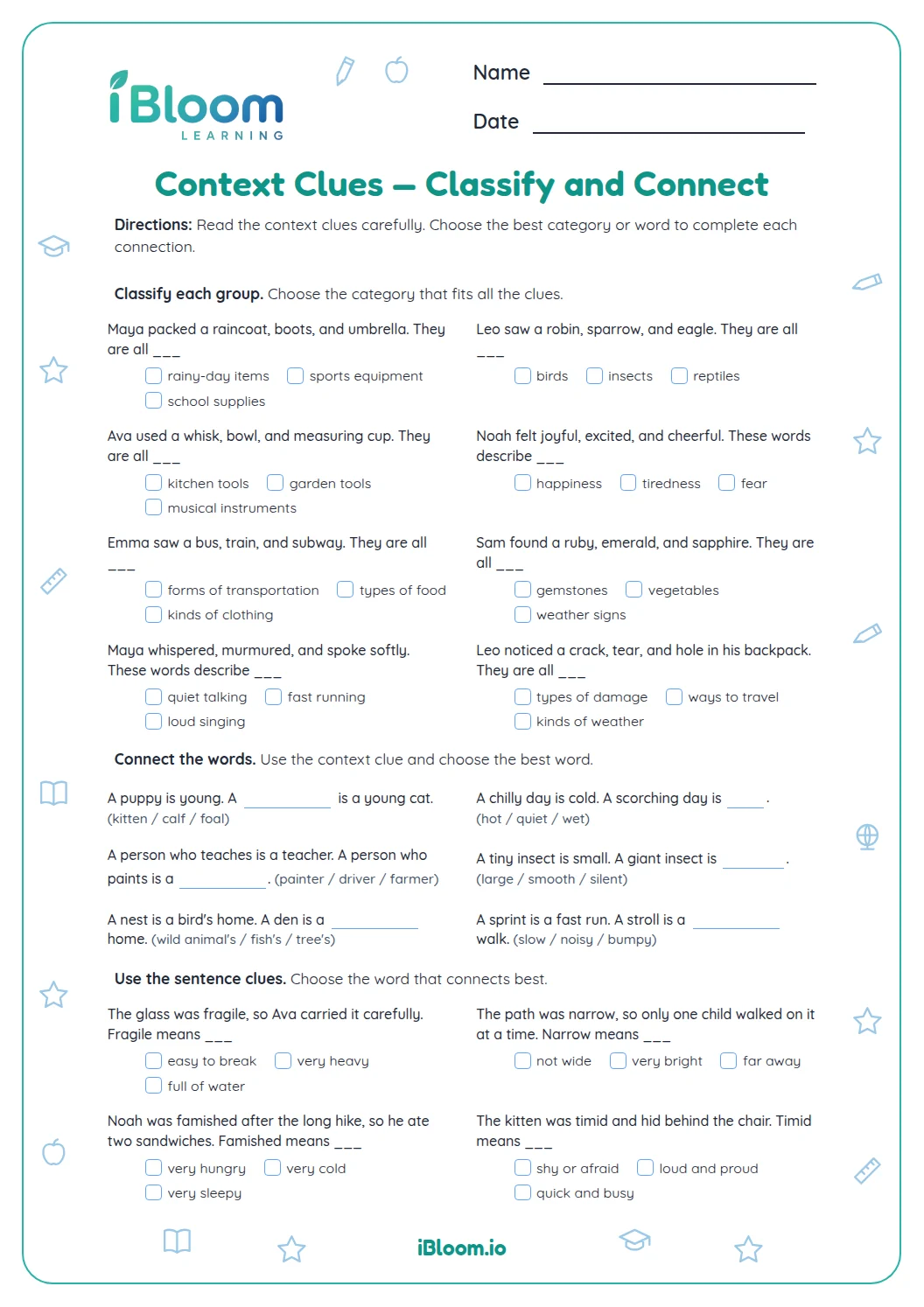 Context Clues — Classify and ConnectGrade 3 students use nearby words, sentences, and passage details to figure out unfamiliar vocabulary with printable context clues practice. This classify and connect worksheet provides a distinct, age-appropriate way to practise the same lesson.Grade 3Free PDF preview
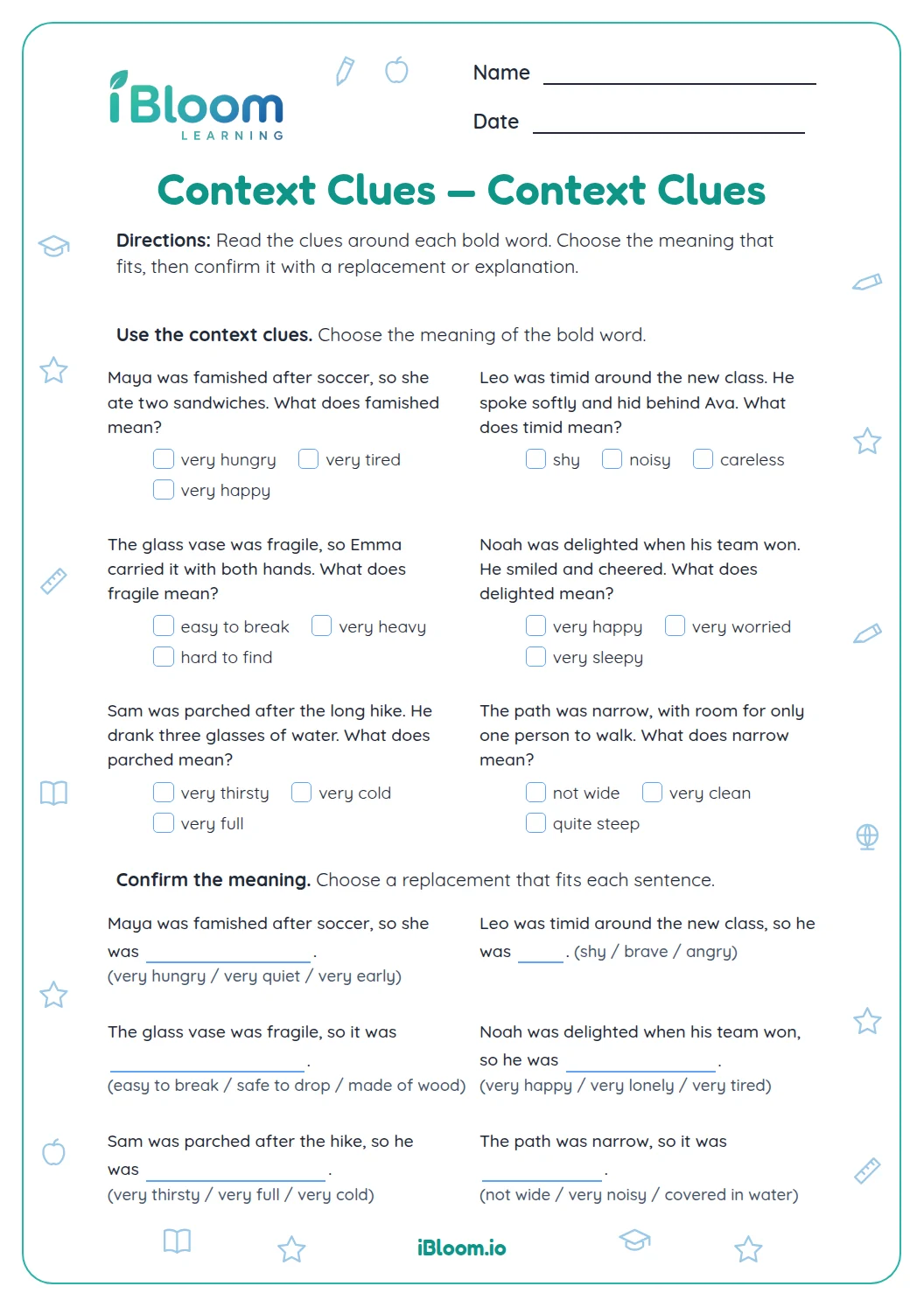 Context Clues — Context CluesGrade 3 students use nearby words, sentences, and passage details to figure out unfamiliar vocabulary with printable context clues practice. This context clues worksheet provides a distinct, age-appropriate way to practise the same lesson.Grade 3Free PDF preview
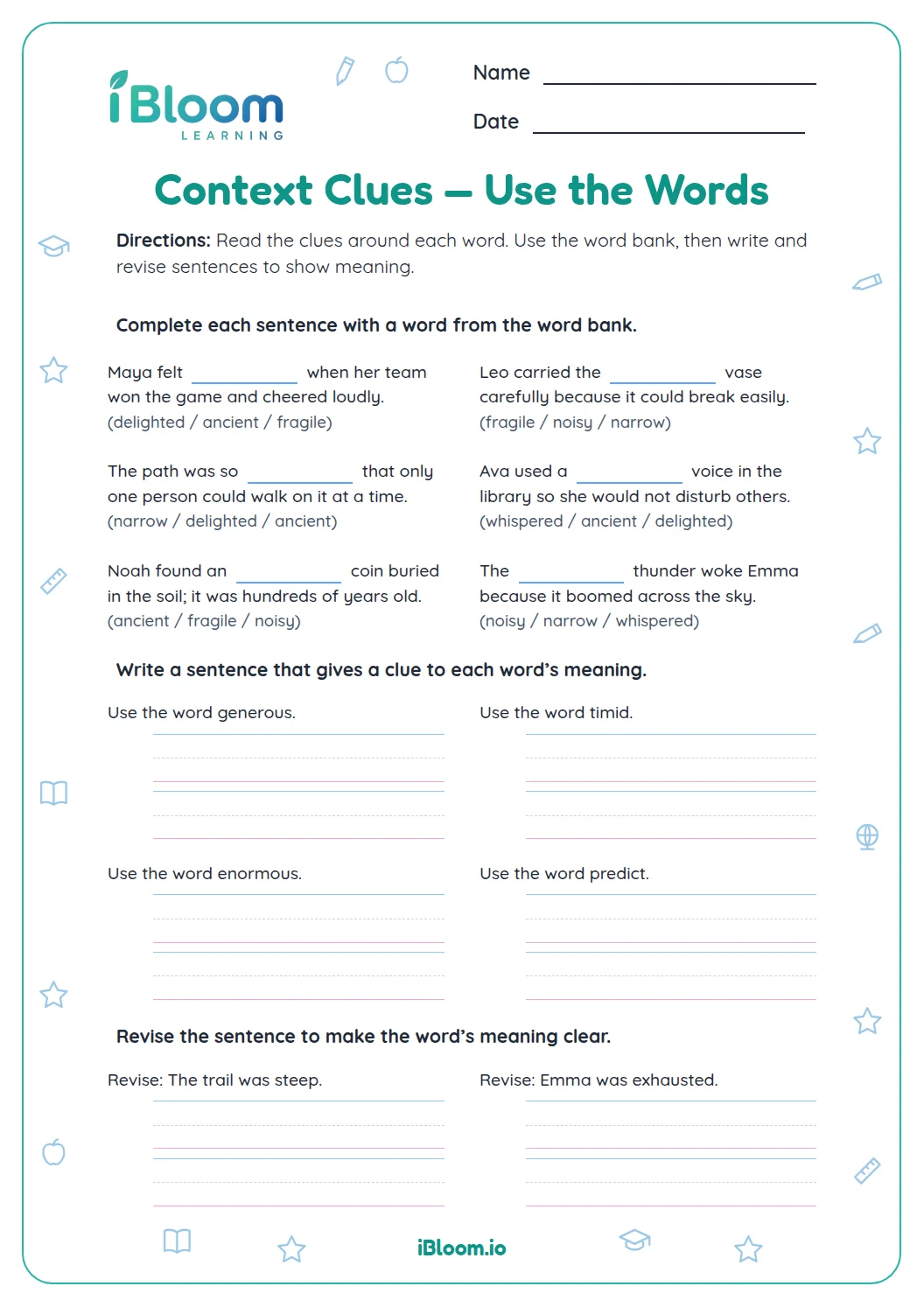 Context Clues — Use the WordsGrade 3 students use nearby words, sentences, and passage details to figure out unfamiliar vocabulary with printable context clues practice. This use the words worksheet provides a distinct, age-appropriate way to practise the same lesson.Grade 3Free PDF preview
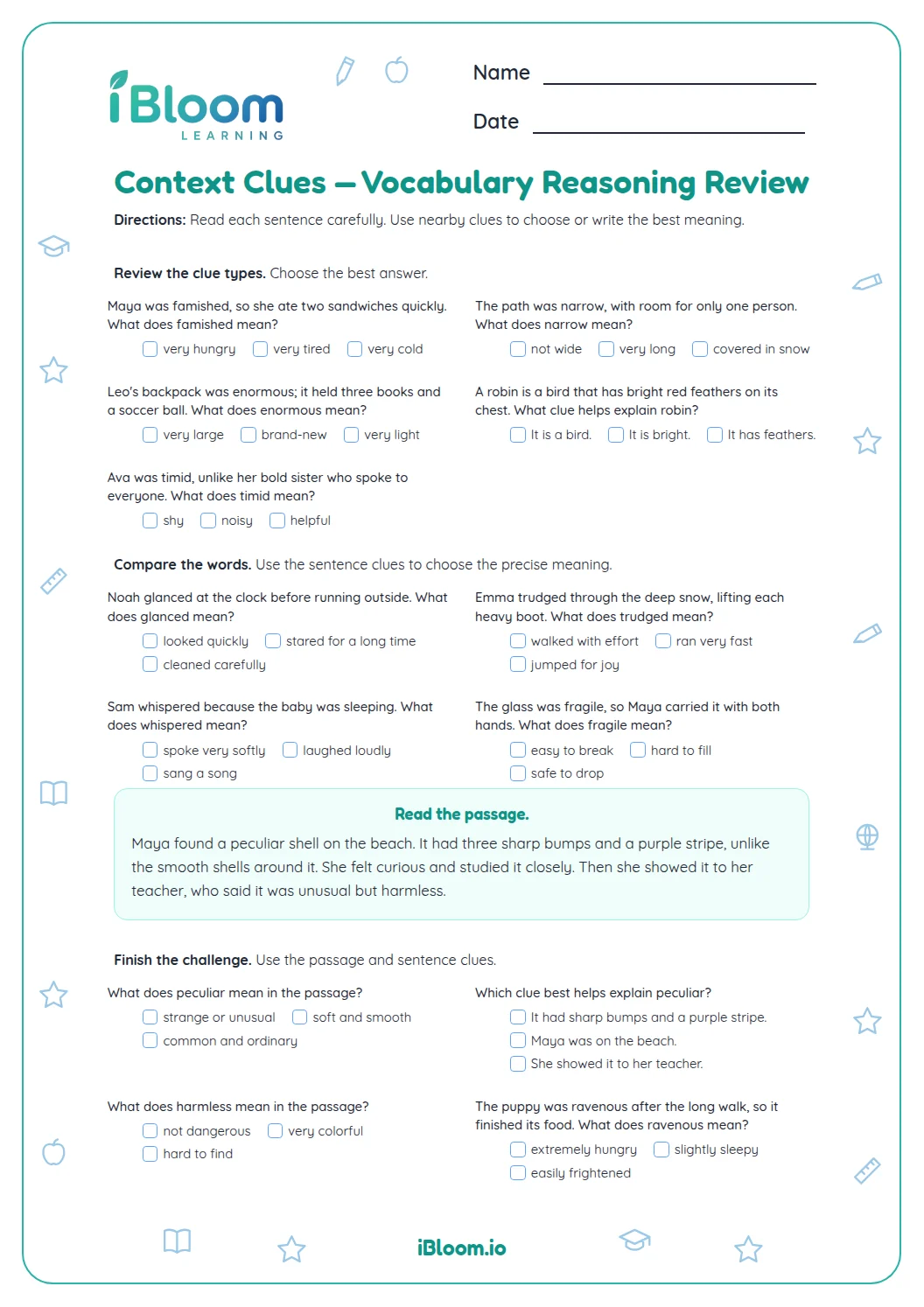 Context Clues — Vocabulary Reasoning ReviewGrade 3 students use nearby words, sentences, and passage details to figure out unfamiliar vocabulary with printable context clues practice. This vocabulary reasoning review worksheet provides a distinct, age-appropriate way to practise the same lesson.Grade 3Free PDF preview
Practice that builds confidence
Building meaning from the sentence
These Grade 3 context clues worksheets help children work out the meaning of unfamiliar words by reading the words and sentences around them. Students practise noticing definitions, examples, synonyms, antonyms, and general clues in a sentence or short passage.
The printable activities include vocabulary-in-context questions, sentence-based practice, and short reading tasks where children choose or explain a word meaning. They build confidence using evidence from the text instead of guessing or stopping at every new word.
Context clues teach Grade 3 readers to slow down and look around an unknown word. A sentence may define the word directly, show an example, give an opposite, or describe what is happening. For example, if a character is “drowsy after staying up late,” children can connect drowsy with being sleepy.

A useful progression for third graders
The worksheets move from shorter sentences with clear clues to slightly longer items where students must combine details. Children may first match a word to its meaning, then choose the best definition, and later explain which words in the sentence helped them. This supports both vocabulary growth and reading comprehension.
Parent routine for at-home practice
Choose one worksheet and ask your child to circle the unknown word first. Next, have them underline the clue words nearby. Ask, “Does the sentence tell what it means, give an example, or show the opposite?” After they answer, invite them to read the full sentence again using their chosen meaning to check whether it makes sense.

Classroom uses for teachers
Teachers can use these printables for vocabulary warm-ups, literacy centers, small-group reading, or independent practice after a mini-lesson. They also work well for partner talk: one student identifies the clue, while the other explains the word meaning in a complete sentence. This keeps the focus on evidence, not just the final answer.

Common errors to watch for
Many third graders choose a meaning based on how a word sounds or on one familiar part of the word. Others read only the sentence with the bold word and miss the clue in the next sentence. Encourage students to read before and after the word, watch for signal words such as “but,” “or,” “such as,” and “means,” and reject answers that do not fit the whole idea.
Free printable PDF download
Use this grade 3 context clues worksheet page to preview the activity, print it, or download it as a PDF for quick practice. It works well for homework, homeschool lessons, tutoring, morning work, revision, and classroom centers.
Answers and answer key support
After the child completes the worksheet independently, parents and teachers can use the answer support or answer key information to check the work, review mistakes, and choose the next practice step.
Why iBloom worksheets help
The activities give repeated, focused practice with the exact skill of using context to understand vocabulary. Clear sentence frames, varied clue types, and opportunities to justify answers help children become flexible readers. A simple child-friendly strategy is: stop, look around, find the clue, try the meaning, and reread to check.
Helpful answers
Frequently asked questions
What are context clues in Grade 3 vocabulary?
Context clues are hints in the same sentence or nearby sentences that help a child figure out an unfamiliar word. Grade 3 students learn to use definitions, examples, opposites, and descriptive details as clues.
How should my child use these worksheets?
Have your child read the full sentence or short passage, circle the unknown word, underline clue words, choose or write the meaning, and then reread to check that the meaning fits.
What types of context clues do these activities practise?
The worksheets include common clue types such as definition clues, synonym clues, antonym clues, example clues, and general meaning clues from the surrounding text.
Are these worksheets only for strong readers?
No. They are designed for Grade 3 vocabulary practice and can support a range of readers. Students who need help can begin by working aloud with an adult or partner before completing items independently.
How do context clues help reading comprehension?
When children can work out word meanings while reading, they are less likely to lose the main idea. They also learn to use evidence from the text, which supports stronger comprehension across stories and informational passages.
Is this grade 3 context clues worksheet free?
Yes. You can preview it for free and use the printable worksheet for home or classroom practice.
Can I download this grade 3 context clues worksheet as a PDF?
Yes. Use the worksheet download option to save a printable PDF, or print the worksheet directly from the page.
Does this grade 3 context clues worksheet include answers or an answer key?
When the activity has fixed answers, iBloom includes answer support so parents and teachers can check the completed worksheet.