Free printable practice
Slow Animals Practice Activities
Grade 3 vocabulary word search worksheets help children recognize, spell, and discuss names of slow-moving animals.
Free printable worksheet PDFs
Preview every available page, then download the free worksheet PDF for home, homeschool, tutoring, or classroom practice.
Preview the exact activity before downloading it.
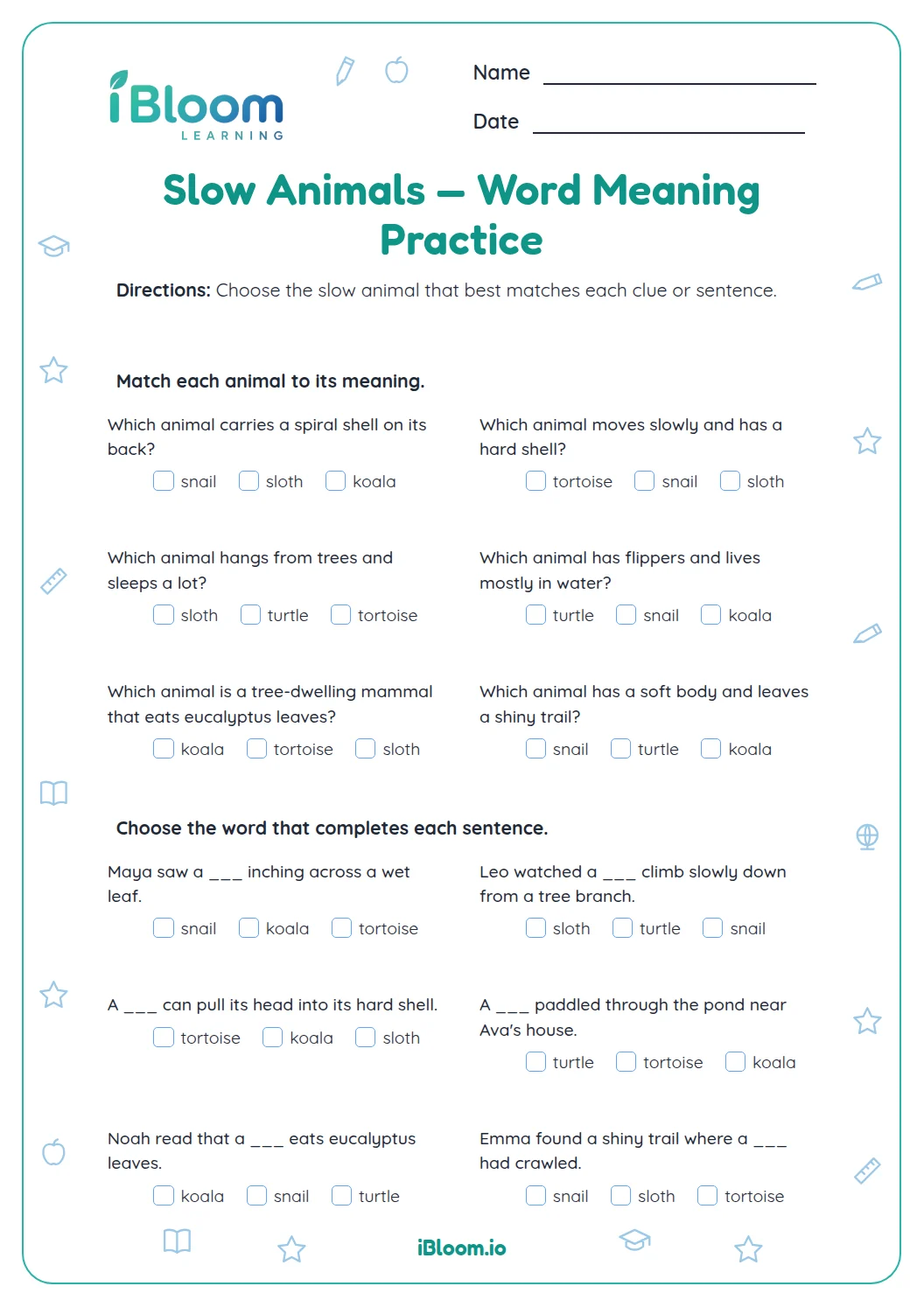 Slow Animals — Word Meaning PracticeGrade 3 vocabulary word search worksheets help children recognize, spell, and discuss names of slow-moving animals. This word meaning practice worksheet provides a distinct, age-appropriate way to practise the same lesson.Grade 3Free PDF preview
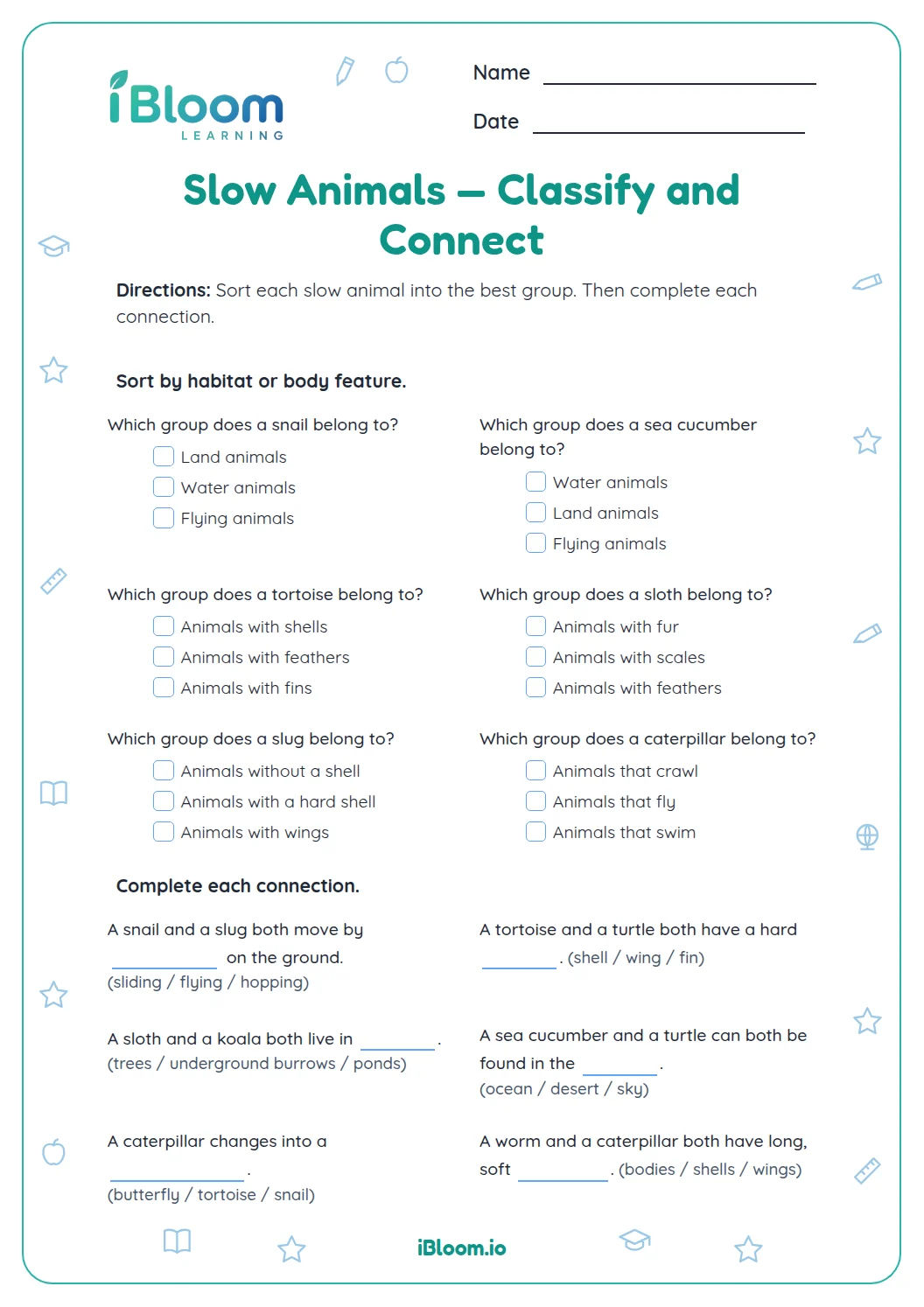 Slow Animals — Classify and ConnectGrade 3 vocabulary word search worksheets help children recognize, spell, and discuss names of slow-moving animals. This classify and connect worksheet provides a distinct, age-appropriate way to practise the same lesson.Grade 3Free PDF preview
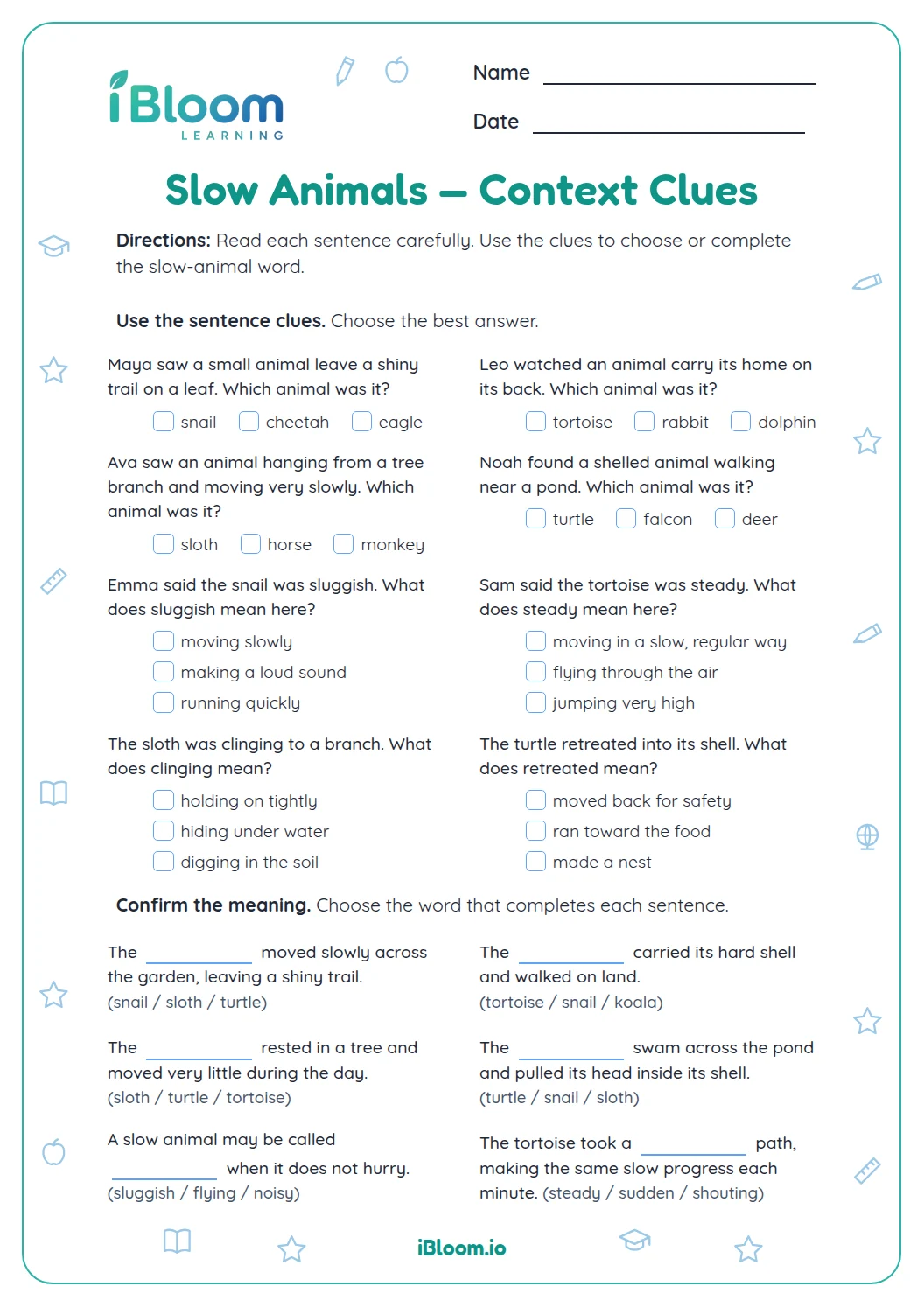 Slow Animals — Context CluesGrade 3 vocabulary word search worksheets help children recognize, spell, and discuss names of slow-moving animals. This context clues worksheet provides a distinct, age-appropriate way to practise the same lesson.Grade 3Free PDF preview4 pages
 Slow Animals — Use the WordsGrade 3 vocabulary word search worksheets help children recognize, spell, and discuss names of slow-moving animals. This use the words worksheet provides a distinct, age-appropriate way to practise the same lesson.Grade 3Free PDF preview
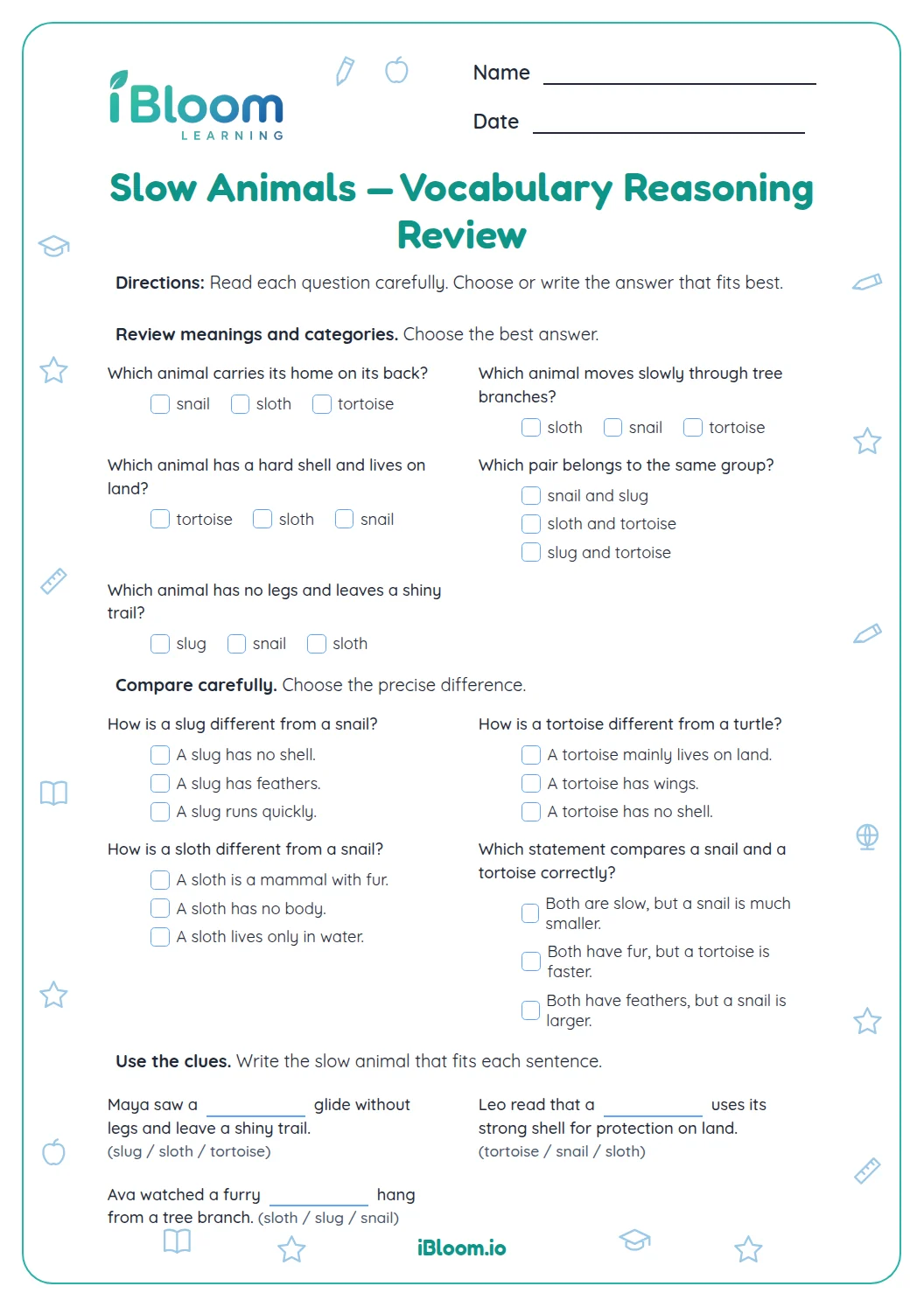 Slow Animals — Vocabulary Reasoning ReviewGrade 3 vocabulary word search worksheets help children recognize, spell, and discuss names of slow-moving animals. This vocabulary reasoning review worksheet provides a distinct, age-appropriate way to practise the same lesson.Grade 3Free PDF preview
Practice that builds confidence
Vocabulary focus
These Grade 3 vocabulary word search activities focus on slow animals, giving children repeated practice reading and spelling animal names in a fun puzzle format. Learners look carefully across the grid, connect letters in order, and build confidence with topic words such as animals known for slow movement.
The printable worksheets include word-search style practice that supports visual scanning, letter recognition, spelling accuracy, and animal vocabulary. They are useful for independent work, literacy centers, early finisher tasks, or a calm vocabulary activity at home.
Slow animal word searches help third graders connect spelling with meaning. Instead of memorizing a list, children search for animal names inside a letter grid, then say, read, and often write the words again. This strengthens attention to exact letter order in words such as snail, sloth, tortoise, turtle, or other slow-moving creatures that may appear in the activity.

How the skill progresses
Children begin by matching each word from the list to letters in the puzzle. They may first find shorter or more familiar words, then move to longer names with repeated letters or less common spelling patterns. As they work, they practise directionality, careful tracking, and distinguishing similar letters. This is especially helpful for vocabulary because the child is not only finding a shape of a word but also attaching it to an animal idea.
A simple parent routine
At home, start by reading the word list together. Ask your child to choose one animal and tell what they know about it: Does it crawl, climb, swim, or carry a shell? Then let them search for that word. After each find, have them spell the word aloud and use it in a sentence, such as, “A tortoise moves slowly.” End by asking them to circle the trickiest word and copy it once neatly.

Classroom uses
Teachers can use these worksheets during Grade 3 vocabulary practice, animal-theme units, morning work, substitutes, or literacy centers. Pair students so one reads the word list while the other searches, then switch roles. For an extension, students can sort the found animals by habitat, body covering, or movement, or write one factual sentence using a selected word.

Common errors to watch for
Some children circle letters that are close to the word but not in the correct order. Others stop after finding the first few letters or confuse similar-looking words. Encourage them to check every letter against the word list before marking a word complete. If a word is long, covering the rest of the list with a finger can reduce visual clutter.
Free printable PDF download
Use this grade 3 slow animals word search worksheet page to preview the activity, print it, or download it as a PDF for quick practice. It works well for homework, homeschool lessons, tutoring, morning work, revision, and classroom centers.
Answers and answer key support
After the child completes the worksheet independently, parents and teachers can use the answer support or answer key information to check the work, review mistakes, and choose the next practice step.
Why iBloom worksheets help
These printable activities give focused, low-pressure vocabulary practice around one clear theme: slow animals. The puzzle format keeps attention high while still requiring accurate spelling, careful reading, and word recognition. A child-friendly strategy is “read, trace, search, check”: read the word, trace it with a finger on the list, search the grid, then check each letter before circling.
Helpful answers
Frequently asked questions
What vocabulary skill do these slow animal word searches practise?
They practise reading and spelling animal names, recognizing words in a letter grid, and connecting vocabulary words with the idea of slow-moving animals.
Are these worksheets suitable for Grade 3 independent work?
Yes. Most Grade 3 children can complete a themed word search independently, though some may benefit from reading the word list aloud first.
How can I extend the activity after the word search is finished?
Ask the child to choose three found animals and write one sentence about each, or sort the animals by where they live, how they move, or whether they have shells, fur, or scales.
What should I do if my child finds only part of a word?
Have them compare each letter in the grid with the word list from start to finish. Encourage checking the complete word before circling it.
Can teachers use these in a vocabulary center?
Yes. They work well in literacy centers because students can read the list, search independently or in pairs, and then use the found words in short animal sentences.
Is this grade 3 slow animals word search worksheet free?
Yes. You can preview it for free and use the printable worksheet for home or classroom practice.
Can I download this grade 3 slow animals word search worksheet as a PDF?
Yes. Use the worksheet download option to save a printable PDF, or print the worksheet directly from the page.
Does this grade 3 slow animals word search worksheet include answers or an answer key?
When the activity has fixed answers, iBloom includes answer support so parents and teachers can check the completed worksheet.