Free printable practice
Proverb Idiom Practice Activities
Grade 4 vocabulary worksheets for understanding, explaining, and using proverbs and idioms in meaningful reading and writing contexts.
Free printable worksheet PDFs
Preview every available page, then download the free worksheet PDF for home, homeschool, tutoring, or classroom practice.
Preview the exact activity before downloading it.
 Proverb Idiom — Word Meaning PracticeGrade 4 vocabulary worksheets for understanding, explaining, and using proverbs and idioms in meaningful reading and writing contexts. This word meaning practice worksheet provides a distinct, age-appropriate way to practise the same lesson.Grade 4Free PDF preview
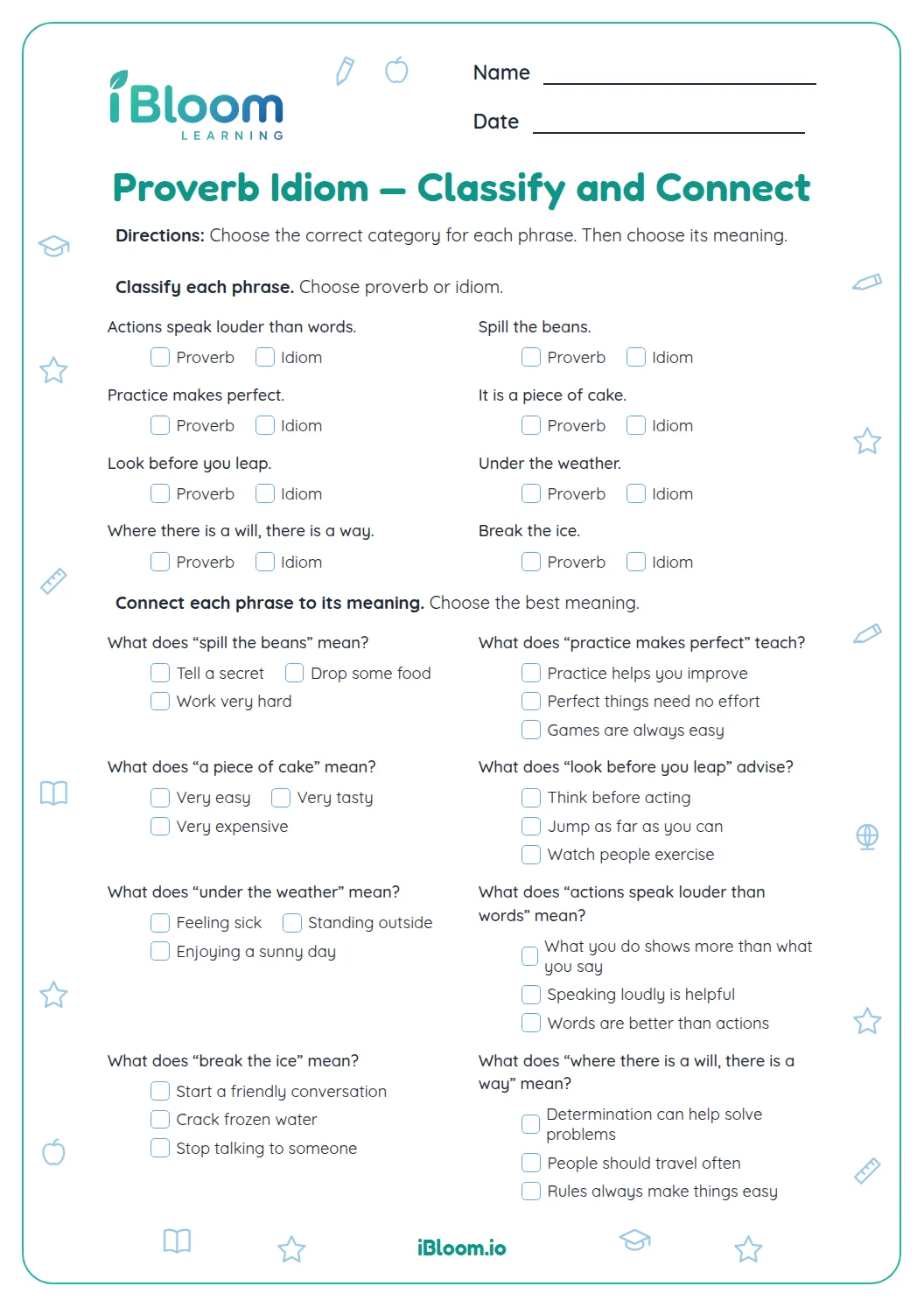 Proverb Idiom — Classify and ConnectGrade 4 vocabulary worksheets for understanding, explaining, and using proverbs and idioms in meaningful reading and writing contexts. This classify and connect worksheet provides a distinct, age-appropriate way to practise the same lesson.Grade 4Free PDF preview
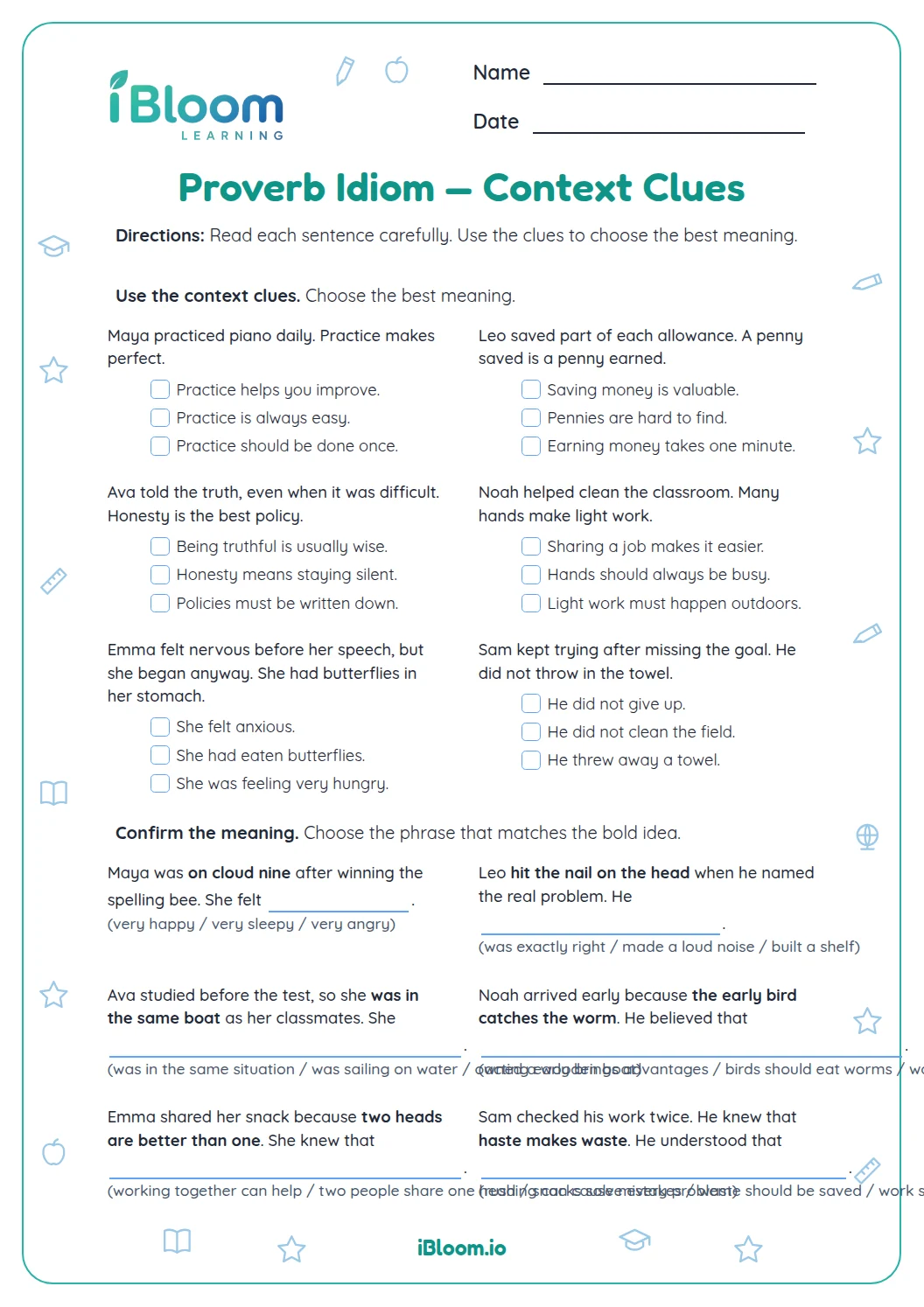 Proverb Idiom — Context CluesGrade 4 vocabulary worksheets for understanding, explaining, and using proverbs and idioms in meaningful reading and writing contexts. This context clues worksheet provides a distinct, age-appropriate way to practise the same lesson.Grade 4Free PDF preview4 pages
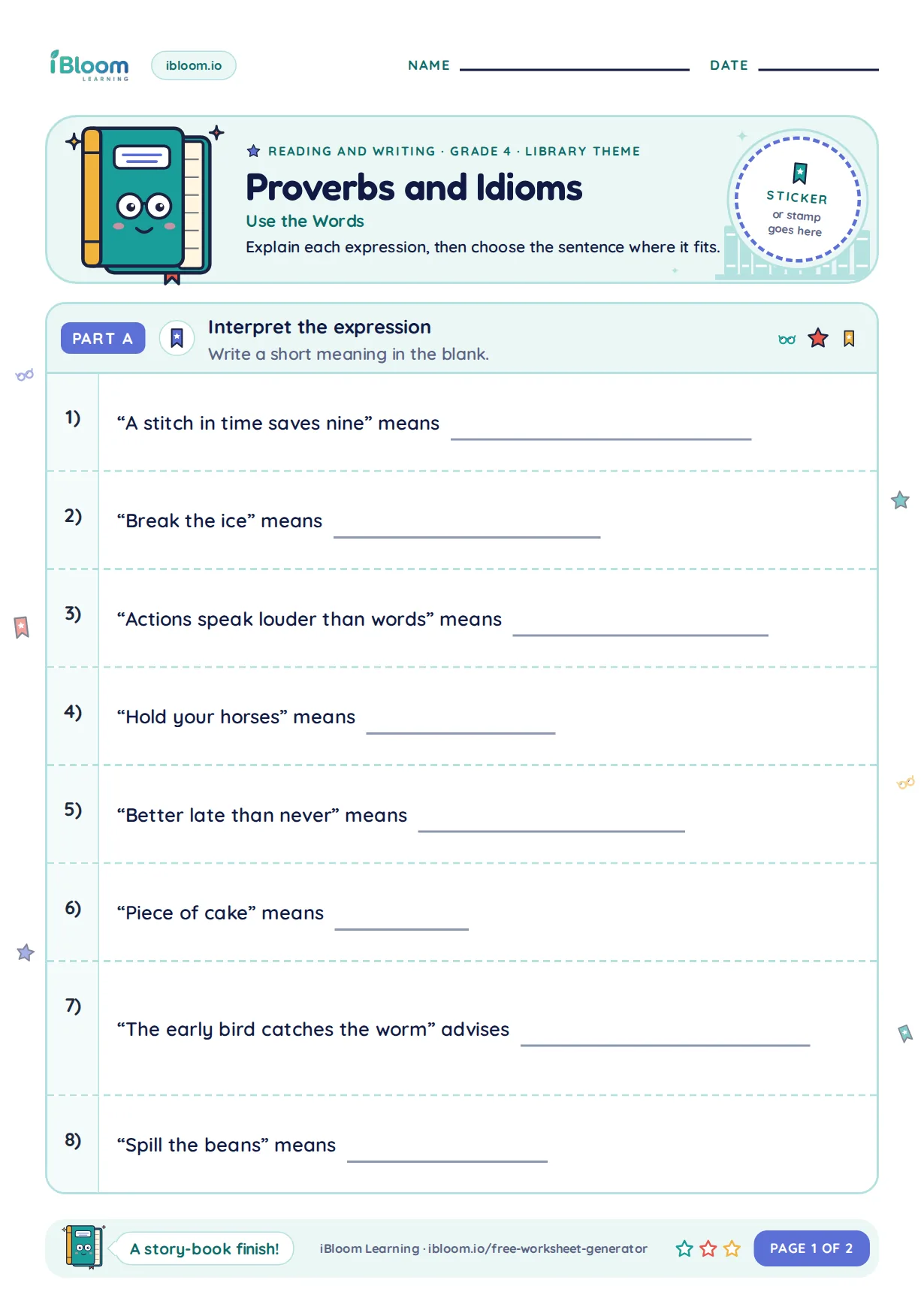 Proverb Idiom — Use the WordsGrade 4 vocabulary worksheets for understanding, explaining, and using proverbs and idioms in meaningful reading and writing contexts. This use the words worksheet provides a distinct, age-appropriate way to practise the same lesson.Grade 4Free PDF preview
 Proverb Idiom — Vocabulary Reasoning ReviewGrade 4 vocabulary worksheets for understanding, explaining, and using proverbs and idioms in meaningful reading and writing contexts. This vocabulary reasoning review worksheet provides a distinct, age-appropriate way to practise the same lesson.Grade 4Free PDF preview
Practice that builds confidence
Understanding Figurative Language
These Grade 4 vocabulary worksheets help children recognize how proverbs and idioms add meaning beyond the literal words on the page. Students practice telling the difference between a short piece of wisdom, such as “Practice makes perfect,” and a figurative expression, such as “spill the beans.”
The printable activities include matching meanings, choosing the best idiom or proverb for a situation, explaining phrases in complete sentences, and using context clues. Children build flexible word knowledge while reading, writing, and speaking with more precise expression.
Proverbs and idioms can be tricky because the words do not always mean exactly what they say. In these worksheets, Grade 4 students learn that an idiom has a figurative meaning, while a proverb usually teaches a lesson or gives advice. Activities may ask children to connect “better late than never” with a real-life situation or explain why “under the weather” does not mean standing below a cloud.

Practice That Builds in Steps
The work moves from recognition to use. Children first match phrases to meanings, then choose which phrase best fits a short passage or conversation. Later tasks ask them to write their own sentences, explain the message of a proverb, or compare literal and figurative meanings. This progression helps students use vocabulary with purpose rather than simply memorizing definitions.
A Simple Parent Routine
At home, read one phrase aloud and ask, “What would this mean if it were literal?” Then ask, “What does it really mean?” Have your child draw a quick two-part sketch: one silly literal picture and one realistic meaning. Finish by asking for a sentence about school, sports, chores, or friendship using the phrase correctly.

Classroom Uses
Teachers can use these printables for vocabulary centers, morning work, small-group reteaching, or partner discussion. They also work well before reading stories that include figurative language. Students can sort cards into “idiom” and “proverb,” justify their choices, and then share examples from books or classroom conversations.

Common Errors to Watch For
Some students may explain only the literal picture, such as thinking “hit the books” means striking a stack of books. Others may confuse any old saying with a proverb, even when it does not teach a lesson. Encourage students to look for clues: Is the phrase giving advice? Is it describing something in a nonliteral way?
Free printable PDF download
Use this grade 4 proverb idiom worksheet page to preview the activity, print it, or download it as a PDF for quick practice. It works well for homework, homeschool lessons, tutoring, morning work, revision, and classroom centers.
Answers and answer key support
After the child completes the worksheet independently, parents and teachers can use the answer support or answer key information to check the work, review mistakes, and choose the next practice step.
Why iBloom Worksheets Help
iBloom worksheets give children repeated practice with short, clear contexts so they can focus on meaning. A helpful strategy is: read the phrase, picture the literal meaning, reread the sentence, then choose the meaning that makes sense. This makes figurative language feel less mysterious and more useful.
Helpful answers
Frequently asked questions
What is the difference between a proverb and an idiom?
An idiom is a phrase whose meaning is different from the literal words, such as “break the ice.” A proverb is a short saying that gives advice or teaches a lesson, such as “Honesty is the best policy.”
Why do Grade 4 students need to learn idioms and proverbs?
Students meet these phrases in stories, conversations, and informational texts. Understanding them helps children read more accurately, follow implied meaning, and make their own writing sound more natural.
How can I help my child if they take every idiom literally?
Ask your child to first describe the literal meaning, then reread the sentence and decide what meaning would make sense in the situation. Drawing both meanings can make the difference clear.
Do these worksheets include writing practice?
Yes. Along with matching and choosing meanings, students practice explaining phrases and using proverbs or idioms in their own complete sentences.
Can these activities be used in vocabulary centers?
Yes. Teachers can use them for independent practice, partner discussion, small-group review, or as a follow-up after a figurative language mini-lesson.
Is this grade 4 proverb idiom worksheet free?
Yes. You can preview it for free and use the printable worksheet for home or classroom practice.
Can I download this grade 4 proverb idiom worksheet as a PDF?
Yes. Use the worksheet download option to save a printable PDF, or print the worksheet directly from the page.
Does this grade 4 proverb idiom worksheet include answers or an answer key?
When the activity has fixed answers, iBloom includes answer support so parents and teachers can check the completed worksheet.