





About this worksheet
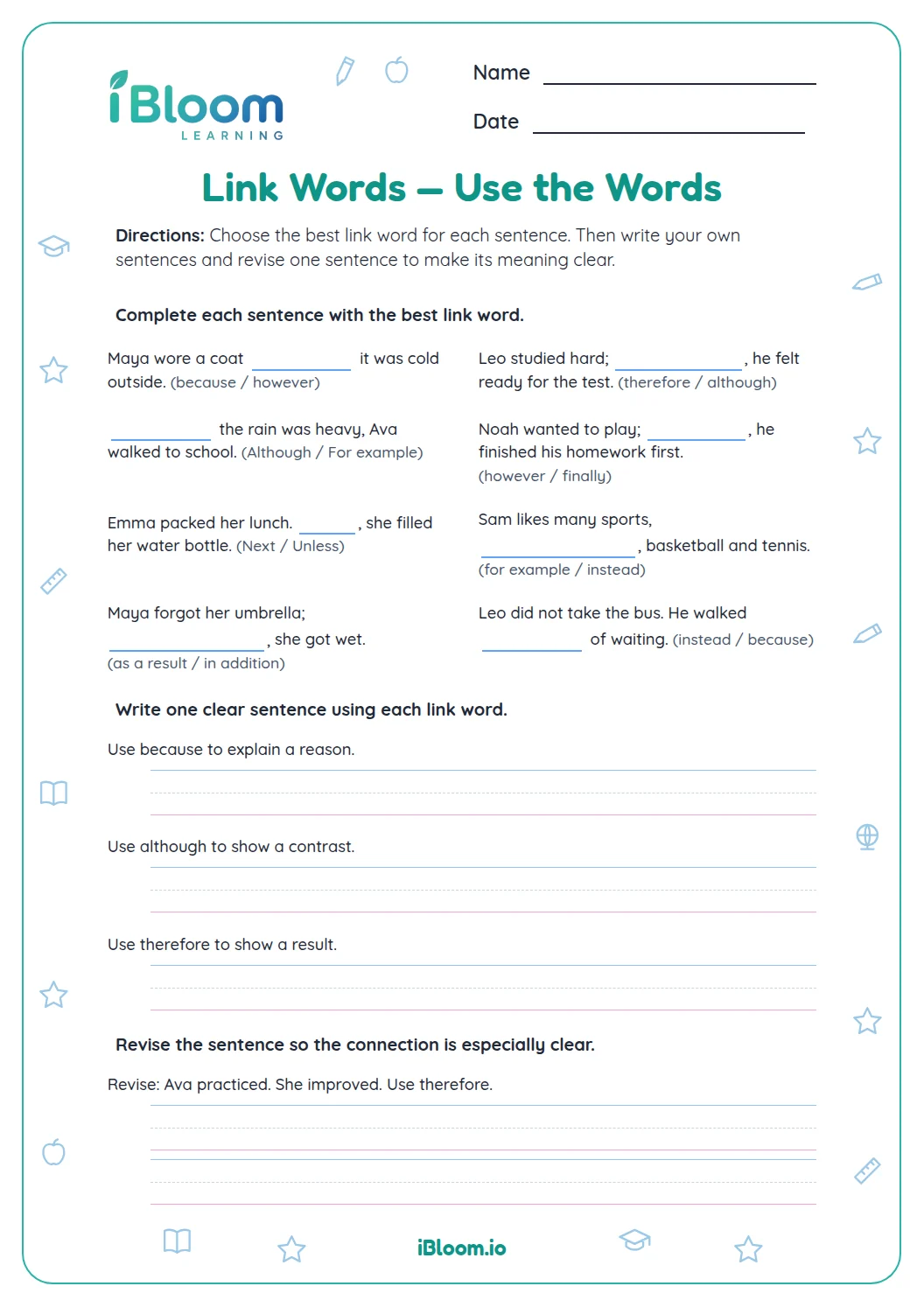
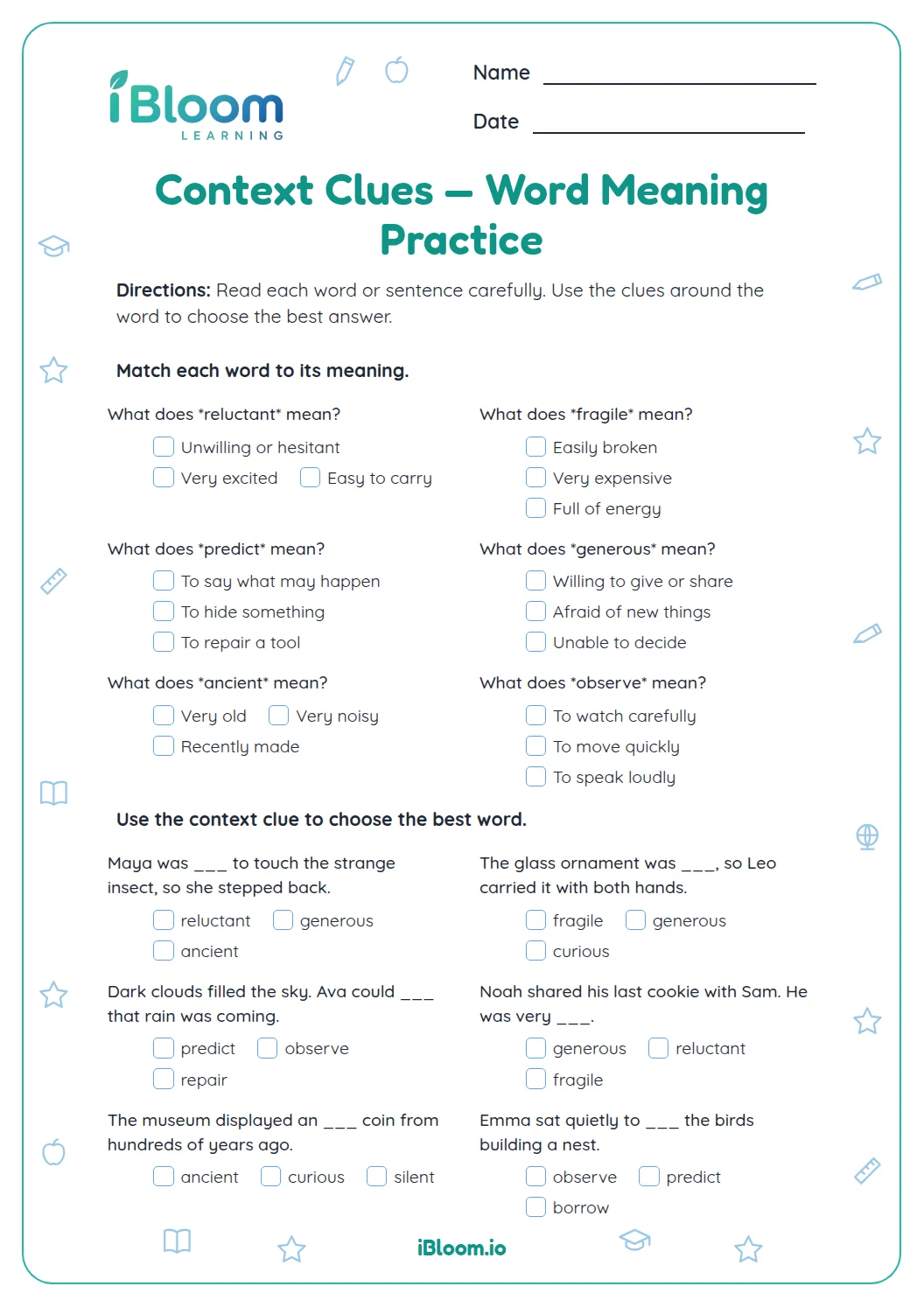
This Grade 5 worksheet helps students recognize how paragraphs organize and connect ideas. Sixteen multiple-choice questions ask learners to identify a topic sentence, supporting details, a conclusion, focus, order, and logical links. Students also choose transitions that connect events and details. A separate answer key supports review. The practice aligns with Common Core W.5.2.a, which asks writers to group related information logically and keep a clear focus.
Aligned to W.5.2.a
What are the main parts of a paragraph?
A topic sentence introduces the main idea. Supporting details explain or develop it, and a concluding sentence gives the paragraph a clear ending. Recognizing each part helps students understand how information is grouped.
How do sentences connect within a paragraph?
A focused paragraph keeps its sentences connected to one idea. Transitions such as first, next, and finally show order; words such as because or for example can show how details relate. The best link depends on the relationship between the ideas.
- 1I planted seeds. Next, I watered them.
- 2Next shows the events happen in time order.
What will students classify and connect?
The 14 questions cover topic sentences, details, conclusions, focus, coherence, paragraph purposes, time order, comparison, cause and effect, descriptive details, and transition words. The answer key identifies the best choice for each item.
How to use this worksheet
- 1Read the whole question before choosing.
- 2For paragraph parts, ask what the sentence does: introduce, explain, or conclude.
- 3For structure questions, identify the relationship between the ideas.
- 4Try each transition in the sentence and listen for a logical connection.
- 5Use the answer key to review any choice that was uncertain.
Common paragraph mistakes and quick fixes
The mistake
Calling a detail the topic sentence because it contains an interesting fact.
The fix
Ask which sentence states the paragraph’s overall idea; details explain that idea.
The mistake
Choosing a transition because it sounds familiar, even when its relationship is wrong.
The fix
Name the connection first: time order, contrast, cause and effect, or an example.
The mistake
Including a sentence that changes the paragraph’s subject.
The fix
Check whether every sentence supports the same main idea; move unrelated information elsewhere.
Common Core alignment
This practice focuses on clear focus and logical grouping of related information.
Group related paragraph information logically around a clear focus.
On this sheet: Students classify paragraph roles and identify focus, support, and logical connections between ideas.
Show the official wordingHide the official wording
Introduce a topic clearly, provide a general observation and focus, and group related information logically; include formatting (e.g., headings), illustrations, and multimedia when useful to aiding comprehension.
What to practice next
Make more practice
Further reading
Questions parents and teachers ask
What is a topic sentence?
A topic sentence introduces the paragraph’s main idea or focus. On this worksheet, students distinguish it from a supporting detail, which explains the main point, and from a concluding sentence, which provides a clear ending. Have students point to the sentence that best states the paragraph’s overall idea.
How can students choose a good transition?
First decide how the ideas relate. Next and finally show time order, while however signals a contrast. Students should test the transition in the sentence and check that it connects the ideas accurately. Ask them to name the relationship before testing a transition word in context.
What does paragraph coherence mean?
Coherence means the sentences connect clearly and make sense together. A coherent paragraph stays focused on one main idea and uses a sensible order or linking words to help readers follow the details. Students can underline repeated ideas and linking words as they reread.
How many questions are on this worksheet?
The worksheet has 14 questions across two pages, plus a separate two-page answer key. Students classify paragraph features and purposes, then complete short connections using transitions and topic-related ideas. The questions move from identifying parts to applying how ideas connect.
How can I help if my student is unsure?
Ask the student to say the paragraph’s main idea in a few words, then decide what each sentence does. For a transition question, name the relationship between the ideas before trying the choices. Ask one question at a time and have the student explain the clue before choosing.