Free printable practice
3D Shapes Practice Activities
Grade 1 geometry worksheets for recognizing, naming, sorting, and describing 3D shapes using real-world objects and shape features.
Free printable worksheet PDFs
Preview every available page, then download the free worksheet PDF for home, homeschool, tutoring, or classroom practice.
Preview the exact activity before downloading it.
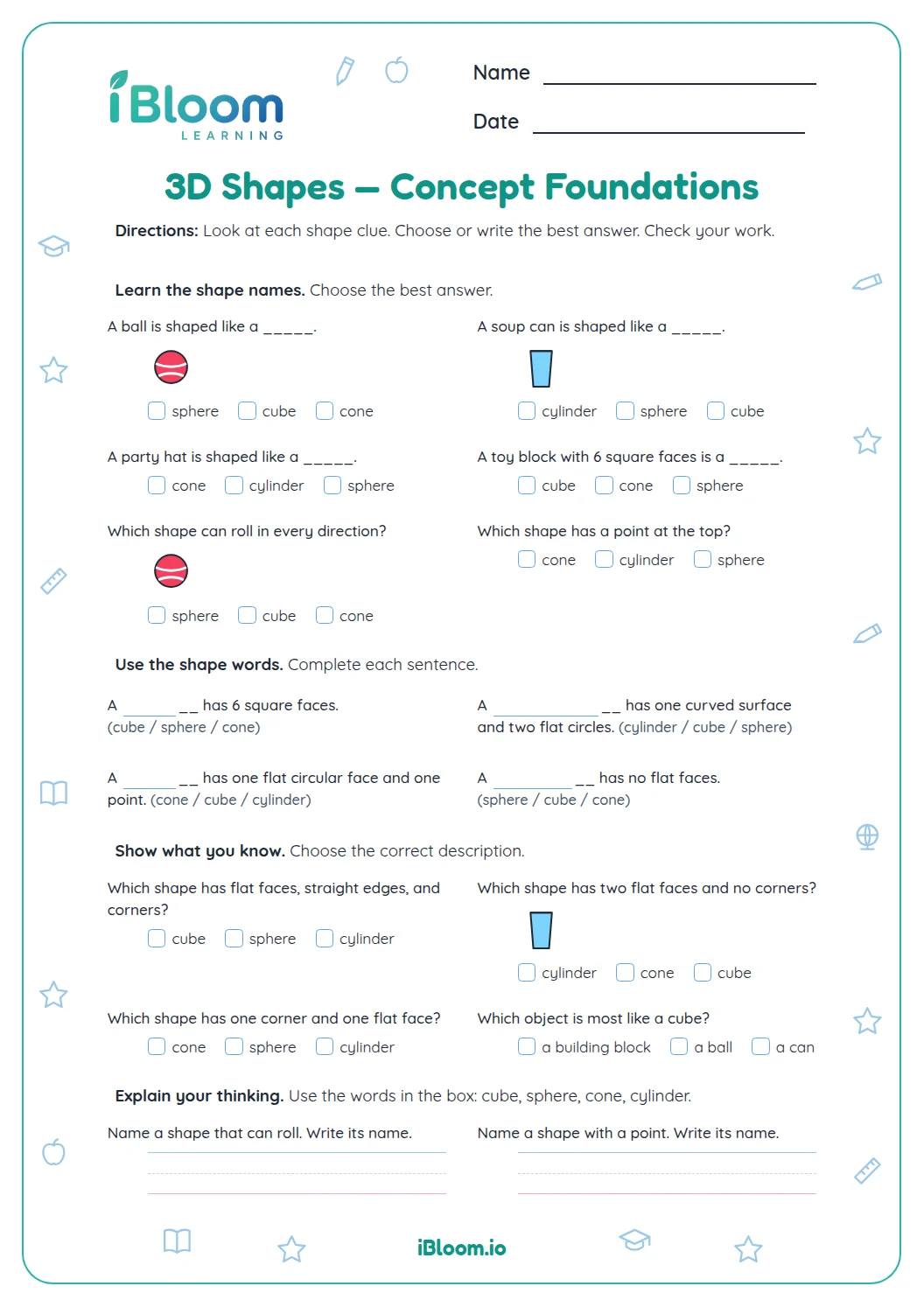 3D Shapes — Concept FoundationsGrade 1 geometry worksheets for recognizing, naming, sorting, and describing 3D shapes using real-world objects and shape features. This Grade 1 foundations worksheet adds concise teaching notes, worked examples, and supported first attempts.Grade 1Free PDF preview
 3D Shapes — Guided PracticeGrade 1 geometry worksheets for recognizing, naming, sorting, and describing 3D shapes using real-world objects and shape features. This Grade 1 guided-practice worksheet progresses from prompts and checkpoints to independent questions.Grade 1Free PDF preview
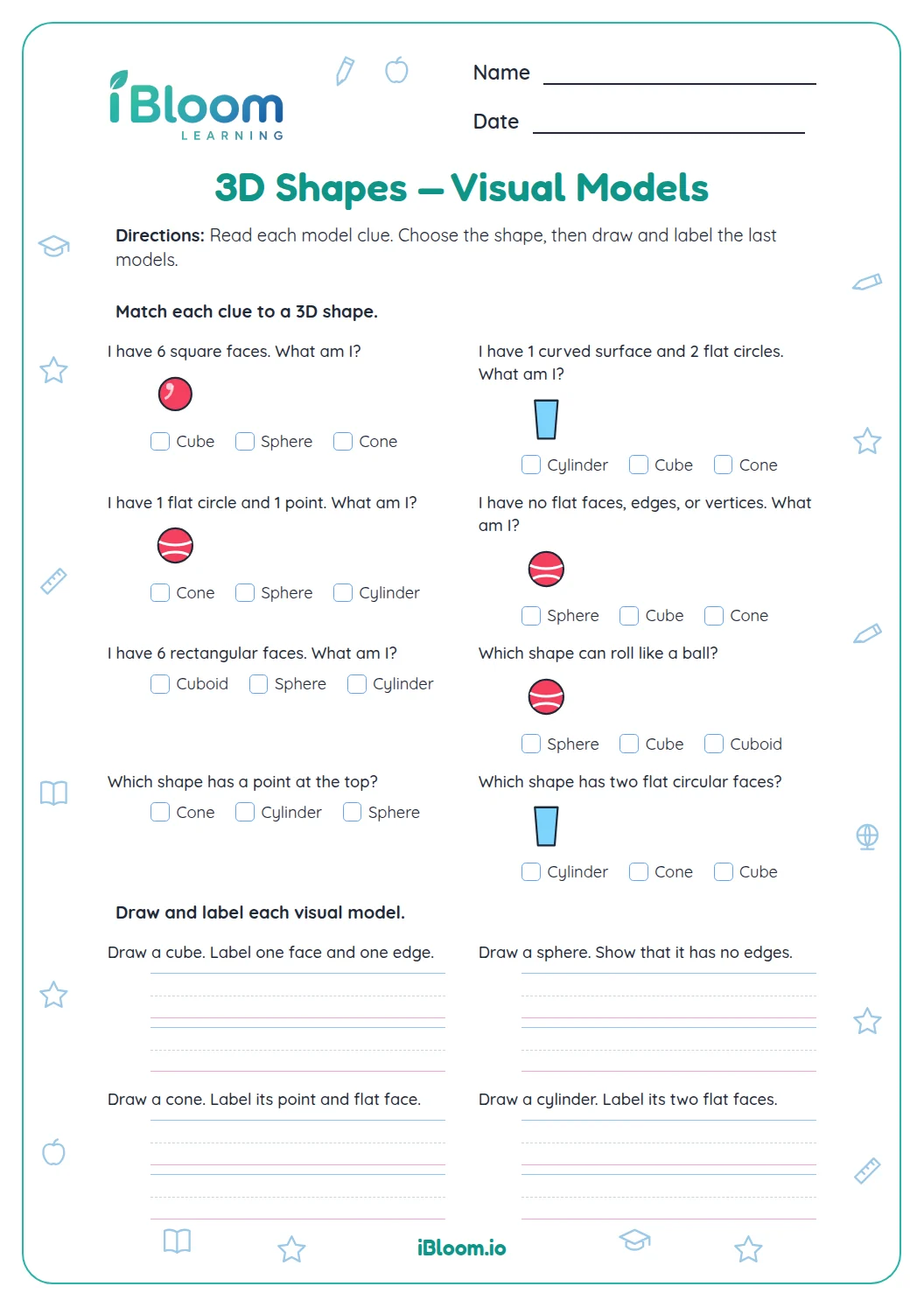 3D Shapes — Visual ModelsGrade 1 geometry worksheets for recognizing, naming, sorting, and describing 3D shapes using real-world objects and shape features. This Grade 1 visual-model worksheet connects suitable diagrams, tables, number lines, or place-value models to mathematical notation.Grade 1Free PDF preview
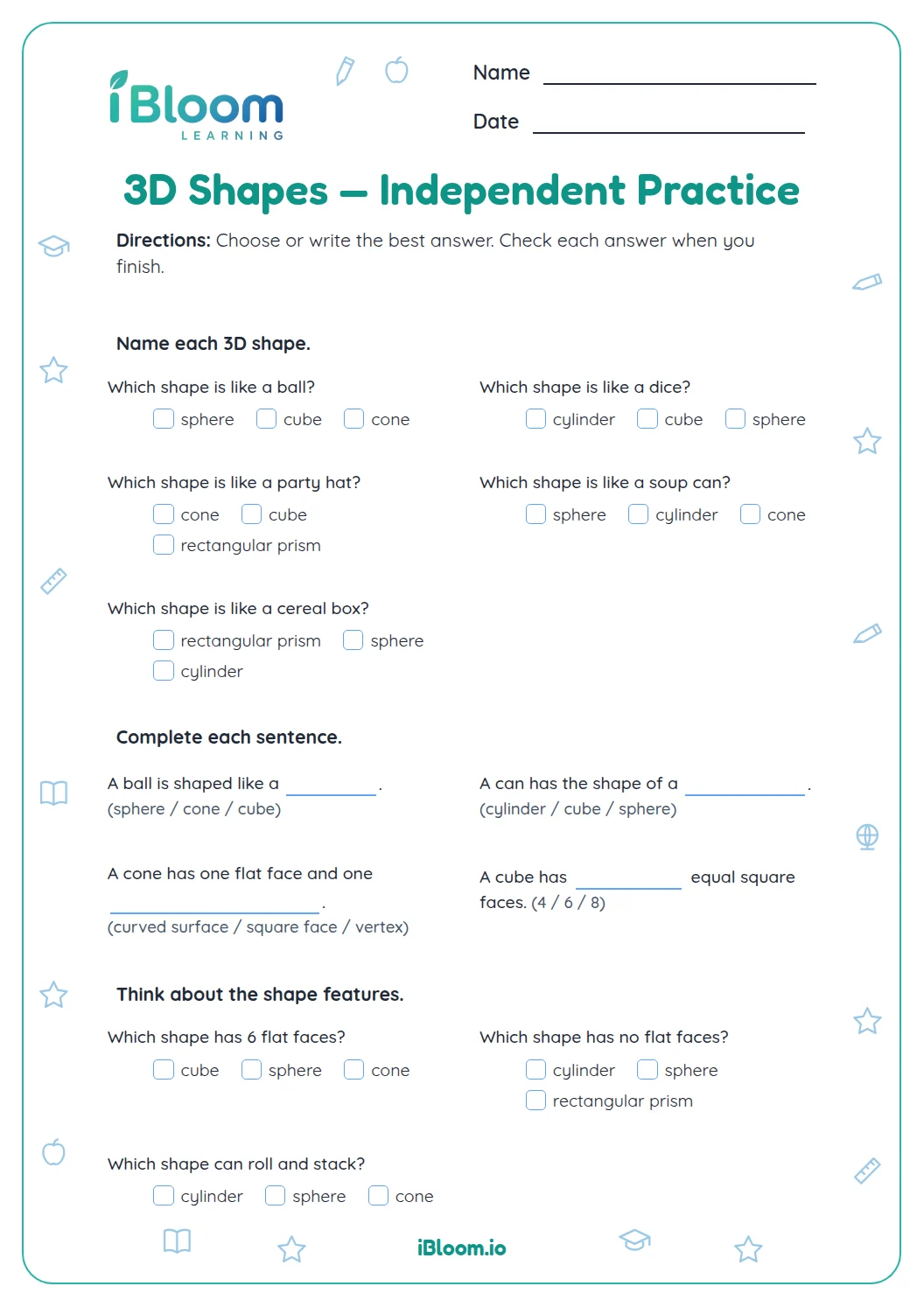 3D Shapes — Independent PracticeGrade 1 geometry worksheets for recognizing, naming, sorting, and describing 3D shapes using real-world objects and shape features. This Grade 1 independent-practice worksheet provides a balanced sequence of accurate, grade-level exercises.Grade 1Free PDF preview
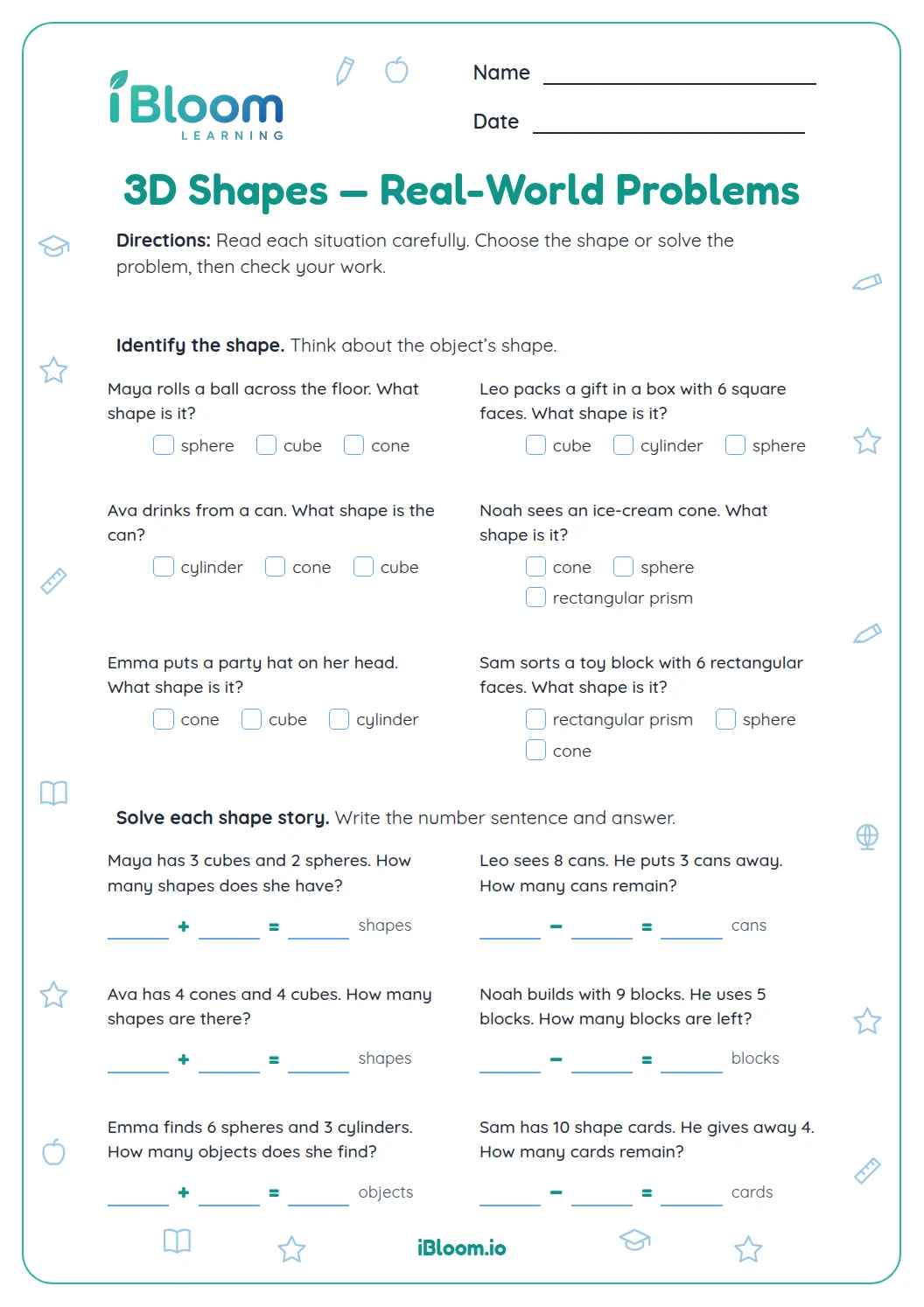 3D Shapes — Real-World ProblemsGrade 1 geometry worksheets for recognizing, naming, sorting, and describing 3D shapes using real-world objects and shape features. This Grade 1 application worksheet uses realistic one-step and multi-step situations with room to model and solve.Grade 1Free PDF preview
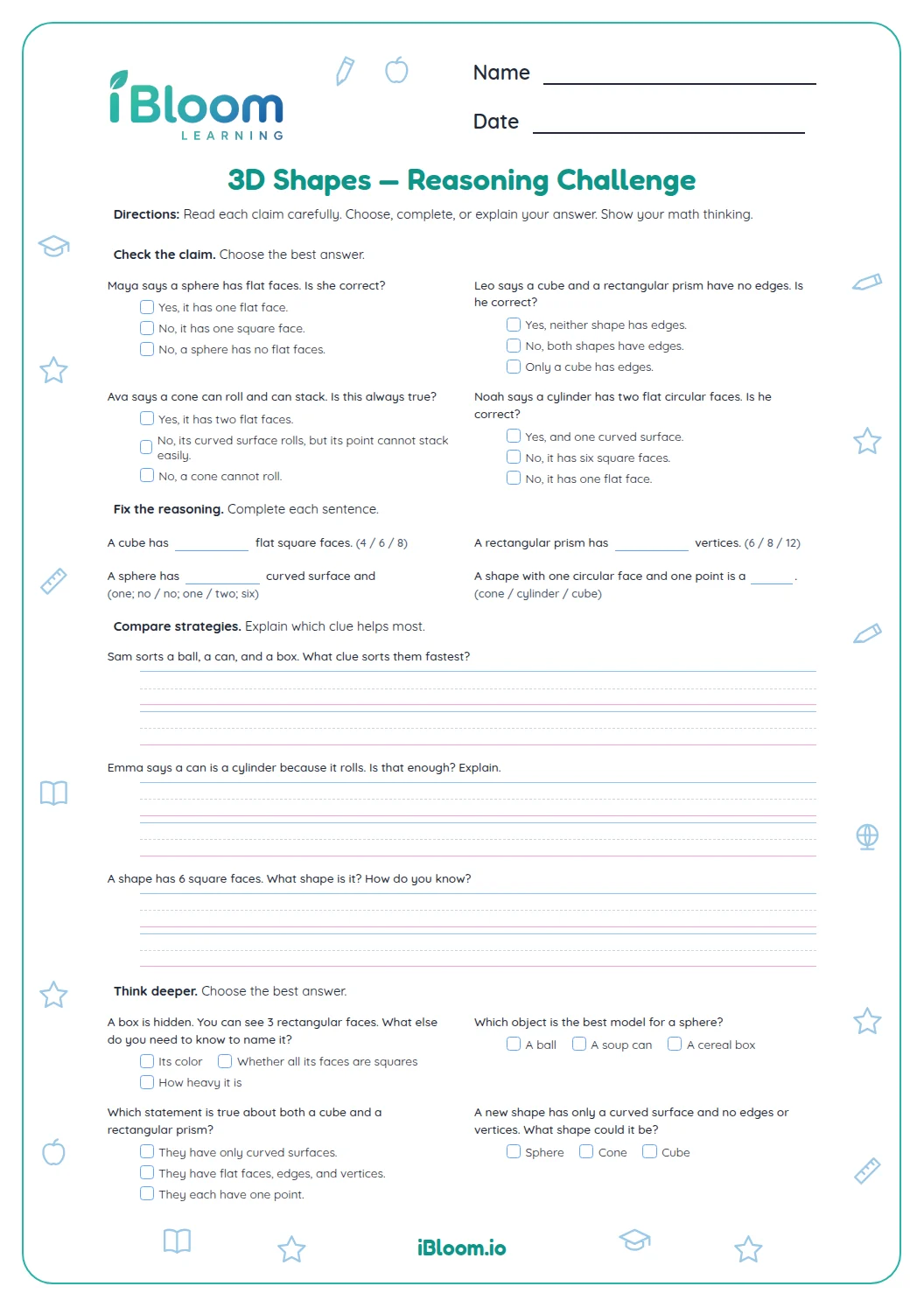 3D Shapes — Reasoning ChallengeGrade 1 geometry worksheets for recognizing, naming, sorting, and describing 3D shapes using real-world objects and shape features. This Grade 1 reasoning worksheet combines error analysis, strategy comparison, missing information, and a gentle extension.Grade 1Free PDF preview
Practice that builds confidence
Building 3D shape recognition
These Grade 1 geometry worksheets help children practise identifying and describing 3D shapes such as cubes, cones, cylinders, spheres, and rectangular prisms. Students look closely at solid shapes, noticing flat faces, curved surfaces, edges, vertices, and whether a shape can roll, slide, or stack.
The printable activities include matching, naming, sorting, tracing, drawing, and real-world object tasks. Children build shape vocabulary while connecting classroom geometry to familiar objects such as boxes, balls, cans, dice, party hats, and blocks.
First graders move beyond simply naming a shape and begin noticing what makes each solid shape different. A cube has square faces, a sphere is round with no flat face, a cone has a point and a circular base, and a cylinder has two circular faces with a curved surface. These worksheets give children repeated chances to see each shape in different sizes and positions so they do not rely on one familiar picture.

Describing features, not just names
The activities encourage children to use precise geometry words: face, edge, vertex, curved surface, flat surface, roll, slide, and stack. A child may know that a can is a cylinder, but the stronger skill is explaining why: it has two flat circular faces and one curved surface. Sorting tasks help students compare shapes by features rather than by color or object type.
A simple parent routine
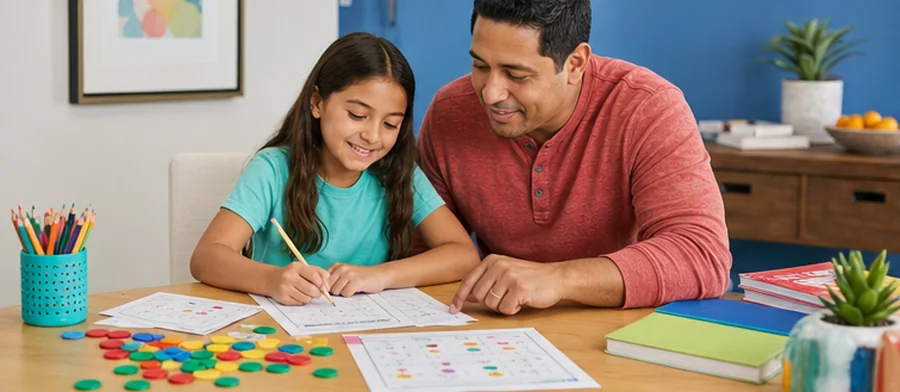
At home, choose one worksheet page and gather a few safe household objects: a cereal box, ball, cup, dice, or paper towel roll. Ask, “What shape does this look like?” then follow up with “How do you know?” After the worksheet, invite your child to find three more objects in the room and describe whether each one can roll, slide, or stack.
Classroom uses for teachers
Teachers can use these printables during whole-group geometry lessons, small-group reteaching, math centers, or quick checks after hands-on shape exploration. Pages that involve matching real objects to solids work well after students handle blocks or classroom objects. Sorting pages can also lead to partner talk, where students justify their choices using shape vocabulary.

Common errors to watch for
Children may call every box a cube, even when it is a rectangular prism. They may also confuse circles with spheres or squares with cubes because the flat and solid shape names sound related. Encourage students to touch or imagine the whole object: Is it flat like a drawing, or solid like something you can hold? Does it have depth?
Free printable PDF download
Use this Grade 1 3D shapes worksheet page to preview the activity, print it, or download it as a PDF for quick practice. It works well for homework, homeschool lessons, tutoring, morning work, revision, and classroom centers.
Answers and answer key support
After the child completes the worksheet independently, parents and teachers can use the answer support or answer key information to check the work, review mistakes, and choose the next practice step.
Why iBloom worksheets help
iBloom worksheets combine clear visuals, focused practice, and small progressions from recognition to explanation. A helpful child-friendly strategy is: “Name it, touch the parts, then tell why.” This keeps children from guessing and helps them connect each 3D shape to its features and real-world examples.
Helpful answers
Frequently asked questions
Which 3D shapes do these Grade 1 worksheets cover?
They focus on common solid shapes for Grade 1 geometry, including cube, cone, cylinder, sphere, and rectangular prism, with practice recognizing them in pictures and real-world objects.
How are 3D shapes different from 2D shapes for first graders?
3D shapes are solid objects that have depth and can often be held, stacked, rolled, or slid. 2D shapes are flat drawings such as circles, squares, and triangles.
What vocabulary should my child use when describing 3D shapes?
Helpful words include face, edge, vertex, flat surface, curved surface, roll, slide, stack, cube, cone, cylinder, sphere, and rectangular prism.
How can I help my child stop confusing cubes and rectangular prisms?
Ask your child to look at the faces. A cube has square faces that are all the same size, while a rectangular prism can have rectangle-shaped faces and may be longer or taller like a cereal box.
Can these worksheets be used with hands-on geometry activities?
Yes. They work well after children handle blocks, cans, balls, boxes, and other objects, then record or explain what they notice on the worksheet.
Is this Grade 1 3D shapes worksheet free?
Yes. You can preview it for free and use the printable worksheet for home or classroom practice.
Can I download this Grade 1 3D shapes worksheet as a PDF?
Yes. Use the worksheet download option to save a printable PDF, or print the worksheet directly from the page.
Does this Grade 1 3D shapes worksheet include answers or an answer key?
When the activity has fixed answers, iBloom includes answer support so parents and teachers can check the completed worksheet.