Write an opinion conclusion Lesson for Fifth Grade
Preparing your worksheet
Write an opinion conclusion Lesson for Fifth Grade: english language arts practice for Fifth Grade
Write an opinion conclusion Lesson for Fifth Grade gives children a focused way to practise write an opinion conclusion. Use Write an opinion conclusion Lesson for Fifth Grade as the main page, then continue with the paired worksheet when the child needs the same skill in another format.
This page supports English worksheets by curriculum and fits a visible regional learning path for UAE expat families in Dubai, Abu Dhabi, Sharjah, Ajman, Al Ain, Ras Al Khaimah, Fujairah, and Umm Al Quwain using British, American, IB, and Indian curriculum language. The regional examples are included for parents and teachers, not hidden for bots, so the page stays useful for real visitors.
What children should be able to do
The core task is to understand write an opinion conclusion, try a small set, and explain one answer. Children may show understanding by reading aloud, marking a clue, counting, drawing a model, correcting a sentence, sorting words, or saying how they know.
For Fifth Grade learners, the adult should watch the thinking step rather than only the final answer. If the child guesses, reduce the task. If the child answers correctly but cannot explain, repeat with one clearer example.
Short parent routine
Parents can use this page for 10 to 15 minutes. Read the task, model one item, let the child try three to five items, and ask for one explanation. If the child is multilingual, allow a home-language explanation first and then repeat the important school-language phrase.
- Start with the easiest item to build confidence.
- Use a real object, drawing, sentence frame, or marked clue when the child is stuck.
- Stop after one useful correction instead of pushing through a long page.
- Return to the same skill after a few days for spaced review.
Teacher and tutor routine
Teachers can use this page as a warm-up, center task, small-group reteach, exit ticket, homework review, or quick diagnostic. Tutors can use it to decide whether the child needs help with vocabulary, directions, memory, handwriting, number sense, or confidence.
Ask partners to compare explanations. Let children point to the clue, sound, number, model, word, or sentence that helped. A short explanation builds stronger retention than a page completed silently.
Regional and curriculum notes
In India, parents may connect this practice to CBSE, ICSE, state-board, LKG, UKG, Class 1, Class 2, or Class 3 expectations. In the US, the same skill may appear in kindergarten, first grade, second grade, homeschool, intervention, or classroom-center language. In the UAE, families may see KG1, KG2, British curriculum, American curriculum, IB, or Indian curriculum labels.
The name changes, but the learning routine stays the same: choose the exact skill, practise a small set, explain one answer, and connect to a related iBloom page.
How to adapt this for India, the US, and the UAE
India
For Indian families, connect this page to the child's school notebook and the language used by the teacher. A CBSE child may need the same core practice as an ICSE or state-board child, but the parent may search for Class 1 English, UKG maths, worksheet practice, revision, or tuition support. Use the page title to name the skill, then ask the child to solve one item and explain it in a simple sentence.
United States
For US classrooms and homeschool routines, use this page as a compact standards-aligned practice moment without turning it into a test. Teachers can place it in a literacy center, math warm-up, intervention binder, or homework folder. Parents can use the same page after school by focusing on one explanation rather than the number of items completed.
UAE
For UAE families, the same child may hear British, American, IB, or Indian curriculum terms across school and home. Keep the session language steady: name the skill in English, let the child explain in the strongest language if needed, then return to the English word, sound, number, sentence, or model on the page. This helps multilingual learners in Dubai, Abu Dhabi, Sharjah, Ajman, Al Ain, and other UAE communities use the page with confidence.
Mini lesson plan for adults
Use this mini lesson when the page is part of a planned routine. First, tell the child the purpose of the page. Second, model one item and show the clue, sound, number, or model that matters. Third, let the child try a short set independently. Fourth, ask the child to explain one answer. Fifth, choose one follow-up link from iBloom so the next session repeats the skill in a fresh way.
If the child answers quickly, add a challenge by asking them to create a new example. If the child struggles, reduce the task and return to a real object, picture, oral sentence, or marked clue. The adult's job is to make the next step smaller and clearer, not to finish the page for the child.
Connected iBloom practice
- Write an opinion conclusion Lesson for Fifth Grade
- paired worksheet for Write an opinion conclusion Lesson for Fifth Grade
- CBSE Class 1 English worksheets
- sentence building practice
- punctuation worksheets
- Free Write clearly and coherently Worksheets for Fourth Grade
- Free Conduct research and write a report Worksheets for Fourth Grade
- Free Write a narrative conclusion Worksheets for Fifth Grade
Trusted adult background
Adults can use this education resource and this supporting reference for planning background. Then return to iBloom for child-facing practice.
Common mistakes to watch for
- The child completes the page but cannot explain one answer.
- The page is treated as a speed task instead of a thinking task.
- The child skips the direction word, clue, sound, model, or number.
- The adult gives the answer instead of one small hint.
Frequently asked questions
Who should use this page?
Use it when a Fifth Grade child needs focused english language arts practice for write an opinion conclusion.
How long should practice take?
Most children do best with 10 to 15 minutes and one clear explanation.
Can this support regional curriculum searches?
Yes, when the regional context helps parents and teachers understand how to use the page. The content should stay visible, educational, and useful.
What should happen next?
Choose one related iBloom lesson, worksheet, or blog guide so the child sees the same skill again in a fresh context.
More practice for this grade
More English Language Arts lessons
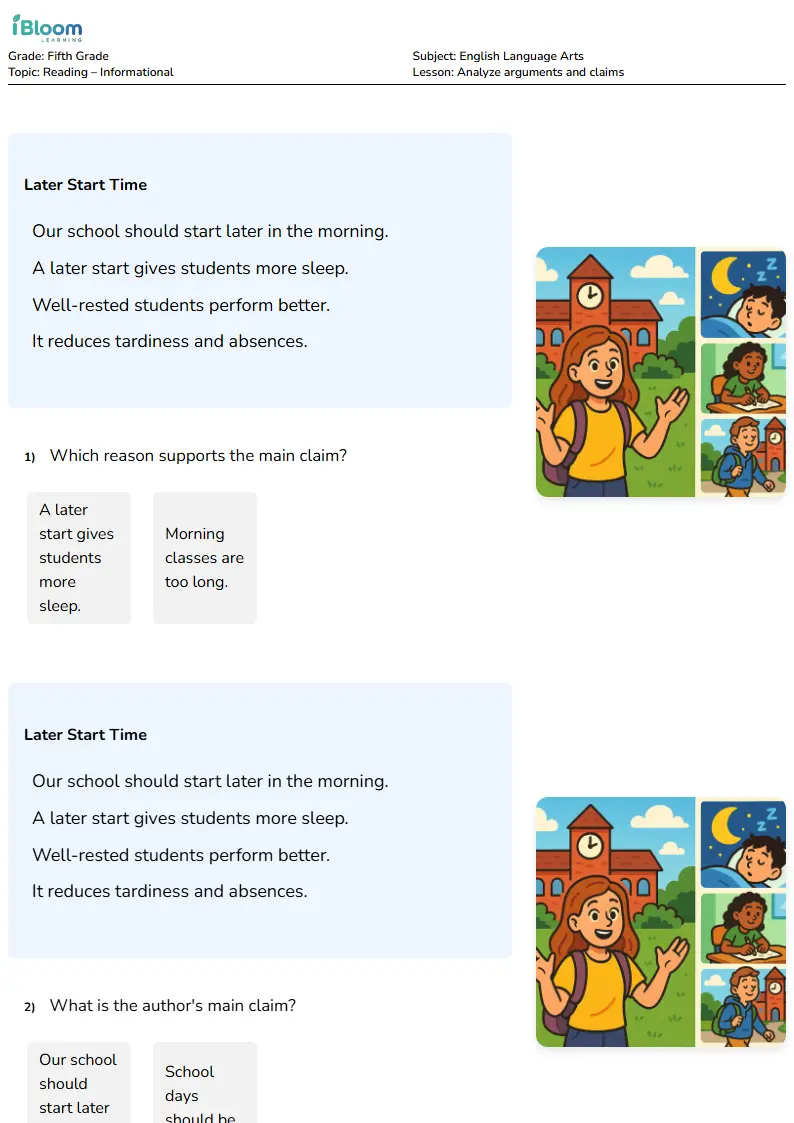
Analyze arguments and claims Lesson for Fifth Grade
Explore a free interactive english language arts lesson for fifth grade: Analyze arguments and claims. AI-personalized, Common Core-aligned, and built for kids.
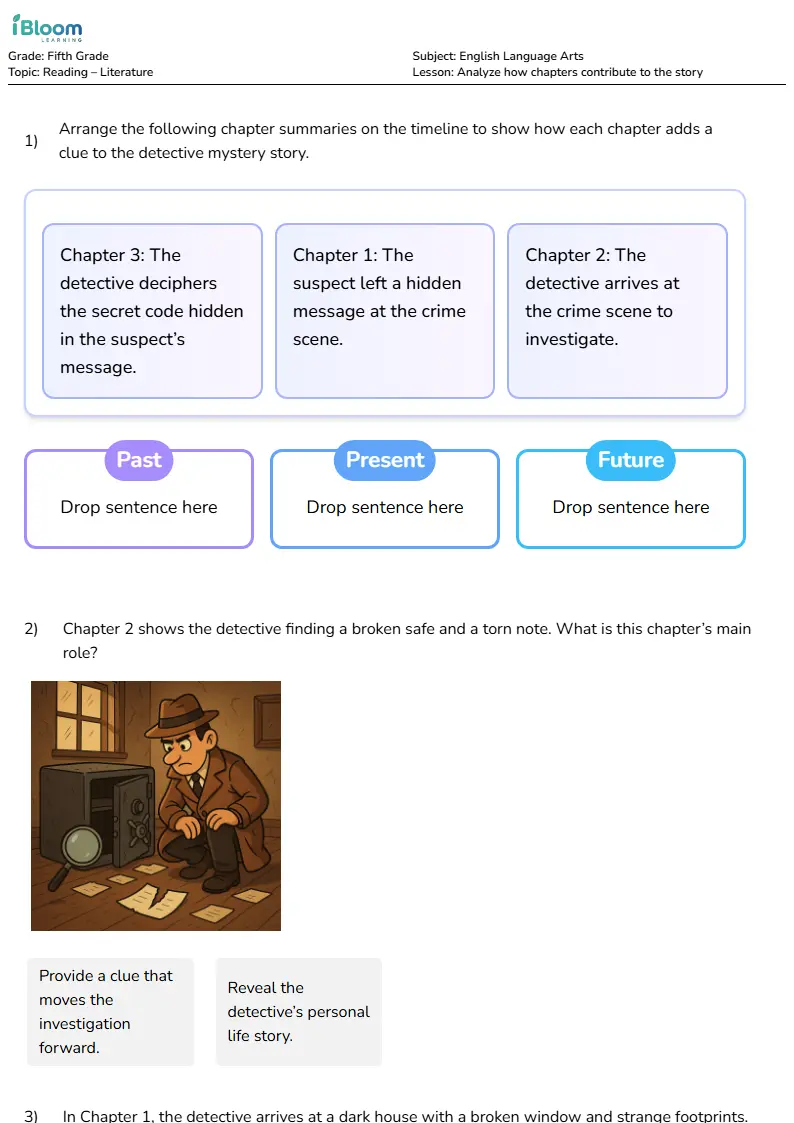
Analyze how chapters contribute to the story Lesson for Fifth Grade
Explore a free interactive english language arts lesson for fifth grade: Analyze how chapters contribute to the story. AI-personalized, Common Core-aligned, and built for kids.
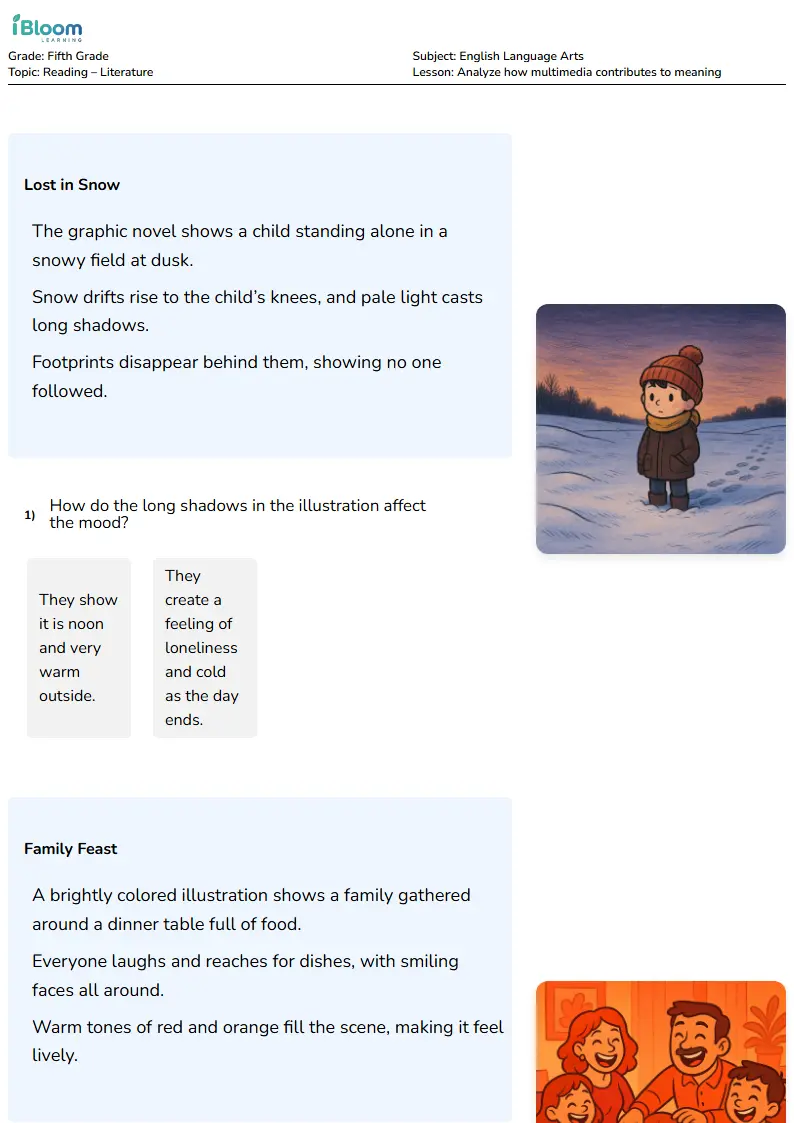
Analyze how multimedia contributes to meaning Lesson for Fifth Grade
Explore a free interactive english language arts lesson for fifth grade: Analyze how multimedia contributes to meaning. AI-personalized, Common Core-aligned, and built for kids.
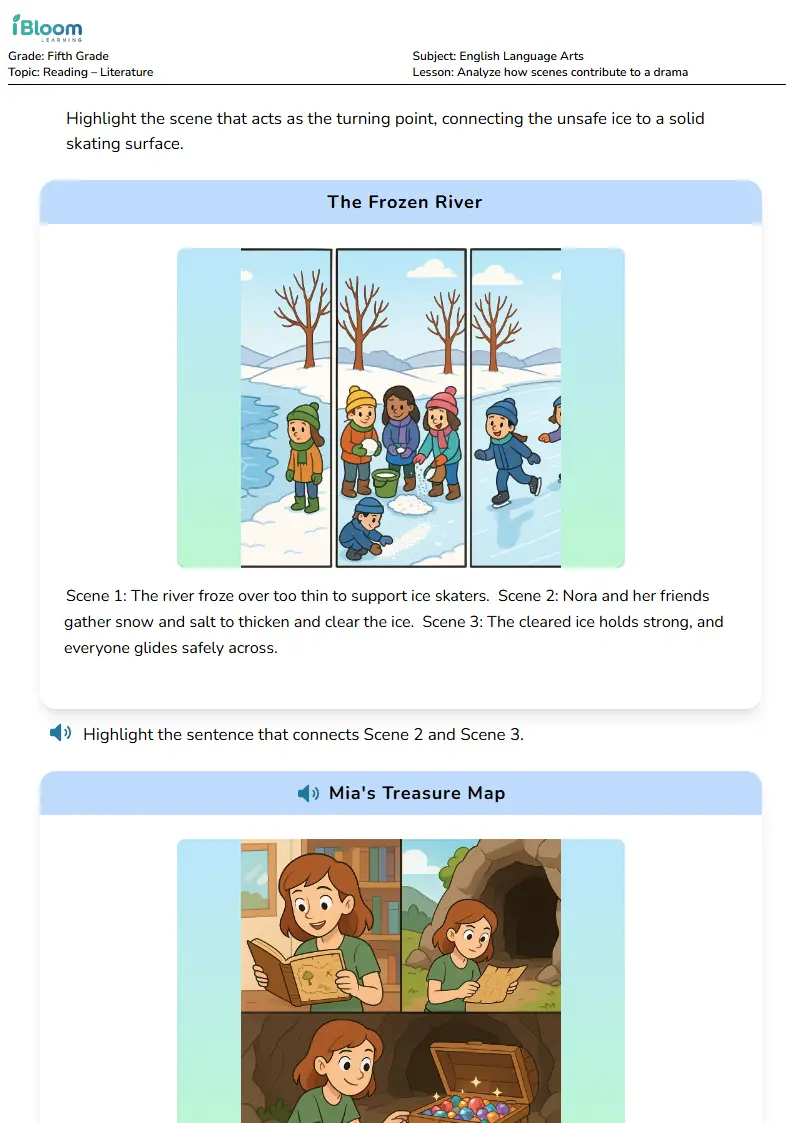
Analyze how scenes contribute to a drama Lesson for Fifth Grade
Explore a free interactive english language arts lesson for fifth grade: Analyze how scenes contribute to a drama. AI-personalized, Common Core-aligned, and built for kids.
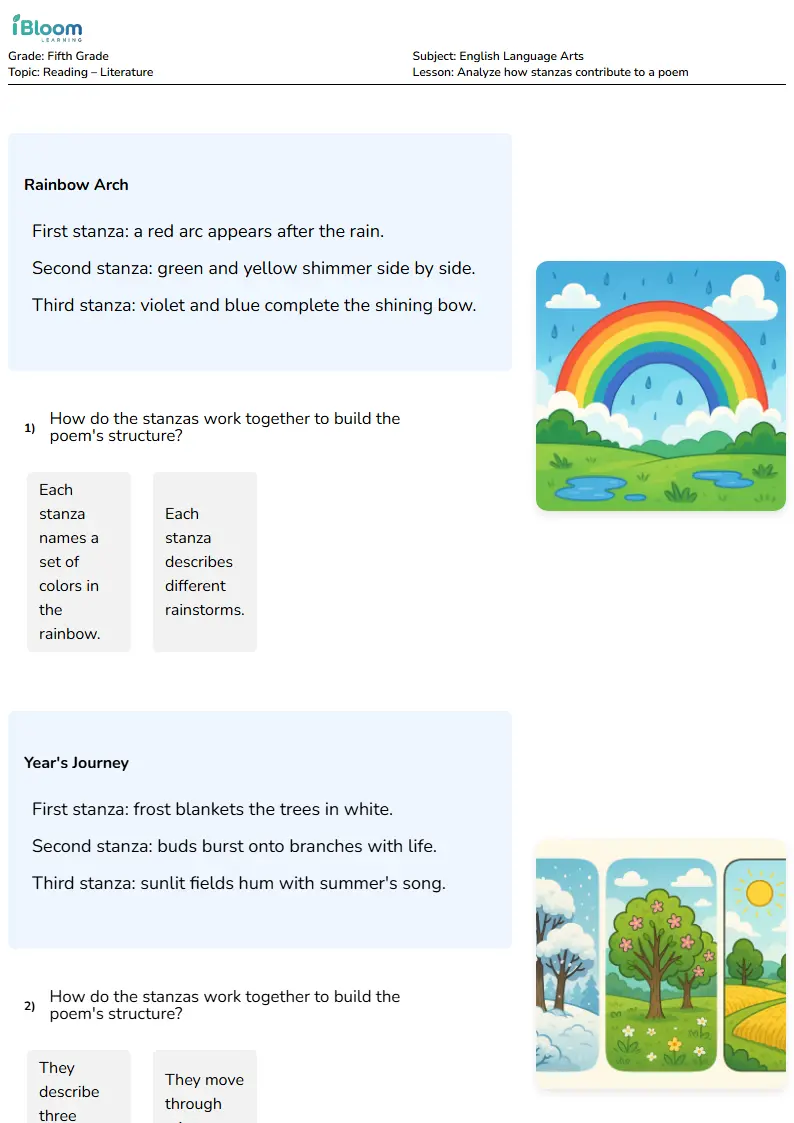
Analyze how stanzas contribute to a poem Lesson for Fifth Grade
Explore a free interactive english language arts lesson for fifth grade: Analyze how stanzas contribute to a poem. AI-personalized, Common Core-aligned, and built for kids.
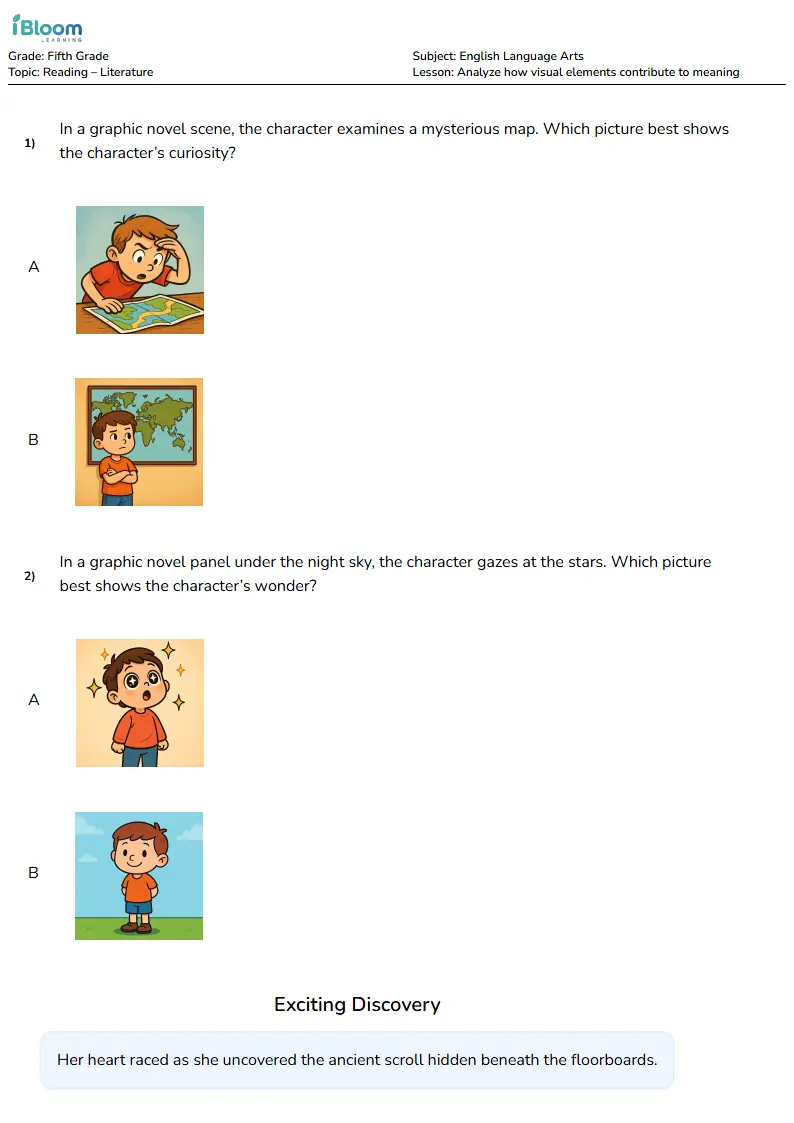
Analyze how visual elements contribute to meaning Lesson for Fifth Grade
Explore a free interactive english language arts lesson for fifth grade: Analyze how visual elements contribute to meaning. AI-personalized, Common Core-aligned, and built for kids.
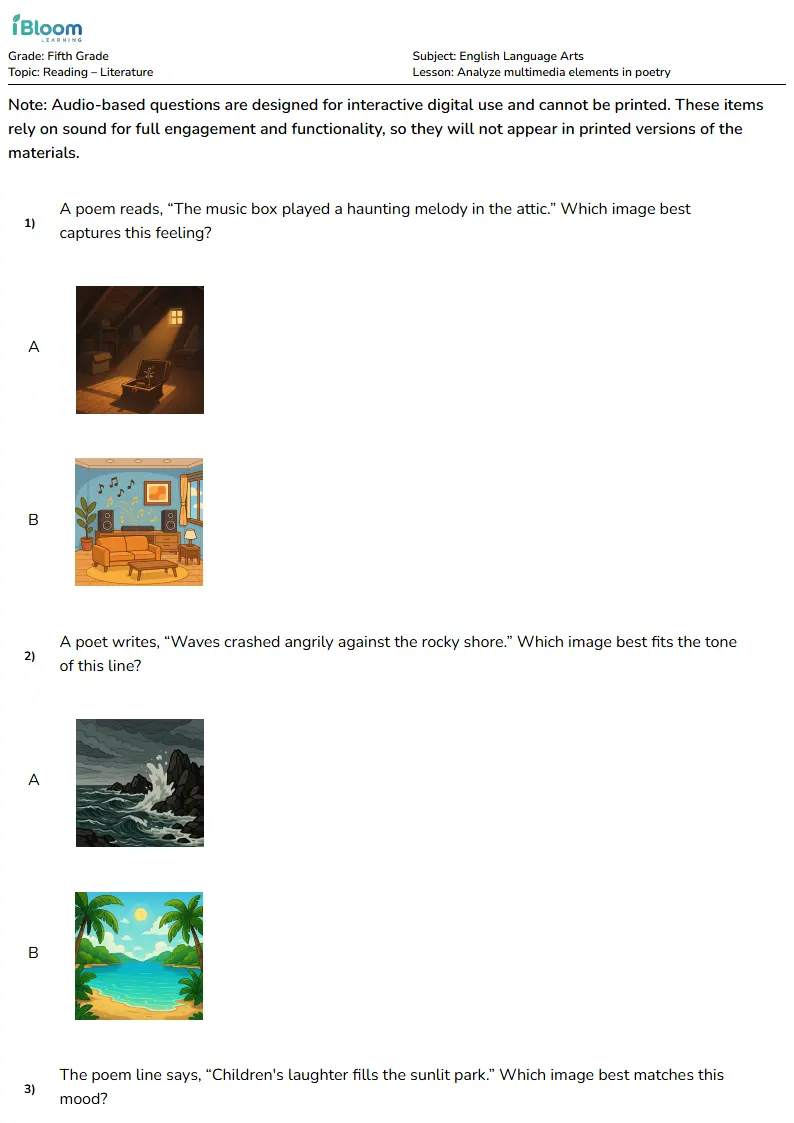
Analyze multimedia elements in poetry Lesson for Fifth Grade
Explore a free interactive english language arts lesson for fifth grade: Analyze multimedia elements in poetry. AI-personalized, Common Core-aligned, and built for kids.
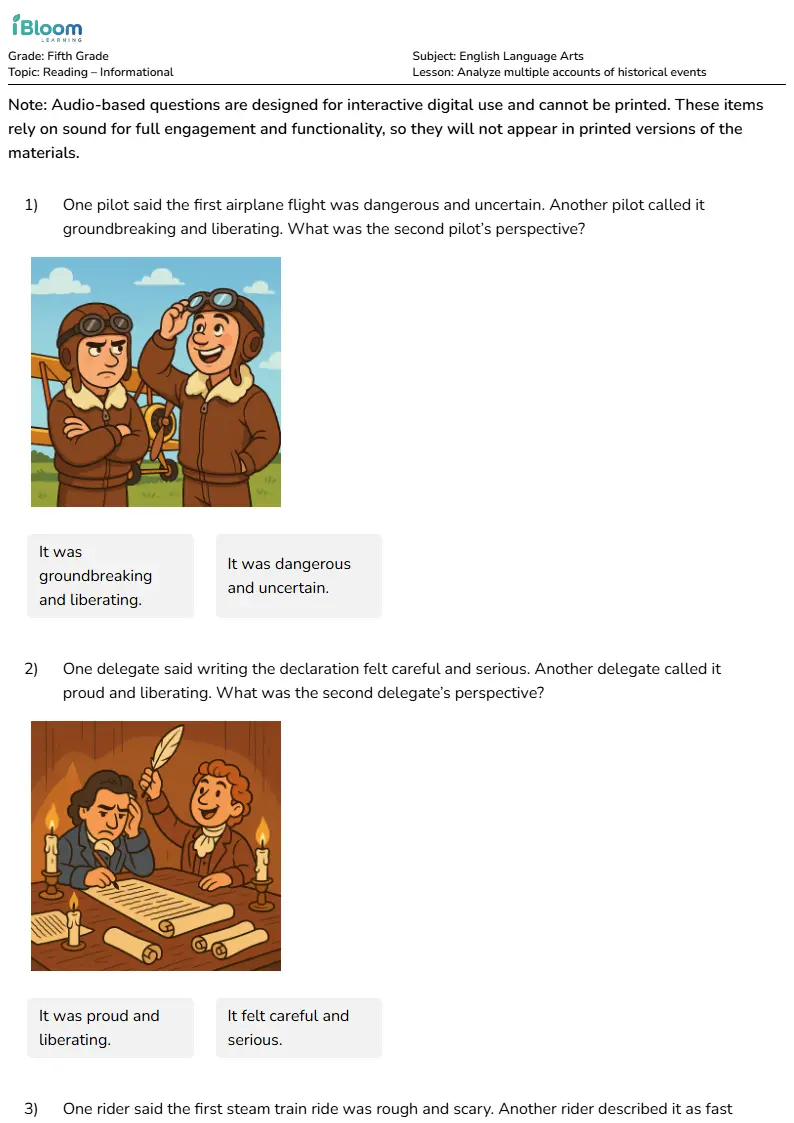
Analyze multiple accounts of historical events Lesson for Fifth Grade
Explore a free interactive english language arts lesson for fifth grade: Analyze multiple accounts of historical events. AI-personalized, Common Core-aligned, and built for kids.
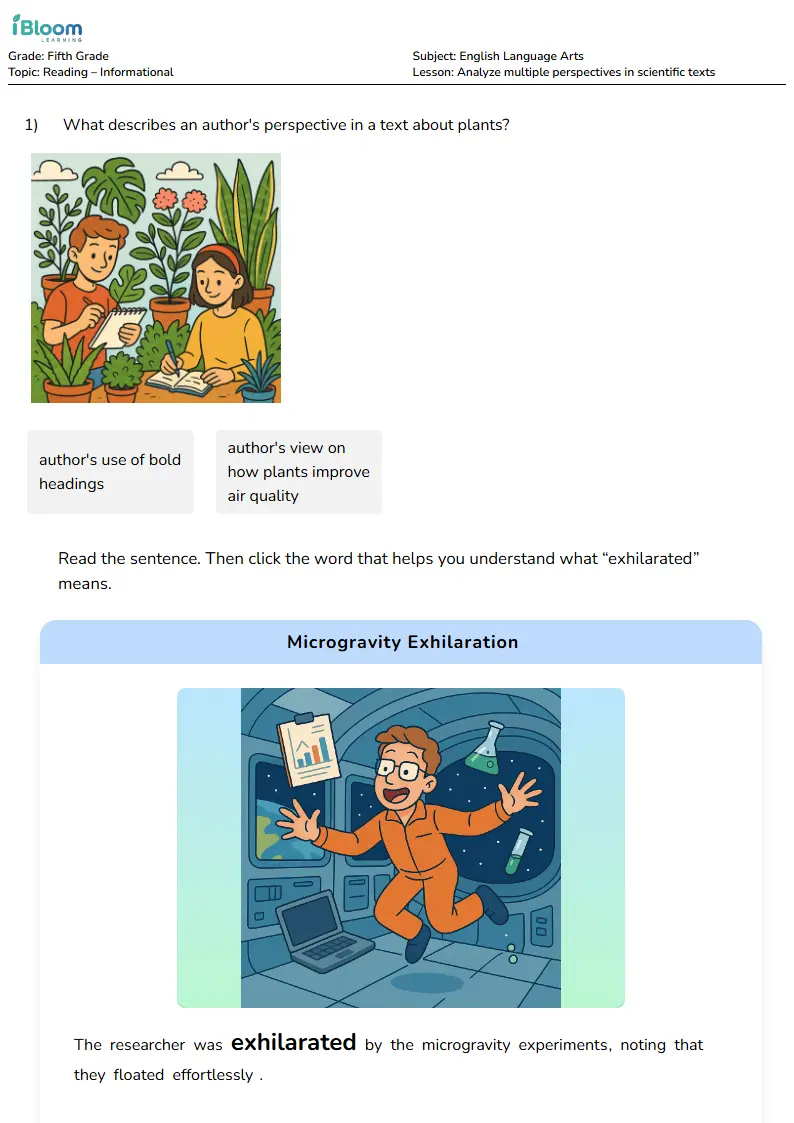
Analyze multiple perspectives in scientific texts Lesson for Fifth Grade
Explore a free interactive english language arts lesson for fifth grade: Analyze multiple perspectives in scientific texts. AI-personalized, Common Core-aligned, and built for kids.
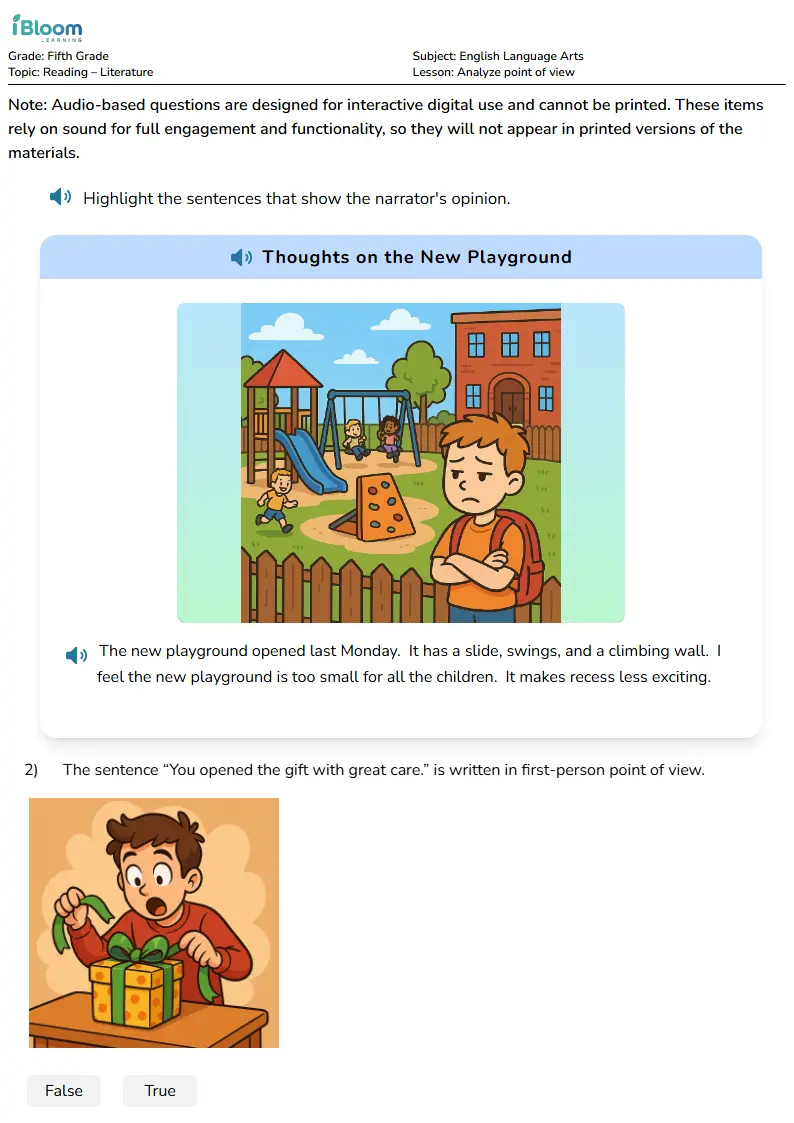
Analyze point of view Lesson for Fifth Grade
Explore a free interactive english language arts lesson for fifth grade: Analyze point of view. AI-personalized, Common Core-aligned, and built for kids.
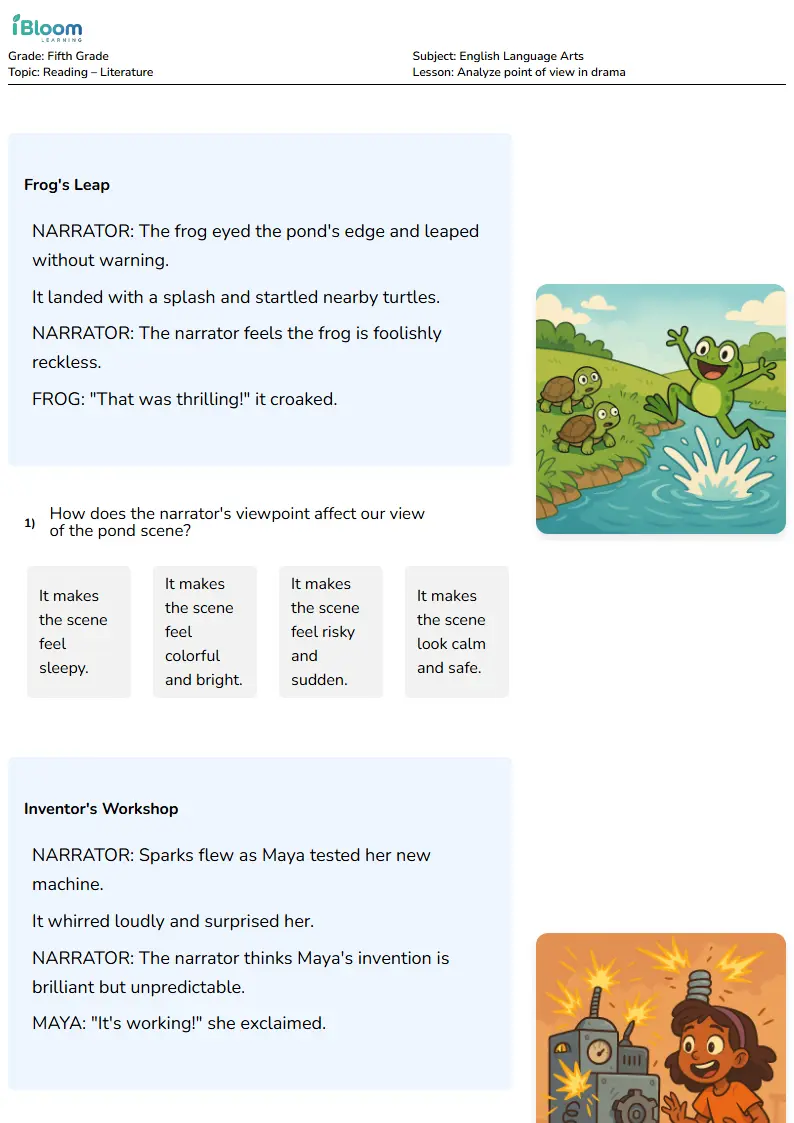
Analyze point of view in drama Lesson for Fifth Grade
Explore a free interactive english language arts lesson for fifth grade: Analyze point of view in drama. AI-personalized, Common Core-aligned, and built for kids.
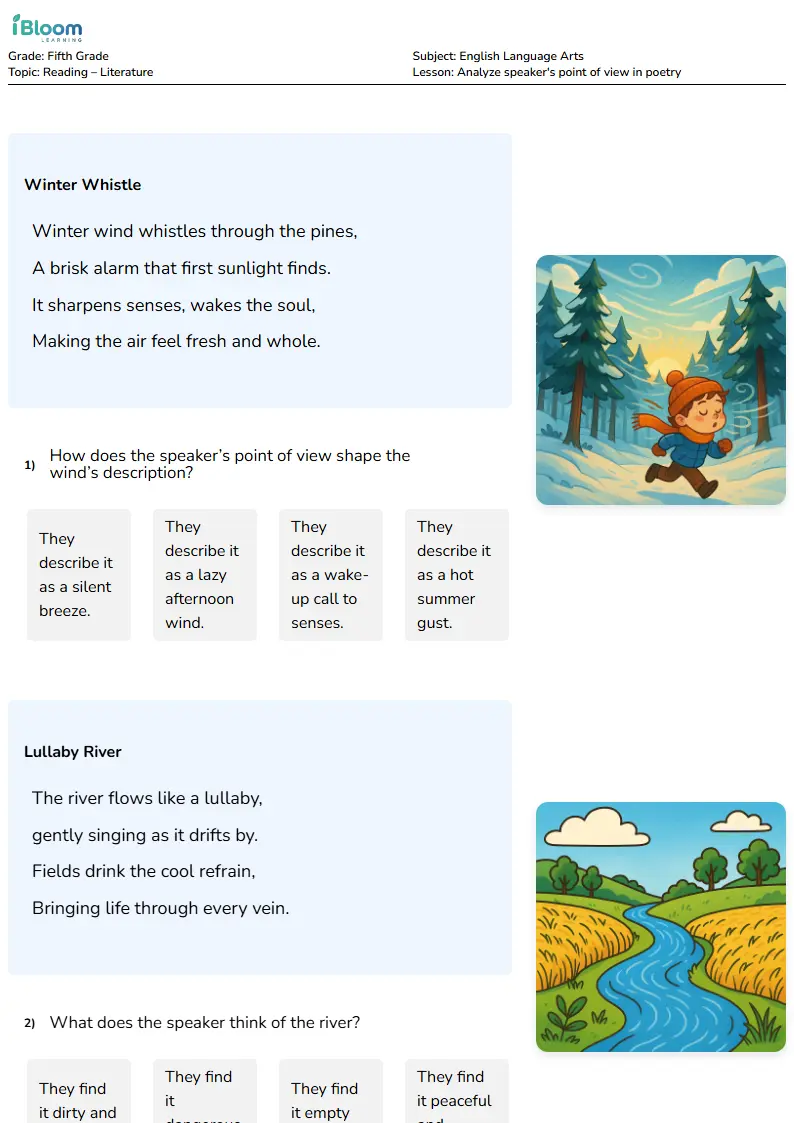
Analyze speaker's point of view in poetry Lesson for Fifth Grade
Explore a free interactive english language arts lesson for fifth grade: Analyze speaker's point of view in poetry. AI-personalized, Common Core-aligned, and built for kids.
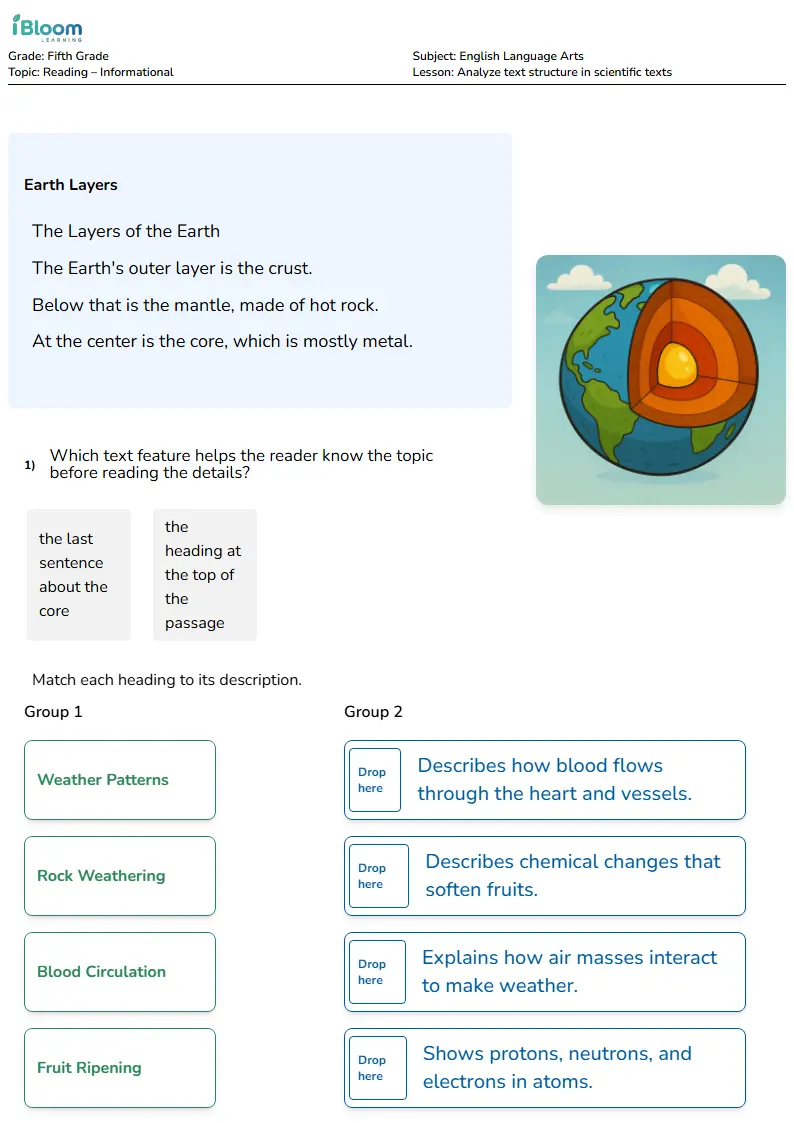
Analyze text structure in scientific texts Lesson for Fifth Grade
Explore a free interactive english language arts lesson for fifth grade: Analyze text structure in scientific texts. AI-personalized, Common Core-aligned, and built for kids.
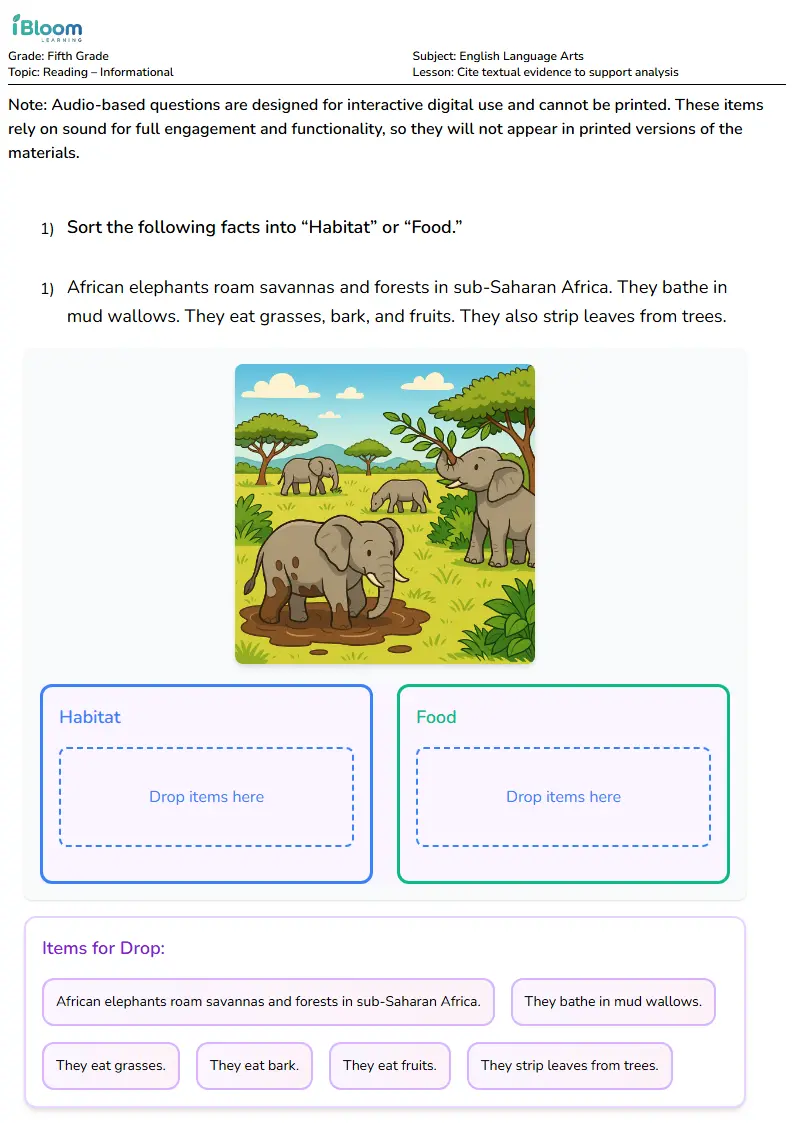
Cite textual evidence to support analysis Lesson for Fifth Grade
Explore a free interactive english language arts lesson for fifth grade: Cite textual evidence to support analysis. AI-personalized, Common Core-aligned, and built for kids.
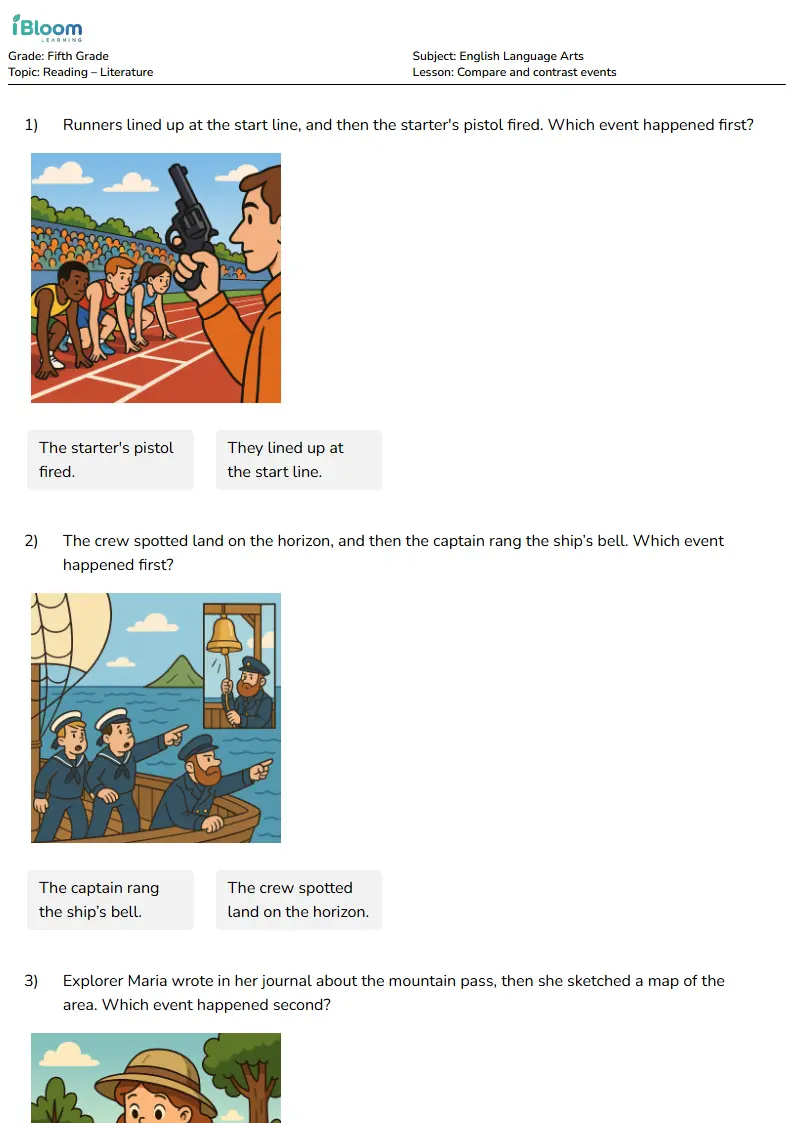
Compare and contrast events Lesson for Fifth Grade
Explore a free interactive english language arts lesson for fifth grade: Compare and contrast events. AI-personalized, Common Core-aligned, and built for kids.
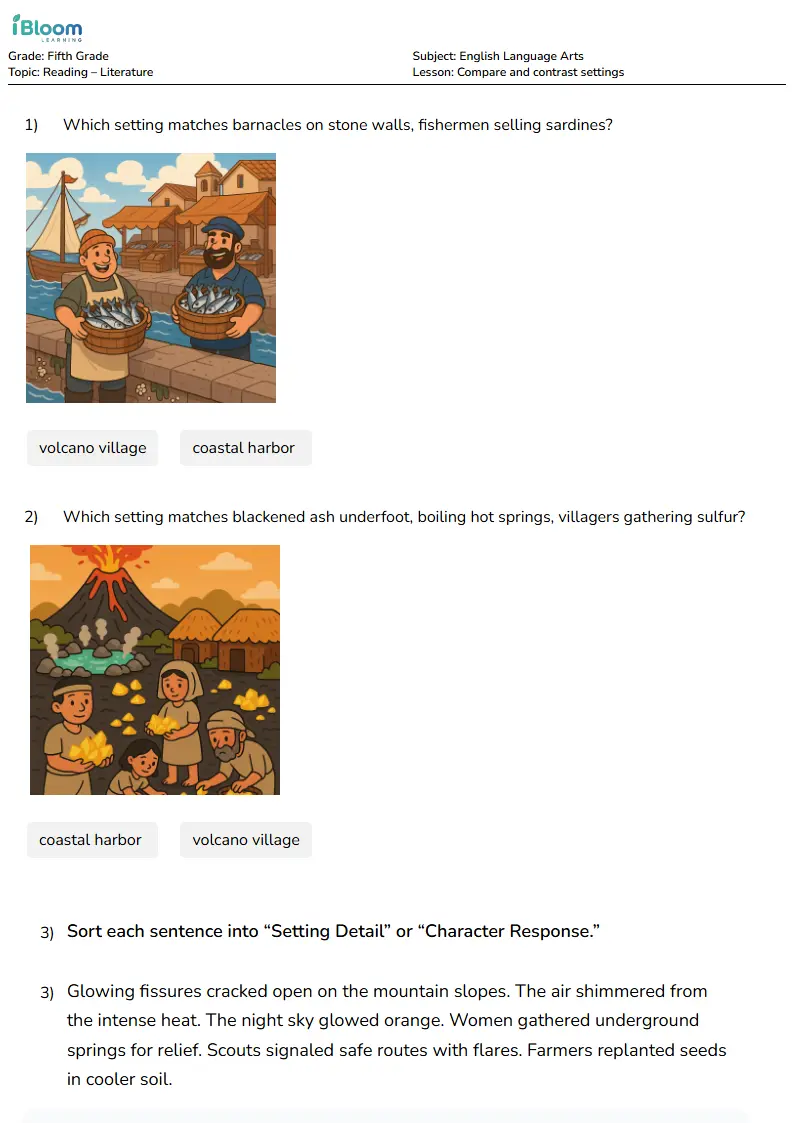
Compare and contrast settings Lesson for Fifth Grade
Explore a free interactive english language arts lesson for fifth grade: Compare and contrast settings. AI-personalized, Common Core-aligned, and built for kids.
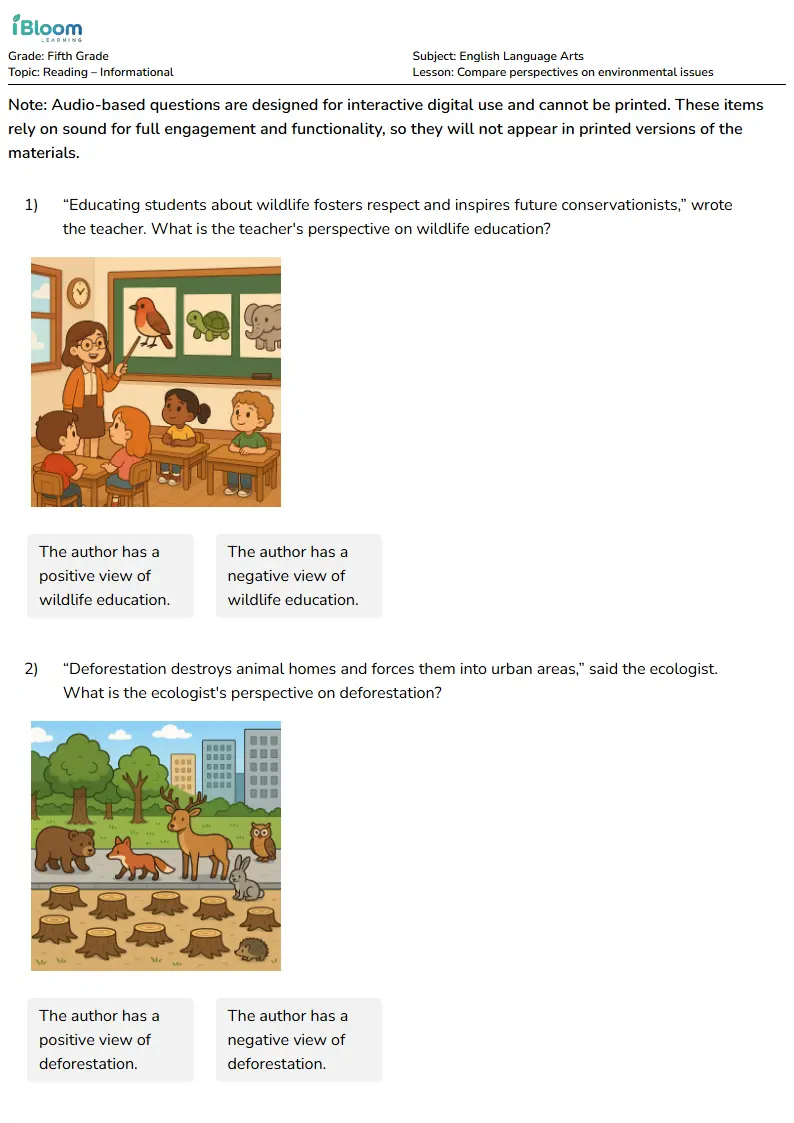
Compare perspectives on environmental issues Lesson for Fifth Grade
Explore a free interactive english language arts lesson for fifth grade: Compare perspectives on environmental issues. AI-personalized, Common Core-aligned, and built for kids.
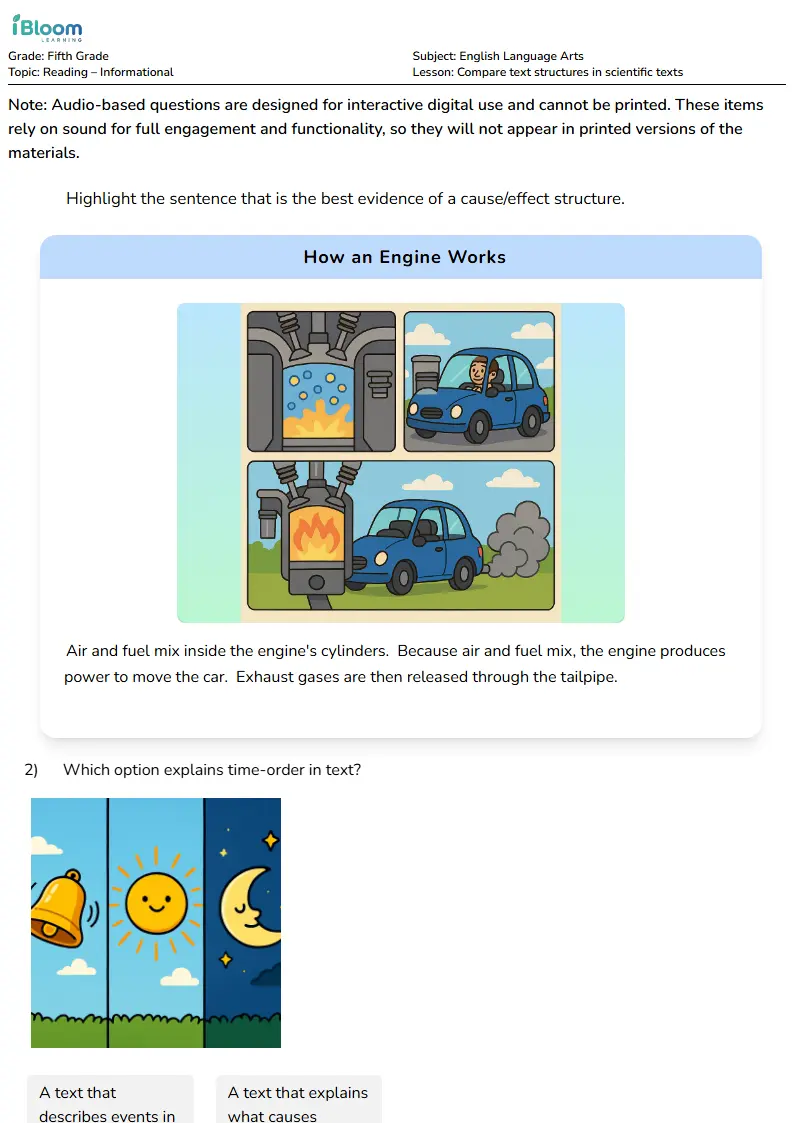
Compare text structures in scientific texts Lesson for Fifth Grade
Explore a free interactive english language arts lesson for fifth grade: Compare text structures in scientific texts. AI-personalized, Common Core-aligned, and built for kids.
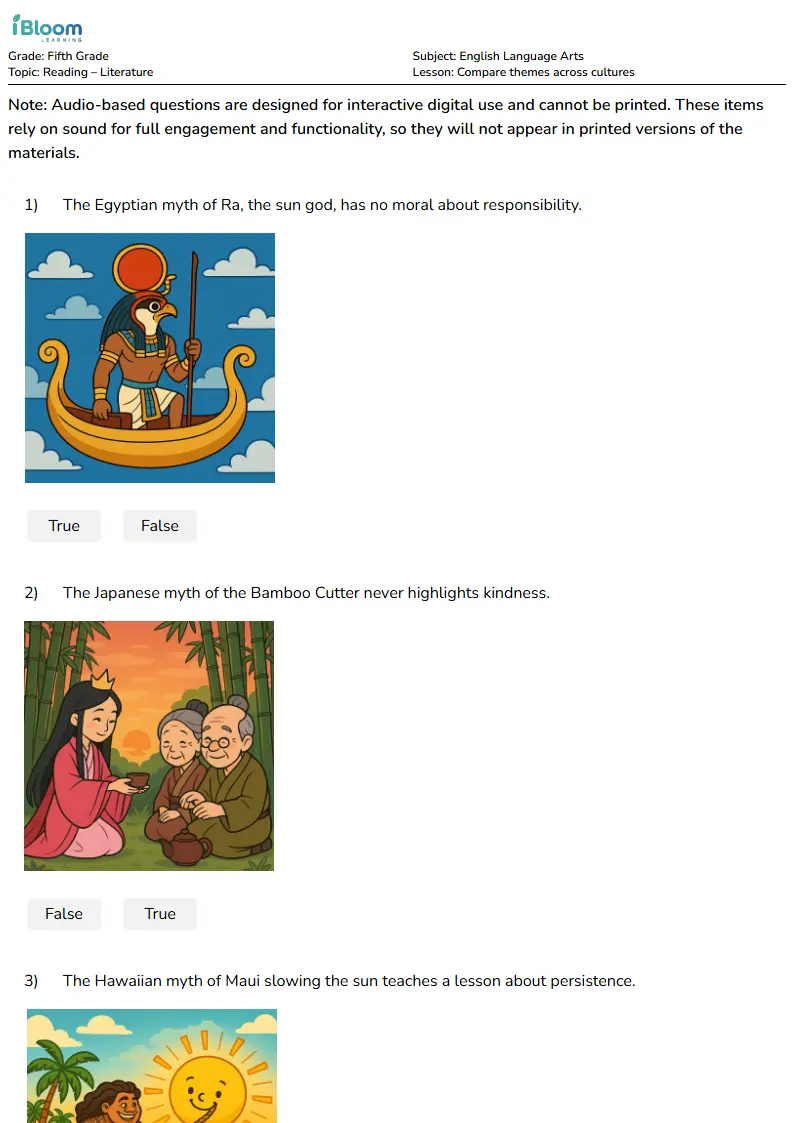
Compare themes across cultures Lesson for Fifth Grade
Explore a free interactive english language arts lesson for fifth grade: Compare themes across cultures. AI-personalized, Common Core-aligned, and built for kids.
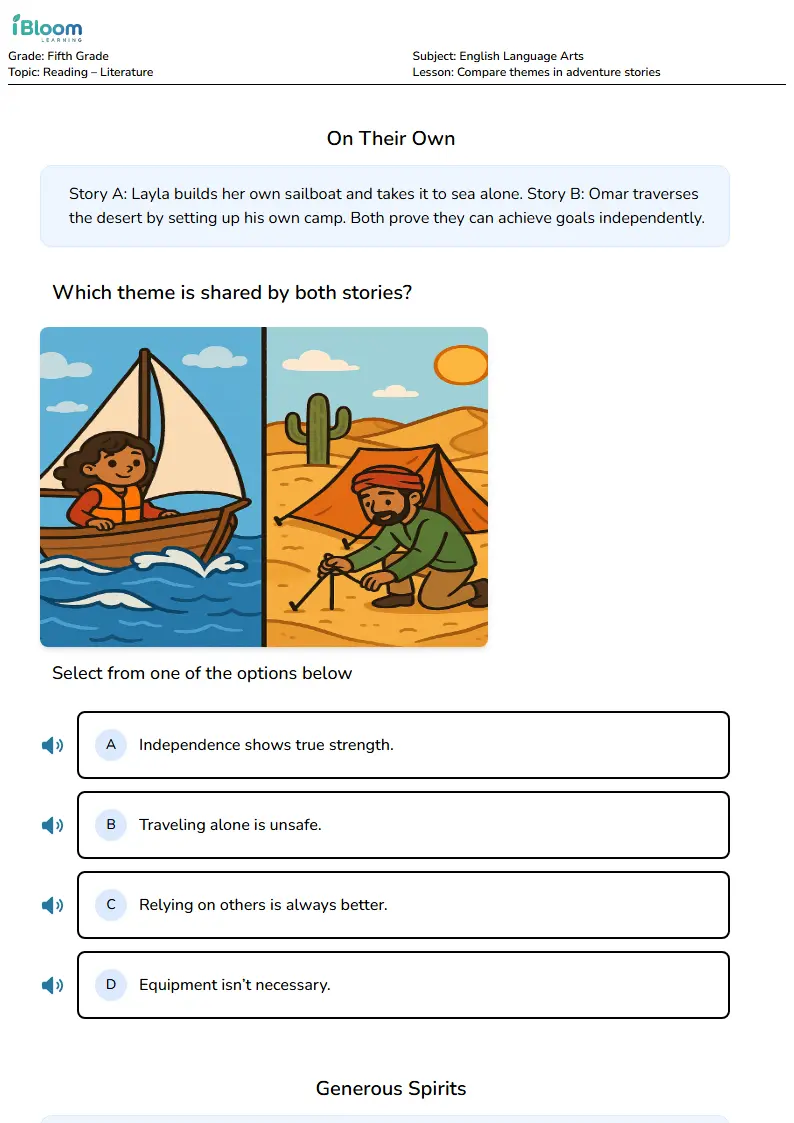
Compare themes in adventure stories Lesson for Fifth Grade
Explore a free interactive english language arts lesson for fifth grade: Compare themes in adventure stories. AI-personalized, Common Core-aligned, and built for kids.
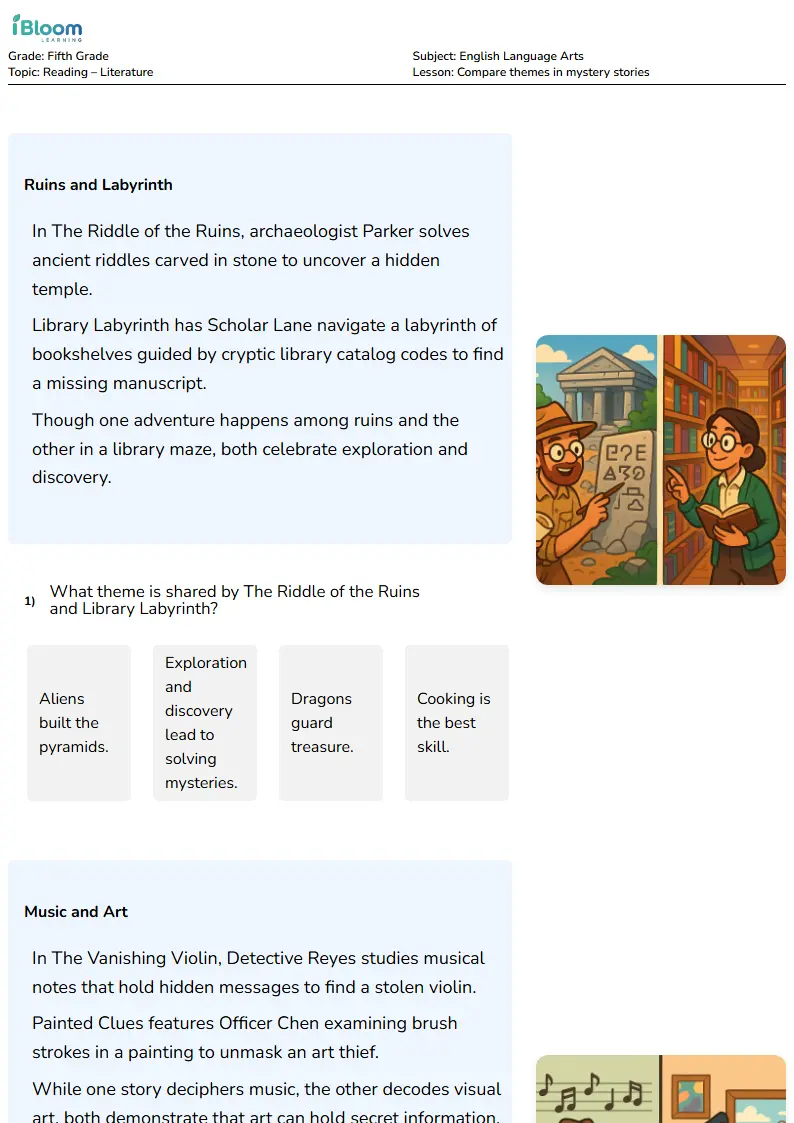
Compare themes in mystery stories Lesson for Fifth Grade
Explore a free interactive english language arts lesson for fifth grade: Compare themes in mystery stories. AI-personalized, Common Core-aligned, and built for kids.
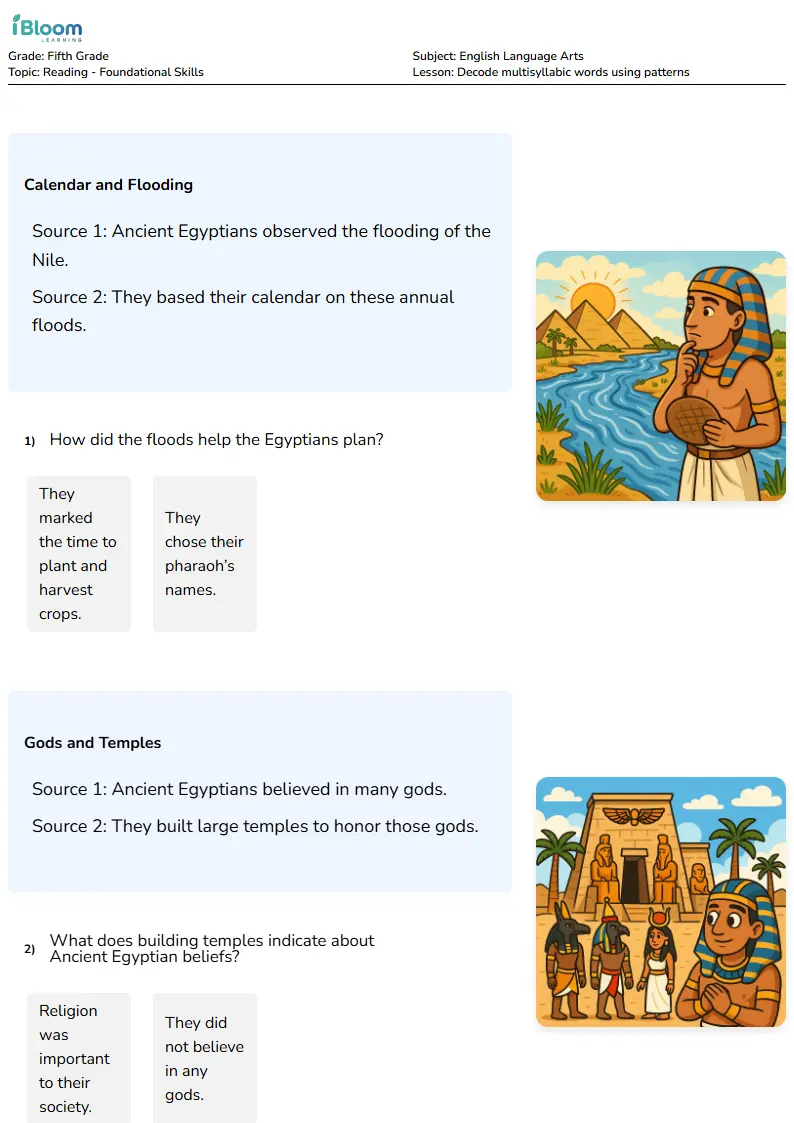
Decode multisyllabic words using patterns Lesson for Fifth Grade
Explore a free interactive english language arts lesson for fifth grade: Decode multisyllabic words using patterns. AI-personalized, Common Core-aligned, and built for kids.
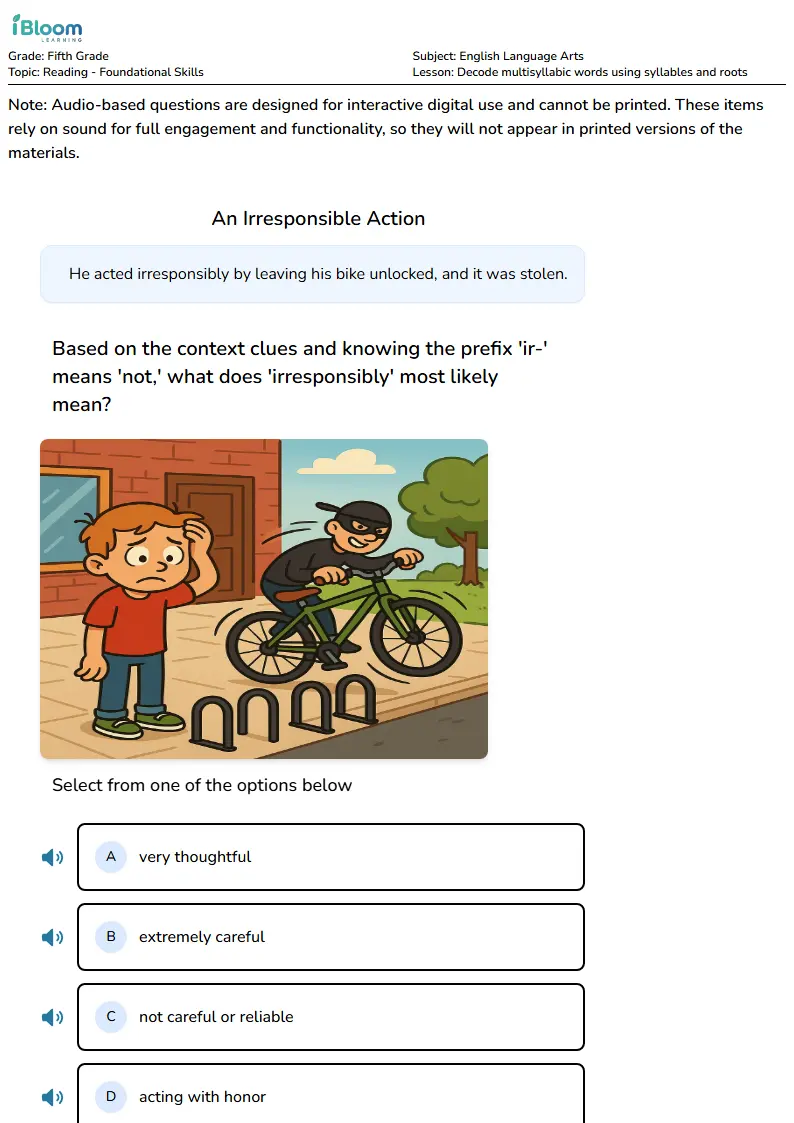
Decode multisyllabic words using syllables and roots Lesson for Fifth Grade
Explore a free interactive english language arts lesson for fifth grade: Decode multisyllabic words using syllables and roots. AI-personalized, Common Core-aligned, and built for kids.
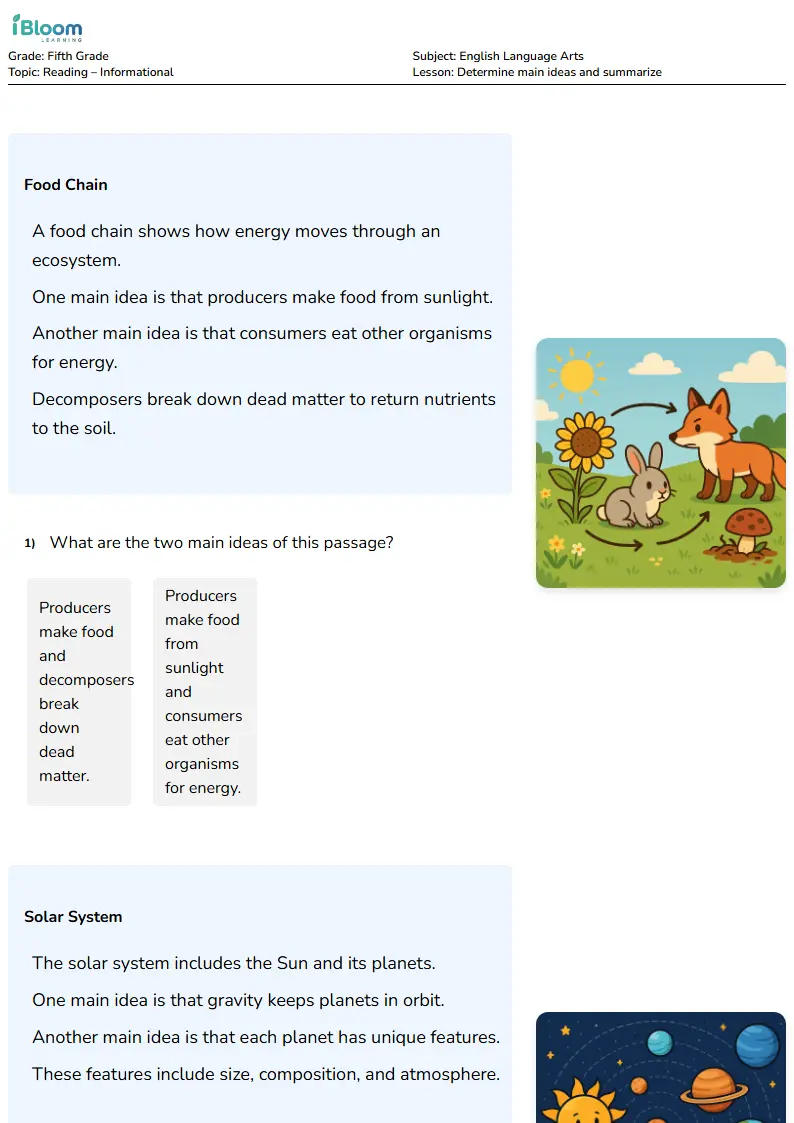
Determine main ideas and summarize Lesson for Fifth Grade
Explore a free interactive english language arts lesson for fifth grade: Determine main ideas and summarize. AI-personalized, Common Core-aligned, and built for kids.