Identify print concepts and directionality Lesson for First Grade
Preparing your worksheet
Identify print concepts and directionality Lesson for First Grade: focused english language arts practice for First Grade
Identify print concepts and directionality Lesson for First Grade helps children sort sounds before reading the answer. Use Identify print concepts and directionality Lesson for First Grade as the main practice page, then move to the paired worksheet when the child needs the same idea in a different format.
This page fits the phonics, spelling, and word reading learning path and supports phonics worksheets for kids without turning practice into a long packet. The goal is simple: help the child try a small set, explain one answer, correct one mistake, and leave with a repeatable strategy.
What children learn on this page
The exact skill is identify print concepts and directionality. Children often miss this kind of task when they rush, guess from the picture only, skip a word, forget to count, or mark an answer without checking the reason. A strong adult prompt slows the child down just enough to notice the clue or model.
In Kerala, Tamil Nadu, Karnataka, Maharashtra, Telangana, Gujarat, California, Texas, Florida, New York, Illinois, Pennsylvania, Dubai, Abu Dhabi, and Sharjah, parents and teachers can use the same short routine: preview the task, model one item, let the child try independently, and ask for an explanation. The regional curriculum label may change, but the child still needs clear language, enough practice, and calm correction.
Step-by-step practice routine
1. Preview the task
Read the title and ask, "What are we trying to find?" If the child cannot answer, point to the first clue, word, number, picture, or model and say the thinking step aloud.
2. Try two items
Let the child complete two items without overhelping. Watch whether the child slows down at the vocabulary, the instructions, the counting, the model, the handwriting, or the final choice.
3. Explain one answer
Ask, "How do you know?" The answer can be spoken, drawn, counted, read aloud, or shown with a marked clue. The explanation matters because it tells the adult whether the child understands identify print concepts and directionality or only guessed correctly.
4. Correct one mistake
Pick one mistake and fix the thinking step. Avoid redoing the whole page. A short correction is easier for young children to remember.
Practice prompts for this page
- Ask the child to sort sounds before reading the answer and explain the answer in one sentence.
- Make a second example using a book, pencil, counter, picture card, notebook line, classroom object, or home routine.
- Let the child correct one mistake by naming the clue, sound, number, model, word, or detail that changed the answer.
- End with a teach-back: the child shows a parent, teacher, tutor, or classmate how to solve one similar item.
For more connected practice, use kindergarten phonics worksheets, online spelling practice, and spelling mistake correction. These guides help adults choose the next step while this page gives the child the actual practice.
Parent guidance
Parents can use this page for 10 to 15 minutes after school, during weekend review, or before a test. Start with one shared item. Then let the child complete a few independently. If the child is multilingual, let them explain the idea in a home language first, then repeat the important word or sentence in English.
If the page feels too hard, use a real object, a shorter sentence, a smaller number, a picture clue, or a sentence frame. If it feels too easy, ask the child to make a similar question for you.
Teacher and tutor guidance
Teachers can use Identify print concepts and directionality Lesson for First Grade as a warm-up, center activity, small-group reteach, exit ticket, homework review, or quick diagnostic. Tutors can use it to see whether the child needs help with vocabulary, attention, memory, reading the directions, number sense, or confidence.
- Use one item as a think-aloud before independent work.
- Ask partners to compare explanations, not only answers.
- Let children mark the clue, number, word, picture, or model that helped.
- Return to the same skill a few days later for spaced review.
Connected iBloom path
- Identify print concepts and directionality Lesson for First Grade
- paired worksheet for Identify print concepts and directionality Lesson for First Grade
- kindergarten phonics worksheets
- online spelling practice
- spelling mistake correction
Trusted adult background
Adults who want research background can review this education resource and this supporting reference. Use those sources for adult planning, then return to iBloom for the child's concrete lesson or worksheet practice.
Common mistakes to watch for
- The child gives the right answer but cannot explain it.
- The child skips the direction word, sentence clue, operation sign, sound pattern, or model.
- The page is completed too quickly and the same error returns later.
- The adult gives the answer instead of giving one small hint.
Frequently asked questions
Who should use this page?
Use it when a First Grade child needs focused practice with identify print concepts and directionality in english language arts.
How long should one session take?
Most children do best with 10 to 15 minutes. One clear explanation is more useful than a rushed full page.
Can this page work for homework?
Yes. Parents can use it after school, and teachers can pair it with a short explanation or related iBloom page.
What should happen after the page is complete?
Ask the child to explain one answer, correct one mistake, and try a related page after a short break.
More practice for this grade
More English Language Arts lessons
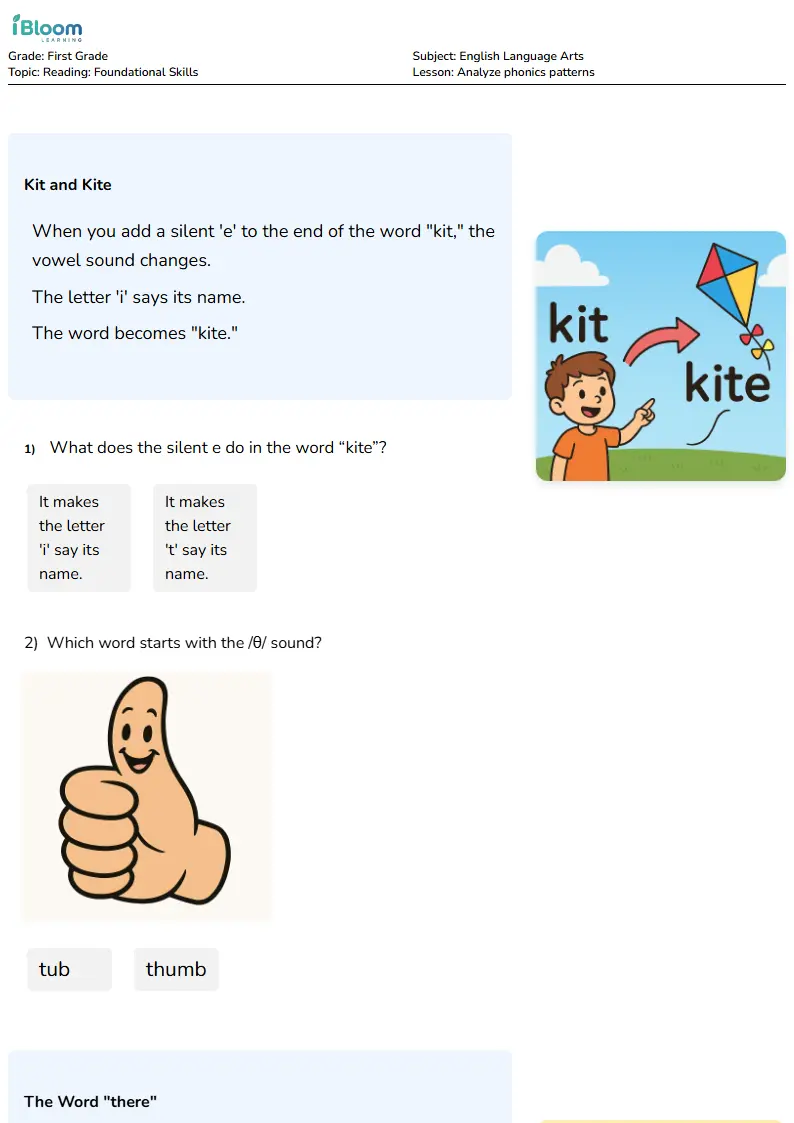
Analyze phonics patterns Lesson for First Grade
Explore a free interactive english language arts lesson for first grade: Analyze phonics patterns. AI-personalized, Common Core-aligned, and built for kids.
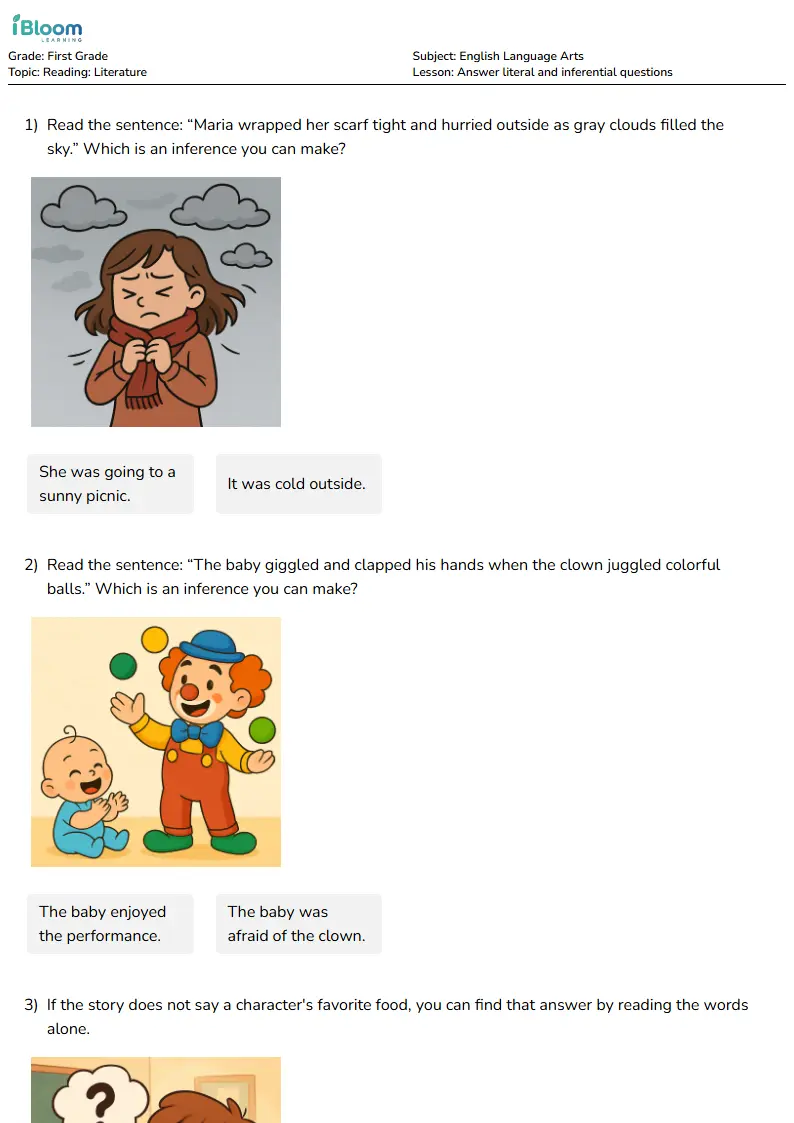
Answer literal and inferential questions Lesson for First Grade
Explore a free interactive english language arts lesson for first grade: Answer literal and inferential questions. AI-personalized, Common Core-aligned, and built for kids.
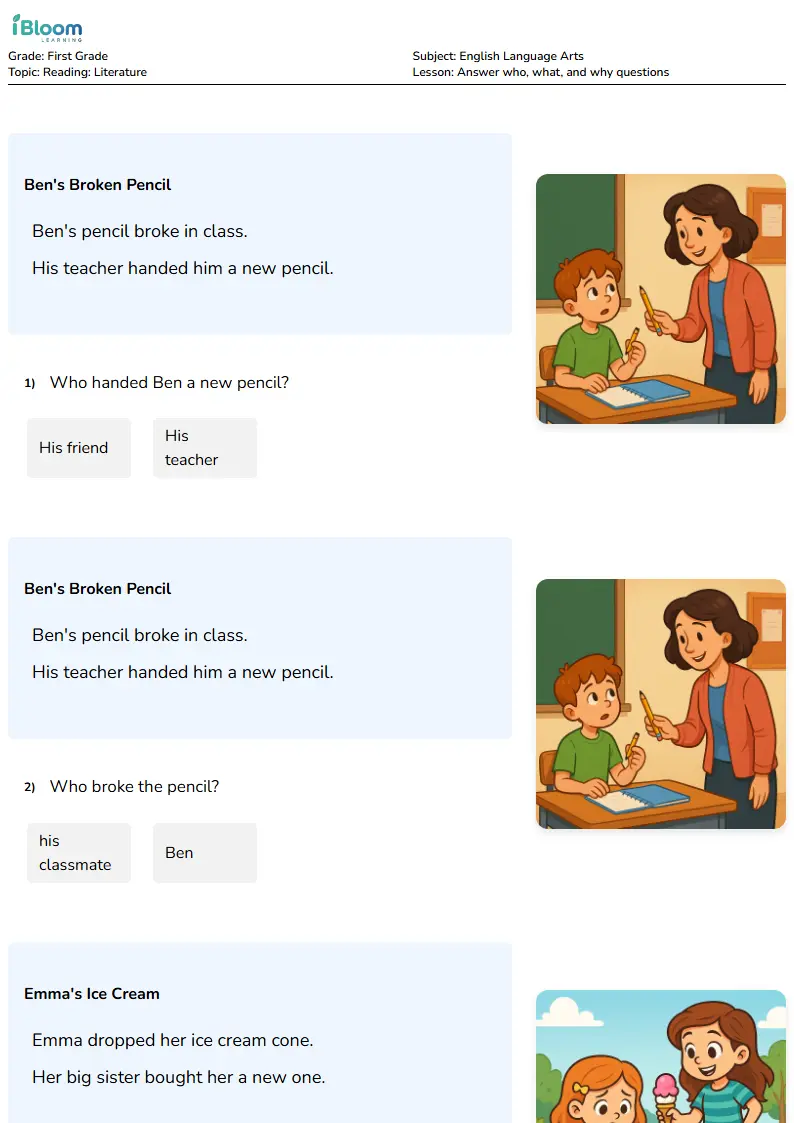
Answer who, what, and why questions Lesson for First Grade
Explore a free interactive english language arts lesson for first grade: Answer who, what, and why questions. AI-personalized, Common Core-aligned, and built for kids.
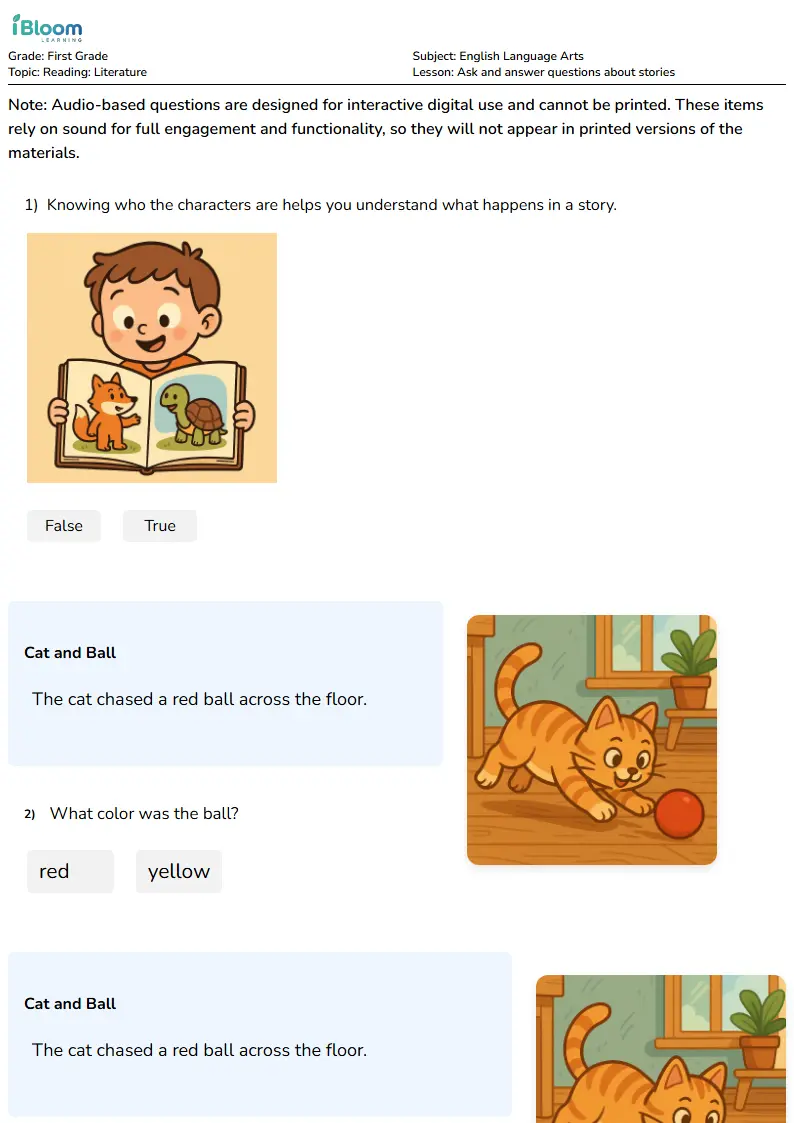
Ask and answer questions about stories Lesson for First Grade
Explore a free interactive english language arts lesson for first grade: Ask and answer questions about stories. AI-personalized, Common Core-aligned, and built for kids.
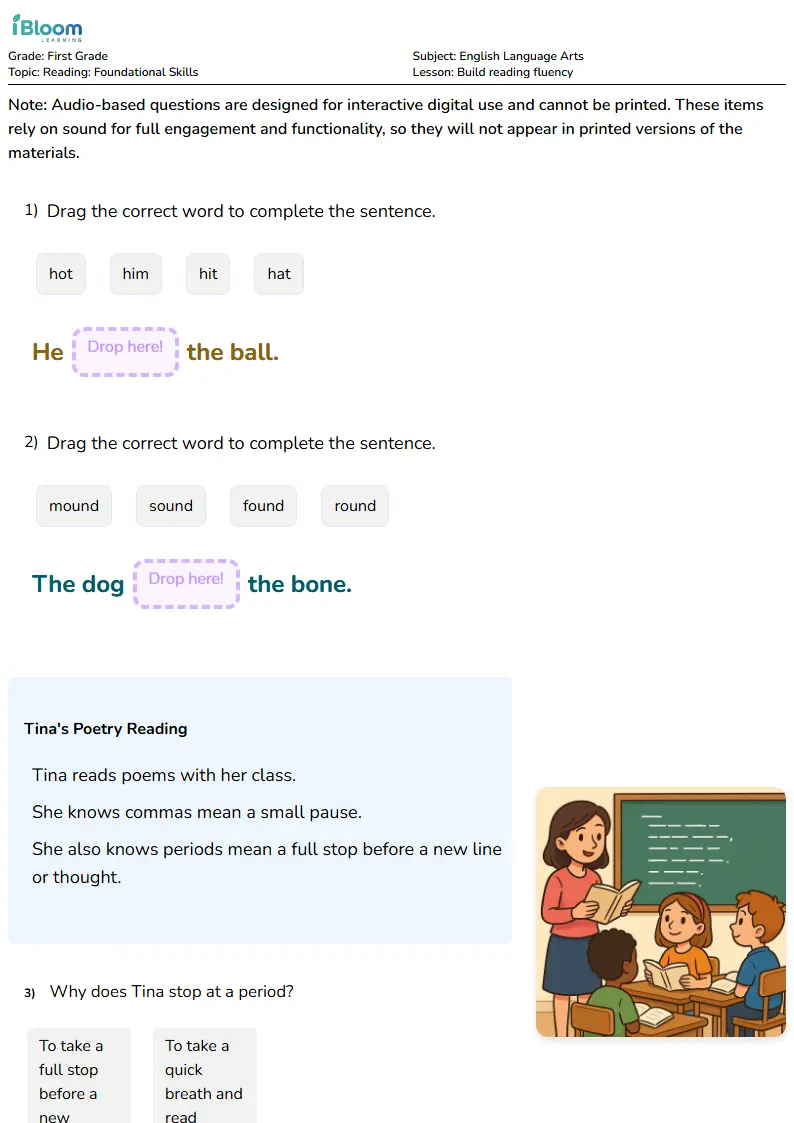
Build reading fluency Lesson for First Grade
Explore a free interactive english language arts lesson for first grade: Build reading fluency. AI-personalized, Common Core-aligned, and built for kids.
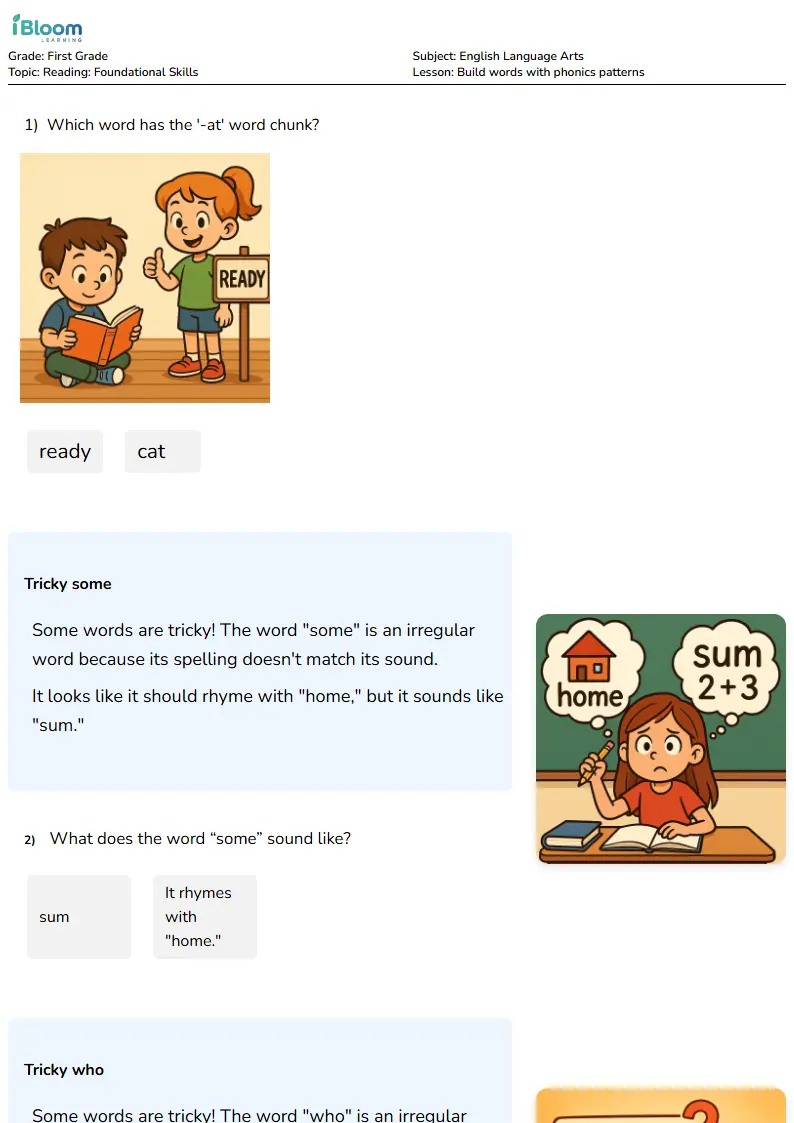
Build words with phonics patterns Lesson for First Grade
Explore a free interactive english language arts lesson for first grade: Build words with phonics patterns. AI-personalized, Common Core-aligned, and built for kids.
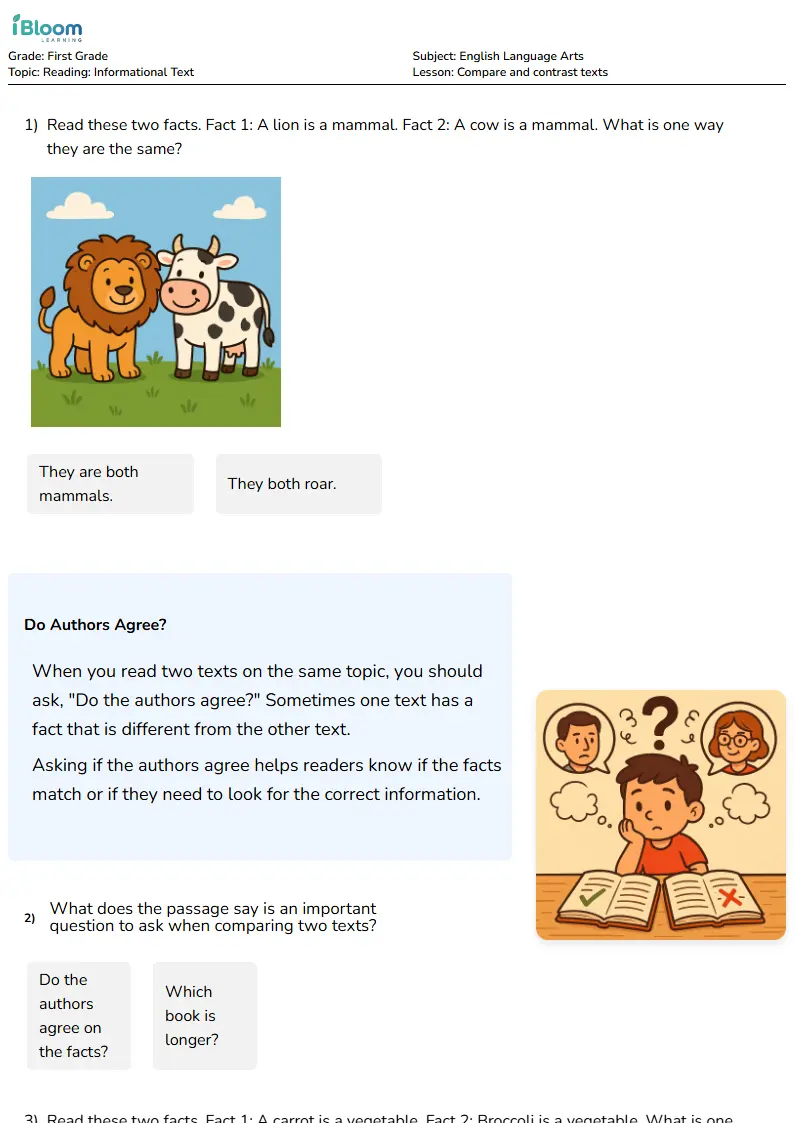
Compare and contrast texts Lesson for First Grade
Explore a free interactive english language arts lesson for first grade: Compare and contrast texts. AI-personalized, Common Core-aligned, and built for kids.
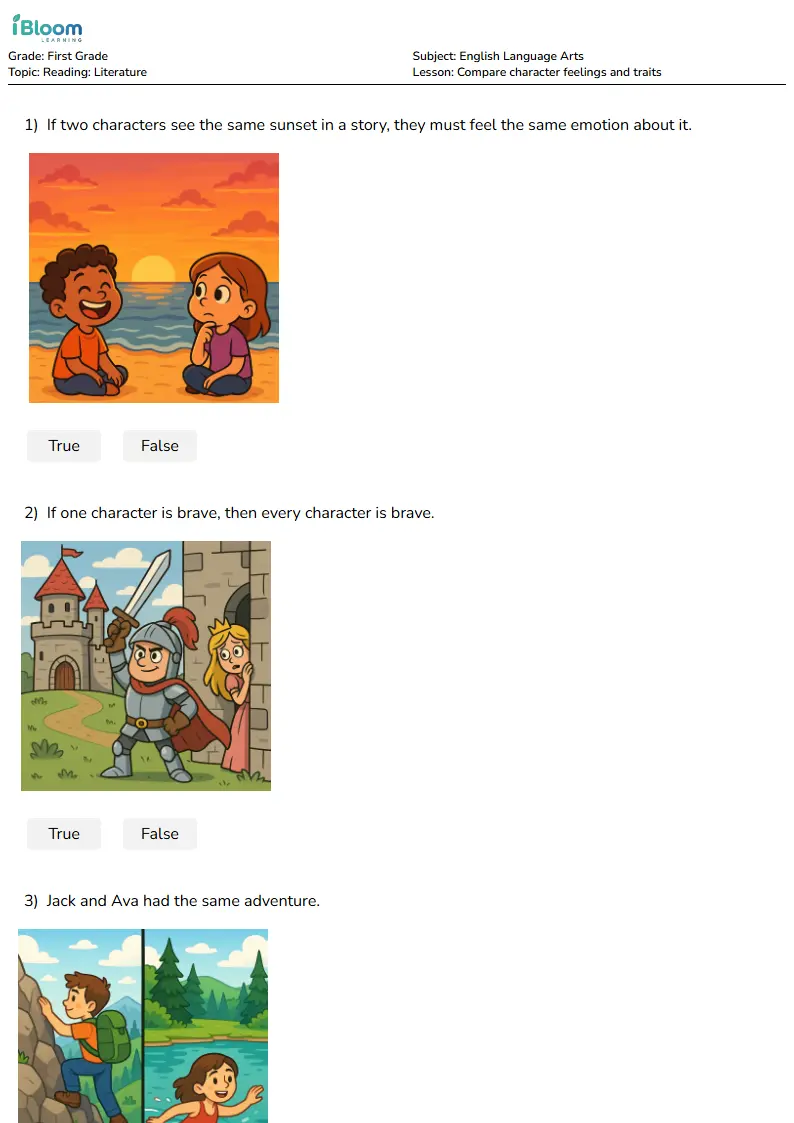
Compare character feelings and traits Lesson for First Grade
Explore a free interactive english language arts lesson for first grade: Compare character feelings and traits. AI-personalized, Common Core-aligned, and built for kids.
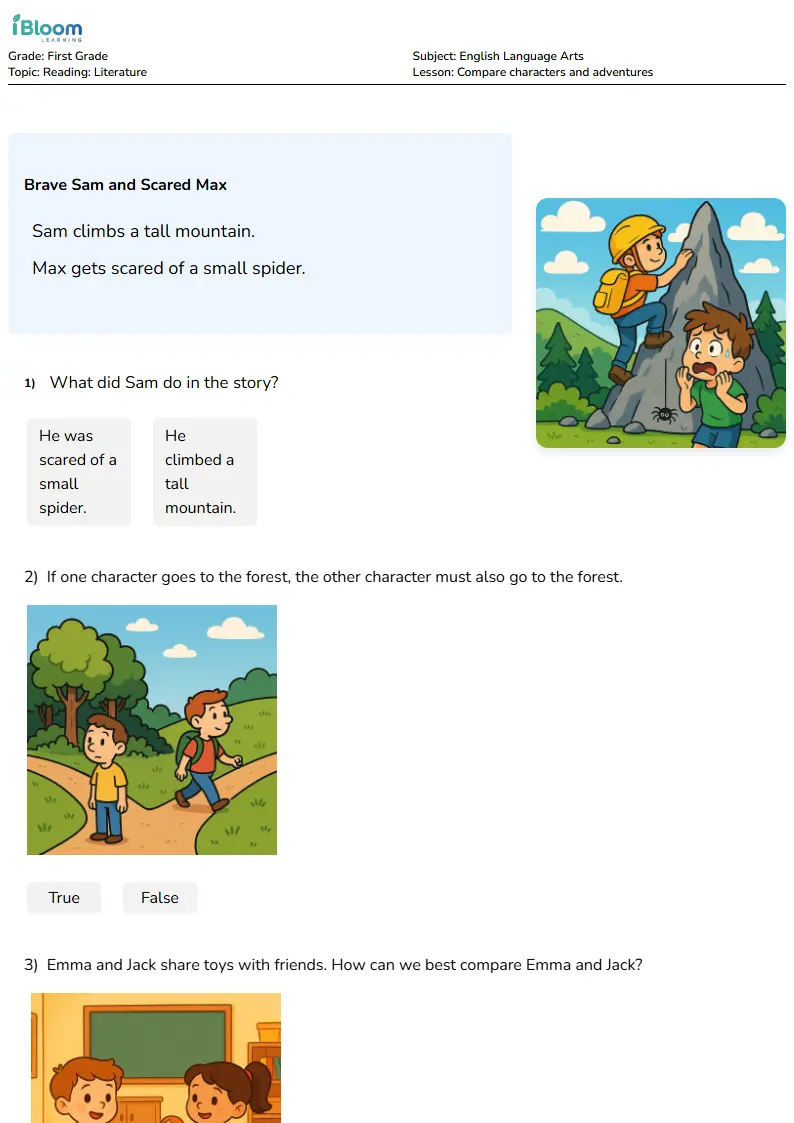
Compare characters and adventures Lesson for First Grade
Explore a free interactive english language arts lesson for first grade: Compare characters and adventures. AI-personalized, Common Core-aligned, and built for kids.
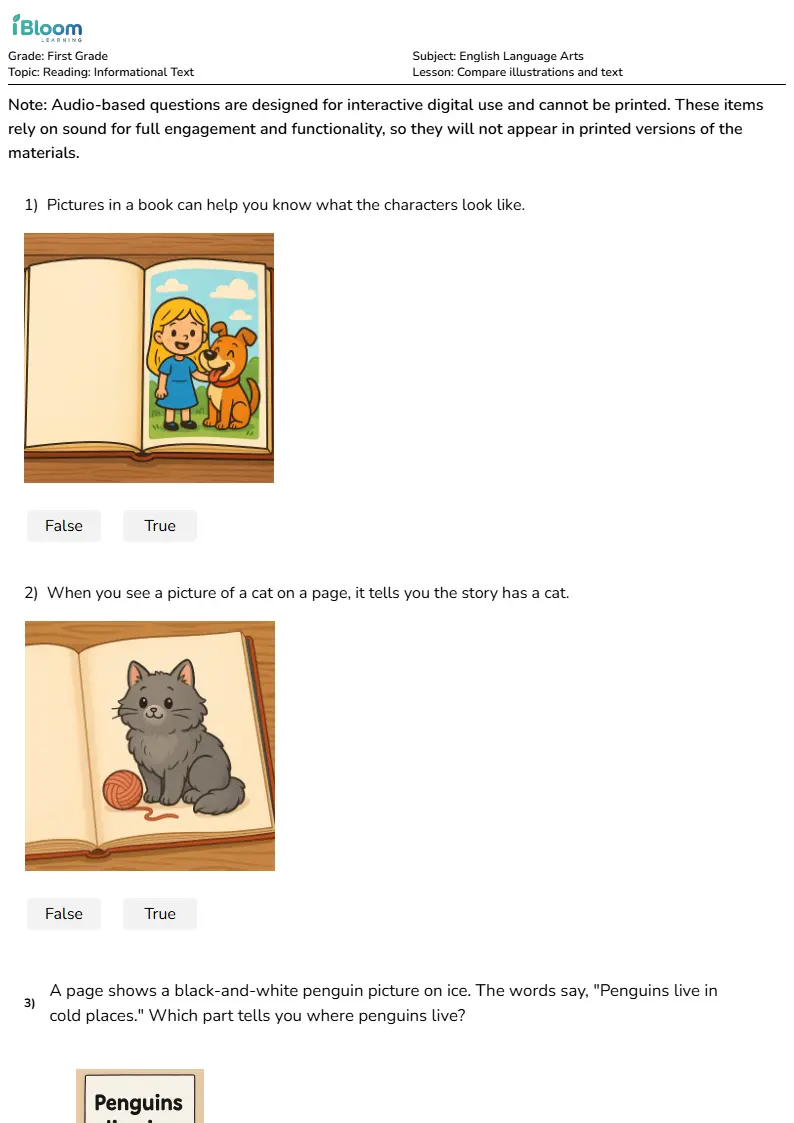
Compare illustrations and text Lesson for First Grade
Explore a free interactive english language arts lesson for first grade: Compare illustrations and text. AI-personalized, Common Core-aligned, and built for kids.
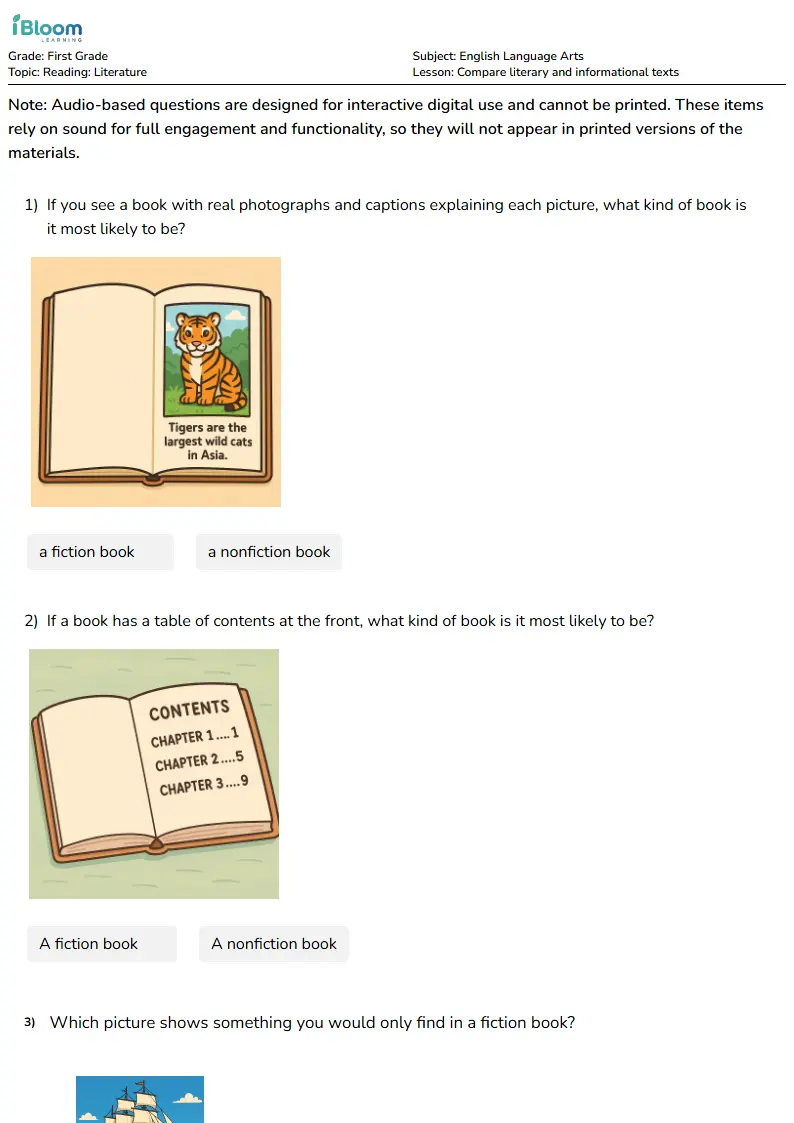
Compare literary and informational texts Lesson for First Grade
Explore a free interactive english language arts lesson for first grade: Compare literary and informational texts. AI-personalized, Common Core-aligned, and built for kids.
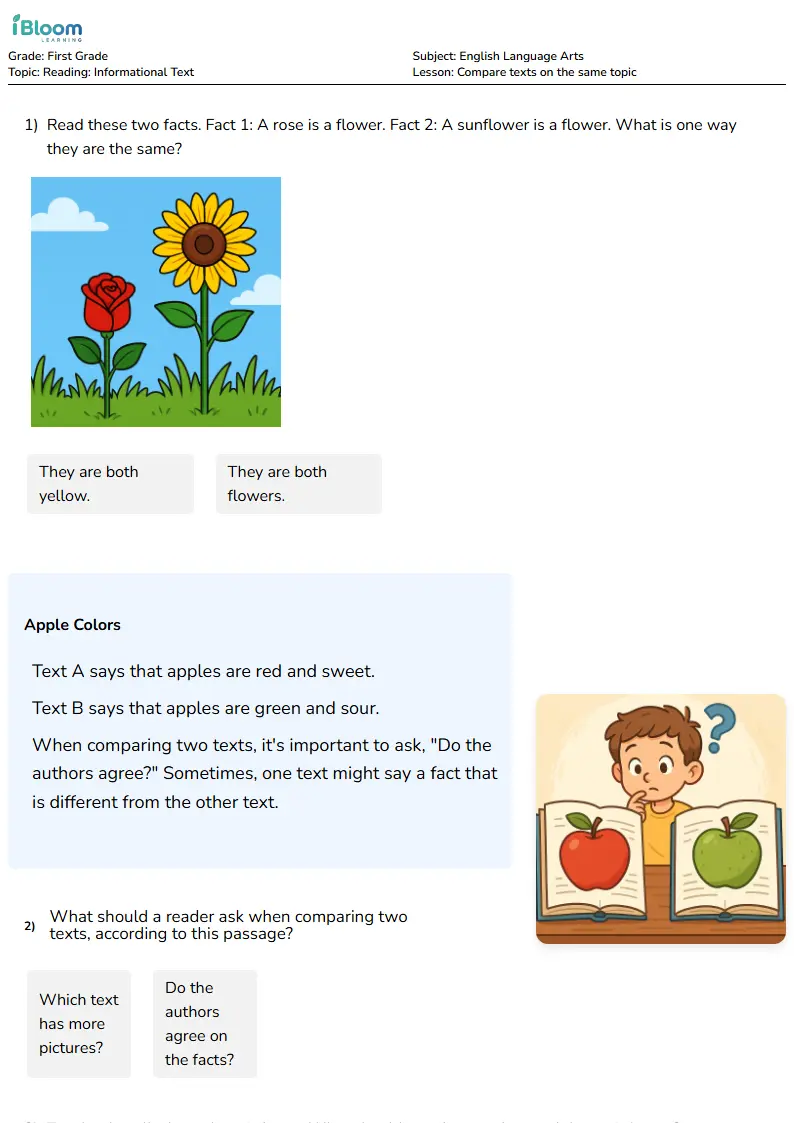
Compare texts on the same topic Lesson for First Grade
Explore a free interactive english language arts lesson for first grade: Compare texts on the same topic. AI-personalized, Common Core-aligned, and built for kids.
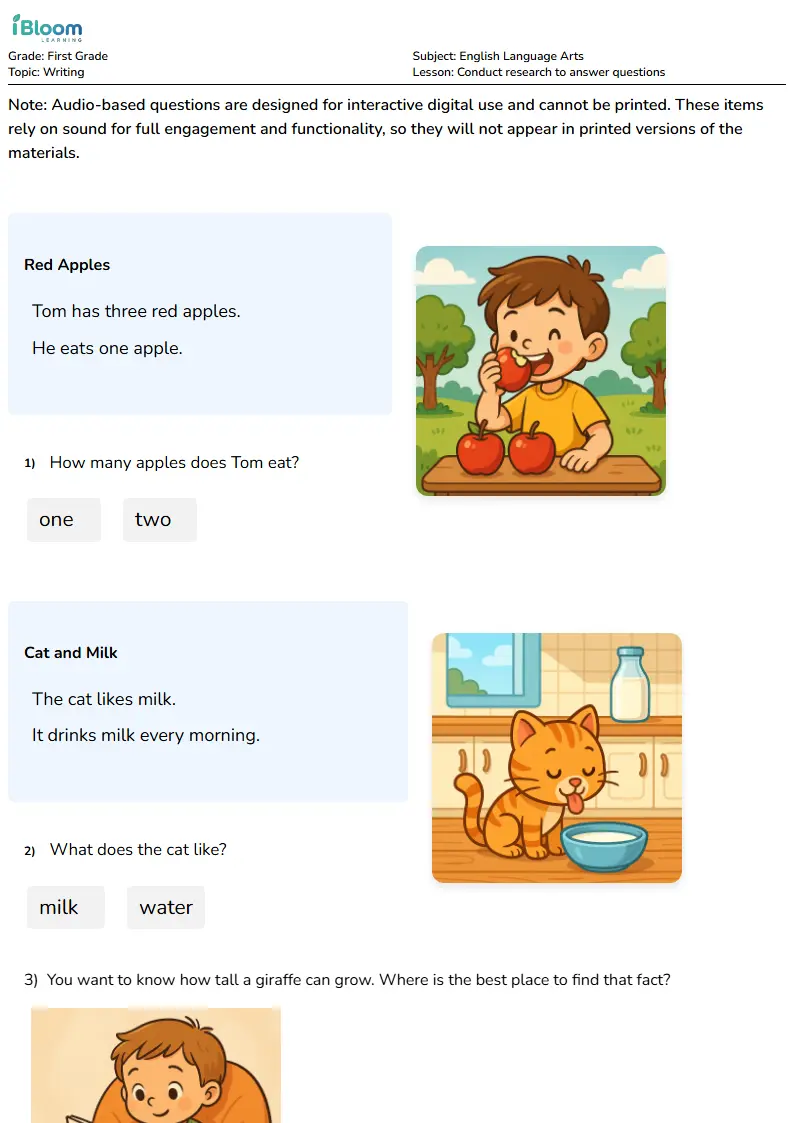
Conduct research to answer questions Lesson for First Grade
Explore a free interactive english language arts lesson for first grade: Conduct research to answer questions. AI-personalized, Common Core-aligned, and built for kids.
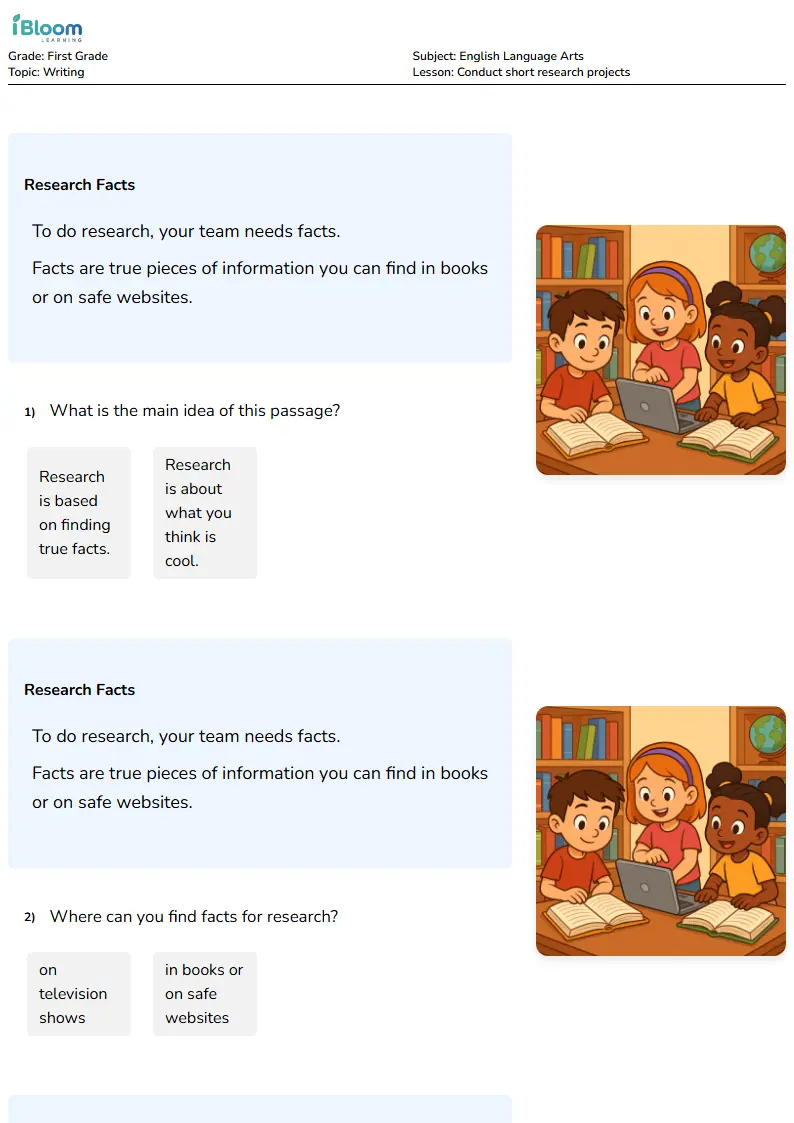
Conduct short research projects Lesson for First Grade
Explore a free interactive english language arts lesson for first grade: Conduct short research projects. AI-personalized, Common Core-aligned, and built for kids.
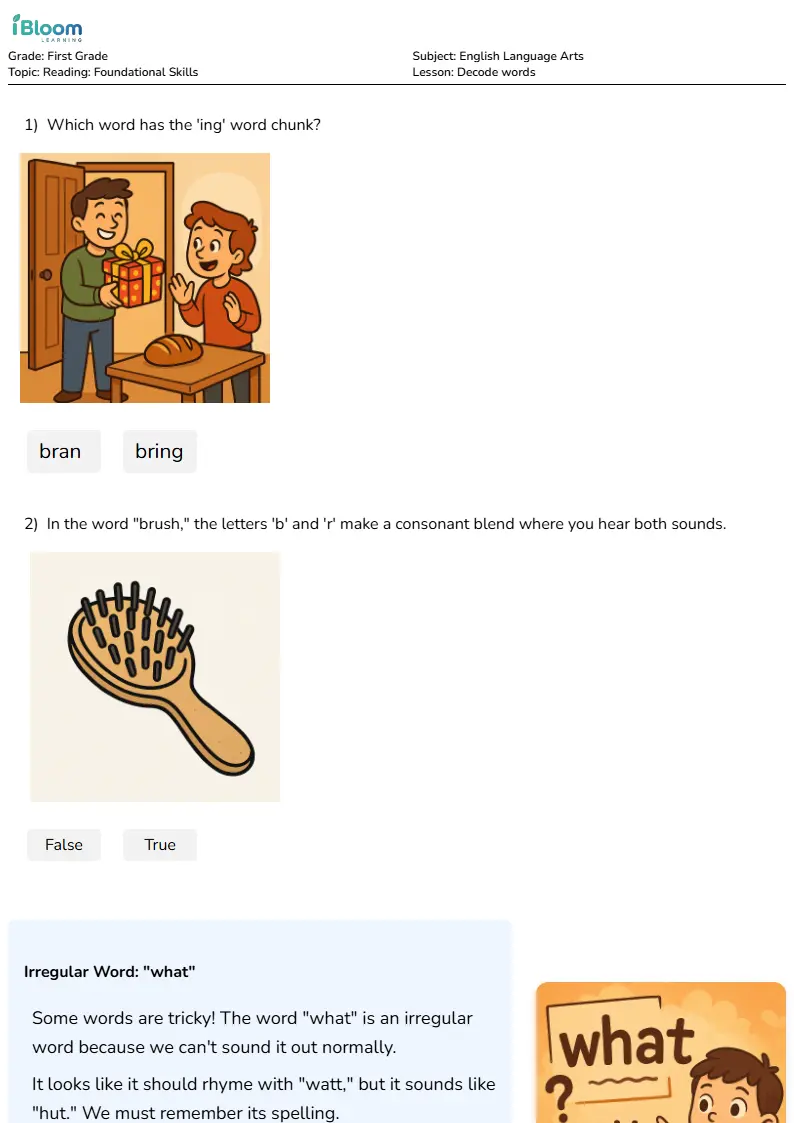
Decode words Lesson for First Grade
Explore a free interactive english language arts lesson for first grade: Decode words. AI-personalized, Common Core-aligned, and built for kids.
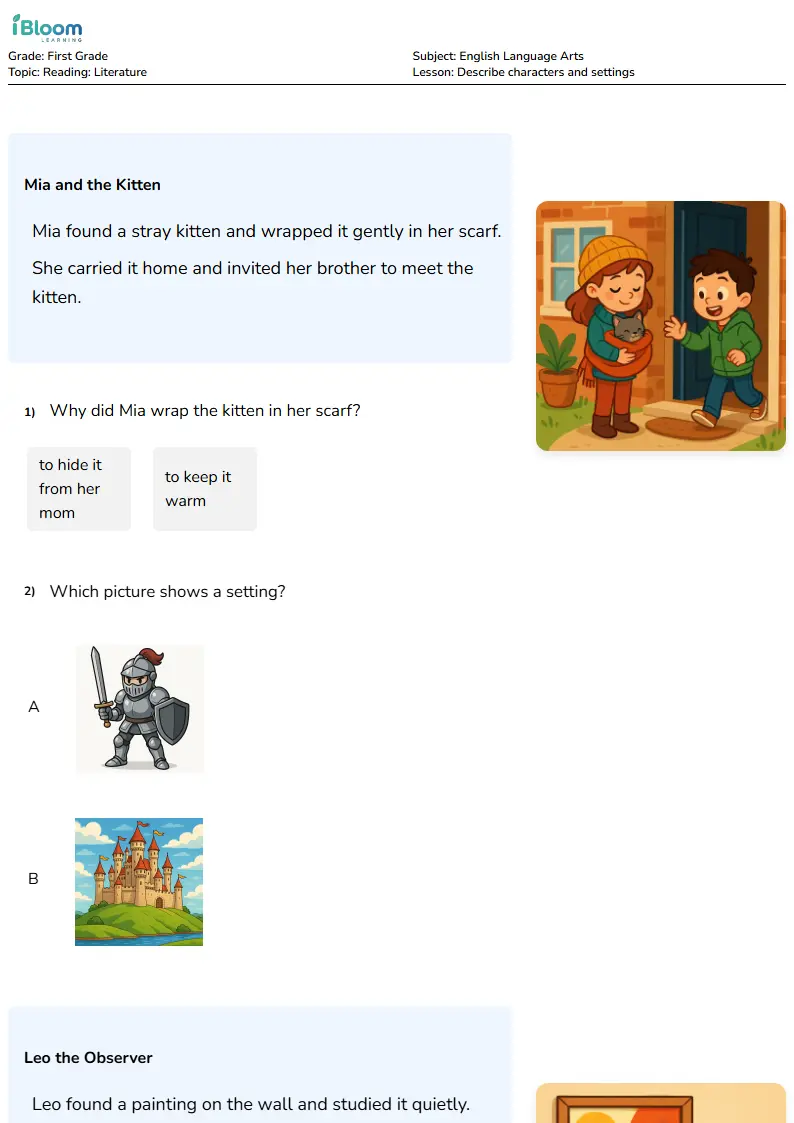
Describe characters and settings Lesson for First Grade
Explore a free interactive english language arts lesson for first grade: Describe characters and settings. AI-personalized, Common Core-aligned, and built for kids.
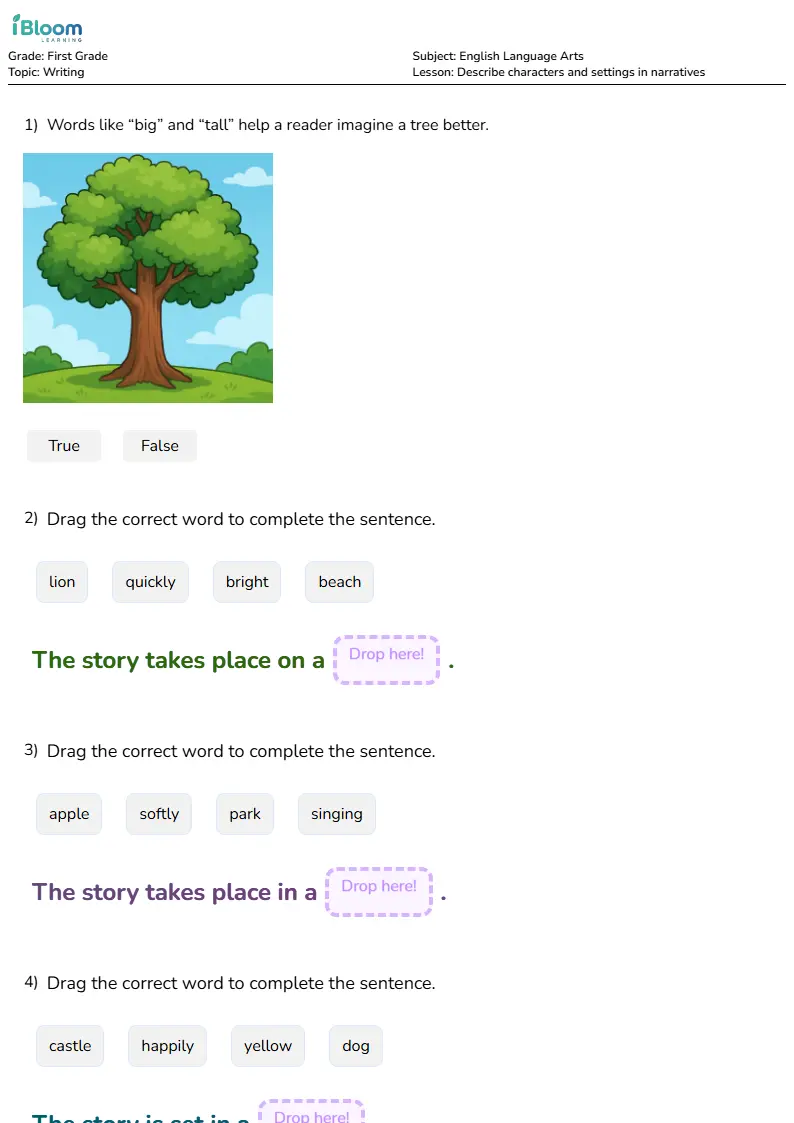
Describe characters and settings in narratives Lesson for First Grade
Explore a free interactive english language arts lesson for first grade: Describe characters and settings in narratives. AI-personalized, Common Core-aligned, and built for kids.
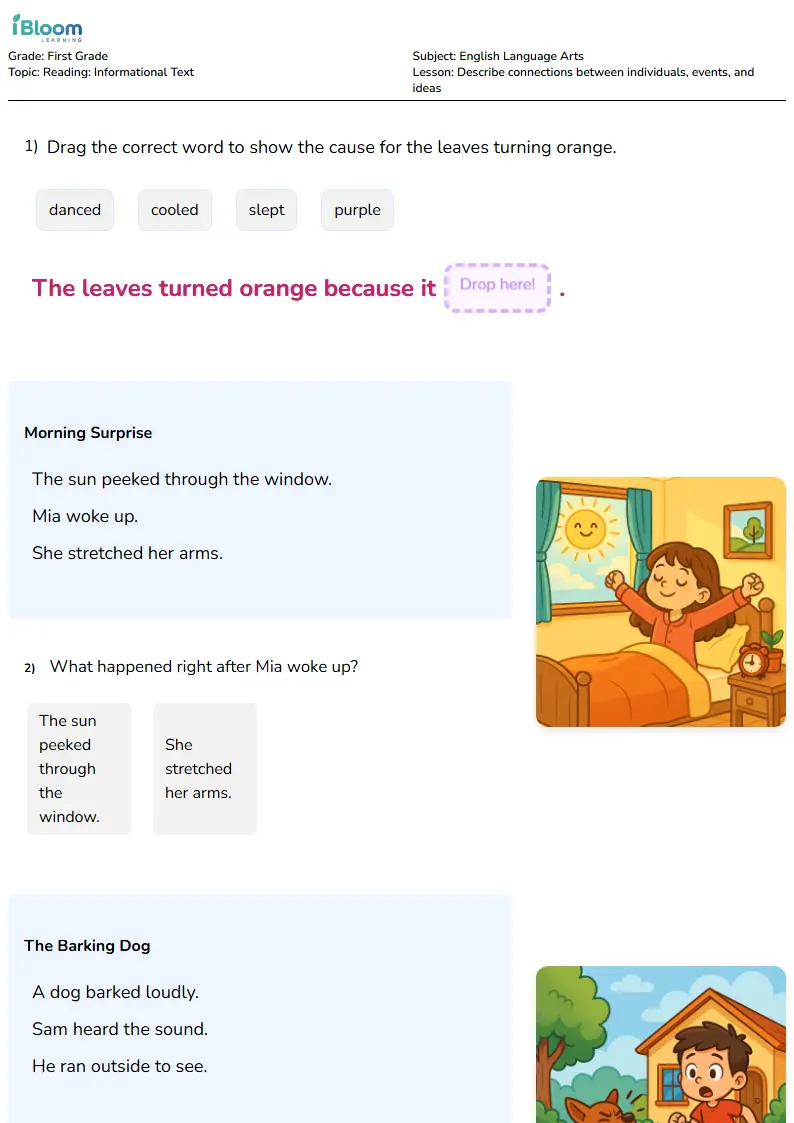
Describe connections between individuals, events, and ideas Lesson for First Grade
Explore a free interactive english language arts lesson for first grade: Describe connections between individuals, events, and ideas. AI-personalized, Common Core-aligned, and built for kids.
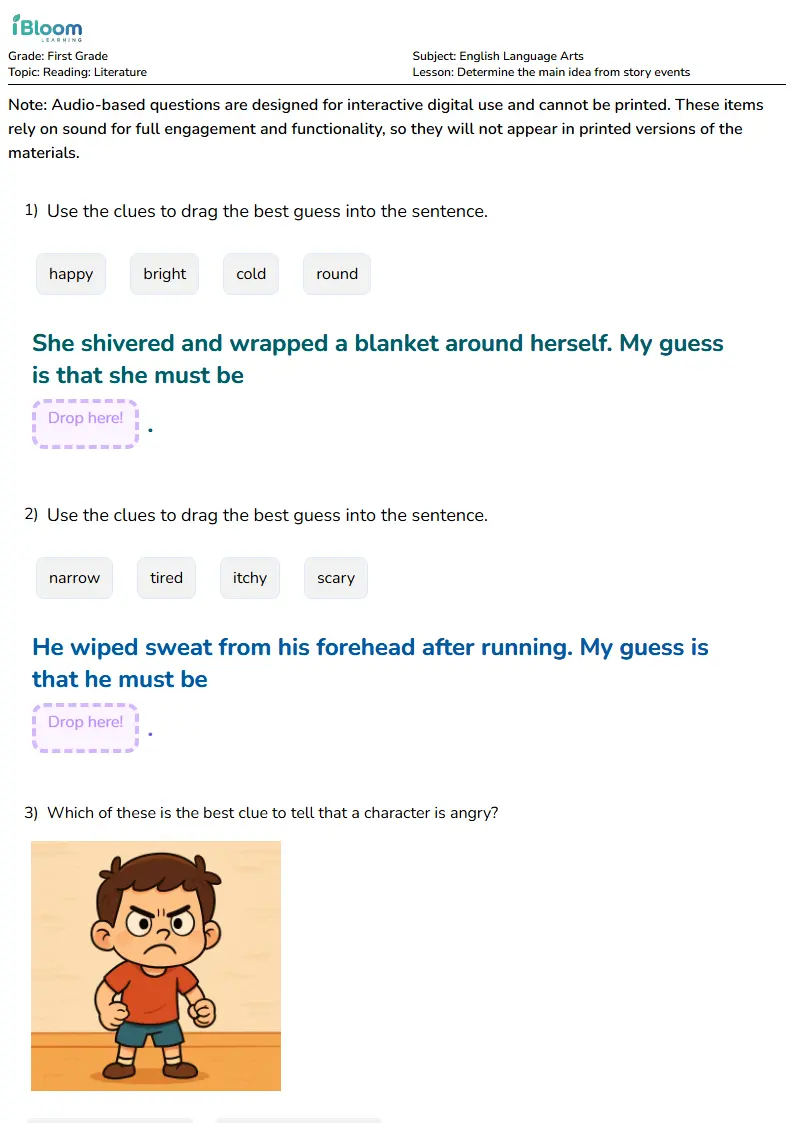
Determine the main idea from story events Lesson for First Grade
Explore a free interactive english language arts lesson for first grade: Determine the main idea from story events. AI-personalized, Common Core-aligned, and built for kids.
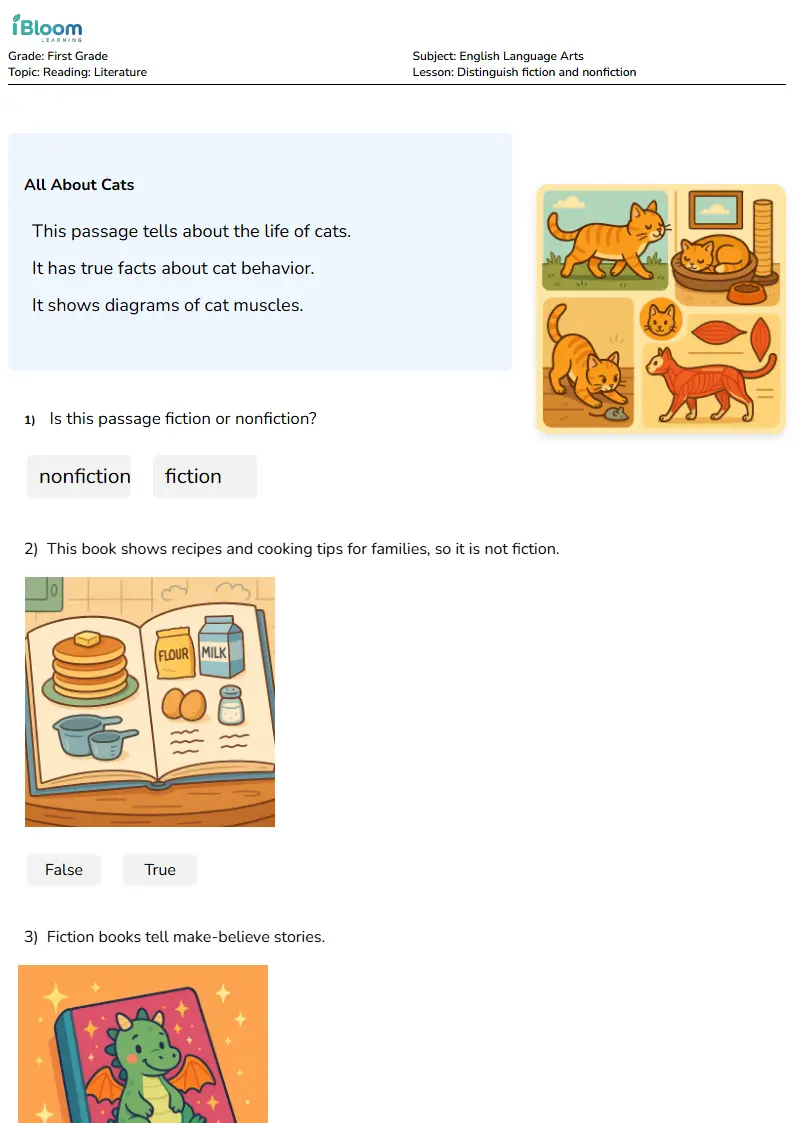
Distinguish fiction and nonfiction Lesson for First Grade
Explore a free interactive english language arts lesson for first grade: Distinguish fiction and nonfiction. AI-personalized, Common Core-aligned, and built for kids.
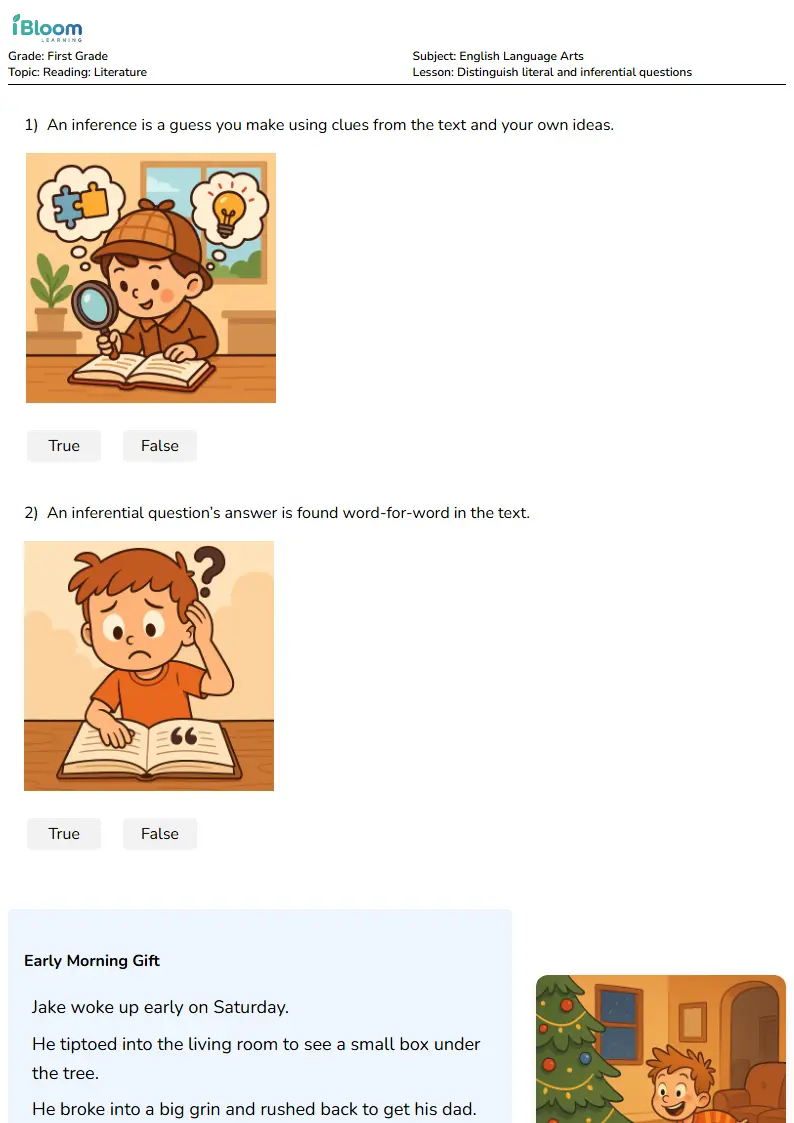
Distinguish literal and inferential questions Lesson for First Grade
Explore a free interactive english language arts lesson for first grade: Distinguish literal and inferential questions. AI-personalized, Common Core-aligned, and built for kids.
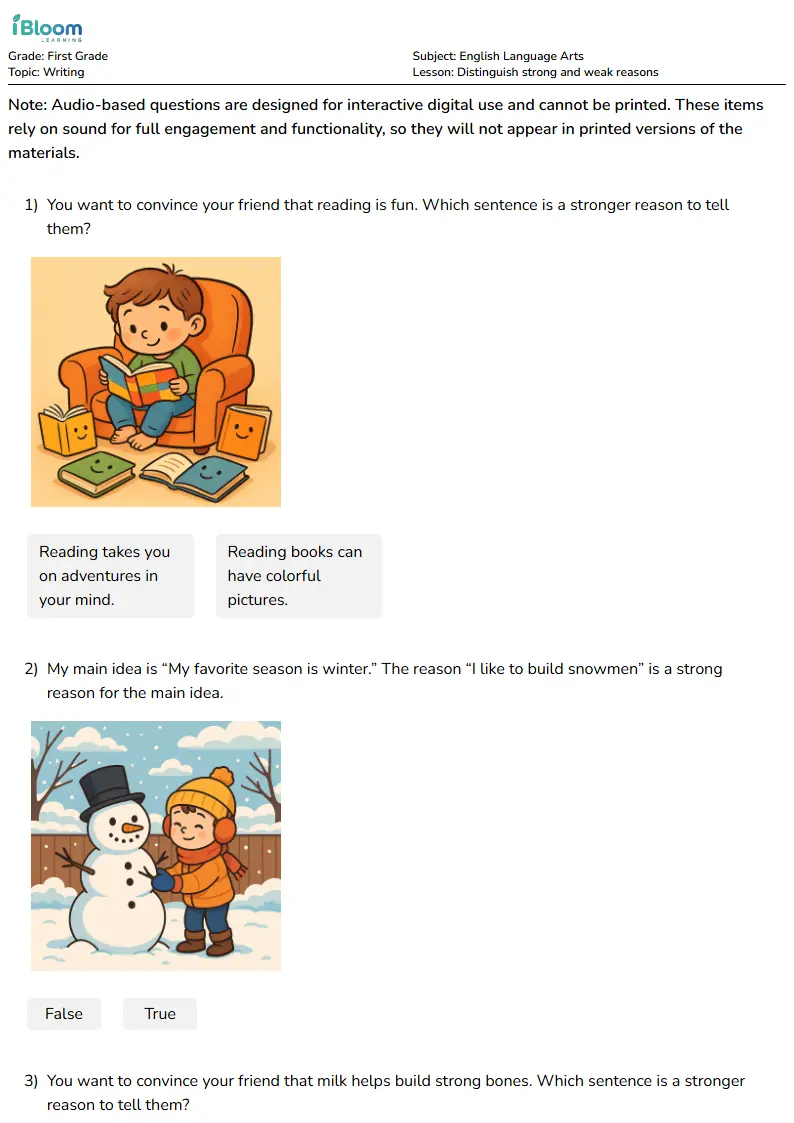
Distinguish strong and weak reasons Lesson for First Grade
Explore a free interactive english language arts lesson for first grade: Distinguish strong and weak reasons. AI-personalized, Common Core-aligned, and built for kids.
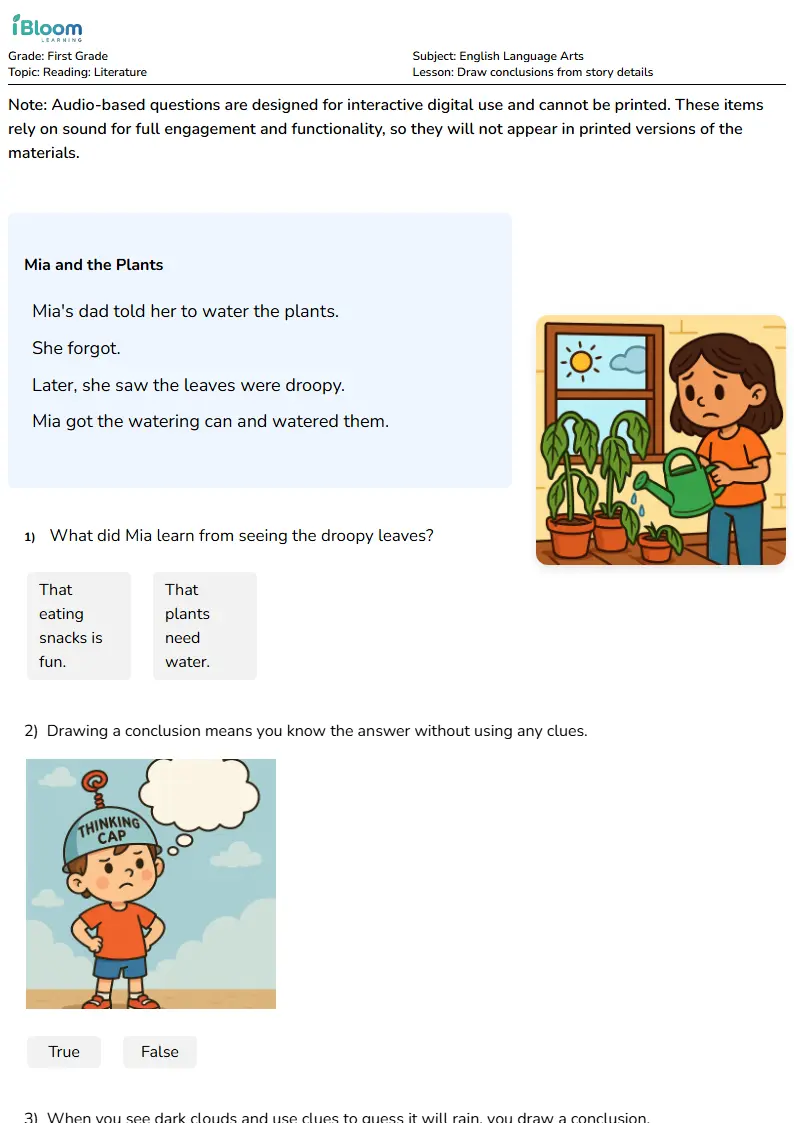
Draw conclusions from story details Lesson for First Grade
Explore a free interactive english language arts lesson for first grade: Draw conclusions from story details. AI-personalized, Common Core-aligned, and built for kids.
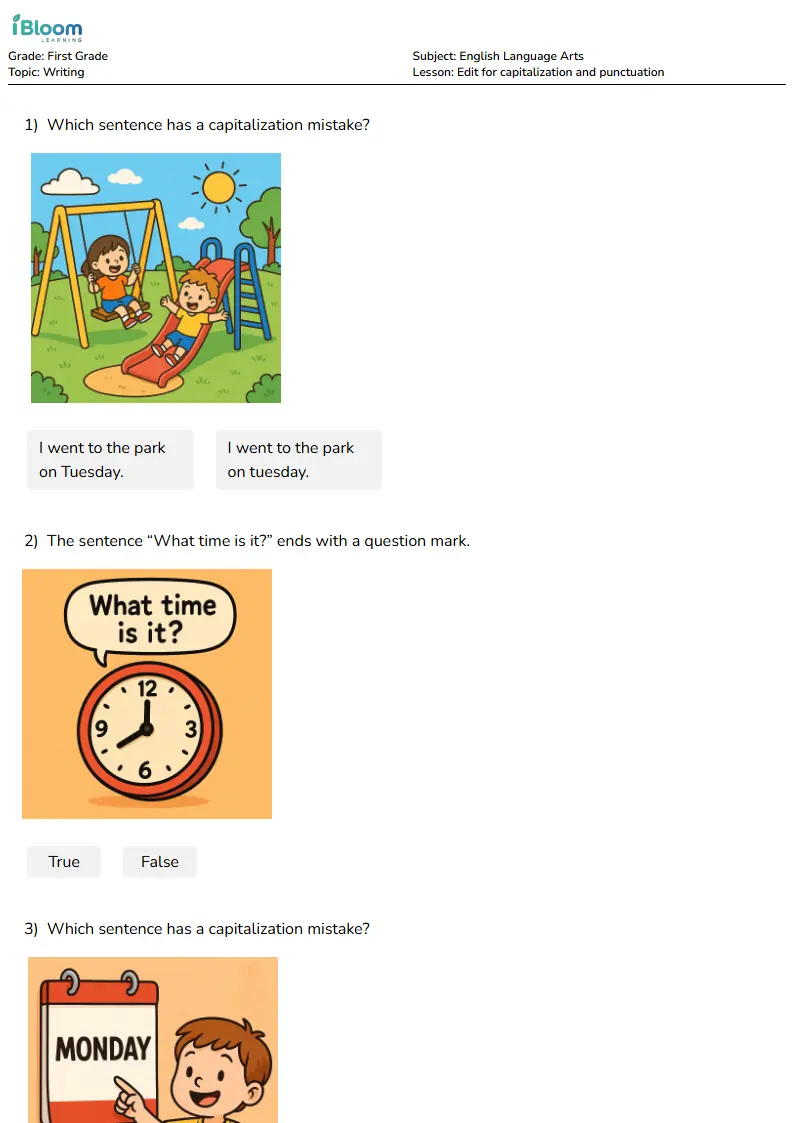
Edit for capitalization and punctuation Lesson for First Grade
Explore a free interactive english language arts lesson for first grade: Edit for capitalization and punctuation. AI-personalized, Common Core-aligned, and built for kids.