Identify words that describe feelings Lesson for First Grade
Preparing your worksheet
Identify words that describe feelings for First Grade English Practice
Identify words that describe feelings helps children connect letters, sounds, word parts, sight words, and simple decoding routines. Start with this iBloom practice page, then use the paired iBloom activity when the child needs the same skill in another format. The aim is to make English feel usable: children should read, say, point, write, and explain in a way that fits their age.
This page is written for parents, teachers, tutors, and children. It can support homework, class practice, small-group teaching, or a short home routine. Ask the child to point, say, and then write. That order keeps the work gentle and clear. A confident young learner does not need a long lecture. They need a clear model, a friendly prompt, a small amount of practice, and a chance to explain the answer.
What Children Learn
Children build phonics, letters, and word reading through repeated practice. They learn to look carefully, listen to sounds, use words in context, complete simple sentences, notice punctuation, and connect pictures with meaning. This matters because early English is not one isolated skill. Reading, speaking, vocabulary, spelling, handwriting, and sentence writing support each other.
- Read or listen to the question before choosing an answer.
- Use the picture, word, sound, sentence, or punctuation mark as evidence.
- Say the answer aloud in a complete thought.
- Write one short answer when the child is ready.
- Check the answer by rereading, pointing, or explaining it to an adult.
Examples to Try
Use these quick examples before the worksheet: The letters sh make one sound in ship. Ask the child what helped. Then try Blend s-a-t to read sat. and ask the child to say the clue. Finish with The word mat starts with /m/. so the learner practises transfer, not only repetition.
If the child guesses, slow the task down. Ask, "What did you see?" for a picture task, "What sound did you hear?" for a phonics task, "Does this sentence sound finished?" for a writing task, or "What mark should the reader hear?" for punctuation. These prompts are simple enough for young children and useful enough for classroom review.
Parent Routine
Parents can use a ten-minute rhythm: open the iBloom page, solve one example together, ask the child to explain the clue, let the child try two questions, and end with one sentence or word read aloud. If the child becomes tired, stop after a successful explanation instead of pushing through a long worksheet.
For a wider learning path, use Class 1 English worksheets, punctuation worksheets for Class 1, and picture comprehension worksheets for Class 1. Families can also browse iBloom English worksheets when they need a broader set of reading, writing, phonics, and vocabulary activities.
Teacher and Tutor Routine
Teachers can use this page as a warm-up, literacy center, guided practice activity, or exit ticket. Model one answer. Let partners discuss one answer. Then ask children to finish a short independent set. Tutors can use the same routine to find the exact problem: sound confusion, weak vocabulary, incomplete sentence language, or not using picture clues.
Helpful early literacy guidance from Reading Rockets phonics and decoding resources, IES early literacy practice guidance, and NICHD reading instruction information supports explicit teaching, oral language, phonics, and repeated practice. iBloom works best when adults ask children to explain how they know, not only whether the answer is correct.
Regional Learning Notes
This routine works across India, the United States, and the UAE. In India, children in Kolkata can use it for CBSE, ICSE, state-board, and tuition practice. In the United States, it supports reading groups, first-grade writing, and home review in places such as Atlanta. In the UAE, families in Sharjah can use the same language for British, American, IB, or Indian curriculum expectations, especially when children are multilingual.
In Indian homes, this can fit evening worksheet practice or tuition revision. In US classrooms, it can support early literacy centers and first-grade intervention. In UAE homes, it gives families a steady English routine even when children meet different school vocabulary across curricula.
Common Mistakes to Watch
- Guessing from one clue: Ask the child to point to the exact picture, word, sound, or mark that helped.
- Answering in single words only: Encourage one short sentence when the child is ready.
- Ignoring punctuation: Read the sentence aloud twice, once with the mark and once without it.
- Confusing sounds and letters: Say the sound first, then show the letter or word.
- Copying without meaning: Ask the child to explain the sentence in their own words.
Practice Path
Begin with Identify words that describe feelings. Continue with the paired iBloom lesson or worksheet. Then choose the closest support guide: phonics, letters, and word reading practice. For related skills, use Class 1 English worksheets, picture comprehension worksheets, and punctuation worksheets.
Frequently Asked Questions
How much practice is enough? Ten focused minutes can help when the child explains each answer.
What if my child knows the answer but will not write? Let the child say the answer first, then write one short word or sentence.
Should parents correct every mistake? Correct the mistake that blocks meaning first. Young children learn better from one clear correction than from many at once.
Can teachers use this for groups? Yes. It works well for a mini-lesson, partner talk, independent practice, and quick review.
More practice for this grade
More English Language Arts lessons
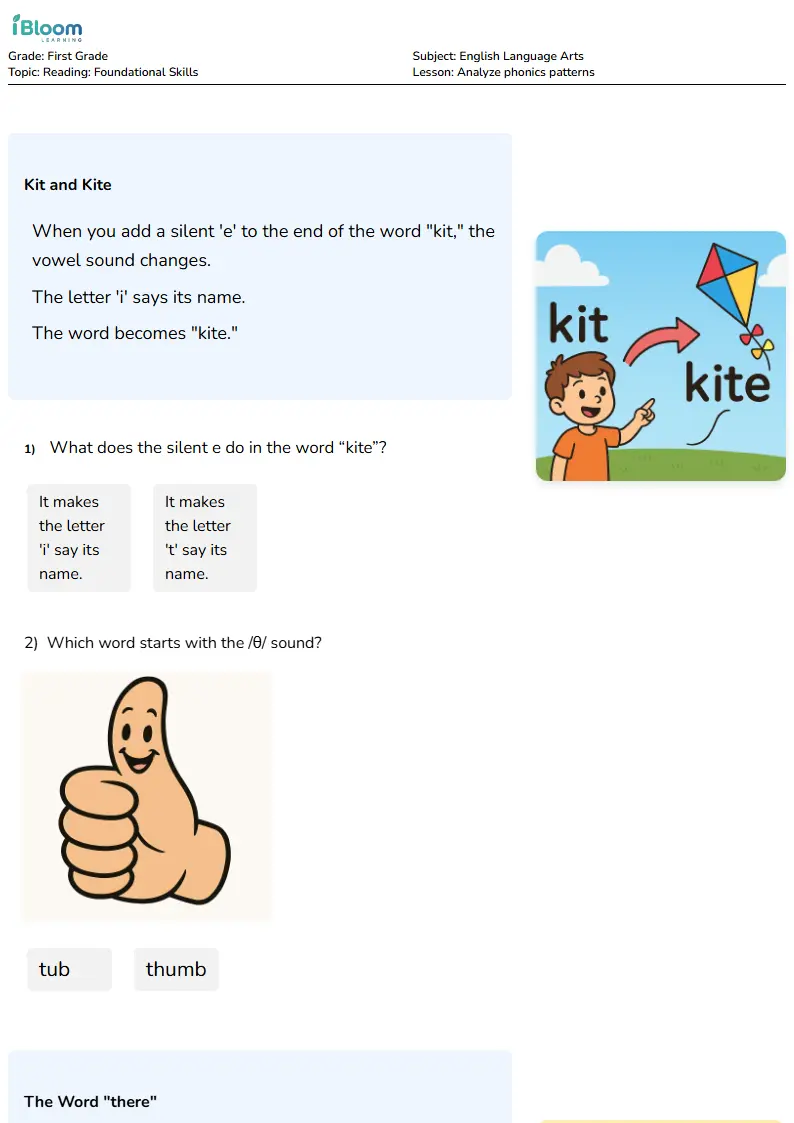
Analyze phonics patterns Lesson for First Grade
Explore a free interactive english language arts lesson for first grade: Analyze phonics patterns. AI-personalized, Common Core-aligned, and built for kids.
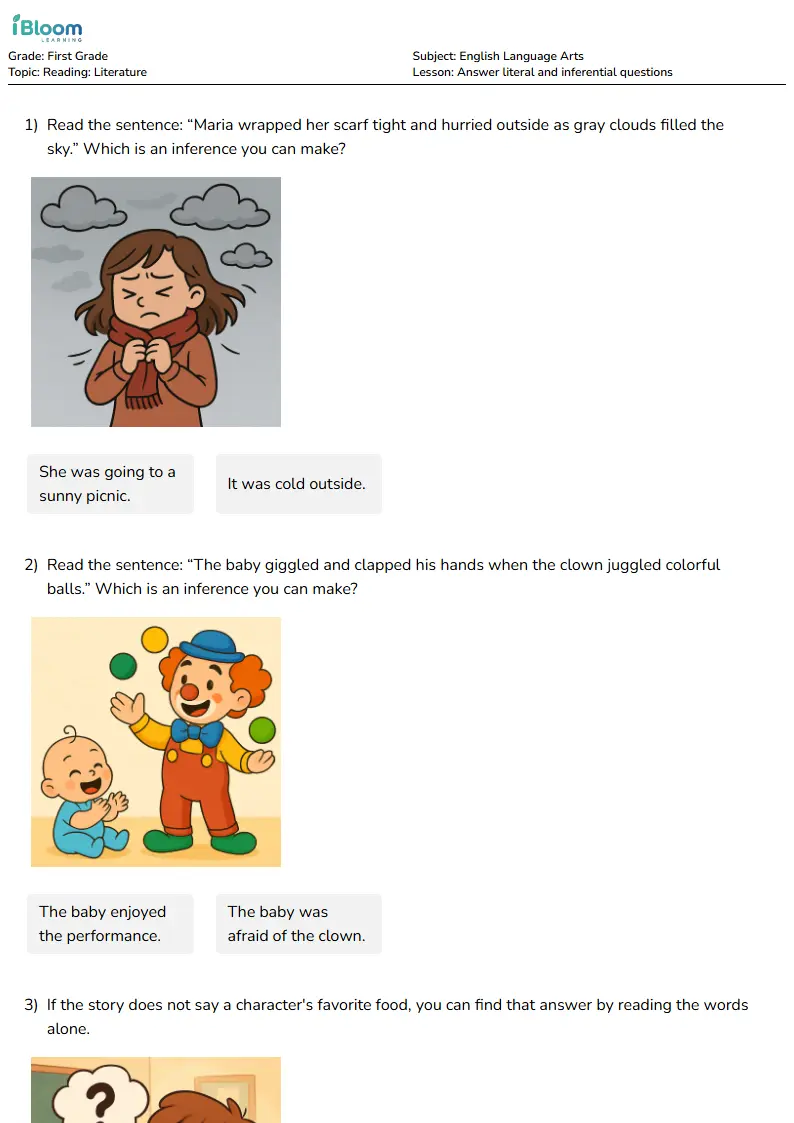
Answer literal and inferential questions Lesson for First Grade
Explore a free interactive english language arts lesson for first grade: Answer literal and inferential questions. AI-personalized, Common Core-aligned, and built for kids.
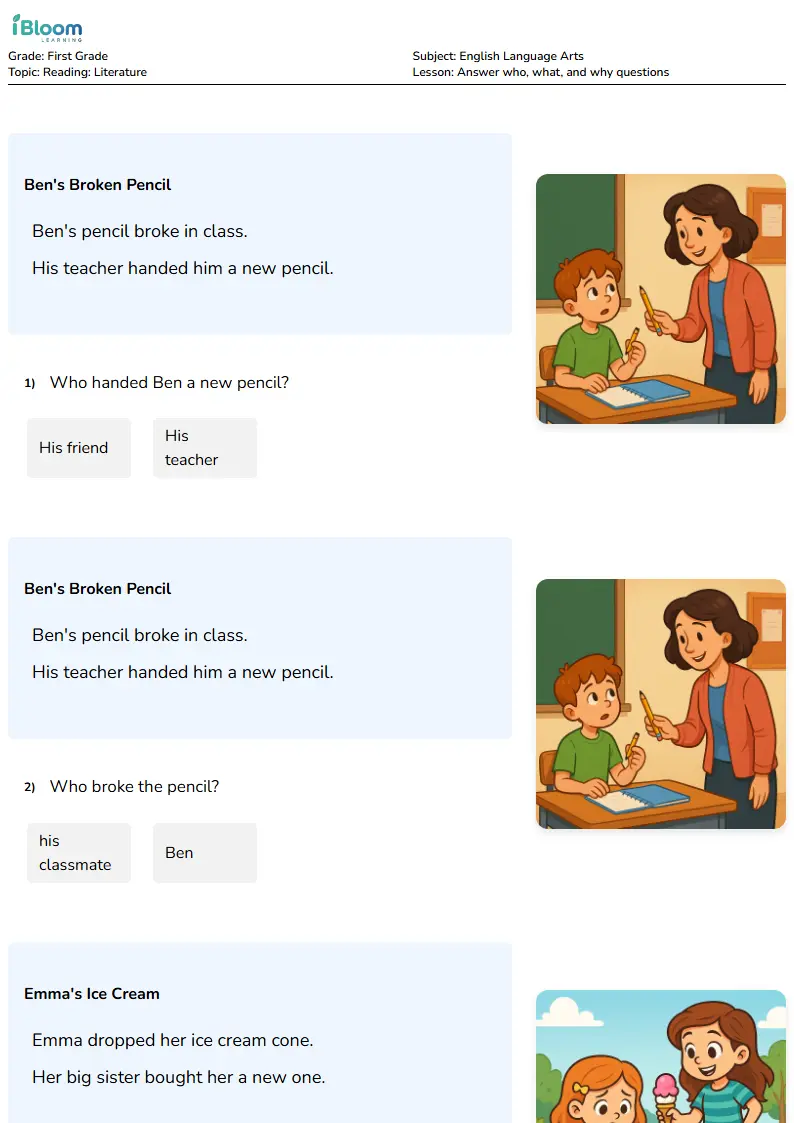
Answer who, what, and why questions Lesson for First Grade
Explore a free interactive english language arts lesson for first grade: Answer who, what, and why questions. AI-personalized, Common Core-aligned, and built for kids.
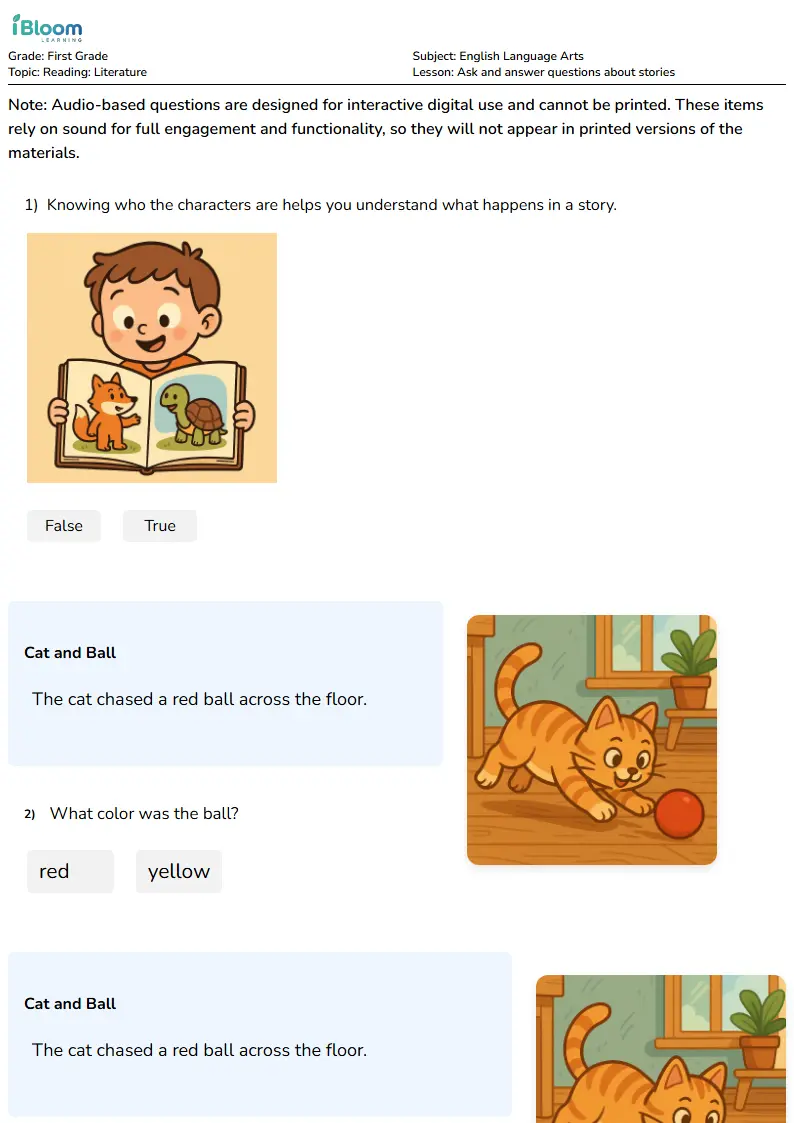
Ask and answer questions about stories Lesson for First Grade
Explore a free interactive english language arts lesson for first grade: Ask and answer questions about stories. AI-personalized, Common Core-aligned, and built for kids.
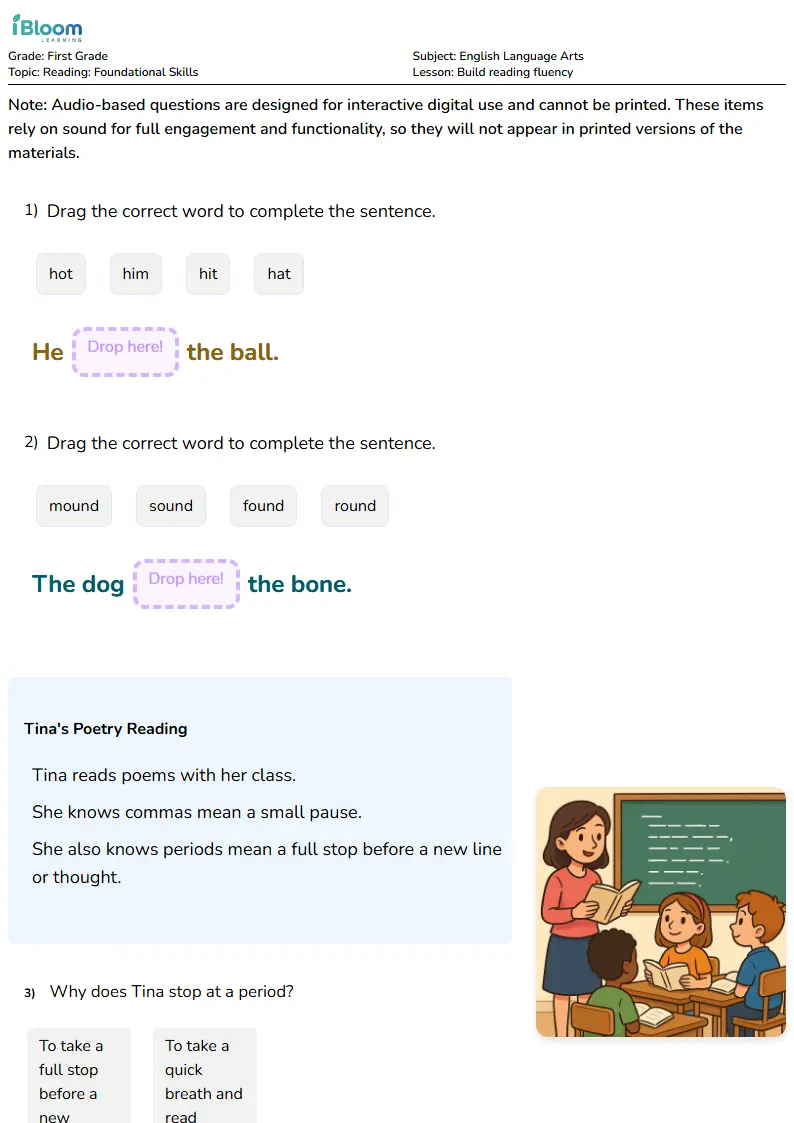
Build reading fluency Lesson for First Grade
Explore a free interactive english language arts lesson for first grade: Build reading fluency. AI-personalized, Common Core-aligned, and built for kids.
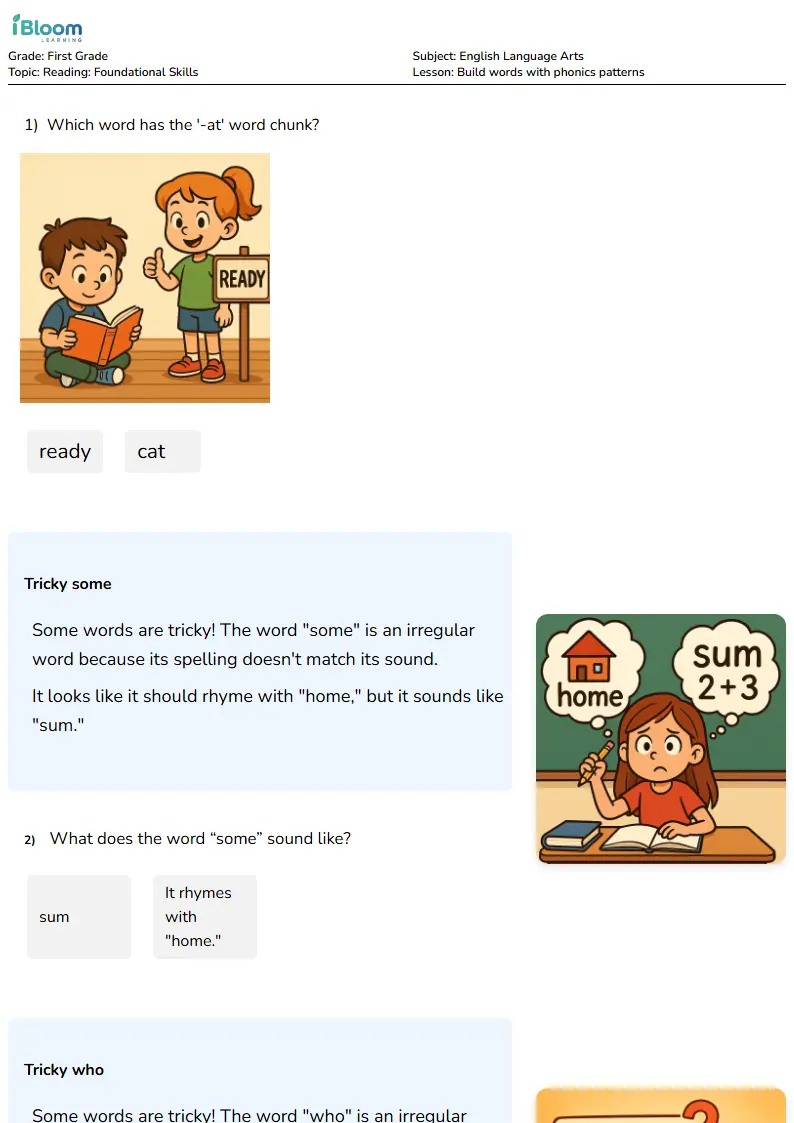
Build words with phonics patterns Lesson for First Grade
Explore a free interactive english language arts lesson for first grade: Build words with phonics patterns. AI-personalized, Common Core-aligned, and built for kids.
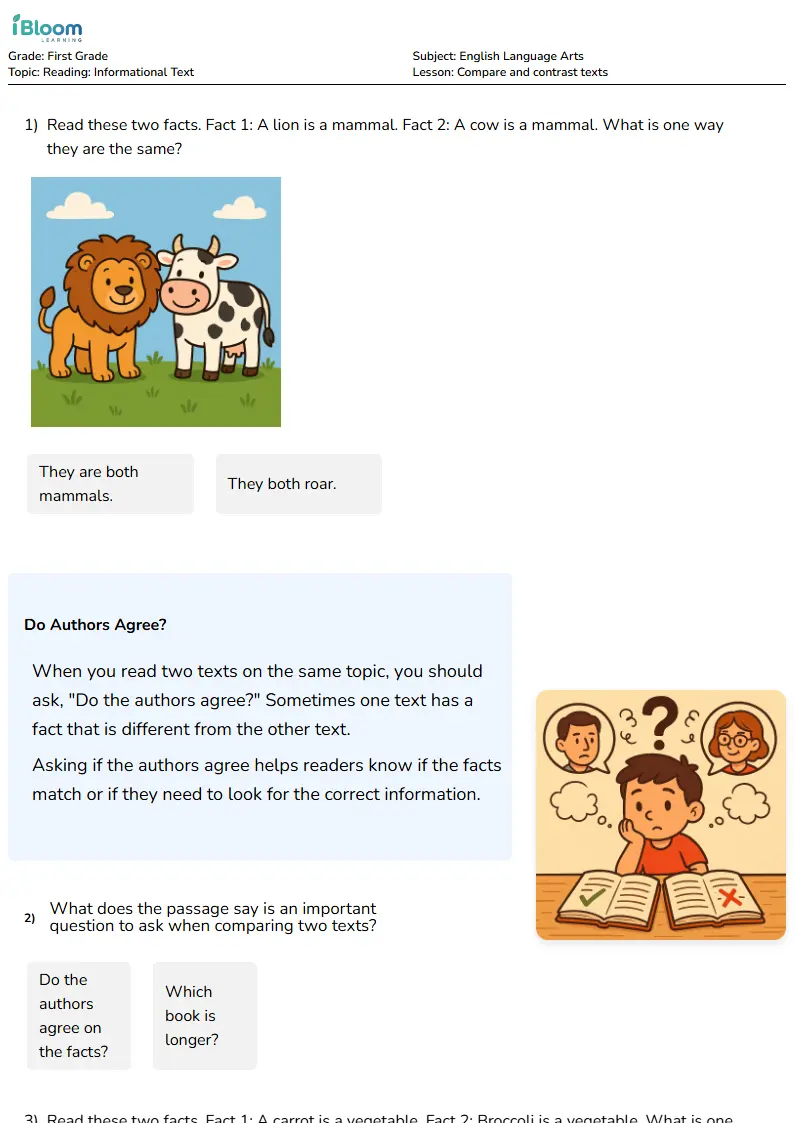
Compare and contrast texts Lesson for First Grade
Explore a free interactive english language arts lesson for first grade: Compare and contrast texts. AI-personalized, Common Core-aligned, and built for kids.
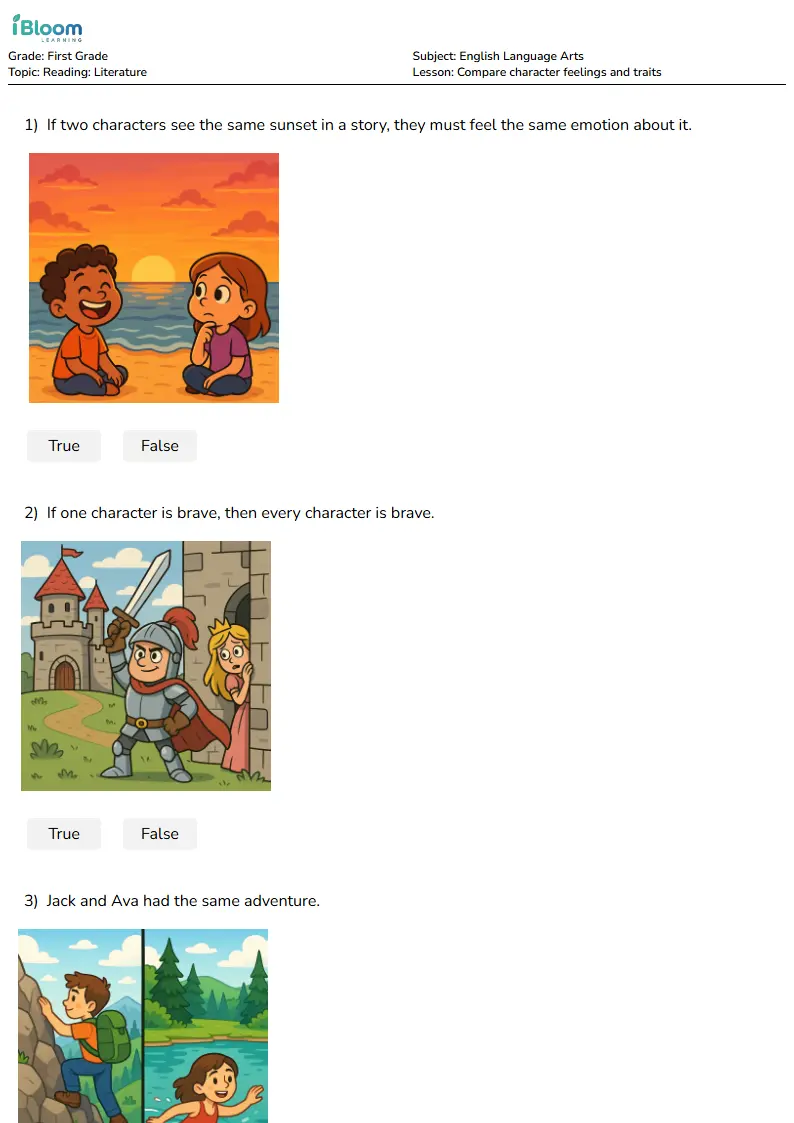
Compare character feelings and traits Lesson for First Grade
Explore a free interactive english language arts lesson for first grade: Compare character feelings and traits. AI-personalized, Common Core-aligned, and built for kids.
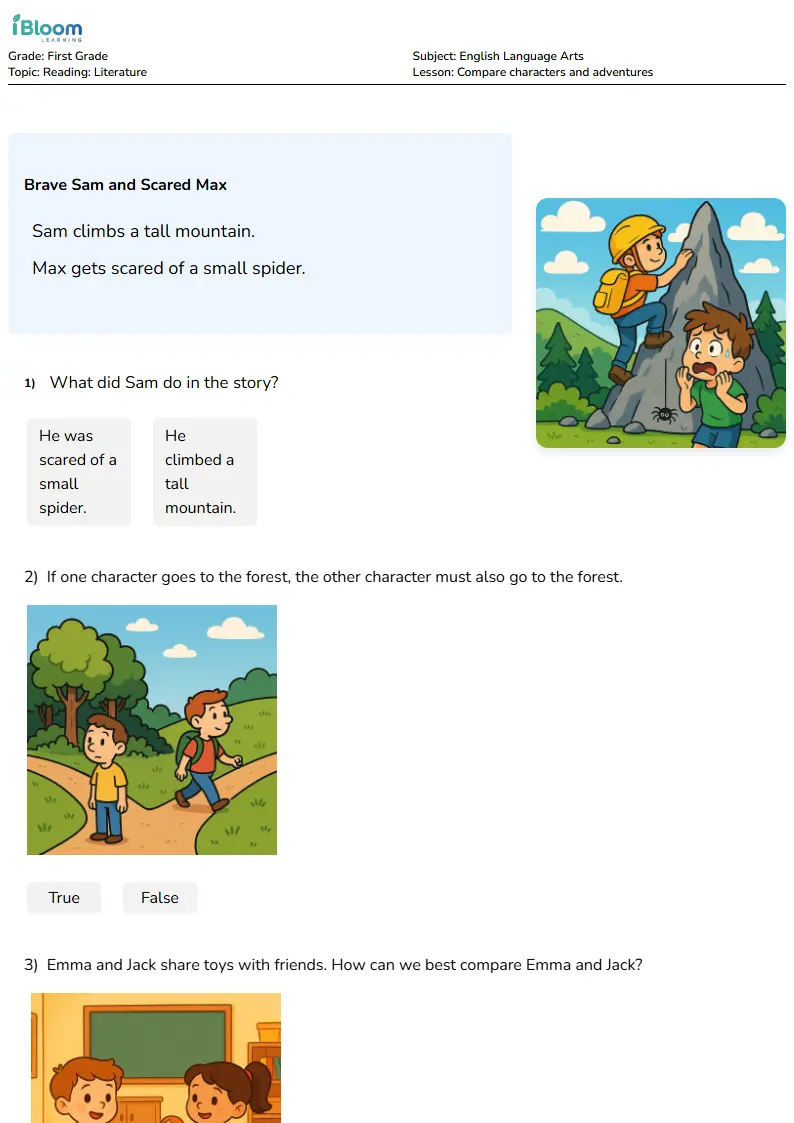
Compare characters and adventures Lesson for First Grade
Explore a free interactive english language arts lesson for first grade: Compare characters and adventures. AI-personalized, Common Core-aligned, and built for kids.
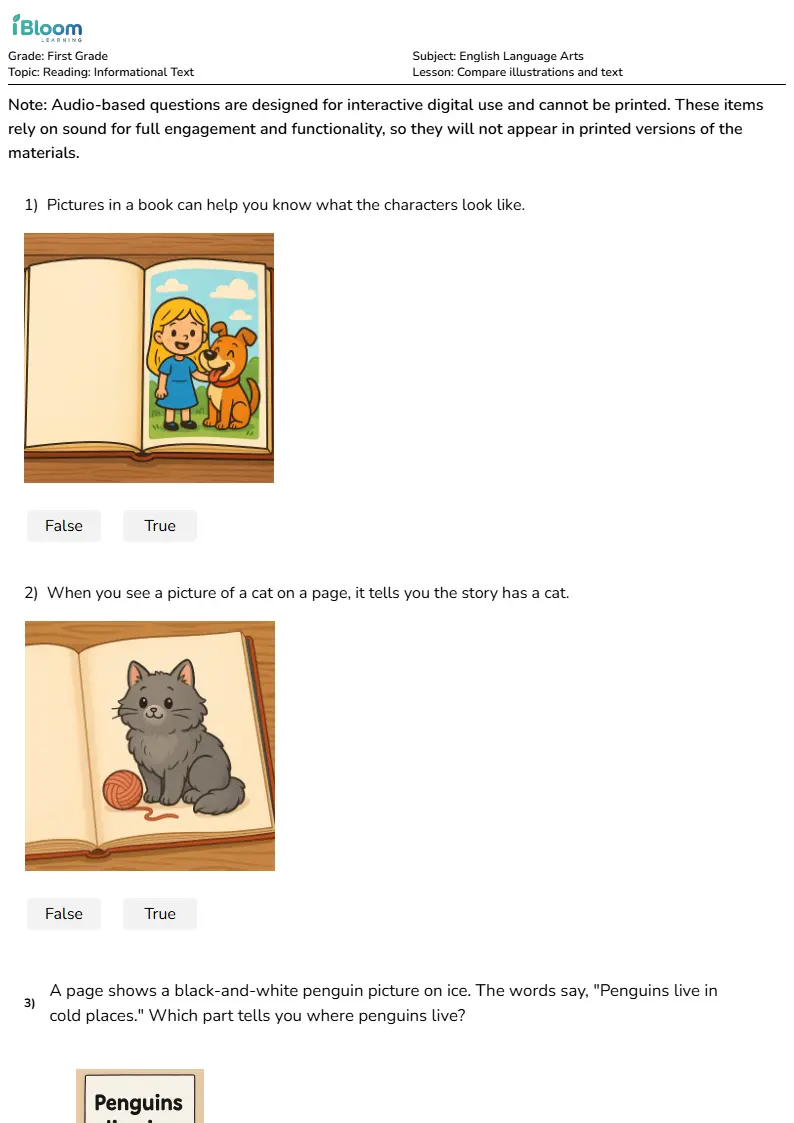
Compare illustrations and text Lesson for First Grade
Explore a free interactive english language arts lesson for first grade: Compare illustrations and text. AI-personalized, Common Core-aligned, and built for kids.
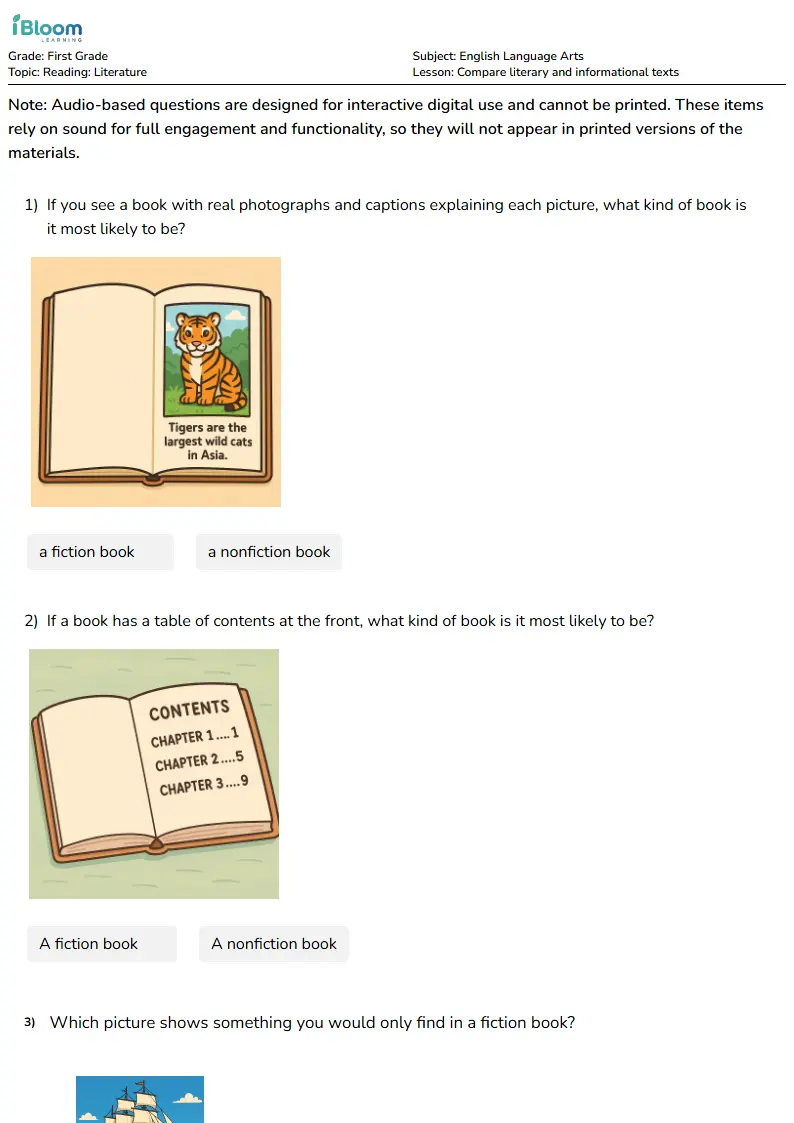
Compare literary and informational texts Lesson for First Grade
Explore a free interactive english language arts lesson for first grade: Compare literary and informational texts. AI-personalized, Common Core-aligned, and built for kids.
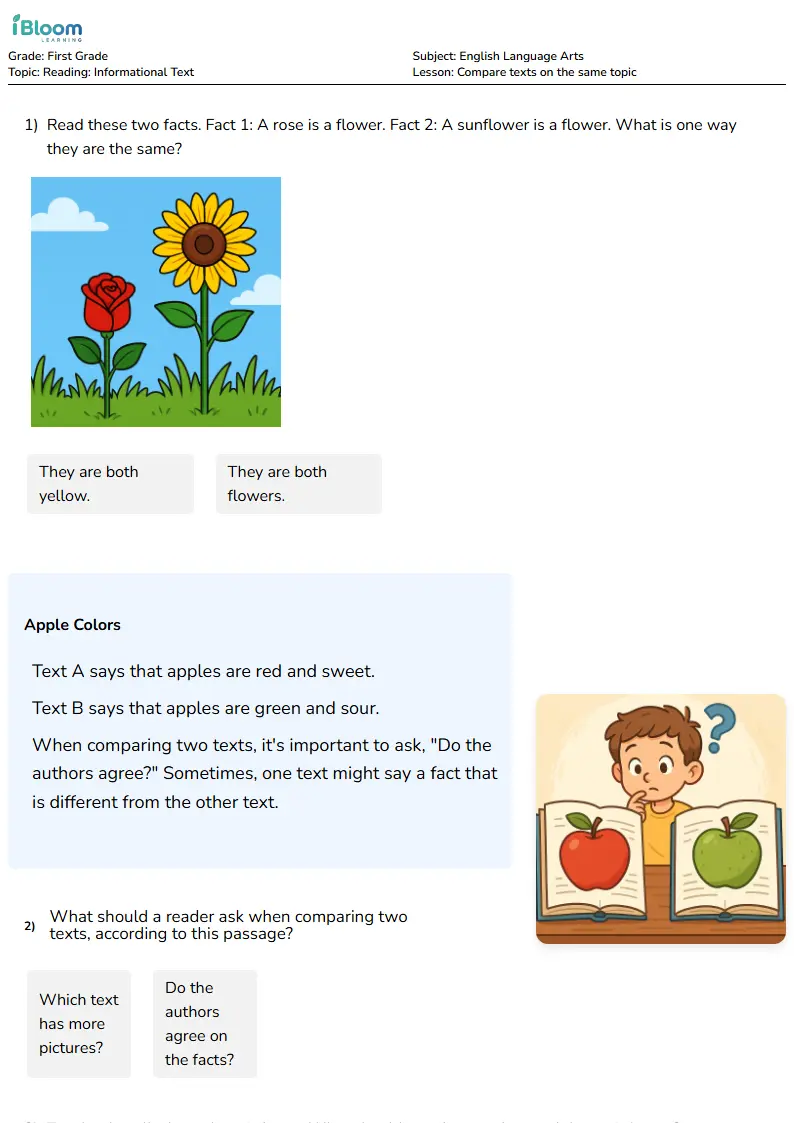
Compare texts on the same topic Lesson for First Grade
Explore a free interactive english language arts lesson for first grade: Compare texts on the same topic. AI-personalized, Common Core-aligned, and built for kids.
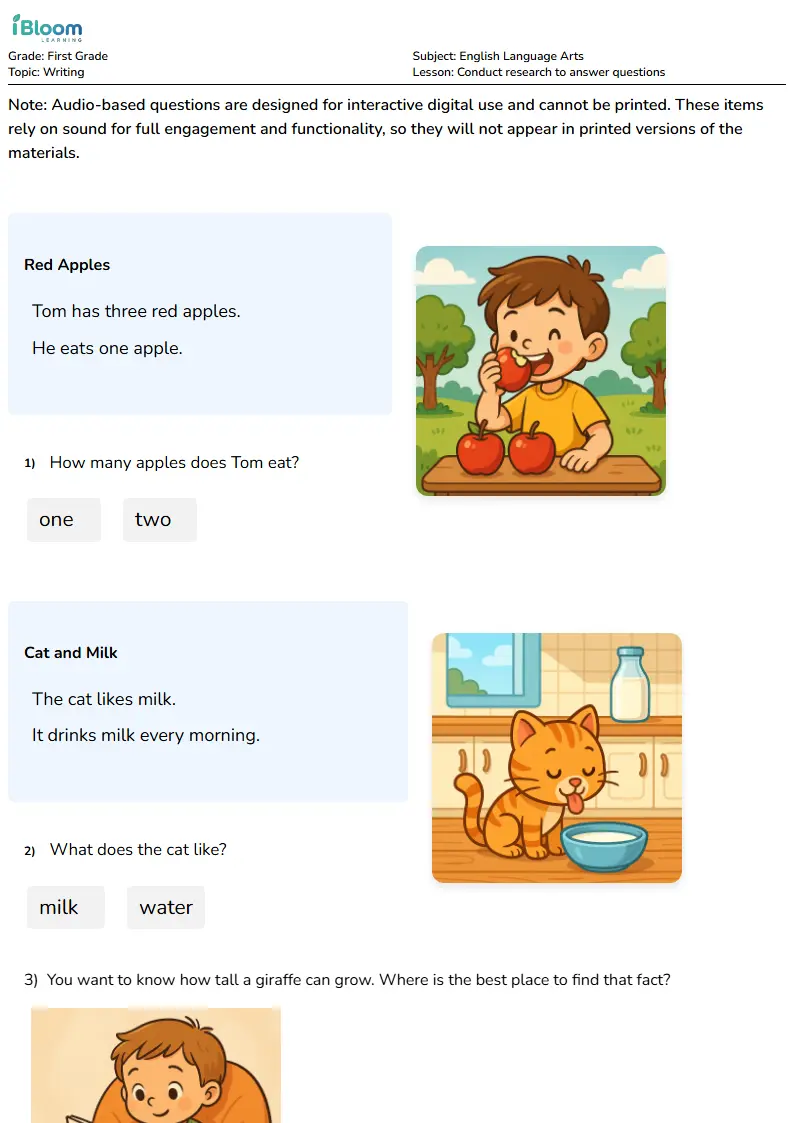
Conduct research to answer questions Lesson for First Grade
Explore a free interactive english language arts lesson for first grade: Conduct research to answer questions. AI-personalized, Common Core-aligned, and built for kids.
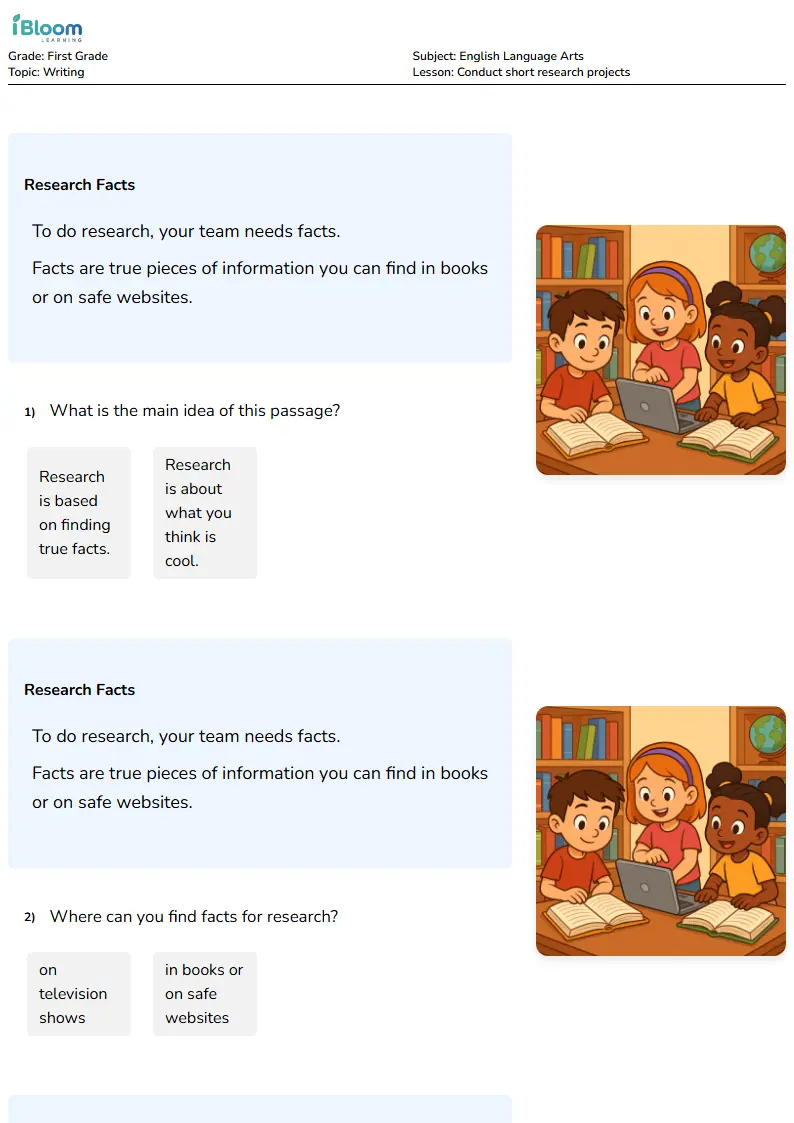
Conduct short research projects Lesson for First Grade
Explore a free interactive english language arts lesson for first grade: Conduct short research projects. AI-personalized, Common Core-aligned, and built for kids.
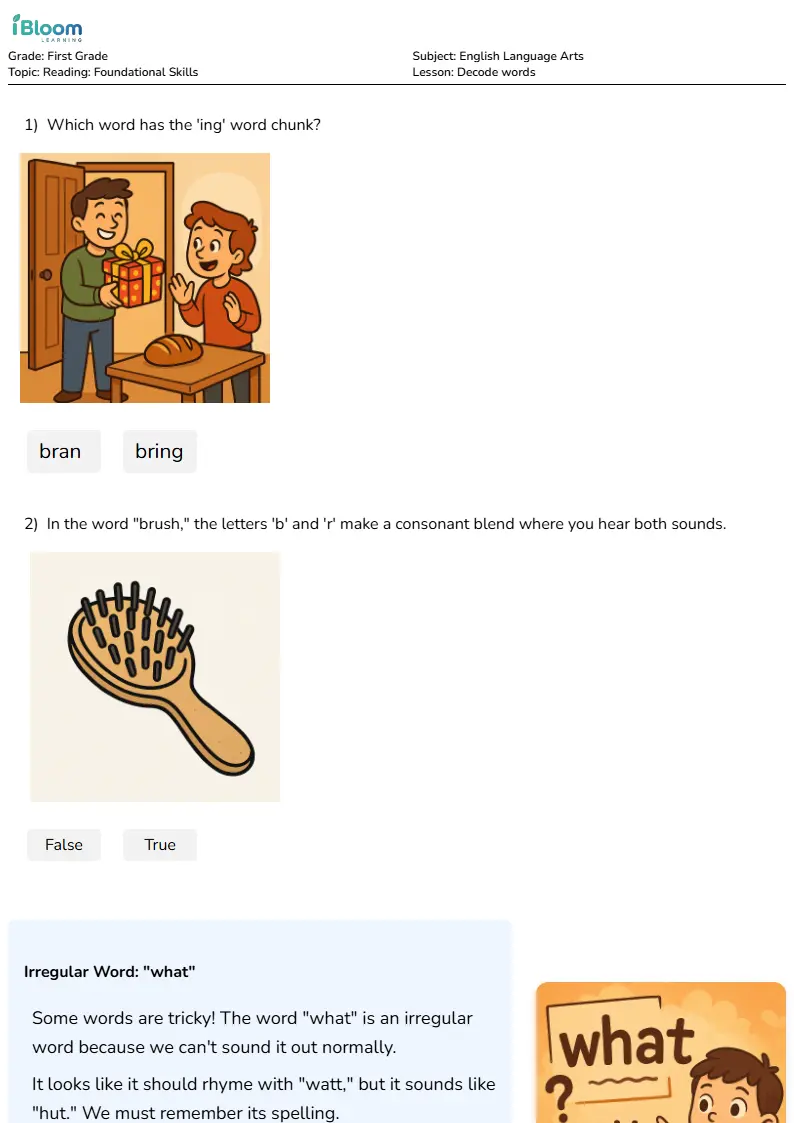
Decode words Lesson for First Grade
Explore a free interactive english language arts lesson for first grade: Decode words. AI-personalized, Common Core-aligned, and built for kids.
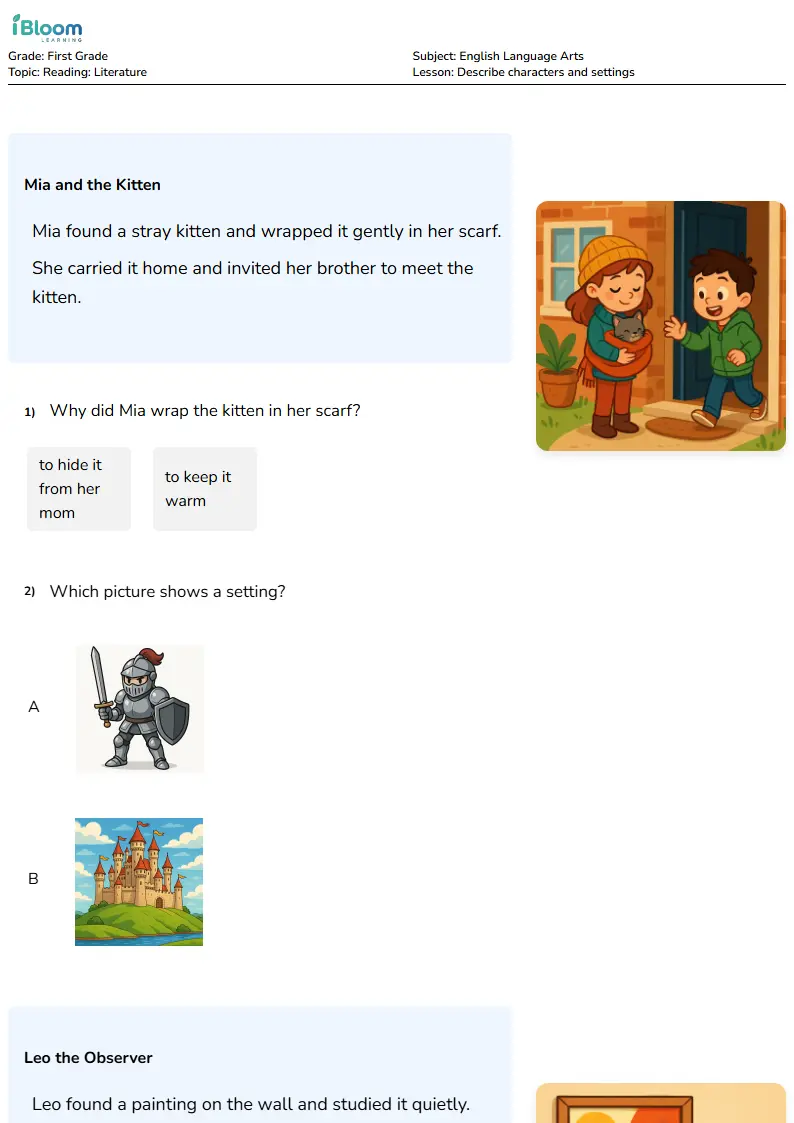
Describe characters and settings Lesson for First Grade
Explore a free interactive english language arts lesson for first grade: Describe characters and settings. AI-personalized, Common Core-aligned, and built for kids.
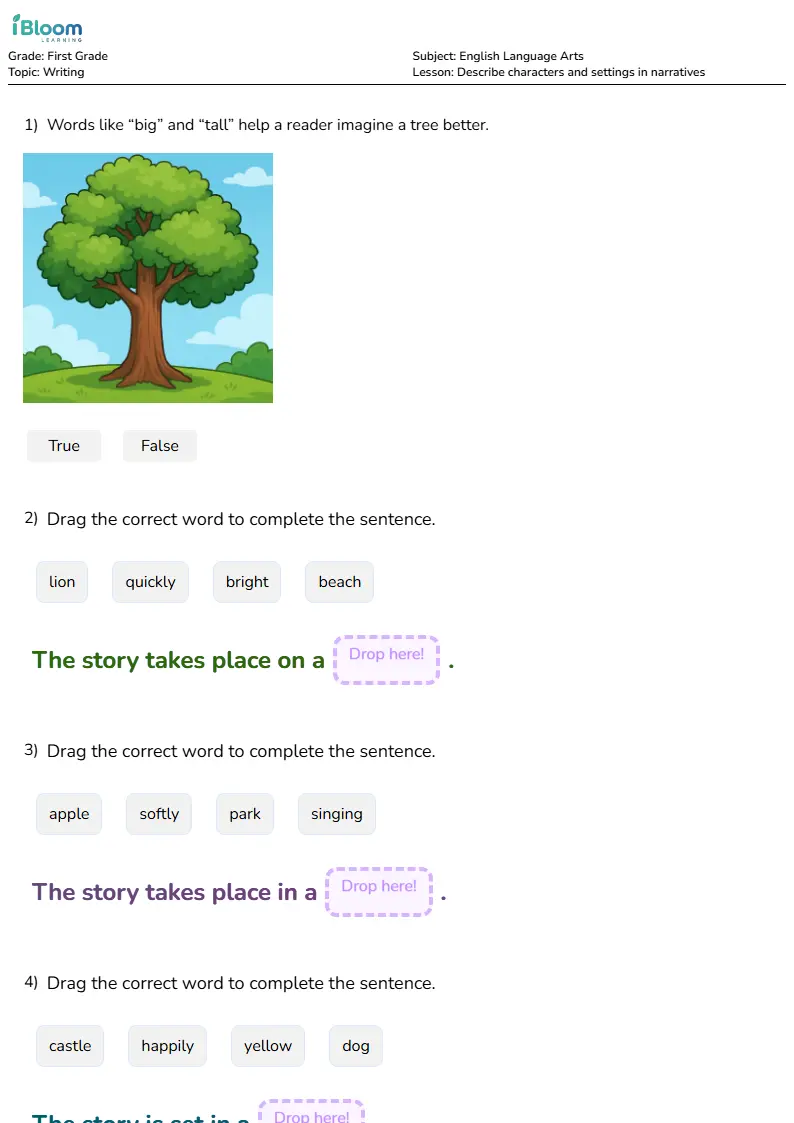
Describe characters and settings in narratives Lesson for First Grade
Explore a free interactive english language arts lesson for first grade: Describe characters and settings in narratives. AI-personalized, Common Core-aligned, and built for kids.
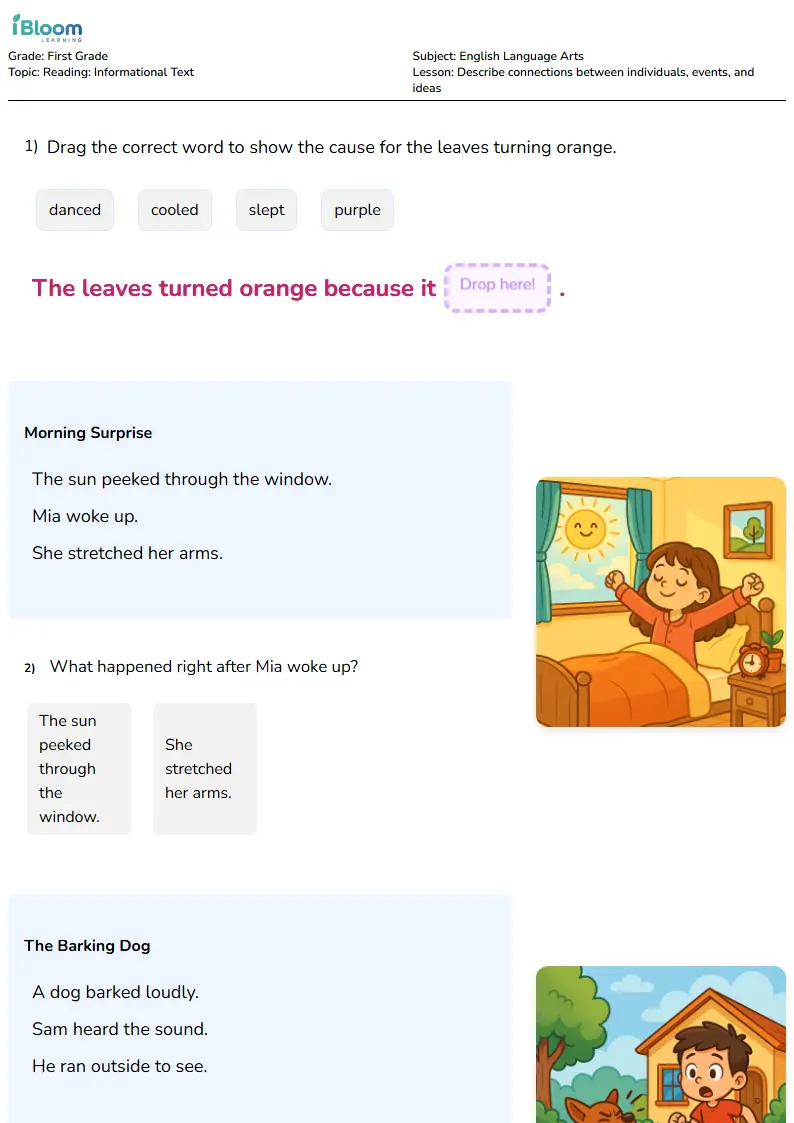
Describe connections between individuals, events, and ideas Lesson for First Grade
Explore a free interactive english language arts lesson for first grade: Describe connections between individuals, events, and ideas. AI-personalized, Common Core-aligned, and built for kids.
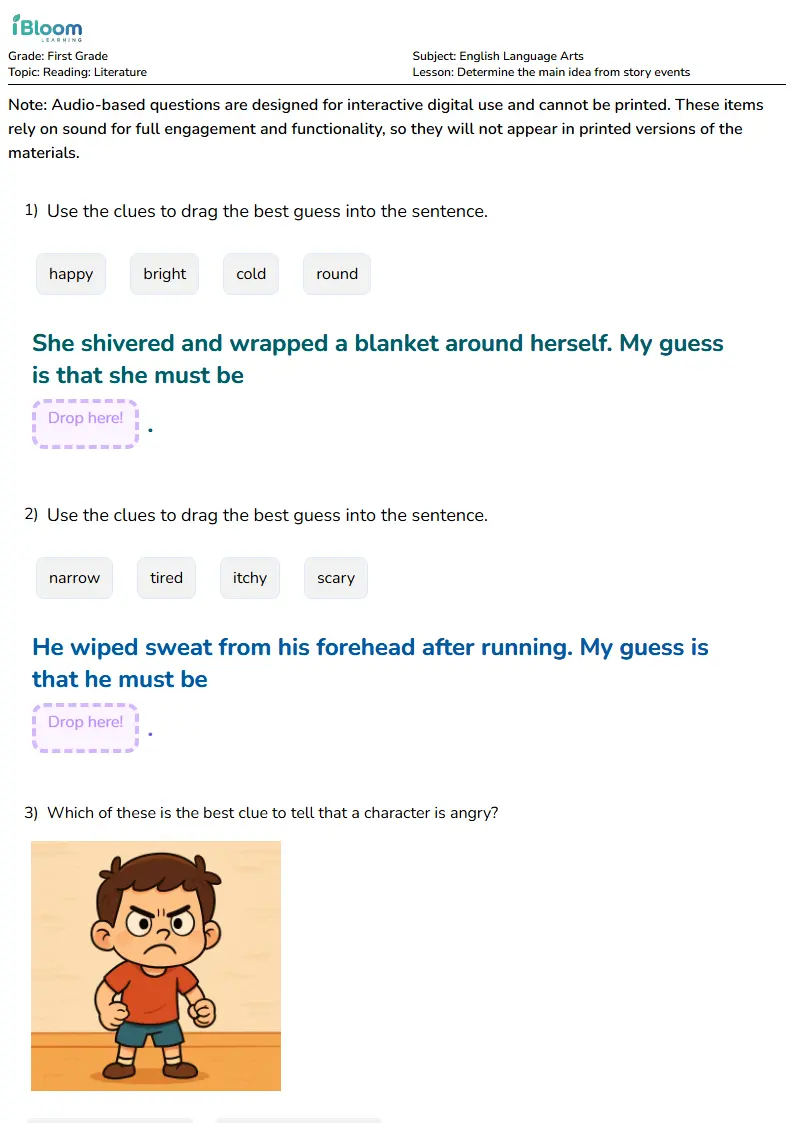
Determine the main idea from story events Lesson for First Grade
Explore a free interactive english language arts lesson for first grade: Determine the main idea from story events. AI-personalized, Common Core-aligned, and built for kids.
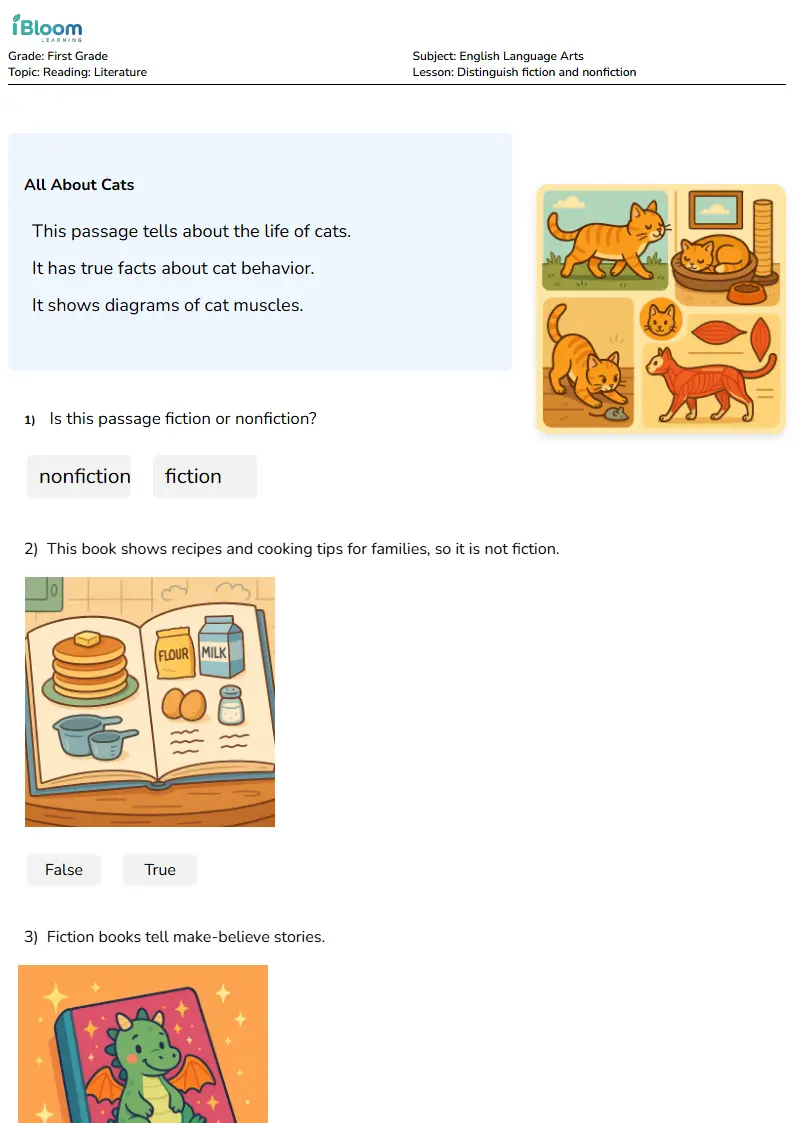
Distinguish fiction and nonfiction Lesson for First Grade
Explore a free interactive english language arts lesson for first grade: Distinguish fiction and nonfiction. AI-personalized, Common Core-aligned, and built for kids.
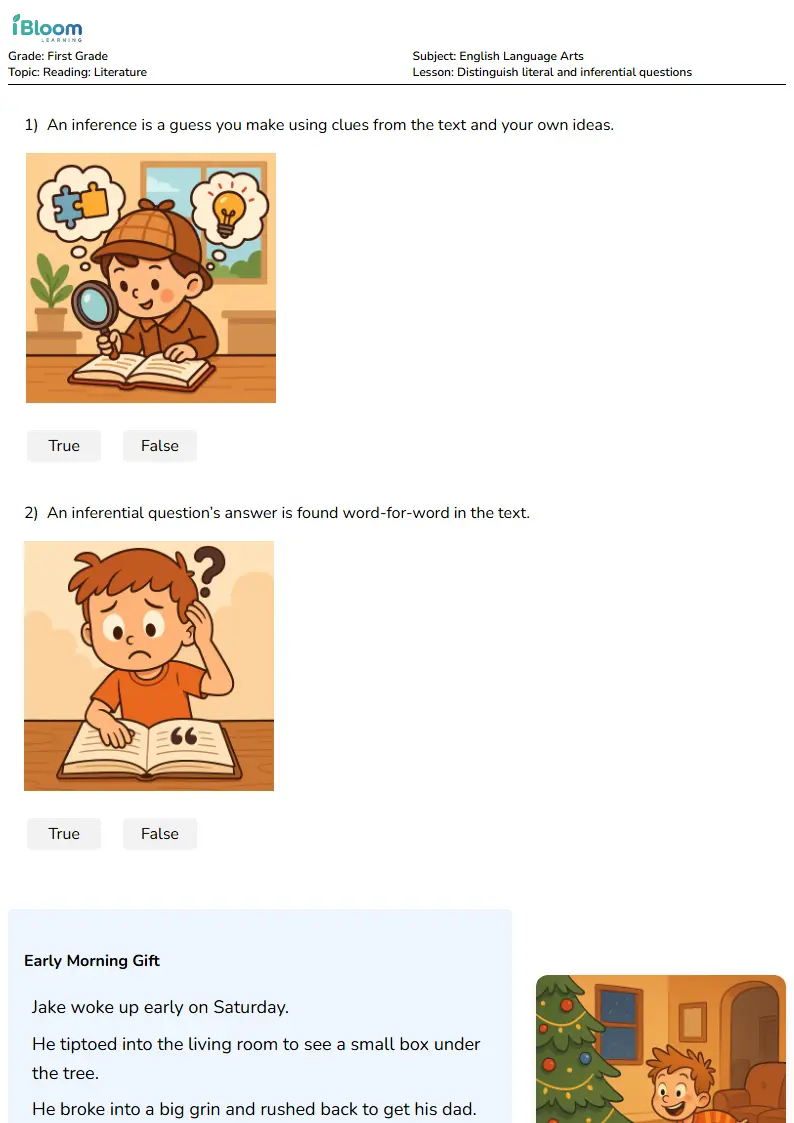
Distinguish literal and inferential questions Lesson for First Grade
Explore a free interactive english language arts lesson for first grade: Distinguish literal and inferential questions. AI-personalized, Common Core-aligned, and built for kids.
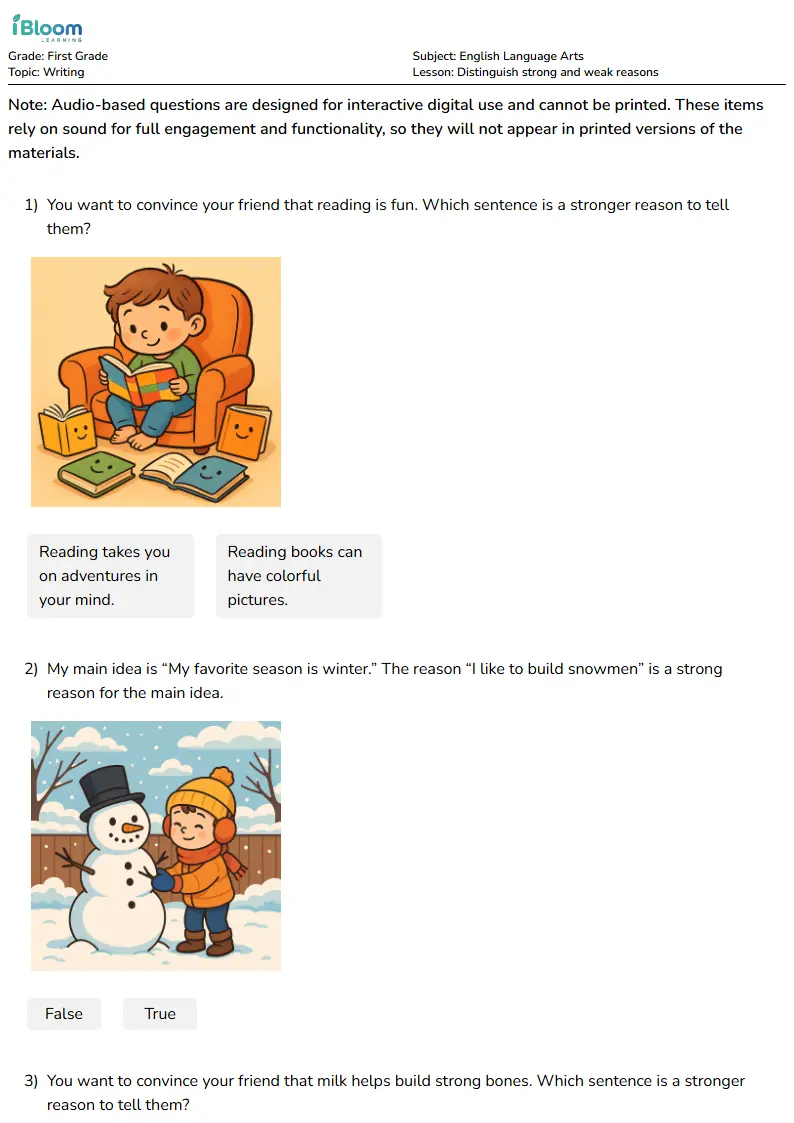
Distinguish strong and weak reasons Lesson for First Grade
Explore a free interactive english language arts lesson for first grade: Distinguish strong and weak reasons. AI-personalized, Common Core-aligned, and built for kids.
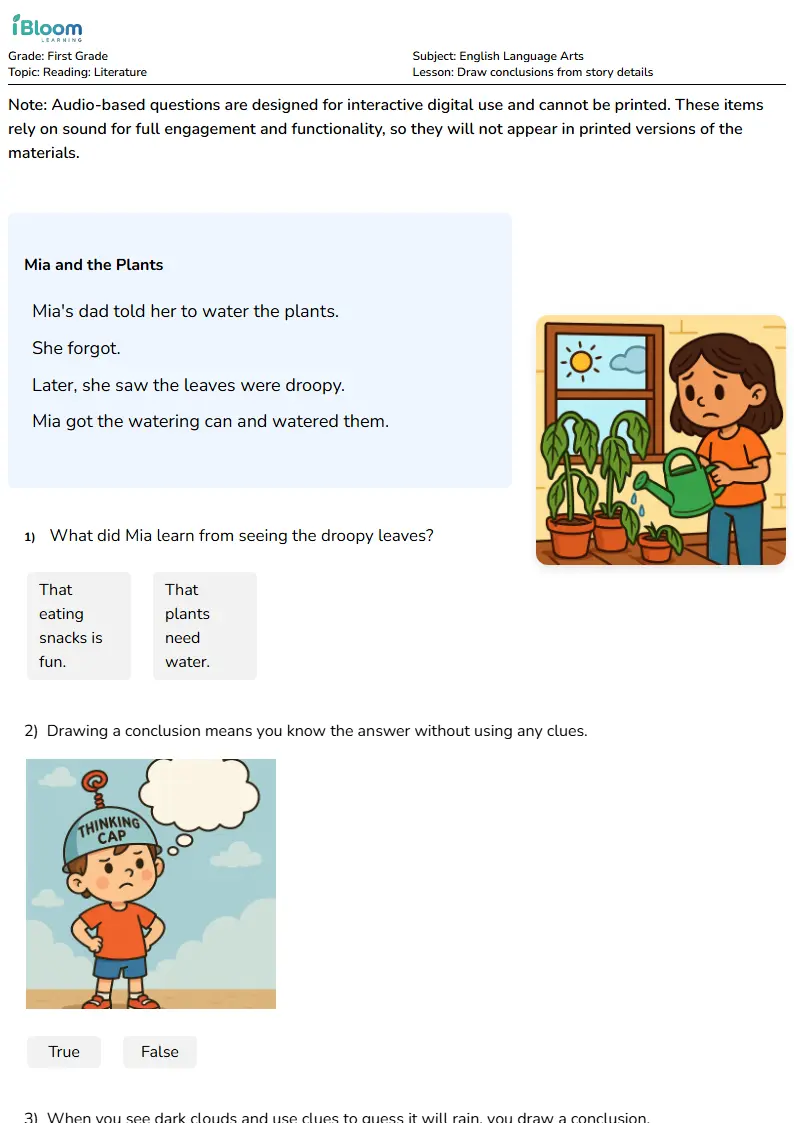
Draw conclusions from story details Lesson for First Grade
Explore a free interactive english language arts lesson for first grade: Draw conclusions from story details. AI-personalized, Common Core-aligned, and built for kids.
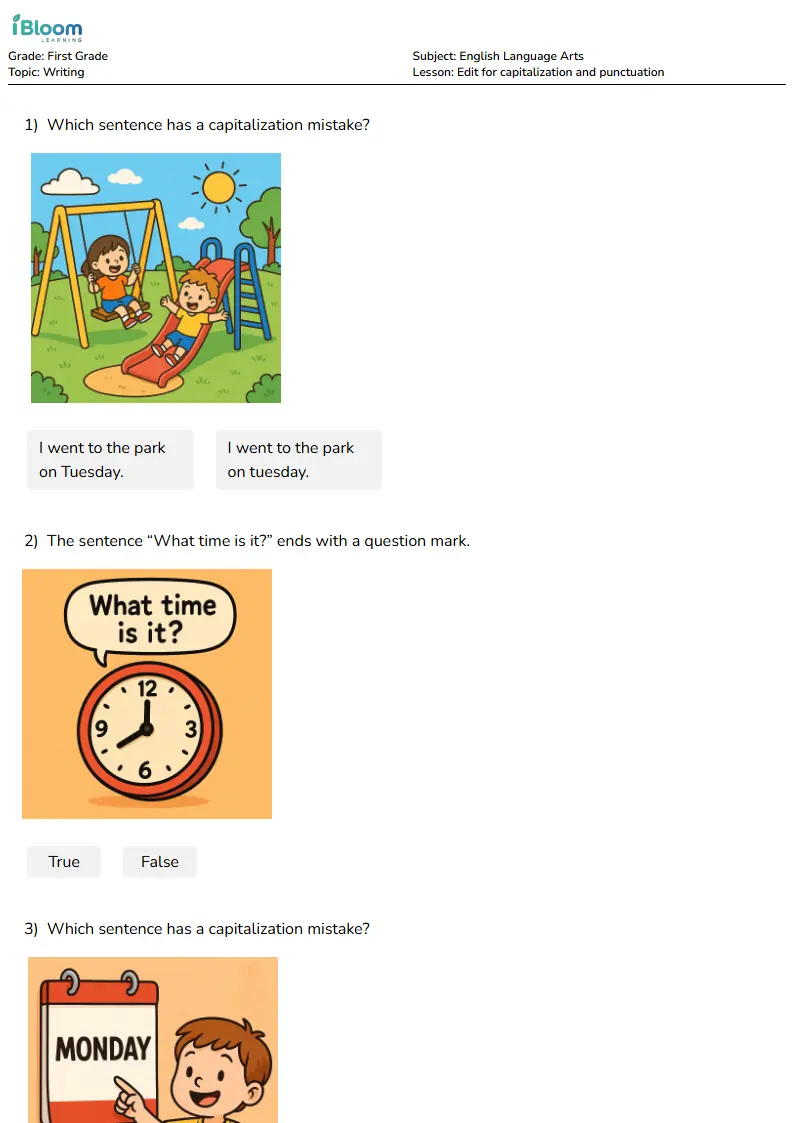
Edit for capitalization and punctuation Lesson for First Grade
Explore a free interactive english language arts lesson for first grade: Edit for capitalization and punctuation. AI-personalized, Common Core-aligned, and built for kids.