
Use illustrations to describe story elements Lesson for First Grade
Preparing your worksheet
Use illustrations to describe story elements Lesson for First Grade: a focused practice guide
Use illustrations to describe story elements Lesson for First Grade focuses on use illustrations to describe story elements for First Grade English Language Arts learners. Open Use illustrations to describe story elements Lesson for First Grade first, then use the paired worksheet when the learner needs the same idea in another format. This guide is useful for US classrooms, homeschool families, intervention groups, and UAE international-school learners.
What children will practise
Children will notice the important information, try a small example set, and explain how they know an answer makes sense. The aim is steady understanding, not rushed completion.
A short home or classroom routine
- Name the skill in simple language.
- Draw a quick representation with one worked example.
- Let the child try two or three items.
- Ask: "Can you show the same idea another way?"
- Look for accuracy before speed.
- Finish with one item the child can complete independently.
Common mistakes to watch for
- The learner starts before understanding the direction.
- The adult gives the answer instead of asking for a clue or step.
- Practice continues after attention drops.
- A harder variation is introduced before this skill feels secure.
How parents, teachers, and tutors can respond
If the child is unsure, return to one example and reduce the number of items. If the child is accurate but quiet, ask for a spoken explanation. If the child explains clearly, open the paired activity and add a related challenge.
Related iBloom practice
Use Use illustrations to describe story elements Lesson for First Grade as the starting point and the paired practice page as the next step. For broader planning, adults can also use the homework focus routine for kids.
Helpful planning reference
Teachers and tutors can compare the routine with the IES practice guides, then adapt the pace to the learner in front of them.
Frequently asked questions
Who should use Use illustrations to describe story elements Lesson for First Grade?
Use it when a learner needs guided or independent practice with use illustrations to describe story elements.
How long should a session take?
Five to ten focused minutes is often enough. Stop earlier if the learner needs a break.
What should happen after a mistake?
Ask for the first clue or step, model one similar example, and let the learner try again.
Extra support for Use illustrations to describe story elements Lesson for First Grade
Use illustrations to describe story elements Lesson for First Grade focuses on use illustrations to describe story elements for First Grade English Language Arts learners. Ask the learner to draw a quick representation, then check for accuracy before speed. The adult should keep the discussion connected to this exact page rather than adding a harder skill too early.
A focused follow-up prompt
Use this question after a short practice set: "Can you show the same idea another way?" The response helps adults decide whether to repeat the model, open the paired page, or add one independent item.
Use it in a weekly routine
Return to Use illustrations to describe story elements Lesson for First Grade later in the week with a smaller set. A learner who can explain the idea, spot a mistake, and finish one example independently is ready for a related activity. A learner who hesitates benefits from another worked example and a shorter session.
Extra support for Use illustrations to describe story elements Lesson for First Grade
Use illustrations to describe story elements Lesson for First Grade focuses on use illustrations to describe story elements for First Grade English Language Arts learners. Ask the learner to draw a quick representation, then check for accuracy before speed. The adult should keep the discussion connected to this exact page rather than adding a harder skill too early.
A focused follow-up prompt
Use this question after a short practice set: "Can you show the same idea another way?" The response helps adults decide whether to repeat the model, open the paired page, or add one independent item.
Use it in a weekly routine
Return to Use illustrations to describe story elements Lesson for First Grade later in the week with a smaller set. A learner who can explain the idea, spot a mistake, and finish one example independently is ready for a related activity. A learner who hesitates benefits from another worked example and a shorter session.
Extra support for Use illustrations to describe story elements Lesson for First Grade
Use illustrations to describe story elements Lesson for First Grade focuses on use illustrations to describe story elements for First Grade English Language Arts learners. Ask the learner to draw a quick representation, then check for accuracy before speed. The adult should keep the discussion connected to this exact page rather than adding a harder skill too early.
A focused follow-up prompt
Use this question after a short practice set: "Can you show the same idea another way?" The response helps adults decide whether to repeat the model, open the paired page, or add one independent item.
Use it in a weekly routine
Return to Use illustrations to describe story elements Lesson for First Grade later in the week with a smaller set. A learner who can explain the idea, spot a mistake, and finish one example independently is ready for a related activity. A learner who hesitates benefits from another worked example and a shorter session.
Extra support for Use illustrations to describe story elements Lesson for First Grade
Use illustrations to describe story elements Lesson for First Grade focuses on use illustrations to describe story elements for First Grade English Language Arts learners. Ask the learner to draw a quick representation, then check for accuracy before speed. The adult should keep the discussion connected to this exact page rather than adding a harder skill too early.
A focused follow-up prompt
Use this question after a short practice set: "Can you show the same idea another way?" The response helps adults decide whether to repeat the model, open the paired page, or add one independent item.
Use it in a weekly routine
Return to Use illustrations to describe story elements Lesson for First Grade later in the week with a smaller set. A learner who can explain the idea, spot a mistake, and finish one example independently is ready for a related activity. A learner who hesitates benefits from another worked example and a shorter session.
More practice for this grade
More English Language Arts lessons
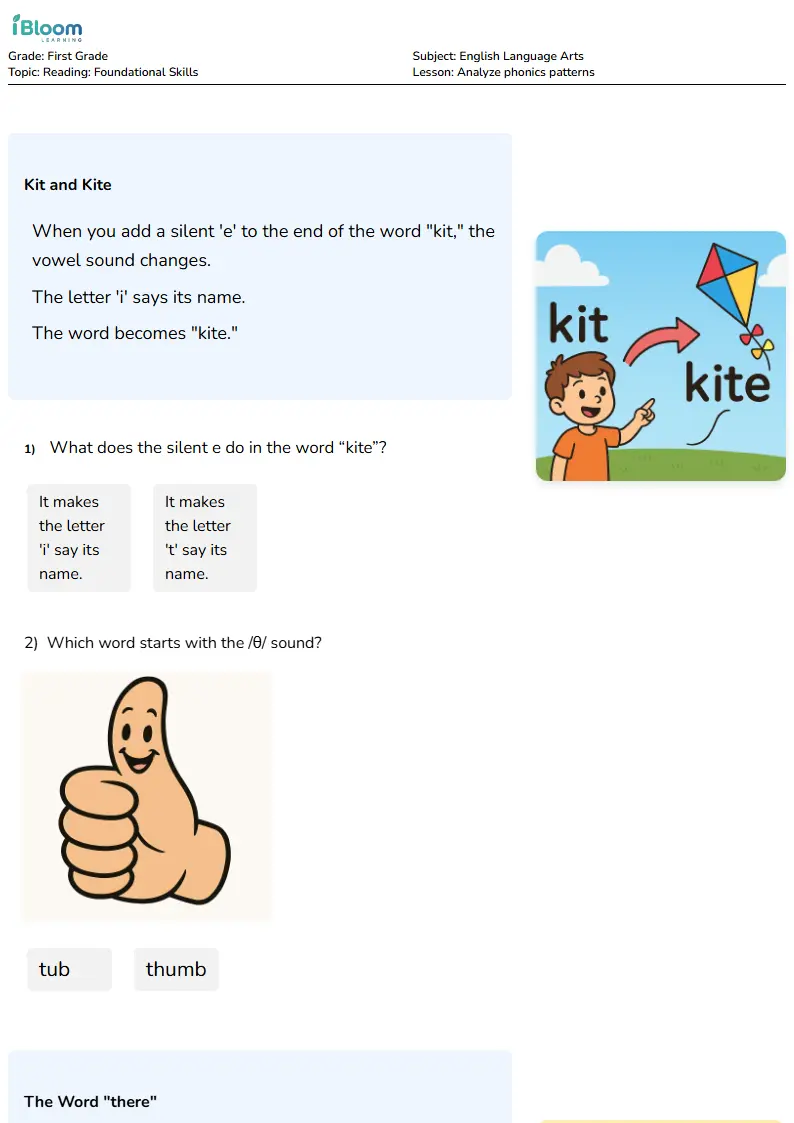
Analyze phonics patterns Lesson for First Grade
Explore a free interactive english language arts lesson for first grade: Analyze phonics patterns. AI-personalized, Common Core-aligned, and built for kids.
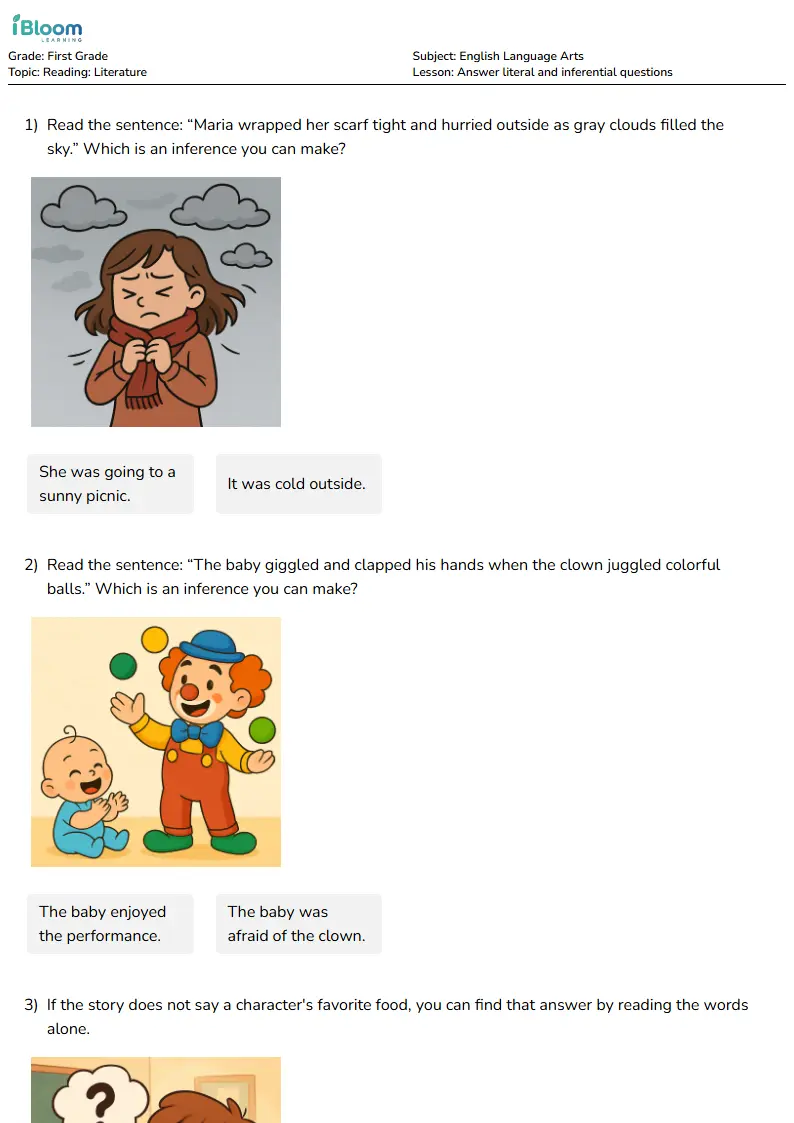
Answer literal and inferential questions Lesson for First Grade
Explore a free interactive english language arts lesson for first grade: Answer literal and inferential questions. AI-personalized, Common Core-aligned, and built for kids.
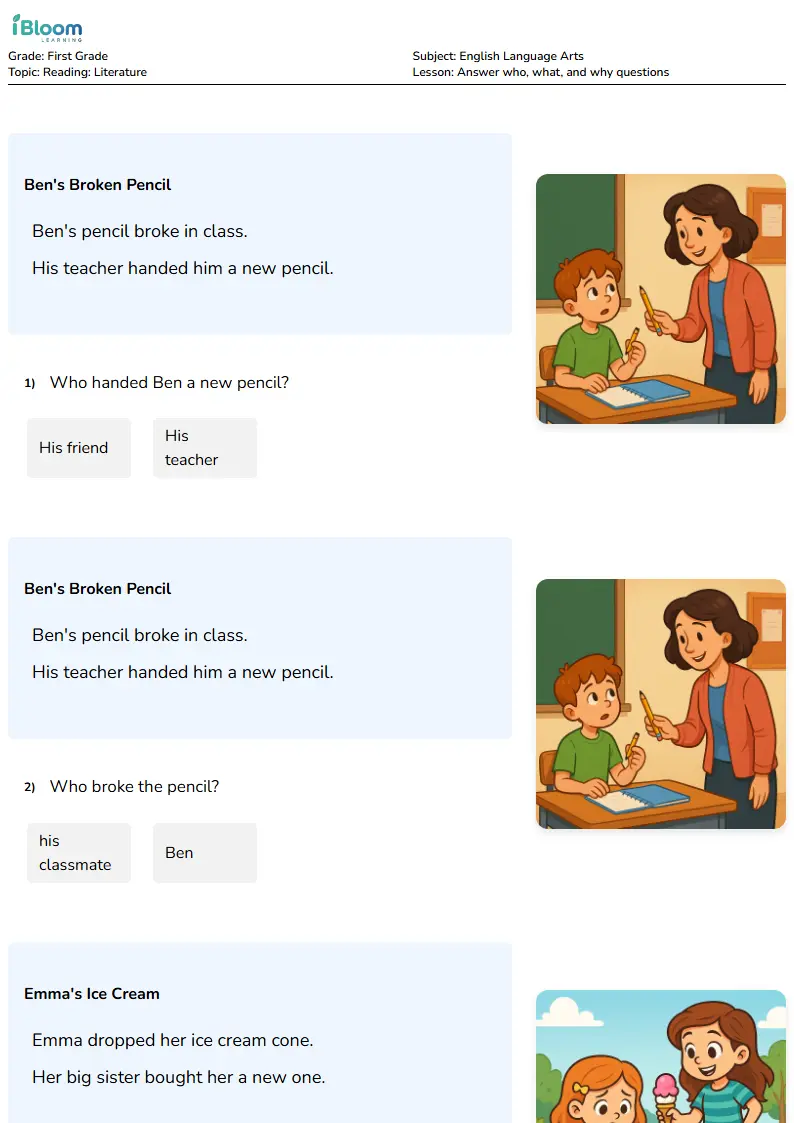
Answer who, what, and why questions Lesson for First Grade
Explore a free interactive english language arts lesson for first grade: Answer who, what, and why questions. AI-personalized, Common Core-aligned, and built for kids.
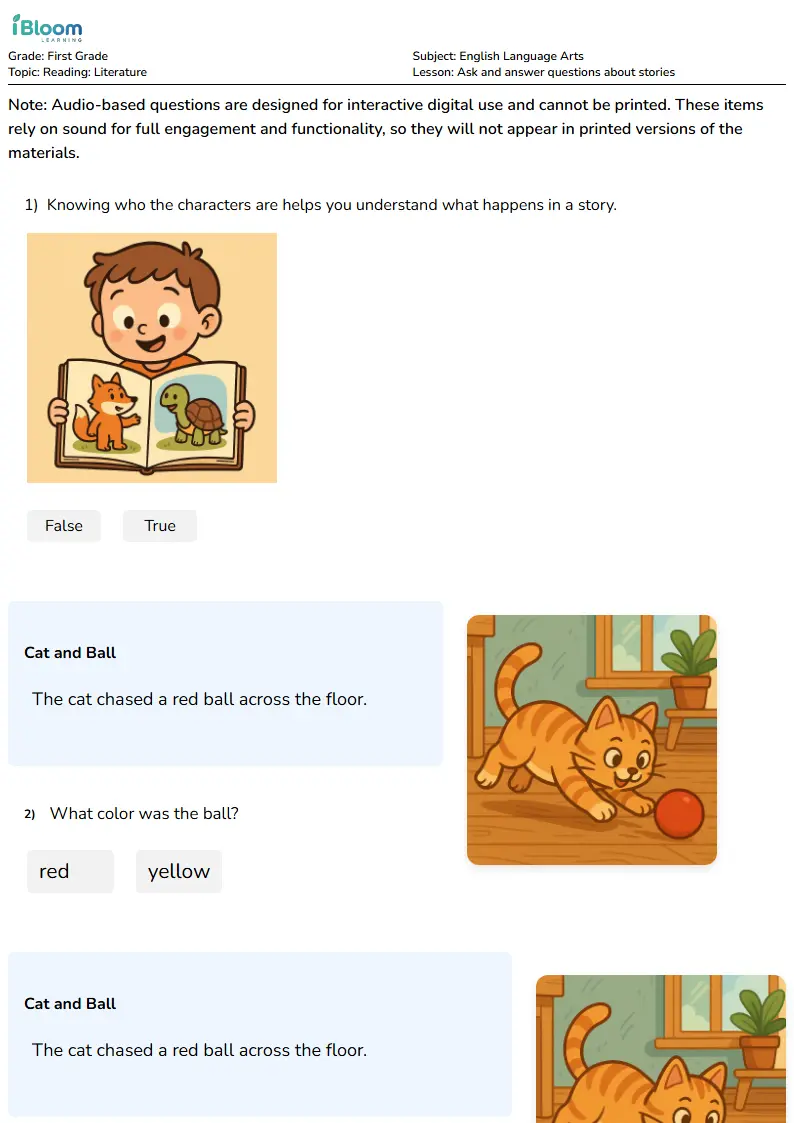
Ask and answer questions about stories Lesson for First Grade
Explore a free interactive english language arts lesson for first grade: Ask and answer questions about stories. AI-personalized, Common Core-aligned, and built for kids.
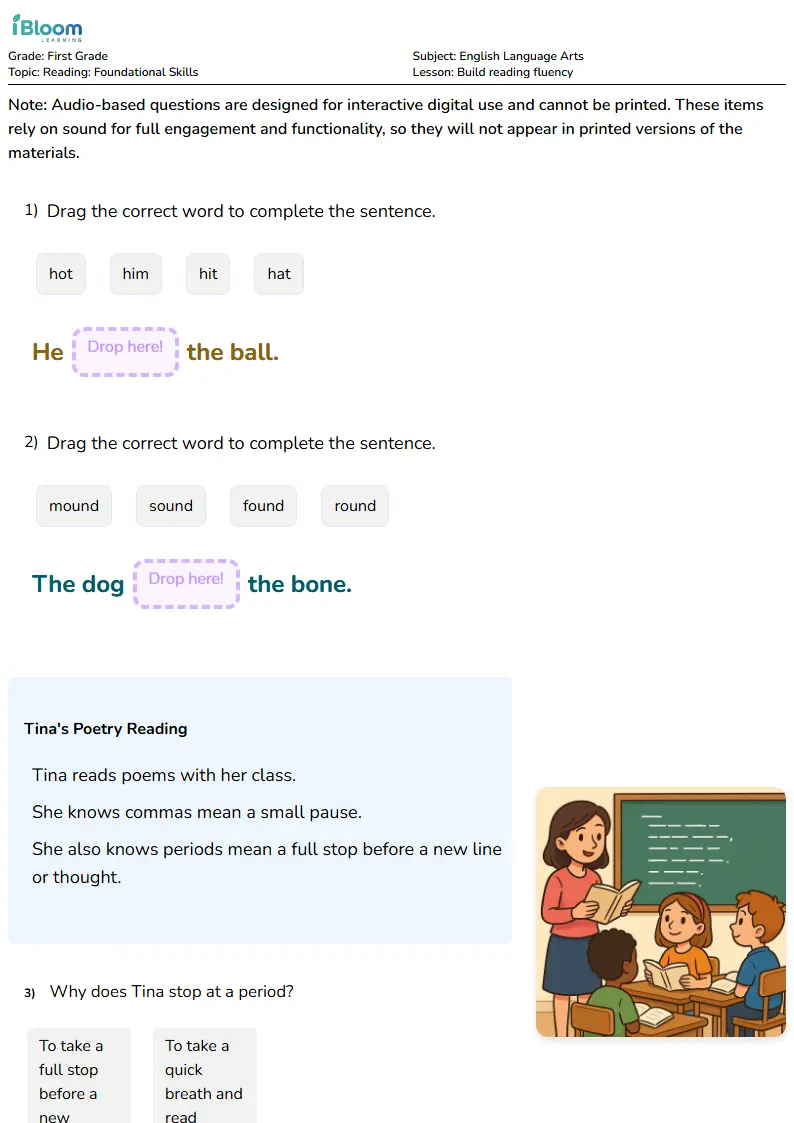
Build reading fluency Lesson for First Grade
Explore a free interactive english language arts lesson for first grade: Build reading fluency. AI-personalized, Common Core-aligned, and built for kids.
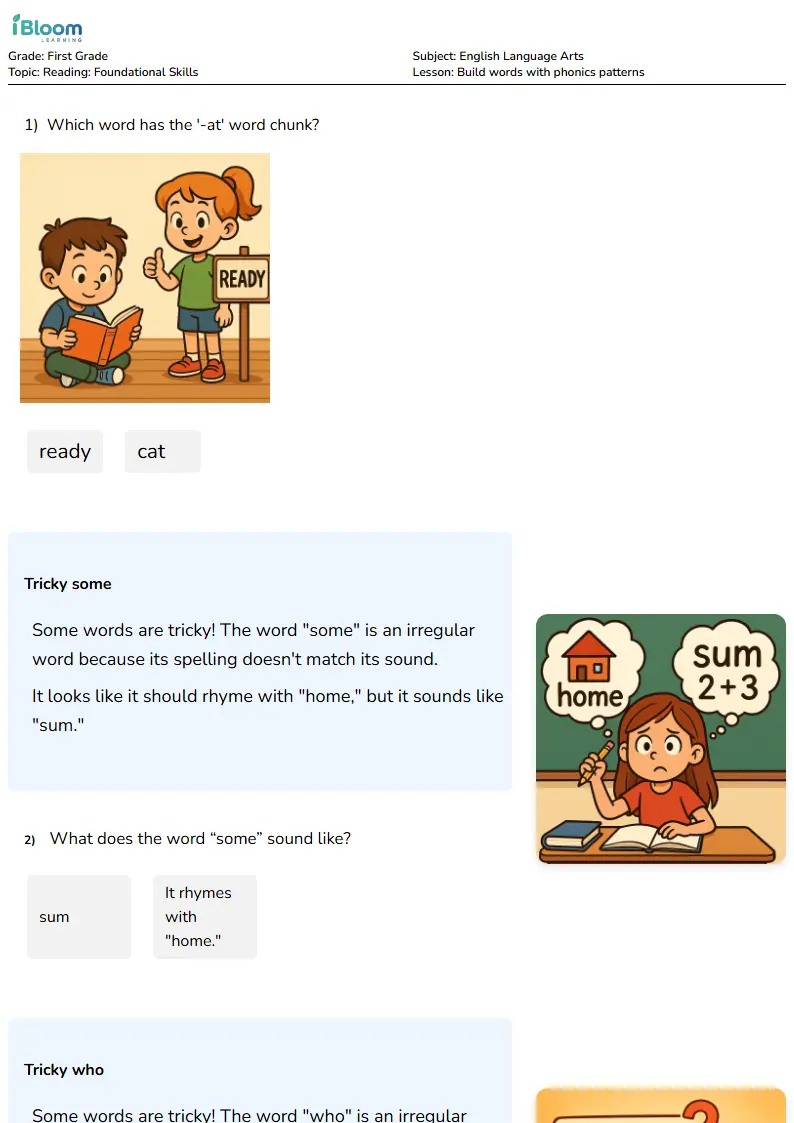
Build words with phonics patterns Lesson for First Grade
Explore a free interactive english language arts lesson for first grade: Build words with phonics patterns. AI-personalized, Common Core-aligned, and built for kids.
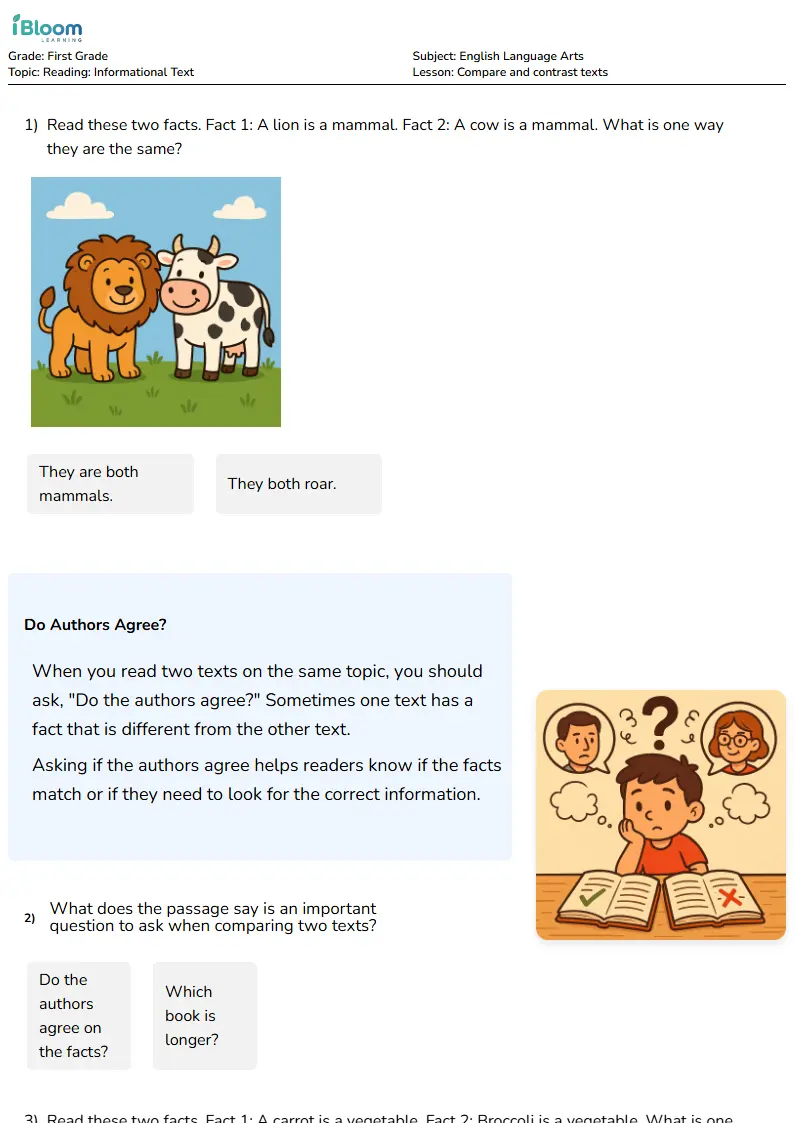
Compare and contrast texts Lesson for First Grade
Explore a free interactive english language arts lesson for first grade: Compare and contrast texts. AI-personalized, Common Core-aligned, and built for kids.
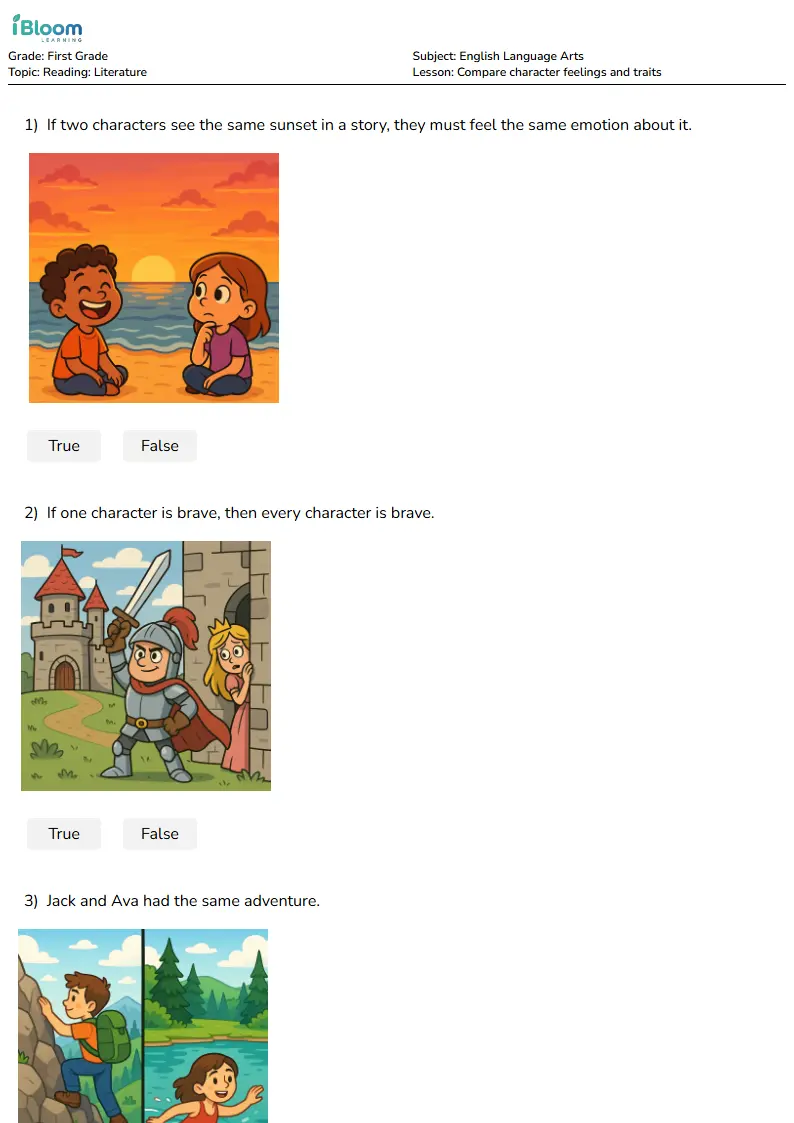
Compare character feelings and traits Lesson for First Grade
Explore a free interactive english language arts lesson for first grade: Compare character feelings and traits. AI-personalized, Common Core-aligned, and built for kids.
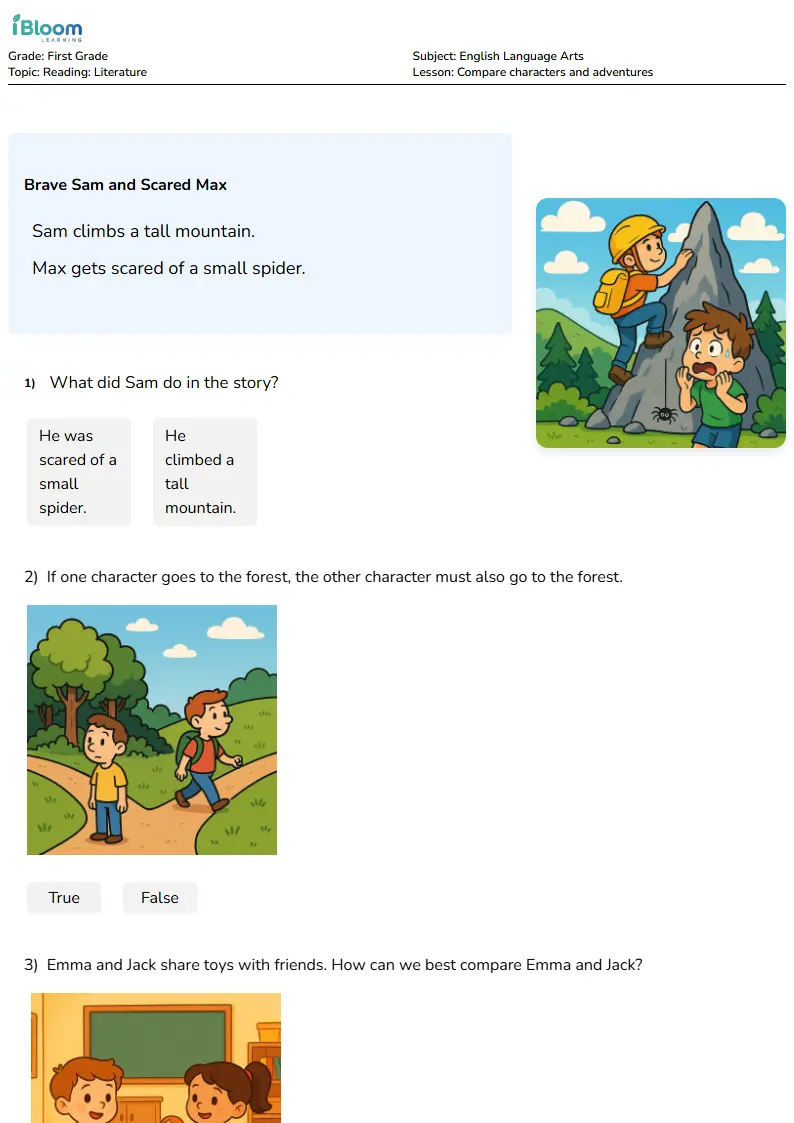
Compare characters and adventures Lesson for First Grade
Explore a free interactive english language arts lesson for first grade: Compare characters and adventures. AI-personalized, Common Core-aligned, and built for kids.
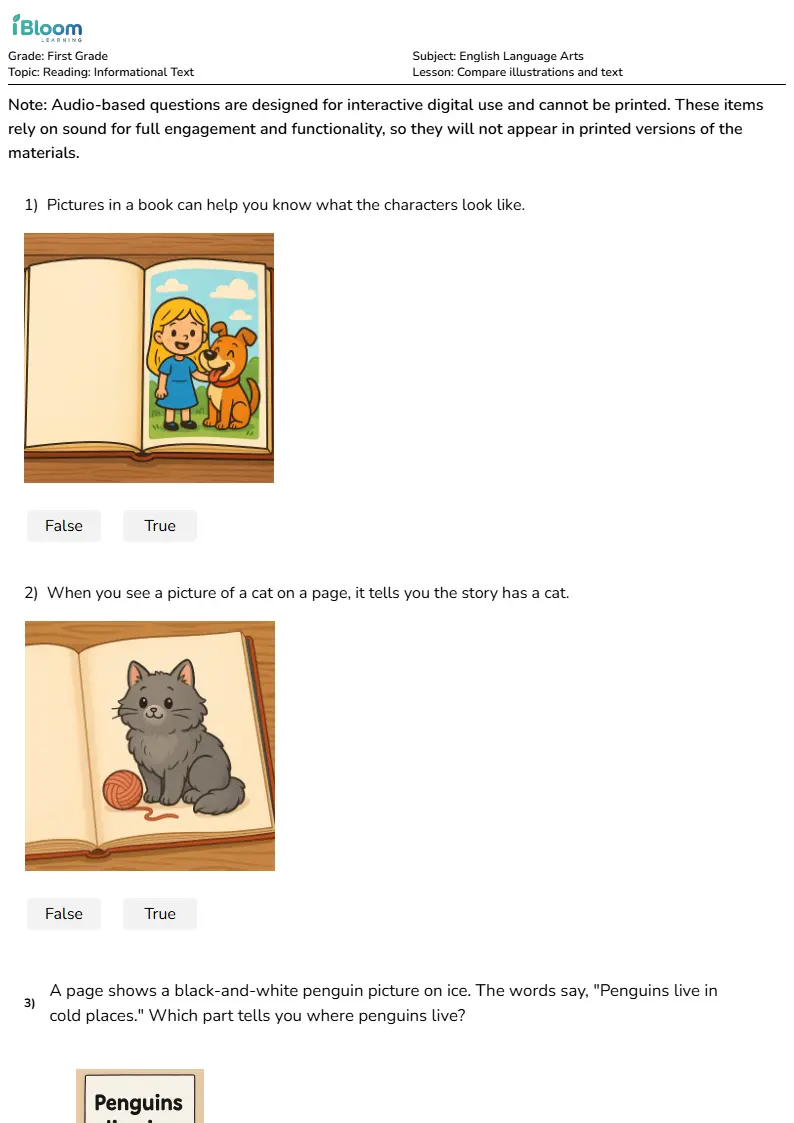
Compare illustrations and text Lesson for First Grade
Explore a free interactive english language arts lesson for first grade: Compare illustrations and text. AI-personalized, Common Core-aligned, and built for kids.
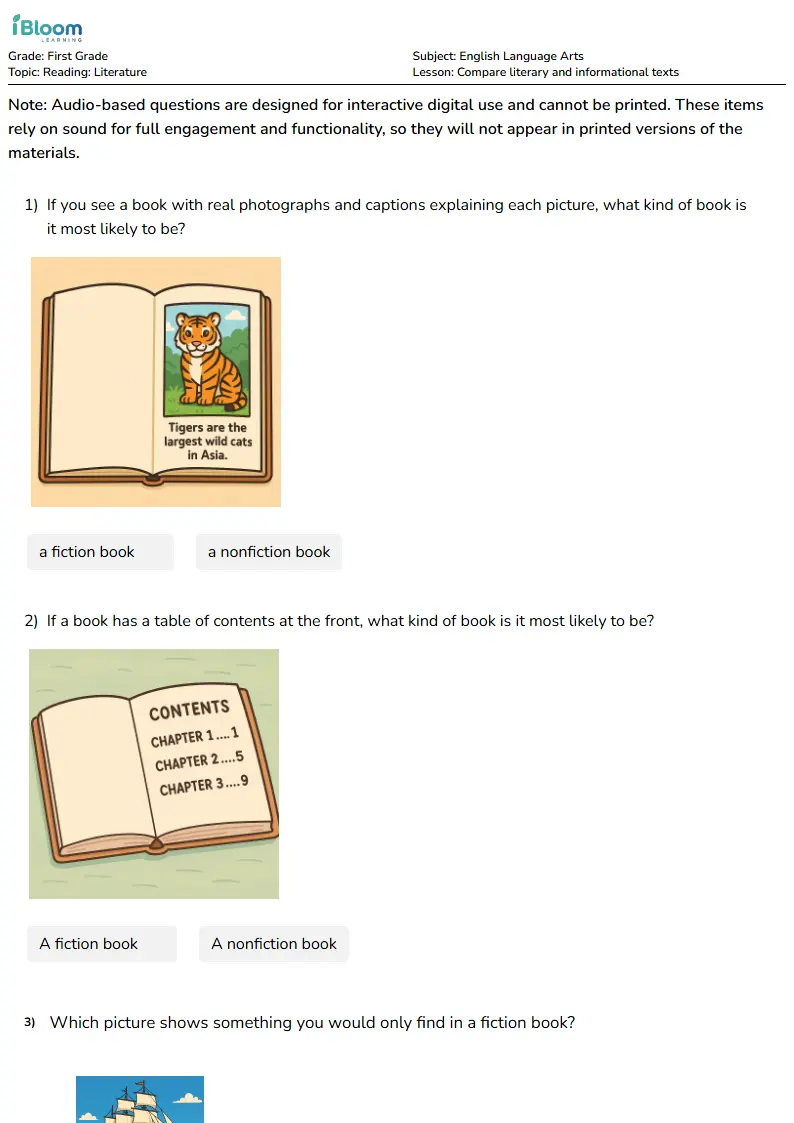
Compare literary and informational texts Lesson for First Grade
Explore a free interactive english language arts lesson for first grade: Compare literary and informational texts. AI-personalized, Common Core-aligned, and built for kids.
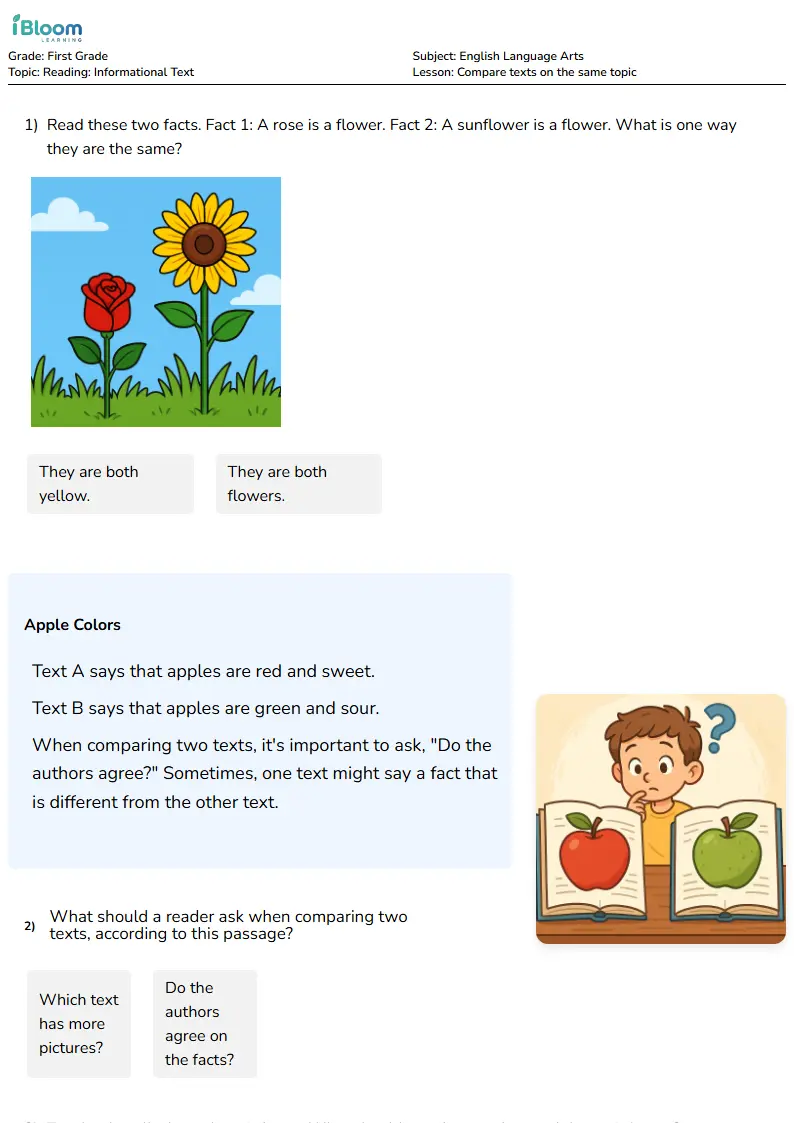
Compare texts on the same topic Lesson for First Grade
Explore a free interactive english language arts lesson for first grade: Compare texts on the same topic. AI-personalized, Common Core-aligned, and built for kids.
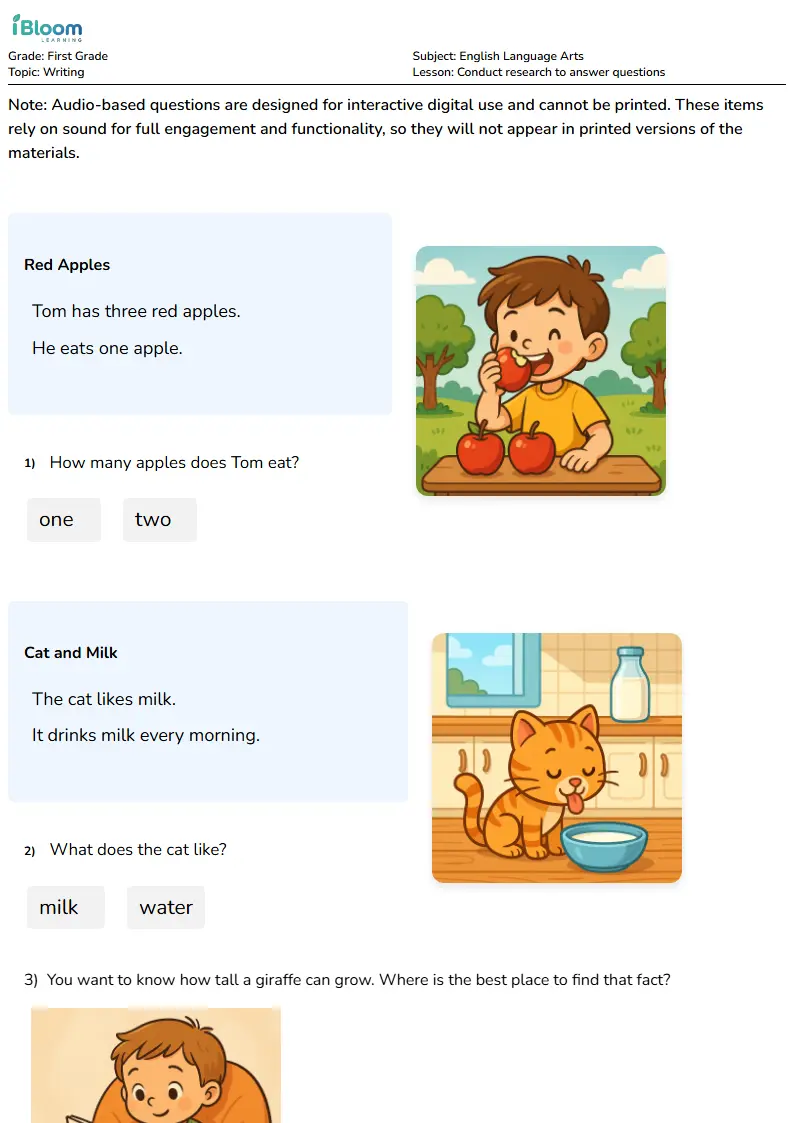
Conduct research to answer questions Lesson for First Grade
Explore a free interactive english language arts lesson for first grade: Conduct research to answer questions. AI-personalized, Common Core-aligned, and built for kids.
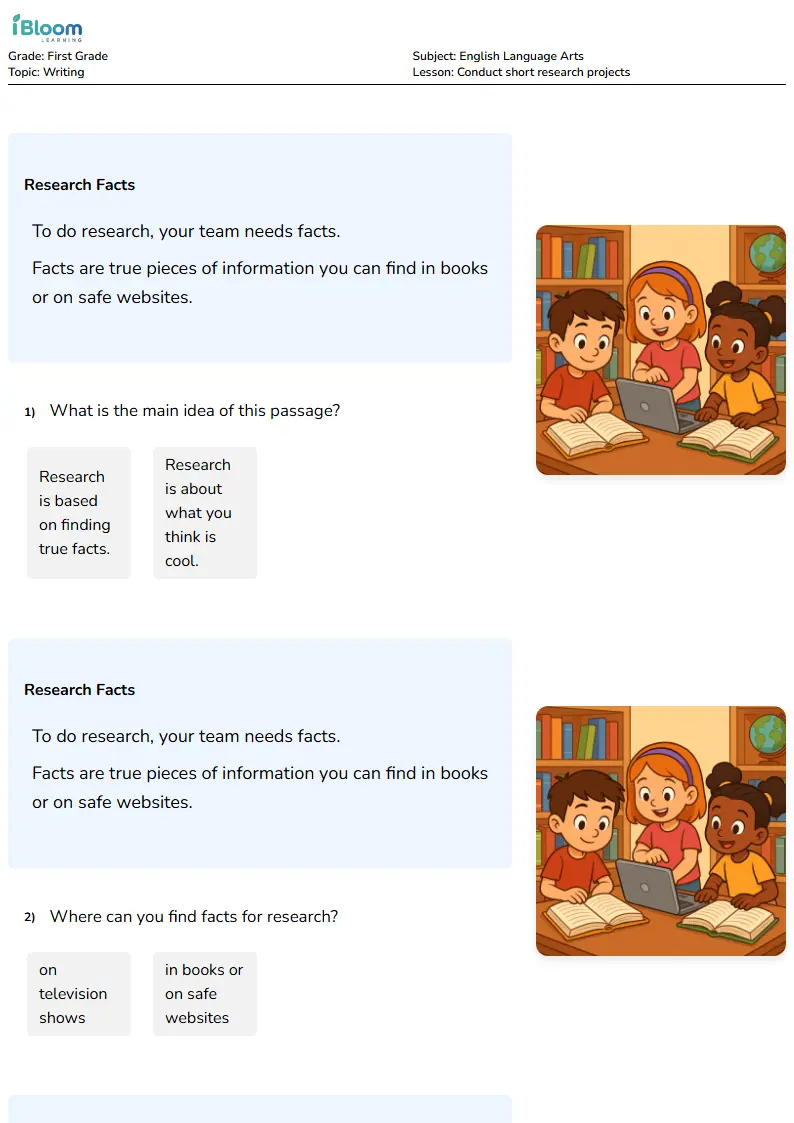
Conduct short research projects Lesson for First Grade
Explore a free interactive english language arts lesson for first grade: Conduct short research projects. AI-personalized, Common Core-aligned, and built for kids.
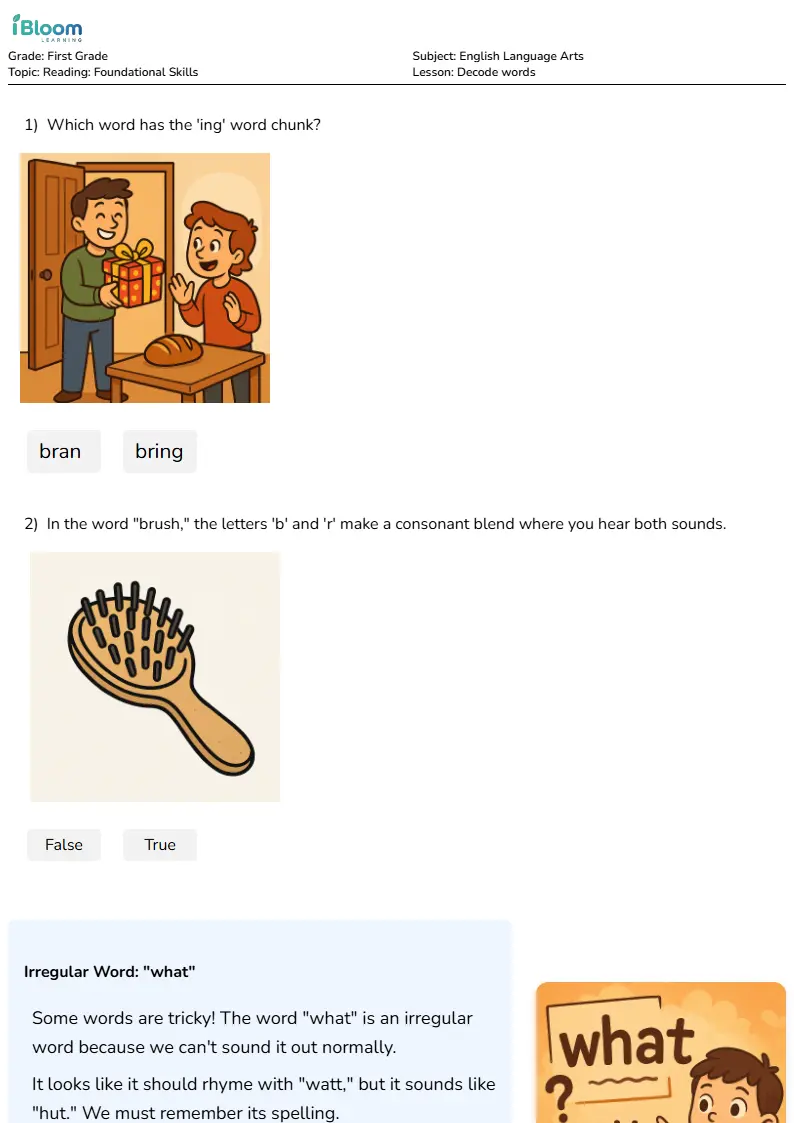
Decode words Lesson for First Grade
Explore a free interactive english language arts lesson for first grade: Decode words. AI-personalized, Common Core-aligned, and built for kids.
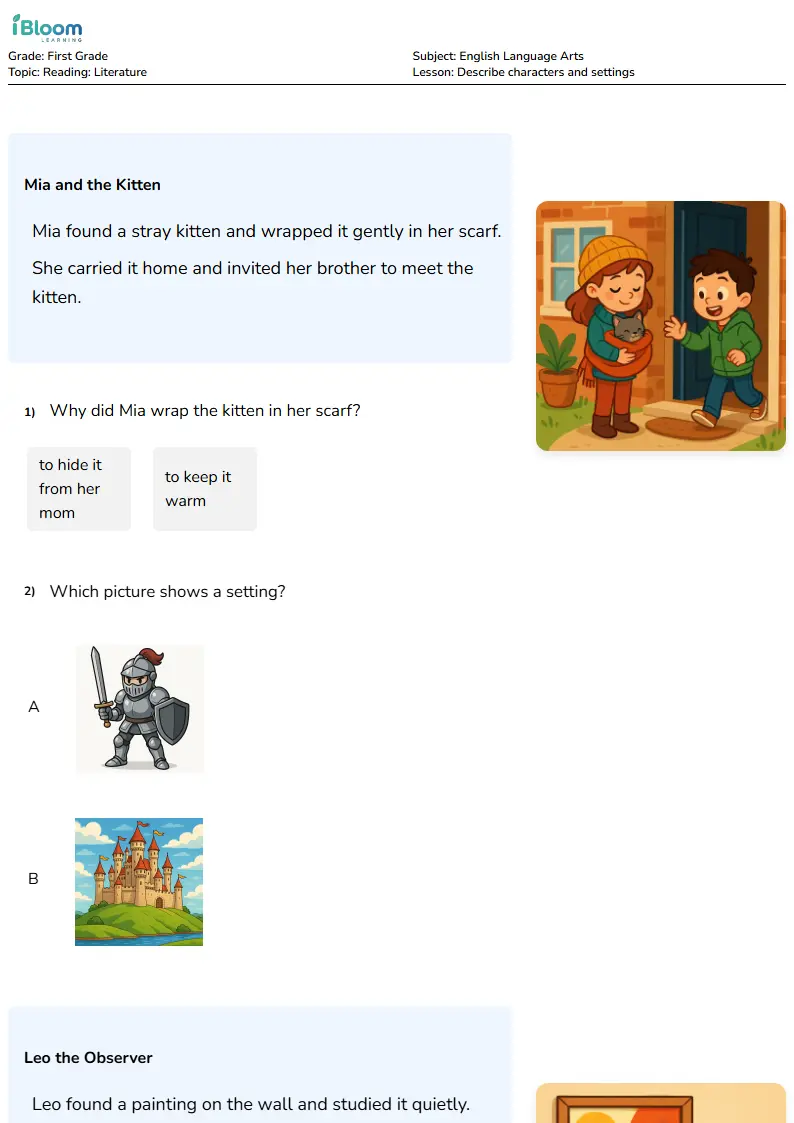
Describe characters and settings Lesson for First Grade
Explore a free interactive english language arts lesson for first grade: Describe characters and settings. AI-personalized, Common Core-aligned, and built for kids.
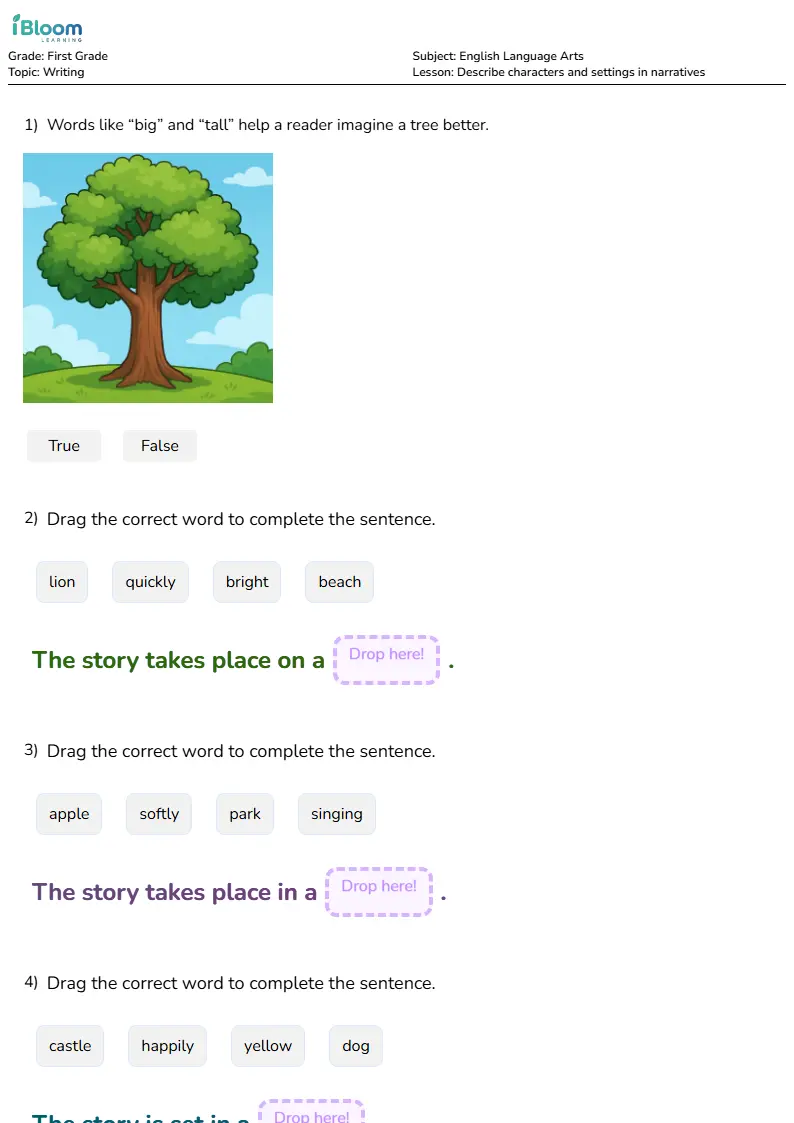
Describe characters and settings in narratives Lesson for First Grade
Explore a free interactive english language arts lesson for first grade: Describe characters and settings in narratives. AI-personalized, Common Core-aligned, and built for kids.
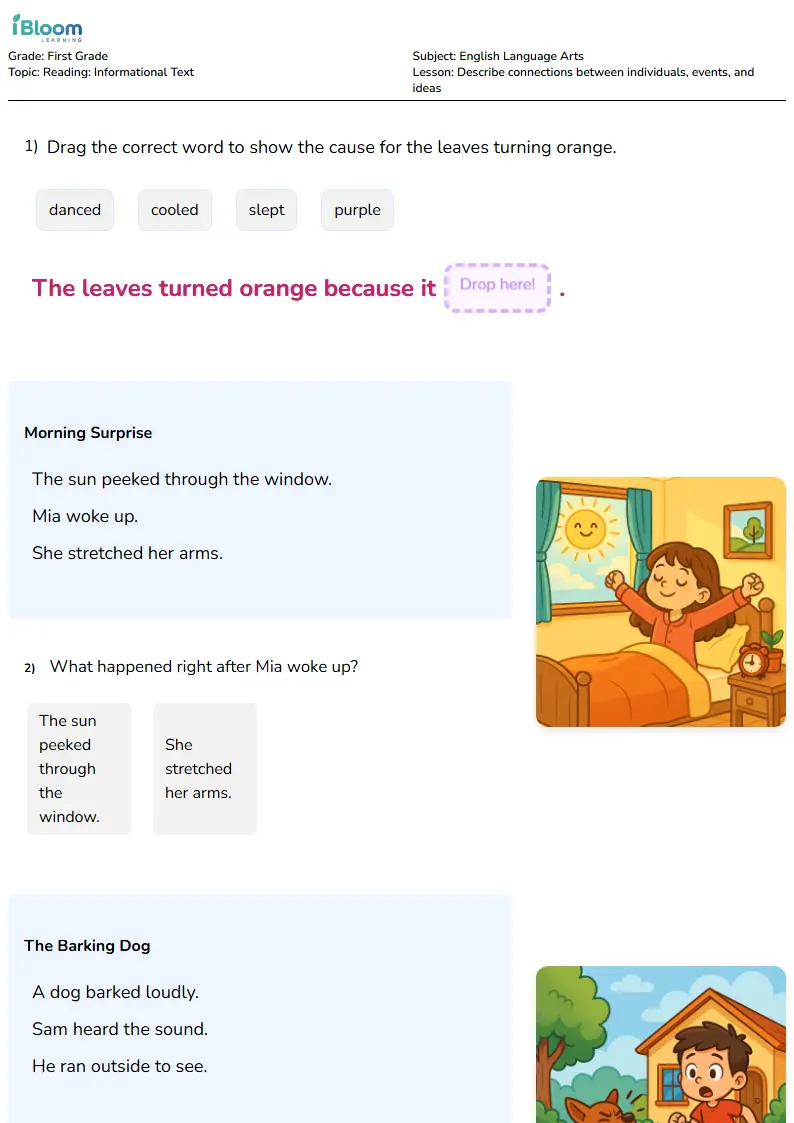
Describe connections between individuals, events, and ideas Lesson for First Grade
Explore a free interactive english language arts lesson for first grade: Describe connections between individuals, events, and ideas. AI-personalized, Common Core-aligned, and built for kids.
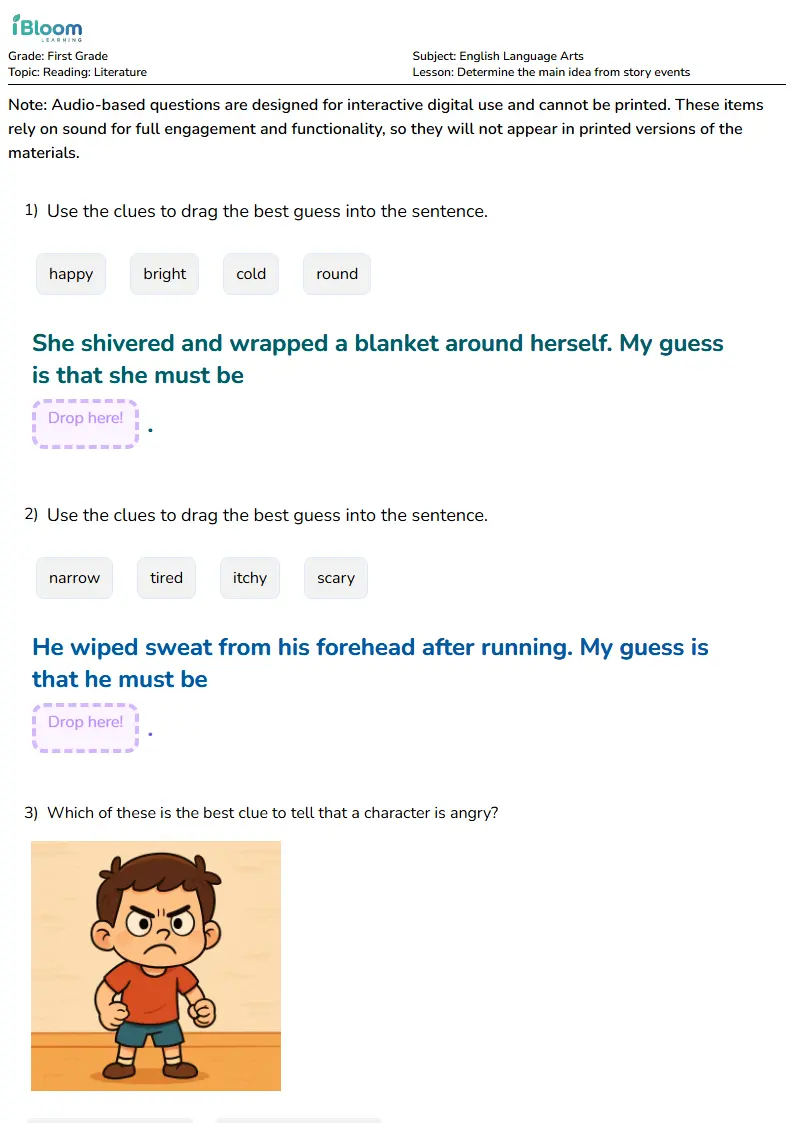
Determine the main idea from story events Lesson for First Grade
Explore a free interactive english language arts lesson for first grade: Determine the main idea from story events. AI-personalized, Common Core-aligned, and built for kids.
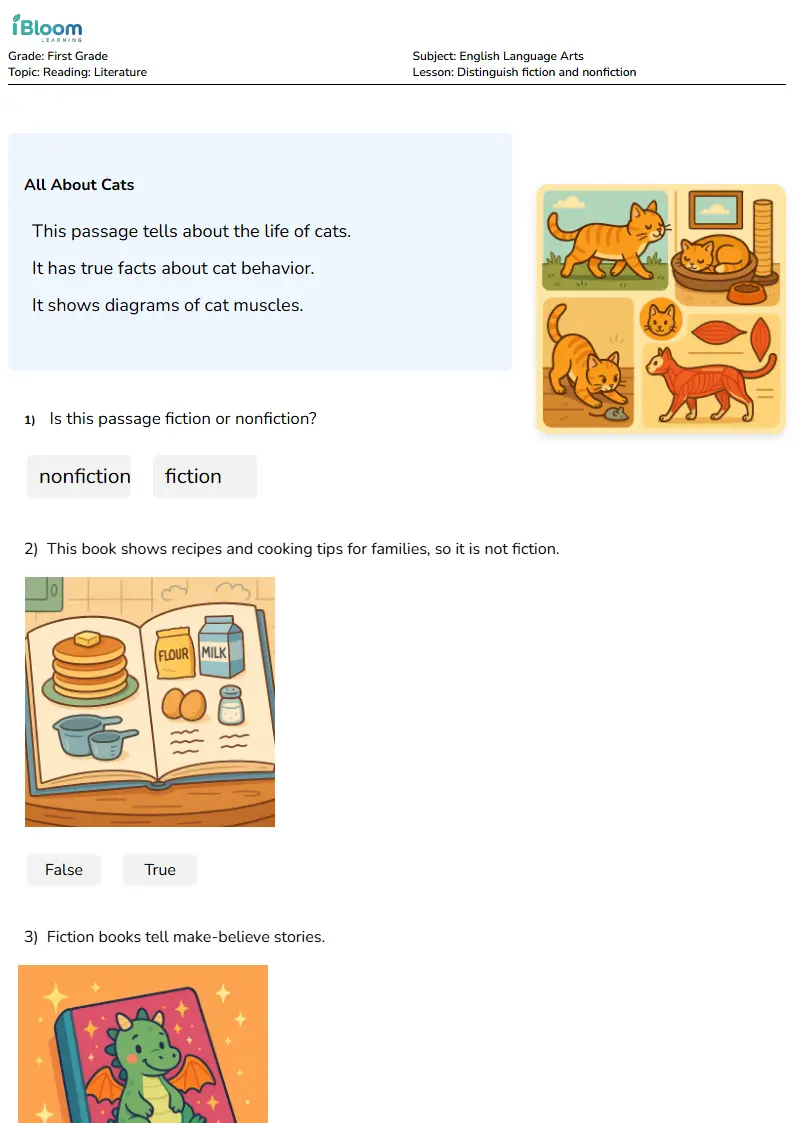
Distinguish fiction and nonfiction Lesson for First Grade
Explore a free interactive english language arts lesson for first grade: Distinguish fiction and nonfiction. AI-personalized, Common Core-aligned, and built for kids.
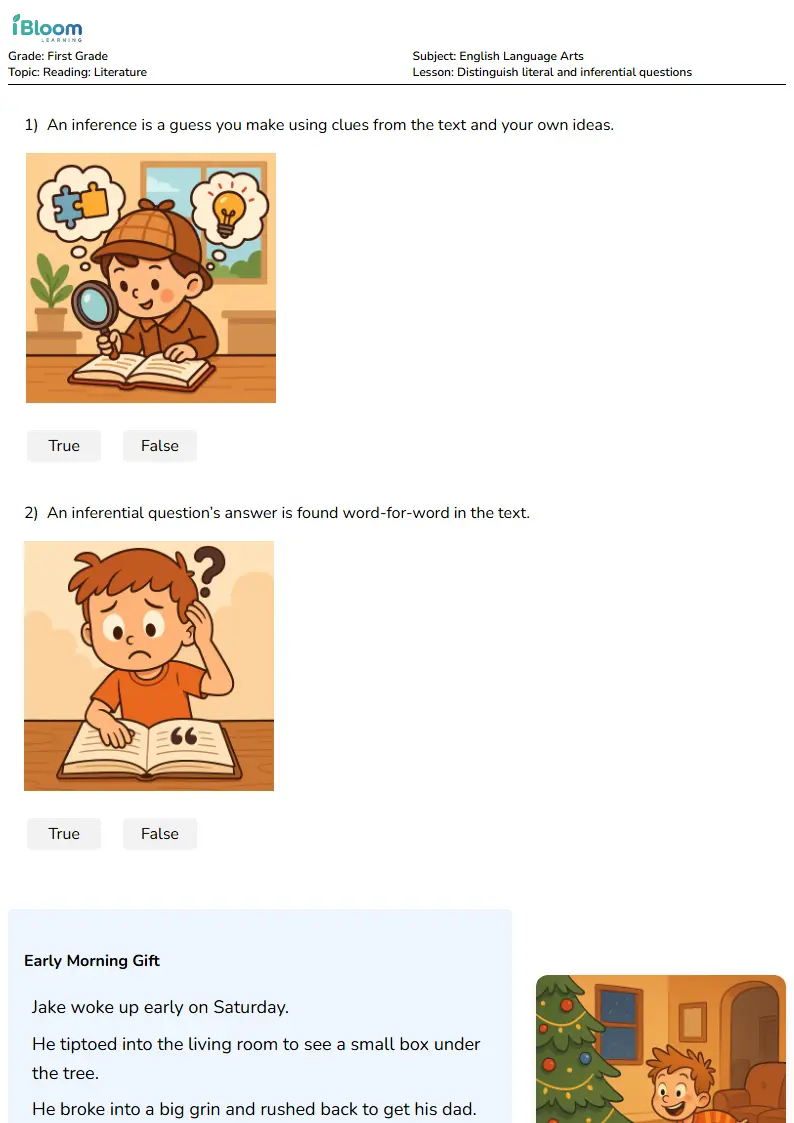
Distinguish literal and inferential questions Lesson for First Grade
Explore a free interactive english language arts lesson for first grade: Distinguish literal and inferential questions. AI-personalized, Common Core-aligned, and built for kids.
Distinguish strong and weak reasons Lesson for First Grade
Explore a free interactive english language arts lesson for first grade: Distinguish strong and weak reasons. AI-personalized, Common Core-aligned, and built for kids.
Draw conclusions from story details Lesson for First Grade
Explore a free interactive english language arts lesson for first grade: Draw conclusions from story details. AI-personalized, Common Core-aligned, and built for kids.
Edit for capitalization and punctuation Lesson for First Grade
Explore a free interactive english language arts lesson for first grade: Edit for capitalization and punctuation. AI-personalized, Common Core-aligned, and built for kids.